Mochi takes a few different forms here: chewy dango, fruit-filled daifuku, savory isobemochi and more. In a Tokyo studio, you make and taste five kinds of sweets, with green tea alongside. It’s a practical way to meet Japanese food culture through your hands and your appetite.
I like two things about this class: you get a mix of sweet and savory mochi, and the instructor explains the traditions behind the treats as you work. One thing to know: the class uses a microwave method for the dough, not the traditional rice-pounding ceremony, and you may assemble some sweets rather than make every component from scratch.
- Five useful things to know
- A Tokyo sweets class with more than one kind of mochi
- Start with the story behind the sweets
- Shape and fill the daifuku
- Compare sweet, savory and softer styles
- Why the microwave method matters
- Taste your work with green tea
- Is the class worth about ?
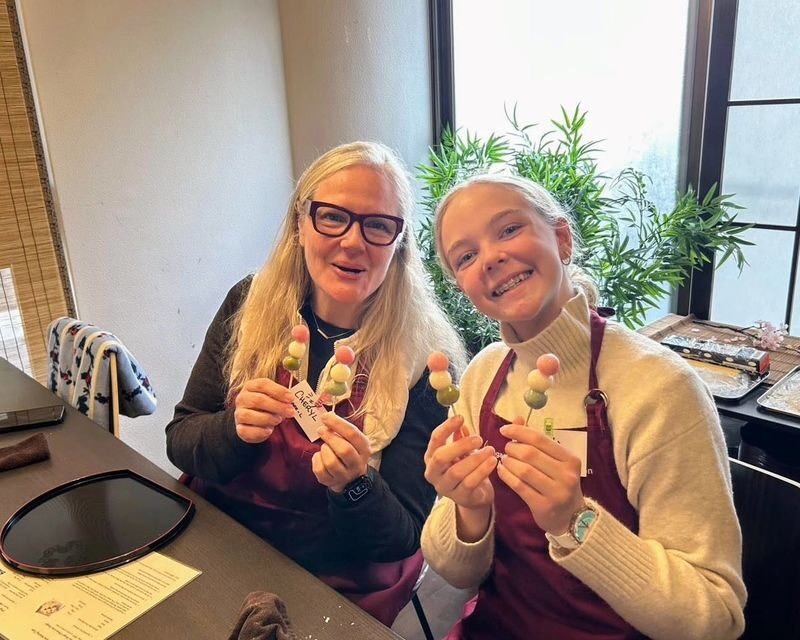
- A good fit for families and first-time cooks
- Plan for a small class and a precise arrival
- Should you book this mochi class?
- FAQ
- How long is the mochi-making class?
- Which sweets are included?
- Do I make all five kinds myself?
- Is the class suitable for children?
- Can the class accommodate dietary requirements?
- Where does the class meet?
- What is the cancellation policy?
- The Best Of Tokyo!
- More Workshops & Classes in Tokyo
- More Tours in Tokyo
- More Tour Reviews in Tokyo
- Not for you? Here's more nearby things to do in Tokyo we have reviewed
Five useful things to know
 1 / 10
 2 / 10
 3 / 10
 4 / 10
 5 / 10
 6 / 10
 7 / 10
 8 / 10
 9 / 10
 10 / 10
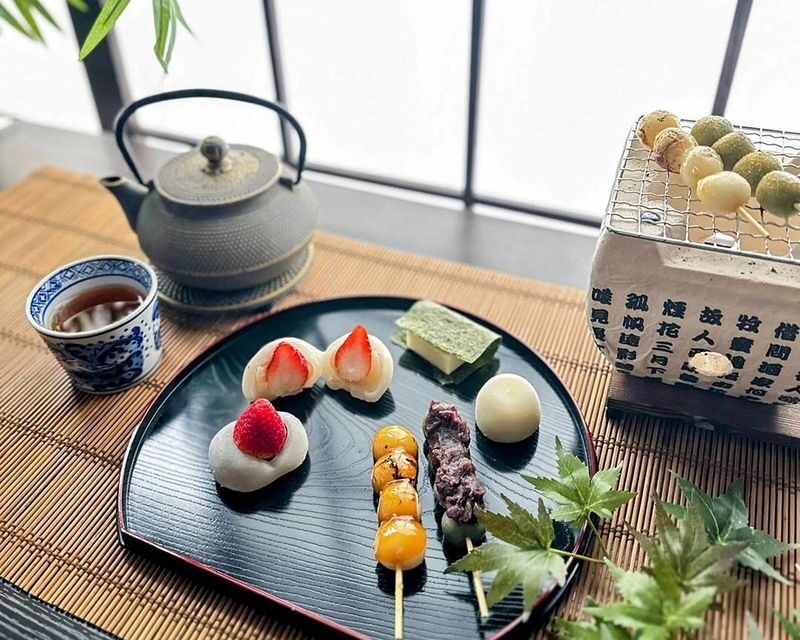
- Five kinds of mochi are on the menu: strawberry daifuku, dango, isobemochi, warabimochi and host-made mochi ice cream.
- Expect a mix of making and demonstration: You’ll shape or assemble some treats, while the host may prepare other dough or sweets.
- The microwave method suits beginners: A tutorial video shows how to make mochi with a traditional steamer at home.
- Green tea comes with the sweets: The class includes a cup of tea to enjoy with what you make.
- Dietary needs need advance notice: Vegetarian and gluten-free options are available, and the ice cream can be made without dairy if you tell the host when booking.

👉 See our pick of the 25 Best Guided Tours In Tokyo
A Tokyo sweets class with more than one kind of mochi
Mochi is not one single dessert. Its soft, chewy dough can be wrapped around fruit and bean paste, rolled into dumplings, grilled with savory toppings or served with a dusting of soybean flour. This class gives you a tasting-sized tour of those differences while letting you handle some of the work yourself.
The package is listed as a 2-hour class, though the general description also calls it 2.5 hours. Check the time shown for your selected session and voucher before you plan the rest of your day. Either way, leave room for the class to run at its own pace. The experience includes cooking, instruction, tasting and a little cultural context, not just a quick recipe demonstration.
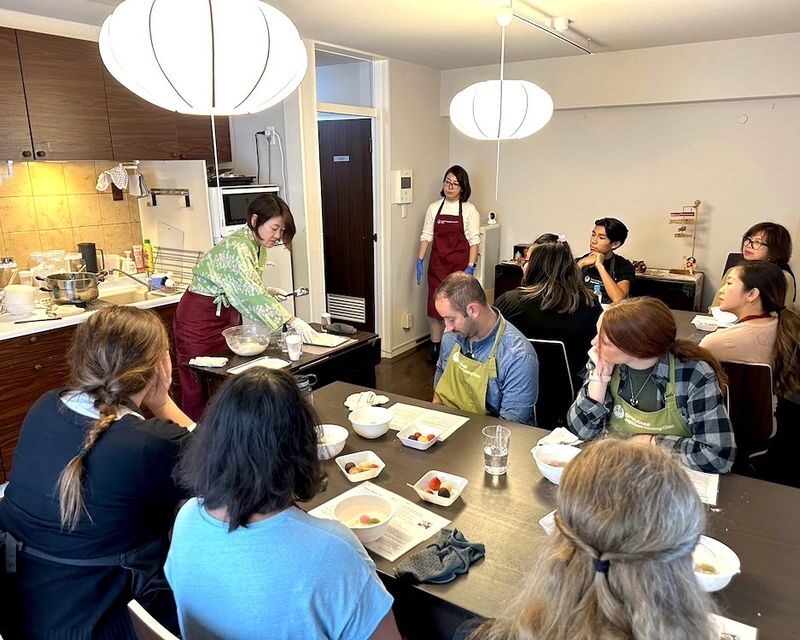
The setting is a private studio in Meguro. The stated address is 1-chome-3-16 Meguro, while the detailed studio location is provided on the voucher after booking. The studio is described as a three-minute walk from the JR Yamanote Line exit and five minutes from the Metro Line exit. Check the voucher for the precise route and meeting point.
You can also read our reviews of more tours and experiences in Tokyo



Start with the story behind the sweets
Mochi has a long place in Japanese food traditions, and the class introduces some of the ways it appears in daily life and seasonal customs. The host explains the different types you will make and eat, and the meaning attached to seasonal sweets. That background matters: a sweet can be more than a snack when its shape, ingredients or timing connect it to a particular celebration or season.
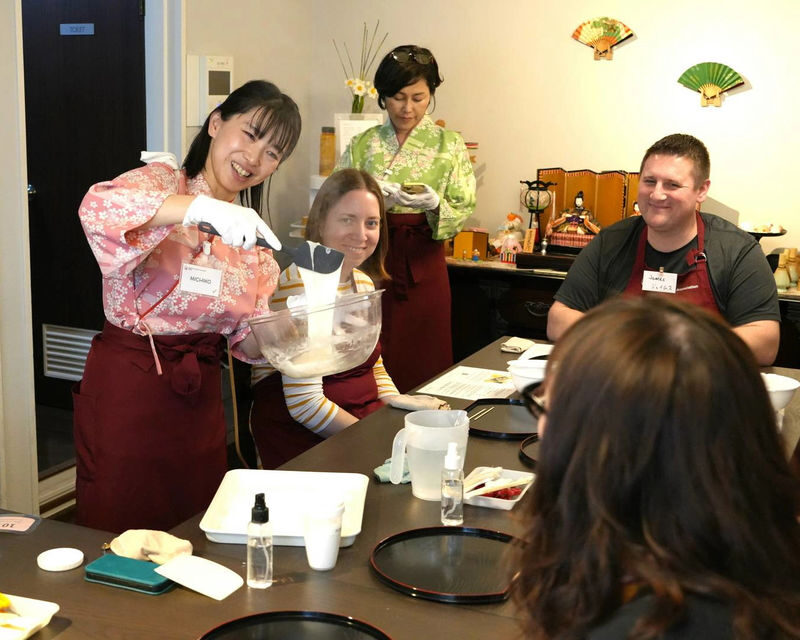
The session is led in English or Japanese, and the class includes recipes and instructions in English. Past instructors have included Hatsumi, Ayumi, Michiko, Yuriko and Muyuki. The specific teacher can vary, but the experience is designed for beginners, so you do not need prior cooking skills or Japanese language ability to follow along.
This is an informal, hands-on setting rather than a formal tea ceremony. Still, some classes have included an explanation of tea traditions and time to mix matcha before tasting the sweets. You get a small window into how Japanese confectionery and tea complement each other without needing to commit to a full cultural program.
Shape and fill the daifuku
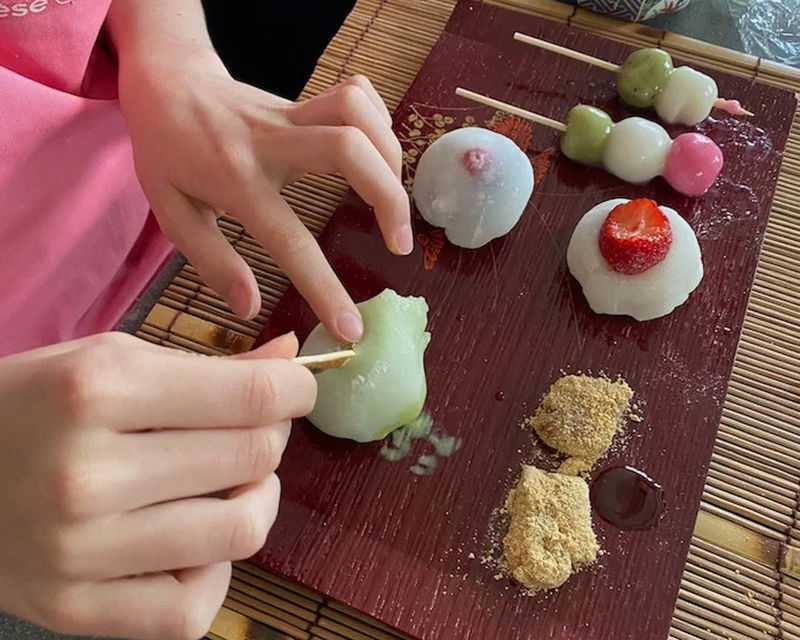
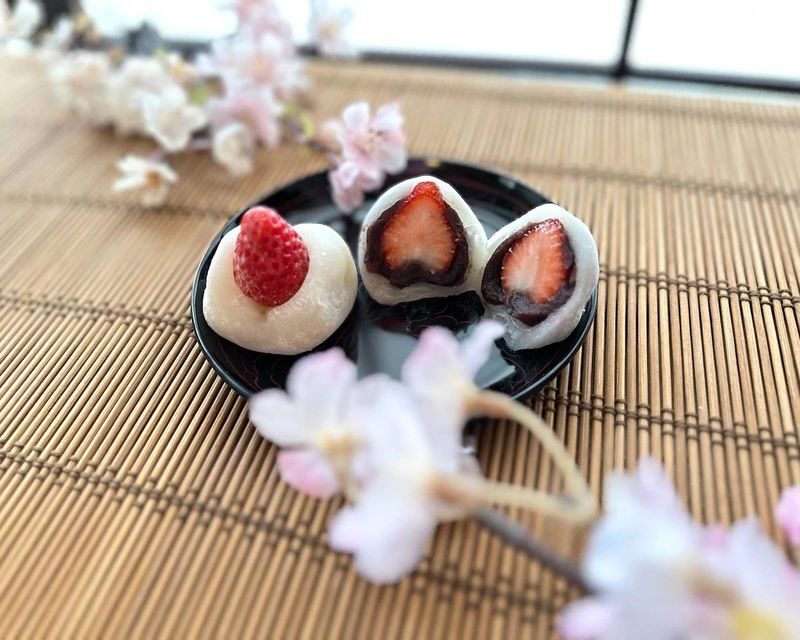
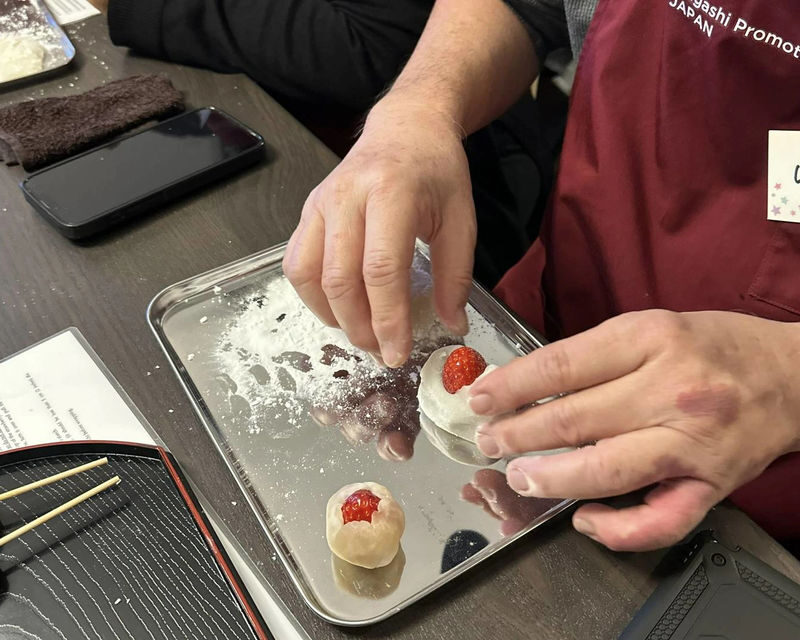
Strawberry daifuku is one of the class’s most appealing projects. A piece of fruit and a layer of bean paste sit inside a soft mochi wrapper. The host guides you through shaping and sealing it, a task that looks simple until the sticky dough gets onto your fingers. That’s part of the fun, and the instructions are intended to make the process manageable even if you have never worked with mochi.
Fruit depends on the season. Strawberries are used when available; pineapple or another fruit may take their place. So if strawberry daifuku is the main reason you’re booking, keep in mind that the filling can change. You should still get the experience of making a fruit-filled sweet, but not necessarily the exact version pictured or expected.
The class may also use prepared mochi dough for the daifuku assembly. That means you can learn how to fill and shape the sweet without necessarily making every batch of dough yourself. It is a useful distinction if your goal is to master the full process from rice to finished daifuku.
Compare sweet, savory and softer styles
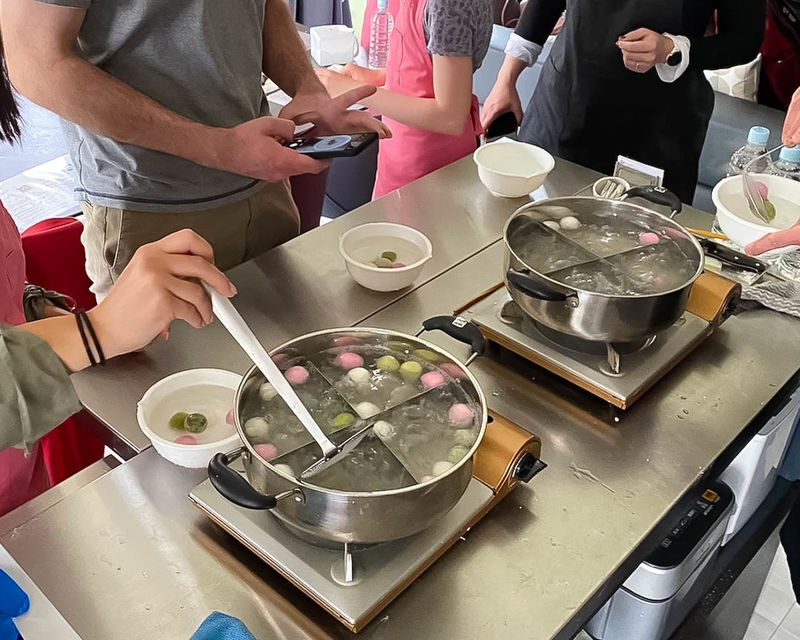
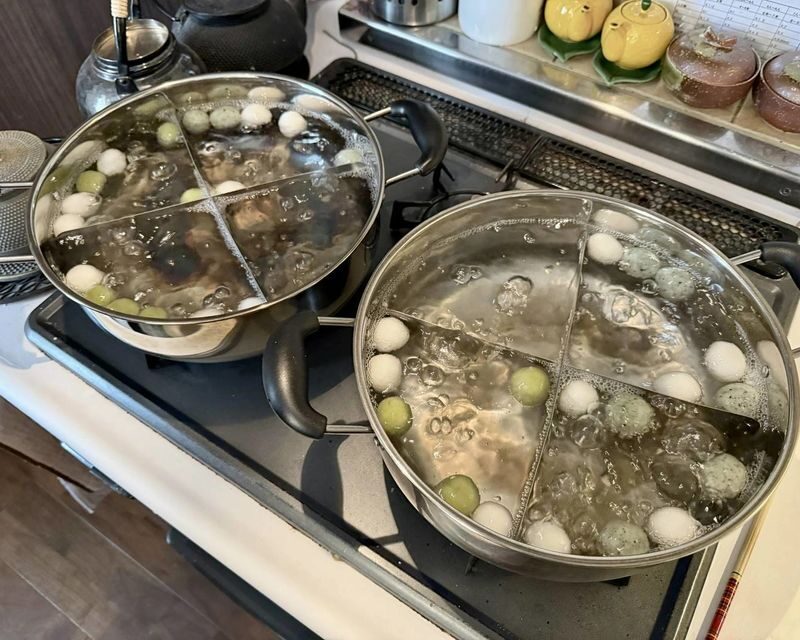
The other sweets broaden the lesson. Dango are chewy dumplings, often served on a skewer. Warabimochi has a softer texture and is commonly coated in soybean flour. Isobemochi offers a savory contrast, pairing mochi with soy sauce and nori. The exact hands-on steps may vary, but the mix helps you see how one ingredient can move from dessert to snack.
Mochi ice cream adds a modern, familiar style to the table. It is made by the host, rather than being one of the main items you prepare yourself. The standard version contains dairy, but the host can make an alternative if you ask for a dairy-free option at booking.
Expect to make some treats and watch demonstrations of others. In some sessions, participants have prepared three kinds while the instructor made two. That arrangement lets you taste more styles in a short class, but it may disappoint if you expect to cook all five entirely from scratch. I’d think of the experience as a guided workshop and tasting, not a five-recipe cooking course.
Why the microwave method matters
Traditional mochi is made by pounding steamed rice with wooden mallets until it becomes a smooth, elastic mass. This class takes a simpler route: the mochi is prepared in a microwave, which makes the process easier for first-timers and more practical in a studio class. You won’t get the physical work or spectacle of a pounding session.
That trade-off is worth knowing before you book. If your priority is seeing traditional mochi production, this is not the most literal version of the craft. If you want to understand how mochi is shaped, filled and served in several forms, the beginner method gives you more time for hands-on work and tasting.
You also receive a tutorial video showing how to make mochi with a traditional steamer at home. That is a useful bridge between the simplified class method and the older technique. Recipes and English instructions are included, so you can try the sweets again after your trip, though some ingredients may take effort to find depending on where you live.






Taste your work with green tea
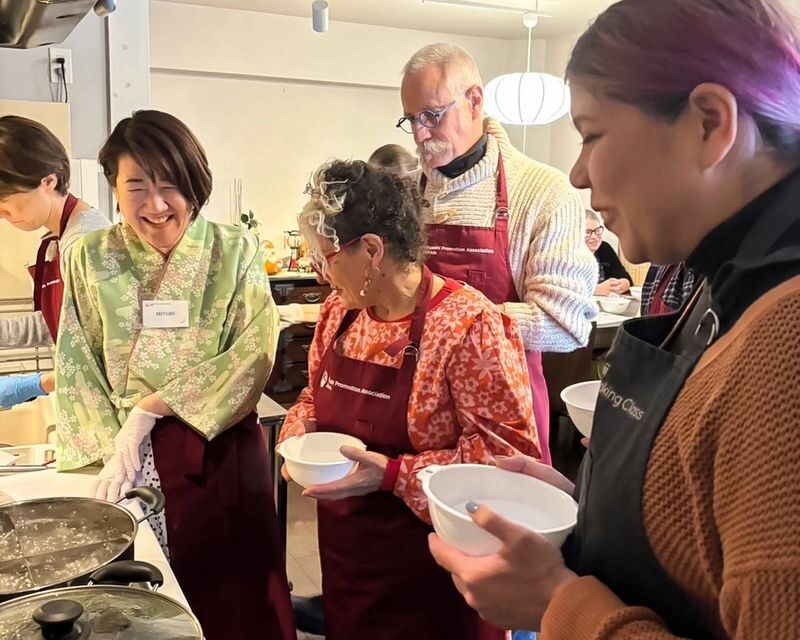
The tasting is part of the point. You finish with the sweets you have made, the host’s mochi ice cream and a complimentary cup of green tea. The tea gives you a simple way to compare the sweets and their textures, while keeping the class tied to the familiar pairing of Japanese confectionery and tea.
You may leave with more food than you expected. Several kinds of mochi add up, so I would avoid arriving hungry enough to rush through the lesson, but consider having a light meal beforehand. The sweets can also be photographed, and some sessions have included a dedicated place to arrange and photograph finished creations. If you cannot finish everything, ask the host whether you can take it away; this has been possible in some classes, but it is not stated as a guaranteed inclusion.
Is the class worth about $90?
The starting price is $90.09, so this is a considered purchase, not a bargain snack stop. The fee covers instruction, ingredients for five types of mochi, cooking tools, an apron, English recipes and a cup of green tea. You are also paying for a small-group cultural activity and a chance to make sweets you might not otherwise try during a short Tokyo visit.
Value depends on what you want from the class. If you enjoy hands-on food activities, want a break from sightseeing and like learning the story behind what you eat, the combination makes sense. The recipes and tutorial video add value beyond the session itself. If you mainly want a full lesson in traditional rice pounding or to make every sweet from raw ingredients, the price may feel high for the amount of cooking involved.
The experience has a 4.9 out of 5 rating based on 32 class ratings. That is a strong indication of a consistently enjoyable activity, though the class format and amount of hands-on preparation are worth weighing against your own expectations.
A good fit for families and first-time cooks
Children aged four and older can participate. Children from four to 12 must attend with a paying adult, and children aged 13 or older pay the adult rate. Infants and children must be included in the passenger headcount, even if they are not participating. The studio is not childproof, so toddlers under four are not allowed.
This could be a pleasant family activity because the steps are tactile and the finished sweets are part of the reward. The class is not stroller- or wheelchair-accessible, however, so it may not suit every family. The building is smoke-free, and cigarettes and e-cigarettes are prohibited.
Vegetarian and gluten-free diets can be accommodated, and pescetarian requirements are also accepted. The class is described as vegan except for the mochi ice cream. If you need a dairy-free version, tell the host when booking. Share dietary restrictions in advance rather than waiting until you arrive, especially if you need a particular ingredient substitution.
Plan for a small class and a precise arrival
A minimum of two participants is required for a class to run. If you book alone, you may be notified three days ahead if the class is cancelled, with an option to cancel or change to an offered date or location. That is a real consideration if your Tokyo schedule is tight.
Arrive on time. The class begins promptly, and you are asked to message the host if you will be more than 10 minutes late. The voucher is valid only for its stated date and time, so check those details before setting off. Confirmation is usually issued within minutes; if it does not arrive, contact customer support.
Should you book this mochi class?
I’d book it if you want a relaxed, food-focused activity that pairs simple cooking with useful cultural context. It is especially suitable for mochi fans, families with school-age children and curious beginners who want to learn several styles without needing to know their way around a Japanese kitchen.
I’d look elsewhere if your main aim is the traditional wooden-mallet pounding method, or if you expect to prepare every component of all five sweets yourself. The microwave technique and host-prepared items keep the class accessible, but they also make it less of a full from-scratch cooking lesson. Go in expecting a mix of demonstration, shaping, tasting and conversation, and the experience offers a thoughtful change of pace from Tokyo’s larger attractions.
Tokyo Mochi-Making Class (2Hr)
“Such a delightful and hands-on class! Hatsumi-san was friendly, patient, and knowledgeable. The instructions were easy to follow, and the end resul…”
FAQ
How long is the mochi-making class?
The package option is listed as a 2-hour class, while the general description says 2.5 hours. Check the duration shown for your selected session and on your voucher.
Which sweets are included?
The class includes five types: strawberry daifuku, dango, isobemochi, warabimochi and mochi ice cream made by the host. Seasonal fruit may replace strawberries when they are unavailable.
Do I make all five kinds myself?
You make or assemble some of the sweets, while the host may prepare other dough or finished items. The exact division can vary by session.
Is the class suitable for children?
Children aged four and older can participate. Children aged four to 12 must be accompanied by a paying adult, and children aged 13 or older are charged the adult rate. Toddlers under four are not allowed.
Can the class accommodate dietary requirements?
Vegetarian and gluten-free options are available, and pescetarian requirements can be accommodated. The class is vegan except for the mochi ice cream, but a dairy-free alternative can be prepared if you tell the host when booking.
Where does the class meet?
The class takes place in a private Meguro studio. The detailed location is provided on your voucher after booking. The stated access is a three-minute walk from the JR Yamanote Line exit and a five-minute walk from the Metro Line exit.
What is the cancellation policy?
You can receive a full refund if you cancel at least 24 hours before the activity date, using the destination’s local time.