Meiji Jingu offers a rare pause in central Tokyo: a broad, wooded shrine precinct where the city’s pace drops away. On this roughly 90-minute walk, a guide helps you read the gates, offerings, and sacred grounds rather than simply pass through them.
I like two things in particular: the guided explanations of Shinto customs and shrine history, and the chance to see landmarks such as the consecrated sake barrels and paired camphor trees in context. Choose the food tasting package and you also finish with a snack and drink available only at the shrine.
One consideration: the historical tour and food tasting tour are separate packages, and the snack is not included with the lower-priced history option. The walk also includes several stops on foot, so comfortable shoes matter.
- What to know before you book
- A forested pause in central Tokyo
- Starting at Ichino Torii
- Sake barrels and the larger torii
- South Gate and the paired camphor trees
- Meiji Jingu’s main shrine buildings
- Kaguraden and the tour’s final stretch
- Choosing between the history walk and food tasting
- Timing, meeting point, and practical details
- Who will get the most from this walk
- Should you book the Meiji Jingu walking tour?
- FAQ
- How long is the tour?
- What departure times are available?
- Where does the tour meet?
- Is food included in the historical tour?
- What does the food tasting package include?
- Is the guide English-speaking?
- Is there an age limit?
- What should I bring?
- The Best Of Tokyo!
- More Walking Tours in Tokyo
- More Tours in Tokyo
- More Tour Reviews in Tokyo
- Not for you? Here's more nearby things to do in Tokyo we have reviewed
What to know before you book
 1 / 10
 2 / 10
 3 / 10
 4 / 10
 5 / 10
 6 / 10
 7 / 10
 8 / 10
 9 / 10
 10 / 10
- The shrine walk is the main event. Expect about 90 minutes at Meiji Jingu, with a guide leading you between gates, offerings, trees, and shrine buildings.
- The historical and food tasting packages differ. The food option includes a snack and drink at Café Mori no Terrace; the historical package does not.
- Your guide gives the landmarks context. Past guides have included Masa and Karina, and the strongest praise centers on clear explanations of shrine customs and Japanese history.
- The route includes several short stops. Most are around 10 minutes, with 15 minutes listed at Kaguraden. The schedule can change with weather and other conditions.
- Prices vary by package. The historical tour is listed from US$25.25 and the food tasting tour from US$37.85, while the activity’s general starting price is shown as US$18.95.
- Plan for a fixed meeting time. Choose 10:00 or 12:30 when booking, and arrive five minutes early at the departure point in Jingumae.

👉 See our pick of the 25 Best Guided Tours In Tokyo
A forested pause in central Tokyo
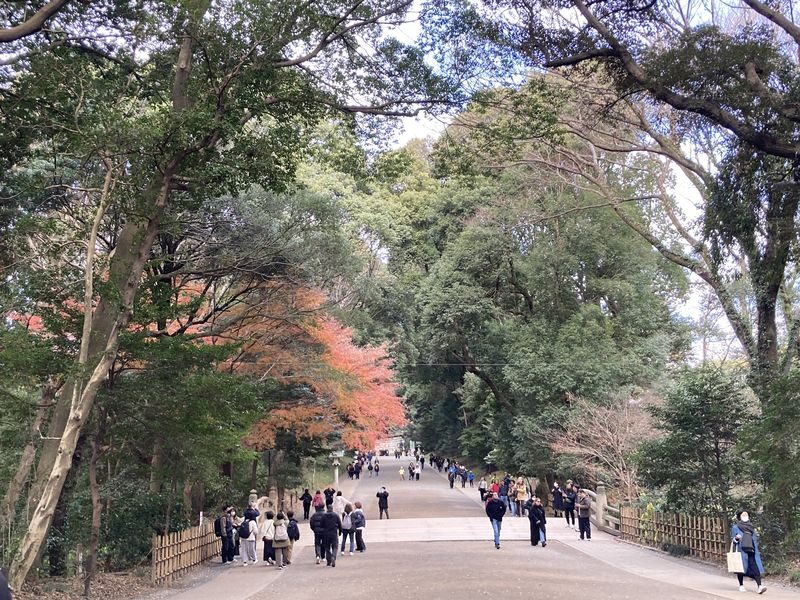
Meiji Jingu is dedicated to Emperor Mutsuhito, known as Emperor Meiji, and Empress Shoken. The shrine’s grounds sit in the middle of a modern Tokyo district, but the walk into the precinct changes the feel of the day: city streets give way to a large forested setting and a carefully ordered approach to the shrine.
That contrast is one reason a guided visit can be useful. A torii gate is easy to photograph, and a barrel of sake may look like an unusual decoration, but a guide can explain how such details relate to the shrine and its traditions. You get more than a pleasant woodland walk, without needing to arrive with a working knowledge of Shinto.
The shrine is also associated with good fortune and marriage. More than three million people visit and pray for good luck, so the grounds have both a ceremonial role and a place in everyday Japanese life. The tour is a chance to learn how the site functions as a religious place, not just a stop on a Tokyo sightseeing route.
You can also read our reviews of more walking tours in Tokyo


Starting at Ichino Torii
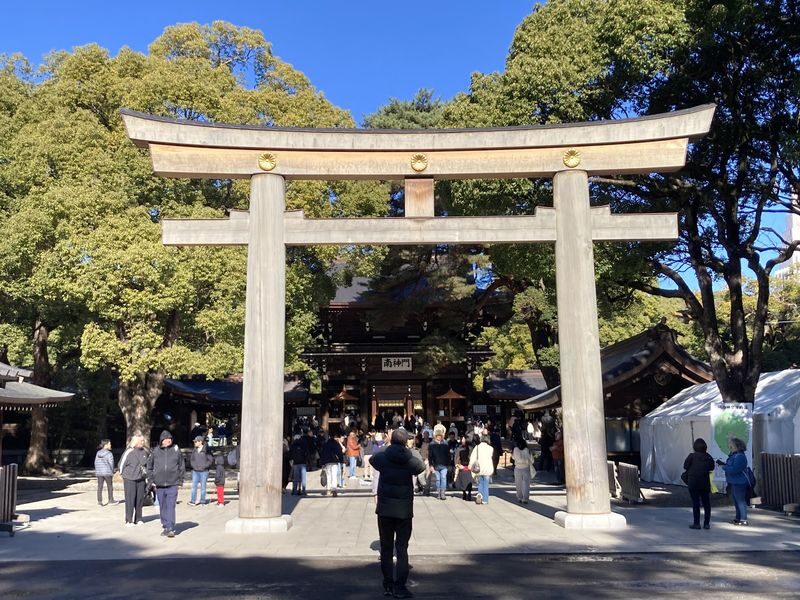
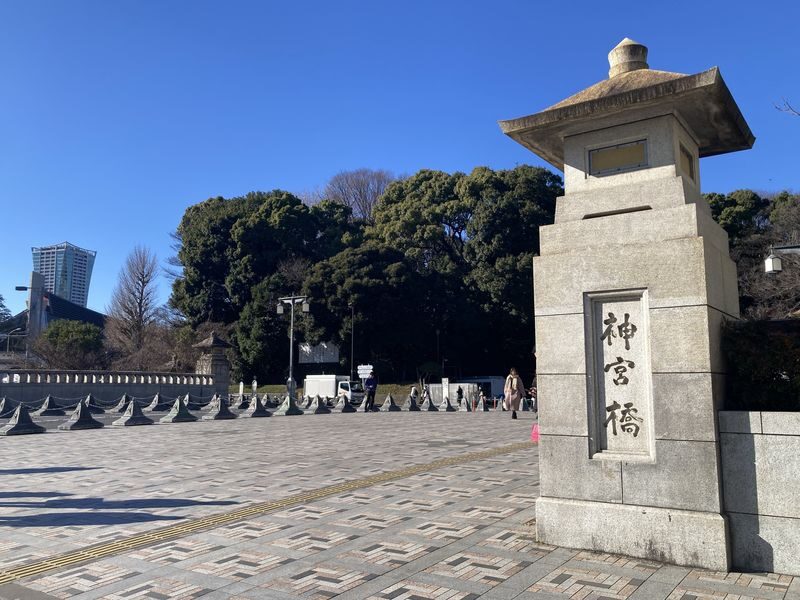
The walk begins at Meiji Jingu’s Ichino Torii, the first torii gate on the route. These gates mark an entrance into sacred space. Your guide can help you notice the transition as you pass from the surrounding city toward the shrine’s quieter grounds.
The first stop is listed as about 10 minutes. That is enough time to get oriented and hear the basic story of the shrine, though it is not a long pause for wandering or photography. If you like to take pictures, be ready to keep moving when the group does.
The guide-led format is especially handy at a site where the visual details can seem simple until someone explains what you are seeing. The tour is not presented as a lecture, but the repeated short stops give you a structure for understanding the place as you walk.
Sake barrels and the larger torii
Next come the consecrated sake barrels, another 10-minute stop. The barrels are a striking sight along the route, and they give the guide a natural way to discuss offerings and the relationship between the shrine and Japanese customs. Rather than treating them as a colorful backdrop, you can ask what the display means and how it fits into shrine practice.
The route then reaches the Big Torii, also allotted about 10 minutes. This is a major landmark on the approach, and it helps set the scale of the precinct. The torii is not just a photogenic gateway; it marks another threshold in the walk toward the shrine buildings.
The schedule uses short intervals, so expect to listen, look, and move on rather than linger for a long time at any one feature. That pace suits you if you want a compact introduction. If you prefer unhurried exploration, you may want to leave extra time before or after the tour to revisit the grounds at your own pace.
South Gate and the paired camphor trees
At the South Gate, the guide continues the walk through the shrine’s approach. The gate is one of several points where the route makes the layout easier to follow. Instead of arriving at the central buildings without context, you move through a sequence of entrances and landmarks.
The paired camphor trees are another 10-minute stop, and they are among the route’s most distinctive details. Their pairing connects neatly with the shrine’s reputation as a place to pray for good fortune in marriage. The guide can explain the association, giving you a reason to look closely rather than treat the trees as just another scenic pause.
This stop also shows how the tour balances broader history with small, memorable features. You get the story of a major shrine, but also details that are easy to recall later. Past guide feedback has singled out clear explanations of religious and historical subjects, which is useful here: the meaning of a place is often in the connections between its features.
Meiji Jingu’s main shrine buildings
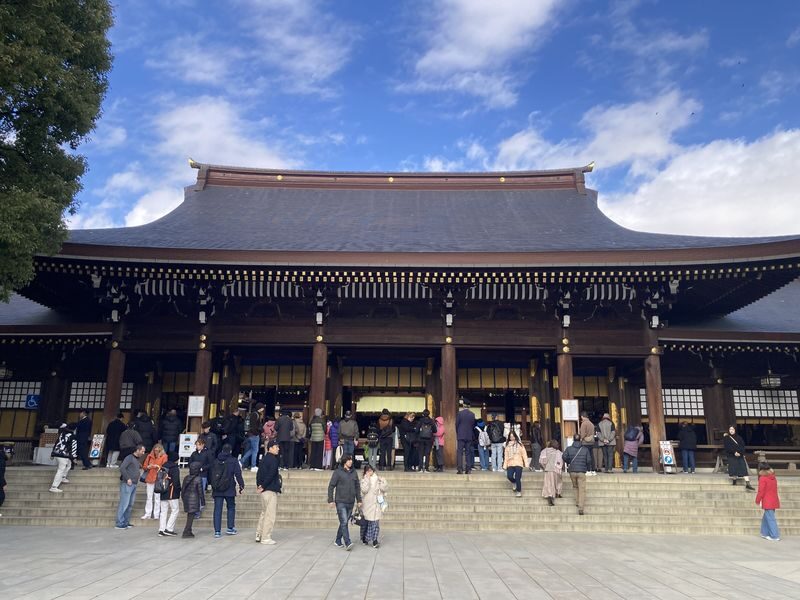
The route continues to Meiji Jingu Gehaiden, the outer worship hall, with about 10 minutes scheduled. This is a central point for understanding how people come to pray at the shrine. The guide can help you make sense of the setting and its customs while you take in the architecture and atmosphere.
For many visitors, this is the point where the walk shifts from seeing the approach to encountering the shrine’s religious purpose more directly. It is worth listening closely to explanations of respectful behavior and what people come here to pray for. You do not need to know the rituals in advance; the guide is there to supply that context.
The Treasure Museum appears in the schedule for about 10 minutes, but it is not marked as a guided stop. The details provided do not specify whether museum entry is included, so do not assume that admission or time inside an exhibition is part of the package. Treat it as a planned point on the route and confirm any museum access details before you book if that matters to you.
You can also read our reviews of more guided tours in Tokyo


Kaguraden and the tour’s final stretch
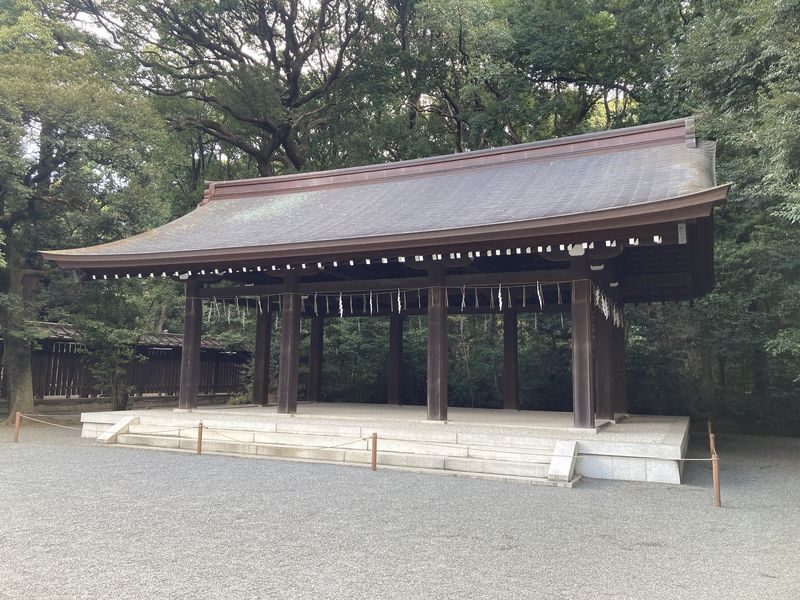
The final named stop is Kaguraden, with about 15 minutes allotted. This is the longest individual stop on the route, giving you more time to hear about the shrine and its traditions before the walk ends. The tour then returns to the designated end point.
The guide-led approach is likely to be most valuable if you are curious about Japanese religious life but do not want to piece together the meaning of the site from signs alone. Past guides have included Masa and Karina. One guide, Karina, led a group in Japanese at the group’s request, but the tour is advertised with an English-speaking guide, so do not count on a particular language or guide unless you confirm it.
The tour provider is Fantasy Travel Japan LLC. Its overall review rating is listed as 96 percent good across 330 reviews, while this particular experience has a smaller set of five-star ratings. The praise focuses on guides who explain the site clearly, treat its religious character respectfully, and keep the visit engaging. That is the quality to prioritize here: a guide who can connect the visible landmarks to the traditions behind them.
Choosing between the history walk and food tasting
The historical tour is listed from US$25.25, while the food tasting option starts at US$37.85. A general starting price of US$18.95 is also shown, so check the package and date you select rather than assuming the lowest displayed amount applies to every option.
For the lower-priced history package, value comes from the guide’s interpretation. Meiji Jingu is free to approach on your own, but a guided visit can make the torii, sake barrels, trees, and shrine buildings easier to understand. If you are interested in Japanese history or customs, that context may be worth more than a longer list of stops.
The food tasting tour adds a snack and drink at Café Mori no Terrace. The snack is described as available only at Meiji Jingu Shrine, and the café visit gives you a relaxed place to continue talking about the site’s history. Choose this version if you like having a small food experience built into your visit. If you mainly want the guide’s explanations, the historical tour is the more direct choice.
Neither package should be mistaken for a full meal. The food option includes a snack and a drink, not a broader dining experience. Personal expenses and tips are not included in either package.
Timing, meeting point, and practical details
You can choose a 10:00 or 12:30 departure. The corresponding return times are 11:30 and 14:00, depending on the selected package and schedule. The route’s individual stops add up to roughly 85 minutes, and the stated departure-to-return window is about 90 minutes.
Meet at 6 Chome Jingumae, Shibuya, Tokyo 150-0001, and arrive five minutes before your selected time. The food tasting tour returns to Café Mori no Terrace at Meiji Jingu Shrine. The schedule can change depending on weather and other conditions, so keep a little flexibility around the end of the walk.
There is no age limit, but you will be walking between several stops. Wear comfortable clothes and shoes. Confirmation is normally issued within minutes; if it does not arrive, contact customer support. Changes are allowed up to 24 hours before the activity starts, with some booking types excluded. The voucher is valid only for the date and time specified.
Who will get the most from this walk
This tour suits first-time visitors who want to understand why Meiji Jingu matters, not just see its gates and take a few pictures. It is also a good fit if you are short on time and want a clear, guided route through the main features of the shrine.
You may value it most if you enjoy asking questions and listening to a guide explain cultural details. One Japanese participant described requesting a Japanese-language tour and finding the guide’s outside perspective useful, even for a group familiar with the country. That experience suggests the walk can offer fresh angles, but it does not guarantee a Japanese-language guide or that every group can request one.
If you prefer to move at your own pace, spend long stretches taking photographs, or decide your route on the spot, a guided schedule may feel brisk. The stops are short, and the group follows a planned sequence. You can balance that by returning to parts of the grounds after the tour, if your plans allow.
Should you book the Meiji Jingu walking tour?
Book it if you want a compact introduction to Meiji Jingu from an English-speaking guide, especially if shrine customs and Japanese history interest you. The strongest reason to go is the interpretation: a good guide turns a peaceful walk into a more meaningful visit.
Choose the food tasting package if a shrine-only snack and drink sound worth the added cost. Pick the historical tour if your priority is the guided walk itself. If you are happy exploring without explanation, you can visit the shrine independently and keep your time more flexible. For most curious first-time visitors, though, this tour offers a practical way to understand the site while still leaving room to explore afterward.
Tokyo: Meiji Jingu Historical Walking Tour with an expert guide
“Masa was a great guide. Very knowledgeable. We enjoyed our time with him. Highly recommend a tour guide to learn about the history of the site you…”
FAQ
How long is the tour?
The listed departure and return times are about 90 minutes apart. The individual stops add up to roughly 85 minutes, and the schedule may change with weather or other conditions.
What departure times are available?
The listed choices are 10:00 and 12:30. Select your departure time when booking and arrive five minutes early.
Where does the tour meet?
The departure point is 6 Chome Jingumae, Shibuya, Tokyo 150-0001. The food tasting tour returns to Café Mori no Terrace at Meiji Jingu Shrine.
Is food included in the historical tour?
No. The snack and drink are part of the separate Food Tasting Tour package, not the Historical Tour package.
What does the food tasting package include?
It includes a snack described as available only at Meiji Jingu Shrine and a drink at Café Mori no Terrace.
Is the guide English-speaking?
An English-speaking guide is included. A past group arranged a Japanese-language tour, but a particular language or guide is not guaranteed by the standard tour details.
Is there an age limit?
No. The activity has no age limit.
What should I bring?
Wear comfortable clothes and shoes for walking.