A sharp knife is more than a kitchen tool in Japan: its shape, steel, and edge all matter. At Sakai Toku in Asakusa, you get to handle a Japanese Santoku and learn the basics of sharpening it on a whetstone, rather than simply watching a demonstration.
I like two things here. First, you get to try the technique yourself, with an expert explaining each step in English. Second, comparing the knife before and after sharpening gives you a clear, practical sense of what good maintenance can do.
The main consideration is the short format: one hour gives you an introduction, not mastery. If you want a longer workshop or to make your own knife, this is not that kind of class.
- What makes this one-hour session useful
- Start with the knife, not the whetstone
- Learn what a sharp edge feels like
- Try sharpening a Santoku on a whetstone
- A focused stop in Asakusa
- Is .55 good value?
- Who should book this class?
- A few practical details before you go
- Should you book the Asakusa sharpening experience?
- FAQ
- How long does the Japanese knife sharpening experience last?
- Where does the activity take place?
- How can I get to Sakai Toku?
- Do I need sharpening experience?
- Are sharpening tools provided?
- What knife will I sharpen?
- What languages are supported?
- What is the minimum age, and what do children pay?
- What should I bring to the activity?
- Can I cancel or change my booking?
- The Best Of Tokyo!
- More Tours in Tokyo
- More Tour Reviews in Tokyo
- Not for you? Here's more nearby things to do in Tokyo we have reviewed
What makes this one-hour session useful
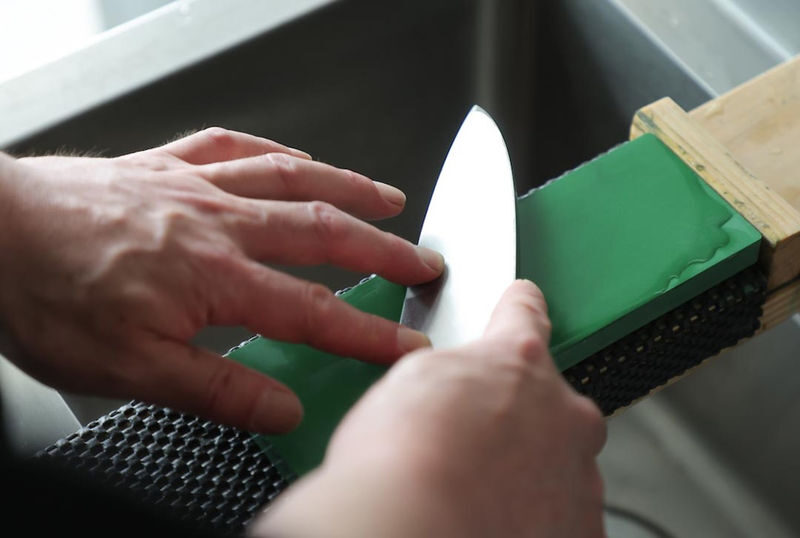
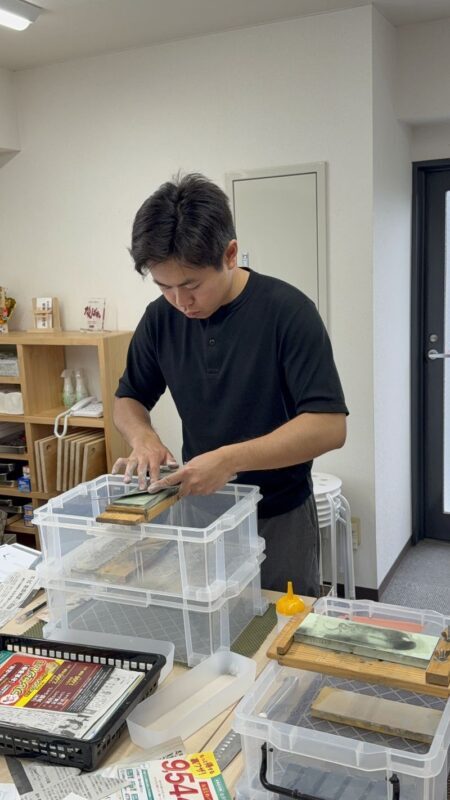
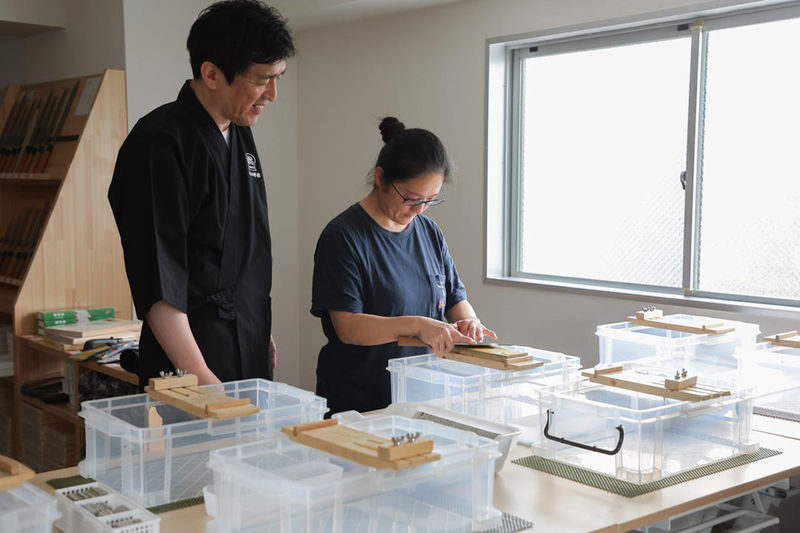
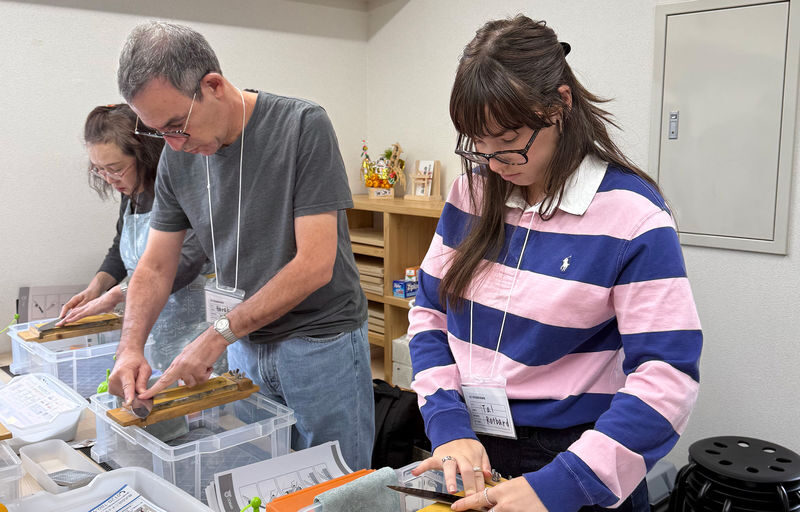
- You sharpen a Japanese Santoku yourself: The hands-on portion turns the lesson from theory into practice.
- You learn what distinguishes Japanese knives: The introduction covers differences in steel, shape, and edge.
- You use a whetstone: The session teaches basic sharpening technique, with tools provided.
- You test the result: Comparing sharpness before and after gives you a direct sense of the change.
- You get advice for home care: The goal is to leave with practical tips, not just a pleasant hour in Asakusa.
- You can join without experience: The activity is open to beginners aged six and up.

👉 See our pick of the 25 Best Guided Tours In Tokyo
Start with the knife, not the whetstone
The session takes place at Sakai Toku, a specialist knife shop in Asakusa. Rather than beginning with a complicated technique, the lesson introduces what makes Japanese knives distinct, including their steel, shapes, and edges. That context helps you understand why sharpening is not just a matter of rubbing a blade against a stone.
The shop’s focus gives the activity a useful connection to Japanese knife culture. You are not taking a general craft class with a kitchen knife added as an afterthought. The subject is the knife itself: how its design affects its use, and why proper care matters.
The specific knife you work on is a Japanese-style Santoku. It is a good choice for a short beginner lesson because the experience can focus on one familiar knife type instead of trying to cover many blade designs at once. The session does not promise to make you an expert, but it gives you a starting point for understanding the tool in your own kitchen.
An English-speaking guide and English-speaking staff are included. That matters in a hands-on class, where you need to follow instructions rather than simply watch someone else work. No guide name is provided, so you should not expect a particular instructor by name.
You can also read our reviews of more tours and experiences in Tokyo.



Learn what a sharp edge feels like
One of the most useful parts of the hour is the comparison between a dull knife and a freshly sharpened one. A short lesson can explain the idea of sharpening, but feeling the difference for yourself makes it more concrete. You can connect the technique to its result instead of leaving with only a list of steps.
The experience also shows why a knife’s edge deserves attention. Japanese knives differ in their steel, shape, and edge, and those details affect how a knife behaves. The class introduces these distinctions without asking you to arrive with technical knowledge or prior sharpening practice.
That beginner-friendly approach is a strength, especially if you have watched sharpening videos but still feel uncertain about the angle or pressure. A participant described the one-to-one demonstration as more helpful than a video, and said the instructions made sense. That is a useful sign of what personal guidance can add: you can see the method demonstrated in real time, rather than pause and replay a screen while guessing at your own technique.
Still, keep your expectations in proportion. The session lasts an hour, and the stated aim is to cover the basics. It is best viewed as a practical introduction, not a course that will prepare you to sharpen every kind of knife with confidence.
Try sharpening a Santoku on a whetstone
After learning about the knife, you get to sharpen a Santoku yourself. The tools are provided, and no experience is required. That makes this a low-pressure way to try a skill that can look deceptively simple from the outside.
Whetstone sharpening rewards careful attention. The point of the lesson is to learn proper technique from an expert, not to rush through a task or compete for the sharpest blade. Follow the demonstration, ask questions as needed, and treat the first attempt as practice. You are there to understand the method, not to prove you can do it perfectly on your first try.
A practical benefit is that the class includes knife-care tips you can use at home. That makes the hour more valuable than a one-off novelty. If you own kitchen knives, even a basic understanding of how to maintain an edge can help you make better choices about their care.
The information provided does not say that you will sharpen or bring home your own knife. The activity centers on trying a Japanese Santoku at the shop, so do not assume that a personal knife is part of the lesson. If you are hoping to work on a specific blade, ask the operator before booking.
A focused stop in Asakusa
Sakai Toku is at NW Building Asakusa Ekimae, 6F, 1-11-4 Hanakawado, Taito City, Tokyo. The listed access points are Asakusa Station on the Metro Ginza Line, Toei Asakusa Line, and Tobu Skytree Line. The location makes it possible to fit the class into a day in Asakusa, though the activity itself is a focused shop visit rather than a walking tour of the neighborhood.
The session is listed as one hour, with a 10:00 departure and 11:00 return option. Your exact time is confirmed after booking, and available return times can depend on the departure time you choose. Plan to arrive five minutes early. Late arrivals and no-shows are not refunded, and the cancellation terms also exclude refunds for participants who arrive ten minutes or more late.
The address and meeting details are worth checking before you set out. The shop is on the sixth floor, so allow time to find the building and reach the correct floor. A mobile voucher is accepted, and the voucher is valid only for the date and time specified.
Is $31.55 good value?
The starting price is US$31.55 for the one-hour experience. The value depends less on the number of minutes than on whether you want to learn a skill. You get instruction in English, use of the tools, a chance to sharpen a Santoku yourself, and an immediate before-and-after comparison.
For someone curious about Japanese knives, that is a useful mix of context and practice. You are paying for an introduction to a specialized subject, plus the chance to ask questions while you try the technique. It may also give you a more reliable foundation than attempting to learn entirely from a video.
On the other hand, this is not a bargain if you mainly want a long class, a guided tour of Asakusa, or a knife-making workshop. The advertised session lasts one hour, and the emphasis is on basic sharpening and care. You should also remember that children aged six and over pay the same rate as adults.






Who should book this class?
I would recommend the session to home cooks who want to understand how Japanese knives differ and how to care for them. It also suits curious visitors looking for a hands-on activity that connects to Japanese craft without taking up half a day. The minimum age is six, so families can consider it, though each child aged six or older is charged the adult rate.
You do not need to own a Japanese knife or have used a whetstone before. The class is designed for beginners, and the tools are provided. If you have already studied sharpening in depth, however, a one-hour introduction may feel basic.
This is also a good fit if you prefer learning by doing. The central appeal is not a long lecture or a series of displays. It is the chance to see a technique demonstrated, try it yourself, and notice the effect on the knife.
A few practical details before you go
The experience is not suitable for anyone who appears intoxicated, and the operator may refuse service without a refund. Outside food and drinks are not allowed. Pets are prohibited, as are weapons, cigarettes, e-cigarettes, alcohol, and illegal substances. Recording is strictly prohibited inside the shop.
You can change a booking up to 24 hours before the activity starts, subject to the stated exceptions for certain passes, presales, freebies, or vouchers that have not yet been issued. For cancellations made at least 24 hours before the activity date, a full refund is available. If the operator cancels because of extreme weather or another unforeseen event, you may reschedule or request a full refund, subject to availability.
Should you book the Asakusa sharpening experience?
Book it if you want a compact, practical introduction to Japanese knives and the basics of whetstone sharpening. The strongest reason to go is the chance to try the technique yourself and feel the difference in sharpness, with English-language instruction and tools supplied.
Skip it if you are looking for an advanced workshop, knife-making, or a broader Asakusa tour. At one hour and from $31.55, this is a focused lesson. For a curious cook or craft-minded visitor, that focus is the point.
Tokyo: Japanese Knife Sharpening Experience
“Wonderful and knowledgeable host. I learned so much, and everything was explained in a way that made perfect sense. Having it demonstrated one-to-o…”
FAQ
How long does the Japanese knife sharpening experience last?
The experience lasts one hour.
Where does the activity take place?
It takes place at Sakai Toku, NW Building Asakusa Ekimae, 6F, 1-11-4 Hanakawado, Taito City, Tokyo 111-0033, Japan.
How can I get to Sakai Toku?
The listed nearby station options are Asakusa Station on the Metro Ginza Line, Toei Asakusa Line, and Tobu Skytree Line.
Do I need sharpening experience?
No. The activity is open to beginners, and no prior experience is required.
Are sharpening tools provided?
Yes. All tools needed for the experience are provided.
What knife will I sharpen?
You will try sharpening a Japanese-style Santoku knife.
What languages are supported?
An English-speaking guide and English-speaking staff are included.
What is the minimum age, and what do children pay?
Participants must be at least six years old. Children aged six and up pay the same rate as adults.
What should I bring to the activity?
Present your mobile voucher. The activity provides the tools, and the listed information does not require you to bring a knife.
Can I cancel or change my booking?
A full refund is available if you cancel at least 24 hours before the activity date. Changes are allowed until 24 hours before the activity starts, subject to the stated booking exceptions.























