Nigiri sushi is a small craft, not just a lump of rice with fish on top. At SUSHI GARYU in Higashi Azabu, you learn to make it from scratch with a chef’s guidance, then sit down to eat your work. I like the hands-on format, and I like that the lesson is aimed at beginners rather than people who already know their way around a sushi counter.
One practical detail: the outfit is a happi coat, a Japanese-style work coat, not a kimono. The class focuses on sushi making, and you should come ready to eat what you prepare. There’s no take-home option, so plan your appetite accordingly.
- Nigiri is the main event: Learn the basic steps for shaping sushi with familiar fish such as tuna and salmon.
- You get a chef’s guidance: The instructor explains the process step by step, with Taka named by several participants as a patient, encouraging teacher.
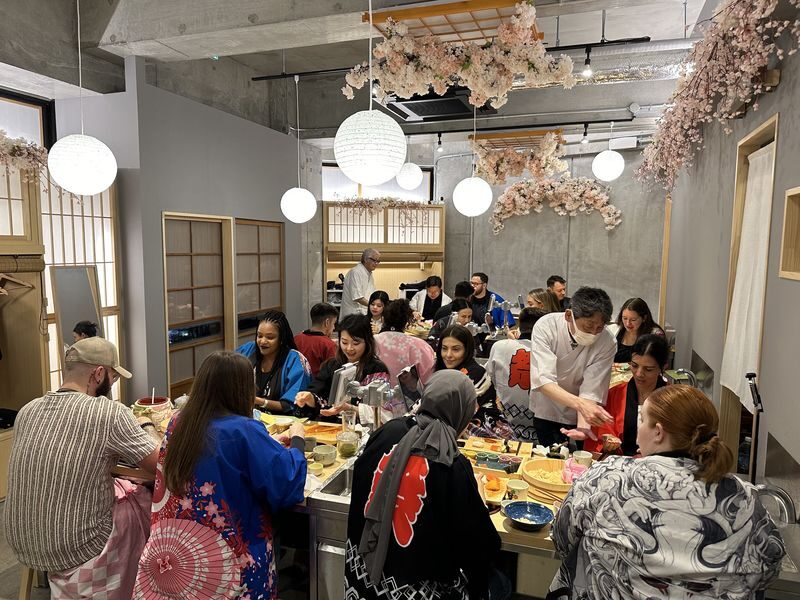
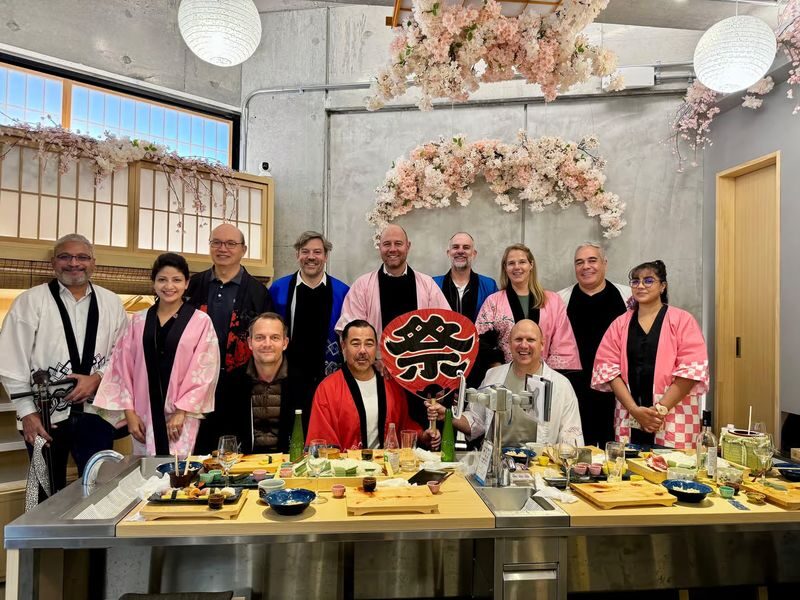
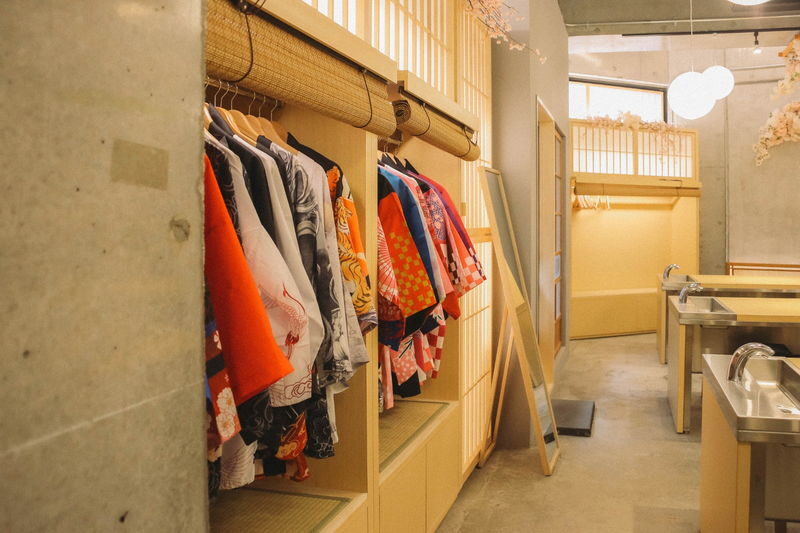
- The happi coat is part of the fun: Put on a traditional-style chef coat before you get to work.
- Come hungry: You eat the sushi you make during the class, and it cannot be taken away.
- Ask for dietary adjustments early: Vegetarian, vegan, and gluten-free options are available by advance request.
- It’s in Higashi Azabu: The meeting point is SUSHI GARYU, a short walk from the Tokyo Tower area, though transport is not included.
- A beginner’s first turn at the sushi counter
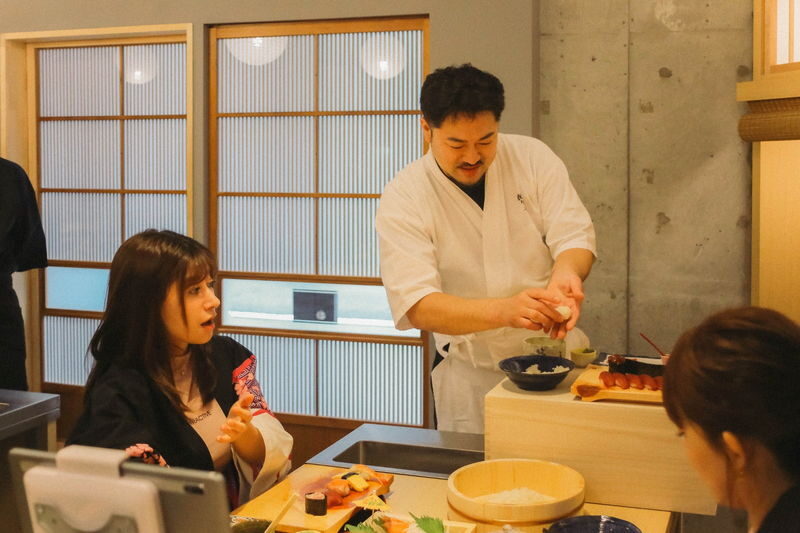
- Step by step with a patient chef
- A happi coat, not a kimono
- Making sushi, then eating it in class
- What the location means for your Tokyo day
- Is US.45 good value?
- Who will enjoy this class most
- Should you book it?
- FAQ
- Where does the sushi-making class take place?
- What sushi will I learn to make?
- Do I wear a kimono?
- Are vegetarian, vegan, or gluten-free options available?
- Can I tell the provider about food allergies?
- Can I take the sushi away after the class?
- How old must participants be?
- The Best Of Tokyo!
- More Workshops & Classes in Tokyo
- More Tours in Tokyo
- More Tour Reviews in Tokyo
- Not for you? Here's more nearby things to do in Tokyo we have reviewed
A beginner’s first turn at the sushi counter
 1 / 8
 2 / 8
 3 / 8
 4 / 8
 5 / 8
 6 / 8
 7 / 8
 8 / 8
Sushi making can look simple until you try to shape a neat piece of nigiri yourself. This class breaks the work into manageable steps: watch the chef’s demonstration, handle the ingredients, and try making sushi under guidance. That structure matters if you’re new to Japanese cooking. You are not expected to arrive knowing how much rice to use or how to form it.
The main focus is nigiri, with ingredients such as tuna and salmon. A class has also included maki, or rolled sushi, but nigiri is the stated focus, so don’t book expecting a full menu of sushi styles. If learning maki is important to you, ask the provider before you reserve.
The aim is practical as well as entertaining. Making sushi gives you a better sense of the care behind a piece you might otherwise eat in two bites. You can notice how the rice is handled and why the balance between rice and topping matters. The class won’t turn you into a sushi chef in an hour, but it can make your next meal at a sushi restaurant more interesting.

👉 See our pick of the 25 Best Guided Tours In Tokyo
Step by step with a patient chef
The class is designed for beginners, and that shows in the teaching style. The chef first explains the process, then you try it yourself. Taka is named as an instructor, and the class has been described as patient and encouraging, including for a participant who was the only student in the session.
That one-person experience suggests the class can feel personal, but it does not guarantee a private lesson. Group size is not specified. Either way, the step-by-step format should suit you better than a fast demonstration where the chef works while you watch from the side.
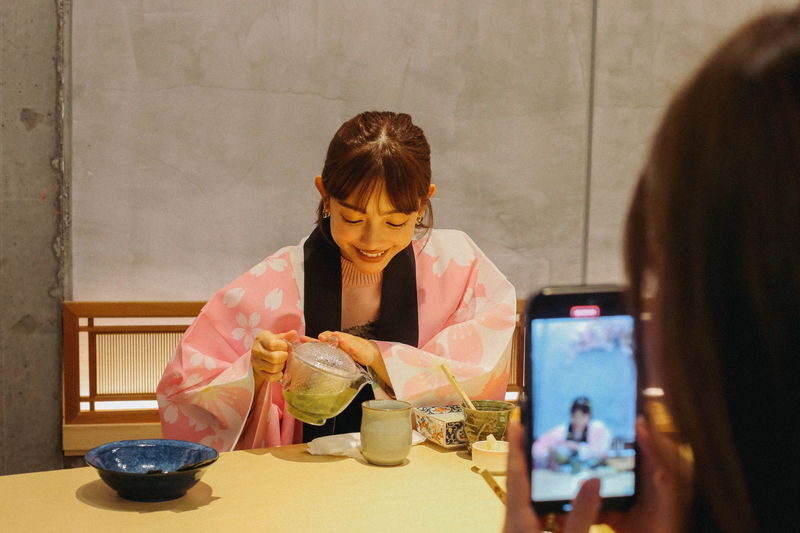
You’ll have a chance to make sushi from scratch and get help along the way. The pace gives you room to ask questions, correct your technique, and try again. Some participants have also had help taking photos and video during the process, but that is not listed as a guaranteed service. Bring your phone if you want pictures, and follow the instructor’s lead about when it is appropriate to use it.
The class has been described as taking about an hour. Treat that as a rough guide rather than a promised duration, since the exact length is not stated. It’s a compact activity that can fit into a day of Tokyo sightseeing without demanding a large block of time.
You can also read our reviews of more tours and experiences in Tokyo


A happi coat, not a kimono
The activity’s title refers to wearing a kimono, but the clothing described for the class is a happi coat, a popular Japanese-style chef coat. It’s a practical and playful way to mark the occasion, and it helps set the scene for a hands-on food lesson.
If you’re choosing this experience for a traditional dress-up session, keep the distinction in mind. The outfit is not described as a formal kimono, and the central activity is cooking. You’ll put on the coat, learn from the chef, and make sushi; the clothing adds atmosphere rather than turning the class into a broader cultural costume experience.
That focus is a strength for many people. You get a clear activity rather than a string of loosely connected photo opportunities. Families, couples, and solo visitors looking for a compact food experience may find the combination of learning and dressing up especially appealing.
Making sushi, then eating it in class
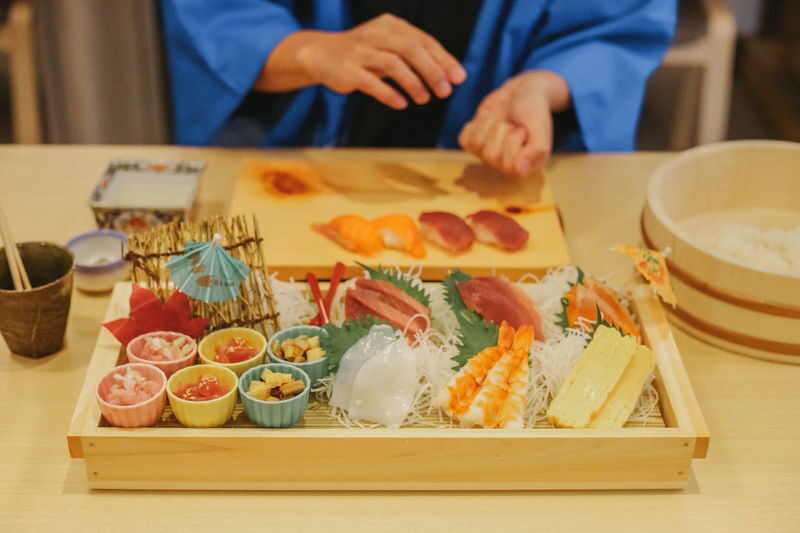
At the end, you eat what you have made. This is part of the appeal: your work becomes lunch or a substantial snack, and you can taste the result while the steps are still fresh in your mind. It also means you should arrive hungry enough to enjoy the food.
There is a trade-off. The sushi cannot be taken away, so you won’t be able to save it for later or carry it around while sightseeing. If you have a full meal planned immediately afterward, consider the timing. And if you don’t like fish, ask for a vegetarian option in advance rather than assuming the standard ingredients will suit you.
Tuna and salmon are among the fresh ingredients used. The food options can include vegetarian, vegan, and gluten-free versions, but you need to contact the provider ahead of time. Requests made on the day may not be accommodated. If you have an allergy, send that information in advance as well. This is especially important for a food class, where ingredients are part of the activity rather than a detail that can always be changed at the last minute.
What the location means for your Tokyo day
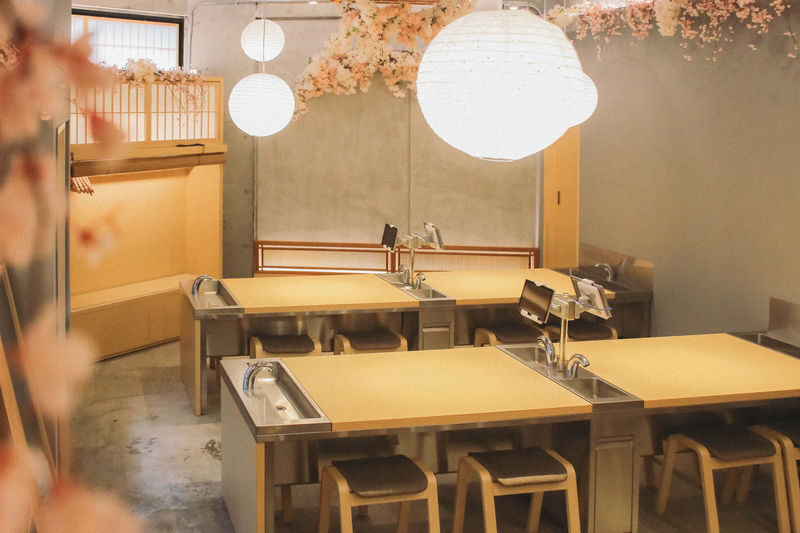
The meeting point is SUSHI GARYU Higashi Azabu Flagshipstore at 1F, Arivio Higashiazabu, 1-6-8 Higashiazabu, Minato-ku, Tokyo 106-0044. The class is described as being near Tokyo Tower, making it easy to pair with sightseeing in the surrounding area if your schedule allows.
Transport and hotel pickup are not included, so you’ll need to make your own way to the shop. Check the address before setting out, especially if you’re navigating from a nearby attraction. The location alone does not mean you’ll see Tokyo Tower during the class; the experience takes place at the sushi shop.
English-speaking staff are included, which helps make a cooking lesson accessible if you don’t speak Japanese. You can focus on the instructions and the food rather than trying to follow a demonstration without explanation.
Is US$62.45 good value?
The listed starting price is US$62.45 for the sushi-making class. For that, you’re paying for guided instruction, ingredients, the chance to make sushi yourself, and a themed experience in a Japanese-style chef coat. The value is strongest if you want to learn by doing and will enjoy eating the food you prepare.
It is less compelling if you mainly want a cheap meal, a formal kimono experience, or sushi to take away. This is a short activity, not a full cooking course, and transport is extra. But if you want something more engaging than sitting down at a restaurant, the price can make sense: you get a lesson and a meal in one stop.
The experience has a 5.0 rating from 14 ratings, and the provider, GARYU Co., Ltd, has a 97 percent good-review rate across 41 reviews. Those figures are encouraging, though a small number of ratings cannot guarantee that every class will be the same. The most consistently praised qualities are the friendly teaching, clear explanations, and patient guidance. Those are the details that matter most in a beginner workshop.






Who will enjoy this class most
This is a good fit if you’re curious about Japanese food, enjoy practical activities, or want a short experience that gives you more than a meal. It also works for families: children aged 4 and older may participate, and the format is hands-on. The class is not recommended for people with disabilities, so contact the provider before booking if you have access needs or are unsure whether the setup will work for you.
Solo visitors can take part too. One participant attended alone and received step-by-step instruction, so you do not need to arrive with a group to make the session worthwhile. Couples and friends may enjoy comparing their sushi-making attempts, though the activity is about learning rather than competition.
If you’re vegetarian, vegan, gluten-free, or have an allergy, make contact before the day of the class. The provider says these options can be accommodated with advance notice, but a same-day request may not be possible. A little planning can make the difference between joining in fully and having to sit out part of the food experience.
Should you book it?
Book this class if you want an approachable introduction to sushi making, value patient instruction, and like the idea of eating what you create. The chef-led steps, English-speaking staff, and happi coat give the activity a clear shape, while the Higashi Azabu location makes it a manageable addition to a Tokyo sightseeing day.
Skip it if you expect a formal kimono session, a long culinary course, or food you can carry away. And if you have dietary needs, don’t leave the request until you arrive. For a compact, hands-on taste of Japanese food culture, this is a sensible choice, especially for beginners and families with children aged 4 or older.
Sushi Making Class with Kimono near Tokyo Tower in Tokyo
“Had a great time at this sushi making class, the host was very kind and welcoming. The explanation about everything was on point. Would highly reco…”
FAQ
Where does the sushi-making class take place?
It meets at SUSHI GARYU Higashi Azabu Flagshipstore, 1F, Arivio Higashiazabu, 1-6-8 Higashiazabu, Minato-ku, Tokyo 106-0044, Japan.
What sushi will I learn to make?
The main focus is nigiri sushi, using ingredients such as tuna and salmon. Maki has also been included in a class, but nigiri is the stated focus.
Do I wear a kimono?
The clothing described for the class is a Japanese-style happi coat, not a formal kimono.
Are vegetarian, vegan, or gluten-free options available?
Yes. You need to request these options in advance by message. A request made on the day may not be accommodated.
Can I tell the provider about food allergies?
Yes. Send allergy information in advance by message.
Can I take the sushi away after the class?
No. You eat the sushi you make during the class, and it cannot be taken away.
How old must participants be?
Participants must be at least 4 years old.