
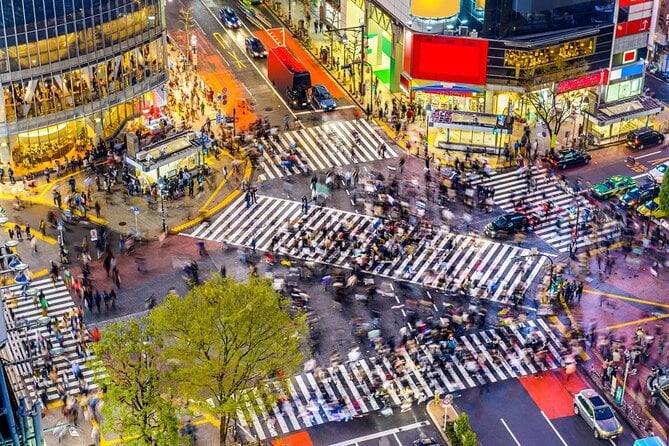
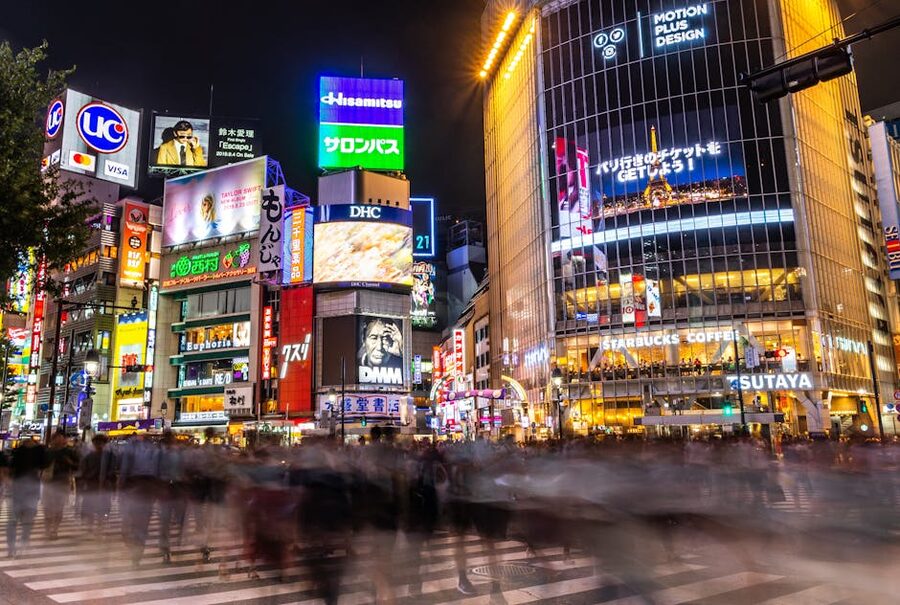
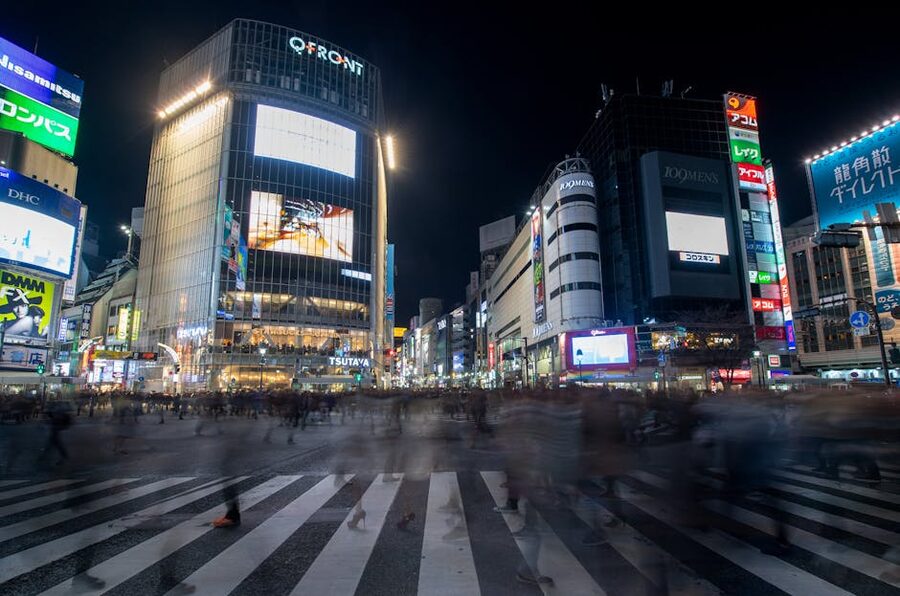
I watched a man miss the green light three times. He was standing at Shibuya Crossing, phone up, trying to get the perfect shot of 3,000 people flooding the intersection. Every time the light changed, he stepped forward, got bumped, stepped back, and missed his chance. The guide grabbed his arm, said “walk and shoot,” and pulled him into the current. He got his photo. It was blurry. He loved it.
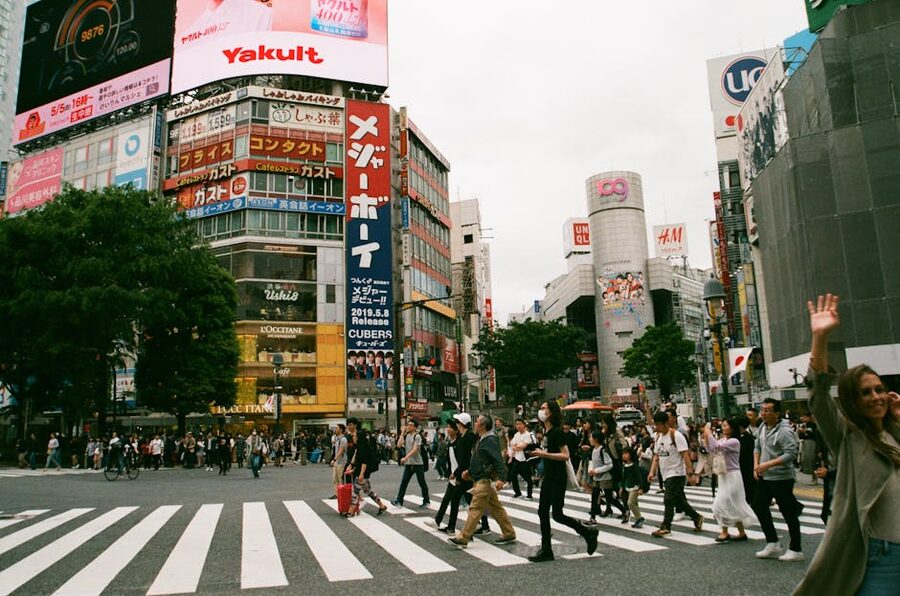
Shibuya is where modern Tokyo lives. Not the ancient temples, not the imperial gardens — the neon, the fashion, the food, the noise. The walking tours take you through it with a local who knows the backstreets, the history behind the chaos, and where to find a 60-year-old ramen shop hidden behind a pachinko parlour.
Short on time? Here are my top picks:
Best food experience: Shibuya Bar Hopping Night Food Walking Tour — $106, 1,058 reviews, perfect 5.0. Three different local spots, food and drinks included, hidden alleys.
Best hidden bars: Shibuya Local Hidden Bar Hopping Tour — $77, 770 reviews, perfect 5.0. Smaller groups, neighbourhood bars the guidebooks don’t list.
Best premium food: Best of Shibuya Food Tour — $217, 612 reviews, 5.0. The premium option — more dishes, higher-end restaurants, 3 hours of eating.
- What the Tours Cover
- Daytime Walking Tours
- Evening Food Tours
- The 3 Best Shibuya Tours
- 1. Shibuya Bar Hopping Night Food Walking Tour — 6
- 2. Shibuya Local Hidden Bar Hopping Tour —
- 3. Best of Shibuya Food Tour — 7
- Shibuya: From Rice Paddies to Scramble Crossing
- What to Eat in Shibuya
- Nonbei Yokocho (Drunkard’s Alley)
- Shibuya Stream and the New Shibuya
- Shibuya at Different Times of Day
- Practical Tips
- Getting There
- Combining Shibuya with Other Tokyo Experiences
- More Tokyo Guides
What the Tours Cover
Shibuya walking tours fall into two categories: daytime highlights (sightseeing, landmarks, history) and evening food tours (eating, drinking, backstreets). Both cover the same neighbourhood. The experience is completely different depending on the time of day.
Daytime Walking Tours
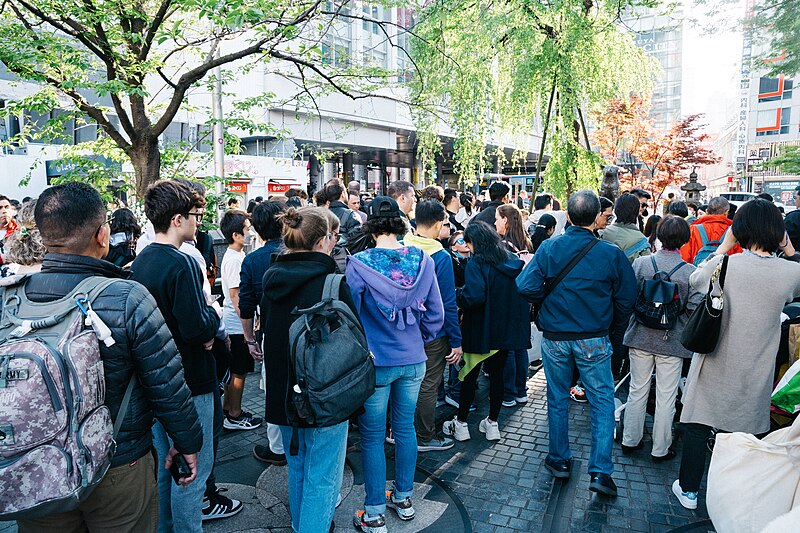
The daytime tours start at Hachiko statue — the bronze Akita dog outside Shibuya Station. Hachiko waited for his owner at this spot every day for nine years after the owner died. The statue went up in 1934. It’s now the most popular meeting point in Tokyo and the emotional start to every Shibuya walking tour.
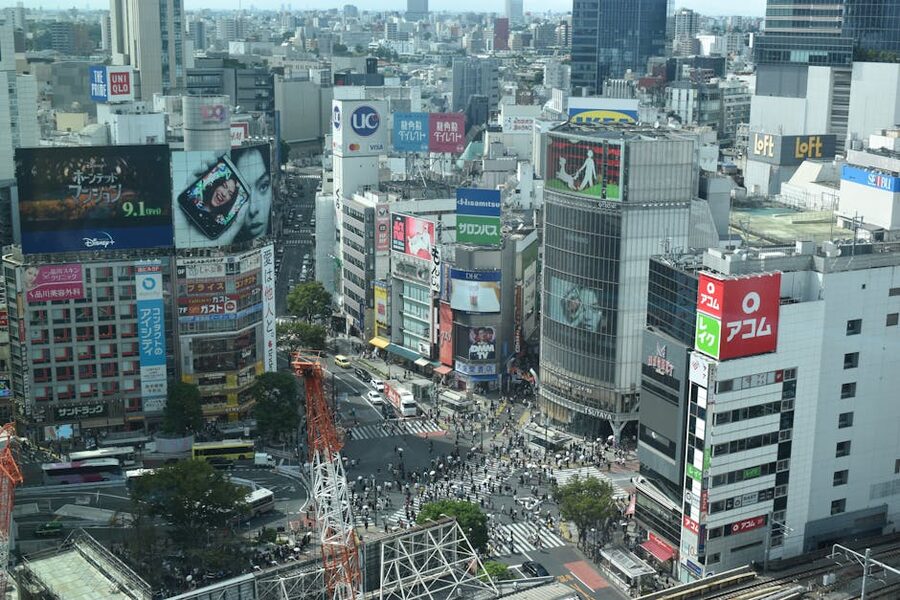
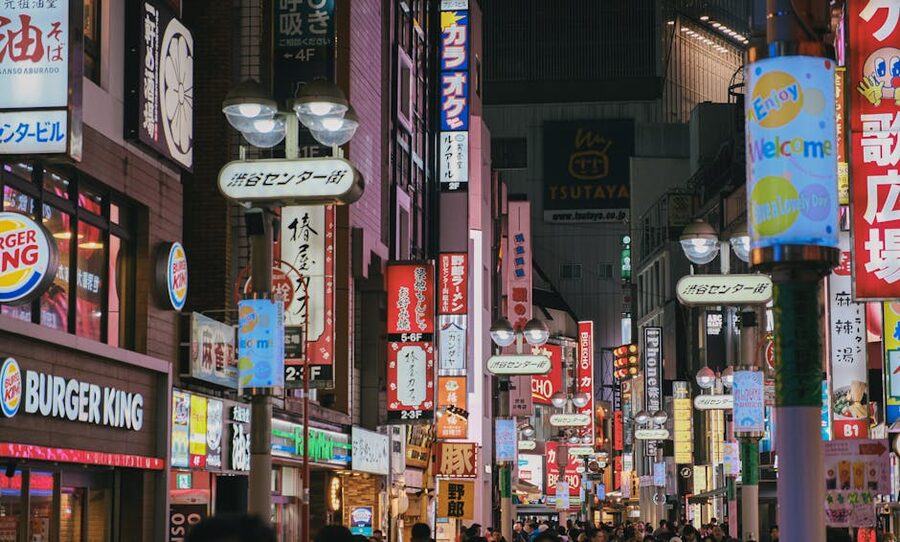
From Hachiko, guides typically take you across the scramble crossing (tips for timing and photography), through Center-Gai (Shibuya’s pedestrian shopping street), up to a viewpoint (usually Shibuya Sky or the Mag’s Park rooftop for free), past the Shibuya Stream development, and through the backstreets where Shibuya’s original post-war culture still survives.
Allison, who took the highlights tour recently, said it felt like a private experience with just 4 people in the group. The guides share insider knowledge — viewpoints, photo spots, and stories about the neighbourhood — that you’d never find on your own.
Evening Food Tours
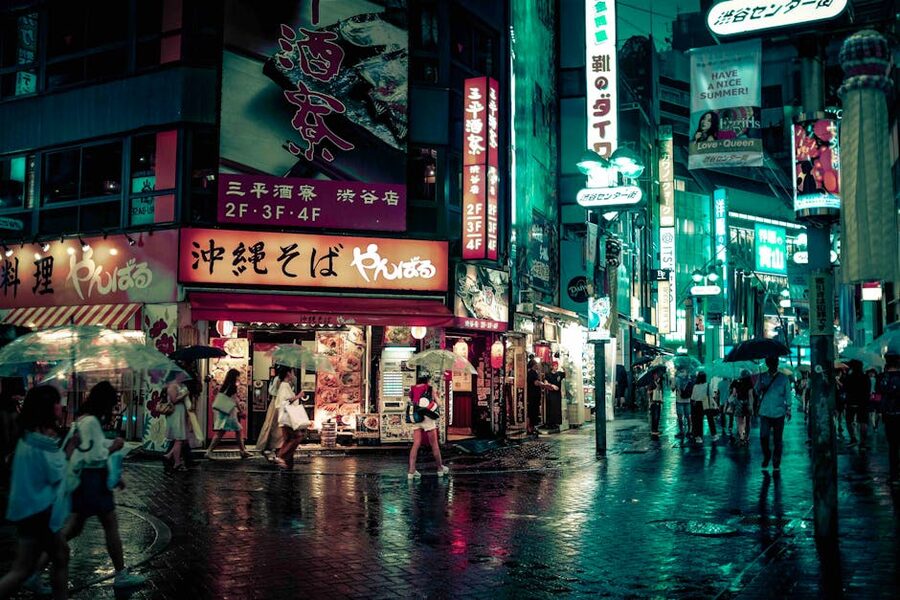
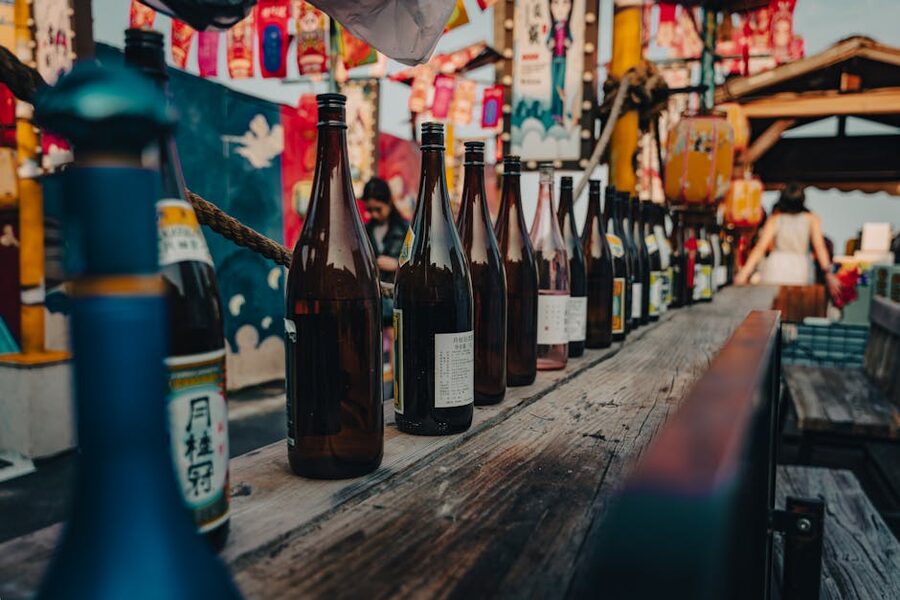
The food tours start around 5-6pm and run 3 hours. You’ll visit 3-5 restaurants and bars, eating at each one. The format varies — some tours do a full sit-down meal spread across multiple courses and venues, others hit standing bars and street food stalls. All of them include drinks (beer, sake, shochu highballs).
The food is the kind of stuff you’d miss entirely without a guide. A ramen shop that’s been open for 60 years, tucked behind a convenience store. A yakitori counter with 8 seats where the chef grills each skewer to order. A standing bar where salarymen drink ¥300 highballs and eat fried chicken from a window counter.
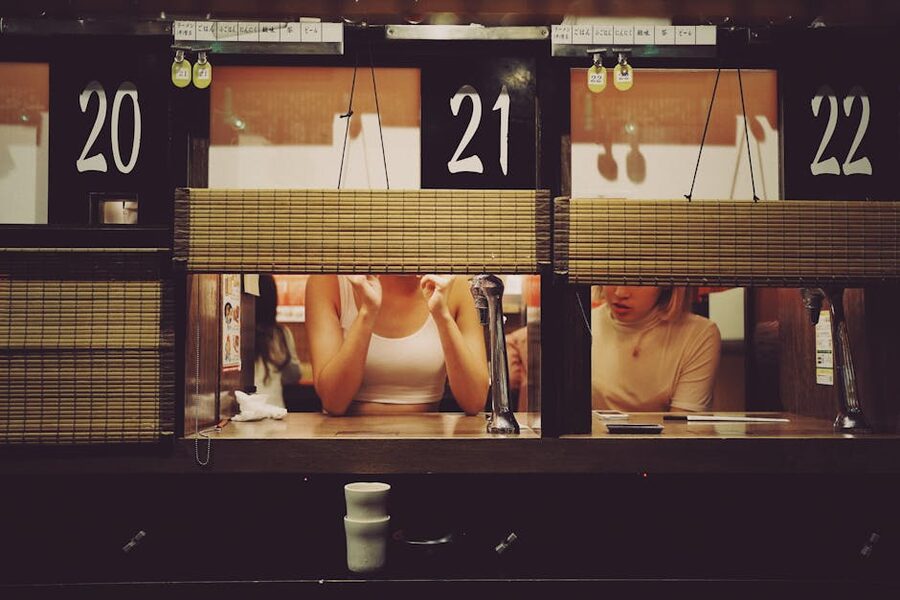
Kelsey, who did the bar hopping food tour, said the guide took them to three completely different local spots they would never have found on their own. The food variety was excellent and the drinks were essentially all-you-can-drink.
The 3 Best Shibuya Tours
1. Shibuya Bar Hopping Night Food Walking Tour — $106
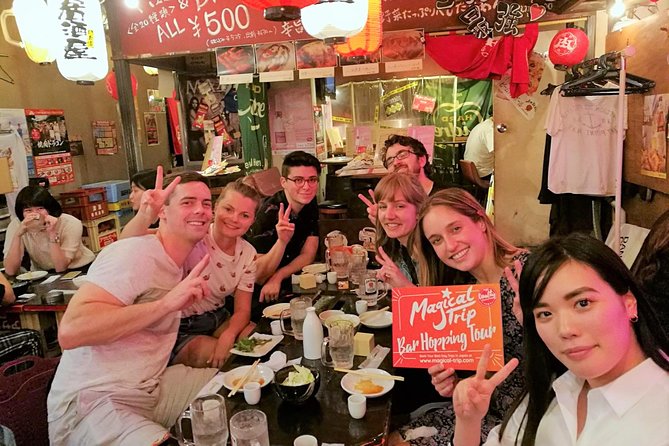
Over 1,000 reviews and a perfect 5.0 — that’s nearly impossible for any tour, let alone one that runs every night. Three different local venues, each with a different vibe. Food and drinks are generous at every stop. Our full review covers each stop and what you’ll eat. Kelsey said the guide found places they’d have walked straight past.
2. Shibuya Local Hidden Bar Hopping Tour — $77
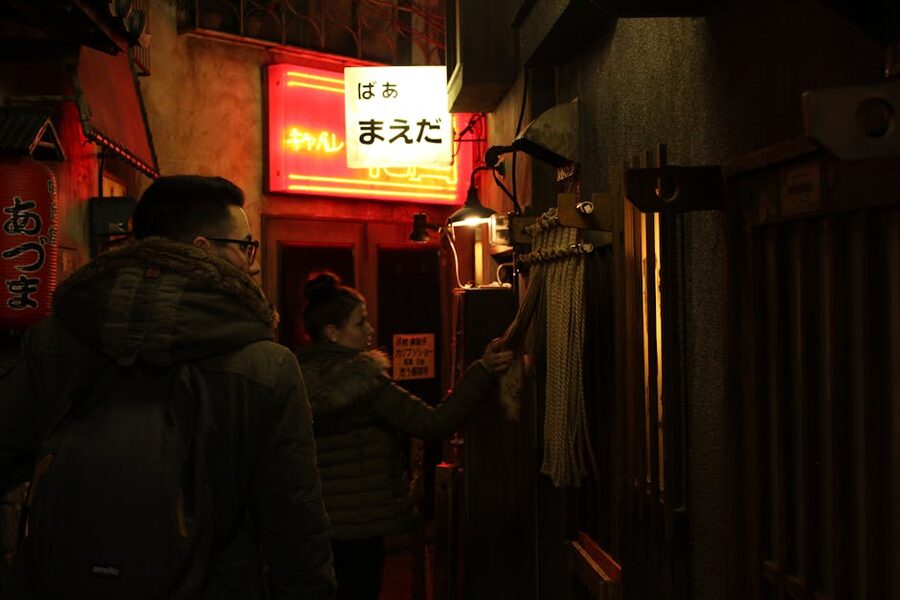
Perfect 5.0 across 770 reviews at a lower price point. The focus here is specifically on hidden bars — the kind of places that don’t have street-level signage and are above a convenience store or behind an unmarked door. Smaller groups mean more intimate venues and more personal attention from the guide. Our review covers the hidden bar format.
3. Best of Shibuya Food Tour — $217
The premium option at $217 — more than double the other tours. What you get for the price: higher-end restaurants, more dishes, and a guide who can explain the nuances of each course. Nick said his guide Seika was the best guide he’d ever had and the food quantity was generous even at this level. Our review compares the value to the cheaper options.
Shibuya: From Rice Paddies to Scramble Crossing
The name “Shibuya” means “astringent valley.” Not glamorous. For most of its history, it was exactly that — a quiet valley with a river running through it (the Shibuya River, now buried underground), rice paddies, and a few farming villages.
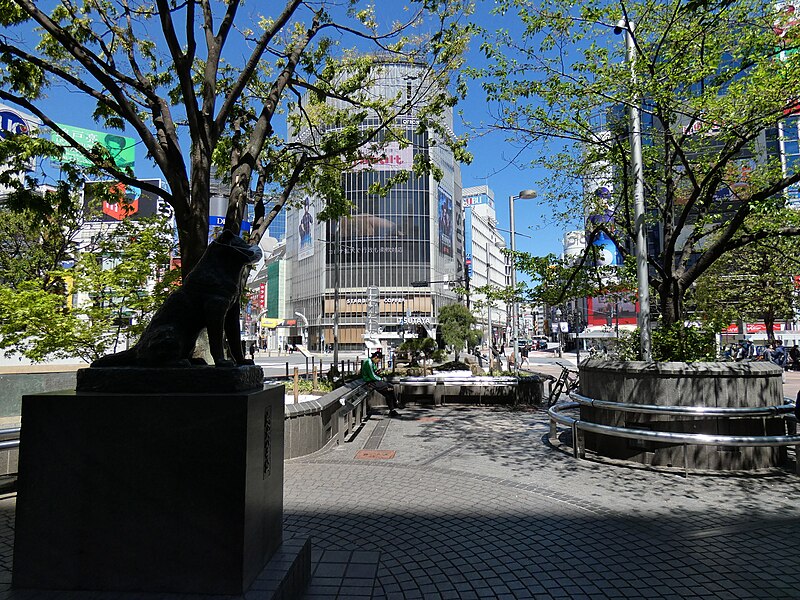
Everything changed when the railway arrived. Shibuya Station opened in 1885 as a stop on the Japan Railway. By the 1920s, department stores had followed the commuters, and Shibuya started its transformation into a commercial district. The Hachiko story — the dog who waited — comes from this era (1920s-1930s), when the station was already the neighbourhood’s centre of gravity.
The post-war decades turned Shibuya into Tokyo’s youth culture capital. In the 1960s, it was the centre of Japan’s counterculture movement. In the 1980s, the Shibuya 109 department store became the headquarters of Japanese youth fashion. In the 1990s, “Shibuya-kei” became a music genre — influenced by French pop, bossa nova, and electronic music — that defined a generation.
When you walk through Shibuya on a guided tour, this layered history is everywhere if you know where to look. The post-war ramen shops next to the glass-and-steel shopping centres. The Showa-era standing bars behind the fashion boutiques. The Shibuya River, now flowing underground beneath your feet, occasionally visible through grates. The guides connect these dots. Solo visitors see neon. Guided visitors see 140 years of Tokyo reinventing itself.
What to Eat in Shibuya
The food tours hit the best of it, but here’s what makes Shibuya’s food scene different from other Tokyo neighbourhoods.
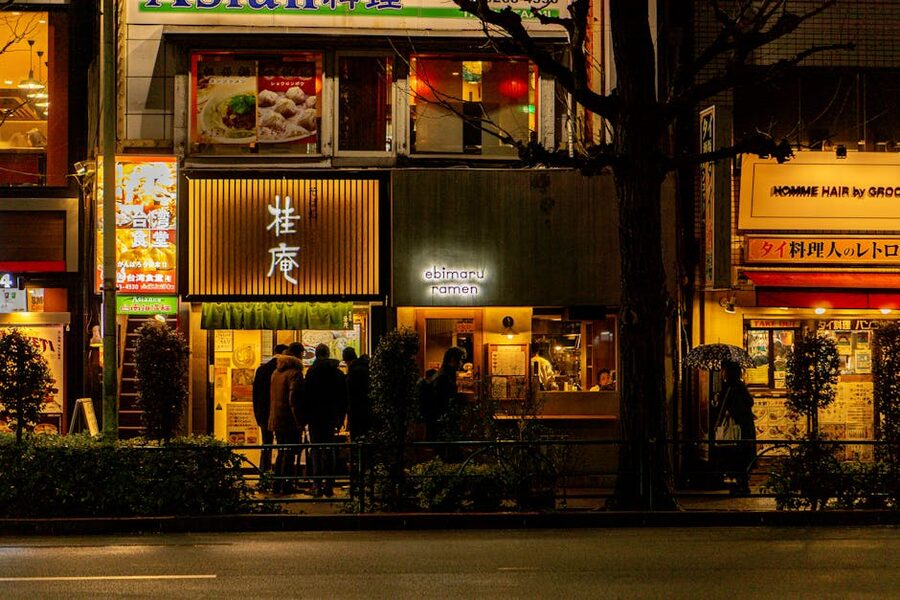
Ramen. Shibuya’s ramen scene is deep. Fuunji (tsukemen — dipping noodles) has had a queue since 2011. Afuri does a yuzu shio (citrus salt) broth that’s lighter than the heavy tonkotsu you find elsewhere. The food tours skip the famous ones (too crowded) and take you to the neighbourhood shops where locals eat.
Yakitori. Grilled chicken on skewers, cooked over charcoal. Shibuya’s yakitori alleys — particularly the streets around Nonbei Yokocho (“Drunkard’s Alley”) — have some of the best in Tokyo. Every part of the chicken is used. The heart, the cartilage, the skin. The food tour guides order for you, which saves the anxiety of pointing at a menu you can’t read.
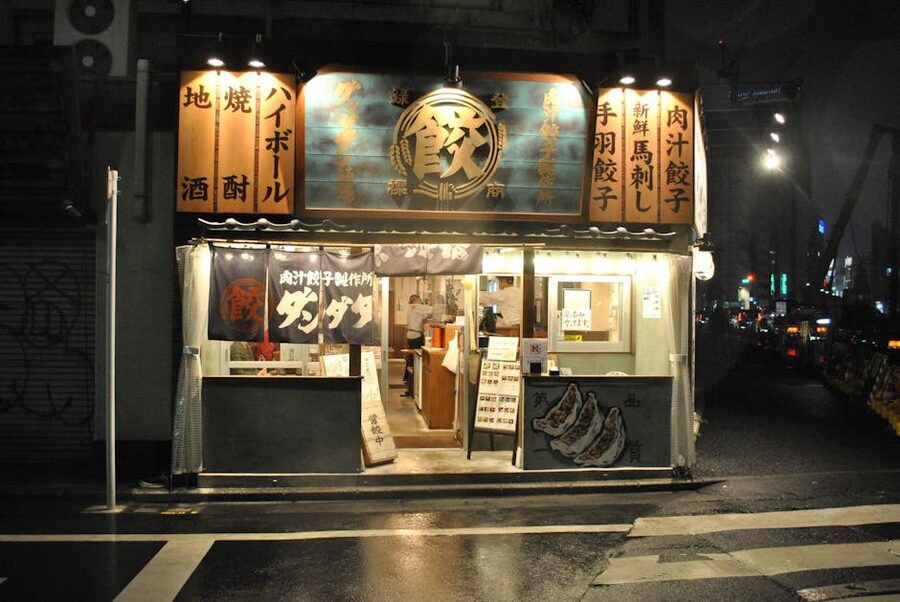
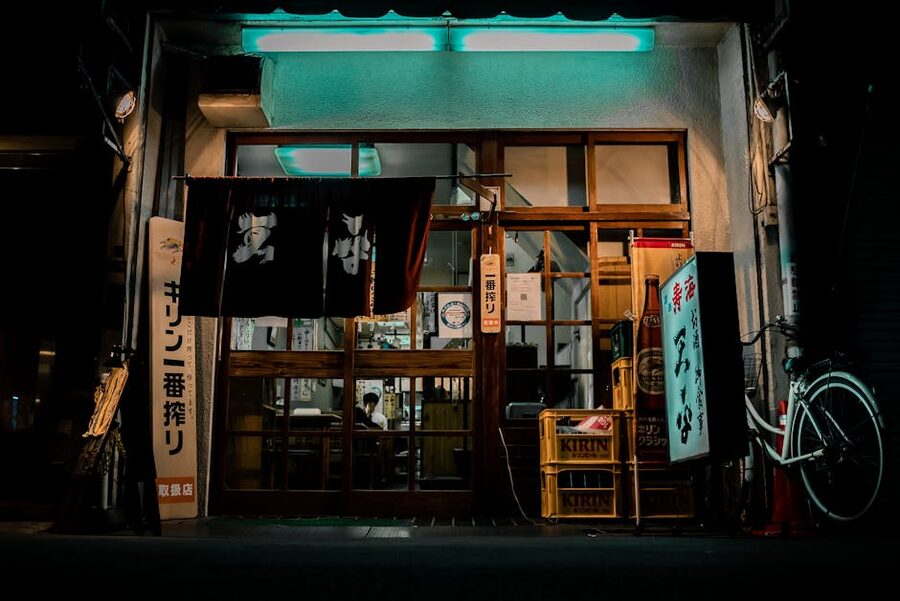
Standing bars (tachi-nomi). Shibuya’s standing bars are where salarymen drink cheap after work. Highballs for ¥300, yakitori for ¥100 per skewer, edamame for ¥200. No seats. You stand, you drink, you eat, you leave. The food tours always include at least one tachi-nomi because it’s the most authentic Japanese drinking experience you can have.
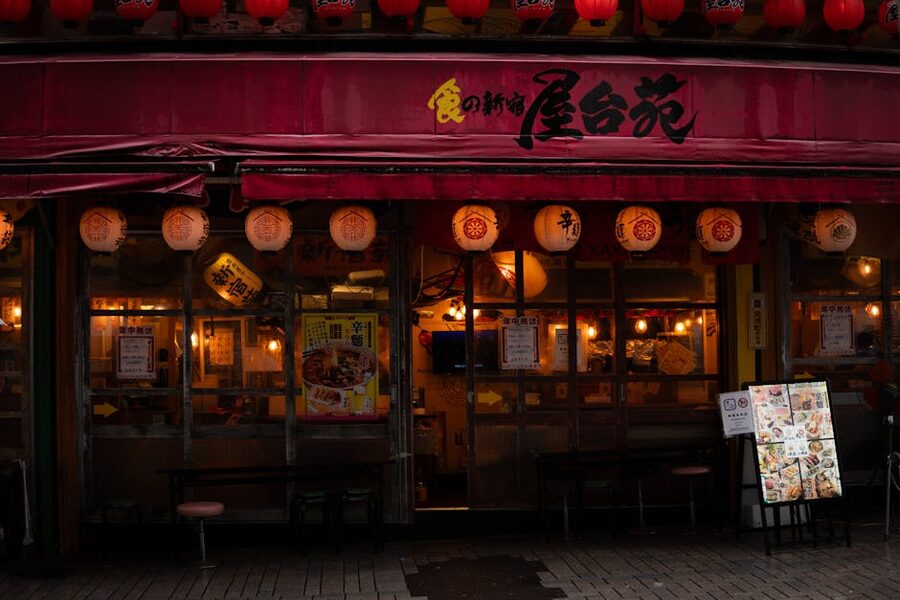
Depachika (department store basement food halls). Every department store in Shibuya (Tokyu, Seibu, Hikarie) has a basement floor dedicated to food. Fresh sushi, wagyu beef, pastries, bento boxes — all displayed like jewellery. The daytime walking tours sometimes pass through. Even if you don’t eat, the presentation is worth seeing.
Nonbei Yokocho (Drunkard’s Alley)
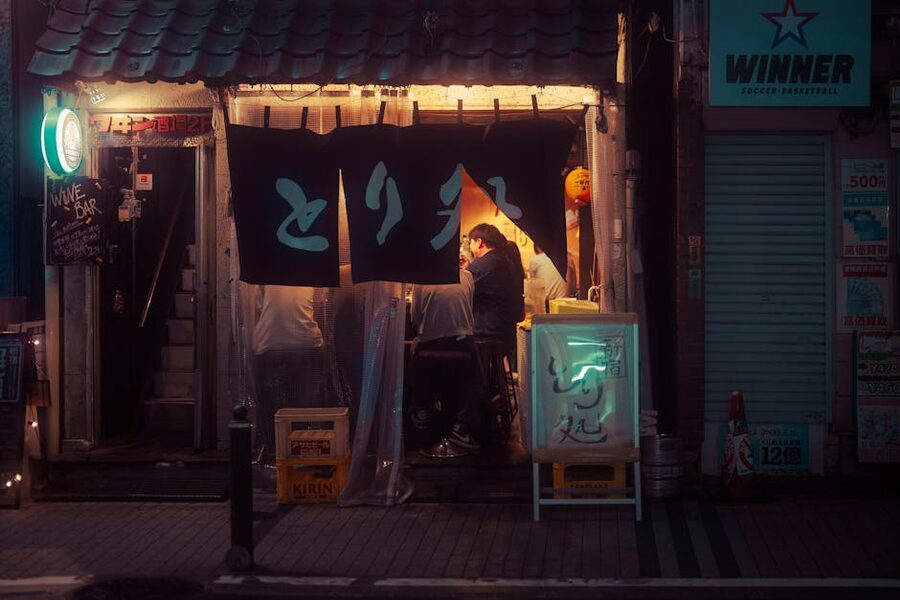
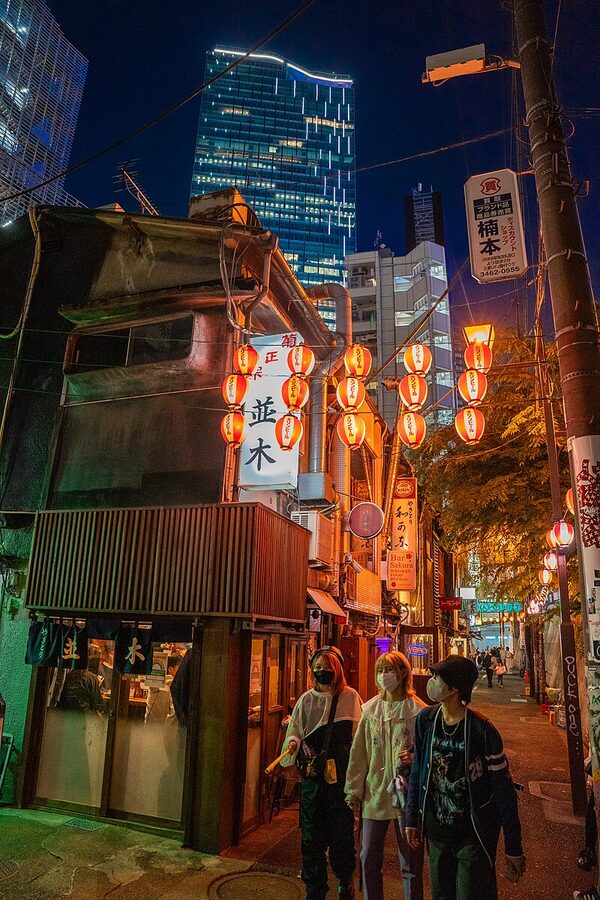
Shibuya’s own version of Golden Gai. About 40 tiny bars squeezed into two narrow alleys just north of the station. It’s been here since the post-war era — one of the few parts of Shibuya that developers haven’t replaced with glass towers. The bars are small enough that you can hear every conversation and the bartender remembers your order from last time.
Some bars charge a cover (¥500-1,000). Some are regulars-only. The food tour guides know which ones welcome walk-ins and which to avoid. Going alone is possible but going with a guide removes the guesswork entirely.
Shibuya Stream and the New Shibuya
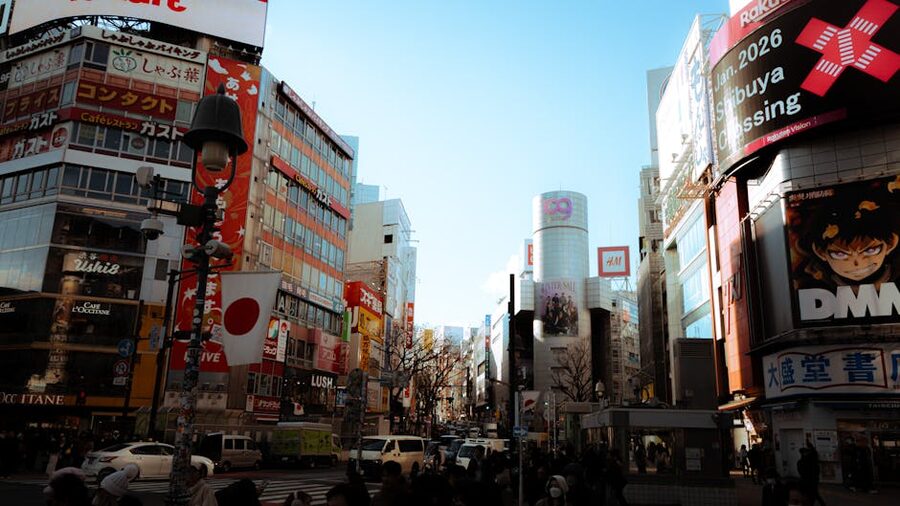
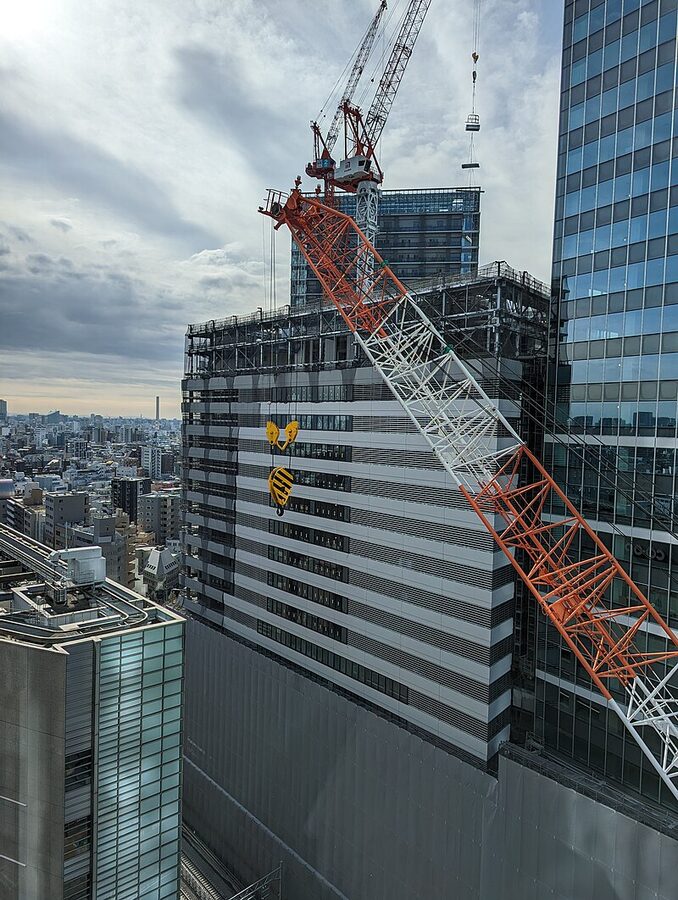
Shibuya is mid-transformation. The Shibuya Stream complex (2018) and Scramble Square (2019) brought the buried Shibuya River back to the surface — sort of. The river now flows through a landscaped channel next to the Stream building. Miyashita Park (2020) turned a derelict elevated park into a shopping-rooftop hybrid. The walking tours cover these newer developments alongside the Showa-era relics, showing how Shibuya keeps reinventing without fully erasing its past.
Shibuya at Different Times of Day
Morning (7-10am): Quiet Shibuya. The crossing is calm enough to walk without being swept along. Meiji Shrine (a 10-minute walk) is at its most peaceful. The morning walking tours cover this tranquil side — a Shibuya that most visitors never see.
Afternoon (12-5pm): Shopping peak. Center-Gai and the surrounding streets fill with teenagers, travelers, and shoppers. The department stores are open. This is when the daytime highlights tour runs — energetic but not overwhelming.
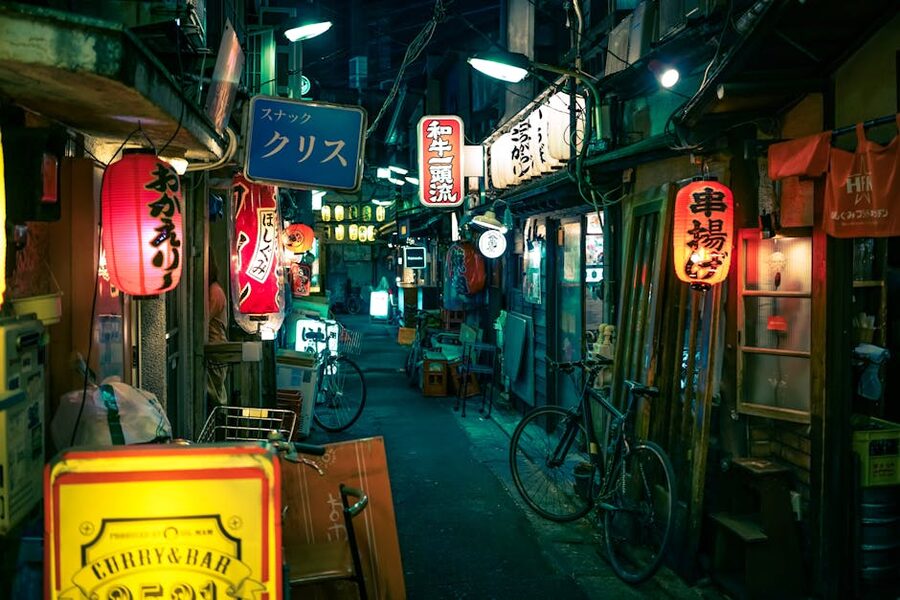
Evening (5-9pm): The sweet spot for food tours. The neon switches on. The backstreet bars open. The transition from daylight Shibuya to nighttime Shibuya happens fast — one minute you’re in a shopping district, the next you’re in a drinking district. The food tours ride this transition perfectly.
Late night (10pm-5am): Club Shibuya. The food tours have ended, the pub crawls are in full swing. If you’re still standing at midnight, the clubs in Dogenzaka (the hill behind the station) stay open until 5am. The last train leaves around midnight — after that, you’re committed until the first train at 5am.
Practical Tips
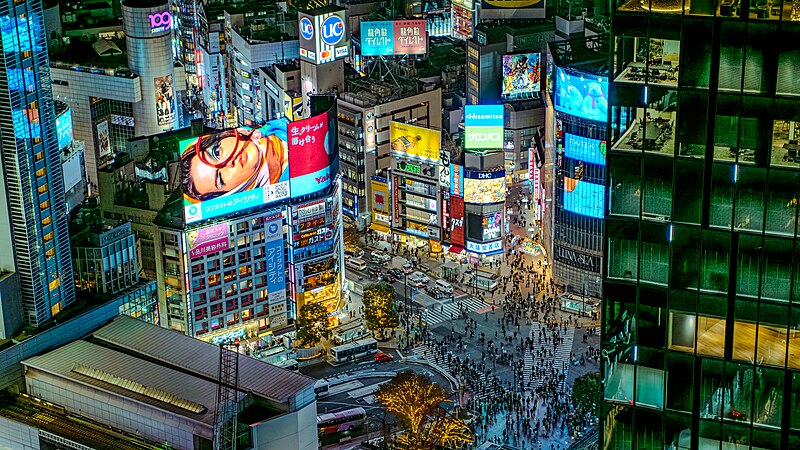
Crossing timing. The scramble crossing changes every 90-120 seconds. The best photo angle is from the Starbucks on the second floor of the Tsutaya building (northwest corner) — it’s free, you just need to buy a coffee. Shibuya Sky (on top of Scramble Square) gives the aerial view for about ¥2,000.
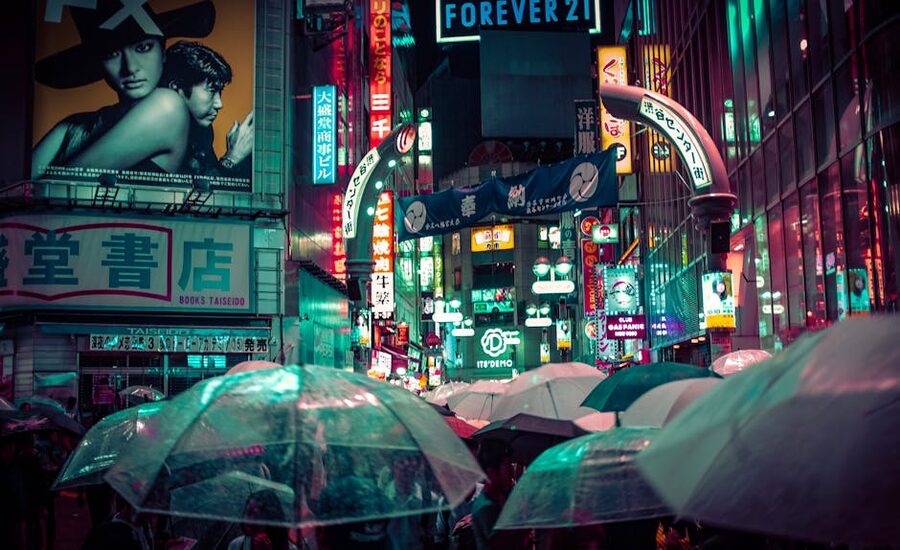
Best time for the food tour. Sunset start (5-6pm) is ideal. You walk through the transition from day to night. By the time you’re at the third stop, the neon is on and the neighbourhood has shifted into its evening character.
Come hungry. The food tours serve 5-8 dishes across multiple stops. Eat a light lunch and skip the afternoon snacks. You’ll need the space.
Cash and cards. Shibuya is more card-friendly than most Tokyo neighbourhoods, but the tiny bars and standing food stalls are often cash-only. Bring at least ¥5,000 in cash for the evening.
Shoes. The walking tours cover about 3km on pavement. The food tours involve stairs — many Shibuya bars are on upper floors of narrow buildings. Comfortable shoes matter.
Getting There
Shibuya Station is served by the JR Yamanote Line, Ginza Line, Hanzomon Line, Fukutoshin Line, Tokyu Toyoko Line, Den-en-toshi Line, and Keio Inokashira Line. It’s one of the most connected stations in Tokyo.
Most tours meet at or near Hachiko statue (Hachiko Exit / west side of the station). Give yourself 10 minutes to navigate the station — it’s large and confusing, with multiple exits across different levels.
Combining Shibuya with Other Tokyo Experiences
Shibuya + Harajuku: A 10-minute walk north of Shibuya brings you to Harajuku — Takeshita Street, Meiji Shrine, and Omotesando. The daytime walking tour covers Shibuya’s highlights in 90 minutes, leaving the rest of the afternoon for Harajuku.
Shibuya food tour + pub crawl: The food tours end around 8-9pm. The Tokyo pub crawls start at 8-9pm. If your stomach and liver can handle it, this is one of the best back-to-back combinations in Tokyo nightlife.
Shibuya + Shinjuku: Two stops apart on the JR Yamanote Line. The Shinjuku night walking tour covers Golden Gai and Omoide Yokocho — a completely different nightlife flavour from Shibuya’s food scene.
More Tokyo Guides
Shibuya is one piece of Tokyo’s food and nightlife puzzle. Our Shinjuku food tour guide covers the other half of Tokyo’s best eating neighbourhood. The Tsukiji fish market tour is the morning counterpart — seafood for breakfast, ramen for dinner. For nightlife, our Tokyo bar hopping guide and pub crawl guide cover the spectrum from intimate izakaya tours to 60-person parties. And if you want to see Shibuya from above, Tokyo Skytree gives you the whole city, but the free Mag’s Park rooftop in Shibuya gives you just the crossing — and sometimes that’s all you need.