Matcha is more than a green drink here. In this Asakusa class, you get a short, hands-on introduction to its history and customs, then whisk your own cup with a bamboo tool. The lesson is designed for beginners, not aspiring tea masters, and the friendly English-speaking instructors keep it approachable.
I like two things in particular: you make the matcha yourself, rather than just watching a demonstration, and the class pairs it with Japanese sweets, a useful balance to matcha’s earthy taste. The short history lesson and playful quiz add context without turning the hour into a lecture.
One consideration: this is a compact introduction, not an in-depth tasting of several teas. The standard package includes one matcha drink and two small sweets, while different matcha options may cost extra. If you want a long, formal tea ceremony, this is a lighter, more practical experience.
- Whisk your own cup: Learn the basic steps with traditional matcha-making tools.
- Get a quick cultural primer: A lighthearted quiz and short lesson introduce matcha’s history and tea etiquette.
- Try matcha with Japanese sweets: The package includes matcha and sweets, commonly described as two small mochi.
- Join in English: Local instructors guide the class in English. Suzy, Tomona, Moon, and Sana are among the instructors who have led sessions.
- Make it part of an Asakusa day: The class is at 2 Chome-17-9 Kaminarimon, near Senso-ji Temple and within the Asakusa area.
- Bring the family: Children aged four and up may participate, at the same price as adults.
- Matcha making in the middle of Asakusa
- A quiz, a little history, then the whisk
- Making your own matcha with traditional tools
- Drinking matcha with Japanese sweets
- How much time to allow, and what the price buys
- A good fit for families, first-timers, and curious eaters
- Before you book
- Should you book this matcha class?
- FAQ
- Where is the matcha-making class?
- Is the class taught in English?
- What is included in the package?
- Do I need experience making matcha?
- What will I learn during the class?
- Are children allowed to participate?
- Are different types of matcha included?
- Can I cancel and receive a refund?
- The Best Of Tokyo!
- More Workshops & Classes in Tokyo
- More Tours in Tokyo
- More Tour Reviews in Tokyo
- Not for you? Here's more nearby things to do in Tokyo we have reviewed
Matcha making in the middle of Asakusa
 1 / 8
 2 / 8
 3 / 8
 4 / 8
 5 / 8
 6 / 8
 7 / 8
 8 / 8
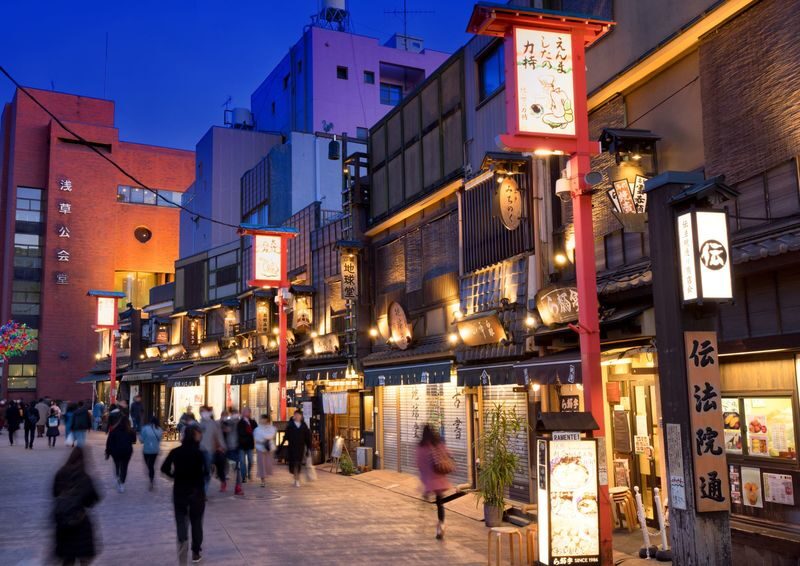
Asakusa is a fitting place to learn about Japanese food traditions. The class takes place at 2 Chome-17-9 Kaminarimon, in Taito City, a short walk from the Senso-ji Temple area. That makes it easy to pair with temple visits and a wander through the neighborhood, rather than setting aside a whole day for a class across town.
The activity is run by Food Activity Japan Inc. It welcomes both solo participants and groups, and no prior experience is required. The English-speaking staff walk you through the process, so you don’t need to arrive knowing the difference between whisking matcha and stirring it with a spoon.
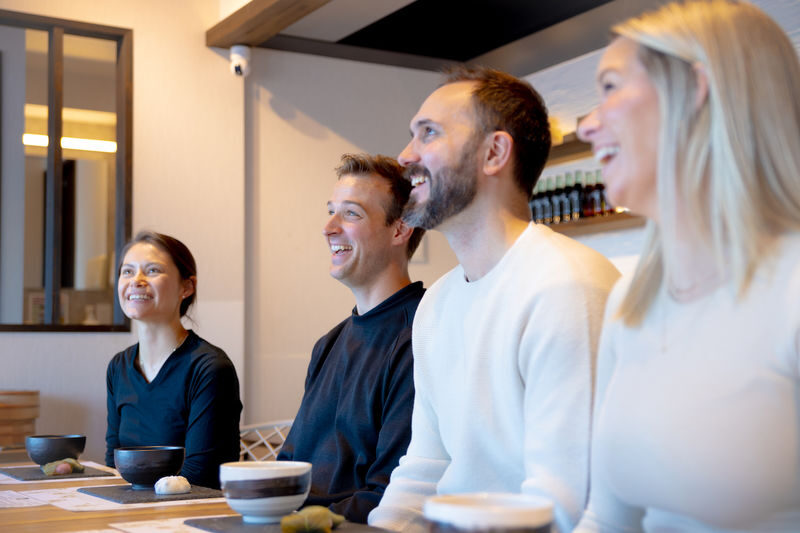
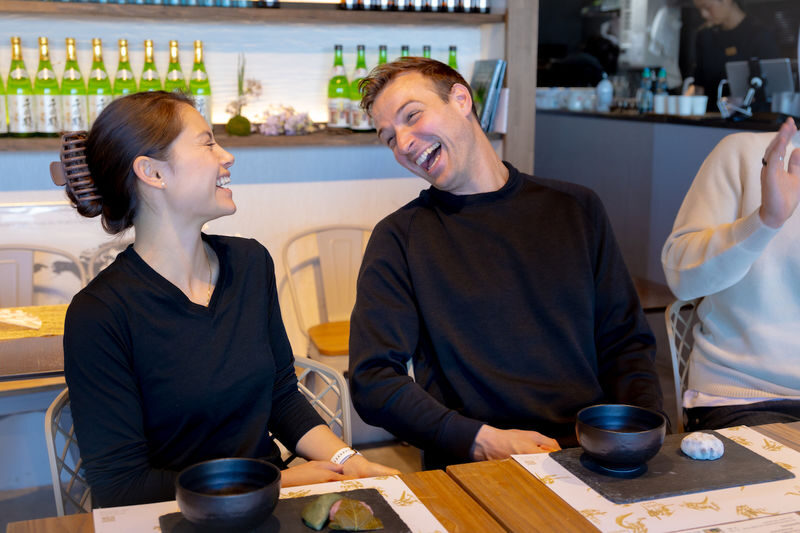
The atmosphere is informal and social. Some sessions may be small enough to feel almost private, but group size is not guaranteed. You may find yourself sharing the table with other people, which can make the class more lively; if you are hoping for a private lesson, don’t assume you’ll get one.

👉 See our pick of the 25 Best Guided Tours In Tokyo
A quiz, a little history, then the whisk
The lesson begins with an interactive quiz and a brief introduction to matcha’s history and place in Japanese culture. It gives you a few useful reference points before you pick up the tools. The approach is deliberately light, so expect a friendly primer rather than a detailed history of tea production or a scholarly discussion of ceremony.
Instructors also explain some of the manners associated with preparing and drinking matcha. That context matters: the activity is not only about making a tasty cup, but about understanding why the steps and gestures carry meaning. The lesson stays practical, with guidance you can use as you prepare your own drink.
The hosts’ style is a big part of the experience. Instructors named in class feedback include Suzy, Tomona, Moon, Sana, Momoka, and Hikaru. Your instructor will depend on the session, but the class is presented in English and designed to be friendly and easy to follow. Some teachers use slides to support the lesson, which can help make the cultural details clearer.
You can also read our reviews of more tours and experiences in Tokyo


Making your own matcha with traditional tools
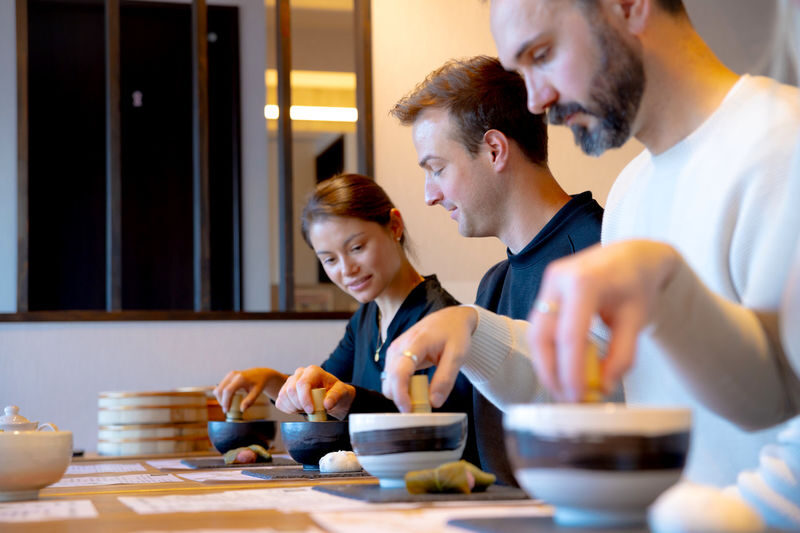
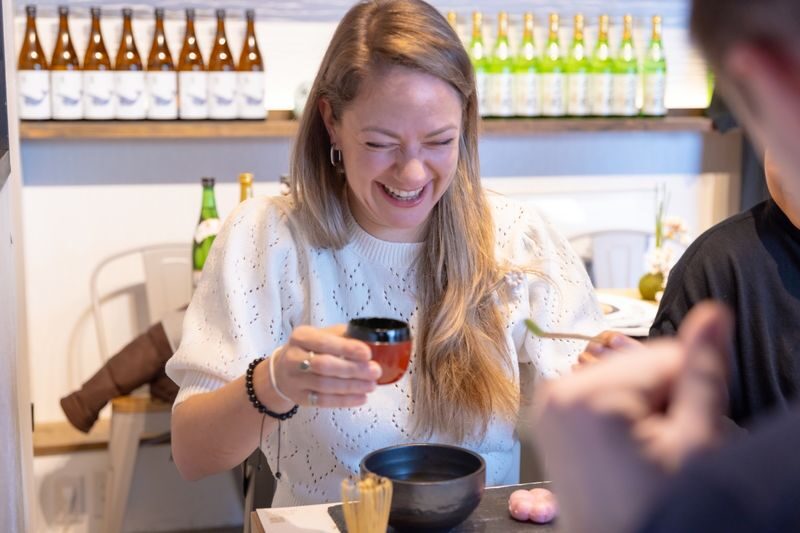
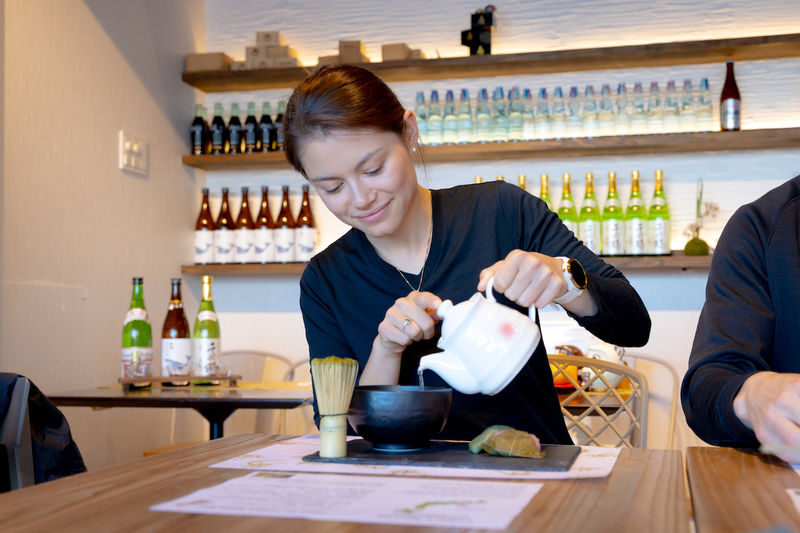
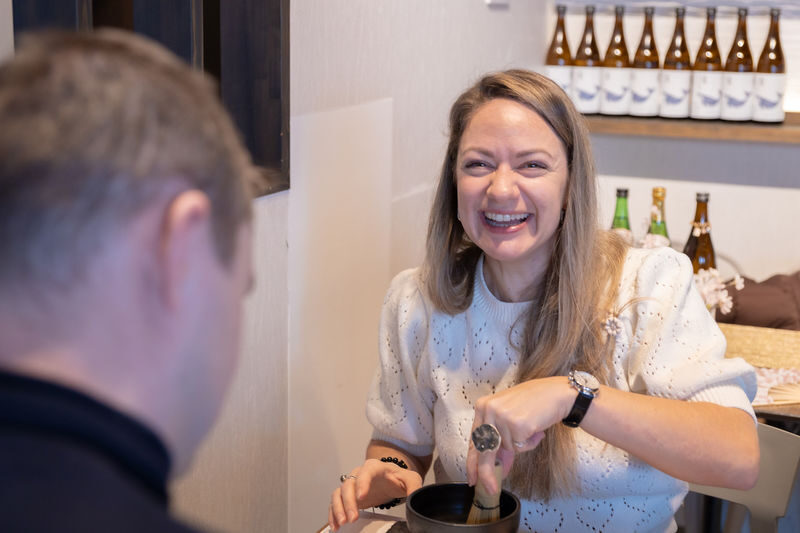
The hands-on portion is the heart of the class. You use traditional tools, including a bamboo whisk, and follow the instructor’s steps to prepare matcha. The goal is not to master every detail of tea ceremony technique in one sitting. It is to learn how to make a proper cup yourself, with someone there to demonstrate and correct your motions.
That makes this a good fit for first-timers. You can ask questions as you go, and the instructor takes you through the process from start to finish. The practical method is also easy to remember: you leave with a clearer idea of how matcha is whisked and served, rather than just a photograph of someone else making it.
The class also touches on tea ceremony etiquette. Expect a modest introduction to respectful serving and drinking, not a full traditional ceremony with every formal element. That distinction is worth keeping in mind if you are comparing this with a dedicated tea ceremony experience.
Drinking matcha with Japanese sweets
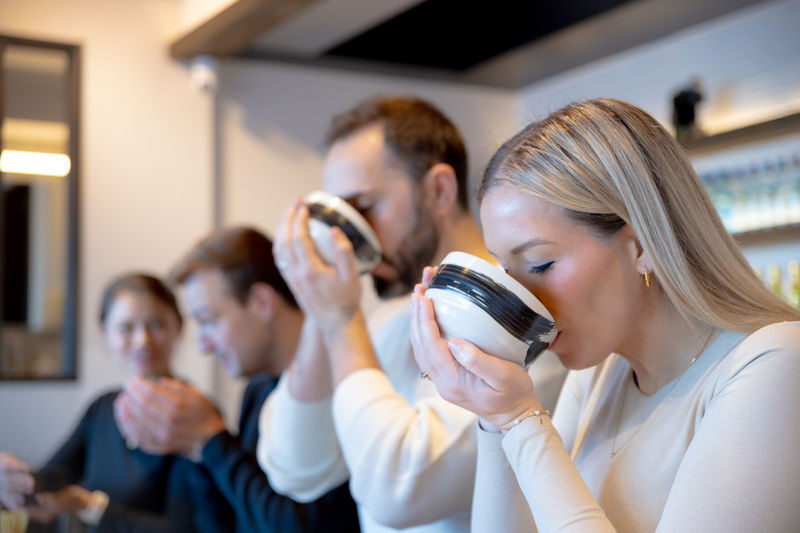
Once you have prepared your drink, you get to taste it with Japanese sweets. The package includes matcha and sweets; one description of the standard serving specifies a cup of matcha and two small mochi. The sweet bite is more than a decorative extra. It offers a pleasant counterpoint to matcha’s grassy, sometimes bitter notes.
The serving is simple, and that is part of the value. You make the drink, taste the result, and connect the preparation steps with the flavor in your cup. You should not expect a full tea tasting with several varieties included in the base price. If comparing flavor profiles is important to you, ask what options are available before booking; different matcha types may be offered for an additional charge.
That possible extra cost is the main value caveat. The base experience is an accessible introduction, but it may not satisfy someone seeking a broad tasting or a detailed lesson on matcha grades. It works best when you want a focused activity that combines a little culture, a little technique, and a snack.
How much time to allow, and what the price buys
The listed starting price is $15.79, though the amount you pay may vary by booking details. For that price, you get English-speaking staff, ingredients, a guided matcha-making activity, and Japanese sweets. You are paying for an activity and instruction, not just a drink, which makes the price appealing if you want a cultural break during a day in Asakusa.
The class is described in participant accounts as taking about an hour. That is a useful planning estimate, though the provided activity details do not set out an official duration. It is short enough to fit between nearby sightseeing stops and long enough to learn the basic process without wearing out younger children.
One participant appreciated the air-conditioned room during Tokyo’s July heat. That may make the class a welcome pause on a hot day, but the experience is not sold as a cooling break, so treat that detail as a possible bonus rather than a promise.
Hotel pickup and drop-off are not included. You’ll need to make your own way to the Kaminarimon address, so check the exact location before setting out. The meeting point is in Asakusa, near Senso-ji Temple and close to Tokyo Skytree, making it straightforward to combine with other sights in the area.
A good fit for families, first-timers, and curious eaters
This class suits you if you want a hands-on cultural activity without a steep learning curve. Solo participants are welcome, and the group format can be a pleasant way to meet others. Couples and friends can make a cup side by side, while families get a short activity that gives children something to do beyond walking around temples and shops.
Children must be at least four years old, and those aged four and up pay the adult rate. The class has worked well for families with young children, and instructors are described as patient with kids. Still, consider your child’s interest in sitting through a short lesson and following simple preparation steps. The sweets and whisking offer a clear reward, but this is not a free-play activity.
It is also a sensible pick for matcha fans who want to learn how to prepare it at home. You won’t leave as a tea expert, but the step-by-step instruction gives you a useful starting point. If your main interest is ceremonial formality, a dedicated tea ceremony may be a better match. If your curiosity is about how matcha is made and enjoyed, this class keeps the focus on the cup.






Before you book
The activity is offered as Matcha Making and Japanese Sweets. Confirmation is expected within minutes of booking; if it does not arrive, contact customer support. The voucher is valid only for the date and time specified, and cancellation at least 24 hours before the activity date, in local time, qualifies for a full refund.
Check the Kaminarimon address carefully: 2 Chome-17-9 Kaminarimon, Taito City, Tokyo 111-0034. The class does not include hotel transport. If you want to try a different matcha type, check whether an upgrade is available and what it costs, since those options may not be included in the base package.
Should you book this matcha class?
Book it if you want an easygoing, hands-on introduction to matcha in a useful Asakusa location. You’ll learn a little history and etiquette, prepare your own drink, and enjoy sweets with English-speaking staff. The approachable teaching and practical whisking lesson are the strongest reasons to go.
Skip it if you are looking for an extended tasting, detailed comparisons of multiple matchas included in the price, or a formal tea ceremony. For a first matcha-making experience, though, the class offers a sensible mix of culture, activity, and flavor, and it fits neatly into a day around Senso-ji.
Matcha Making Class in Tokyo
“It was a quick but informative class. It is worth doing if you're in the area. Though, it would be better if they included different types of match…”
FAQ
Where is the matcha-making class?
It meets at Matcha Making Tokyo, 2 Chome-17-9 Kaminarimon, Taito City, Tokyo 111-0034, Japan.
Is the class taught in English?
Yes. English-speaking local staff guide participants through the activity.
What is included in the package?
The package includes ingredients, matcha making, Japanese sweets, and English-speaking staff. Hotel pickup and drop-off are not included.
Do I need experience making matcha?
No. The class is designed for beginners, and the instructor guides you through the process.
What will I learn during the class?
You’ll learn about matcha history, some tea etiquette, and how to whisk your own matcha with traditional tools.
Are children allowed to participate?
Yes. Children aged four and older may join. They are charged the same rate as adults.
Are different types of matcha included?
The standard package includes matcha and sweets. Different matcha options may be available for an additional charge, so check before booking if you want to compare types.
Can I cancel and receive a refund?
You can receive a full refund if you cancel at least 24 hours before the activity date, using destination local time.