
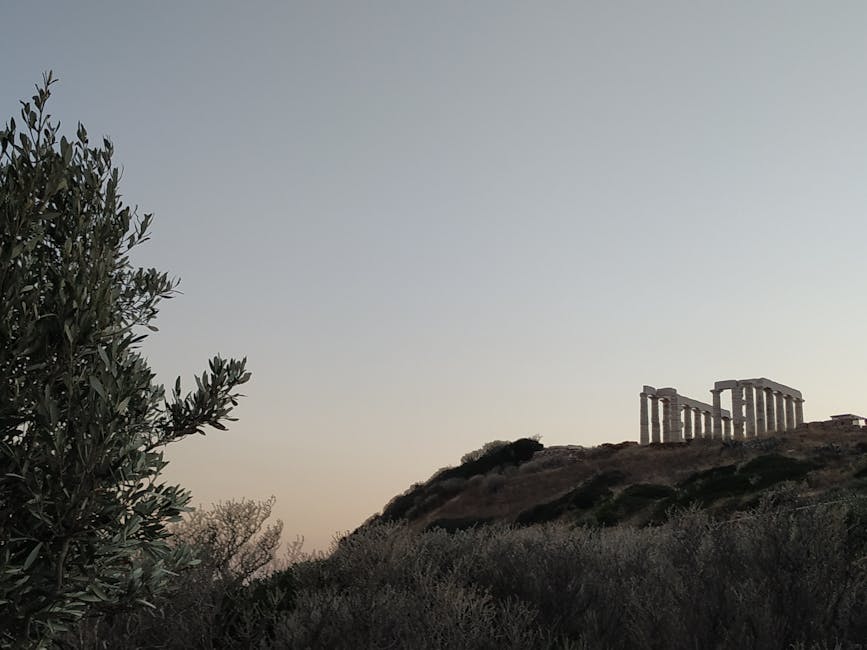
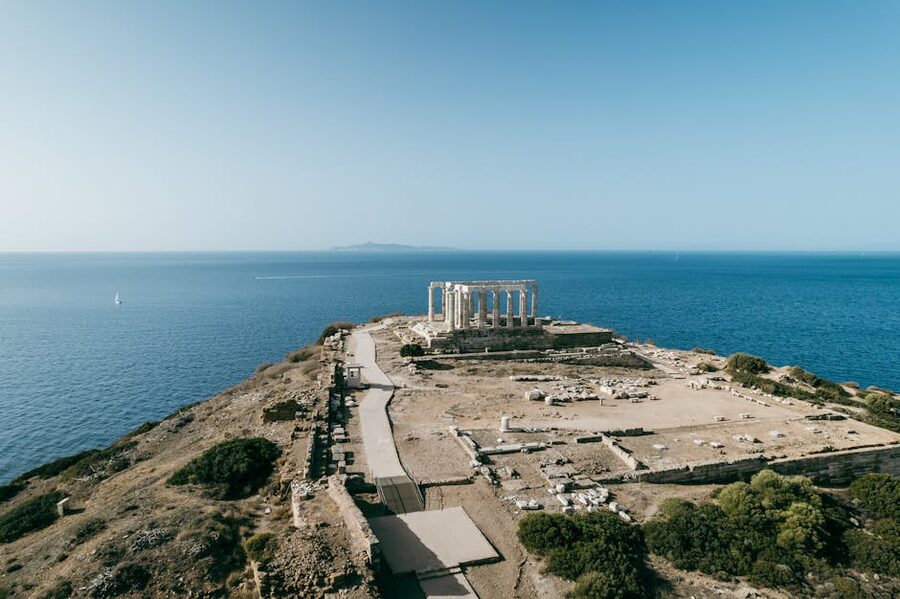
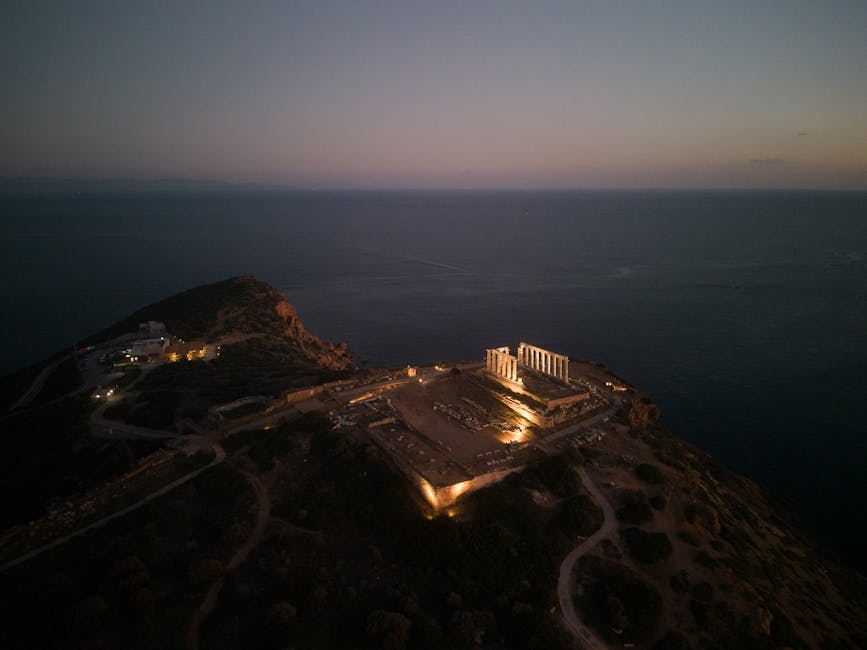
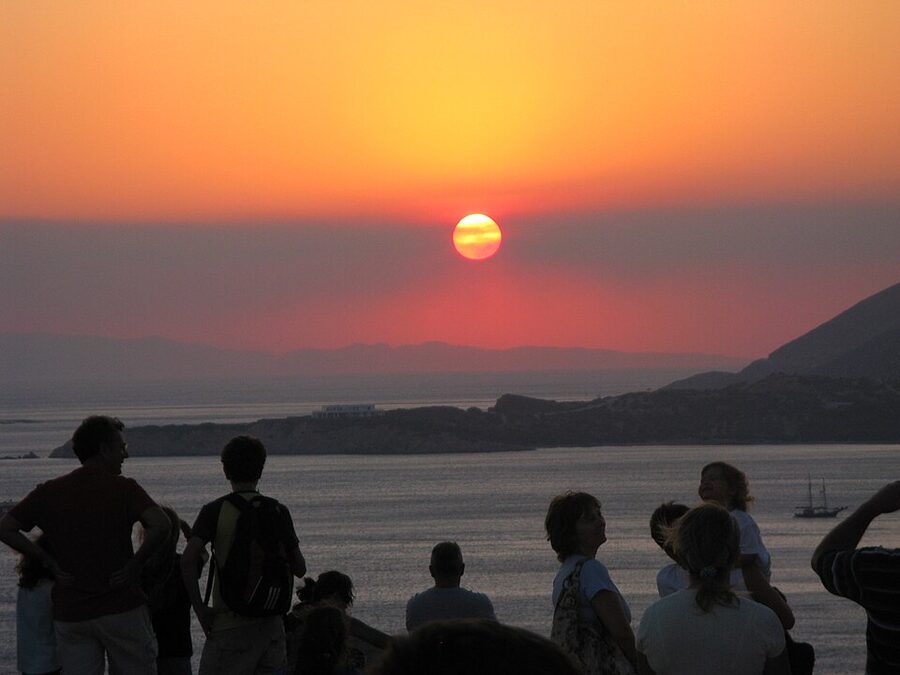
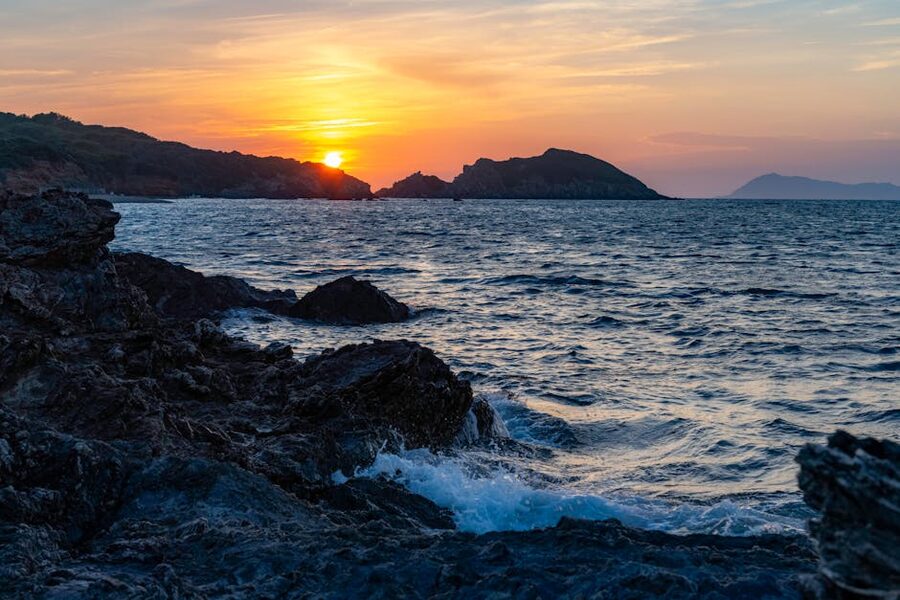
The bus pulls up at the cliff edge and the white columns of the Temple of Poseidon catch the late sun. The Aegean stretches west until it hits the colour of cooled iron. A small crowd is already gathering on the rocks below the ruins, picking their spot for the next forty minutes.
This is the bit no one really tells you about a Cape Sounion sunset tour. The temple is the destination, but the sunset is the meeting. Ten coaches, a hundred phones, and one God of the Sea presiding over the whole thing.
Short on time? My three quick picks
- Cape Sounion Sunset Half-Day Trip from Athens, $23. The booked-by-everyone flagship. Hotel-area pickup, lands you at the temple about half an hour before sundown.
- Cape Sounio Trip With Audio Guide, $23. Same coach format, six-language audio narration during the drive, no live guide on the bus.
- Cape Sounion Small Group Tour, $41. Mini-bus, real human guide, about an hour at the temple. Worth the extra if you hate big-coach noise.
- Short on time? My three quick picks
- What Cape Sounion actually is
- How the standard sunset tour actually runs
- Which tour is right for you
- My three picks for Cape Sounion sunset
- 1. Cape Sounion & Poseidon Temple Sunset Half-Day Trip,
- 2. Cape Sounio & Poseidon Temple Trip With Audio Guide,
- 3. Cape Sounion & Temple of Poseidon Small Group Tour,
- The drive itself
- The Vouliagmeni Lake variant
- The temple itself: what you actually see
- Lord Byron and the column
- What to wear
- How to do it without a tour
- Best month for Cape Sounion
- Combining Cape Sounion with the rest of Athens
- Pickup logistics
- Free or paid? The temple ticket question
- Sunset times by season
- Food and drink at the cape
- Cape Sounion vs the comparable Mediterranean sunset stops
- What can go wrong
- The mythology bit, briefly
- One small last thing about the wind
- Other Greek guides worth a look
What Cape Sounion actually is
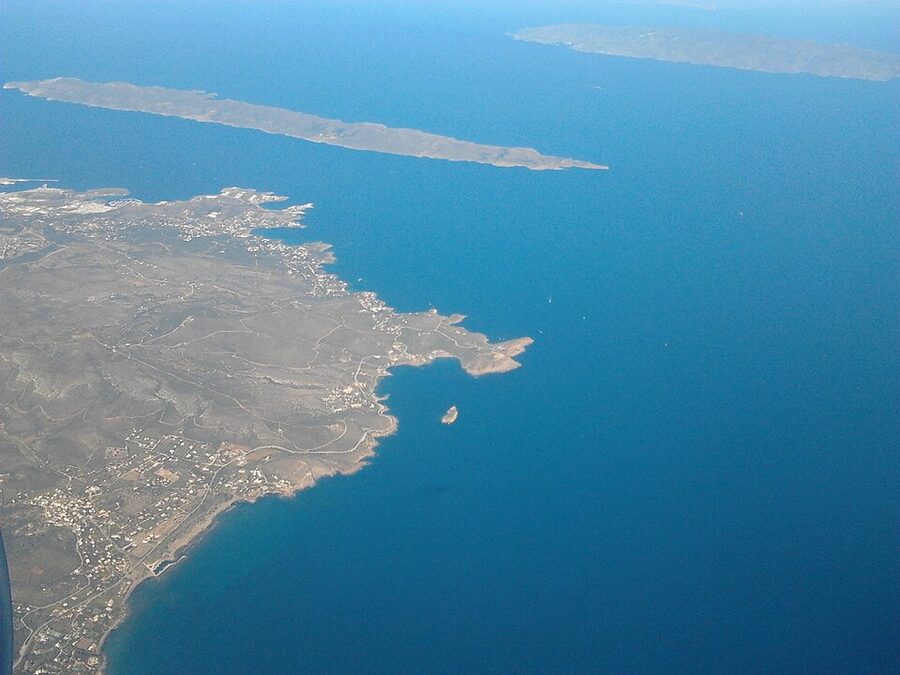
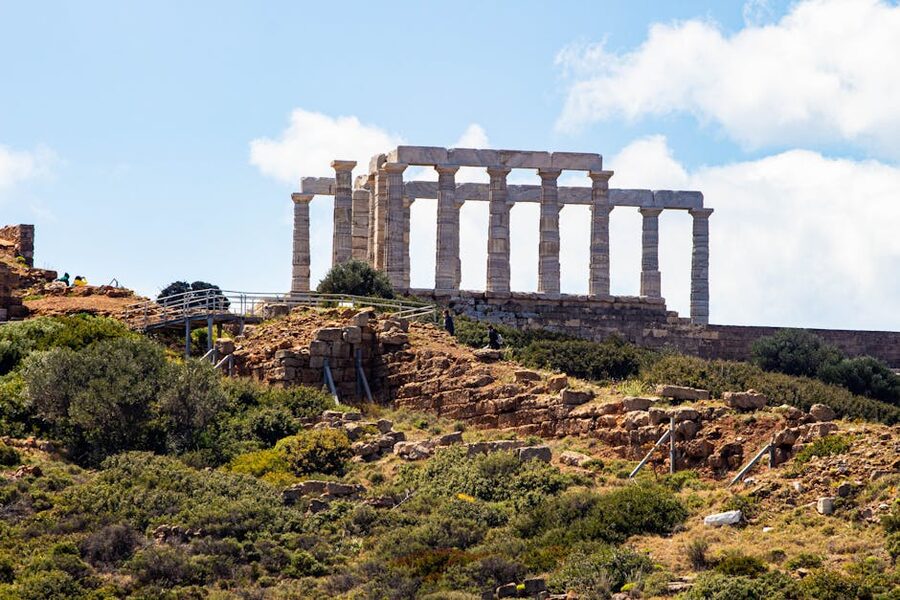
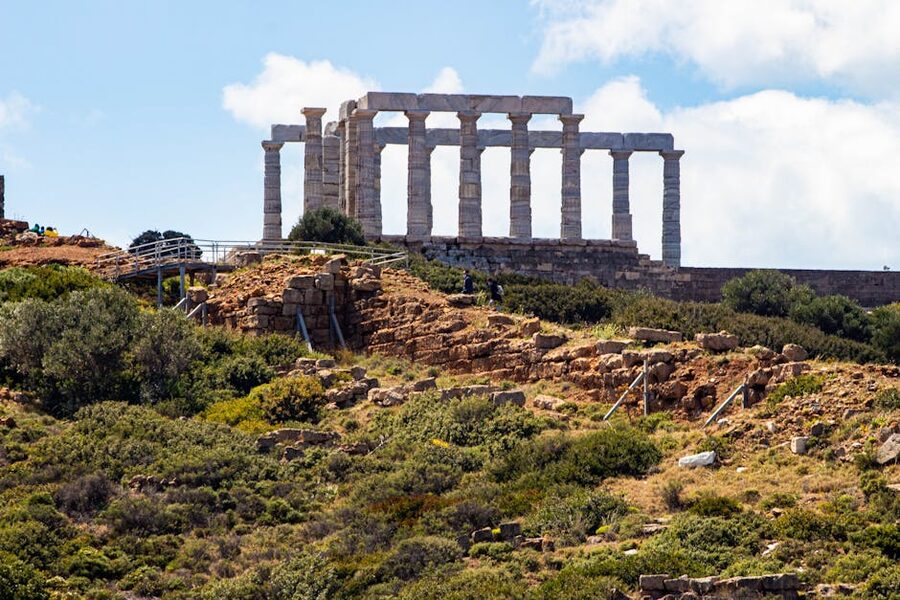
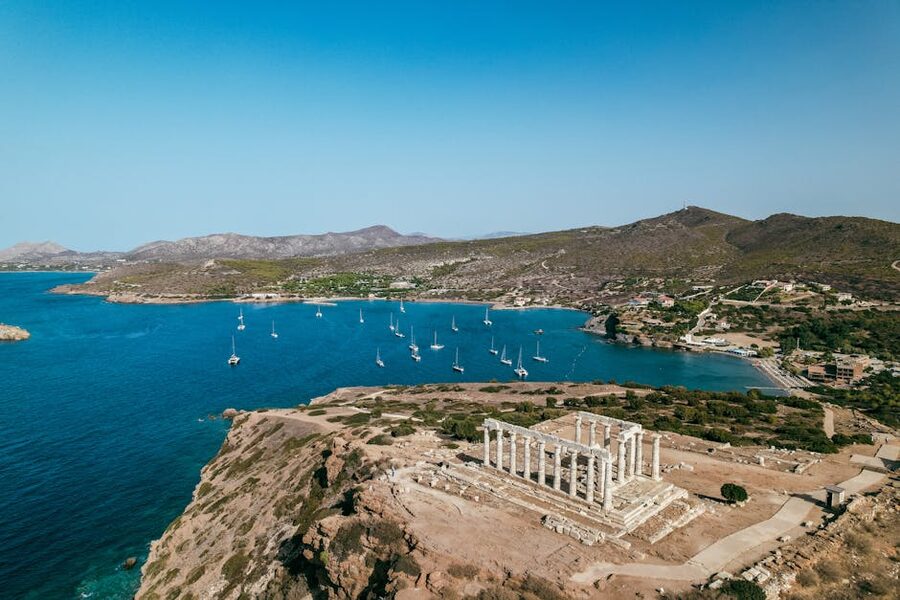
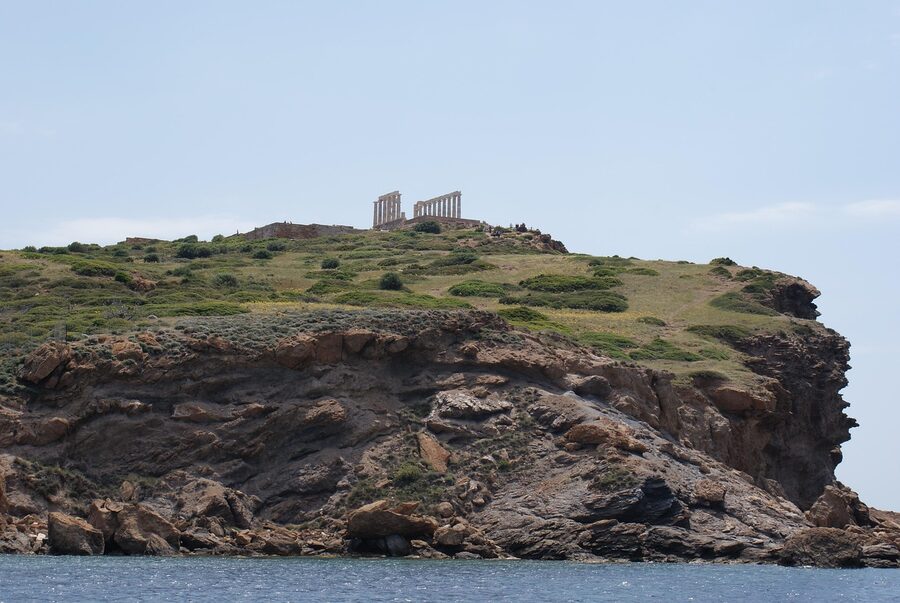
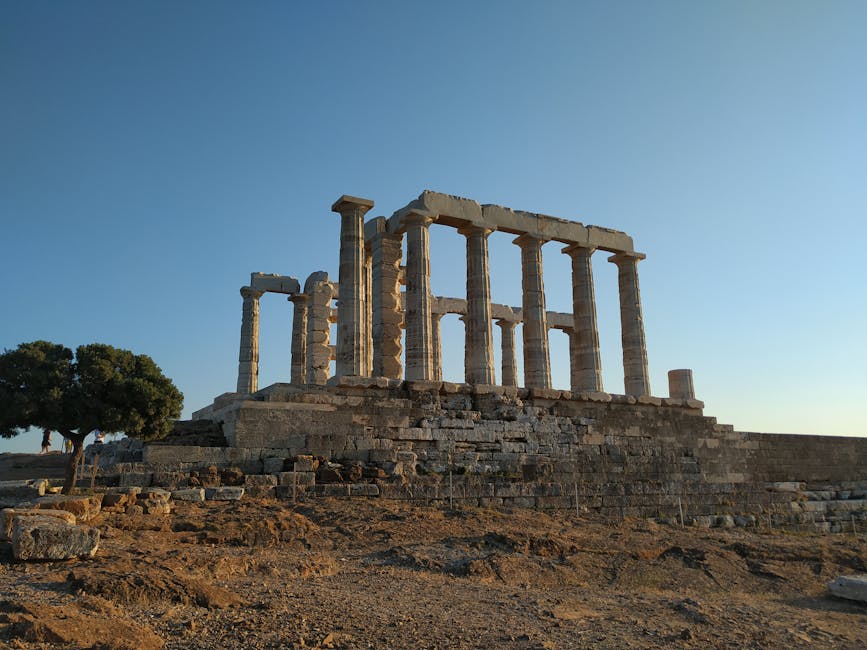
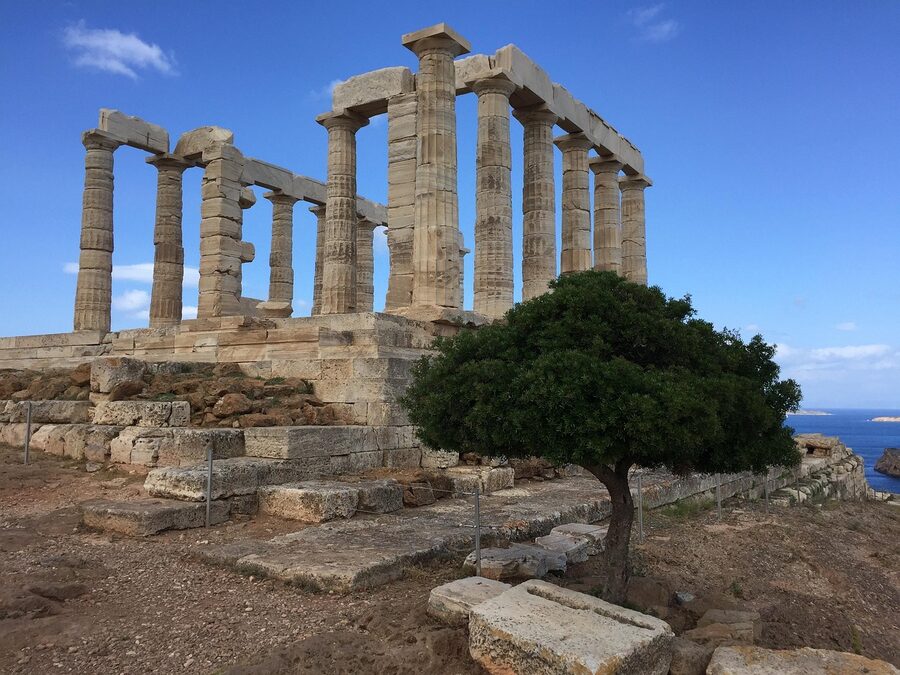
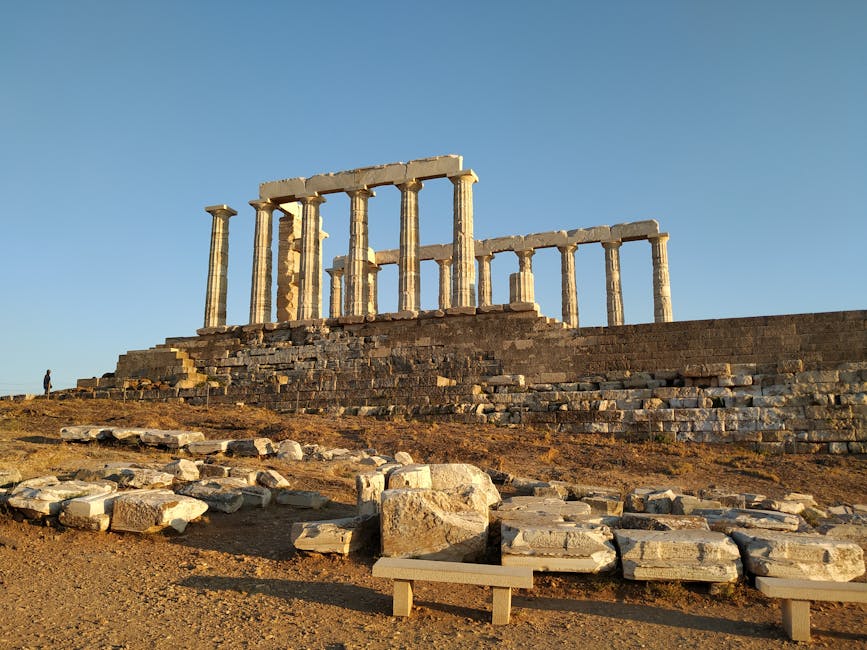
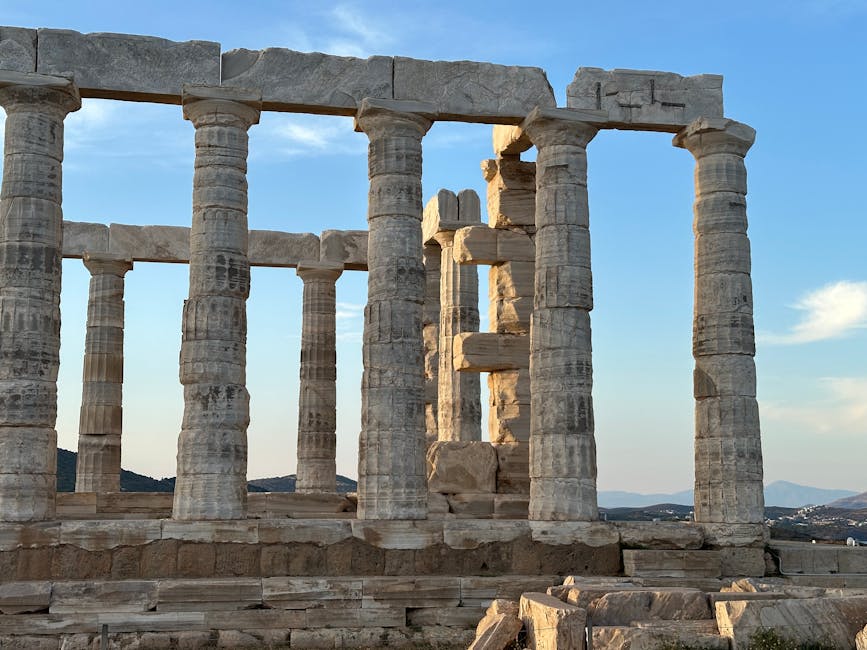
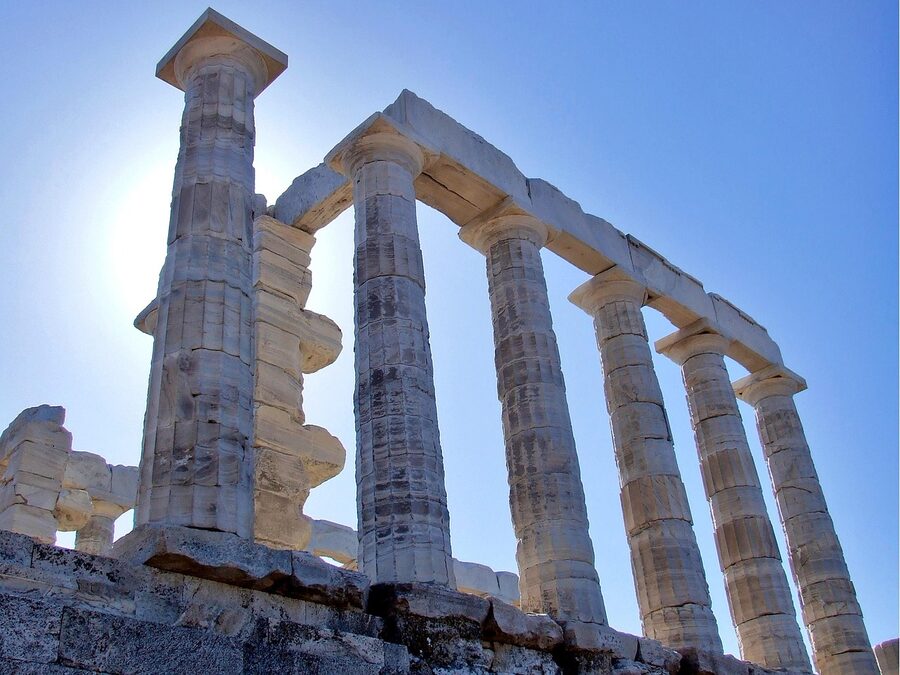
Cape Sounion is the southern tip of Attica, about 70km south of central Athens by road. The cape juts into the Aegean like a stone fist. On top of it, perched on a 60-metre cliff, is what’s left of the 5th-century-BC Temple of Poseidon. Sixteen Doric columns still stand. The original temple had thirty-four.
For ancient Athenian sailors, this was the last sight of home as they rowed south, and the first sight of home as they returned. They built a god a temple here for that reason. Make the sea kind on the way out, make us alive on the way back. The wind on the cape on most evenings tells you why they thought it needed asking.
How the standard sunset tour actually runs
Almost every Cape Sounion tour you can book online is the same shape. Pickup from a central Athens meeting point or your hotel area between 2pm and 3pm. About 90 minutes by coach down the coastal road. Drop at the cape around 30 minutes before sunset. Forty to sixty minutes at the temple. Drive back. Most operators have you back in central Athens by about 9pm.
The reason the timing matters is the entry. The archaeological site of Sounion charges 10 EUR for adults to walk up to the temple itself. That isn’t included in any of the bus tours. You can also stay below the ruins on the open rocks for free, which is what some people on the coach choose to do once they realise the ticket isn’t covered. The sunset looks the same from either spot. The columns close-up only happen if you pay.
If you’ve already used a multi-site Acropolis combo pass for central Athens, note that Cape Sounion runs on its own ticketing and isn’t part of that pass. Don’t show up expecting the combo to cover it.
Which tour is right for you
The pool of Cape Sounion tours splits into four practical categories. I’ll tell you what I think of each so you can pick fast.
Big-coach sunset half-day, around $23. This is the default and the most-booked. It’s the one almost every visitor ends up on without realising it. You’re on a 50-seat coach with a live guide on the microphone for the drive. Good if you want the lowest price and don’t mind a busy temple. The flagship version is our most-booked Cape Sounion option on the site by a wide margin, and for good reason at that price point.
Coach with audio guide, also around $23. Same price, same coach format, but instead of a live guide you get a six-language pre-recorded audio narration during the drive. I’d pick this if you don’t like having a guide talking continuously, or if your group prefers a different language. The audio-guide variant runs almost identically to the live-guide one and the temple time is the same.
Small group, $40 to $50. Mini-bus instead of full coach, real human guide who actually knows you exist. Group size capped around 16-20. You get more temple time, usually a full hour rather than 40 minutes. The small-group sunset is the one I’d recommend to anyone who can stretch to it.
Half-day non-sunset, around $25-$30. Worth knowing about. Morning Cape Sounion tours exist and the temple is genuinely quieter, you can photograph the columns without other people’s elbows in the frame. You miss the sunset, but you miss the crowds too. Some people prefer that trade.
My three picks for Cape Sounion sunset
1. Cape Sounion & Poseidon Temple Sunset Half-Day Trip, $23
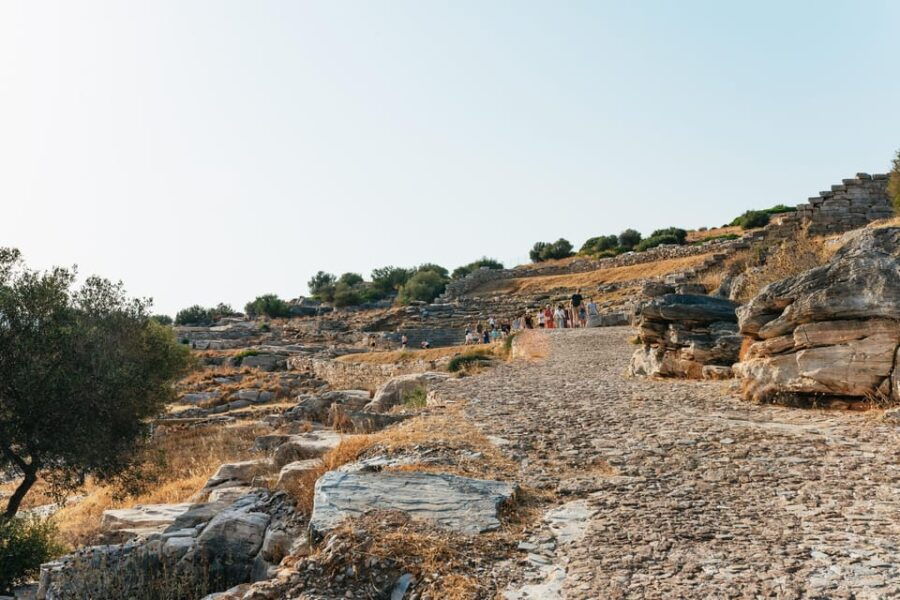
This is the most booked Cape Sounion tour from Athens, and at this price point I think that’s right. The coach is full, the guide is on a mic for the drive, and you reach the temple about 30 minutes before the sun drops. My full review of the flagship covers the pickup-zone details and the realistic sunset timing. Book it if you want the lowest-friction sunset run from central Athens.
2. Cape Sounio & Poseidon Temple Trip With Audio Guide, $23
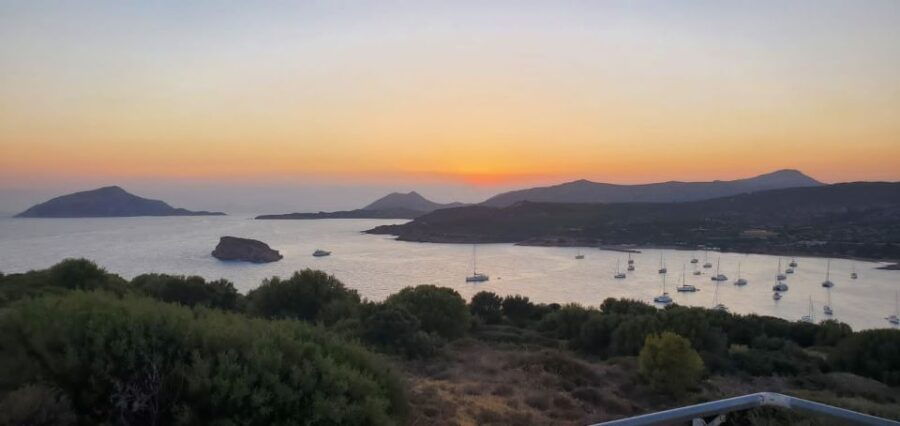
Identical price, identical schedule, but instead of a live guide on the mic you wear earbuds and listen at your own pace. Good if your travel group includes a non-English speaker, or if you just want a calmer two-hour drive. Our review of the audio version goes into the language list and what you actually hear. Same temple, same sunset window, just a different narration style.
3. Cape Sounion & Temple of Poseidon Small Group Tour, $41
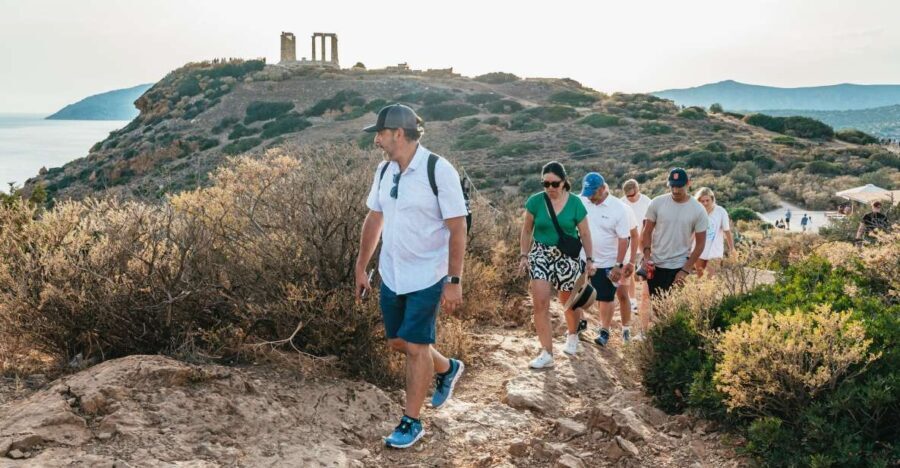
If you can stretch the budget, this is the one I’d take. Capped at small numbers, you get a real guide rather than a microphone monologue, and you get about an hour at the temple instead of 40 minutes. Our small-group review talks through the mini-bus comfort and the realistic group size you’ll see on the day. Pricier, but the difference shows.
The drive itself
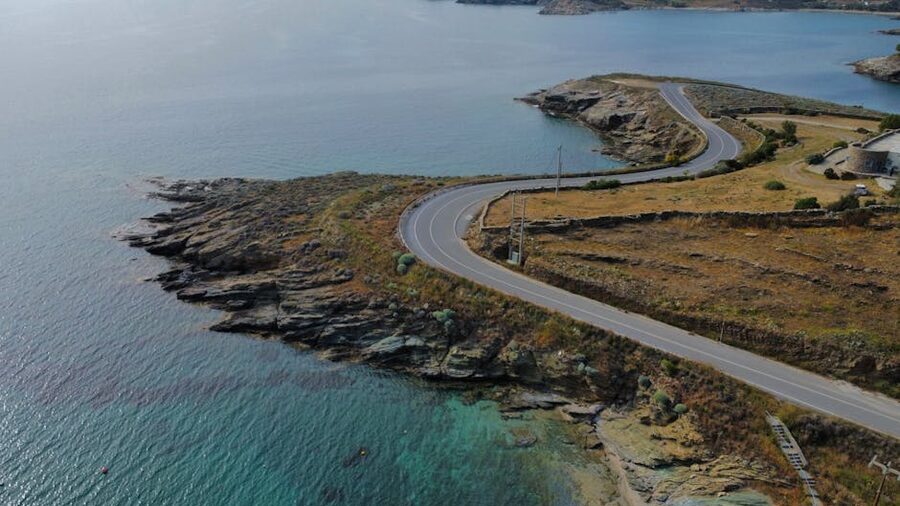
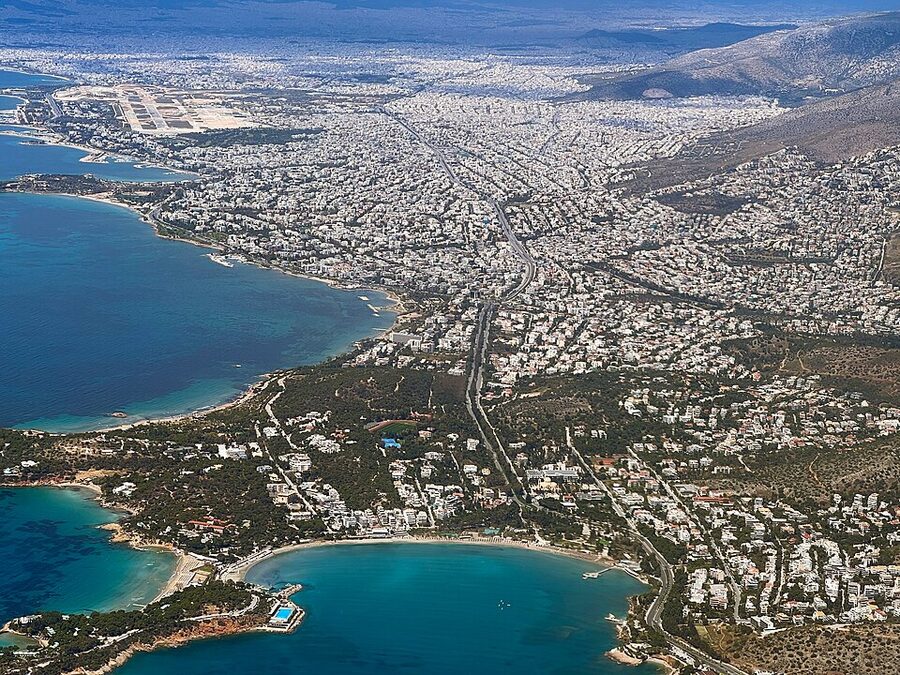
People underrate the drive. From central Athens you head south through Glyfada, Voula, then along the Athens Riviera proper. The road is right on the water for most of it. Beach clubs, marinas, the occasional half-finished hotel. About forty minutes in you start passing the seaside villages of the Athenian Riviera, and the coastline gets rougher and quieter. The last twenty minutes are properly scenic.
The Vouliagmeni Lake variant
Several operators offer a Cape Sounion route that adds a stop at Lake Vouliagmeni on the way down. It’s a thermal-spring lake about 25km south of Athens, fed from underground. Some of the small-group and private tours include 30-45 minutes there. You can swim if your tour gives enough time and you’ve brought a swimsuit. The water sits around 22-29 degrees year-round because of the spring source.
Honestly: the lake is fine, but it isn’t the point of the day. If you’ve only got one trip out of Athens and it’s for the temple, don’t waste daylight on Vouliagmeni. If you’re already doing a full-day private and want a swim built in, sure.
The temple itself: what you actually see
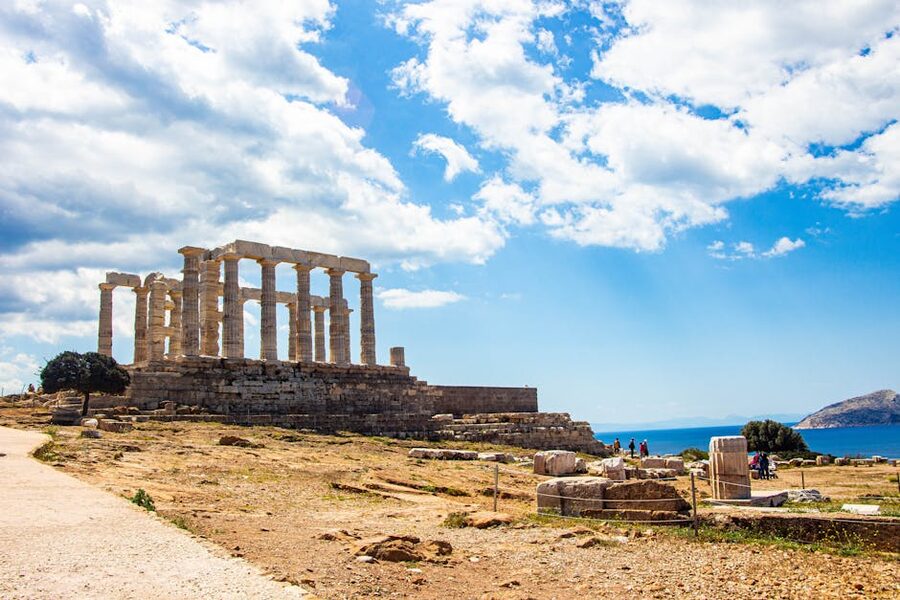
You enter from the eastern side, walking up a paved slope. The ticket booth and shop are at the bottom. Most of the climb is gentle, the last bit is the fiddly stretch over the original ancient stones. The temple sits on a flat platform at the top.
Sixteen Doric columns are still standing. They were originally white Pentelic marble, but the local stone weathering and centuries of salt air have given them a slightly bone-coloured patina. You walk a roped perimeter around the temple platform, you don’t go inside the column ring. There’s no longer a roof or pediment, and the cella (the inner chamber that once held the cult statue of Poseidon) is just rectangular foundations.
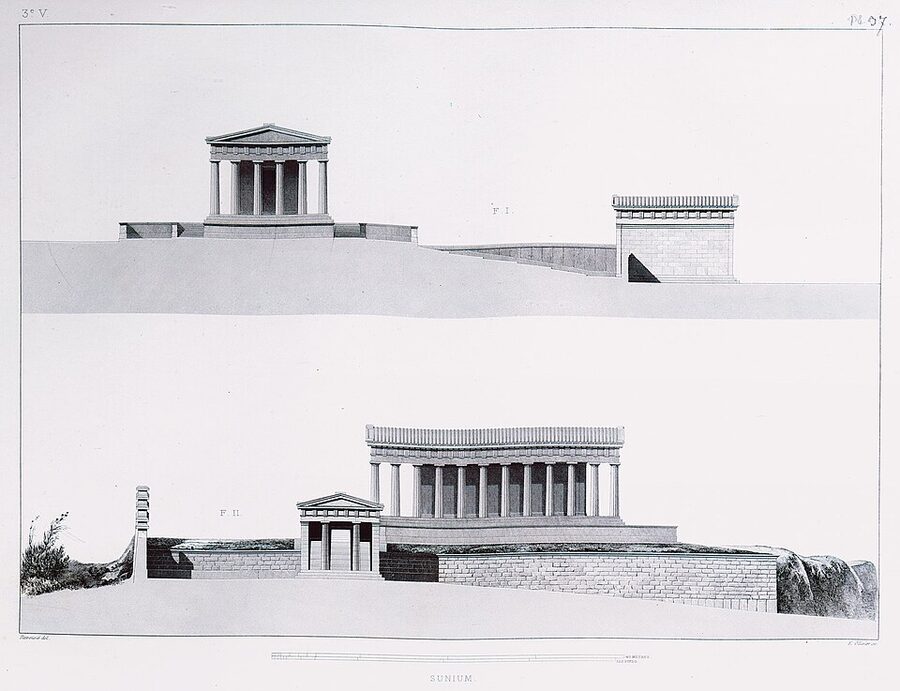
The current temple was built around 440 BC, replacing an earlier one the Persians had destroyed. It’s the same generation as the Parthenon. If you’ve already done the guided Acropolis walking tour in central Athens, you’ll recognise the proportions. Same architects, same school, same period. The Sounion temple is smaller and the columns are slimmer because of the seaside material constraints, but it’s the same family.
Lord Byron and the column
One of the columns has Lord Byron’s name carved into it. He was here in 1810 during his Mediterranean tour, before he was famous. He used a knife or a chisel and just cut his name into the marble. You can still find it. The temple staff will sometimes point it out, or you can ask, although they’re not always keen to help with this.
Byron later wrote about Sounion in Don Juan: “Place me on Sounion’s marbled steep / Where nothing, save the waves and I, / May hear our mutual murmurs sweep.” The “marbled steep” is exactly the cliff you’re standing on. The lines are quoted on signs in the site.
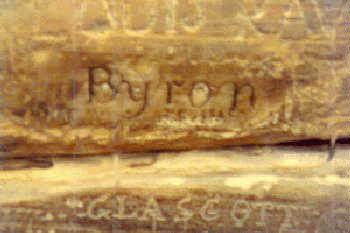
Modern visitors are not allowed to add their own. Don’t try.
What to wear
The cape is windy. It’s almost always windier than central Athens, and on a January or November sunset run it can be properly cold. Bring a layer even if you spent the day in shorts. Think Atlantic-coast windy, not Mediterranean-balmy.
For the climb to the temple, closed-toe shoes or proper sandals. The path has uneven ancient stones near the top and one wrong step in flip-flops is a turned ankle. I’ve watched it happen.
If you’re going for the photo, take a wide-angle lens or a phone with a 0.5x ultrawide. The columns are tall and at the standard viewing distance you can’t fit them all in on a normal lens. Sunset light is harsh and orange, you’ll want to underexpose by half a stop.
How to do it without a tour
You don’t have to book a tour at all. The local KTEL bus runs from Athens to Sounion. There’s a service from Mavromateon Street near Pedion tou Areos park, and another from the coastal road via Glyfada. The fare is about 7 EUR each way. Drive time is similar to the tours, around 90 minutes. The catch is the return: the last bus back from Sounion in summer is usually around 8.30pm, in winter earlier. If you’re cutting it fine for the sunset, you can end up stranded.
The other option is a taxi or private transfer for around 100-130 EUR each way, which only makes sense if you’re a group of three or four splitting it. By the time you’ve added the cost of waiting time at the cape, you’re paying more than the small-group tour and you don’t get a guide.
For most people, the bus tour is the right answer. You’re paying for someone else to handle the timing and the return.
Best month for Cape Sounion
September is my pick. The crowds drop after Greek school summer holidays, the sea is still warm enough that the cape doesn’t feel cold yet, and the sunset hits around 7.30pm so you don’t have to start your day at noon. October and early November are also good if you don’t mind a real wind layer.
July and August are the worst time. The temple platform gets uncomfortably packed, the buses run hot, and the sunset is the latest in the year (you don’t get back to your hotel until almost 10pm). The temple in summer at sunset is shoulder-to-shoulder Instagram. Skip it if you can.
Winter (December to February) is genuinely worth doing if you don’t mind the cold. The crowds are tiny and the low sun gives the columns a much harder, longer shadow. Bring a real coat.
Combining Cape Sounion with the rest of Athens
Cape Sounion is the obvious half-day from central Athens. It pairs well with anything you do in the morning or early afternoon. Most travellers I know do the Acropolis on a different day and use Sounion as their relaxed afternoon. If you’re doing a tight three-day trip, the natural shape is: Acropolis on day one, Sounion sunset on day two, longer day-trip on day three.
The other big day-trip from Athens is the Meteora monasteries, which is a full 12-13 hour day rather than a half-day, and which goes north rather than south. The two trips don’t overlap at all. People often do both on the same Athens stay.
A few people try to combine Cape Sounion with the Acropolis Museum on the same day. It works, just barely. You can do the museum from opening at 9am until about 1pm, get back to your hotel for a quick lunch, then meet the 2.30pm Sounion bus. By 9pm you’re done. The downside is you’ve packed two of the three Athens highlights into one day and you’ll be tired.
Pickup logistics
Most Cape Sounion sunset tours do “pickup from your hotel area” rather than a single fixed meeting point. What this actually means is you get a message the night before with one of about a dozen pickup points scattered around central Athens, Plaka, Syntagma, the Acropolis Museum, and Hilton/Megaron. You walk five to fifteen minutes to your assigned point.
If your hotel is in Piraeus, Glyfada, or further out, double-check before you book. A few operators charge extra for those zones, others don’t pick up at all. The flagship coach tour does Piraeus only by request and adds about 30 minutes to your total day.
The small-group tour usually picks up from a single central meeting point, often near the Acropolis or Syntagma. That’s quicker overall because nobody is doing the round-Athens hotel rotation before you finally hit the road south.
Free or paid? The temple ticket question
The site charges 10 EUR. The bus drops you at the entrance and waits in the parking area. You decide on the day whether to pay and walk up to the columns, or stay below on the rocks for free. The ticket booth takes card.
What’s worth paying the 10 for: getting close to the column ring, seeing the original 5th-century BC stonework, walking the temple platform itself, finding Byron’s signature. What you’re NOT paying for: a better sunset (the open rock viewpoints below the cliff have an equal sea horizon).
If your tour budget is tight, skip the ticket and stay below. If this is your only Greek archaeological visit on the trip, pay it. For the comparable Acropolis sites in central Athens, the multi-site combo pass bundles five to seven sites for not much more than two singles, but Sounion sits outside that bundle.
Sunset times by season
Knowing the sunset time before you book matters because the tour pickup shifts to land you at the cape about 30 minutes before sunset.
- March: pickup around 4pm, sunset around 6.20pm
- June: pickup around 6pm, sunset around 8.50pm (latest of the year)
- September: pickup around 4.30pm, sunset around 7.30pm (my pick for the sweet spot)
- December: pickup around 1.30pm, sunset around 5pm (earliest, also least crowded)
The bus drivers know these timings to the minute and they will push the schedule if you’re slow boarding. Don’t be the person who’s still in the gift shop when the coach is supposed to leave the parking lot.
Food and drink at the cape
There’s one cafe at the Sounion archaeological site itself, at the bottom of the slope by the parking. It does standard Greek tourist-cafe food, gyros, salads, frappes, beer, and it’s open until close. Prices are higher than central Athens but not insanely so. Expect 8 to 12 EUR for a sandwich and a coffee.
Most tours don’t include any food. Some private tours can arrange a stop at a fish taverna in nearby Lavrio on the drive back, which is genuinely good if you have it as an option. Don’t expect tour-included meals on the standard half-day routes; lunch and dinner are on you.
Bring water. The cape is windy and the climb is exposed. Even in March I’ve finished half a litre between bus and temple.
Cape Sounion vs the comparable Mediterranean sunset stops
If you’ve already done a Mediterranean cliff-top sunset elsewhere, Sounion sits in good company. The closest parallel I’ve experienced is the rooftop of Seville Cathedral at the same hour, which has the same warm-stone-against-cooling-sky palette. Sounion has the sea that Seville doesn’t. Seville has the height and the religious architecture that Sounion’s been missing for two thousand years.
If you’re working through Mediterranean monuments more broadly, the experience also rhymes with the Alhambra at golden hour in Andalusia. Different empire, different stones, same warm-light-on-old-stone effect. Sounion is starker and shorter; the Alhambra is denser and gives you more to walk around.
The true twin for Sounion is harder to find because the Athens combination of cliff-top temple and open horizon at sunset is genuinely rare. The closest thing in Italy would be Paestum or Agrigento, neither of which sits literally on the sea.
What can go wrong
A few honest warnings.
The traffic on the way back can be bad. By the time the sun has set, every coach in the parking lot wants to leave at the same time. The single coastal road back to Athens funnels them all. Plan for the return drive to take 20-30 minutes longer than the outbound, especially in summer.
Cloudy days kill the sunset. If a serious cloud bank comes in from the west, the sun never quite drops cleanly into the sea, you just see it disappear into grey. The tour operators don’t refund for cloudy weather and the temple is still beautiful, but you should mentally prepare for “we saw the temple and the sky got dark” rather than “we saw the colours of the apocalypse.”
The ticket booth has a queue at peak. If your tour lands you at the cape with all the others, you may queue 10-15 minutes for the ticket. Some smaller-group operators pre-buy in bulk and skip you to the front; the big coach operators don’t. Worth asking your specific tour what they do.
Some operators run “highlights of Athens + Sounion sunset” as a single 12-hour day. These exist but I’d avoid them. You spend too long sitting in a bus, you do the Acropolis on tired feet, and you arrive at Sounion already exhausted. Treat them as separate days.
The mythology bit, briefly
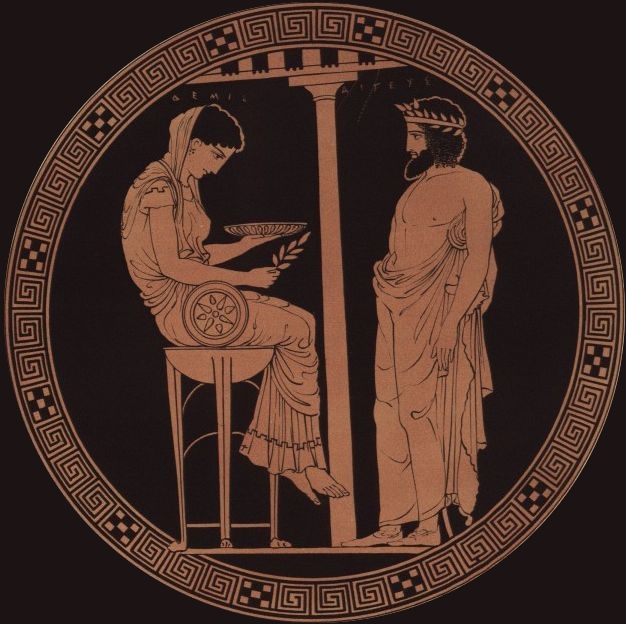
Poseidon was the god of the sea and storms in the Greek pantheon, brother to Zeus, uncle to Athena. The cult at Sounion was specifically Poseidon-of-the-sea-route, the deity you asked for safe passage. The temple’s east-facing orientation matters. Poseidon’s morning was the sailor’s morning.
The cape is also where, in Greek myth, King Aegeus threw himself into the sea after mistakenly believing his son Theseus had been killed by the Minotaur. Theseus had agreed to fly white sails on the return voyage if alive, black if dead. He forgot. Aegeus, watching from Sounion, saw the black sails and jumped. The Aegean is supposedly named after him.
Whether the myth predates the temple or whether the temple created the myth is a question for archaeologists, but the cult of Poseidon and the stories of Aegeus are inseparable from the cape itself. The story is part of why a 5th-century BC Athenian would have funded a temple here in the first place, and why the spot still feels significant 2,400 years on.
One small last thing about the wind
Stand on the temple platform when the meltemi is blowing in summer and you’ll understand instantly why these columns have lost three-quarters of their fellows. The wind here doesn’t just blow, it scours. Pentelic marble is hard but it’s not infinite. The columns that remain are the ones whose original orientation kept them slightly leeward of the worst gusts.
That’s also the wind that nearly capsized the ancient ships rounding Sounion on the way home from Egypt or Asia Minor. It’s why the temple is here. Two and a half thousand years of weather doing the same thing.
Other Greek guides worth a look
If Sounion is your first Athens trip, you’ll probably also want to nail the Acropolis itself; we’ve a separate guide on booking a guided Acropolis walking tour and another on the multi-site Acropolis combo ticket that bundles the Ancient Agora and the Olympieion. For a full day out of Athens, our guide on the Meteora monasteries day trip is the natural pairing, north rather than south, monasteries rather than temples, and a different kind of long-bus-ride payoff.