Asakusa’s landmarks make a useful map of Japan’s past: a river linked to the city’s beginnings, a temple approach crowded with shops, and a Shinto shrine beside a Buddhist temple. This walk uses those places to explain how Japanese history and beliefs fit together, and how Japan connected with the wider world.
I like two things in particular: the guide links local sights to bigger ideas, including Japan’s reopening to foreign influence and ukiyo-e’s impact on European art; and the route gives you time at Nakamise Street to browse and try Japanese snacks. Guides Kay, Taka-san, and Keiko have each been praised for answering questions, helping families, and, in Taka-san’s case, taking photos.
One consideration: the tour lasts about two hours, despite being sold as a half-day walk, and the audio system is used only for groups of three or more. The tour also depends on the operator having a guide available, so confirm your booking and keep an eye out for any update.
- Key points to know
- A two-hour walk that connects local sights to Japan’s past
- Starting beside the Sumida River
- A city view from the Culture Tourist Information Center
- Kaminarimon and its famous red lantern
- Passing through Hozomon to Senso-ji
- Understanding the shrine beside the temple
- How the guide shapes the experience
- Is .55 good value?
- Practical details before you book
- Who should book this Asakusa walk?
- FAQ
- How long does the tour last?
- What is the starting price?
- What is included in the price?
- Are food and drinks included?
- Where is the meeting point?
- Where does the tour finish?
- How many people can join the group?
- When is the earphone guide system available?
- The Best Of Tokyo!
- More Walking Tours in Tokyo
- More Tours in Tokyo
- More Tour Reviews in Tokyo
- Not for you? Here's more nearby things to do in Tokyo we have reviewed
Key points to know
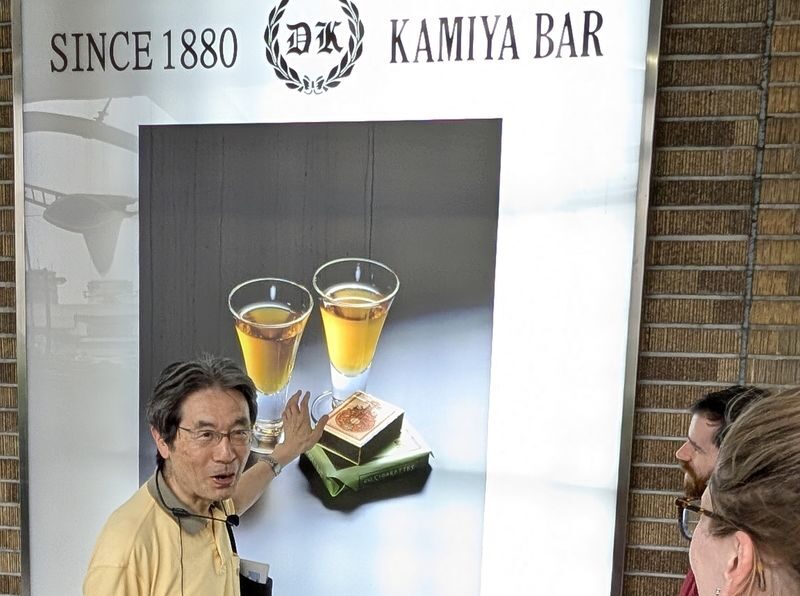
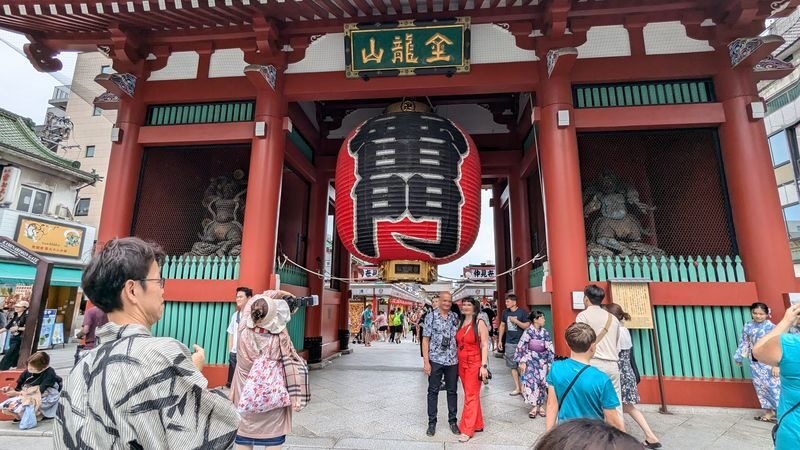
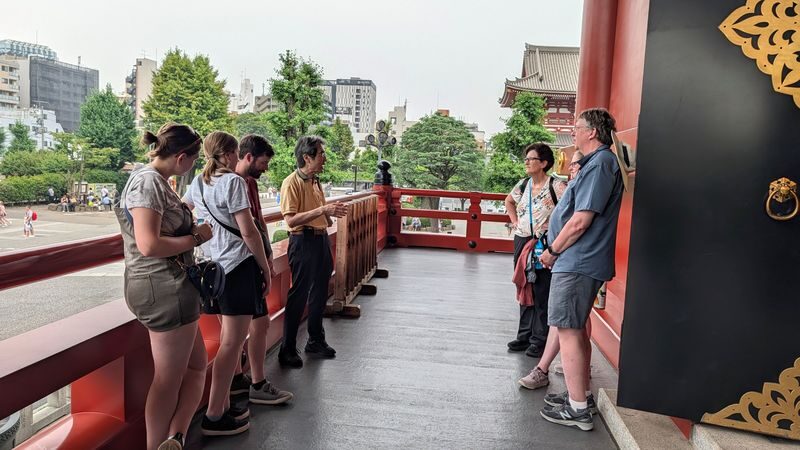
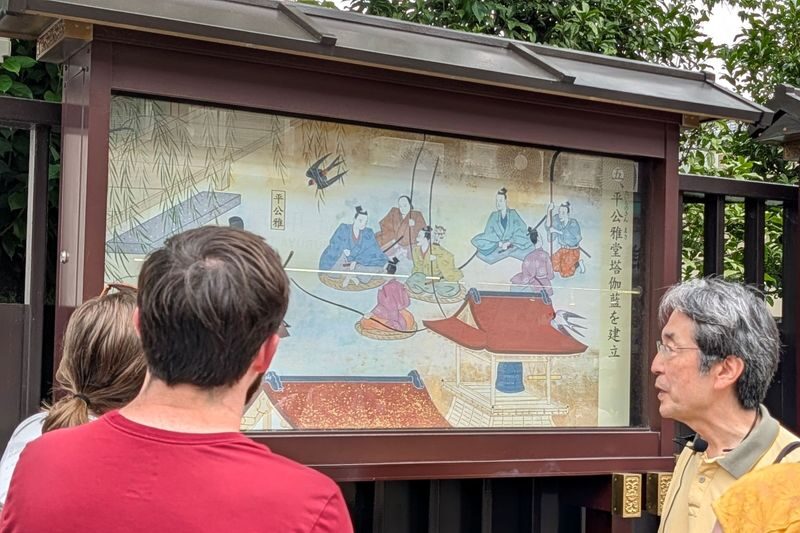
- A short route with a big historical purpose: The guide connects Asakusa’s sights to Japan’s past and its links with the outside world.
- Seven stops, from the Sumida River to Senso-ji: The walk ends around Tokyo’s oldest temple, with Asakusa Shrine next door.
- Nakamise is your browsing break: You get about 30 minutes on the approach to Senso-ji, where food stalls and souvenir shops line the street.
- Small groups are part of the format: Group size is limited to one to eight people.
- Audio support depends on group size: The earphone guide system applies to groups of three or more.
- Expect about two hours on foot: The scheduled time is 9:30 to 11:30, with the exact order or timing subject to change due to weather and traffic.

👉 See our pick of the 25 Best Guided Tours In Tokyo
A two-hour walk that connects local sights to Japan’s past
Asakusa is easy to approach as a string of photo stops: the red lantern at Kaminarimon, the busy Nakamise shopping street, the main hall at Senso-ji. This tour gives those places a wider frame. The guide uses landmarks to explain how Japan’s history, religious traditions, and contact with other countries shaped the city you see today.
That broader approach is the tour’s main appeal. Along the Sumida River, you hear about Japan’s shift from long isolation toward reopening under pressure from abroad. The walk also introduces Buddhism and Shinto, compares Japanese and Western dragons, and explains how ukiyo-e prints influenced European art. You get more than dates and names, but the route remains grounded in places you can see.
The tour is scheduled from 9:30 to 11:30. That is a helpful length if you want context before exploring Asakusa on your own, or if you are travelling with children and would rather not commit to a long guided day. One family with a toddler found the duration manageable, and the guide Taka-san was praised for answering questions and taking photos.
You can also read our reviews of more walking tours in Tokyo


Starting beside the Sumida River
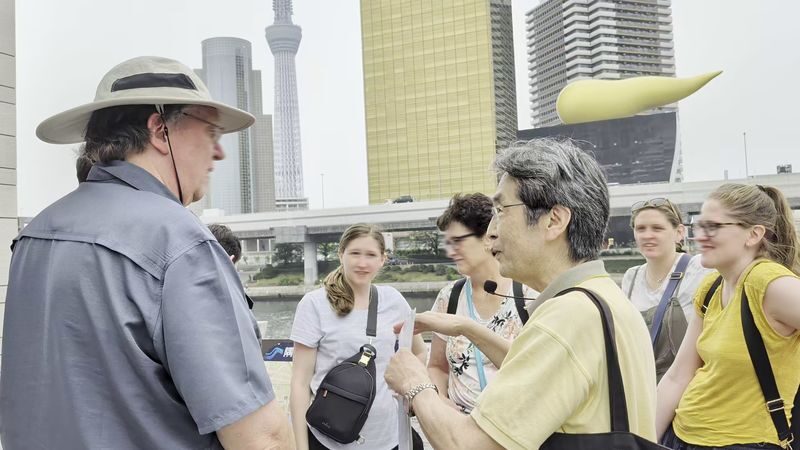
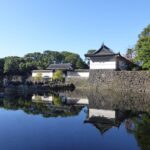
The first stop is Sumida Park, where the tour begins with Asakusa’s connection to the river. You cross Azumabashi Bridge and get views of Tokyo Skytree and the Asahi Breweries headquarters, including its well-known golden flame object. The riverside setting gives the guide room to introduce the area before you enter the tighter streets around the temple.
This opening is a useful change of pace from starting immediately at a temple gate. It puts the city’s geography first and gives the history a physical anchor. The tour’s wider discussion of Japan’s move from isolation to reopening also makes the river a fitting place to start, since the guide uses it to set up the country’s changing relationship with the outside world.
The park stop is listed as 15 minutes, so treat it as an introduction rather than a long riverside visit. If views are important to you, listen for the guide’s pointers and take your photos promptly before the group moves on.
A city view from the Culture Tourist Information Center
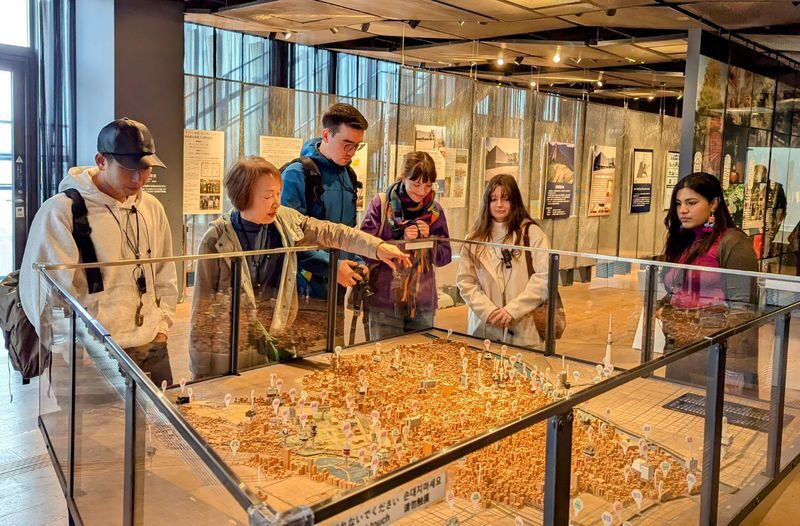
From the river, you walk to the Asakusa Culture Tourist Information Center, another 15-minute guided stop. The building is presented as both a source of practical sightseeing information and one of Asakusa’s newer attractions. It offers a contrast to the older temple district that follows.
The tour’s value here lies less in a long visit than in seeing how the modern city sits alongside its historic center. The guide can help you get oriented before the route reaches Kaminarimon and the temple approach. If you are hoping for an extended stop inside the center, the schedule does not suggest one; it is a brief part of the walk.
Kaminarimon and its famous red lantern
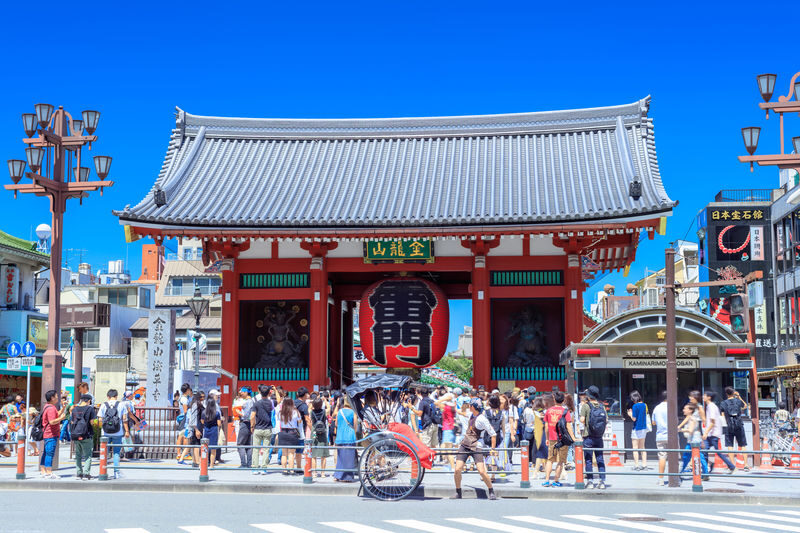
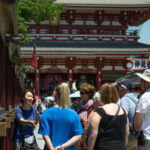
Kaminarimon, or the Thunder Gate, is one of the two large gates on the approach to Senso-ji. Its enormous red lantern makes it one of Asakusa’s best-known sights, and the guide takes about 15 minutes to explain the gate and its features. With the background, it becomes more than a popular place to pause for a photograph.
This is where a guide can be especially useful. The gate is often crowded with people taking pictures, and its scale can make it easy to look without noticing details. The tour promises to explain the lantern and the gate, giving you something to focus on besides finding a clear camera angle.
The group then moves along Nakamise-dori, the 250-metre shopping street between Kaminarimon and Senso-ji’s main hall. This is the longest scheduled stop, at about 30 minutes. Shops and food stalls line the route, with souvenirs and Japanese street food available to buy.
Meals and drinks are not included, so bring money if you want to sample something or pick up a small gift. The time is enough to browse, but it is not an open-ended shopping break. If you see something you want, decide without waiting until the end of the street, since the group continues on to the temple.
Passing through Hozomon to Senso-ji
Hozomon is the inner of the two large gates leading to Senso-ji. The tour allows about 15 minutes here, with attention to objects housed in the first story and treasures kept on the second story. It is another point where the guide’s explanations can help you notice more than the gate’s size and decoration.
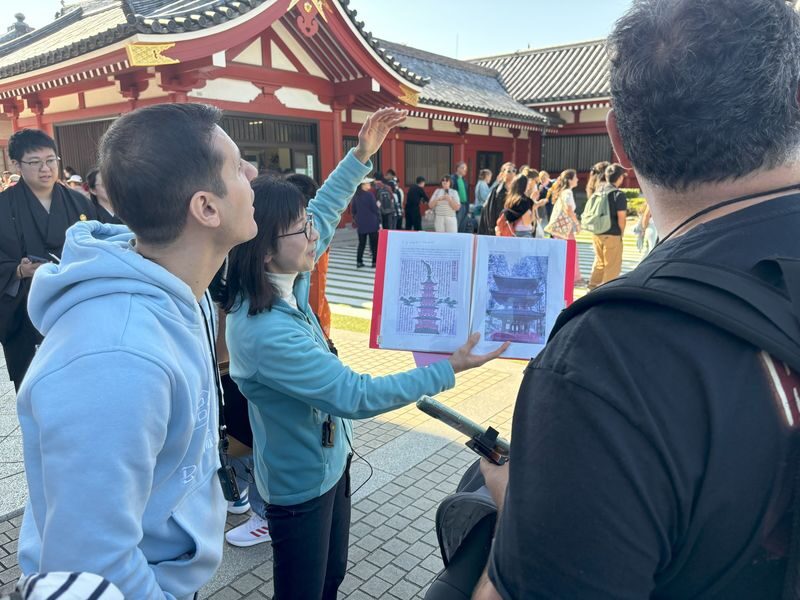
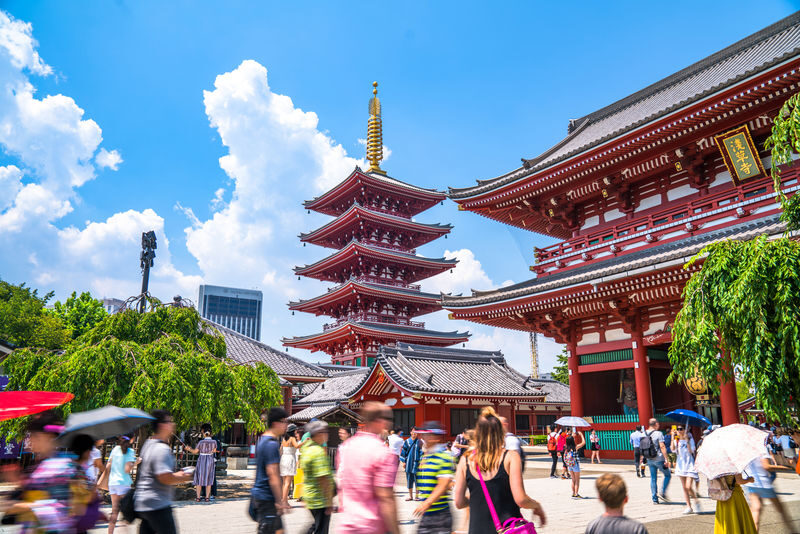
The next 15-minute stop is Senso-ji itself, described as Tokyo’s oldest temple. Around the main hall, you can see features such as the five-storied pagoda, incense burner, and paper fortunes. The tour also takes you into the main hall, where local worshippers come to pray.
This combination of explanation and observation is a strength of the walk. You are not only hearing about the history from outside; you also get a chance to enter the main hall and see how the temple is used. Allow space for the fact that this is an active place of worship, not just a historic backdrop. Follow the guide’s directions and be respectful of people who have come to pray.
You can also read our reviews of more historical tours in Tokyo

Understanding the shrine beside the temple
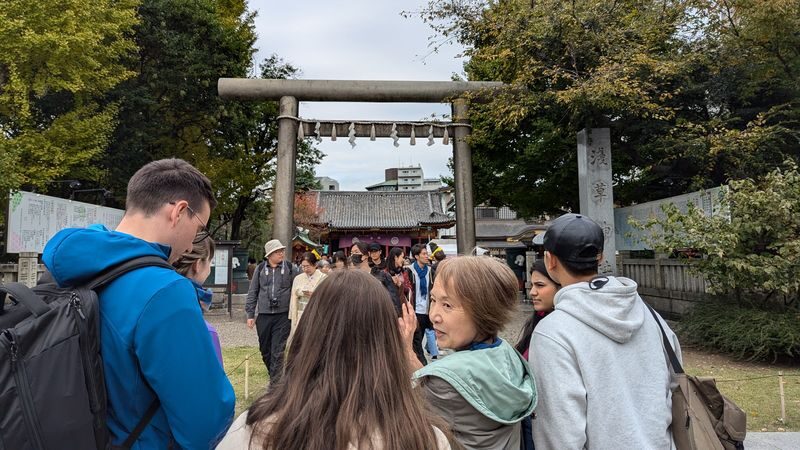
The final listed stop is Asakusa Shrine, beside Senso-ji. The guide explains how a Buddhist temple and Shinto shrine could share the same grounds and have connected origins and worshippers. That relationship is a central idea of the walk, and a practical way to understand how these two traditions have existed alongside each other in Japan.
The stop lasts about 15 minutes, then the tour ends around Senso-ji at roughly 11:30. You finish in a useful spot for continuing your own visit: you can return to a temple detail you want to see again, browse nearby shops, or look for lunch. Meals are not part of the tour, so plan your next stop separately.
How the guide shapes the experience
The route is compact, but the subject matter is broad. A good guide makes the difference between a brisk circuit of familiar sights and a walk that helps you understand why they matter. The tour is led in English, and past guides Kay, Taka-san, and Keiko have each been named for their clear explanations and helpful approach. Taka-san was also noted for taking photos, a welcome extra if you want a group picture.
Questions are a natural fit for this format. One of the tour’s stated aims is to build a big-picture understanding, so you can ask how a temple feature connects to Buddhism, how Shinto fits beside it, or why ukiyo-e mattered beyond Japan. The small group limit of eight can make it easier to hear and take part than on a large coach tour.
For groups of three or more, an earphone guide system is available so you can hear the guide from a little farther away. It is not specified for smaller groups, so if you are travelling alone or as a pair, expect to stay close enough to hear the guide directly.
Is $23.55 good value?
At a starting price of $23.55, the tour is a low-cost way to add historical context to an area you can also explore on your own. You are paying for an English-speaking guide, an audio guide where applicable, and insurance provided by the operator. You are not paying for food, drinks, souvenirs, or personal expenses.
The value depends on what you want from Asakusa. If you are content to walk through the gates, take photos, and browse Nakamise, you may not need a guided tour. If you want to understand the connections between Japan’s history, religions, and global influence, the guide adds a layer that can be hard to assemble while moving through a busy district by yourself.
The tour’s short duration is part of that value, but also a limit. It covers several major sights without taking most of your day, yet each stop is brief. Think of it as a strong orientation rather than an exhaustive study of Asakusa.
Practical details before you book
Meet at 9:30 in front of the Burger King beside Exit 4 of Asakusa subway station on the Ginza Line. The listed meeting location is Burger King Asakusa Azumabashi, at Cross Bil Royal Palace, 2 Chome-20-6 Kaminarimon, Taito City. Arrive five minutes early; late arrivals and no-shows are not refundable.
The return is around 11:30 at Senso-ji Temple. The route and schedule may change with traffic or weather, so leave some flexibility if you are arranging another activity immediately afterward. The voucher is for the date and time you booked, and you can present it on your phone.
The group size is one to eight participants. You receive confirmation within minutes, and if it does not arrive, contact customer support. You can cancel for a full refund up to 24 hours before the activity date in local time; no refund or amendment is offered for arriving late or missing the tour. One practical caution is that a guide availability problem can still disrupt plans, so check messages from the operator before setting out.
Who should book this Asakusa walk?
I would choose this tour if you want an efficient introduction to Asakusa and prefer a guide to connect the sights rather than simply point them out. It suits first-time visitors, history-minded families, and anyone curious about the relationship between Buddhism and Shinto or Japan’s links with European art and global history.
It is less suitable if your priority is an unhurried shopping session, a food-focused tour, or a long visit inside each landmark. The Nakamise stop gives you time to browse and buy snacks, but those purchases are your own, and the overall walk moves at a set pace.
For the price, the strongest reason to book is the context. If that is what you want, this compact route makes a sensible start to your time in Asakusa. If you would rather explore at your own speed, keep the route in mind and use the two-hour saving for a self-guided visit instead.
Asakusa: Big-picture History Walk to Know Japan
“This was a wonderful tour guided by a lovely tour guide who seemed very passionate about the history and culture. Embarking on this tour made us so…”
FAQ
How long does the tour last?
It runs from 9:30 to around 11:30, for about two hours. The schedule may change due to traffic or weather.
What is the starting price?
The Asakusa Half-Day Walking Tour starts at US$23.55. The price may vary by date or availability.
What is included in the price?
An English-speaking guide, an audio guide, and insurance provided by the operator are included.
Are food and drinks included?
No. Meals and beverages are not included, and any food or souvenirs you buy are personal expenses.
Where is the meeting point?
Meet in front of the Burger King beside Exit 4 of Asakusa subway station on the Ginza Line. The named venue is Burger King Asakusa Azumabashi.
Where does the tour finish?
The tour ends around Senso-ji Temple at about 11:30.
How many people can join the group?
The group size is one to eight participants.
When is the earphone guide system available?
The earphone guide system applies to groups of three or more.