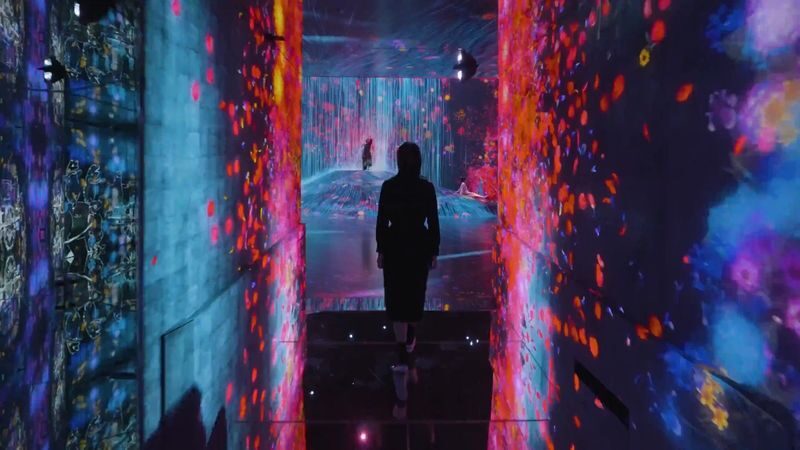
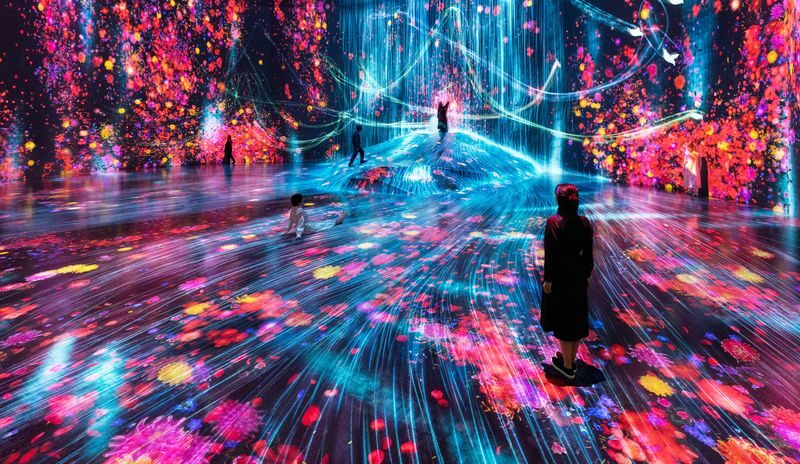
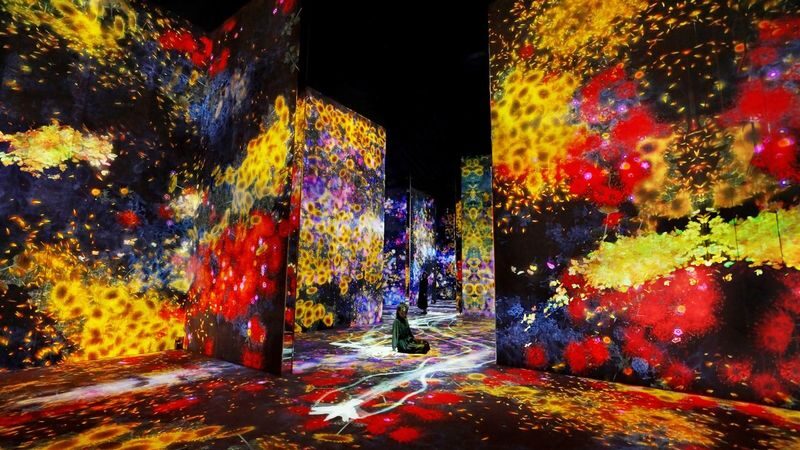
At teamLab Borderless, a field of light can slip from one room into another, so the art feels less like a set of displays and more like a world you can walk through. You choose your own route, and the work changes around you.
I like two things in particular: the shifting art makes repeat visits to a room worthwhile, and the hands-on exhibits give children and adults a reason to look closely rather than simply take photos. The tea house adds a quieter pause, with digital flowers appearing in your cup.
The main drawback is the setting: it is dark, maze-like and can get crowded. Some rooms have mirrored floors, low ceilings or unstable footing, and the moving lights and sound may not suit everyone.
- Art travels between rooms: Images and light flow through the museum, so the route is not a fixed gallery sequence.
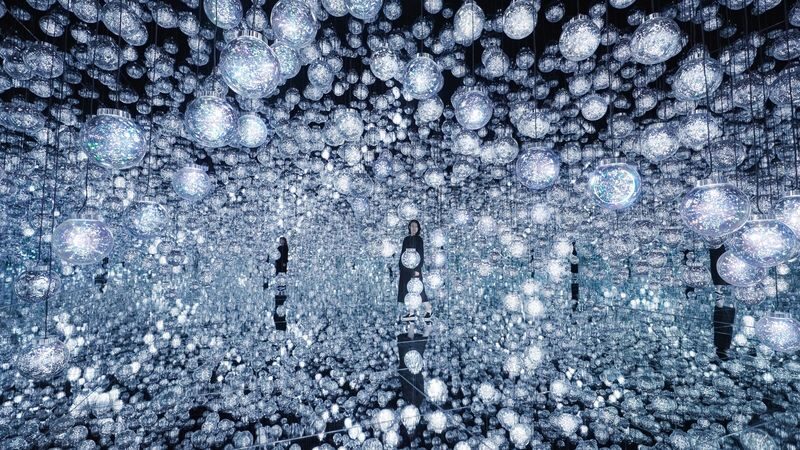
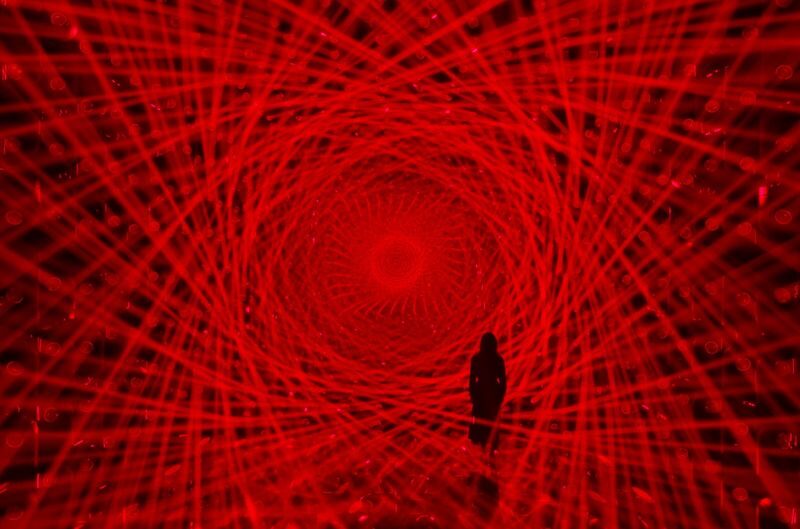
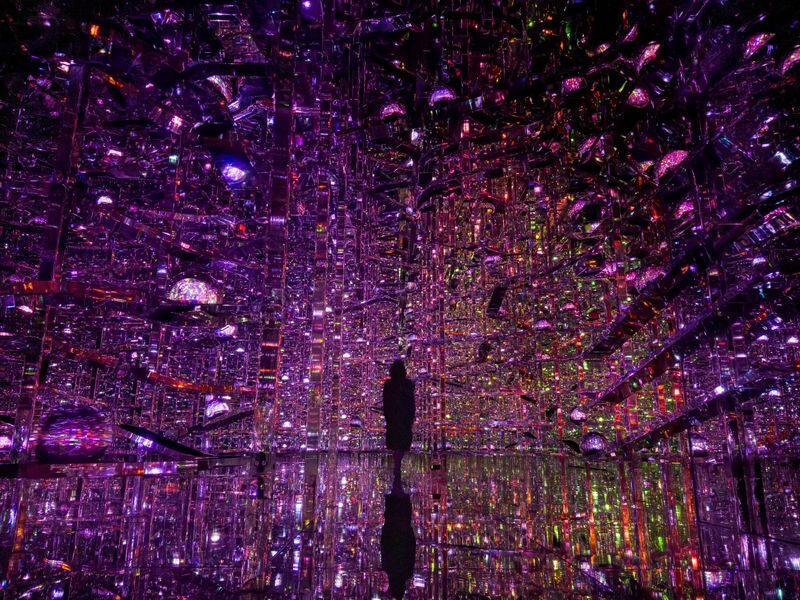
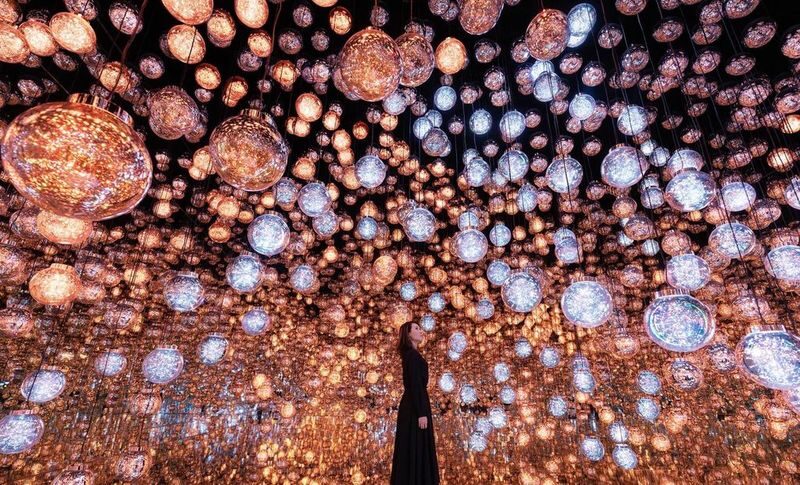
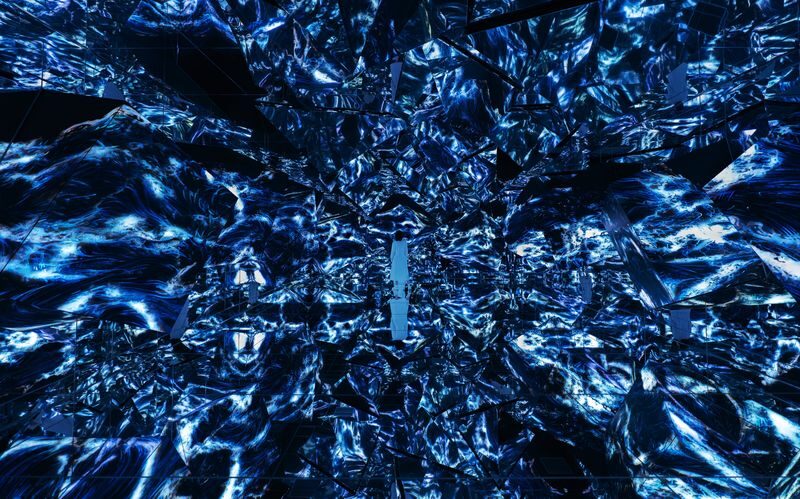
- Bubble Universe and Infinite Crystal World: These are among the signature spaces, with floating spheres and shifting points of light.
- Children can take part: At some exhibits, drawings become part of the wall display.
- EN TEA HOUSE is an extra stop: Order a drink to see digital flowers bloom in your cup. The listed offer includes gelato with a tea purchase.
- Go early if you can: Morning visits are a good bet for more breathing room in the rooms.
- Download the app first: It provides artwork information and may be needed to get numbered admission for certain installations when it is busy.
- A museum without a set route
- Finding your way through the art
- Three works worth making time for
- EN TEA HOUSE: a slower stop
- How long to spend, and when to go
- Tickets, price and what the choices mean
- Getting there and preparing for entry
- Who will enjoy it, and who should think twice
- Should you book teamLab Borderless?
- FAQ
- How long should I plan for teamLab Borderless?
- Where is teamLab Borderless?
- What is the nearest subway station?
- Should I download the teamLab app?
- Can I enter at any time?
- Can I cancel or change my ticket?
- Is the tea house included in the ticket?
- Is teamLab Borderless suitable for children?
- The Best Of Tokyo!
- More Tickets in Tokyo
- More Tours in Tokyo
- More Tour Reviews in Tokyo
- Not for you? Here's more nearby things to do in Tokyo we have reviewed
A museum without a set route
 1 / 9
 2 / 9
 3 / 9
 4 / 9
 5 / 9
 6 / 9
 7 / 9
 8 / 9
 9 / 9
teamLab Borderless is in Azabudai Hills, in Tokyo’s Minato City. It is a digital art museum, not a conventional gallery with labels and a clear sequence of rooms. Projections, light, sound and motion create the artwork, and parts of it move from place to place.
That shifting quality is the heart of the experience. You may see one room change as you return to it, or spot an image drifting into a space you have already explored. The result is less about ticking off a list than following your curiosity. If you like to wander and notice details, this format is a pleasure. If you prefer a clear route and a set explanation for every work, it can feel confusing.
There is no guide-led tour described, and you set your own pace. The museum suggests allowing about two hours, though two to three hours is a sensible visit window. There is no limit on how long you may stay after entering, so you can linger, revisit a room or take a break at the tea house without watching the clock.

👉 See our pick of the 25 Best Guided Tours In Tokyo
Finding your way through the art
The museum is deliberately maze-like, with rooms and corridors that do not always announce what comes next. That can be part of the fun: turn a corner and you may find a new scene, or discover a familiar image appearing in a different place. It also means you should not expect to see everything in a neat order.
A good approach is to slow down and let the rooms guide you. Notice what changes as you move, and look for ways the art responds to you. Some installations are interactive, and visitors have described swishing their feet through projected water or moving a hand along a wall to affect the visuals. These touches reward attention, but not every room is designed for active play.
The darkness adds to the sense of stepping into another world, but it is a practical concern too. Watch your footing, keep an eye on children and give other people room to move. Some spaces have low ceilings or unstable surfaces, so this is not a place to hurry through while looking only at your phone.
You can also read our reviews of more tours and experiences in Tokyo



Three works worth making time for
Bubble Universe surrounds you with glowing spheres that appear to float and connect. It is one of the museum’s signature rooms, and a good example of how teamLab makes digital effects feel spatial rather than like images on a screen. Give yourself time to watch the shapes and light change instead of aiming for one quick photograph.
Infinite Crystal World fills a space with points of light that form shifting, three-dimensional patterns. The teamLab app can let you send stars into the artwork, adding a participatory element. During busy periods, numbered admission tickets for some works may be distributed through the app. Download it before arriving so you are ready if access is managed that way.
The Sketch Ocean style of activity is especially appealing to families. Children can draw pictures that appear on a wall display, turning their own work into part of the scene. It gives younger visitors a clear way to take part, while adults can enjoy watching their drawings join the moving artwork. The exact exhibits can change with the season, so treat any particular installation as subject to change.
A newer feature listed for the museum is On the Asymmetry of the Universe, a special exhibition featuring light sculptures. Check the official site before your visit for current details, since exhibitions and operating plans can change.
EN TEA HOUSE: a slower stop
The EN TEA HOUSE offers a different pace from the galleries. You order tea, and digital flowers appear in the cup, making the drink part of the display. It is a small, meditative experience rather than a full meal stop, and it gives you a chance to sit and take a breath between rooms.
You must order at least one drink per person to visit the tea house. The ticket offer described here includes gelato worth JPY 700 with a tea purchase, but the promotion is time-limited: it applies to bookings made by October 31 and is subject to the offer terms. Check that the offer is still active for your chosen booking date before you count it as part of the value.
The tea house opens 30 minutes after the museum and stops taking orders 30 minutes before closing. On certain late-closing days, the final order time is listed as 9 p.m. If tea is a priority, avoid leaving it until the end of a late visit.
How long to spend, and when to go
Set aside at least two hours. Many people can spend longer, particularly if they revisit rooms, wait for access to a popular work or stop for tea. The ticket has a selected date and, depending on the option, a time slot, but once inside there is no set departure time.
An early weekday visit is a practical choice if you want more space to look around and take photos. Crowds can reduce the room to room sense of discovery, especially in narrower spaces. Staff may control how many people enter certain rooms at once, but that does not eliminate waiting during busy periods.
The regular hours supplied are 8:30 a.m. to 9 p.m., with last entry at 8 p.m. Some dates have extended hours or closures, so check the official website close to your visit. A ticket is valid only on its selected date and time where applicable, and popular dates can sell out.
Tickets, price and what the choices mean
Tickets start from about $24, with the final price depending on the option and date. For that price, you get access to a large, self-paced art experience rather than a short guided attraction. If you spend two or three hours inside and enjoy interacting with the installations, the cost can represent good value. If you mainly want a few photos and do not care for digital art, it may feel expensive for a single visit.
The standard entrance pass is for the date and time you select. A flexible pass allows entry at any time during opening hours on the chosen date, while the combined ticket adds admission to Tokyo City View, an observation deck with city panoramas. Consider the combined option if the view is already on your Tokyo plan, but check the observation deck’s separate hours before building your day around it.
The booking is not generally refundable. The supplied conditions say changes may be allowed up to two hours before the activity, but there are exceptions, including tickets with freebies and certain pass bookings. Read the terms shown for your exact ticket before purchase. Double-check that you selected Tokyo Borderless, not teamLab Planets or another venue. The two Tokyo teamLab experiences have different locations and formats, and a ticket for one will not get you into the other.
You can also read our reviews of more museum experiences in Tokyo




Getting there and preparing for entry
The museum is at Azabudai Hills Garden Plaza B, B1, in Toranomon, Minato City. The clearest public transport option is Kamiyacho Station on the Tokyo Metro Hibiya Line. From Exit 5, follow the underground passage rather than going up to street level; the museum is about a two-minute walk away. Roppongi-itchome Station on the Namboku Line is around a nine-minute walk from the venue.
Show your mobile voucher at the entrance. You may need to wait during busy periods, so arrive within the time stated on your ticket and leave enough room in your schedule. Some numbered admission tickets for exhibits are distributed through the teamLab app, so install it before you reach the museum.
Travel light. Small lockers are available free, but luggage over 50 centimeters long, strollers, outside food and most drinks are not allowed inside. Strollers can be left in the luggage storage area. Re-entry is not allowed, so take care of meals and essentials before you go in.
Wear trousers if you can. Some areas have mirror surfaces, which may reflect skirts or wide-hemmed trousers. Photos and videos are allowed, but flash, tripods, monopods and selfie sticks are not. Keep your camera use considerate; the dark rooms are easier to enjoy when people are not blocking the way for a shot.
Who will enjoy it, and who should think twice
This is a strong pick for families, art fans, curious first-time visitors and anyone who enjoys visual experiences that change as they move around. Children aged 0 to 3 enter free, and children up to 12 must be accompanied by an adult aged 18 or older. The self-paced format lets families linger where children are engaged and move on when they are ready.
It is not a perfect fit for everyone. The museum warns that it is dark, with flashing lights, loud sounds, low ceilings and uneven or unstable footing. People with conditions such as epilepsy or high blood pressure, pregnant visitors and seniors are advised against the activity. If you are sensitive to motion, light or sound, consider whether the setting will be comfortable for you.
Wheelchair and stretcher access is available by elevator, but some works cannot be entered or experienced by wheelchair. There are limits on the number of wheelchairs and stretchers admitted, and waiting may be required. Contact the museum directly about your needs before booking. Pets are not allowed, including guide dogs under the facility’s stated policy, so check with the venue if you require a service animal.
Should you book teamLab Borderless?
Book it if you enjoy art that asks you to look, move and explore rather than follow a label-by-label route. The strongest reasons to go are the way images travel between rooms, the distinctive light installations and the option to take part in works such as the drawing display. The tea house is a worthwhile extra if you like the idea of a cup of tea with a digital bloom.
Choose an early weekday slot if your schedule allows, download the app, pack light and confirm your ticket is for the Azabudai Hills museum. If you are uneasy in dark, crowded spaces or sensitive to flashing lights and sound, this may not be the right stop. For most curious visitors, though, it is a memorable way to spend a few hours in Tokyo.
teamLab Borderless Tickets: MORI Building DIGITAL ART MUSEUM
“The experience was a unique look at art that most will never see. Each room offers something unique and some are more interesting than others. It's…”
FAQ
How long should I plan for teamLab Borderless?
Plan on two to three hours. You can stay as long as you like after entering, and many people spend extra time revisiting rooms or stopping at the tea house.
Where is teamLab Borderless?
It is at Azabudai Hills Garden Plaza B, B1, in Toranomon, Minato City, Tokyo. The address is Japan, 〒106-0041 Tokyo, Minato City, Toranomon, 5 Chome-9, Azabudai Hills Garden Plaza B, B1.
What is the nearest subway station?
Kamiyacho Station on the Hibiya Line is about a two-minute walk away from Exit 5. Stay in the underground passage after leaving the station instead of going up to street level. Roppongi-itchome Station on the Namboku Line is about a nine-minute walk away.
Should I download the teamLab app?
Yes. It provides information about the artworks and interactive features, and numbered admission tickets for certain works may be distributed through the app during busy periods.
Can I enter at any time?
That depends on the ticket you choose. A standard entrance pass is for the selected date and time, while the flexible pass allows entry at any time during opening hours on the selected date.
Can I cancel or change my ticket?
Tickets are generally nonrefundable. Some bookings may be changed up to two hours before the activity, but exceptions apply, so check the conditions attached to your specific ticket before buying.
Is the tea house included in the ticket?
The tea house is inside the museum, but you must order at least one drink per person to visit. The listed offer provides gelato worth JPY 700 with a tea purchase when the offer conditions are met.
Is teamLab Borderless suitable for children?
Children aged 0 to 3 enter free, and children aged 0 to 12 must be accompanied by a parent or guardian aged 18 or older. The museum is dark and has flashing lights, loud sounds and uneven or unstable footing, so supervise children closely.