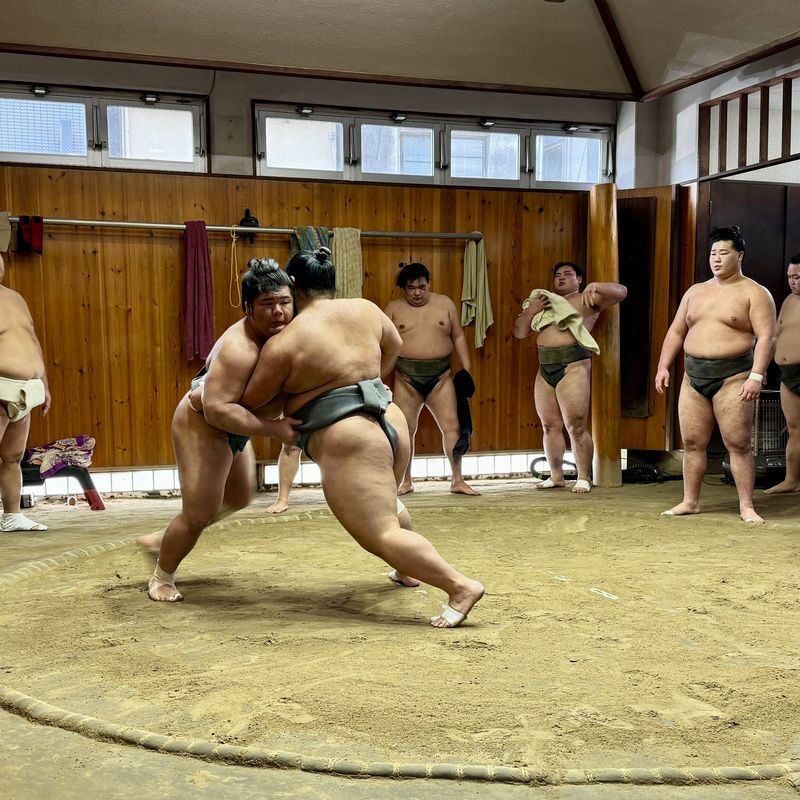
Sumo practice brings you within a few feet of wrestlers as they work through the demanding routines that shape the sport. This is a look inside a working stable, not a tournament, and the close view of the wrestlers’ training is the main event.
I like two things in particular: you see the discipline and physical effort behind sumo, and the intimate setting makes the practice feel like a real part of the wrestlers’ day rather than a performance built for an audience. There may also be a chance to take a photo with wrestlers afterward, though that should be treated as a bonus, not a promise.
The main drawback is the uncertainty. The stable, exact start details, and length of practice depend on its schedule, and the viewing area can feel crowded. You’ll need an early start, quiet manners, and patience if your view is not from the front.
- Practice, not a match: Watch training in a sumo stable, with warm-ups and, depending on the session, practice bouts.
- Close viewing: The viewing area can put you only a few feet from the wrestlers, but the crowd may block sightlines.
- A short morning visit: Meet at 8:00 AM and return around 9:15 AM, though practice itself generally lasts 60 to 90 minutes.
- The stable is confirmed later: Its name and address are sent about a week before the visit.
- Tournament dates affect the session: In Tokyo tournament periods in January, May, and September, practice can be only 30 to 40 minutes.
- Come ready to sit quietly: You may sit on the floor for a long time, and eating, loud talk, and disruptive photography are not allowed.
- Close enough to hear the practice
- A stable visit shaped by tradition
- The morning schedule and what it really means
- Getting a clear view of the ring
- What the price buys
- Who will get the most from it
- Booking details worth checking
- Should you book this sumo practice?
- FAQ
- How long does the sumo practice last?
- When and where do I meet?
- Is this a sumo tournament?
- What is the minimum age?
- Do I need to sit on the floor?
- Can I cancel for a refund?
- The Best Of Tokyo!
- More Tours in Tokyo
- More Tour Reviews in Tokyo
- Not for you? Here's more nearby things to do in Tokyo we have reviewed
Close enough to hear the practice
 1 / 3
 2 / 3
 3 / 3
Sumo is more than two wrestlers pushing for position in a ring. A stable is where wrestlers live and train under customs that govern daily life, and access is not routinely open to the public. This visit offers a rare chance to observe that private routine, but it also asks you to fit into the stable’s rules rather than expect the stable to entertain you.
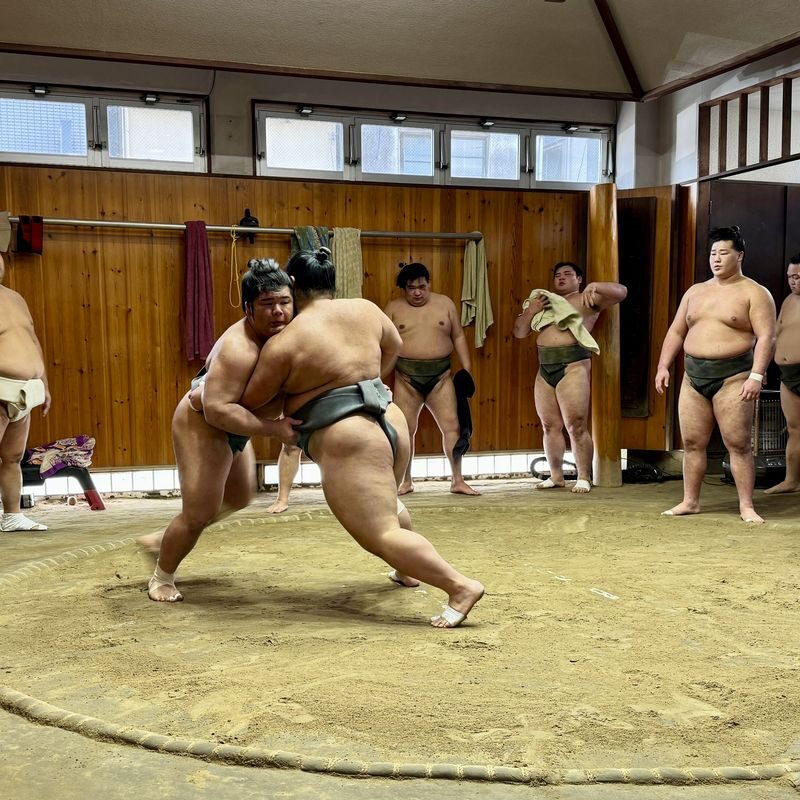
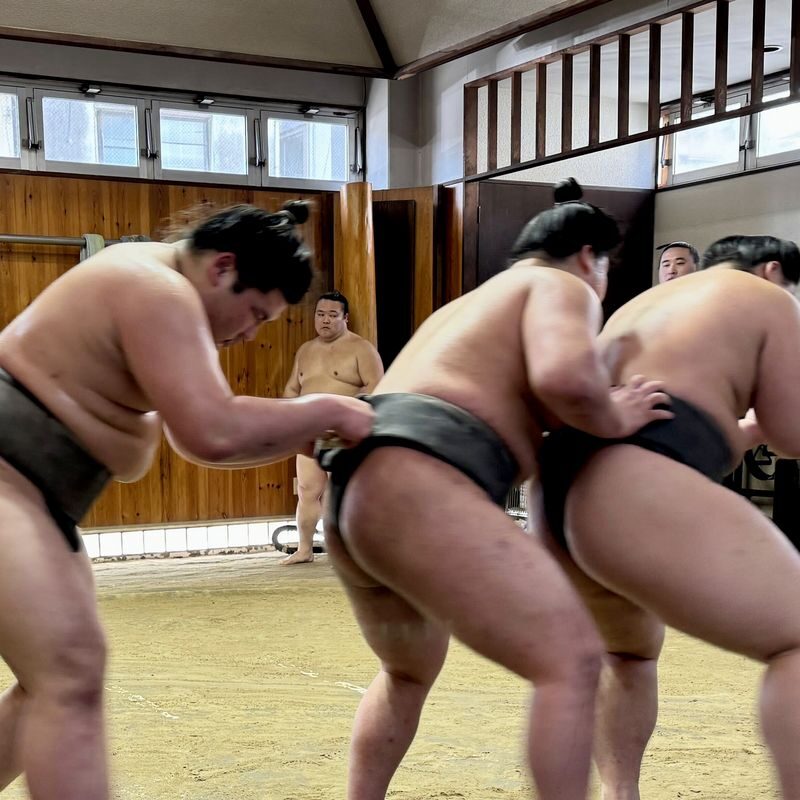
From the viewing area, you may see warm-ups, repeated movements, and training bouts. The close distance is a major part of the appeal: you can take in the force and effort at arm’s length, not from a distant seat in an arena. Some sessions are intense and sustained; others may feel more like conditioning and preparation than the dramatic clashes you have seen on television.
That distinction matters. You are paying to see real practice, not a guaranteed sequence of full bouts or a narrated show. The wrestlers train according to their own schedule. If they are warming up, resting, or moving through drills, that is what you watch.

👉 See our pick of the 25 Best Guided Tours In Tokyo
A stable visit shaped by tradition
The rules are simple, but they are not optional. Keep quiet, do not eat, and avoid flash photography or any camera noise that might disturb the wrestlers. The point is to watch without interrupting a session that is happening for the wrestlers, not for the audience.
This restraint is part of what makes the visit worthwhile. You are entering a place with its own customs, not a tourist venue designed around visitor comfort. Respecting those customs gives you a more authentic view of the practice and helps keep the stable willing to receive outside observers.
You may receive a short explanation of the rules before entering. The amount of background information can vary, however. Some visitors have found the English-speaking support useful for basic directions and etiquette, while others have wanted more explanation of sumo’s history, training, and rituals. I would read a little about the sport beforehand if you want the movements to make more sense. Do not count on a detailed running commentary.
You can also read our reviews of more tours and experiences in Tokyo.



The morning schedule and what it really means
The scheduled meet-up is at 8:00 AM, with a return around 9:15 AM. Arrive at the meeting place 10 minutes early. The meeting point and stable address are not fixed in advance; the operator sends the details about a week before the activity, along with directions. This means you cannot plan the exact route to the stable months ahead.
Build the early start into your Tokyo plans. You will need to reach the designated meeting point on time, and the stable may be a distance from where you are staying. One visitor described using trains and the subway to make the morning start; another found the venue a long way from the station. Since the stable changes, the journey will vary. Check the directions as soon as they arrive and leave extra time for transfers and walking.
The listed visit runs for about 75 minutes from departure to return, but that is not the same as 75 minutes of practice. The training itself is normally 60 to 90 minutes, and the finish time varies each day. The overall schedule can also shift with traffic or weather. Treat the return time as an estimate rather than a hard appointment.
There is a further wrinkle during Tokyo’s tournament periods in January, May, and September, generally around the 15th to 25th. Practice may then last only 30 to 40 minutes, and the price remains the same. Exact tournament dates change each year, and stable availability depends on the schedule. If you are booking near those dates, go in knowing you may get a much shorter session.
Getting a clear view of the ring
The experience is intimate, but the viewing space can be crowded when several groups attend. A front-row spot gives you the clearest view; from farther back, bodies in front can obscure parts of the practice. Arriving promptly at the meeting place is essential, but it does not guarantee a front-row position once the group enters.
If you have trouble sitting on the floor for a long time, plan ahead. The activity requires floor sitting, and the practice may last up to 90 minutes. A few people have reported that a chair was available for those with bad knees, but that is not guaranteed in the activity details. If you need a seat, ask the operator before booking rather than relying on one being provided.
Phones and cameras can be useful, but the stable is not a place for noisy or flashy photography. Keep the camera quiet and switch off the flash. A photo with wrestlers may be possible after practice, and some sessions have included this opportunity. It is a pleasant extra, but the core value is watching the training itself.
What the price buys
At a starting price of $93.95, this is not a cheap way to fill an hour. The fee covers admission and English-speaking staff, and the main value is access to a stable that you may not be able to visit independently. You are paying for entry and a rare close-up encounter, not for a long sightseeing program, a meal, or an elaborate lesson in sumo history. Personal expenses are extra.
Value depends heavily on what you want. If you are fascinated by sumo and want to see how wrestlers train in a working setting, the closeness and authenticity can justify the cost. If you mainly want a dramatic match, a long guided introduction, or a guaranteed 90-minute session, the price may disappoint. A short practice during tournament season makes that calculation especially important.
The minimum group size is two, and the price is listed per person. That can make the visit easier to justify if you are travelling with someone who shares your interest. For a solo visitor, it is worth weighing the expense against how much you value this particular glimpse into sumo life.
Who will get the most from it
This suits you best if you are curious about Japanese sport and custom, comfortable following strict etiquette, and willing to get up early for a focused experience. It can be a memorable choice for a family with teenagers, since the minimum age is 13. Younger children cannot take part.
It is also a practical alternative when you cannot attend a tournament during your stay. But do not confuse the two experiences. At a stable, you see training rather than a formal competition, and the session may include long stretches of drills rather than bout after bout. Read a little about sumo before you go if you want to understand what you are seeing, especially if commentary is limited.
If your priority is interaction, keep expectations modest. The stable is a place of practice, and conversation with wrestlers is not promised. A post-session photo has been possible on some visits, but it is not the reason to book.






Booking details worth checking
Participants must be at least 13. The activity requires sitting on the floor for extended periods, and the stable’s location and schedule are confirmed close to the date. You receive the meeting details about a week ahead, while booking confirmation is due 48 hours before departure. If that confirmation does not arrive, contact customer support.
Changes are not allowed within three days of the experience. Arriving late or missing the meeting means you forfeit the booking, so do not cut your travel time close. You can cancel for a full refund up to 48 hours before the activity, subject to the stated local-time deadline. If extreme weather or an unforeseen event forces the operator to cancel, you can request a reschedule or refund.
Should you book this sumo practice?
Book it if you value access to a real training session more than polished narration, and if seeing sumo up close is high on your Tokyo wish list. Go in expecting an early, quiet, floor-seated visit whose length depends on the stable’s routine. If you want a match, a guaranteed long session, or a detailed guided history lesson, choose another sumo experience. For the curious visitor who can accept those limits, this is a distinctive way to see the discipline behind the sport.
Sumo Practice in Tokyo
“It was truly impressive to be able to see the sumo wrestlers training up close. Everything was perfectly organized via email, and at the end, you c…”
FAQ
How long does the sumo practice last?
The practice usually lasts 60 to 90 minutes, but the length varies by day. During Tokyo tournament periods in January, May, and September, it may last only 30 to 40 minutes.
When and where do I meet?
The scheduled departure is 8:00 AM. The meeting place, stable name, address, and directions are sent about a week before the experience. Arrive 10 minutes early.
Is this a sumo tournament?
No. You watch wrestlers train at a sumo stable. It is a practice session, not a tournament match.
What is the minimum age?
Participants must be at least 13 years old.
Do I need to sit on the floor?
Yes. The activity requires sitting on the floor for a long time. A chair is not guaranteed, so ask the operator in advance if you need one.
Can I cancel for a refund?
You can receive a full refund if you cancel at least 48 hours before the activity, using the local-time deadline. Late arrivals and no-shows are not refundable.























