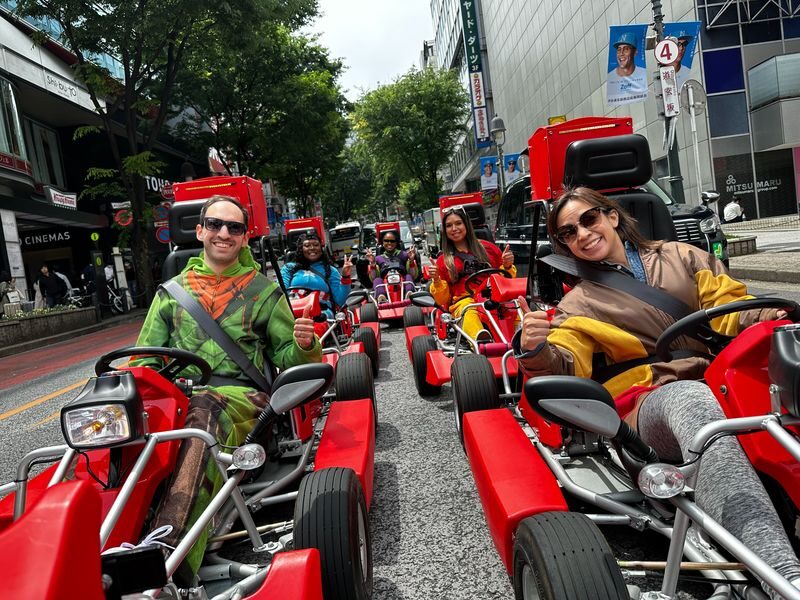
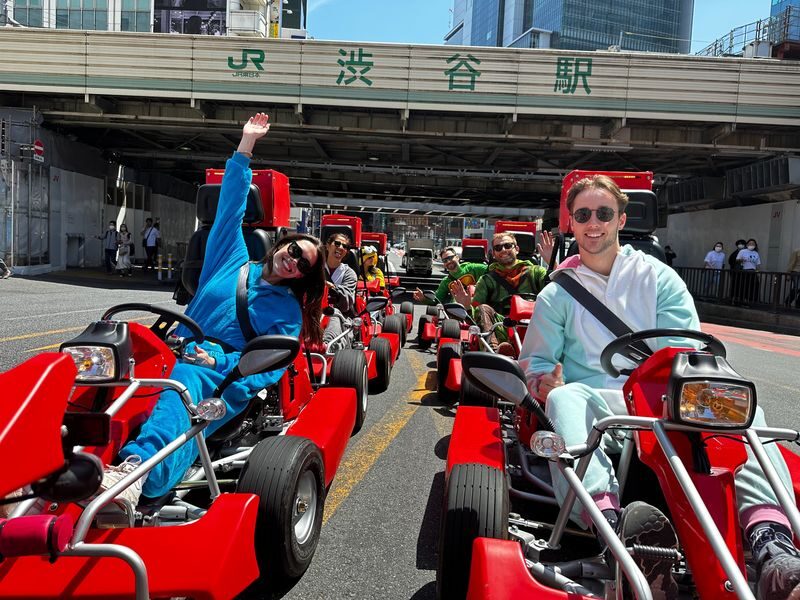
Shibuya Crossing is the headline here: you pass through one of Tokyo’s most famous intersections in a small go-kart, with pedestrians waving and taking photos from the sidewalks. It is a playful way to see the city, but the roads are real, and you drive in traffic behind a guide.
I like two things in particular: the route links Shibuya with Harajuku and Omotesando, so the hour brings a change of scenery, and the guide helps with both safety and photos. Costumes add a lighthearted touch, while the included photo data means you can focus on the ride rather than trying to film it yourself.
The main catch is practical, not subtle: you need the right driving documents, and the rules are strict. Arrive 30 minutes early with your original paperwork in hand. The ride can also feel short for the price, and its actual length may vary with traffic and weather.
- Key points before you book
- The Shibuya Crossing ride is the main event
- Harajuku and Omotesando add contrast
- What the one-hour ride feels like
- Costumes, photos, and the value of the experience
- Driving documents matter more than the costume
- Choose a departure time with care
- Who will enjoy this, and who may want to skip it
- Should you book the Shibuya street kart ride?
- FAQ
- How long is the Shibuya go-kart experience?
- Where is the meeting point?
- How early should I arrive?
- What areas does the route cover?
- What is included in the price?
- What driving documents do I need?
- Can people under 18 join?
- Is the activity suitable for pregnant participants or people with medical conditions?
- Can I get a refund if I cancel?
- The Best Of Tokyo!
- More Tours in Tokyo
- More Tour Reviews in Tokyo
- Not for you? Here's more nearby things to do in Tokyo we have reviewed
Key points before you book
 1 / 6
 2 / 6
 3 / 6
 4 / 6
 5 / 6
 6 / 6
- Shibuya Crossing is part of the ride: The route is promoted as passing through the famous crossing multiple times.
- You drive on public roads: A guide leads the group, but you still need to be comfortable behind the wheel in city traffic.
- The route covers three distinct areas: Expect Shibuya, Harajuku, and Omotesando, not a walking tour with long stops.
- Costumes and photo data are included: Camera equipment and a MicroSD card are not.
- You must bring valid driving documents: Requirements depend on where your license was issued.
- Be at the shop 30 minutes early: Late arrivals and no-shows are not refunded.

👉 See our pick of the 25 Best Guided Tours In Tokyo
The Shibuya Crossing ride is the main event
This is not a kart track with barriers and a few laps. You steer a small go-kart on Tokyo’s public streets, following a guide through Shibuya, Harajuku, and Omotesando. That difference makes the experience both more memorable and more demanding than a standard amusement ride.
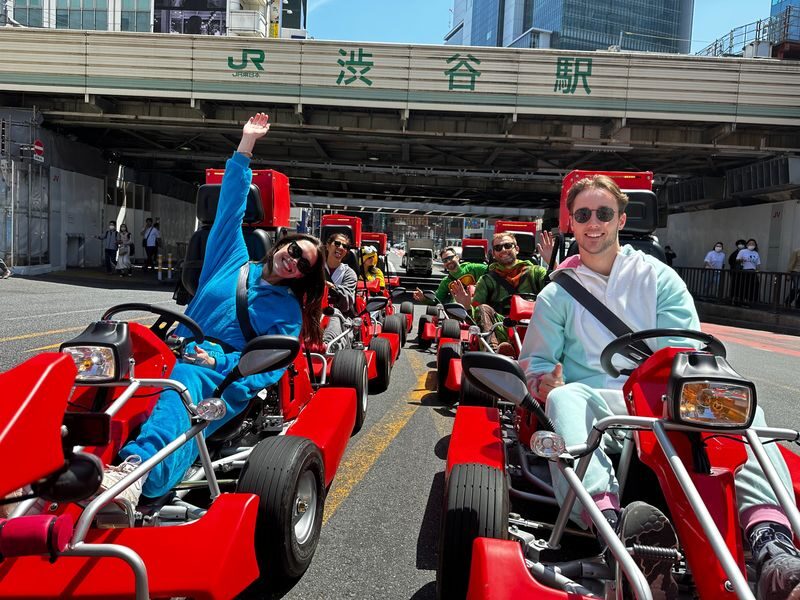
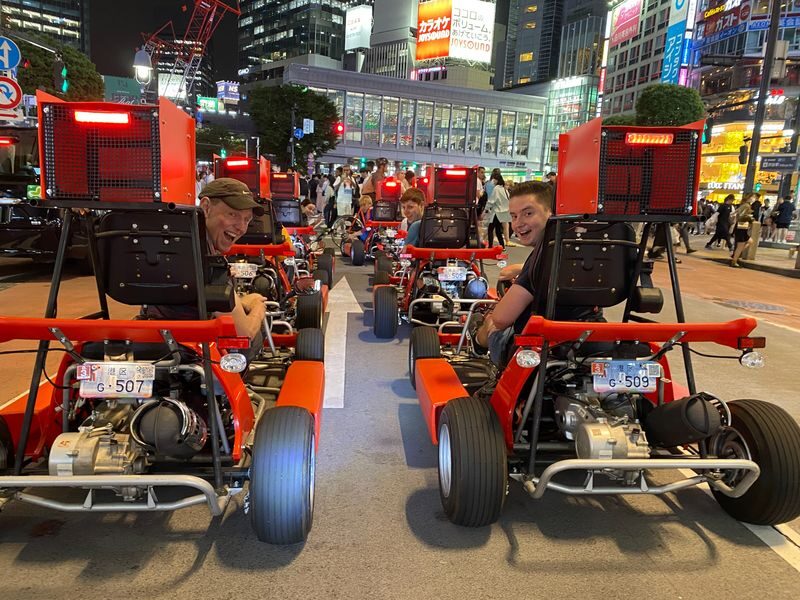
The biggest spectacle is Shibuya Crossing. From a low kart, the city’s signs, buildings, and crowds feel close at hand. The tour is promoted as taking you across the crossing several times, which gives you more than a fleeting look at this famous junction. You are also part of the view: people on the sidewalks may wave, smile, or take pictures as the costumed group goes by.
That attention is part of the fun, but it helps to know what you are signing up for. You are not simply watching Tokyo pass through a window. You are operating a vehicle on the road, keeping pace with a group, and following instructions in traffic. If that sounds thrilling, this is a novel way to experience the city. If you would rather take in Shibuya at your own pace, the crossing is easy to visit on foot.
You can also read our reviews of more tours and experiences in Tokyo.


Harajuku and Omotesando add contrast
The route also passes through Harajuku and Omotesando, two areas with a different feel from the broad spectacle of Shibuya Crossing. Harajuku is known for its kawaii culture, which gives the costume element a natural fit. Omotesando offers another change of scene on the ride through the city.
Think of these areas as part of a moving city tour, not as stops where you get out and explore. The supplied details do not promise time off the kart, specific attractions along the way, or a chance to shop. The value is in seeing the districts from the street and noticing how the atmosphere shifts as the guide leads the group along the route.
This is a useful option if you want a quick overview of several central Tokyo neighborhoods without planning a route yourself. It is less useful if your priority is detailed sightseeing. You will not have the freedom to pause for a snack, linger over a shopfront, or choose which streets to take. The guide sets the pace, and traffic can affect the route and timing.
What the one-hour ride feels like
The package is described as a one-hour experience, while the reference schedule gives a guided outing of about one hour and 15 minutes. The difference may reflect time spent getting organized, but the exact drive time is not guaranteed. One participant reported a ride lasting about 40 minutes, while another felt the time on the road went by quickly. Plan for the activity to take longer than the stated driving time once you add the early arrival requirement, and do not count on a fixed number of minutes on the street.
At the shop, expect to check in, get ready, and receive instructions before setting off. The guide leads the group, and the safety briefing is an important part of the experience. The karts are described as easy to operate, but first-time nerves are understandable. You are sharing real roads, not driving in a closed course.
Once underway, the group follows the guide through the route. The guide’s job is to manage the pace and keep the group moving together. Guides named Miguel, Max, Manuel, Allen, Aziz, Ryuya, and Clinton have been associated with outings here, though you cannot choose or guarantee a particular guide. Accounts of the experience often emphasize clear instructions, careful supervision, and guides taking photos along the way.
The included photo data is a welcome detail. You can enjoy the ride instead of trying to record every moment yourself. A camera equipment rental and MicroSD card are not included, so check what you need to bring or arrange before departure if you want to use your own equipment.
Costumes, photos, and the value of the experience
The advertised starting price is $85.29 for the one-hour package. That is a noticeable spend for a short activity, so the question is what you value. The price includes the guide, costume rental, and photo data, and the unusual setting is a big part of the appeal. You are not paying for a long lesson or a full day of sightseeing. You are paying for a brief, highly visible ride through central Tokyo that would be hard to recreate on your own.
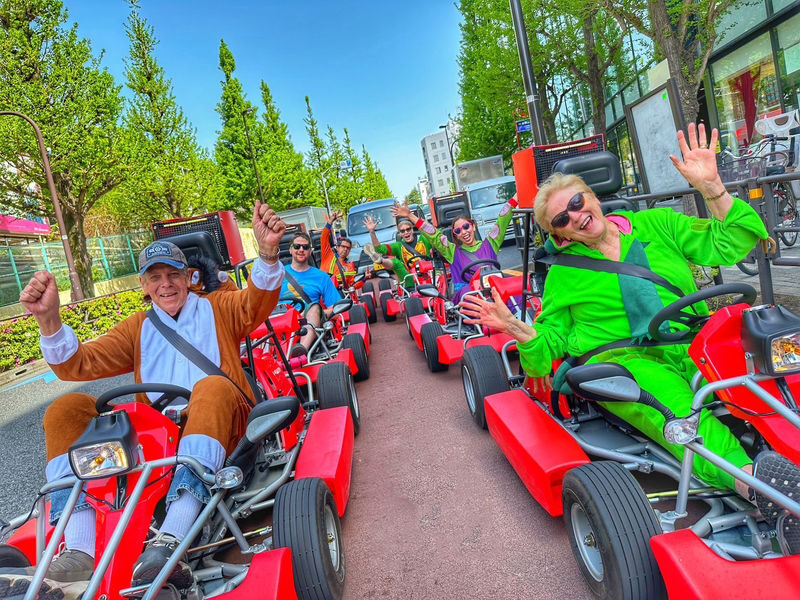
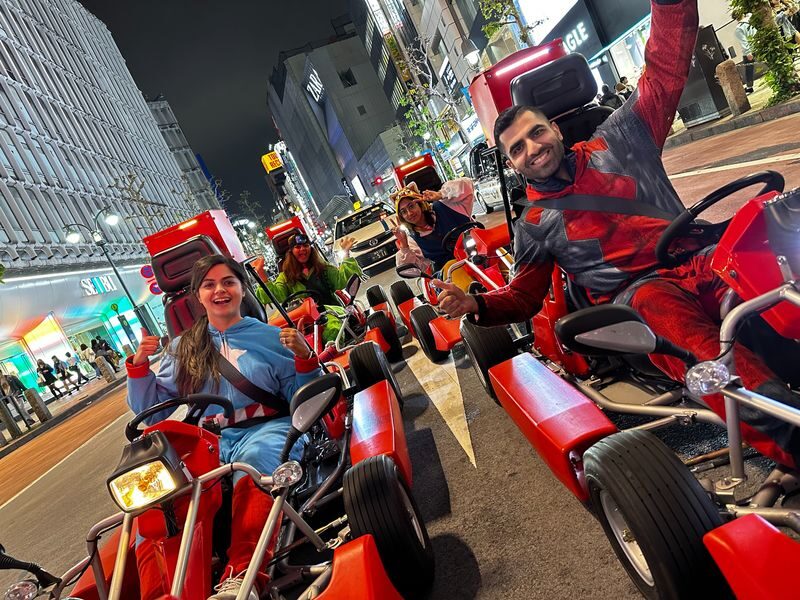
The costumes make the experience feel like a bit of street theater. You can pick one for the ride, then enjoy the reactions as the group passes through busy areas. This is intentionally playful, rather than a quiet or conventional way to see the city. If you enjoy dressing up, driving, and being noticed, the combination can make the hour feel like a highlight. If you dislike costumes or being photographed by people nearby, that same feature may feel uncomfortable.
Guides also help make the price easier to justify. The strongest parts of the experience are not just the kart itself, but the clear instructions, group leadership, and photos. Still, expectations matter. You are not guaranteed a particular guide or a set amount of photo coverage, and the time on the road can vary.
Driving documents matter more than the costume
The legal requirements are the most important part of planning. Participants must be at least 18 and need a valid license arrangement for driving in Japan. For many international visitors, that means a physical International Driving Permit issued under the 1949 Geneva Convention, along with the original home-country license and passport. A digital copy is not a substitute for the required physical documents.
If your license was issued in Switzerland, Germany, France, Taiwan, Belgium, or Monaco, the stated requirement is an official Japanese translation from the Japan Automobile Federation. Licenses from countries that are not covered by the 1949 convention, including China, Indonesia, Mexico, and Qatar, are not accepted for driving in Japan on this activity.
US military participants may use a SOFA permit or a state-side license together with an active-duty uniformed military ID. US, Canadian, and Australian passport holders must present an IDP or eligible SOFA driver’s license, plus the physical home-country license and passport. For Indian passport holders, the IDP must be issued by the Automobile Association of Western India, Upper India, Eastern India, or Southern India, and the physical IDP, license, and passport are required.
After booking, participants are asked to email a copy or photo of the cover and picture ID pages of their IDP for verification. That advance check does not replace the physical documents you must bring on the day. If you arrive with an invalid permit or forget required paperwork, you cannot join and will not receive a refund. Treat the document check as a booking task, not something to sort out at the shop.






Choose a departure time with care
Departures are offered from 10:00 through the evening, with slots at 10:00, 11:00, 12:00, 13:00, 14:00, 15:00, 16:00, 17:00, 17:30, 18:00, 18:30, 19:00, 19:30, and 20:00. Availability can vary, so select the time you intend to attend and arrive at the meeting point 30 minutes beforehand.
The shop is at 15-3 Maruyama-cho, Shibuya-ku, Tokyo, in the Street Kart Shibuya store. The meeting and return point are the same. Build in enough time to find the location and complete check-in. The operator’s rule is firm: late arrivals and no-shows cannot be refunded, and the activity requires you to be ready before the departure time.
Traffic and weather can change the schedule. The operator may cancel for extreme weather or unforeseen events, in which case you can reschedule or request a full refund. If you cancel yourself, the stated full-refund window is at least 24 hours before the activity date, using destination local time. A medical reason after that cutoff is not listed as an exception, so consider that risk before booking.
Who will enjoy this, and who may want to skip it
I would put this near the top of the list for confident drivers who want a lively, unusual activity and do not mind sharing the road with city traffic. It suits couples, friends, and people who enjoy costumes, photos, and a little public attention. It can also be a fun change of pace if the rest of your Tokyo plans are built around temples, museums, and food.
It is not a good match if you lack the required license documents, dislike driving in traffic, or want a slow sightseeing tour with time to stop. The activity is not recommended for pregnant women, people with back pain, people with epilepsy, asthma, or other serious medical conditions, or people with disabilities. Anyone who appears intoxicated may be refused service without a refund. Flip-flops, sandals, and high heels are prohibited, so wear secure footwear.
The tour is also not recommended for anyone who expects a long ride simply because the total outing may take around 75 minutes. You should book for the experience of driving through the city, not for a guaranteed hour of uninterrupted kart time.
Should you book the Shibuya street kart ride?
Book it if you have the correct documents, like driving, and want a playful view of Shibuya, Harajuku, and Omotesando. The guided route, costumes, repeated passes through Shibuya Crossing, and included photo data make it more than a standard kart rental.
Skip it if you would rather explore on foot, need a guaranteed ride duration, or are uncertain about the licensing rules. Before paying, verify your permit type, email the requested IDP pages, and set a reminder to arrive 30 minutes early. Those simple checks are the difference between a memorable hour on Tokyo’s streets and a costly trip to the shop without getting behind the wheel.
Shibuya Street Go-Kart Experience by Original Street Kart Shibuya
“Highly recommended!! My English is terrible, but I could easily understand everything the instructor was saying, and there's even a Taiwanese versi…”
FAQ
How long is the Shibuya go-kart experience?
The package is described as a one-hour go-kart experience. The reference schedule gives a guided outing of about one hour and 15 minutes, and the actual schedule may change with traffic and weather.
Where is the meeting point?
Meet at Street Kart Shibuya, 15-3 Maruyama-cho, Shibuya-ku, Tokyo. The return point is the same location.
How early should I arrive?
Arrive 30 minutes before your booked departure time. Late arrivals and no-shows cannot be refunded.
What areas does the route cover?
The route includes Shibuya, Harajuku, and Omotesando. It is promoted as passing through Shibuya Crossing multiple times.
What is included in the price?
The package includes an English-speaking guide, a one-hour street go-kart experience, costume rental, and photo data. Camera equipment rental and a MicroSD card are not included.
What driving documents do I need?
Most participants need a physical International Driving Permit issued under the 1949 Geneva Convention, along with their original home-country license and passport. Some license holders need an official Japanese translation instead. Check the rules for your license before booking.
Can people under 18 join?
No. Participants must be at least 18 years old.
Is the activity suitable for pregnant participants or people with medical conditions?
The activity is not recommended for pregnant women, people with back pain, people with epilepsy, asthma, or other serious medical conditions, or people with disabilities.
Can I get a refund if I cancel?
A full refund is available if you cancel at least 24 hours before the activity date, using destination local time. Late arrivals and no-shows are not refunded.























