Shinjuku’s best food adventure here is a progressive dinner: eight pieces of seasonal omakase sushi, followed by A5 Wagyu you grill yourself, then a sweet finish. It pairs two major Japanese food experiences with an evening walk through Omoide Yokocho and Kabukicho, so you get a taste of the district as well as its restaurants.
I like the contrast between a sushi chef choosing the day’s fish and the hands-on yakiniku meal, and I like having a guide to explain local customs and steer you through hard-to-find spots. One caveat: the final dessert can vary, so don’t book expecting taiyaki alone, and the included food may not satisfy every big appetite.
- At a glance
- A three-hour dinner with Shinjuku between courses
- Omakase sushi, chosen by the chef
- A5 Wagyu, cooked at your table
- Omoide Yokocho and Kabukicho on foot
- Dessert, with room for variation
- What the 7.19 starting price buys
- Who should book, and who might pass
- FAQ
- How long is the tour?
- What food is included?
- How many drinks are included?
- Is the dessert always taiyaki?
- Is a vegetarian option available?
- Can the tour accommodate food allergies?
- Where is the meeting point?
- When should I arrive?
- Is the tour wheelchair-accessible or stroller-accessible?
- Can children join?
- The Best Of Tokyo!
- More Food Experiences in Tokyo
- More Tours in Tokyo
- More Tour Reviews in Tokyo
- Not for you? Here's more nearby things to do in Tokyo we have reviewed
At a glance
 1 / 8
 2 / 8
 3 / 8
 4 / 8
 5 / 8
 6 / 8
 7 / 8
 8 / 8
- Two headline dishes: The tour includes eight pieces of seasonal omakase nigiri and a full yakiniku dinner with A5 Wagyu.
- Sushi with a chef: At the sushi stop, the chef selects and prepares the seasonal pieces. Your guide can explain dining etiquette and food traditions.
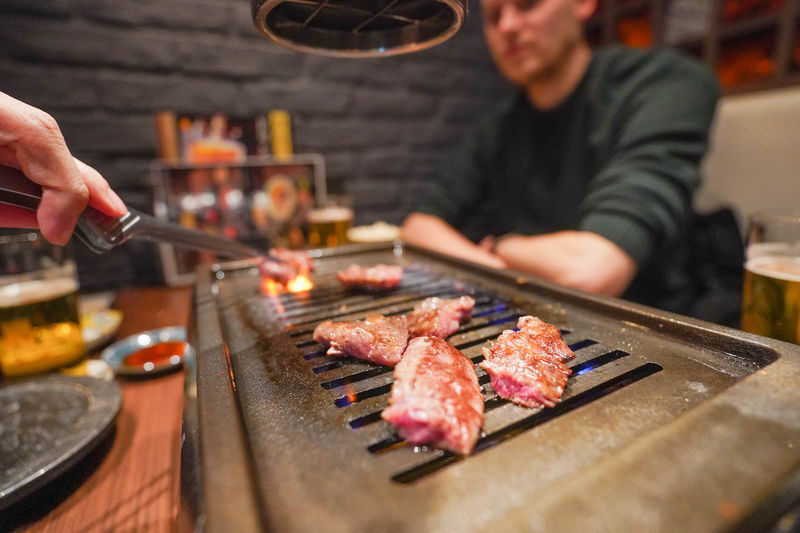
- Grill your own Wagyu: Yakiniku means cooking thin slices of meat yourself at the table, a different experience from being served a finished steak.
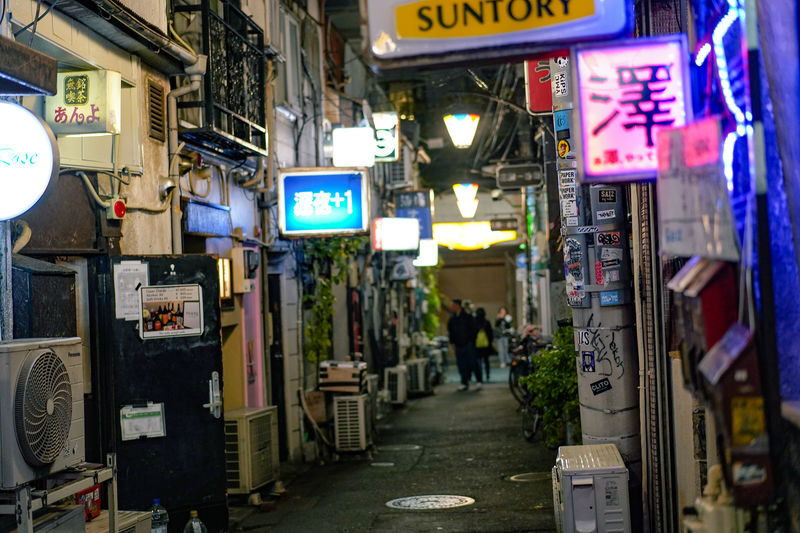
- Shinjuku after dark: Walking connects the food stops with areas such as Omoide Yokocho and Kabukicho.
- A sweet or liquid finish: The last stop includes one dessert or one drink. Taiyaki is part of the advertised experience, but the final choice can change.
- Plan for the fine print: Two drinks are included, vegetarian food must be requested in advance, and the route is not wheelchair- or stroller-accessible.

👉 See our pick of the 25 Best Guided Tours In Tokyo
A three-hour dinner with Shinjuku between courses
The experience starts near the west side of Shinjuku Station and unfolds on foot. Instead of sitting down for one long meal, you move from stop to stop, with the neighborhood itself serving as the connecting course. That format is especially useful if you’re new to Tokyo: the guide handles restaurant choices and explains what you’re eating while you get a closer look at the streets around you.
The tour lasts about three hours. Departure options are listed at 5 p.m. and 6 p.m., with return times around 8:30 p.m. or 9:30 p.m., depending on the schedule chosen. The exact route and menu can change with weather, traffic, season, and ingredient availability, so treat the food sequence as a plan rather than a promise of identical dishes every night.
The gathering point is in front of a black pillar beside the Uniqlo Shinjuku Nishiguchi shop, at 1 Chome-2 Nishishinjuku. It’s about a three-minute walk from the JR Shinjuku Station West Exit, with D1 and B15 listed as nearby station exits. The guide carries a MagicalTrip sign. Arrive ten minutes early: the tour starts on time, and late arrivals who miss the group cannot join or receive a refund.
You can also read our reviews of more tours and experiences in Tokyo

Omakase sushi, chosen by the chef
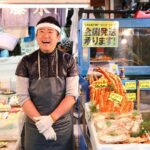
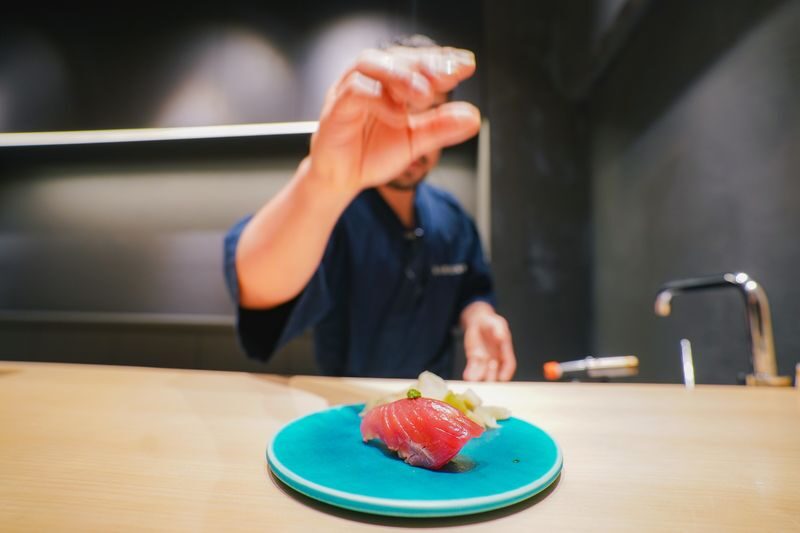
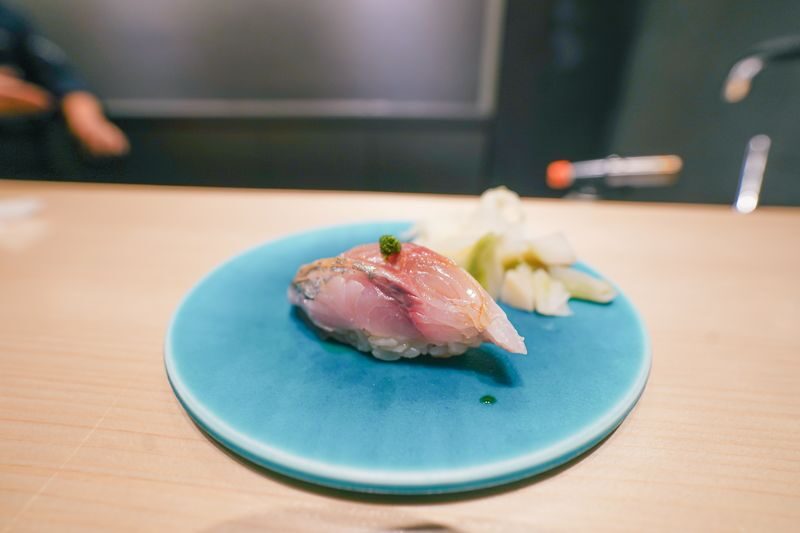
The first major food stop is an omakase sushi meal. Omakase means you leave the selection to the chef, who serves what is best or available that day. Here, the package includes eight pieces of seasonal nigiri, and the sushi chef prepares the food at the restaurant.
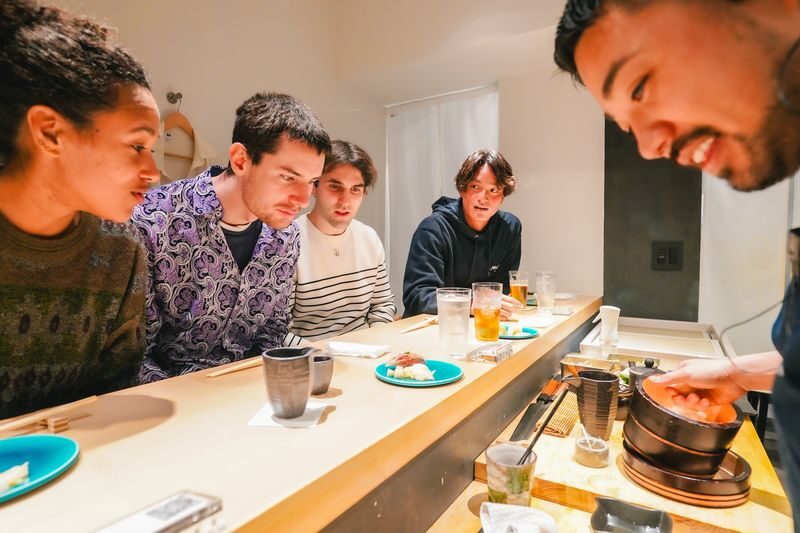
That chef-led format gives you more than a set of fish names to tick off. You can watch how the sushi is made, ask questions through your guide, and learn basic etiquette as you go. If you’re unsure how to eat a particular piece or what to do between courses, this is a good setting to ask. The point is not to pass a test. It’s to feel more comfortable at a sushi counter next time.
The seasonal approach is appealing, but it also means the selection can change. Don’t expect a fixed list of fish or a particular specialty on every date. If you’ve never tried omakase, this is a low-pressure introduction with a guide to help explain what is happening. If you’re already a dedicated sushi regular, the value will depend more on the chef, the day’s ingredients, and the chance to visit a local restaurant than on learning the basic format.
Eight pieces are a substantial tasting, but not necessarily a stand-alone feast for everyone. The Wagyu stop follows, which is why it makes sense to think of the tour as a progressive dinner rather than judging the sushi portion in isolation.
A5 Wagyu, cooked at your table
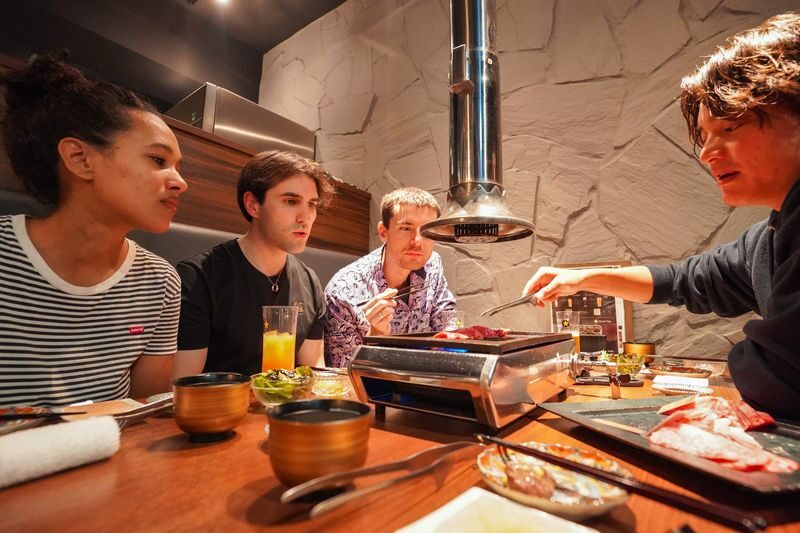
Next comes yakiniku, the Japanese style of grilling thin slices of raw meat yourself. This stop centers on Kagoshima Black Beef, described as A5-ranked Wagyu. The difference from a conventional steakhouse meal is in the cooking: you control the heat and timing, and the meat arrives in cuts suited to grilling at the table.
A5 is a quality grade, not a guarantee that every diner will prefer the flavor or texture. Wagyu’s rich marbling is part of its appeal, but it can also make small portions feel satisfying. The advertised meal is a full yakiniku dinner with Wagyu, and the package includes two drinks across the meal stops. The precise cuts and availability may vary.
I like this pairing because sushi and yakiniku offer two distinct ways to appreciate Japanese ingredients. The sushi is prepared by a chef; the meat asks you to take part. You don’t need prior grilling experience, but do follow the restaurant’s instructions and cook at a measured pace. The tour is designed to introduce the food, not to turn dinner into a race.
A practical note for hungry diners: a few people have found the overall quantity modest for the price. The meal includes several stops, but it is not an unlimited dinner, and extra food or drinks cost more. If you usually eat a large meal, bring cash for additional orders and ask your guide what can be added at the restaurants.
Omoide Yokocho and Kabukicho on foot
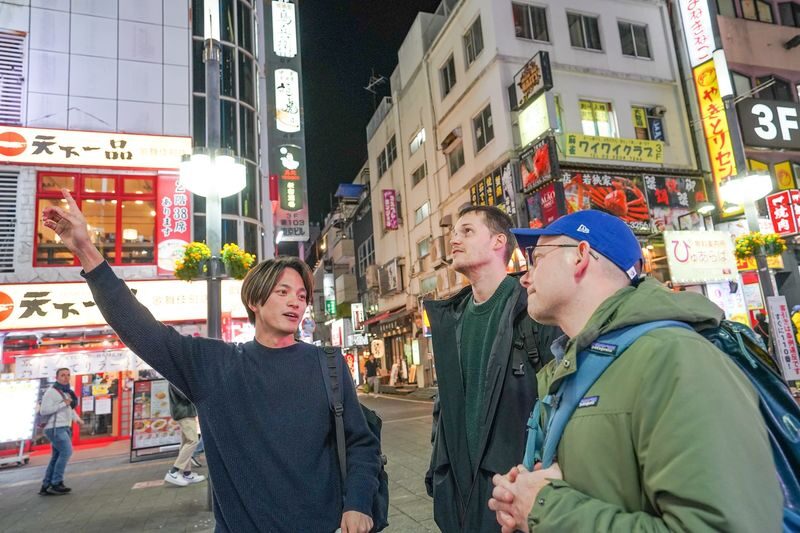
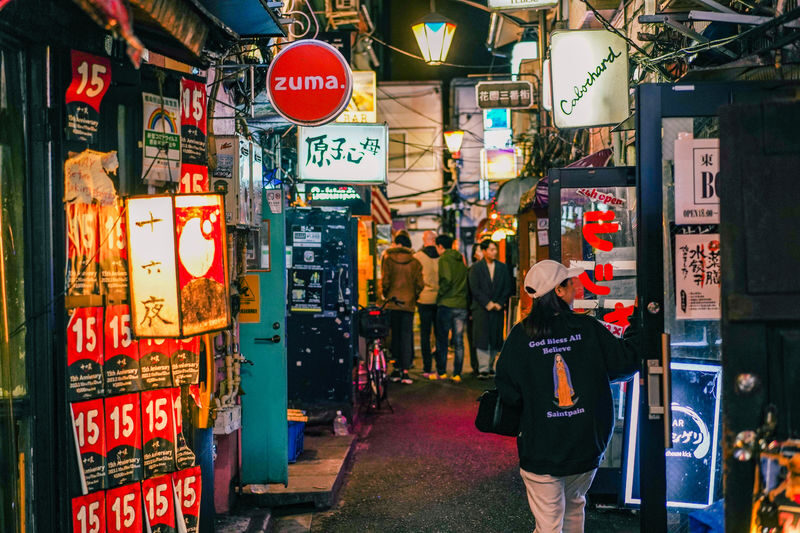
Between meals, the guide leads a walking route through Shinjuku. Two named areas are Omoide Yokocho, known for its nostalgic lanes, and Kabukicho, with its bright night signs and busy streets. The walk makes the tour more than a restaurant crawl: it gives you a chance to see how different parts of the district feel after dark.
Shinjuku can be confusing at street level, even when you know the station is nearby. A guide can point out turns and passages you might not find on your own, and offer context about the area’s food and nightlife. Past guide names include Hannah, Taka, Megumi, Yuki, Fuji, and Aoi. The names are not a choice you can count on when booking, but the tour’s best asset is the guide’s role in connecting the meal to the neighborhood.
The route involves walking, and the schedule may shift with weather or traffic. Wear comfortable shoes and check the forecast before setting out. Tokyo’s summer heat can be intense, and winter nights can get cold; the tour information advises preparing for temperatures ranging from summer highs around 40°C to winter lows around -5°C. A light layer or weather protection can make the walk easier.
Dessert, with room for variation
The final stop is described as a traditional dessert, with taiyaki highlighted as a classic Tokyo sweet. Taiyaki is a fish-shaped cake, commonly filled with a sweet filling, and makes a fitting change of pace after sushi and grilled meat. But the final offering is not guaranteed to be taiyaki every time. The tour also describes the ending as one dessert or one drink, and the menu can change with availability.
That distinction matters if dessert is a main reason you’re booking. Some evenings may end with a Japanese sweet; other stops have included gelato, cake, or coffee-shop-style options. The finish can still be a pleasant chance to sit, talk, or try one last drink, but it may not feel as distinctly Japanese as the sushi and Wagyu portions.
The included package allows one dessert or one drink at the last stop. If you’re hoping for a specific sweet, ask about the likely menu before booking, while keeping in mind that seasonal availability can still alter the plan.





What the $137.19 starting price buys
At a starting price of $137.19, this is a premium food tour, not a cheap way to fill your stomach. The cost covers a guide, eight pieces of seasonal omakase nigiri, a Wagyu yakiniku dinner, two drinks, and one dessert or drink at the final stop. It also buys a planned route through restaurants that can be difficult to find as a first-time visitor.
The strongest value is the combination. Booking sushi, Wagyu, and several drinks independently could cost a similar amount, but you would need to find suitable restaurants, work out what to order, and navigate the neighborhood yourself. Here, you get an explanation of the food and local etiquette as you go, plus a route linking the meal stops. For a solo diner or first-time visitor who finds restaurant decisions daunting, that help can be worth a lot.
The weaker value case is for diners who already know Shinjuku, can comfortably choose restaurants in Japanese, or mainly want a large meal. You may prefer to spend the same budget on a single high-end sushi or yakiniku restaurant and order more of what you like. The tour’s charm is variety, access, and guidance, not fine-dining formality or unlimited portions.
A small-group setting has been described by past participants, but group size can vary and should not be assumed. The guide-led social element is part of the appeal: guides such as Megumi and Fuji have been noted for being warm and helpful, while other named guides have shared local food and history along the route. If the group is larger on your date, the experience may feel less intimate than a private dinner.
Who should book, and who might pass
I’d recommend this tour if you want to try both omakase and A5 Wagyu in one evening, appreciate having someone explain how to order and eat, or feel more at ease exploring Shinjuku with a guide. It also suits solo diners who want company at the table and a clear route through an unfamiliar district. The walk and the food work especially well together for anyone who wants a taste of Tokyo nightlife without planning every stop.
I’d hesitate if you have strict food allergies or dietary requirements. The kitchens are not operated by the tour company, allergy-free meals cannot be guaranteed, and substitutions may not be possible at every stop. Vegetarian options are listed, but you must request a vegetarian course by the day before; asking on the day is too late. The tour is also not recommended for pregnant women, does not allow pets, and is not accessible to wheelchairs or strollers.
Book it for guided variety, not for a guaranteed dessert or a huge dinner. If you’re keen to learn as you eat and want sushi, Wagyu, and a guided walk in one three-hour evening, the package makes a convenient introduction. If food quantity, strict dietary control, or a specific sweet matters most, arrange your own meal instead.
Tokyo Omakase Sushi & A5 Wagyu Premium Foodie Tour in Shinjuku
“our guide Hannah was excellent, attentive so that we had a great time, understand and learn Japanese food, manners and culture. the places were ver…”
FAQ
How long is the tour?
The guided walking tour lasts about three hours.
What food is included?
The package includes eight pieces of seasonal omakase nigiri, a full Wagyu yakiniku dinner, and one dessert or drink at the final stop.
How many drinks are included?
Two drinks are included. Alcohol is available. Additional food and drinks can be purchased separately.
Is the dessert always taiyaki?
No. Taiyaki is highlighted, but the final stop can offer a different dessert or a drink, depending on availability.
Is a vegetarian option available?
Yes. Request a vegetarian course by the day before the tour. A vegetarian course cannot be arranged on the day.
Can the tour accommodate food allergies?
An allergy-free meal cannot be guaranteed. The restaurants prepare food in kitchens not operated by the tour company, and substitutions may not be possible at every stop.
Where is the meeting point?
Meet in front of the black pillar beside the Uniqlo Shinjuku Nishiguchi shop, at 1 Chome-2 Nishishinjuku. It is about a three-minute walk from the JR Shinjuku Station West Exit.
When should I arrive?
Arrive ten minutes before your selected departure time. The tour starts on time, and late arrivals who miss the group cannot join or receive a refund.
Is the tour wheelchair-accessible or stroller-accessible?
No. Some locations on the route are not accessible to wheelchairs or strollers.
Can children join?
Children aged 16 and older are charged the same rate as adults.