
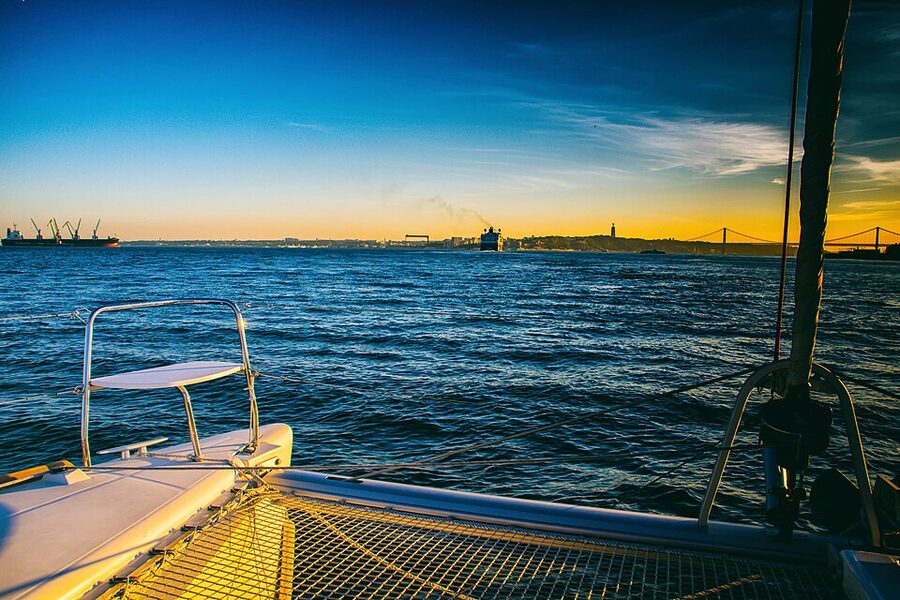
The Tagus turns gold first, then bronze, then a deep tangerine that bleeds into the water until the river looks like polished metal. Off your starboard side the 25 de Abril Bridge starts as a russet outline against the haze, and somewhere over your shoulder Cristo Rei goes from white statue to charcoal silhouette as the sun drops behind the Lisbon hills. Bring a jacket. The light fades fast, and so does the warmth.
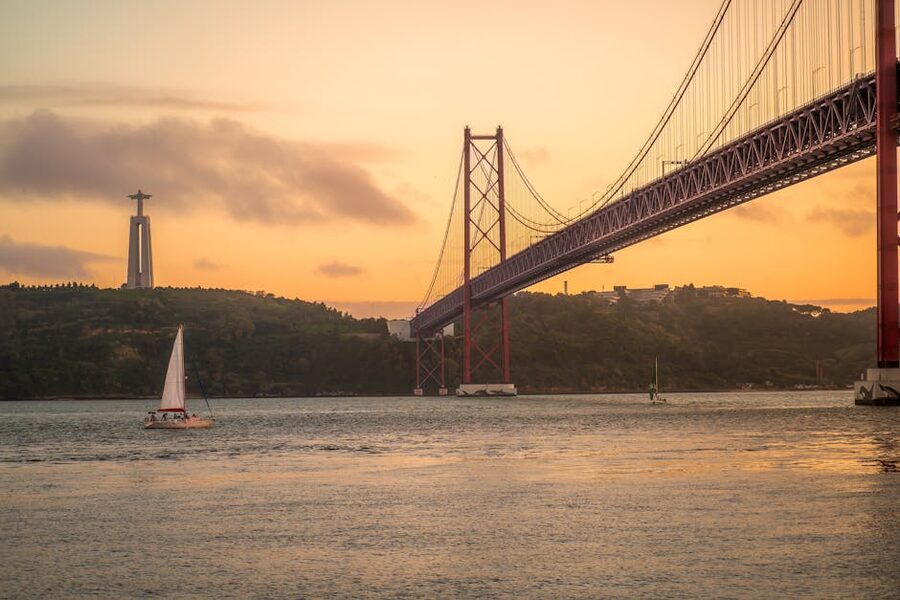
I’ve been on the Tagus at golden hour more times than I can sensibly justify, on everything from a tiny three-mast sailboat with a captain who poured the wine himself, to a 150-person party catamaran with a DJ deck and an open bar. They’re all selling the same view. What they’re not selling is the same evening. So before you book, you need to decide which kind of night you actually want.
In a hurry? My three picks
- The party one ($27): Sunset Boat Party Cruise with DJ and Open Bar. Big boat, loud DJ, open bar, dance floor, around 150 people. The most-booked sunset cruise in Lisbon by a wide margin.
- The quiet one ($23): Sailing Tour on the Tagus River. A small catamaran, the wind doing most of the work, a glass of vinho verde in your hand and not much else.
- The river-to-ocean one ($38): Tagus River Cruise to the Ocean and Dolphin Watching. Three hours, marine biologist on board, you exit the river mouth and look for bottlenose pods. Not guaranteed, but they show up.
- In a hurry? My three picks
- Pick a format before you pick a boat
- Where you actually leave from
- Doca de Santo Amaro
- Doca de Belém
- Cais do Sodré and the central docks
- What you’ll actually see (in the order you’ll see it)
- The three cruises I’d actually book
- 1. Lisbon Sunset Boat Party Cruise with DJ and Open Bar:
- 2. Lisbon Sailing Tour on the Tagus River:
- 3. Lisbon Tagus River Cruise to the Ocean and Dolphin Watching:
- If you’re between the party boat and the quiet sail
- What to bring (and what not to bother with)
- When to go (and when not to)
- The bridge, the statue, and a quick history nobody asked for
- How Lisbon’s sunset cruises differ from Spain’s
- Booking and pricing in plain numbers
- Pairing the cruise with the rest of your trip
Pick a format before you pick a boat
This is the part most articles skip and it’s the part that actually matters. There are roughly four formats running on the Tagus, and the wrong one will ruin your evening.
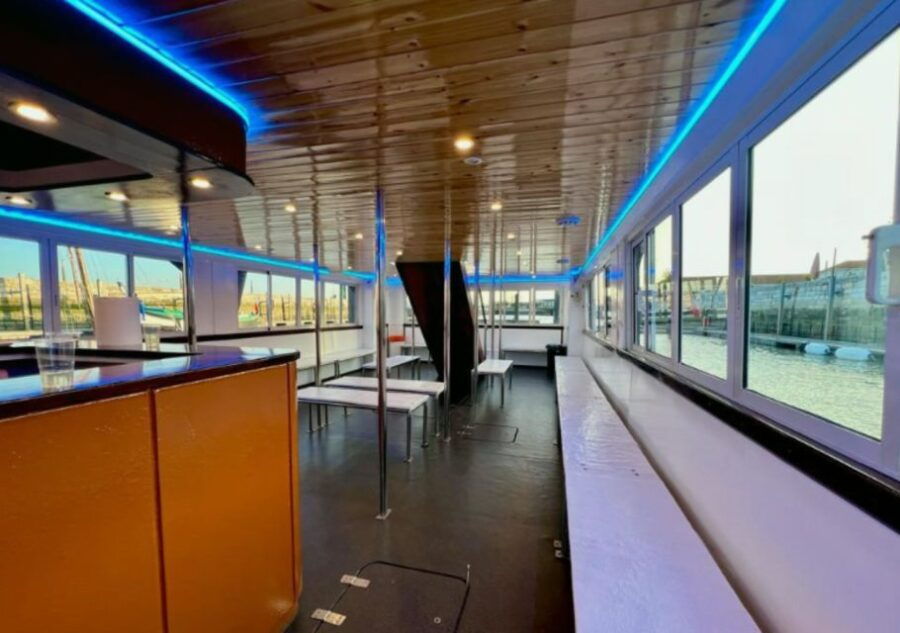
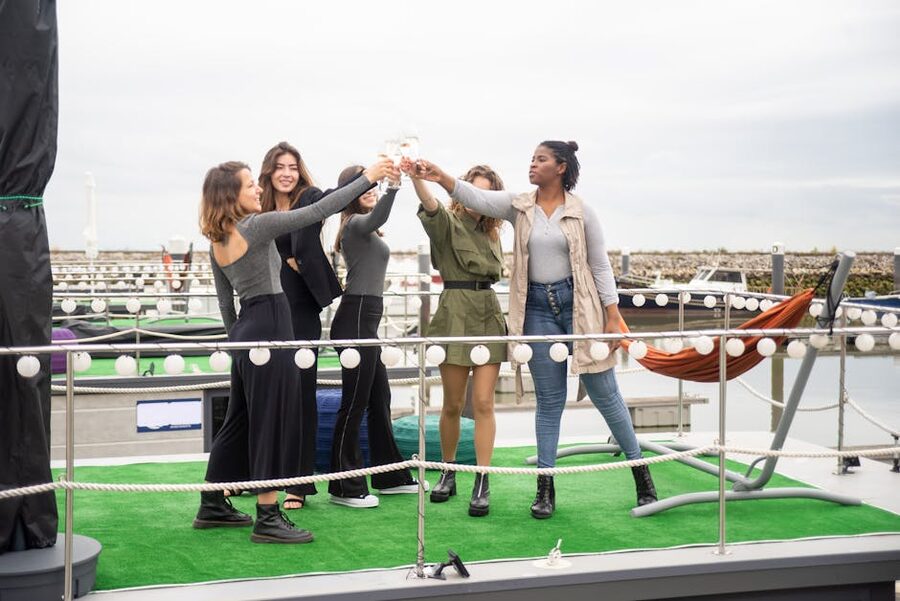
Big party catamarans with DJs. 80 to 150 people, open bar with beer, wine, sangria and soft drinks, a DJ set, sometimes dancing. Cheap (around $25-30), loud, social, late twenties to mid thirties on average. If you’re a hen do, a stag, a bachelorette, or a group that wants the night to feel like a beginning rather than an ending, this is the right boat. If you want to talk, it’s the wrong one. The DJ is doing their job.
Small sailboats and catamarans. 10 to 18 people, two hours, a welcome drink, a captain who’ll explain what you’re looking at if you ask. Around $20-50 a seat. Couples, parents with older kids, two friends who want to actually hear each other. The boat moves under sail, which most party boats don’t bother with because they’re on a tighter timetable. You feel the river instead of just looking at it.
Hop-on hop-off river boats and budget sightseeing cruises. Useful if you want a transport-shaped view of Belém Tower and the bridge for under $20. Not really sunset experiences, more “spot the landmarks from the water” services. I’d skip these for golden hour. Save them for a daytime hour when you want to cover ground.
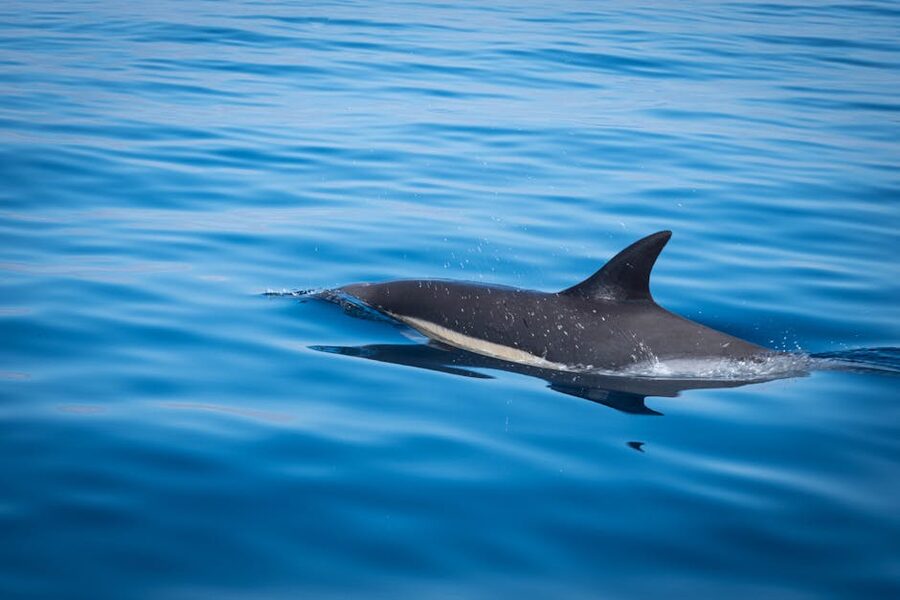
Tagus-to-ocean dolphin and wildlife tours. Three hours, smaller fast boats or rigid inflatables, marine biologist on board. You leave the river, head out past Belém and Cascais, and look for bottlenose dolphins that hunt off the river mouth. Sightings aren’t guaranteed but the trip is good even without them. The light over the open Atlantic at sunset is genuinely different from the river light.
Where you actually leave from
Lisbon doesn’t have one cruise pier. It has a string of them along the Tagus, and your booking will name a specific dock. Show up to the wrong one and you’ll miss the boat. There is no hotel pickup, ever, on these cruises. You take Uber, Bolt, the train, or a taxi.
Doca de Santo Amaro
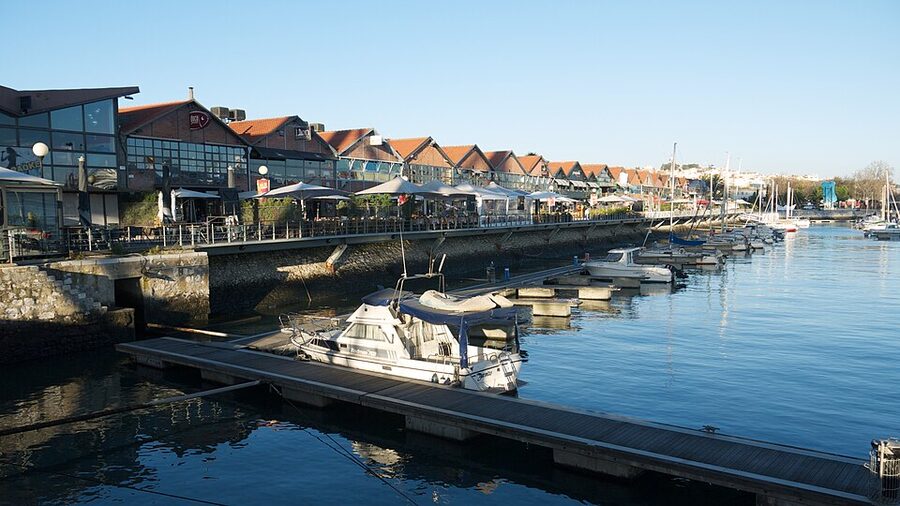
The most common departure dock for sunset cruises and the prettiest place to wait. It sits directly under the 25 de Abril Bridge, in a converted line of old harbour warehouses now full of bars and restaurants. Get there 45 minutes early, grab a beer at one of the pier-side terraces, and you’ve already started the evening before the boat does. From central Lisbon it’s about 15 minutes by Uber, or take the train from Cais do Sodré to Alcântara-Mar.
Doca de Belém
Out west, next to Belém Tower itself. If your cruise leaves from here, you sail east towards the bridge with the sunset more or less behind you, which gives you the best frontal light on the bridge silhouette. Pair this with an afternoon at Jerónimos Monastery and a pastel de nata at the original Pastéis de Belém and you’ve got an entire western-Lisbon day stitched together. The downside: it’s the furthest dock from central Lisbon, around 25 minutes by car or 30 by tram.
Cais do Sodré and the central docks
The most central pier, right by the train station of the same name. A handful of party boats and a few smaller operators leave from here or from the adjacent Doca da Caldeirinha. The advantage is obvious if you’re staying in Bairro Alto, Chiado, or Alfama: you can walk. The disadvantage is that the cruise spends its first 15 minutes motoring out west to reach the bridge before the light hits.
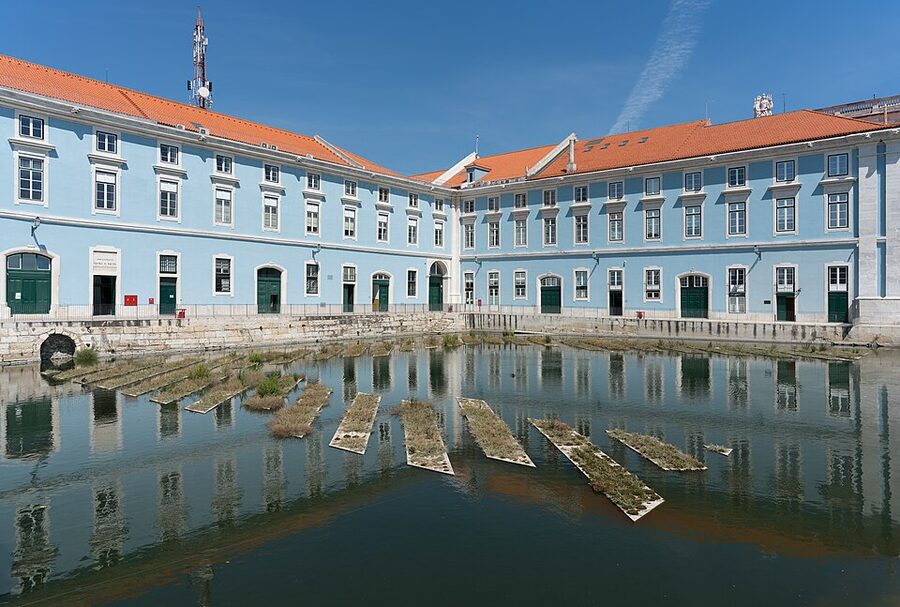
What you’ll actually see (in the order you’ll see it)
Most cruises run a two-hour loop that puts the sun behind Lisbon and the bridge dead-centre in your camera roll. The exact route varies, but here’s what you cross off, roughly in order, on a westbound sunset run from Santo Amaro or Cais do Sodré.
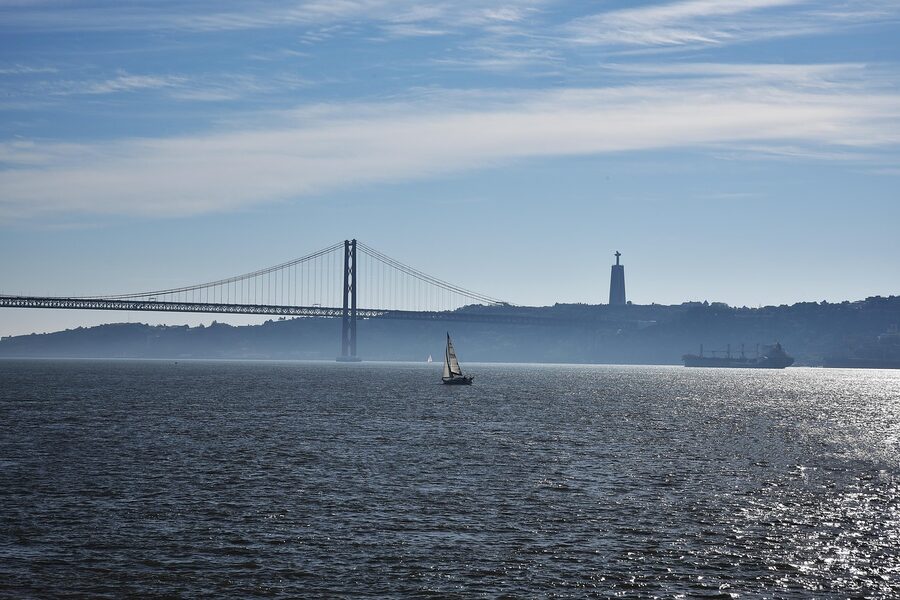
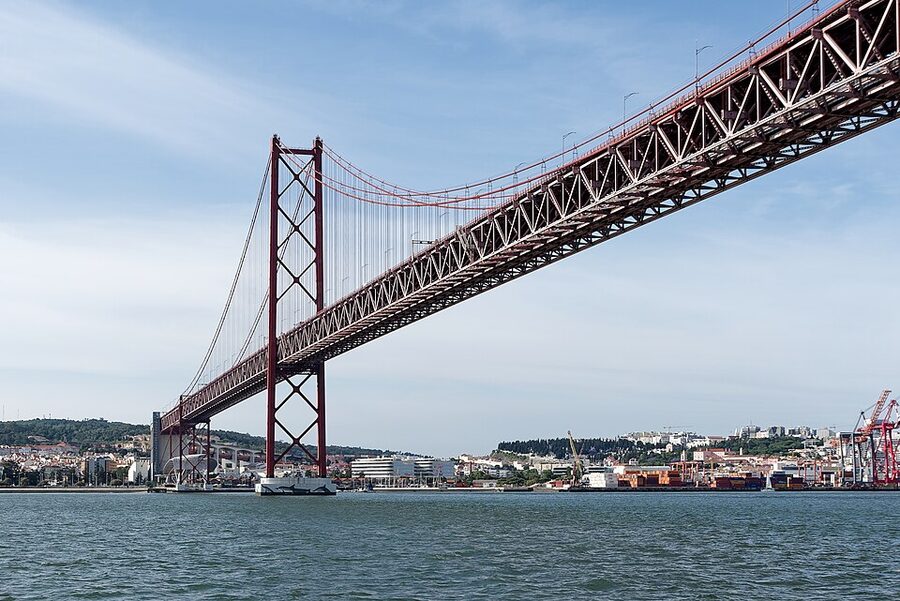
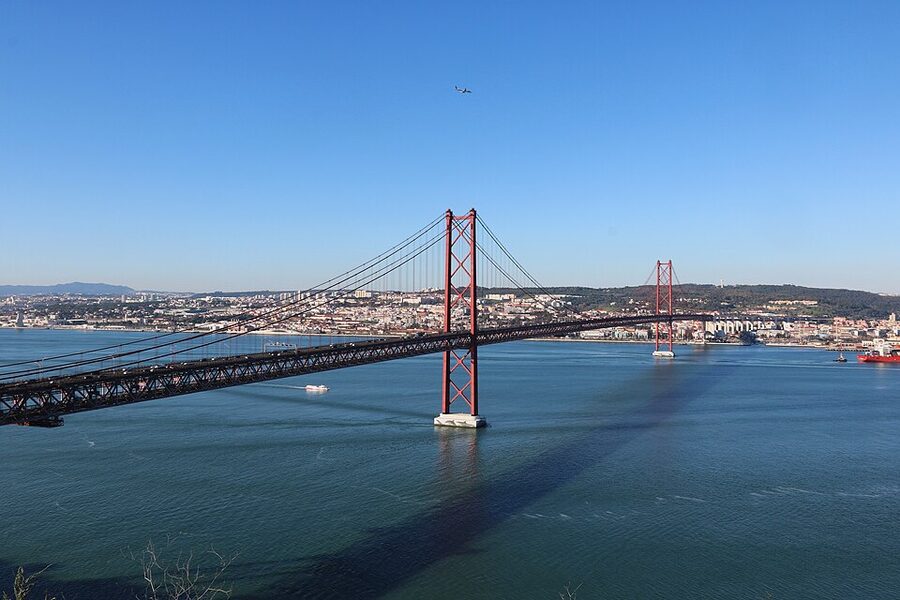
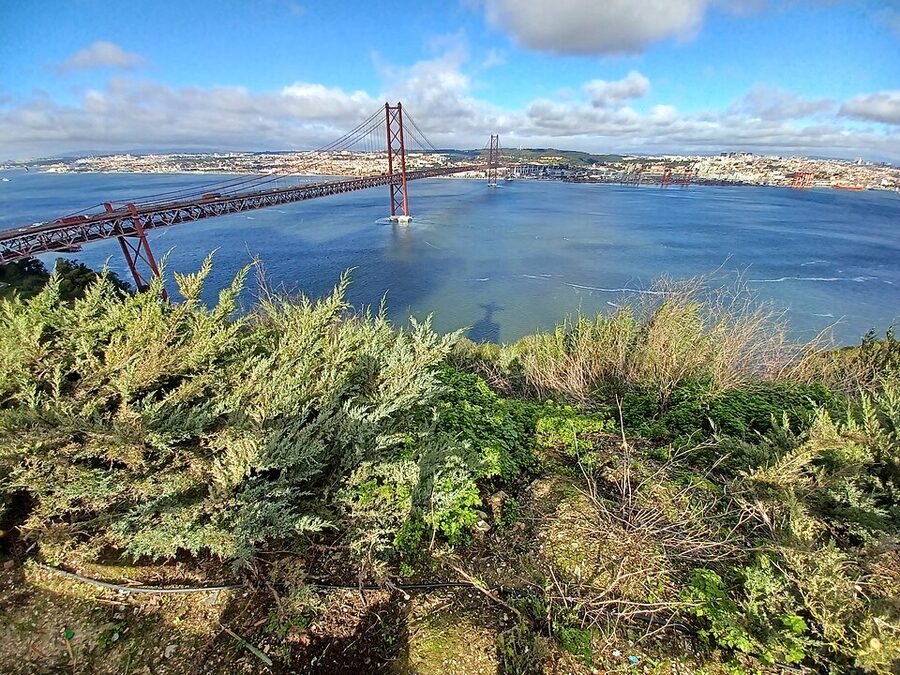
The 25 de Abril Bridge. Built in 1966, originally called Salazar Bridge, renamed after the 1974 Carnation Revolution. Looks deliberately like the Golden Gate, partly because the same American firm that built San Francisco’s bay bridges also built this one. Sail underneath it once and the noise is something you don’t get from photographs: the lower deck carries trains, and when one passes overhead the steel sings. From a small boat in calm water it’s slightly cinematic, slightly alarming. Lean back and look straight up.
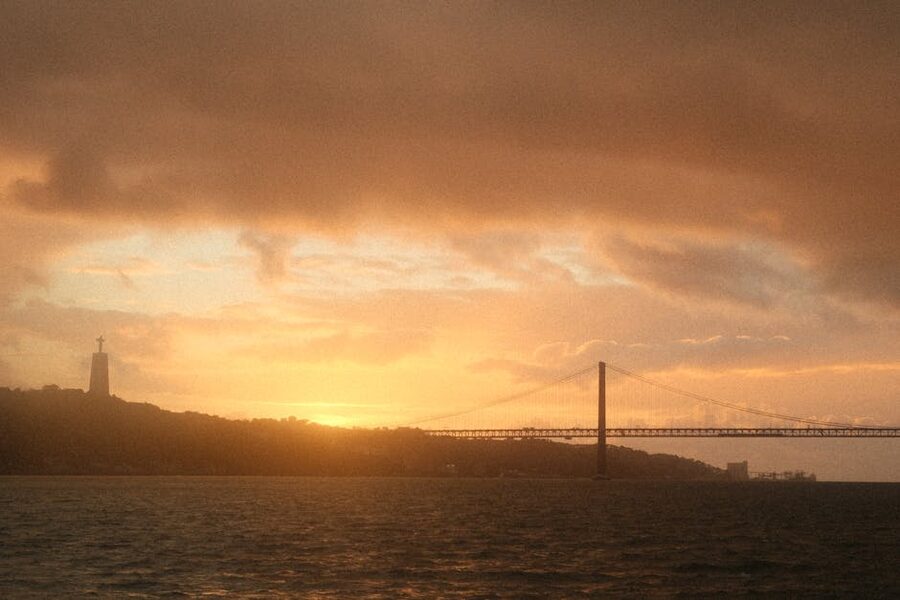
Cristo Rei. The 28-metre Christ statue on the Almada cliffs across the river, with arms out over the water. Inspired by Rio’s, smaller, but on a much bigger pedestal so the silhouette dominates the south bank skyline. As the sun drops, Cristo Rei’s outline goes from white to grey to charcoal. There’s about a 20-minute window where the statue is still readable but the sky behind it is on fire. That’s the photo.
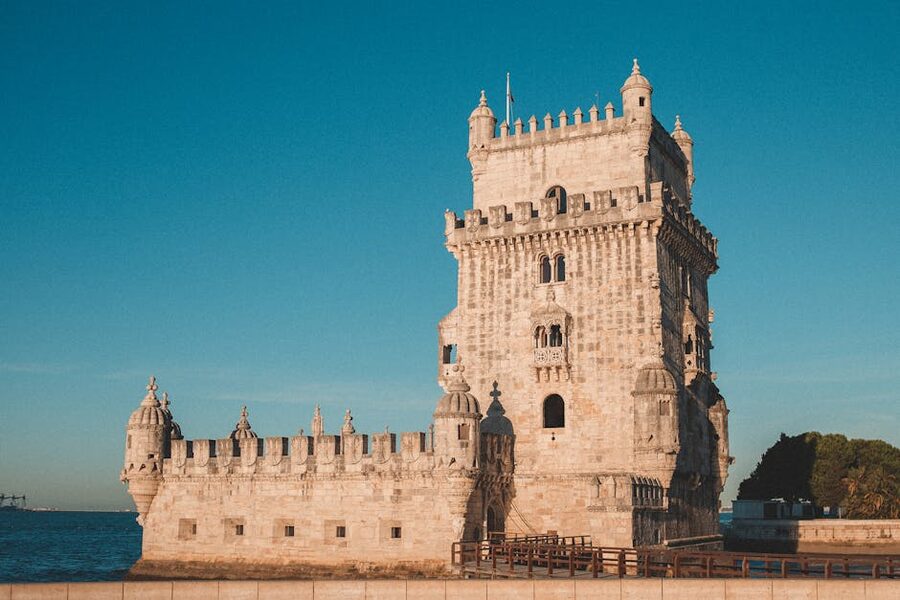
Belém Tower. The 16th-century fortress at the river mouth, white limestone, all turrets and Manueline carvings. From the water it looks the way it was meant to look, because it was built to be seen by approaching ships. Some cruises turn around at Belém and head back; some go further out to the river mouth and beyond.
The Praça do Comércio waterfront. The huge yellow square that opens onto the river was Lisbon’s front door for hundreds of years; arriving merchants saw it before they saw anything else. Going past it from the water gives you the same approach. Look for King José I on horseback in the centre of the square.
The Padrão dos Descobrimentos. The big stone monument shaped like a caravel’s prow, full of carved Portuguese explorers all leaning forward. Best seen from the water at golden hour because the carving picks up shadow and the figures look as if they’re moving.
The three cruises I’d actually book
I’ve narrowed this down to three picks that cover the formats most people are choosing between. The DJ-and-open-bar party flagship for the night out, the small-catamaran sail for the calm version, and the river-to-ocean dolphin watch for the wildlife angle. Skip the rest unless one of these doesn’t fit.
1. Lisbon Sunset Boat Party Cruise with DJ and Open Bar: $27

This is the party flagship and the reason most twenty-somethings come to the Tagus at sunset. Open bar (beer, wine, sangria, soft drinks), a DJ working a proper set, dancing on the upper deck, the bridge passing overhead at golden hour. Our full review of the DJ and open-bar cruise covers the boarding routine and the bar logistics. It’s loud, it’s fun, and at this price the value is hard to argue with.
2. Lisbon Sailing Tour on the Tagus River: $23
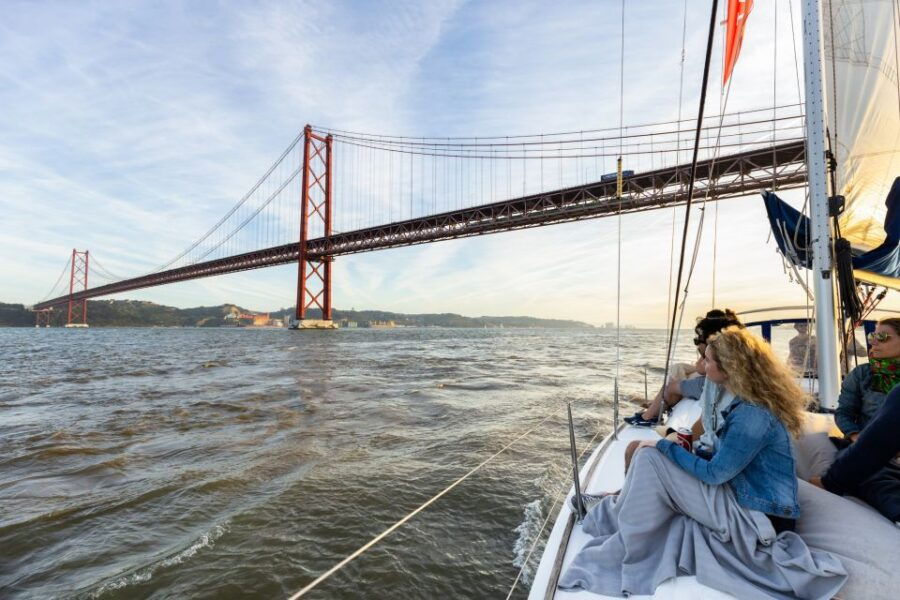
If the DJ cruise sounds like a nightmare, this is the other end of the spectrum. A small catamaran (around 12-15 people), morning, afternoon or sunset slots, and a properly intimate sail under the bridge with the engine off where conditions allow. Our review of the Tagus sailing tour goes into the welcome-drink and crew details. It’s the option I’d pick for a proposal, an anniversary, or anyone who genuinely doesn’t want to dance.
3. Lisbon Tagus River Cruise to the Ocean and Dolphin Watching: $38
The format that doesn’t show up in the rest of the cluster. This is roughly three hours, you exit the Tagus mouth past Belém Tower into the Atlantic, and a marine biologist on board scans for the resident bottlenose pod. Our review of the dolphin-watching cruise is straight about the no-sightings nights, which do happen. Even on a quiet wildlife day, the open-ocean sunset light is genuinely different from the river light, and that alone is worth the bump in price.
If you’re between the party boat and the quiet sail
This is the actual decision most people are making, so I’ll be unhelpfully blunt: the format you’ll regret is the wrong one. There’s no compromise boat that does both well. The middle-ground options exist (a smaller boat with music, a quieter boat with snacks) but they tend to under-deliver on both fronts. Pick the format that matches your group.
If you’re a couple and one of you is dragging the other along, take the small catamaran. Two hours, calm, photogenic, you’ll both be glad. If you’re a group of friends in their twenties or thirties on a city break, the DJ boat is the right call and you’ll get more people-watching value than the photo cruise. If you’re travelling with kids or older parents, the small sailboat is again the answer. Children love the wheel turn most captains will let them have a go at, and grandparents don’t want to be next to a bass cabinet.
Worth a mention: there are also middle-format cruises with onboard music and drinks that aren’t full party boats. The music-and-drinks sunset tour sits in this space, smaller crowd than the DJ flagship but still upbeat, and the Tagus river cruise with welcome drink is a budget pick that hits the bridge view without going either party or fully quiet.
What to bring (and what not to bother with)
A jacket. Even in July. Once the sun is gone behind the Lisbon hills the temperature drops noticeably, and any breeze on the water doubles it. I’ve watched people in shorts and a t-shirt huddle visibly miserable through the second hour of a tour they’d been excited about for three months. A linen overshirt, a hoodie, anything.
Sunscreen on at least your face. The reflection off the Tagus is brutal in the first hour even when the sun feels mild. I’ve burned my forehead on a March cruise. You don’t need full beach kit, just a quick application before boarding.
A phone or a real camera, not both. The bridge passes overhead in about 90 seconds. Cristo Rei is in good light for 20 minutes max. If you’re the kind of person who switches lenses, switch them before you board. Phone cameras handle Lisbon sunsets surprisingly well because the sky has so much colour to work with.
Cash for the bar if your boat doesn’t include one. Most party boats do; many smaller sailboats charge for drinks beyond the welcome glass. Cards are accepted on the bigger boats but not always on the smaller ones, and a marine card terminal in poor light is exactly the situation you’d expect to fail.
Skip: full meal beforehand. Most cruises include some form of welcome drink and a few have light snacks; a heavy dinner ahead of a swaying boat is a bad combination. Eat after, not before. The waterfront restaurants at Doca de Santo Amaro stay open late, and a grilled fish at one of those terraces is the right way to end the evening.
When to go (and when not to)
Sunset on the Tagus runs about 8.30pm to 9.15pm in June and July, dropping to roughly 5.30pm in December and January. Most cruises start their sunset slot 90 minutes to two hours before the sun actually drops, so you board into daylight, watch the colour build, and finish in dusk or full dark. The “blue hour” right after sunset is genuinely the best part for photos; if your tour ends at exactly sunset, you’ve finished too early.
The Tagus runs east to west, and the sun sets behind Lisbon (not over the water from the city side). The light fades faster than over an ocean horizon because it’s hitting the hills. If you’re booking a private tour, plan to be at the icon spots 30 minutes before sunset, not 30 after. If you’re on a fixed-itinerary tour, this is already factored in.
April through October is the safe window. Stable weather, warm evenings, full schedules. July and August get busy, especially Friday and Saturday nights when locals join the tourists, and the party boats run at capacity. Book a week ahead minimum.
November to March the cruises still run but a chunk of operators reduce sailings or close. Sunset is at 5pm-ish, which means you’re effectively on a late-afternoon boat. The light is sharper when it’s clear, but the wind kicks up and the river gets choppy. Bring proper layers, not the optimistic kind. I once did a December cruise where the welcome drink froze to the cup.
Avoid the day after a strong Atlantic storm. The river runs muddy, the bridge view is gauzy with leftover spray, and the swell makes the smaller boats unpleasant. Two clear days after a storm is when the river is at its photographic best.
The bridge, the statue, and a quick history nobody asked for
You’ll be staring at both for two hours, so a small amount of context goes a long way.
The 25 de Abril Bridge opened in 1966 as the Salazar Bridge, named after the dictator who commissioned it. The American Bridge Company built it, the same firm that worked on the Bay Bridge in San Francisco. That’s why it looks the way it does. After the 1974 Carnation Revolution, with Salazar long dead and his regime overthrown, locals renamed it after the date of the revolution itself: 25 de Abril, 25 April. The original sign came down within days. The bridge has carried road traffic since 1966 and trains since 1999, on a deck added below the original road. The lower deck is what you hear when one passes overhead from a boat.
Cristo Rei went up between 1949 and 1959 in thanksgiving for Portugal staying out of World War II. It’s based on Rio’s Cristo Redentor (which Portuguese cardinals had visited in 1934), but smaller; what makes it look bigger is the 75-metre concrete pedestal, which means the cross is at over 100 metres above the river even though the figure itself is 28. From the water it dominates the south bank in a way it doesn’t from land. There’s a viewpoint at the foot of the statue that looks back across to Lisbon proper, and getting there is a 15-minute ferry ride from Cais do Sodré to Cacilhas, then a short bus.
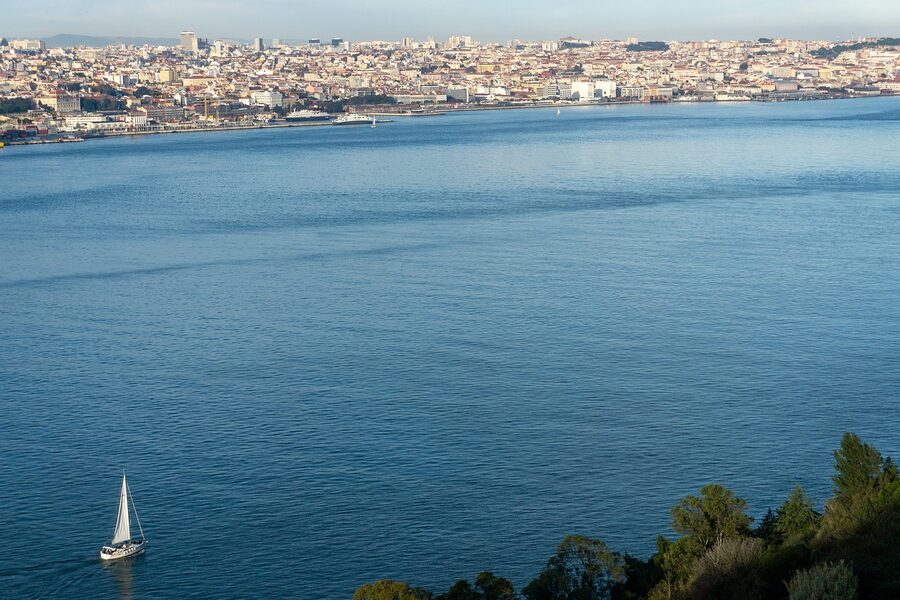
The Tagus itself, by the way, is the longest river on the Iberian Peninsula, starting in Spain (where it’s called the Tajo) and emptying into the Atlantic right past Belém. The estuary you’re cruising is one of the largest natural harbours in Europe, which is exactly why Lisbon ended up where it did and why Portuguese explorers were sent out from this exact stretch of water in the 1400s. The Padrão dos Descobrimentos monument, the one shaped like a ship’s prow, is right there because that’s where they actually left from.
How Lisbon’s sunset cruises differ from Spain’s
If you’ve already done a sunset catamaran in Palma, Barcelona, Valencia, or Ibiza, you’re not really booking the same experience here. Those are open-Mediterranean tours where the boat heads out to flat water and the sunset happens over a featureless horizon. Lisbon is a river cruise where the sunset frames specific landmarks: a 1960s suspension bridge, a thirty-metre Christ statue on a cliff, a 16th-century fortress at the river mouth.
The closest equivalent is the Guadalquivir cruise in Seville, also a river run with city views, although with no equivalent of the bridge silhouette. Santorini’s catamaran circuit is closer to the Spanish format: open water, dramatic cliffs, no bridges. If you’ve booked one of those and are wondering whether Lisbon is worth doing again, the answer is yes. The view is meaningfully different.
The other significant difference is price. Lisbon’s market is more competitive than the Spanish Mediterranean cluster. You’ll pay $25 here for what costs $50 in Ibiza, and the open-bar party boats are dramatically cheaper than their Balearic equivalents. The trade-off is that the boats are generally bigger and the experience less yacht-like, but for the same view at half the price most people don’t mind.
Booking and pricing in plain numbers
Standard sunset cruise: $20 to $50 per person for two hours, including a welcome drink. Cheaper end is the bigger party boats; more expensive end is the small sailboats and catamarans with crews of two and tighter passenger limits.
Open-bar party cruise: $25 to $35 for two and a half hours. Unlimited beer, wine, sangria, soft drinks. DJ. Around 100-150 people on the bigger boats.
Dolphin and wildlife trip: $35 to $60 for three hours. Marine biologist or naturalist on board. Smaller boats, often rigid inflatables.
Private charter: $300 to $500 for two hours on a 10-12 person sailboat, BYO drinks usually permitted (no red wine, by tradition). Splits down nicely between three or four couples.
Booking window: 24-48 hours ahead is fine for the bigger boats outside July-August; book a week or more ahead for any small-group tour or for any cruise during peak summer Fridays and Saturdays. Most cruises run regardless of weather unless conditions are dangerous, and free cancellation is standard up to 24 hours before. Cancellation rates are low; the operators have been doing this a long time.
One quiet warning: the open-bar party boats tend to mark up drinks-included tickets above what they actually cost, and the experience is the same on the cheaper non-open-bar version of the same boat. If you don’t think you’ll drink more than two or three glasses, the standard ticket and a per-drink purchase usually saves money.
Pairing the cruise with the rest of your trip
If you want one Lisbon evening that beats the boat, it’s the cruise followed by a proper fado show in Alfama. A daytime tuk-tuk loop earlier covers the hills your boat can’t, and pairing the cruise with the Sintra, Cabo da Roca and Cascais day trip is the easiest two-experience day in the whole city.