
Ask ten people queueing for the Acropolis what their ticket covers and most will say one thing: the rock. The Parthenon, the Erechtheion, maybe the slope theatres on the way down. What almost nobody knows is that for a small premium over the single-site fare, you can walk straight into another five or six ancient sites scattered around the same square kilometre of central Athens. The Ancient Agora. The Roman Agora. Hadrian’s Library. The Olympieion. Kerameikos. Aristotle’s Lyceum on a quiet side street. Same week, often the same afternoon.
This is the thing the combo pass exists for. And the rules around it have changed sharply in the last year, so what your friend told you in 2023 is probably wrong.
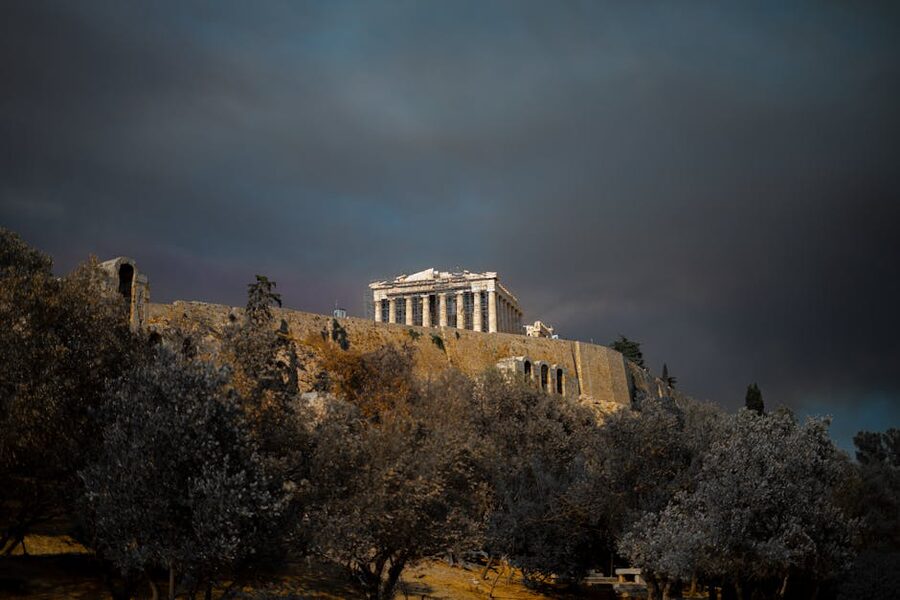
Short on time? Three picks that cover the budget combo, the bigger combo, and the simple Acropolis-only ticket if you only want the rock.
- Acropolis plus 5 archaeological sites combo pass, around $42 per person: the most-booked combo on the market. One ticket, audio guide on your phone, valid for the Acropolis day plus the others on later days. Check availability.
- Acropolis plus 6 archaeological sites combo ticket, around $49 per person: adds Kerameikos and the full Olympieion to the bundle for a few euros more. The cheapest way to see almost everything. Check availability.
- Acropolis-only entry with optional audio guide, around $42: the right pick if Athens is a one-day stop and you’re not going to use the other sites. Same Acropolis access, no commitment to the rest. Check availability.
- The big change: the old government combo is gone
- Which sites are actually included
- What each site is actually worth
- How the combo actually works as a ticket
- Best Acropolis Combo Tickets to Book
- 1. Athens: Acropolis and Up to 5 Archaeological Sites Combo Pass (around per person)
- 2. Athens: Acropolis and 6 Archaeological Sites Combo Ticket (around per person)
- 3. Athens: Acropolis Entry Ticket With Optional Audio Guide (around )
- Opening hours by season (and the heat warning)
- Free entry days and reduced tickets
- How to book, and what platform to trust
- Pairing the combo with a guided walk or day trip
- Common mistakes that cost time
- How the combo compares to single-site tickets
- One more thing: time of year
- More Greece guides
The big change: the old government combo is gone
If you read a guidebook printed before April 2025, ignore the price. Until then there was a single official combination ticket sold by the Greek Ministry of Culture for €30, valid for five days, that covered the Acropolis and six other archaeological sites in central Athens. That ticket has been discontinued. Officially. As of 1 April 2025.
What replaced it is messier and, in some ways, better. The government now sells single-entry timed tickets only, at €30 each, for the Acropolis. To visit Hadrian’s Library, the Ancient Agora, the Roman Agora, the Olympieion, Kerameikos and Aristotle’s Lyceum, you now have to buy separate tickets to each. If you bought all of them individually you would pay close to €100 for one person.
So the third-party platforms (mainly GetYourGuide, Tiqets and Viator) stepped in. They package the Acropolis with five or six of the same sites at a flat per-person price, throw in an audio guide for the Acropolis on your phone, and sell it as a single combo. That is what you are buying now when you book an “Acropolis combo ticket” online. It is not the old government combo. It is a privately bundled package that achieves roughly the same outcome.
Which sites are actually included
Different operators bundle different sites. Read the inclusions carefully before clicking book, because there are two main combo formats out there.
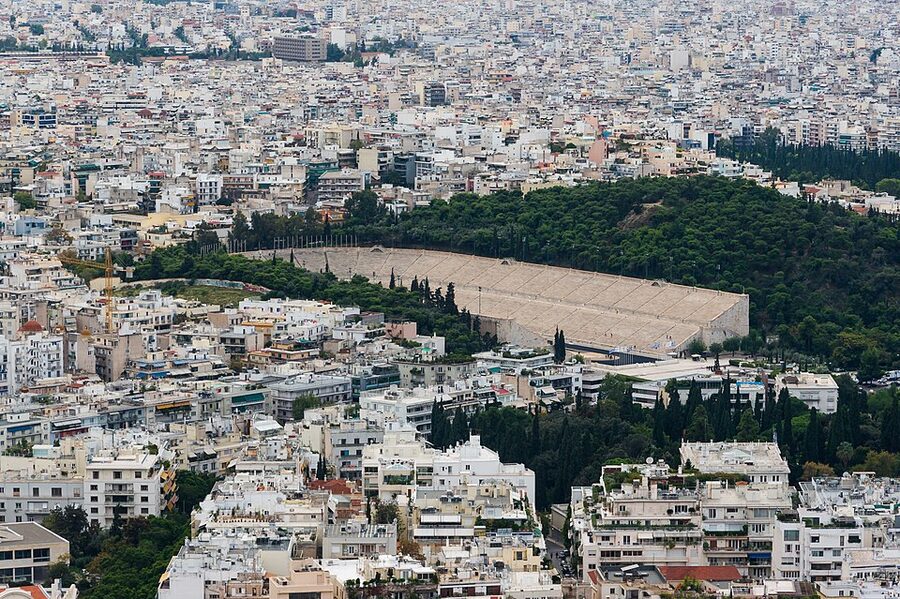
The 5-site combo. Most operators package this as the Acropolis plus the Ancient Agora, the Roman Agora, the Temple of Olympian Zeus (Olympieion), Aristotle’s School (Lykeion), and the Panathenaic Stadium. The Panathenaic Stadium is the marble U-shape from the 1896 Olympics on the eastern side of the centre, which is a slightly odd inclusion historically (it’s 19th century, the rest is ancient) but a popular one because the audio tells the modern Olympic story well.
The 6-site combo. This adds Hadrian’s Library and Kerameikos and drops the Panathenaic Stadium. So you get the Acropolis, Ancient Agora, Roman Agora, Hadrian’s Library, the Olympieion and Kerameikos. This is the bundle that most closely mirrors the old government combination. If you want to see the most archaeology for the money, this is the better pick. Our full review of the 6-site combo walks through what each individual site is worth visiting for.
Some operators also sell what is functionally a 7-stop variant by adding the Acropolis Museum to either bundle. The museum is a separate ticket from the archaeological sites and a separate building. It is across the street from the south slope of the Acropolis. Worth doing, but it does not share an entry with the rest. The Parthenon and Museum bundle with audio is the cleanest way to add the museum to your combo if that is the way you want to go.
What each site is actually worth
A quick rundown, site by site, because the inclusions list does not tell you which ones are worth your time.
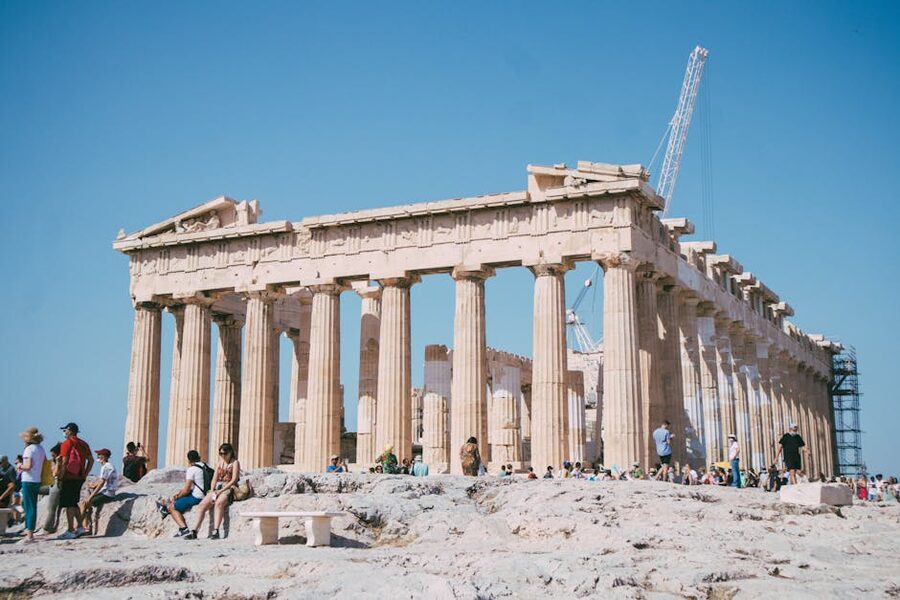
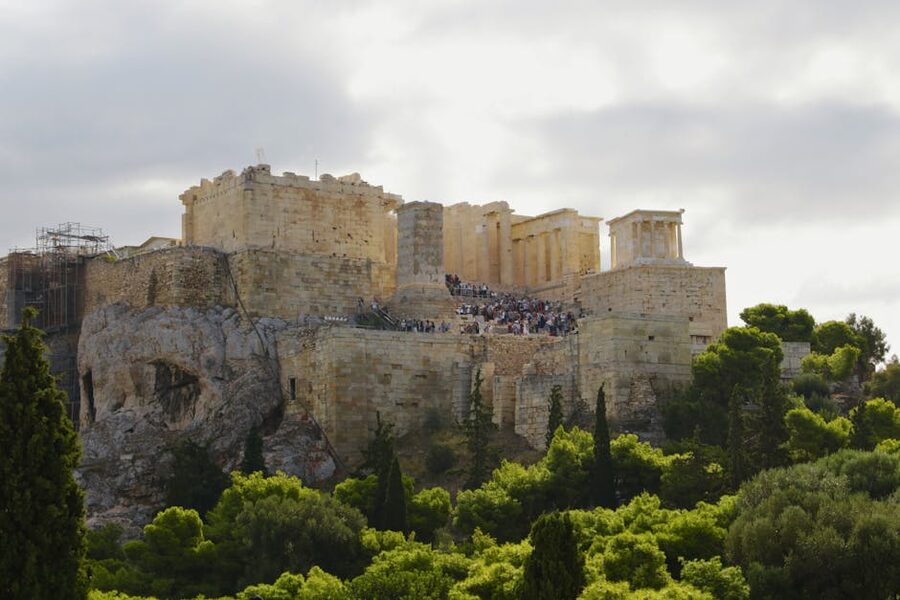
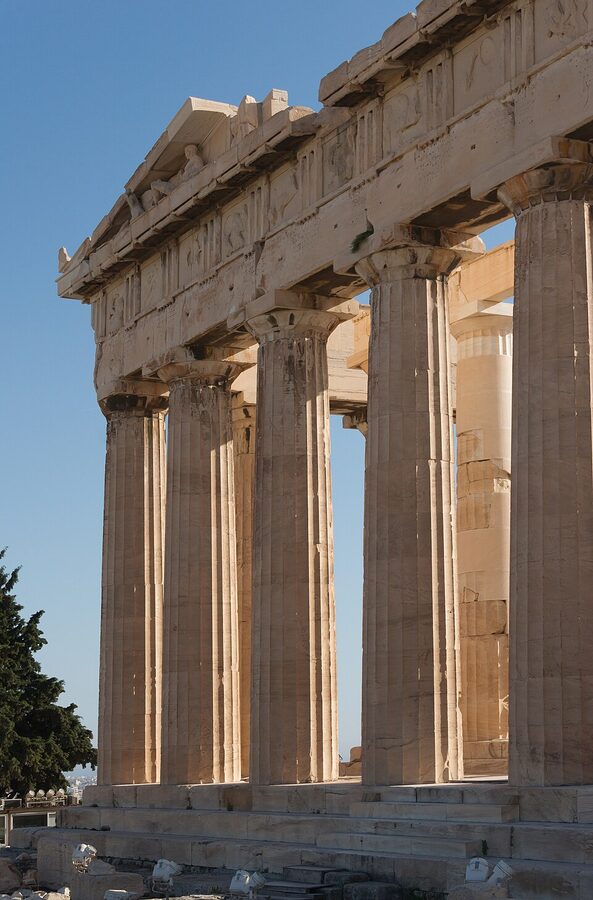
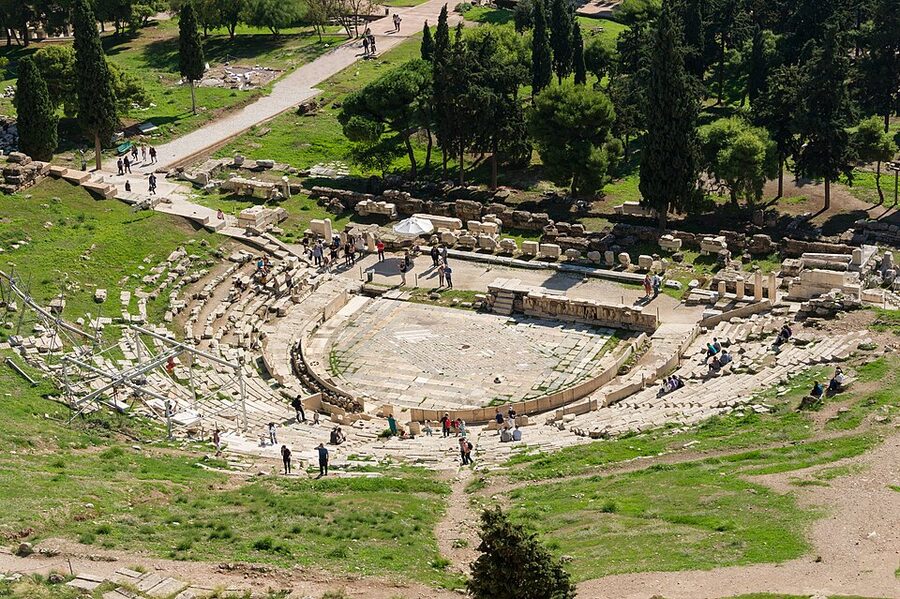
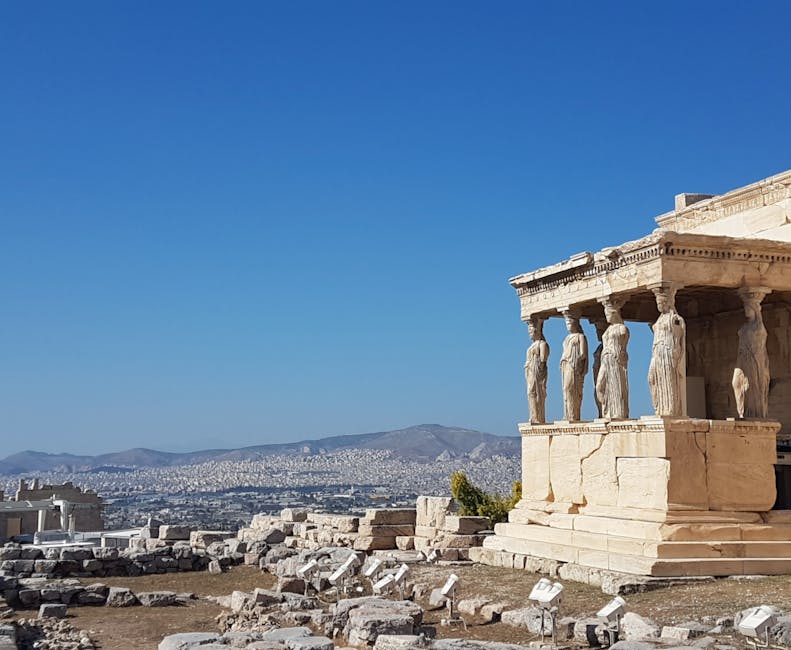
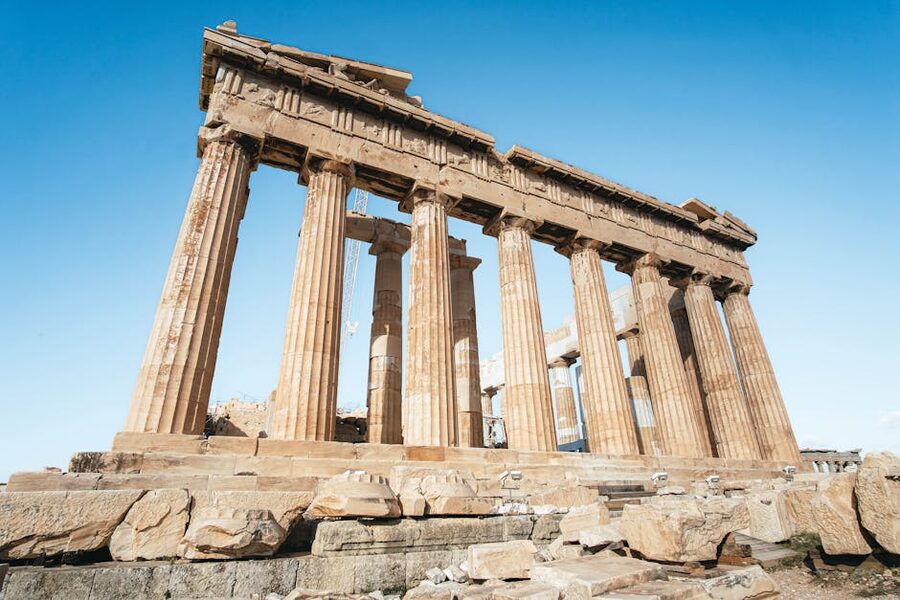
The Acropolis itself is the headliner. Allow 90 minutes minimum, two hours if you want to read all the panels. The Parthenon is roped off, you walk around it, not inside. The Erechtheion porch with the Caryatid figures is the photogenic side. The Theatre of Dionysus on the south slope is included with the Acropolis ticket and is genuinely interesting if you have an extra 20 minutes on the way down.
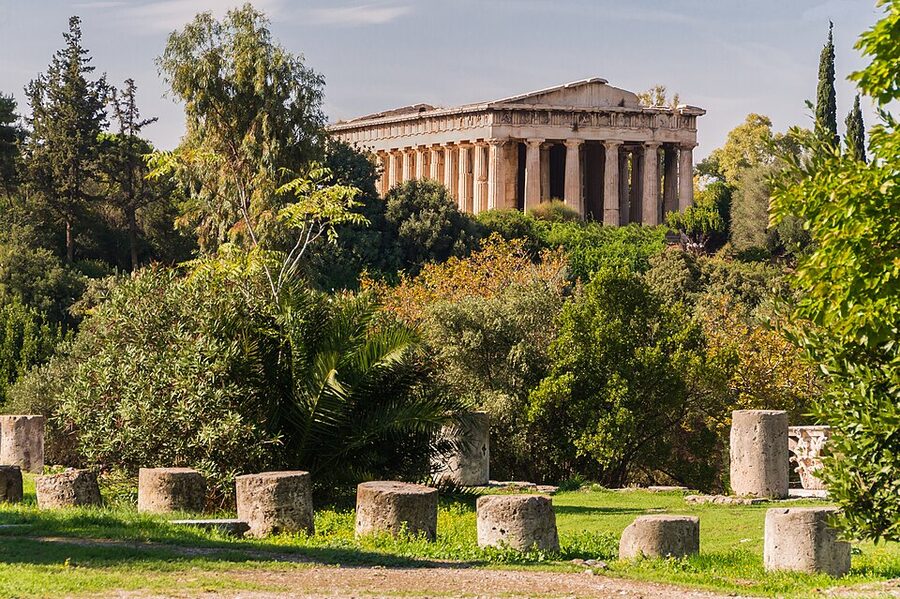
The Ancient Agora is the one most people skip and almost everyone regrets skipping. This is the actual marketplace and meeting ground of classical Athens, the place where Socrates argued and was eventually condemned. The Temple of Hephaestus on the western edge is the best-preserved Doric temple in Greece. Better preserved than the Parthenon, easier to photograph (no scaffolding), and almost no crowds. Allow 60 to 90 minutes. It is a ten-minute walk downhill from the Acropolis exit.
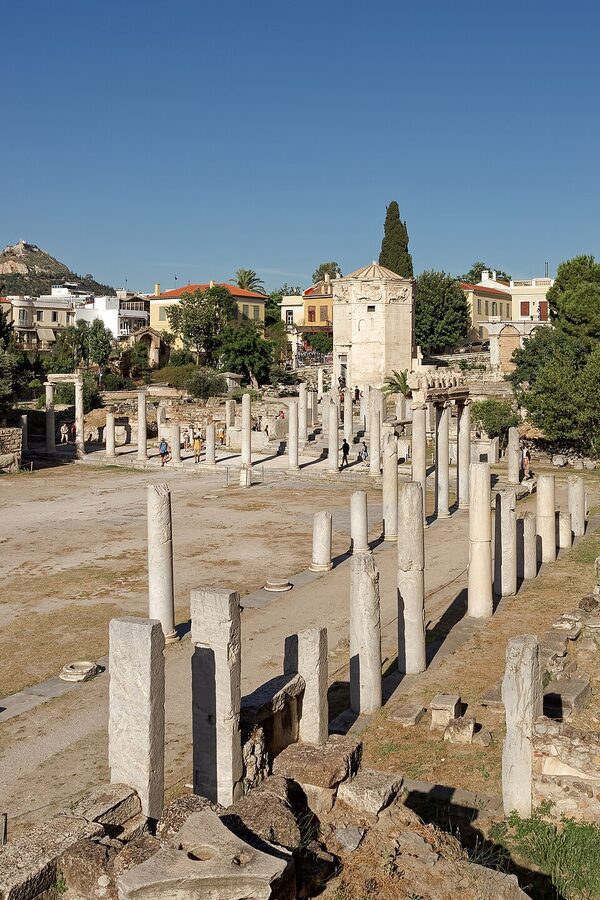
The Roman Agora sits just east of the Ancient Agora, with the eight-sided Tower of the Winds at its eastern end. The Tower is a first-century BCE clock tower with carved wind figures on each face. It is the oldest known surviving meteorological station in the world. The Agora itself is small, you can do it in 30 minutes, but the Tower alone is worth the detour.
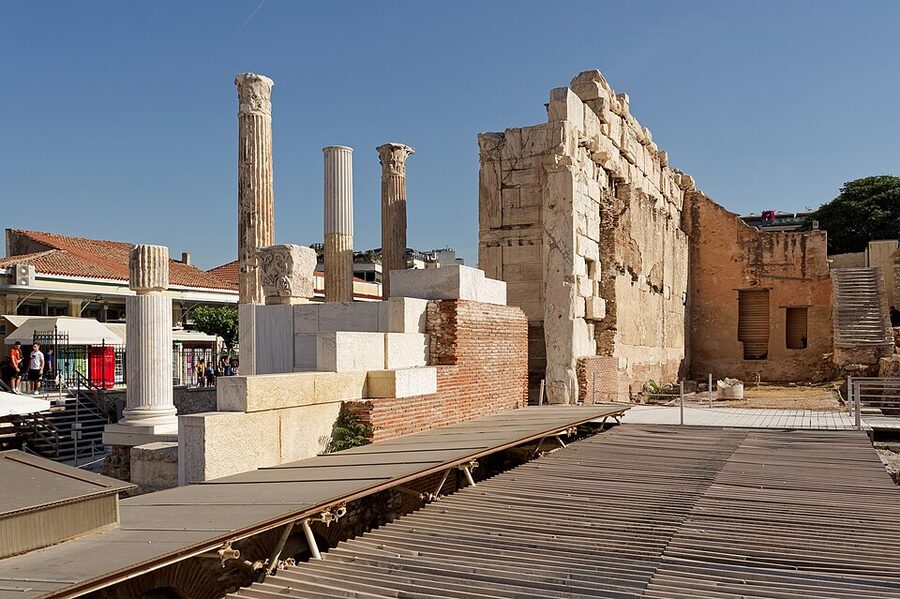
Hadrian’s Library is a large rectangular space with the surviving facade columns of what was the largest library of the ancient Roman world in Athens. Built by the emperor Hadrian in 132 CE. The site is small and you can do it in 20 minutes. The columns on the western frontage are excellent photos and rarely crowded.
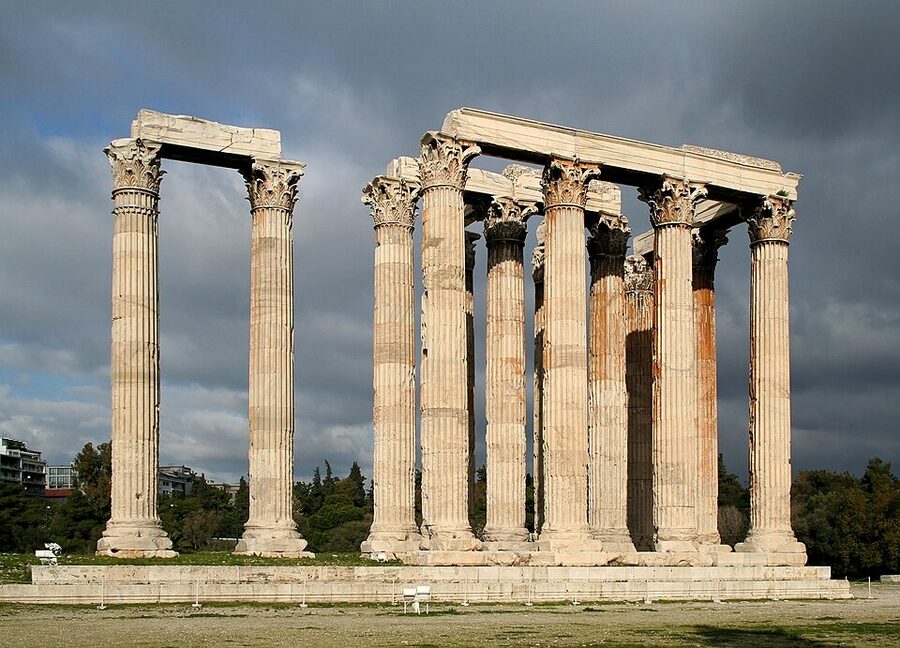
The Olympieion (Temple of Olympian Zeus) is the giant temple on the eastern side of the centre, near Hadrian’s Arch. Originally 104 columns, only 15 still standing. It was the largest temple in Greece when finished, taking nearly 700 years to complete from start to dedication. The site is open and the columns are massive when you stand under them. 20 minutes. The entry is a five-minute walk from Syntagma metro.
Kerameikos is the ancient potters’ quarter, home of the burial ground of classical Athens. The Sacred Way leading from here to Eleusis ran through this site. The on-site museum has the original grave stelai and is small but excellent. This site is much quieter than the others. If you want a peaceful 90 minutes, do Kerameikos in the late afternoon.

Aristotle’s School (the Lykeion) is the easiest to skip. It is a low-walled archaeological site near the Athens War Museum, on the eastern side of the centre. Aristotle taught here in the late 4th century BCE. The visible remains are foundations, not standing structures. If you have an extra 20 minutes and you are an Aristotle person, go. Otherwise this is the one I would drop.
The Panathenaic Stadium (when included) is the white marble U-shape east of the centre, refurbished in 1896 for the first modern Olympics. It is a 19th-century building on classical foundations. The audio tour is good, the marble seating is dramatic, and the loop on the running track is fun if you have kids. Allow 45 minutes.
How the combo actually works as a ticket
Practical mechanics for the combo bundles you’ll be buying online. These differ from the old government one in a few ways that matter.
You pick a timeslot for the Acropolis only. Hourly intervals, you can arrive 15 minutes early or 15 minutes late, otherwise the slot lapses and they will not let you in. The other five or six sites do not have timeslots. You walk up, scan your QR code at the gate, walk in.
The combo is valid for around 5 days from your Acropolis date on most operators (check the small print, some are tighter). So you do the Acropolis at your timed slot, then spread the others out over the rest of your stay. Many people do the Acropolis on day one in the morning, then knock off two or three of the smaller sites in the same afternoon (Hadrian’s Library, the Roman Agora, the Olympieion are all within twenty minutes’ walk of the Acropolis exit).
The audio guide that comes with the combo runs on your phone. Download the app before you arrive at the gate, because reception inside the Acropolis enclosure is patchy. The audio is available in English, French, Spanish, and a few others depending on operator. Bring headphones. Listening on speaker on a crowded site is the fastest way to annoy other visitors. If the standalone Acropolis ticket with audio guide looks easier to manage than the combo audio, that’s a fine alternative.
Refunds and changes. This is the warning I want to make loudest. Most of the third-party platforms allow a 24-hour cancellation policy. The official Greek government website does not. If you book direct through the Hellenic Heritage portal you cannot change the date, refund the ticket, or correct an entry error. Read the cancellation terms before paying. For families and group bookings, the third-party platforms are the safer place to buy for that reason alone.
Best Acropolis Combo Tickets to Book
1. Athens: Acropolis and Up to 5 Archaeological Sites Combo Pass (around $42 per person)
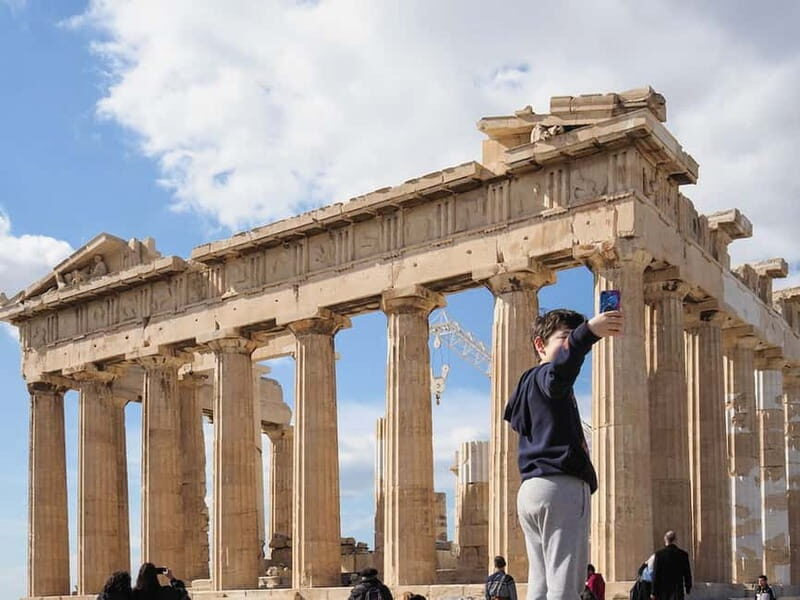
This is the most-booked combo on the market and the right starting point for almost everyone. The audio guide is solid and the Panathenaic Stadium addition is a fun outlier if you are travelling with kids. Our full review walks through which sites you can chain in a single afternoon and which ones to save for the morning.
2. Athens: Acropolis and 6 Archaeological Sites Combo Ticket (around $49 per person)
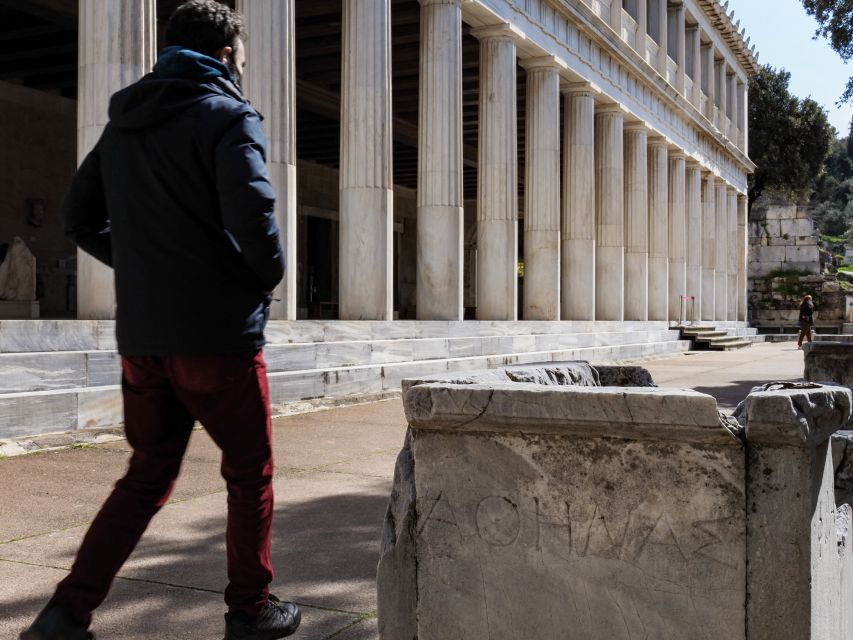
If you are an archaeology person or you have three or four full days in Athens, this is the better pick. Hadrian’s Library alone is worth the upgrade because it is hard to find time to fit in otherwise. The review of the 6-site combo covers the route I would take to chain all seven stops over two days.
3. Athens: Acropolis Entry Ticket With Optional Audio Guide (around $42)
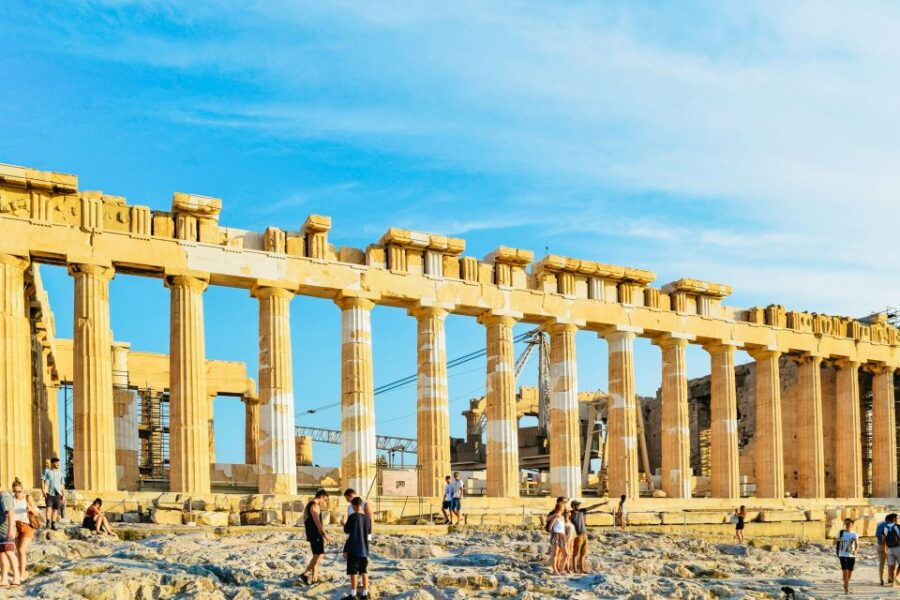
Use this one if you have already decided you are not going to do the other sites, or if you have under 24 hours in Athens and the choice is between the Acropolis and dinner. The audio guide review covers which version of the audio is the better one to download. There are two on the platform, and they vary in length and depth.
Opening hours by season (and the heat warning)
Summer hours run 1 April to 31 October, daily, 8am to 7pm. Last entry is around 6:30pm but in practice the gates start to push you out at 6:45pm. Winter hours run 1 November to 31 March, daily, 8am to 5pm. Last entry 4:30pm.
The summer heat is not a joke. By July and August, the marble of the Acropolis is reflecting full sun and there is almost no shade on the hilltop. People faint up there every week in August. The advice from our reviewers on the 6-site combo is the same advice you’ll get from any local: book the 8am slot. Be there at 7:55am. Bring a litre of water per person and a hat that actually shades your neck. Wear shoes with grip because the marble paths up to the Propylaea are polished glass-smooth from two thousand years of feet.
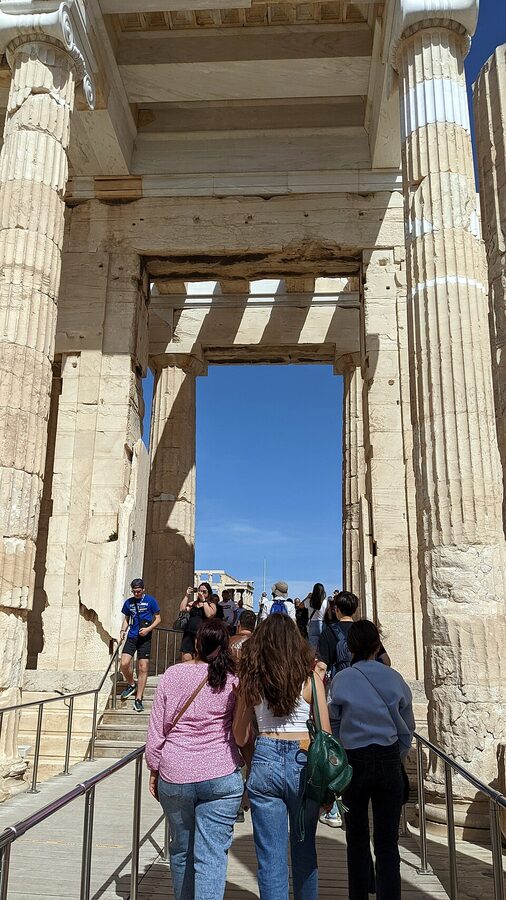
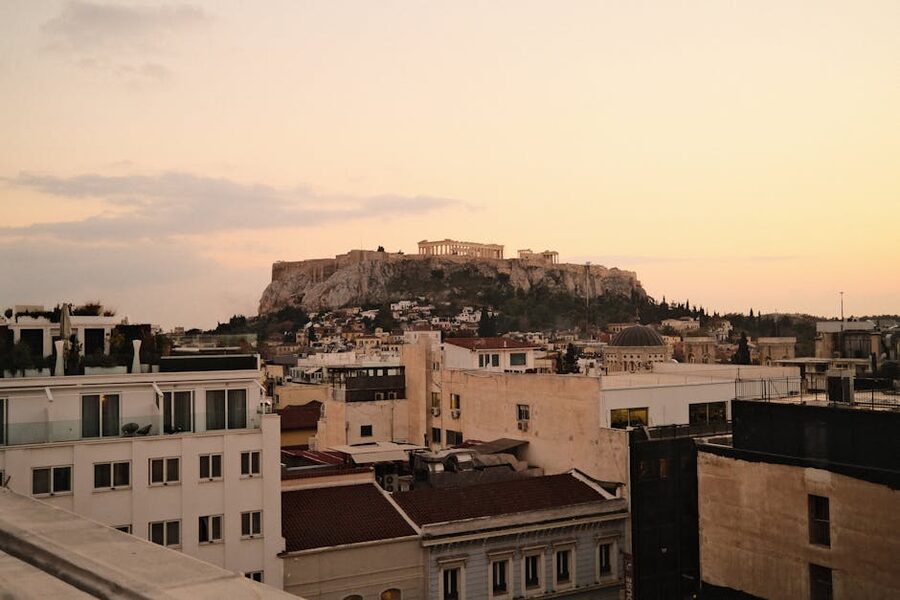
If your only available timeslot is in the afternoon, switch the order. Do the Ancient Agora or Hadrian’s Library in the morning when the streets are still cool, eat lunch in Plaka, then go up to the Acropolis around 5pm when the worst of the heat has passed and the light starts to soften for sunset. The trade-off is a busier hilltop, because everyone else has the same idea, but the air is breathable.
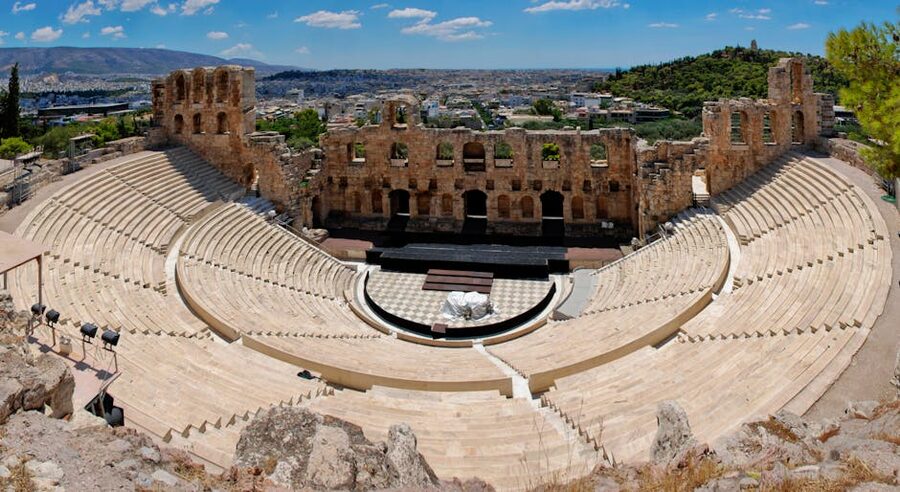
An aside on the slope theatres. The two amphitheatres on the south slope of the Acropolis are easy to mix up. The Theatre of Dionysus, on the eastern side, is the original 5th century BCE Greek theatre and is included with your Acropolis ticket. The Odeon of Herodes Atticus, on the western side, is a Roman-era theatre from 161 CE and is NOT included with the combo: you can look down into it from the path above, but you can only enter on a concert night with a separate ticket. Most people peer into the Odeon, take a photo, and assume it’s part of the visit. It isn’t.
One more practical note. There is a lift on the north side of the Acropolis for visitors with mobility issues. It is well-signposted at the main entrance. The buggies that ferry people to the lift wait at the base of the north cliffs. If you or anyone in your party cannot manage the climb, ask at the main ticket kiosk and they will arrange access.
Free entry days and reduced tickets
The Greek state offers free entry to all archaeological sites and museums on a fixed list of days. These are: 6 March (Melina Mercouri Day), 18 April (International Monuments Day), 18 May (International Museums Day), the last weekend of September (European Heritage Days), 28 October (Oxi Day), and the first Sunday of every month from November to March.
Going on these days is a mixed bag. The Acropolis is genuinely free, no booking needed, but the queues are vicious and the hilltop is shoulder-to-shoulder. If you can plan your trip around them, fine. If you cannot, do not bend your itinerary to land on a free day. The €30 ticket is genuinely worth it to skip the queue.
Reduced and free entry through the year. Anyone under 25 from an EU country gets free entry year-round (you’ll need ID with proof of EU residence). Under-5s from anywhere get free entry. People over 65 from EU and EEA countries get a 50% reduction on summer rates. Non-EU travellers aged 6 to 25 get a 50% reduction in summer. Disabled visitors and one escort enter free with proof of eligibility. There are about a dozen other categories. If you are buying through a third-party platform, select the appropriate ticket type at booking and bring proof to the gate.
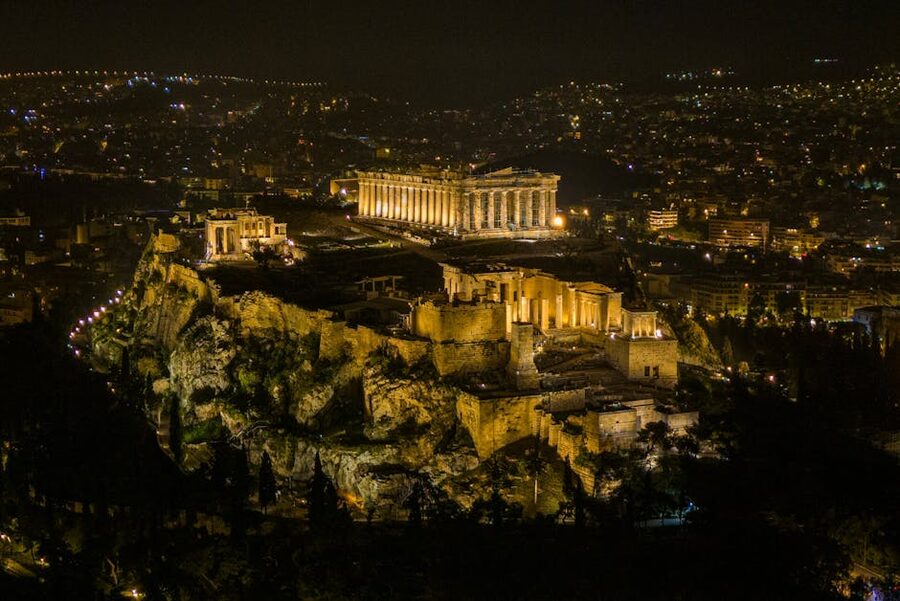
How to book, and what platform to trust
You have three places to buy.
The Greek government website (Hellenic Heritage). Cheapest by a small margin, no booking fee, but no refund or change policy of any kind. Read the terms three times before paying. The site only sells through 31 March 2026 right now, so for trips later in the year you cannot book through them yet anyway.
The third-party platforms (GetYourGuide, Tiqets, Viator). A few euros more, but with 24-hour free cancellation on most products and responsive customer service if you need to change a date. The combos described above (5-site, 6-site, audio entry) are all sold through these. This is what we recommend for almost everyone. The 5-site combo review covers what to expect from the GYG version specifically.
Walk-up at the gate. Possible, not recommended. The kiosk lines at peak season run 45 minutes to two hours. There are two ticket kiosks, one at the main western entrance and one at the south entrance near the Acropolis Museum, and the lines are about the same length. The advice that “the south kiosk is faster” was true in 2018. It is no longer true. Save yourself the queue and book online.
Pre-booking is genuinely necessary. The Acropolis caps timeslot capacity, and the early-morning slots in May, June and September sell out two to three weeks ahead. If you are flexible, book at least a week before your trip. If you have a fixed Athens window, book as soon as you have the dates.
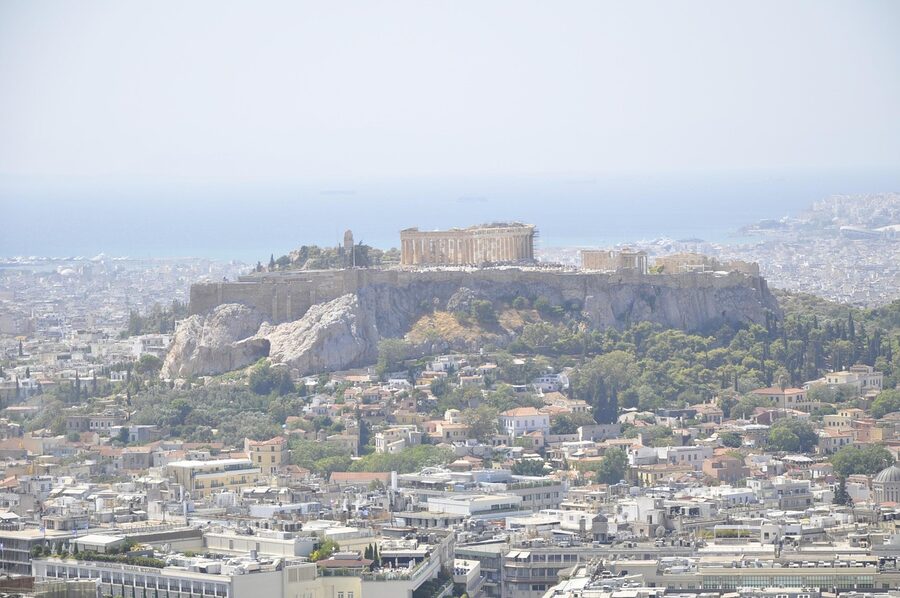
Pairing the combo with a guided walk or day trip
If you want to step beyond the combo and add a layer of guided context, the most popular alternative is a guided walking tour of the Acropolis itself with a licensed Greek archaeologist. These run about €50 to €75 per person and include the Acropolis ticket. The flagship Acropolis walking tour we cover separately walks the Pelasgian wall, the Erechtheion, and the Theatre of Dionysus with a local guide who can point out the things signage never mentions. Smaller-group versions of the same tour exist on the platform if you prefer not to be in a 20-person crowd; the small-group mythology highlights walk is the one most people enjoy. Worth it if you have any interest in the building history. Less worth it if you just want photos.
The Acropolis Museum is the other natural pairing. It sits across the street from the south entrance of the Acropolis and houses the original Caryatid figures, the Parthenon frieze fragments still in Greek hands, and a chronological display from the prehistoric Acropolis up. A combined Acropolis + Museum ticket is around €36 if you book in advance. The guided Acropolis and Museum tour is the simplest way to do both with context if you have a half day to spare.
For travellers spending three or more days in Athens, look at one of the day trips that pair the city with somewhere else. The Cape Sounion sunset trip at the Temple of Poseidon is the easy half-day add-on, leaving Athens around 2pm and back by 9pm. The audio-guided Sounion trip with audio guide is a quieter alternative if you’d rather skip the live commentary. The Meteora day trip is the bigger commitment, an 8 to 9 hour drive each way to the rock-pillar monasteries in Thessaly, but unlike anything else in the country.
Common mistakes that cost time
A short list of avoidable errors I have seen in feedback from readers and reviewers.
Booking the wrong day. The platform shows you a calendar, you click through, the timeslot is “Tuesday 10am”. Read which Tuesday before paying. People have shown up on the right time, the wrong week. There is no refund.
Trying to chain too many sites in one afternoon. After the Acropolis, your legs are toast. Two more sites is comfortable. Four is masochism. Spread the others out over a couple of days if your validity window allows.
Forgetting the audio download before arriving. Inside the Acropolis enclosure the wifi is patchy and your data signal will struggle when 30,000 other phones are on the hill. Download the app, log in, and pre-load the audio at your hotel that morning.
Wearing the wrong shoes. The marble pathway up to and around the Parthenon is polished. People in sandals slip every day. Trainers with grip are the right call.
Ignoring the heat in summer. June through August, an afternoon timeslot on the Acropolis is genuinely dangerous if you are not used to dry heat. Switch to the 8am slot. Or, if your itinerary forces afternoon, do the smaller shaded sites (Hadrian’s Library, Kerameikos with its trees) in the heat and save the Acropolis for the very end of the day.
How the combo compares to single-site tickets
Quick maths. If you bought the seven main sites individually at gate prices, you would pay close to €100 for one person. The 6-site combo at around €49 covers six of them. So you save roughly €50 per person and you are buying access on a ticket that is much harder to lose, since it is on your phone.
The corollary: the combo only saves money if you actually visit at least three of the included sites. If your plan is the Acropolis plus a museum, the combo is not the right buy. The single-site Acropolis ticket plus a museum ticket is cheaper. The break-even is around three sites. If you are doing four or more, the 6-site combo is the obvious choice.
The audio guide is the bonus. Even on the cheapest combo, the audio is included for the Acropolis itself and is what makes the rock walk-around make any sense to a first-time visitor. The Erechtheion has three different sanctuary stories layered on it, the Propylaea was a deliberate Roman re-staging of a Greek gateway, and the Theatre of Dionysus on the slope is where Greek tragedy was invented as a public art form. Without audio, none of that is on the panels.

One more thing: time of year
If you have any flexibility, March, April, October and early November are the best months for the combo. Cooler. Lighter crowds. The light at sunset hits the marble at a softer angle. June, July, August are the worst, but if that is when you have to come, take the 8am slot and the heat will not break you. December and February are the budget months. Many of the cafes around Plaka close early in winter and the air is sharper, but the Acropolis itself is empty by Athens standards. You will not get the same volume of crowd as in May, but you will also be queuing in cold and possible rain. Pack a layer.
If you have visited the timed-entry monuments of Mediterranean Spain, the Acropolis combo will feel familiar. The system is closer to the Alhambra in Granada than anything else: a fixed slot for the headline site, then a few days to mop up the surrounding archaeological complex on the same ticket. If you found the Alhambra logistics manageable, the Acropolis combo will be no harder. The big difference is the scale: the Acropolis cluster is concentrated within a single kilometre. The Alhambra is its own walled city.
More Greece guides
Once the Acropolis combo is booked, the obvious next steps from Athens are a half-day to the Temple of Poseidon at Cape Sounion for the sunset, a longer day out to the monasteries of Meteora in Thessaly, or stepping up to a guided Acropolis walking tour with a Greek archaeologist if you want the building history at a deeper level than the audio guide provides.