
Europe’s largest aquarium isn’t in Lisbon, Genoa, or Berlin. It sits at the southern end of Valencia’s old Turia riverbed, under a roof shaped like a flying saucer that someone dropped into a pond. L’Oceanogràfic holds more than 45,000 marine creatures across nine zones, and most visitors get through about half of them before their feet give up.
This is my honest guide to booking Oceanogràfic Valencia tickets, with the combo decisions explained, the best dolphin show timing, the underwater restaurant detail nobody mentions, and three picks I’d actually use depending on how much of the City of Arts and Sciences you want to see.
Short on time? Three picks worth knowing
- Aquarium only, around $44: the Oceanogràfic entry ticket covers all nine zones plus the dolphin show.
- Aquarium + Hemisferic + Science Museum, around $54: the triple combo does the whole City of Arts and Sciences in one ticket.
- Aquarium + Science Museum, around $45: the duo combo skips the dome and adds the hands-on physics museum next door.
- Short on time? Three picks worth knowing
- The Quick Version of How Tickets Work
- Family-of-Four Pricing, Honestly
- The Nine Zones, in the Order I’d Walk Them
- Dolphin Show Timing (the Bit That Matters)
- The Underwater Restaurant Most Visitors Don’t Even Know About
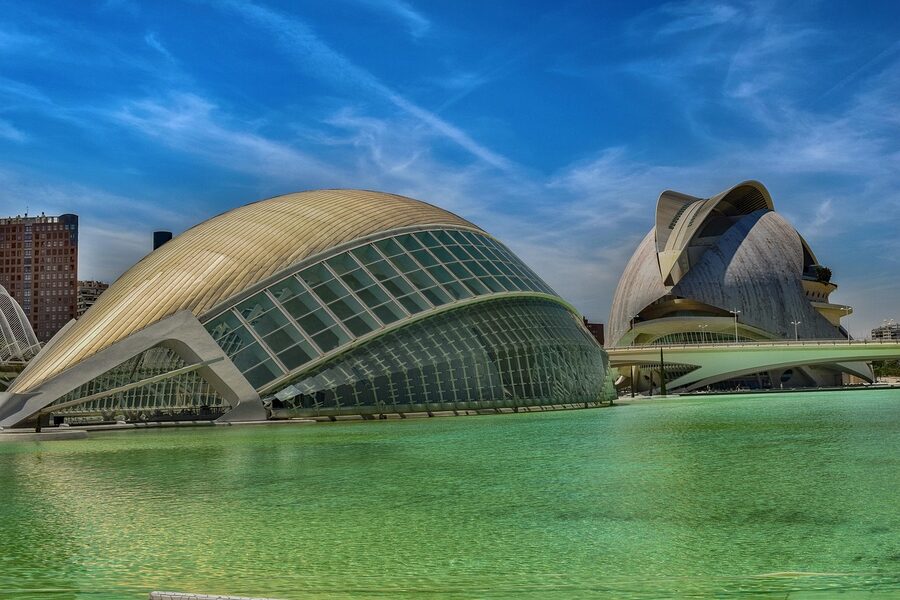
- Architecture: Calatrava, Candela, and the Old Riverbed
- Three Picks for Booking
- 1. Oceanogràfic Entry Ticket:
- 2. Oceanogràfic + Hemisferic + Science Museum Combo:
- 3. Oceanogràfic + Science Museum Combo:
- Getting There and Practical Stuff
- The Best Time of Day to Go
- Where Oceanogràfic Sits Versus Other European Aquariums
- Bigger Picture: A Day in the City of Arts and Sciences
- If You Want a Guide to Walk You Through It
- Common Booking Questions
- Pairing Oceanogràfic With the Rest of Valencia
- What I’d Skip
- Pieces I’d Read Next
The Quick Version of How Tickets Work
Oceanogràfic has its own ticket and three combo options that bundle it with the other City of Arts and Sciences buildings. The aquarium is the headline; everything else is a question of how much extra you want to pay for a half-day vs a full-day visit.
The standalone Oceanogràfic entry ticket runs around $44 and gets you all nine zones plus the dolphin show. That’s the right call if you’ve only got an afternoon, or if you’ve already done the architecture-photo thing from the outside.
The triple combo (Oceanogràfic + Hemisferic IMAX + Príncipe Felipe Science Museum) sits at around $54. That’s only $10 over the standalone aquarium ticket and adds two more buildings, which is why it’s the busiest combo on the marketplace. The duo combo (Oceanogràfic + Science Museum) is around $45, just a dollar over the standalone, and skips the IMAX. If you’ve got kids who’d rather poke at physics exhibits than sit through a 45-minute dome film, the duo is the better buy.
I always tell people to think about it as a per-building cost. At triple-combo pricing, the Hemisferic film and the Science Museum together cost you about $10. That’s hard to beat for an extra two or three hours of indoor time on a hot Valencia afternoon.
Family-of-Four Pricing, Honestly
Here’s the maths most blogs skip. A family of four (two adults, two kids over 4) doing the standalone Oceanogràfic ticket lands at roughly $176. Bumping up to the triple combo costs about $216 for the same family, an extra $40, and adds both the Hemisferic film and the full Science Museum. That’s $20 a head for a second attraction and a third attraction, which is genuinely cheap for Valencia.
The duo combo at four people costs around $180, basically the same as the standalone aquarium. So if you’re going to add anything, the duo is the painless upgrade. The Science Museum is huge, kid-friendly, and free for under-4s.
One genuine gotcha: kids under 4 are free at the aquarium and don’t need a ticket, but you do need to bring official ID (passport or DNI) to prove the age at the gate. They check. We saw a Spanish family get sent back to the ticket booth for a paid child ticket because they hadn’t brought any documentation for their three-year-old.
The Nine Zones, in the Order I’d Walk Them
Oceanogràfic is laid out as separate buildings around a central lake. Each zone represents a different marine ecosystem. The official map suggests one route; I’d do this one instead.
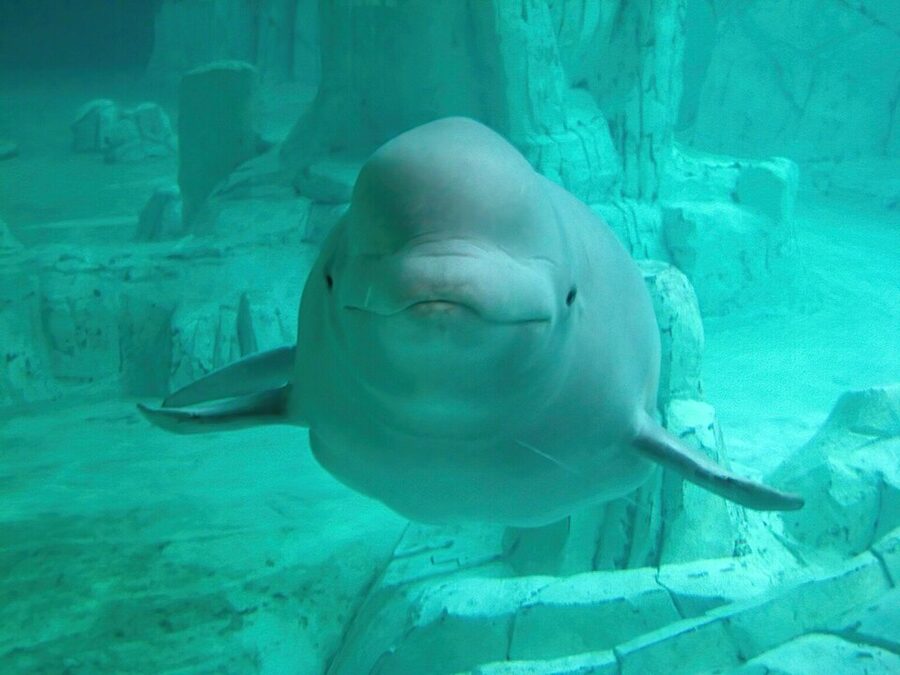
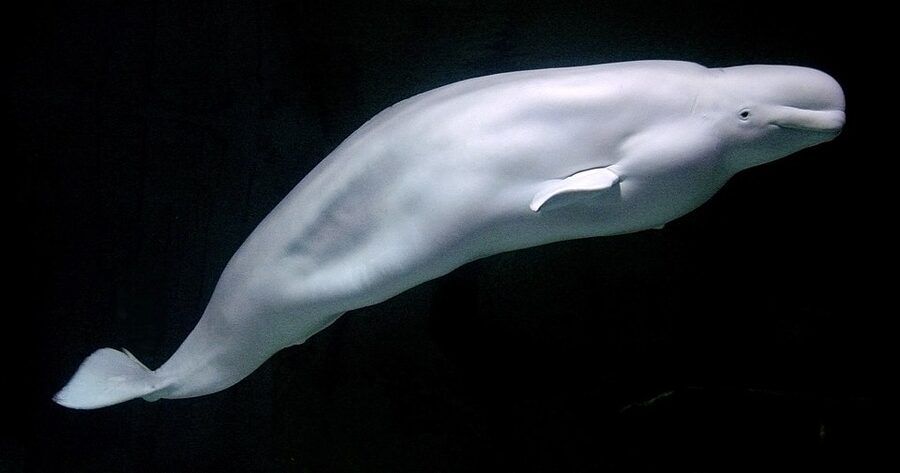
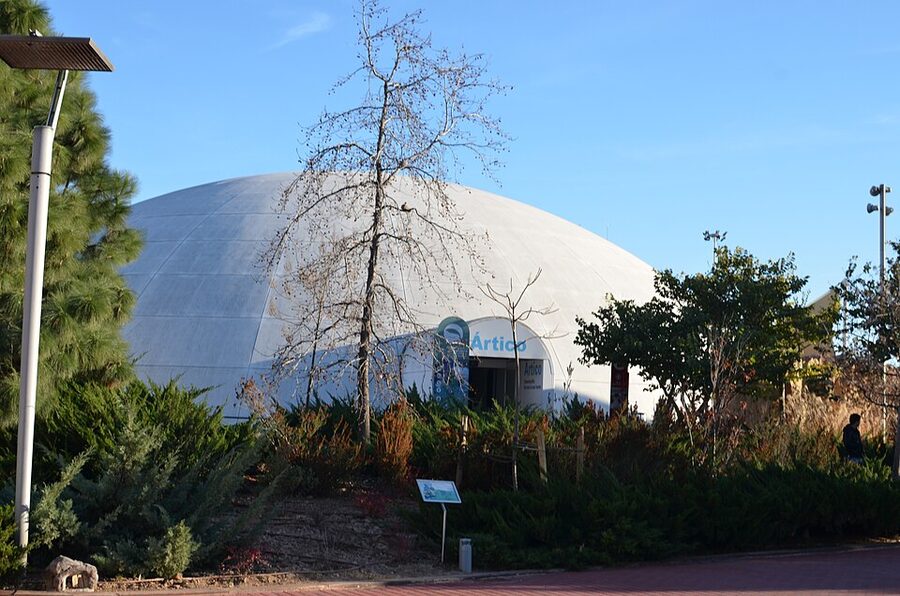
Start with the Arctic and the Antarctic. Both zones share a building and they’re the most popular for kids, so you want them done first. Belugas live in the Arctic tank, which holds 4 million litres of cold water. Two adult belugas. They’re closer to the glass than you’d expect.
The Antarctic side has Humboldt and Gentoo penguins behind a long curved-glass front. Feeding times posted at the door. Worth catching if you can time it.
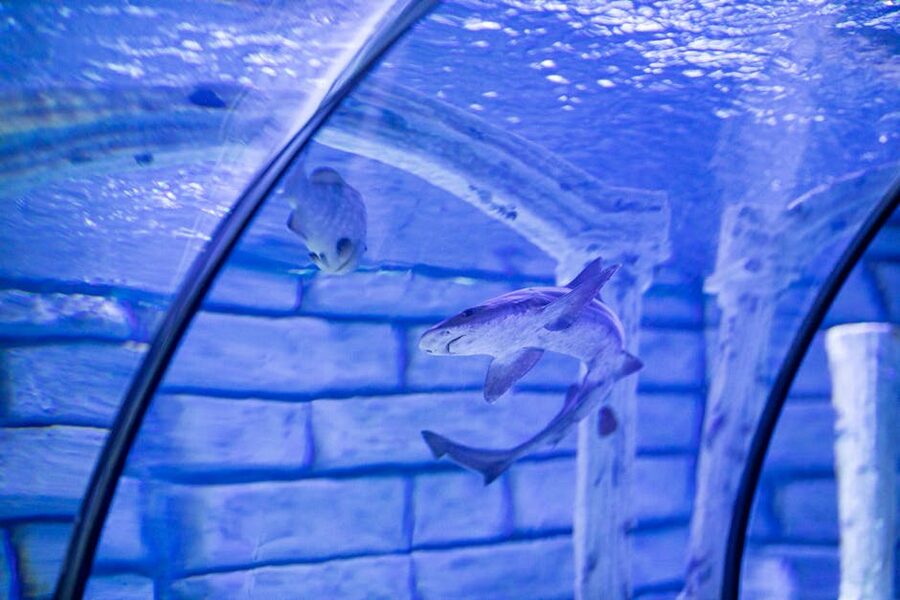
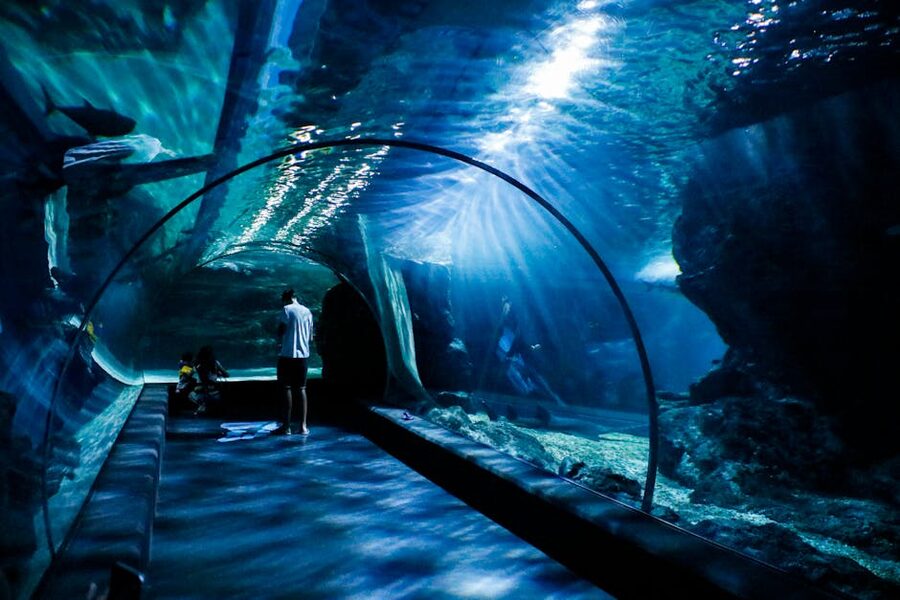
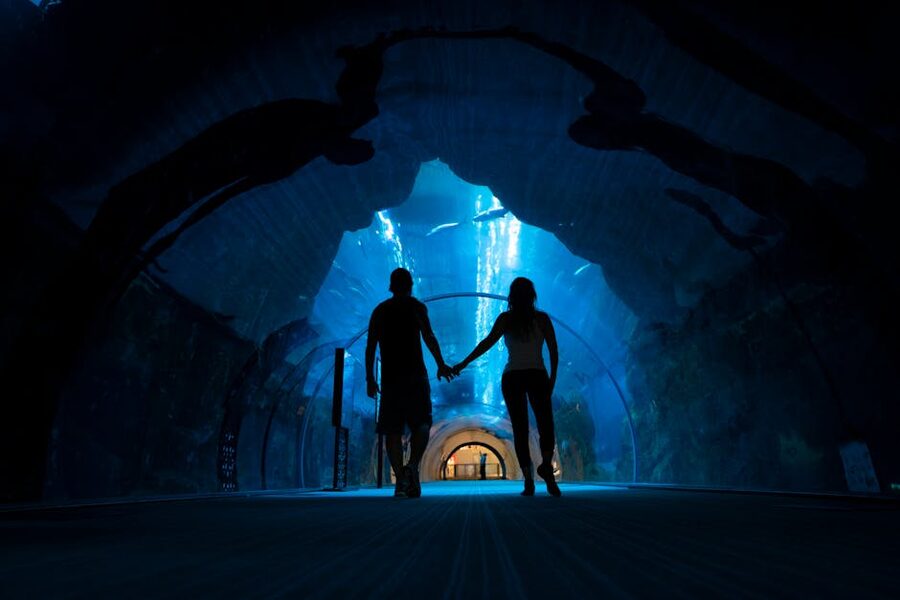
Then the Oceans tunnel. The 70-metre underwater walk-through tunnel runs through the shark tank. Sand tigers, bull sharks, sawfish. The acrylic is thick enough that even when a sand tiger is right above you, the jaw lines up with the curve of the ceiling and looks unreal. Kids stop and refuse to walk on. Mine certainly did.
Mediterranean and Tropical Seas next. These share a path that loops down into the basement of the entry pavilion. The tropical tank is loud with colour. The Mediterranean is quieter, more grey-blue, but it’s the one that actually matches the sea you can see from the Valencia coast.
The Red Sea building. Smaller and easy to miss. Inside, the lighting is set to a warm-orange that imitates desert reflections, and the corals are some of the most photogenic in the whole park. Don’t skip it because of the size.
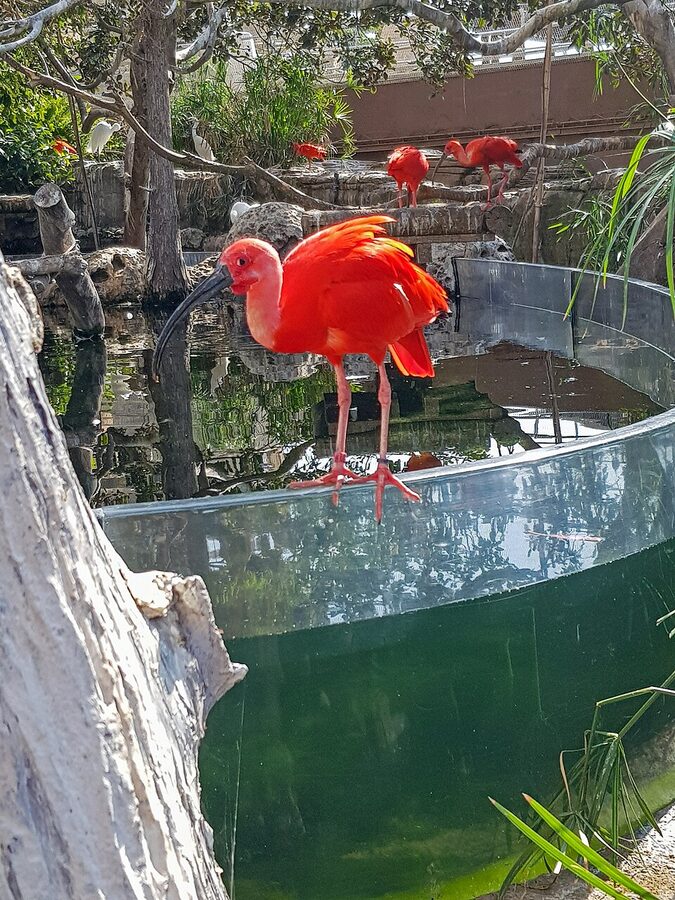
Then Wetlands and the open-air sections. Flamingos, turtles, the freshwater pools. The flamingos are the noisiest residents of the entire complex. You’ll hear them before you see them.

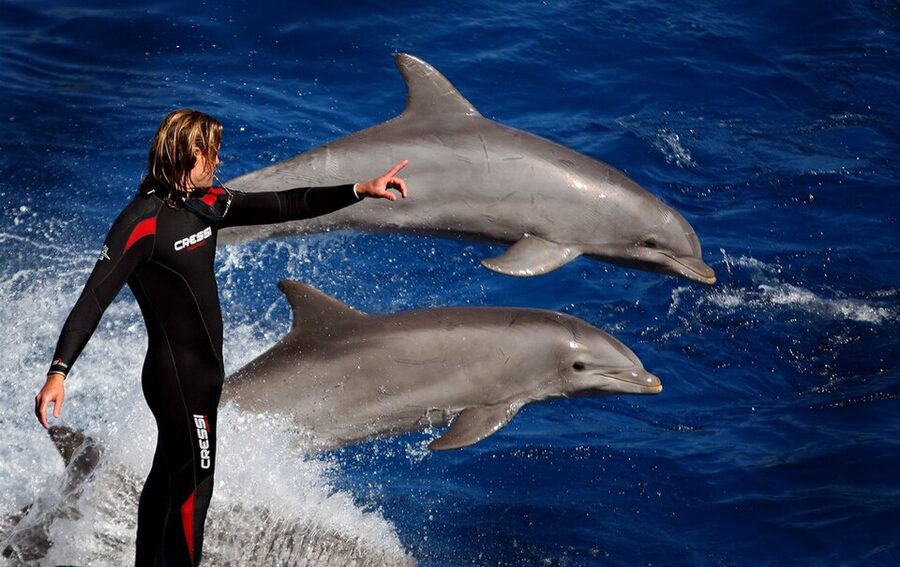
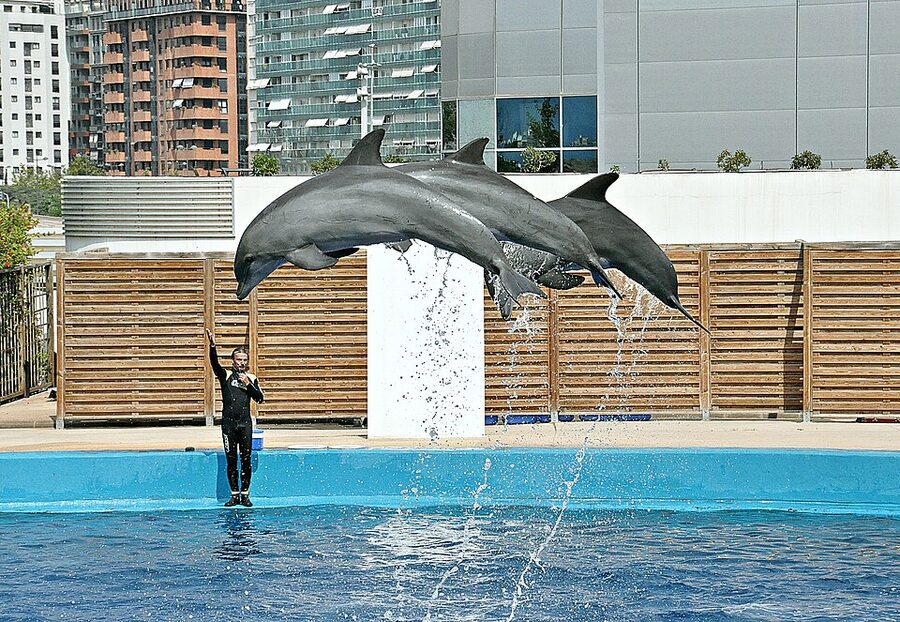
Save the Dolphinarium for last. Or, more accurately, walk the rest of the park to fit around the show timing. The dolphin show drops a chunk of visitors out together at the end, so anything you do after the show will feel busier than what you do before.
Dolphin Show Timing (the Bit That Matters)
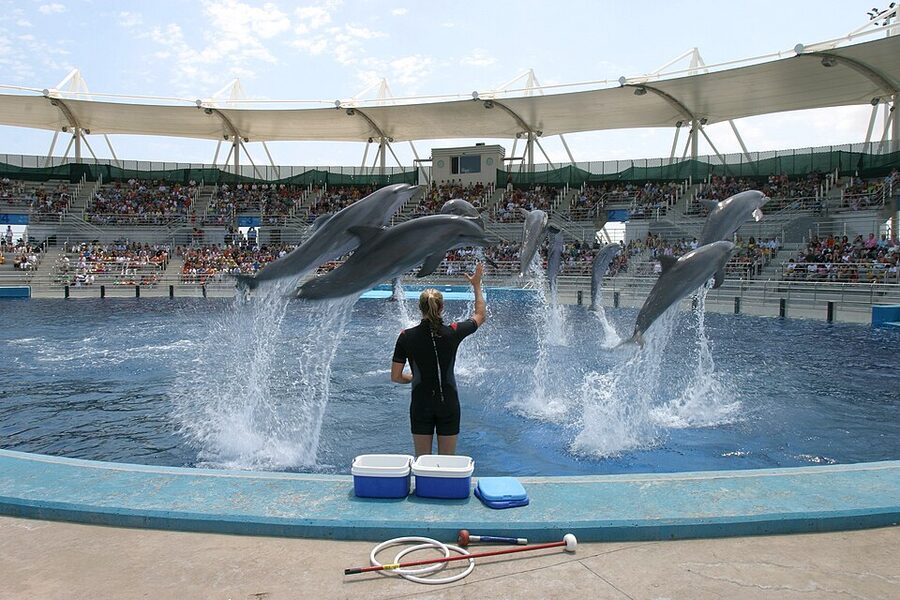
Oceanogràfic runs the dolphin show three to four times a day. Times are usually around 11:30, 13:30, 16:00, and an evening show in summer. Check the day’s schedule on a board at the entrance; it does shift seasonally.
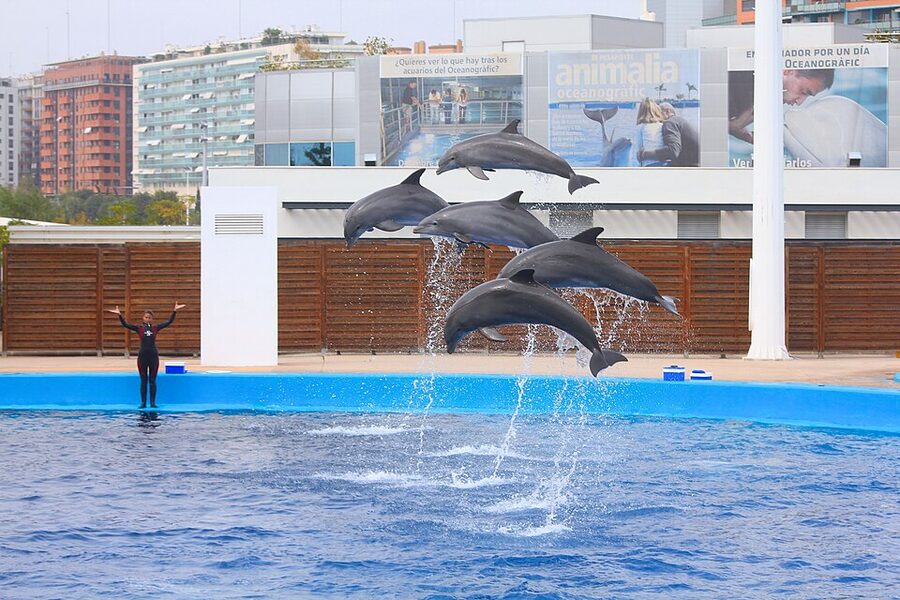
Pick the second show of the day if you can. The morning one fills up fast with school groups and tour buses. The afternoon shows are more locals and walk-up visitors, which means easier seating and a calmer atmosphere. The evening summer show is genuinely lovely, but the heat earlier in the day will have already worn the kids out.
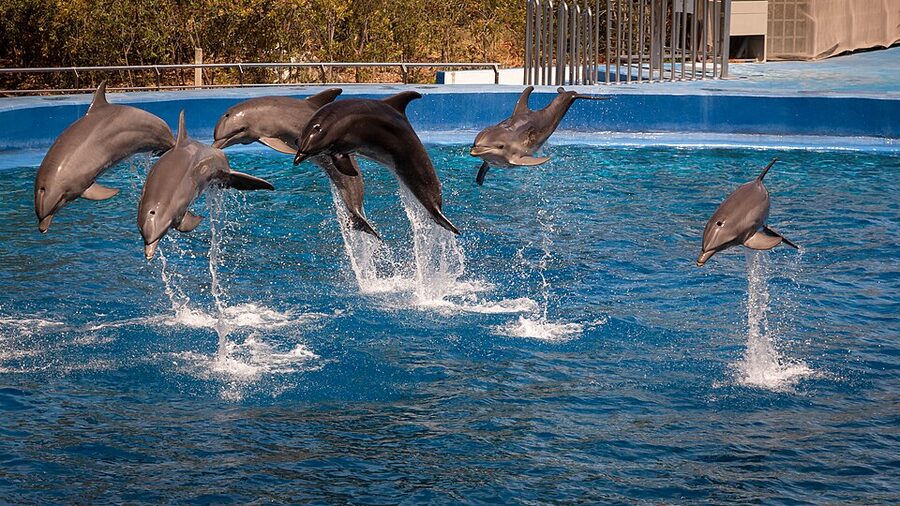
The dolphinarium itself is the largest in Europe, holding 24 million litres. Capacity around 2,000 people in the stands. It does fill on weekends and during peak season, so plan to arrive 20 minutes early to get a midfield seat.
The Underwater Restaurant Most Visitors Don’t Even Know About
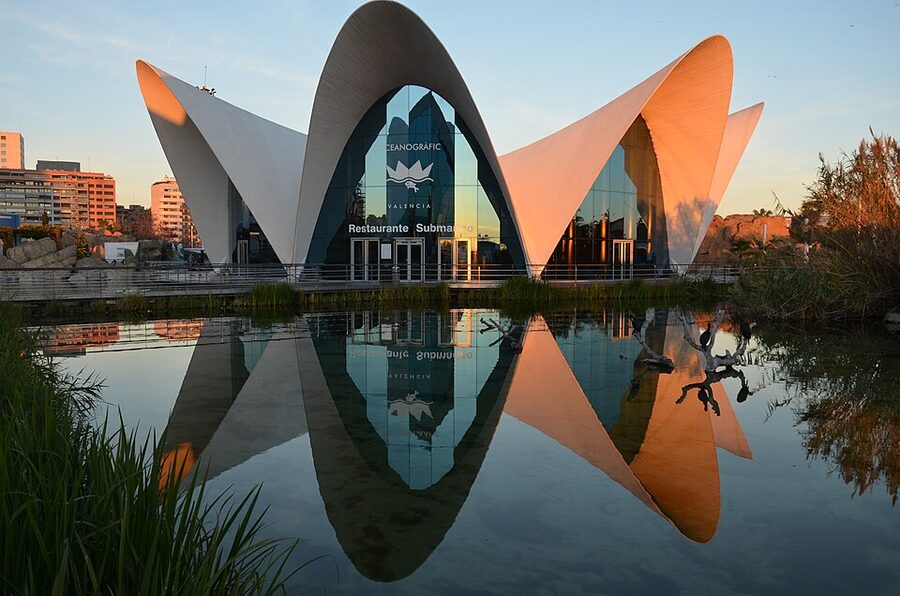
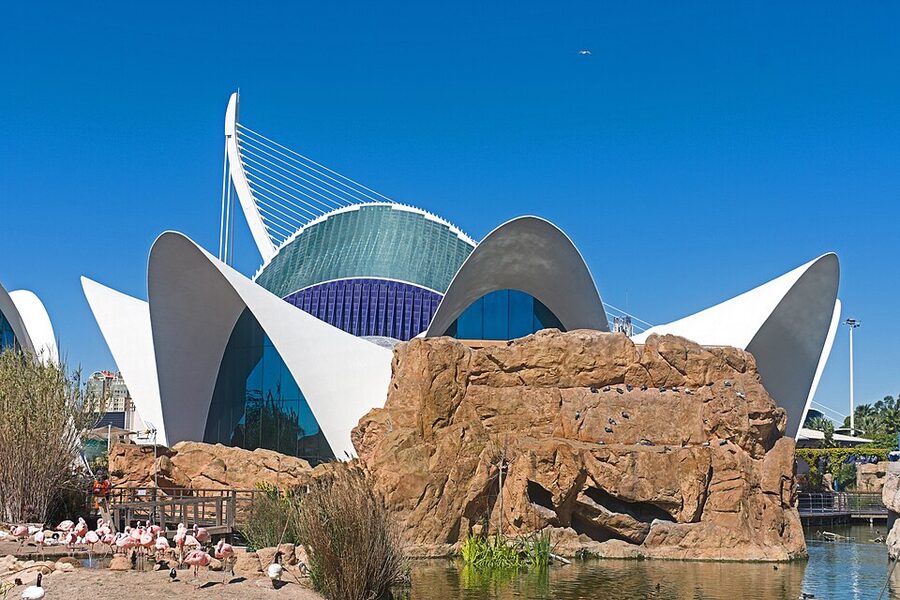
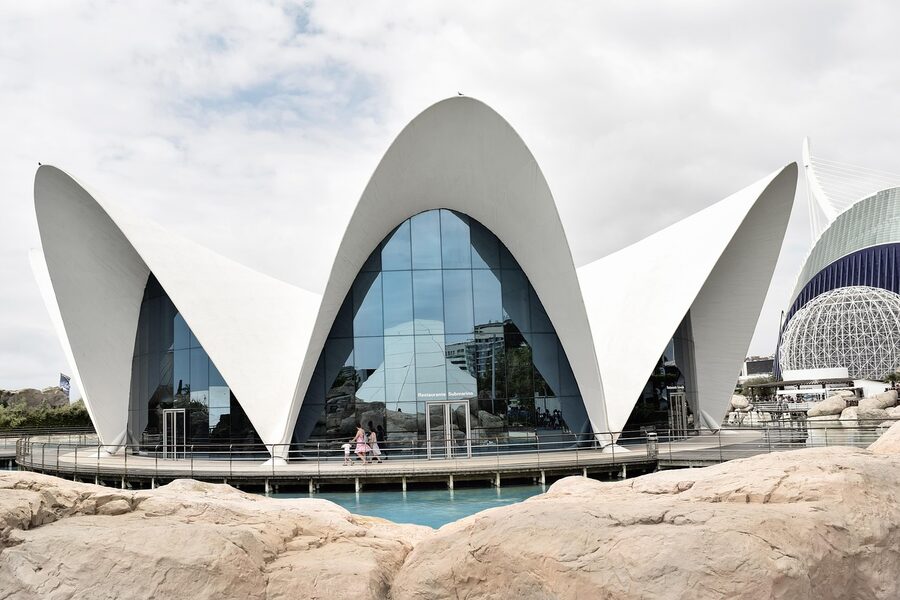
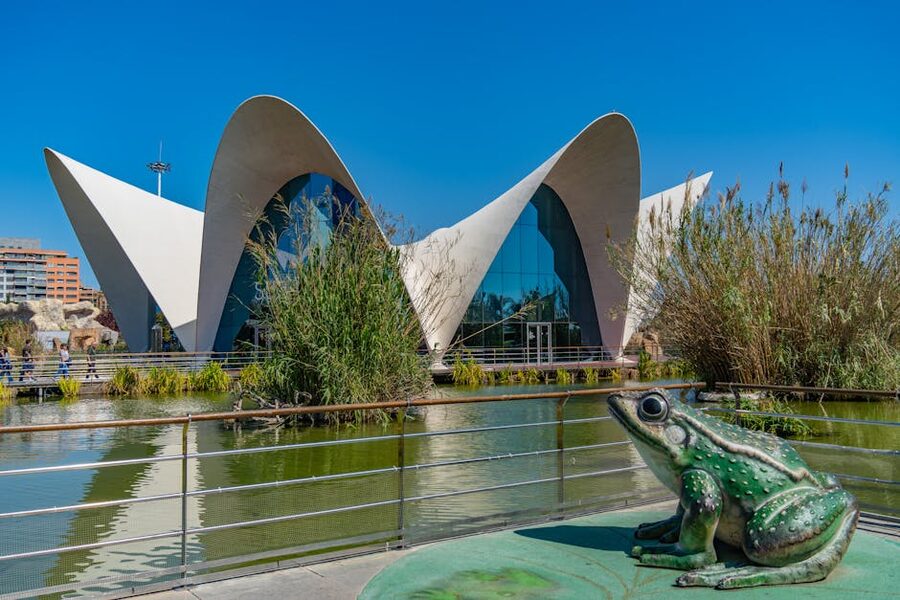
Inside the aquarium, in the central pavilion under Felix Candela’s flying-saucer roof, sits a circular dining room called Submarino. Three sides face floor-to-ceiling glass into a 5-million-litre tank. You eat surrounded by sharks, rays, and a few thousand silver fish.
Submarino is operated separately from the standard ticket and you book it directly through the Oceanogràfic site or by phone. Set menus run around 38-50 euros at lunch and a bit more at dinner. The food is decent rather than spectacular; the room is what you’re paying for. Reservations open a couple of months ahead and the window tables go first.
Two practical notes. First, you can dine at Submarino without an aquarium ticket. There’s a separate restaurant entry process, although honestly going to the aquarium first and eating in the middle is the better day. Second, the dining room is in the basement of the central building, so you don’t get views of the Calatrava complex from your table; the view is the tank.
Architecture: Calatrava, Candela, and the Old Riverbed
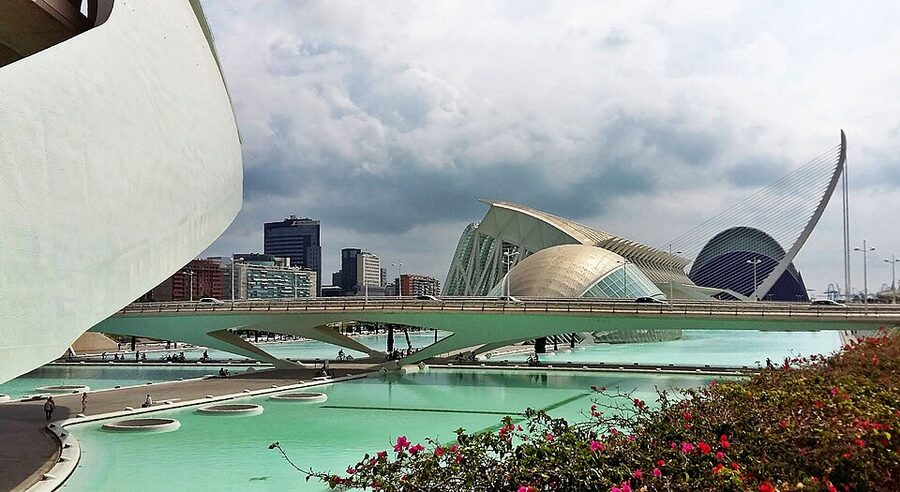
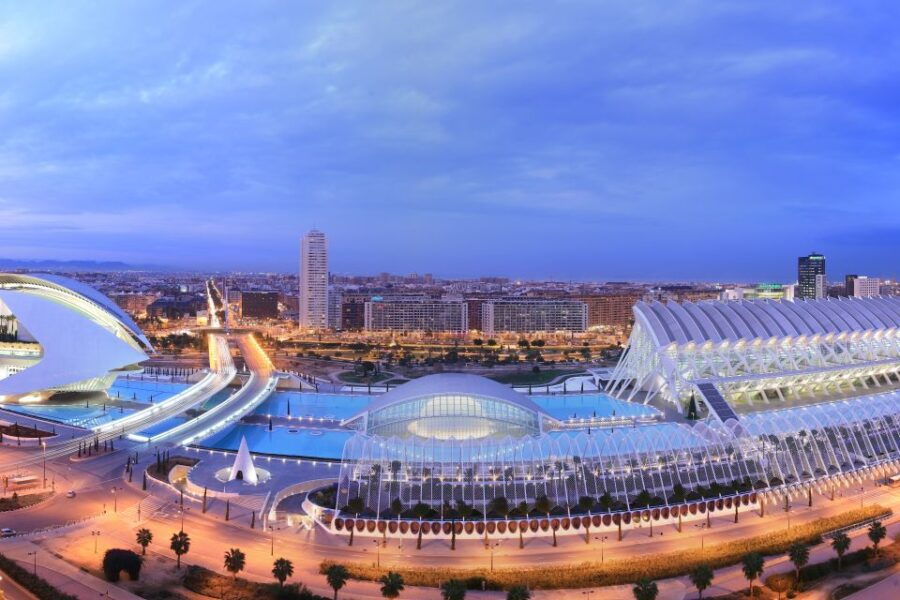
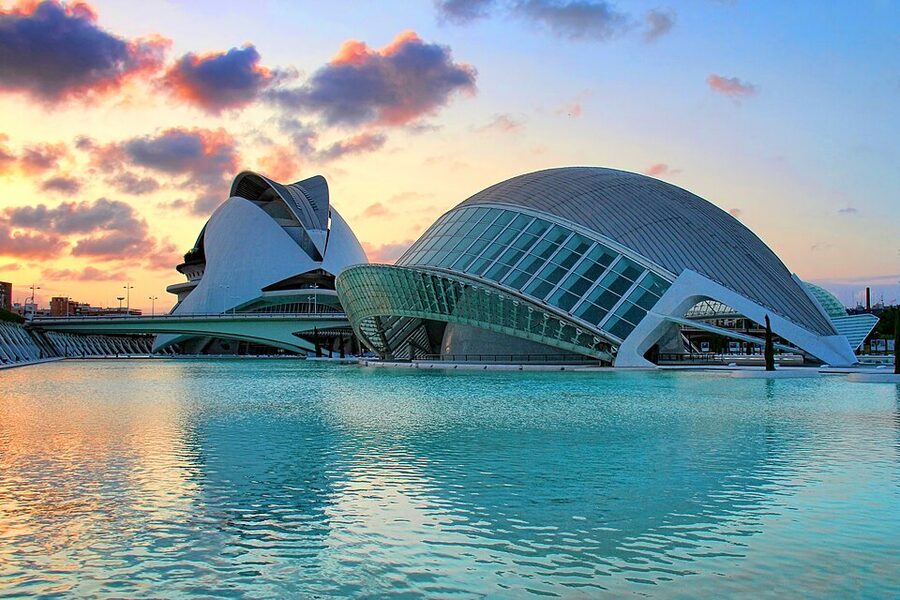
This bit gives Oceanogràfic its weight as a destination, not just an aquarium visit. The City of Arts and Sciences sits on what used to be the bed of the Turia river, before the 1957 flood killed dozens of people in Valencia and the city diverted the river south of town. The dry riverbed became a 9-kilometre linear park, and the southern end was given over to Santiago Calatrava and Felix Candela.
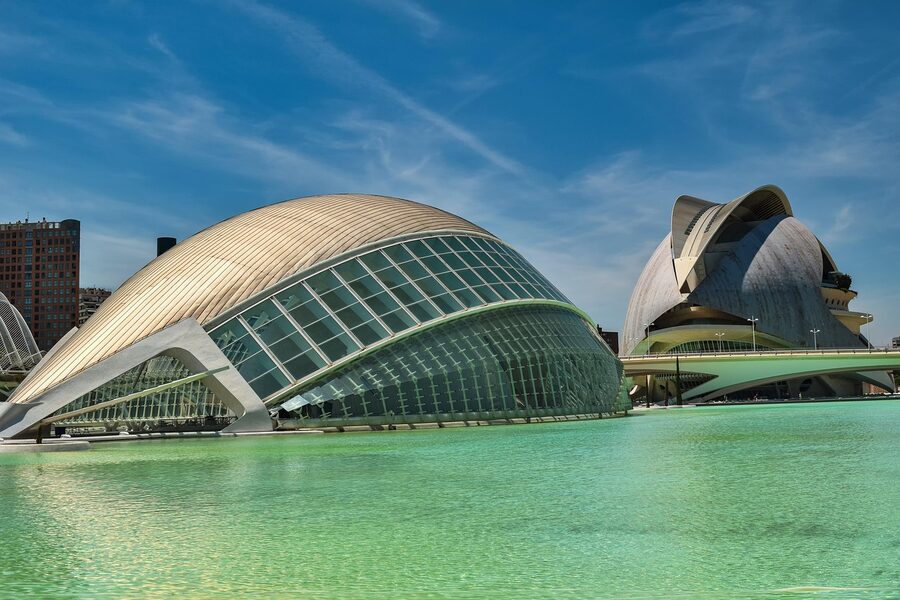
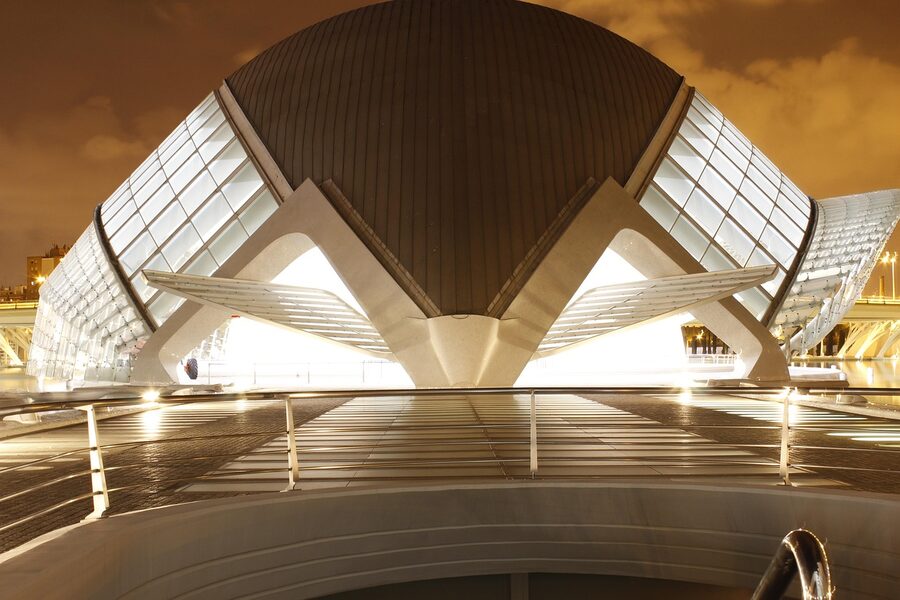
Calatrava designed most of the complex (Hemisferic, Príncipe Felipe Science Museum, Umbracle, Ágora, Palau de les Arts). Felix Candela, the Spanish-Mexican shell-structure pioneer, designed the Oceanogràfic entrance pavilion and the Submarino restaurant. He died in 1997, before the complex opened in 2003. The shells are basically his last big work.
The hyperbolic-paraboloid form means the structure self-supports through tension and compression in opposing directions. No columns, no big steel skeleton inside. That’s why the entry pavilion looks so empty under that vast white shell.
Three Picks for Booking
I’d narrow it down to one of these three. The first is what I’d book if I had only an afternoon. The second is what I’d book if I had a full day and I wanted everything. The third is the painless mid-tier option.
1. Oceanogràfic Entry Ticket: $44

This is the workhorse. Our review of the standalone Oceanogràfic ticket covers what’s actually included, but the short version: all nine zones, the dolphin show, and the option to add the 4D cinema if you want. Book it if you’ve only got an afternoon, or if Calatrava architecture isn’t your thing and you just want sea creatures.
2. Oceanogràfic + Hemisferic + Science Museum Combo: $54
Best value for a full day. Our take on the triple combo goes through the math, but the headline is that you pay around $10 over the standalone aquarium and get two more buildings. The Hemisferic is a 45-minute IMAX film inside Calatrava’s eyeball-shaped dome; the Science Museum is the long whale-skeleton building beside it.
3. Oceanogràfic + Science Museum Combo: $45
The painless upgrade. Our duo combo review covers the call between this and the triple. If your kids would rather poke at interactive physics exhibits than sit through a 45-minute dome film, take this one. The Science Museum is huge, free for under-7s, and works on rainy days.
Getting There and Practical Stuff
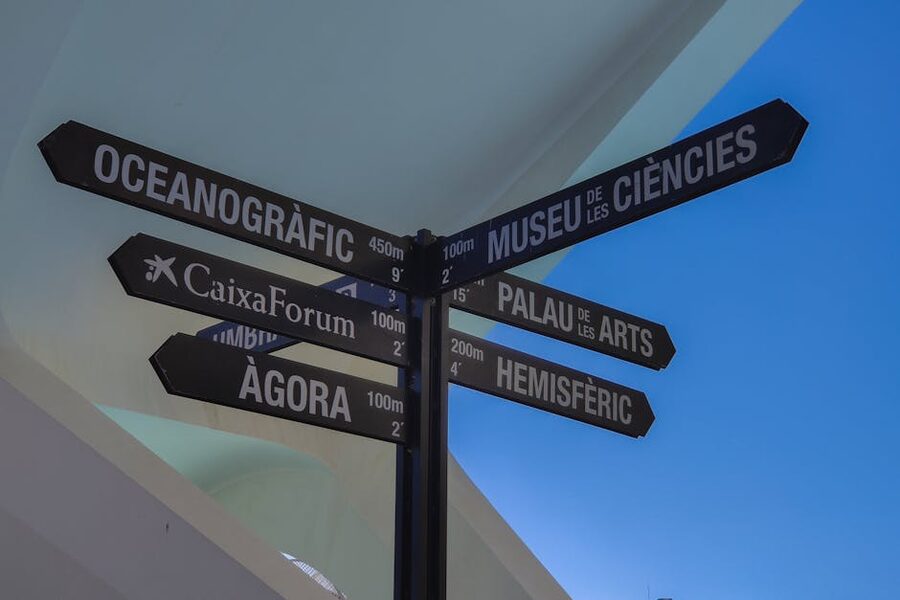
The complex sits about 3km south of the old town. You can walk it through the Turia gardens in roughly 40 minutes, which is what I’d do on a cool morning. By bike it’s 15 minutes; the Turia is flat and the path is dedicated. By bus, lines 95 and 35 stop right outside.
If you’re already on a Valencia hop-on hop-off bus, both standard routes stop at the City of Arts and Sciences. That’s the easy option if you’re combining Oceanogràfic with the cathedral and the Mercado Central in a single day. The HOHO ticket and the aquarium ticket are entirely separate, but together they cover most of what a first-time visitor wants to see.
Doors open 10:00 and stay open until 18:00 most of the year, with later hours (until 20:00 or 22:00) in July and August. The last admission is usually one hour before closing. Plan to spend at least three hours inside; four if you’re doing the full park plus the dolphin show.
The Best Time of Day to Go
I’d go at opening. 10:00 sharp. The first hour is properly quiet, you’ll catch the morning beluga feeding, and the dolphin show queues haven’t built yet. Tour buses and school groups arrive around 11:30, which is when it starts to feel like a weekend afternoon at IKEA.
Second-best is the last two hours before closing. Most families leave for dinner around 6pm. The Mediterranean and Red Sea zones empty out, and the Oceans tunnel is genuinely peaceful. The dolphin show times are tighter at the end of the day, so check the schedule before you commit.
Avoid the middle of the day in summer. The outdoor zones (wetlands, tropical aviary, dolphin pool seating) get hot, and there’s no real shade between buildings. Spring and autumn are the comfortable seasons. Winter is fine but the open-air sections get cold and breezy.
Where Oceanogràfic Sits Versus Other European Aquariums
Oceanogràfic is the largest aquarium in Europe by water volume (around 42 million litres total). For comparison, the Barcelona Aquarium in Port Vell is around 4.5 million litres. Lisbon’s Oceanário is about 5 million. Genoa’s is roughly 6.5 million. So you’re looking at something an order of magnitude bigger.
That said, bigger isn’t always better. Barcelona’s tunnel is longer per square metre and the tank is denser with sharks. Lisbon’s central tank is more dramatic in its single-volume design. Oceanogràfic wins on variety: nine ecosystems vs the typical three or four. If you’ve already done Barcelona’s aquarium, Oceanogràfic still feels like a different visit, not a repeat.
Three on-site notes that nobody seems to put on the booking page. There’s a 4D cinema add-on for around 4 euros that’s mostly for kids and not great. The food court inside is functional but uninspired; eat at Submarino if you’re going to eat inside, or step out to the Turia gardens cafe if you’re not. And the gift shop has the best sea-creature plushies I’ve seen at any European aquarium, which my niece can attest to and my wallet can lament.
Bigger Picture: A Day in the City of Arts and Sciences
If you’ve gone for the triple combo, here’s the day I’d build. Open at 10:00 with Oceanogràfic. Spend three hours in the aquarium and catch the 11:30 dolphin show. Lunch at Submarino around 13:30 if you’ve booked, or step out to the gardens. Hit the Príncipe Felipe Science Museum from 15:00 to 17:00. End with the Hemisferic IMAX at 17:30 or 18:00.
That gets you all three buildings and a meal, with no rushing, and you’ll walk out as the lighting turns golden over the lake. If you want to pack in more, the Umbracle (the open-air promenade with the modern-art sculpture garden) is free to walk and worth ten minutes on the way back to town. The Hemisferic 3D film ticket on its own runs about $10 if you want to add it later instead of doing the combo upfront.
If You Want a Guide to Walk You Through It
For most visitors, a self-guided visit is plenty. The signage is bilingual (Spanish and English), most exhibit panels are clear, and you can move at your own pace. But if you’d rather have someone explain the architecture, the species, and the Calatrava-Candela history, there’s a 2.5-hour guided tour of the City of Arts and Sciences plus Oceanogràfic that includes both the architectural side and the aquarium. It’s a smaller-group format so the per-person cost is higher (around $76), but the architectural explanation is genuinely worth it if Calatrava is part of why you came.
The other option, more limited, is the standalone Oceanogràfic + Hemisferic combo, which skips the Science Museum but adds the IMAX. I wouldn’t pick this over the triple combo unless the Science Museum genuinely doesn’t appeal, because the price gap is small.
Common Booking Questions
Can I skip the queue? Tickets are timed-entry, so once you’ve booked online you walk straight to the gate at your slot. There’s no real “queue” in the traditional sense unless the day is properly busy.
Are tickets refundable? Most marketplace tickets allow cancellation up to 24 hours before the visit, but check the listing. Direct from oceanografic.org the refund window is shorter.
Do I need printed tickets? No, the QR code on your phone is fine. Bring photo ID for child discount validation, and bring proof of age for under-4s.
Is there parking? Underground parking under the City of Arts and Sciences runs around 4 euros for the whole day. It’s signposted from the Avenida del Saler and the Avenida de Francia approach roads.
Strollers and accessibility? Fully wheelchair and stroller accessible throughout. Lifts in every building. The Oceans tunnel has a flat path with no steps.
Pairing Oceanogràfic With the Rest of Valencia
If you’re spending two or three days in Valencia, the aquarium is best paired with the rest of the southern coast. A morning at Oceanogràfic and an afternoon on a Valencia sunset catamaran from Marina Real Juan Carlos I gives you a full water-themed day. The marina is a 10-minute drive or 25-minute bike ride from the City of Arts and Sciences.
For a slower day after Oceanogràfic, the old town (the cathedral, the Mercado Central, Plaza de la Reina) is best done by walking; the hop-on hop-off bus is the alternative if you’ve got tired feet. Or rent a bike along the Turia and ride the green spine of the city back from the aquarium to the cathedral.
What I’d Skip
The 4D cinema add-on is forgettable. The themed photo packages at the exit are overpriced. The merchandise outside the gift shop kiosk near the dolphinarium is more of the same as the main shop, just with worse lighting. And the Albufera boat-tour combos that some marketplaces bundle with Oceanogràfic add a separate half-day to your itinerary; if you’ve only got two days in Valencia, that’s a stretch.
If you’re juggling Oceanogràfic against another Spain stop, this isn’t the place to skip. Set aside the half-day or full-day, do it properly, and don’t try to combine it with too much else. The complex deserves its own slot in your itinerary.
Pieces I’d Read Next
If Valencia is part of a longer Spain trip, our Prado in Madrid guide is the standard pair for travellers who want one architectural marvel and one art-museum afternoon. For Catalan coast comparisons, the Barcelona Aquarium review is the closest peer write-up and worth a read if you’ve already done Port Vell. And if you’re stitching south, the Seville Cathedral piece covers the other Spanish heavyweight on most first-time itineraries.