
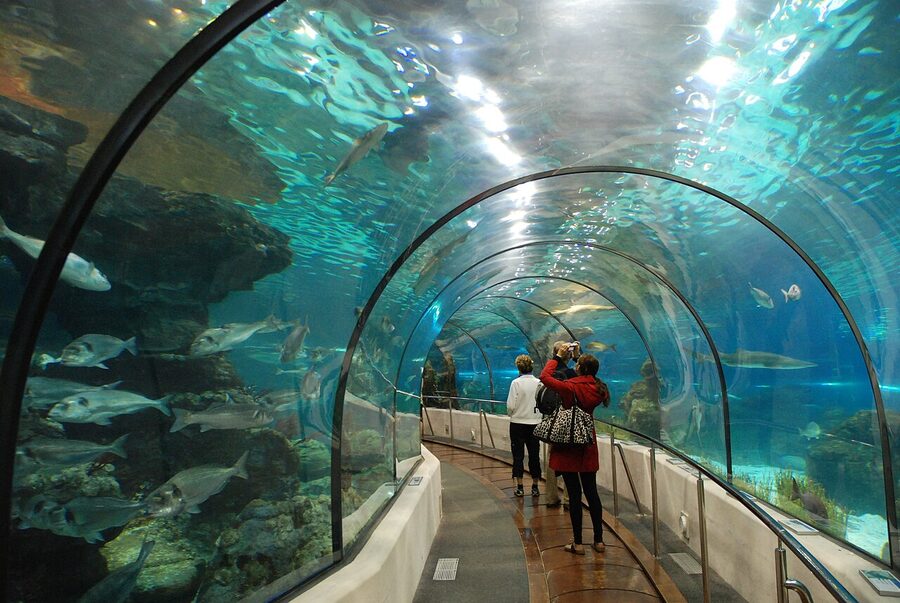
A friend told me her seven-year-old refused to leave the shark tunnel. Twenty minutes she stood on the slow walkway, looking up at sand tiger sharks gliding two feet over her head, and when her parents tried to nudge her along she went back to the start and rode it through again. That tunnel is the reason most people book L’Aquarium de Barcelona. The rest of the place is good. The tunnel is what they remember.
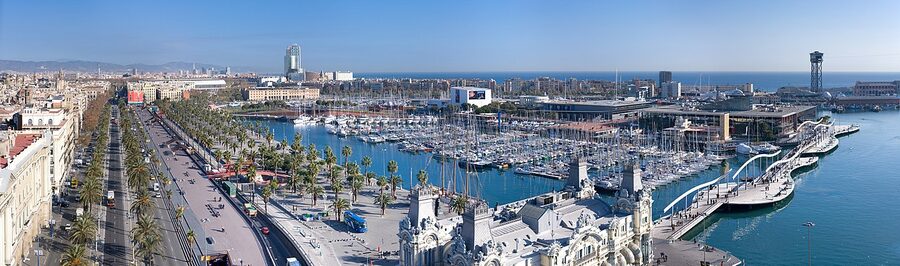
The aquarium sits at the end of the wooden Moll d’Espanya bridge in Port Vell, a fifteen-minute walk from the Gothic Quarter. It opened in 1995 and still claims one of the largest Mediterranean-themed collections in Europe. About 11,000 animals across 450 species, an 80-metre acrylic tunnel through a 4-million-litre tank, and a kids’ floor that will keep a five-year-old busy for an hour. Not bad for a rainy afternoon, and very bookable in advance.
In a Hurry? Top 3 Picks
- Standard Entry Ticket, $34. The cheapest legitimate way in. GetYourGuide pricing matches the box office. Book the standard ticket
- Skip-the-Line Admission, $31. Slightly cheaper, priority entry. The one to grab on a rainy summer Saturday. Book skip-the-line
- Hop-On Hop-Off Bus + Aquarium combo, $73. Pairs the aquarium with the red bus. Worth it if you’re doing both anyway. Book the combo
- In a Hurry? Top 3 Picks
- Where the aquarium sits and how to get there
- Tickets, prices, and the fastest way to book
- Best time to go (and when to skip it)
- What you’ll actually see inside
- The Mediterranean tanks
- Tropical reef and “dangerous” species
- The Oceanarium and the shark tunnel
- Planeta Aqua and the kids’ floor
- The three tickets we’d actually book
- 1. Barcelona Aquarium Entry Ticket:
- 2. Barcelona Aquarium Skip-the-Line Admission Ticket:
- 3. Hop-On Hop-Off Bus and Aquarium Combo:
- Practical notes that catch people out
- Combining the aquarium with the rest of Port Vell
- Should you actually go?
- What to do once you’ve left the building
Where the aquarium sits and how to get there
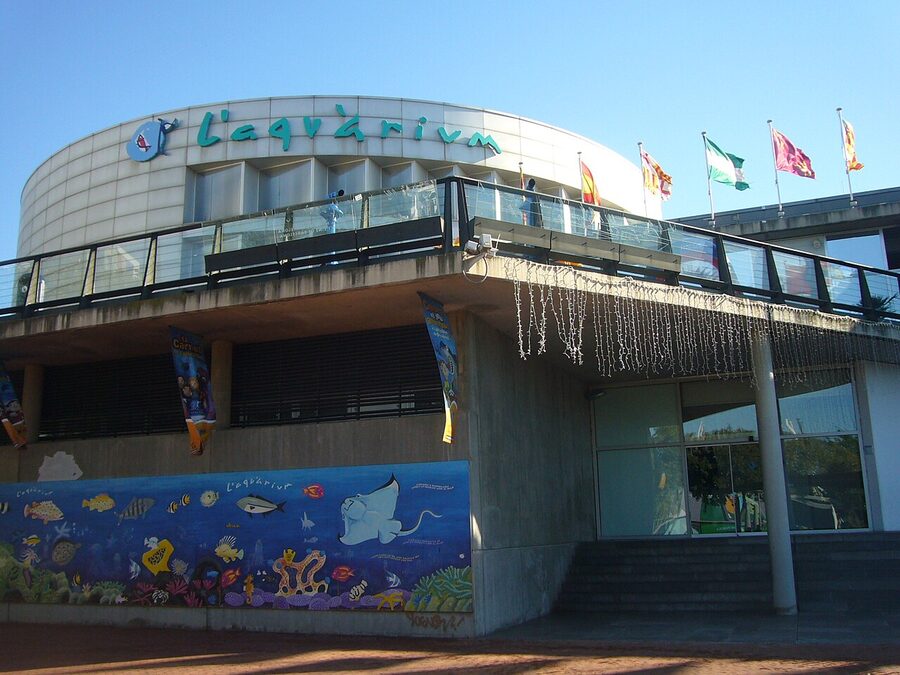
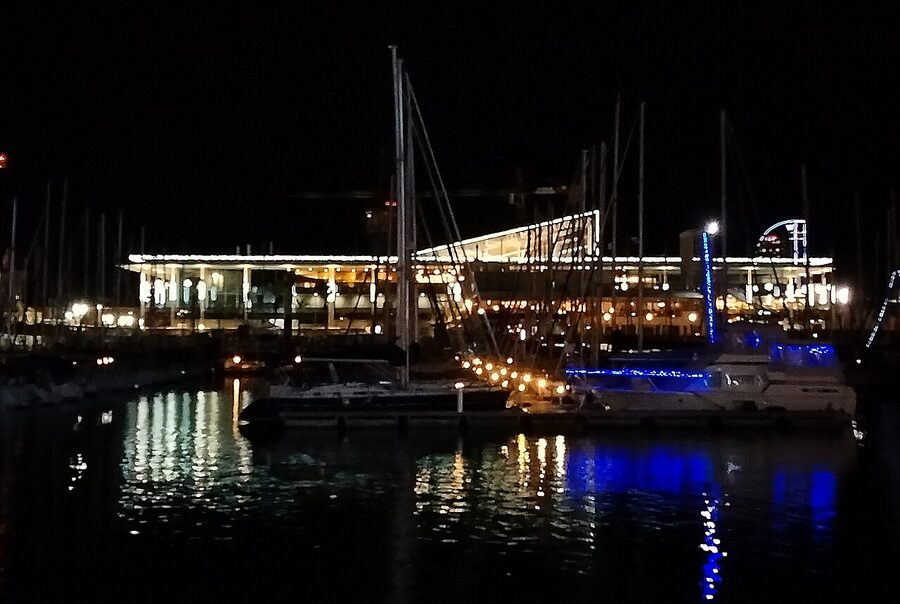
The address on the ticket is Moll d’Espanya, del Port Vell, s/n. That’s a pier rather than a street, so don’t waste time looking for a building number. The closest metro is Drassanes (L3, green line), about a six-minute walk. Barceloneta station (L4, yellow line) is also fine, around eight minutes if you cut through the Maremagnum mall.
From La Rambla, walk to the Columbus monument at the bottom, cross the Rambla de Mar wooden bridge, and you’re at the door. It’s flat the whole way, which matters if you’re pushing a stroller or just done with Barcelona’s hills. Most people coming from a Gaudí morning end up here for the afternoon, and the route works well after a Sagrada Família visit. Our guide to Sagrada Família tickets covers the obvious next stop if you’re stacking your day.
Tickets, prices, and the fastest way to book
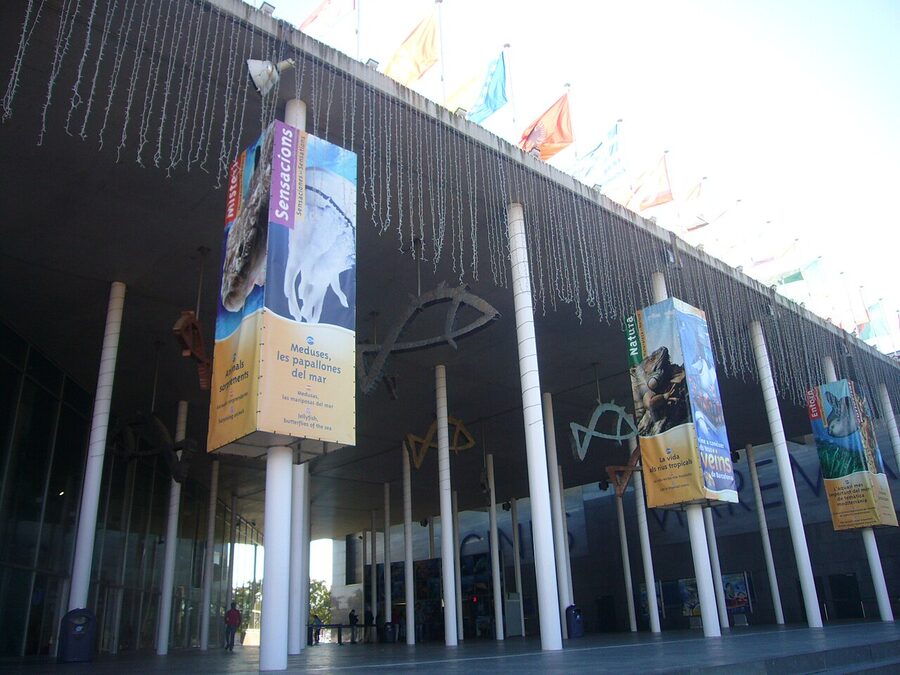
Adult tickets at the door are around 26 euros (roughly $28 to $34 depending on the day), with kids 5 to 10 about half that. Under-fours are free. The official site (aquariumbcn.com) sells the same ticket as GetYourGuide, but with a date lock and a less-friendly refund window.
I usually book through GetYourGuide’s standard entry ticket for two reasons. Free cancellation up to 24 hours before, and a phone-friendly QR ticket that scans straight at the gate. No printer needed, no language faff. The skip-the-line variant is a few euros cheaper on the same platform, which makes no sense to me but I’ll take it.
What you actually pay for: standard and skip-the-line let you in to the same exhibits. The “skip” part is just a separate scanning queue. On a quiet weekday morning the difference is irrelevant. On a Saturday in July with rain forecast, skip-the-line saves you forty minutes.
If you’re combining several Barcelona attractions, look at the Barcelona Card or the Hop-On Hop-Off combo. The card includes the aquarium plus public transport, while the bus combo is genuinely useful if you’d be paying for both anyway. Our Hop-On Hop-Off guide breaks down whether the bus is worth it on its own.
Best time to go (and when to skip it)
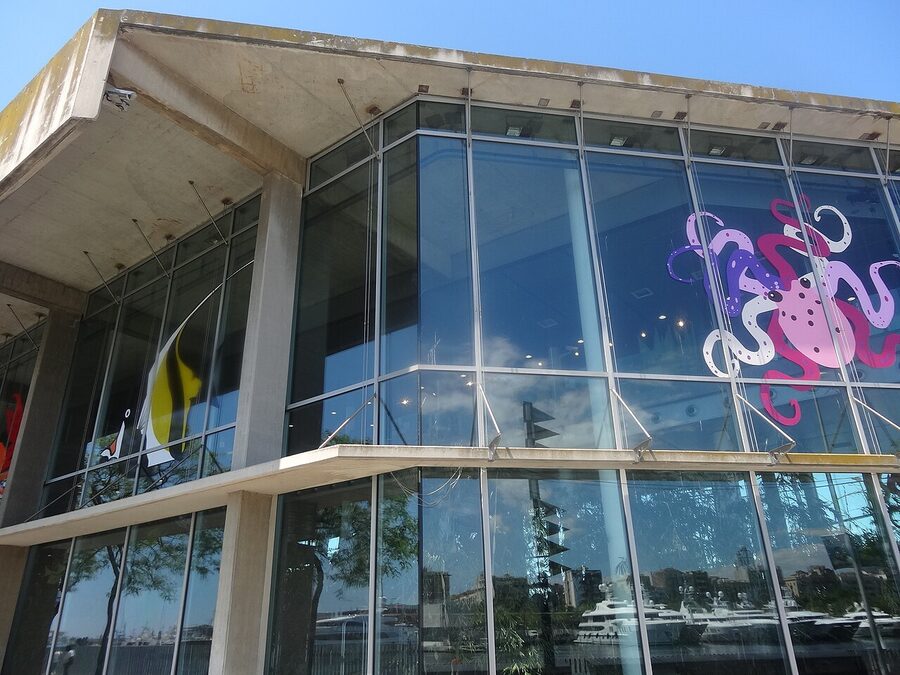
Doors open at 10:00 every day of the year. Closing time shifts with the season. November through March it’s 19:00 (20:00 on weekends). April, May, and October it’s 20:00. June through September it’s 21:00. The ticket office shuts an hour before the aquarium, which catches a lot of people out.
Best slot: 10:00 sharp. Tour groups and school trips arrive between 11:30 and 13:30, and from then until mid-afternoon the shark tunnel walkway becomes a slow-moving bottleneck of phones held up to the glass. If you can’t make 10:00, aim for the last two hours before closing. The light drops, the crowds thin, and you get the tunnel mostly to yourself.
Days to avoid: rainy summer weekends. The aquarium becomes the city’s default Plan B and gets uncomfortably full. Conversely, sunny shoulder-season weekdays are the dream. Beach weather pulls everyone else away.
For the bigger picture on Barcelona’s tourist seasons, our writeups on Park Güell and Casa Batlló follow the same pattern. Mornings are gold across the board.
What you’ll actually see inside
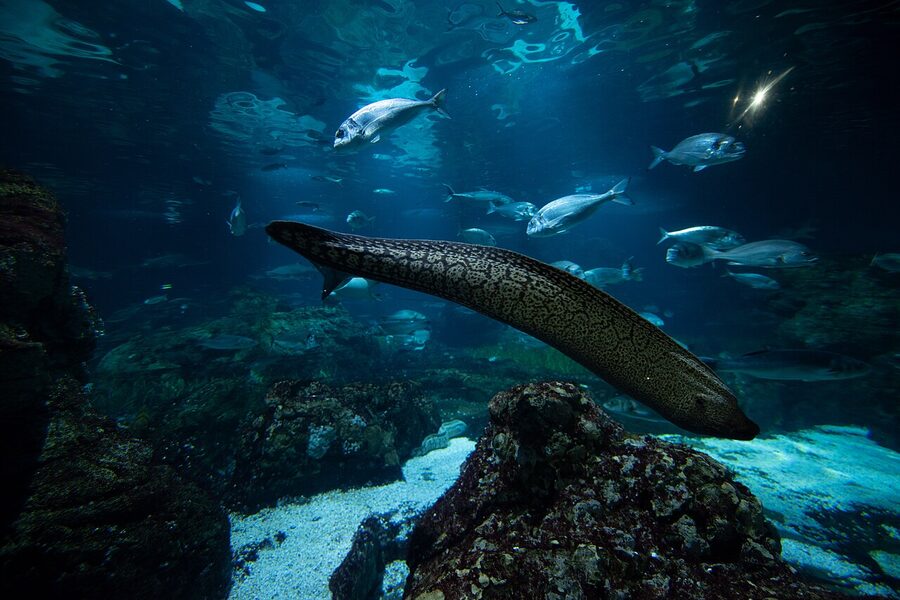
The route runs roughly counter-clockwise. You start with smaller themed tanks recreating Catalan and Mediterranean habitats, move through tropical reef tanks, then reach the Oceanarium tunnel about two-thirds of the way through. Upstairs is Planeta Aqua and the kids’ Explora! zone.
The Mediterranean tanks
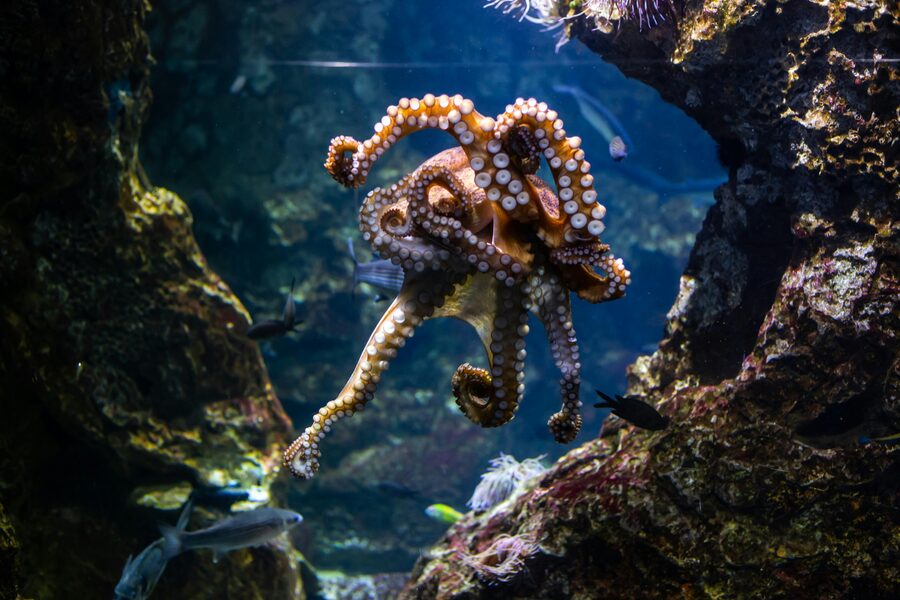
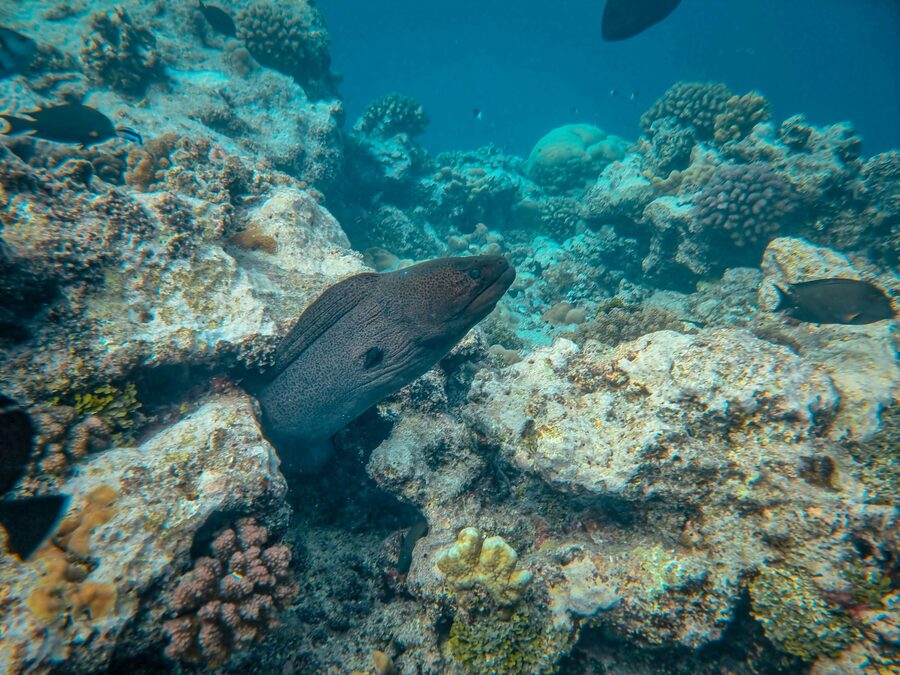
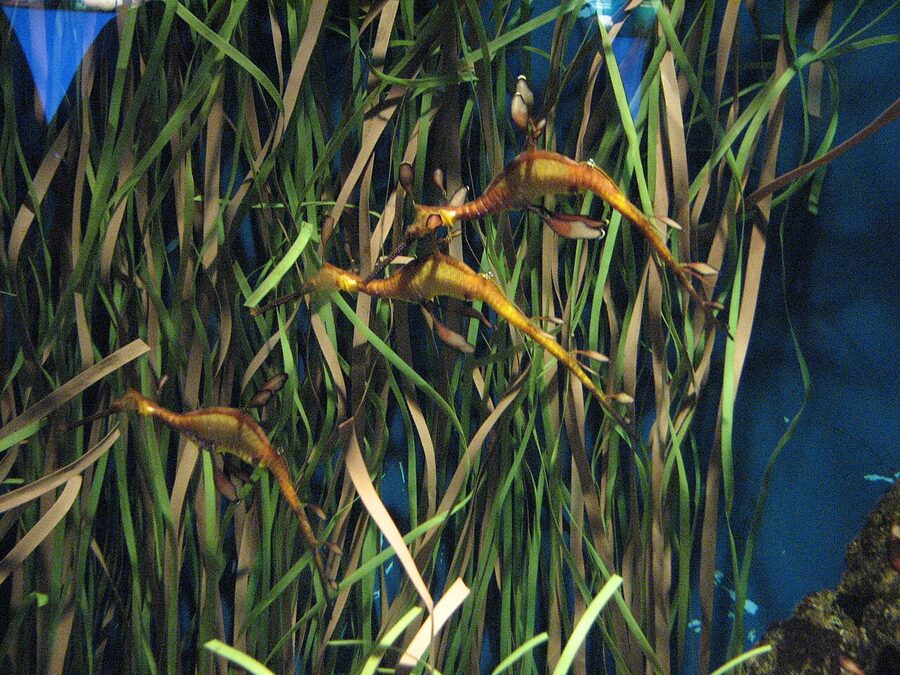
This is what makes the place worth it for me. Most aquariums lean tropical because the colours are louder. Barcelona leans the other way, and the local tanks are genuinely interesting if you’ve ever swum off the Costa Brava and wondered what was beneath you. Look for moray eels in the rock crevices, the deep red Mediterranean coral, and the seagrass habitat from the Balearic Islands.
The invertebrates section is the part I’d nudge people to slow down for. Octopuses change colour to match the rock they’re on, and watching one fail to camouflage on a different rock and shuffle to a better one is unexpectedly funny. Less Instagram-worthy than the sharks, more memorable.
Tropical reef and “dangerous” species
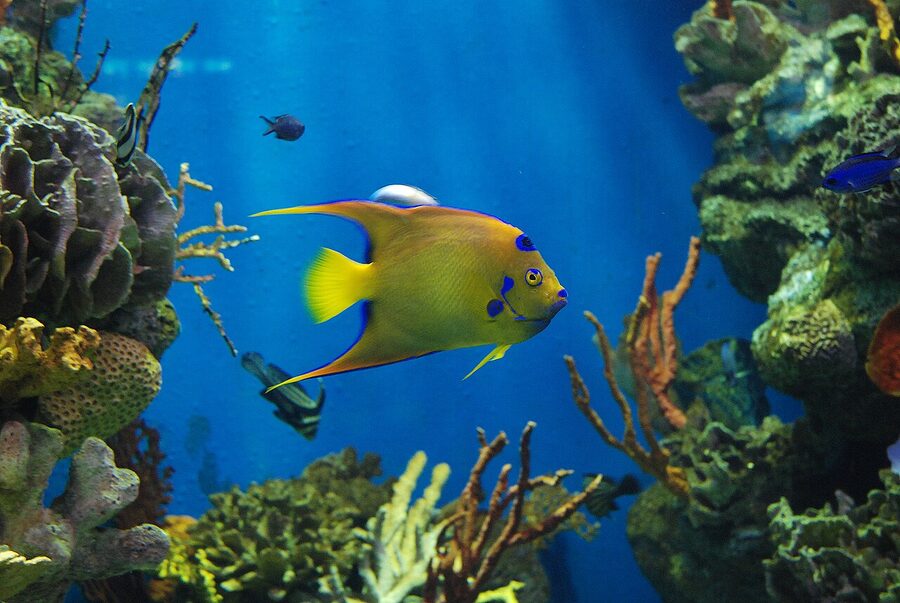
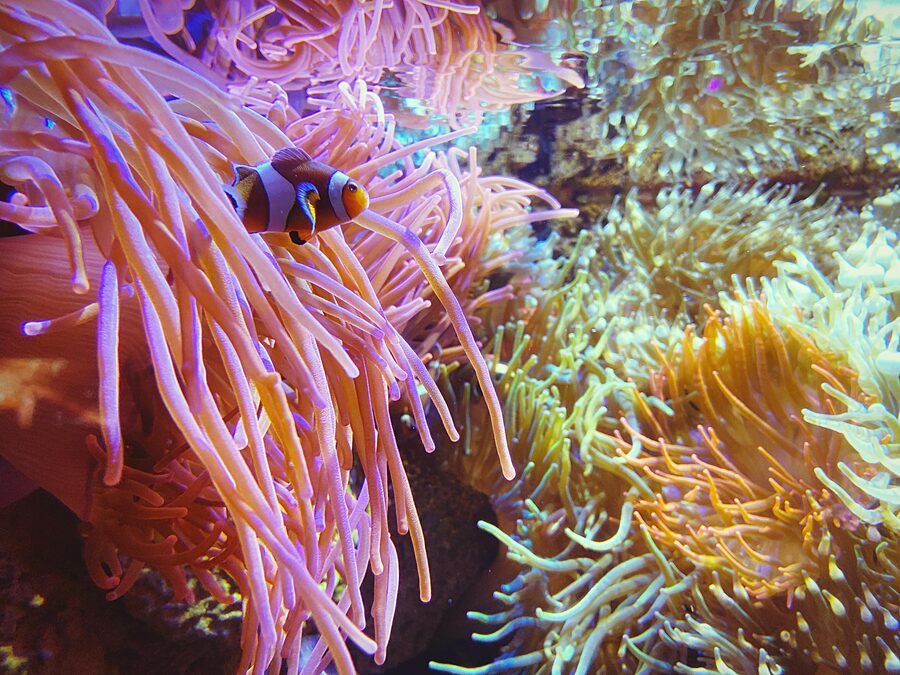
Tropical reef tanks are where the colour lives. Caribbean clownfish in their anemones, schools of tangs, the lionfish that everyone half-recognises from Finding Nemo. There’s a separate tank for “dangerous” species (stonefish, lionfish, electric rays) which I think is mistitled because half of them are gentle, but kids love the implied threat.
The Oceanarium and the shark tunnel
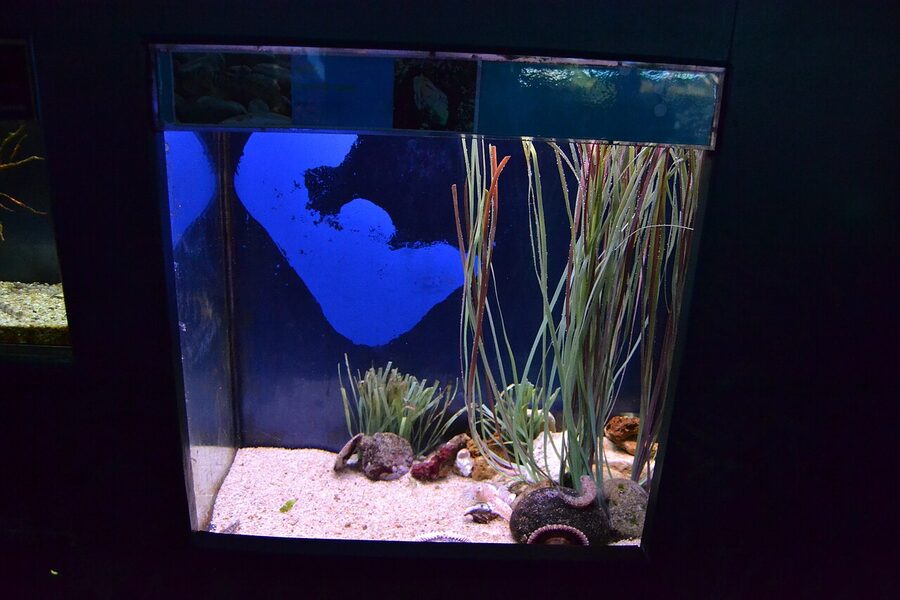
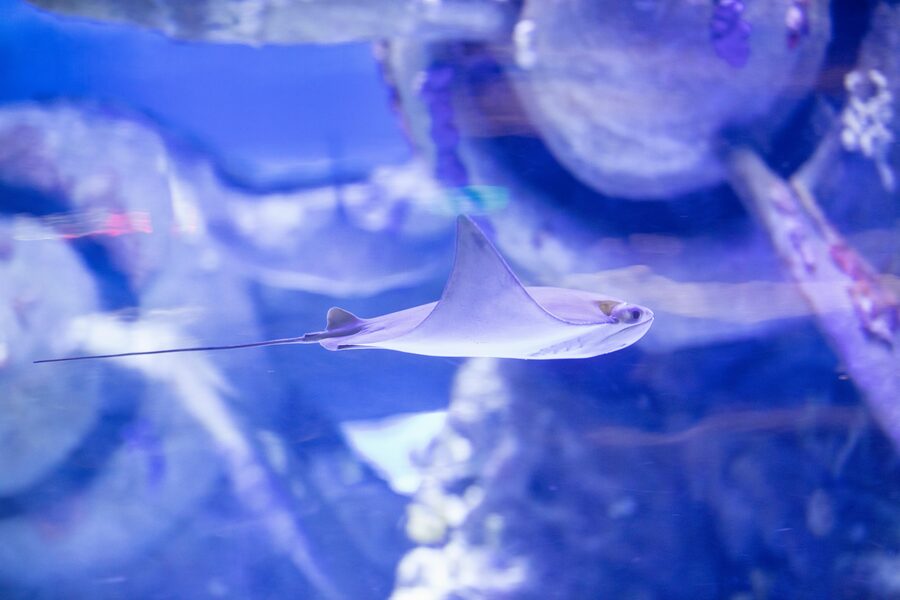
The Oceanarium is the centrepiece and rightly so. An 80-metre acrylic tube through a tank holding about 4 million litres of water, surrounded by sand tiger sharks, bull sharks, stingrays, and if you’re lucky, a sunfish. The sunfish (mola mola) is the rare one. Most aquariums struggle to keep them; Barcelona has had them off and on for years.
The walkway moves slowly on purpose. Stay on it, or step off to the side benches if you want longer. Don’t try to power-walk against it; you’ll just annoy the family behind you. If you can hit a feeding session, do it. Divers feed the sharks a few times a week, usually around midday on Tuesdays and Fridays. Schedule isn’t always posted in advance, so ask at the entrance when you arrive.
Planeta Aqua and the kids’ floor
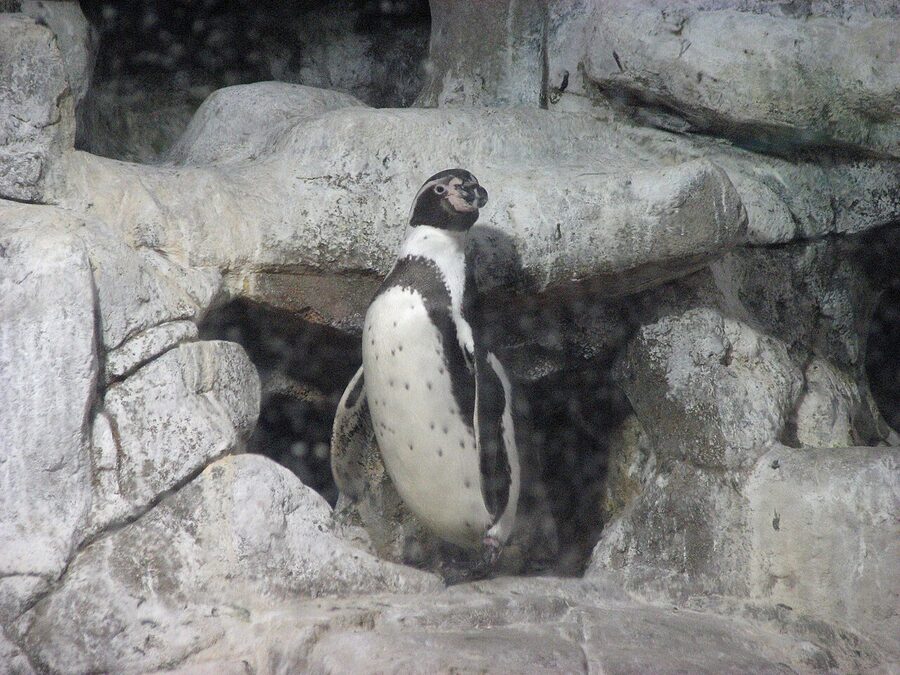
Upstairs is split between the Planeta Aqua exhibits, which look at how animals adapt to extreme conditions, and Explora!, the interactive zone for under-tens. Planeta Aqua has the Humboldt penguins, a “living fossils” section with horseshoe crabs that have barely changed in 450 million years, and tanks themed around extreme cold and deep-sea pressure.
Explora! is touch-and-play: 50-odd activities recreating the Ebro Delta marshlands and underwater caves. If you’re travelling with a child between four and ten, this floor is where they’ll spend the longest. Plan for a slow exit; nobody’s leaving without finishing the last station.
The three tickets we’d actually book
I’ve ranked these by what most readers actually need, not just by review count. The standard ticket is right for the majority. Skip-the-line is the safer pick on busy days. The HOHO combo only makes sense if you were buying both anyway.
1. Barcelona Aquarium Entry Ticket: $34
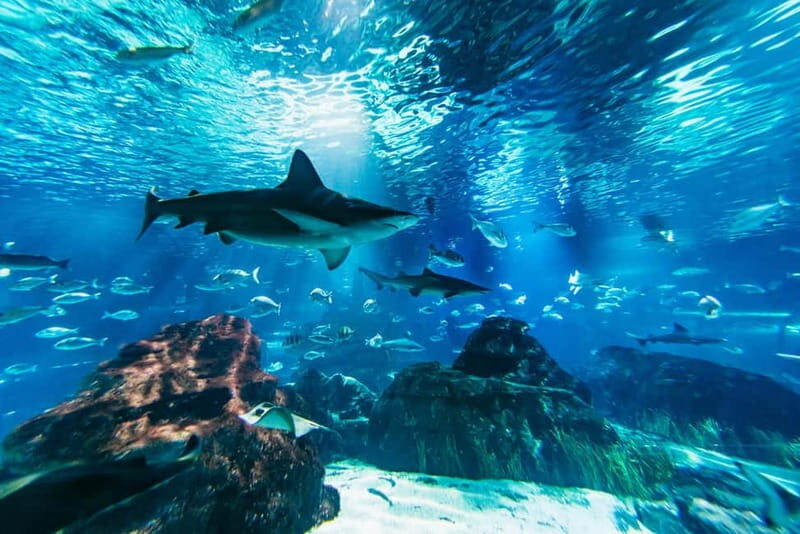
The standard entry. It gets you the whole route, from Mediterranean tanks and tropical zone through to the Oceanarium tunnel, Planeta Aqua, and Explora!. Free cancellation up to 24 hours before makes this safer than the official site. Our full review gets into how the on-site queue actually flows on different days.
2. Barcelona Aquarium Skip-the-Line Admission Ticket: $31
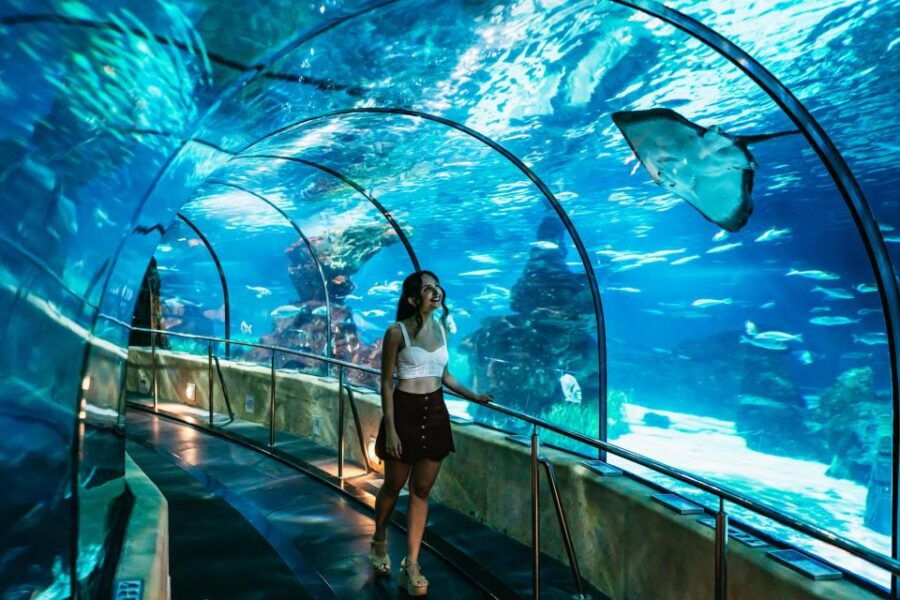
Weirdly the same price or cheaper than the standard ticket on most dates. We pulled apart the skip-the-line claim in our review. Short version: useful in summer, irrelevant on a quiet Tuesday in February. If you’re booking on a rainy weekend, default to this one.
3. Hop-On Hop-Off Bus and Aquarium Combo: $73
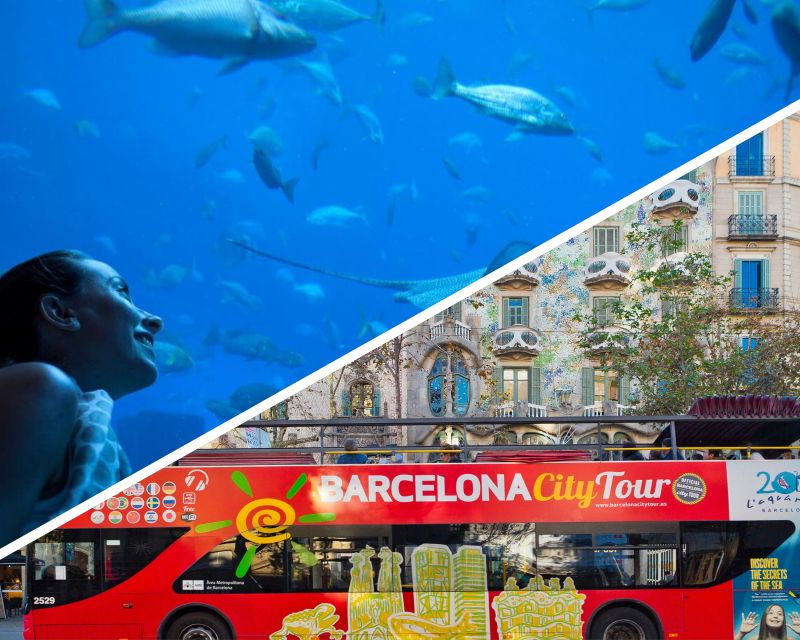
This combo is right for a specific person: the day-tripper or cruiser who wants to do as much as possible in 24 hours. Bus + aquarium is cheaper bundled than separate. Our review goes into which bus stop is closest to the aquarium and where the time leaks in. If you only want the aquarium, skip this and book #1 instead.
Practical notes that catch people out
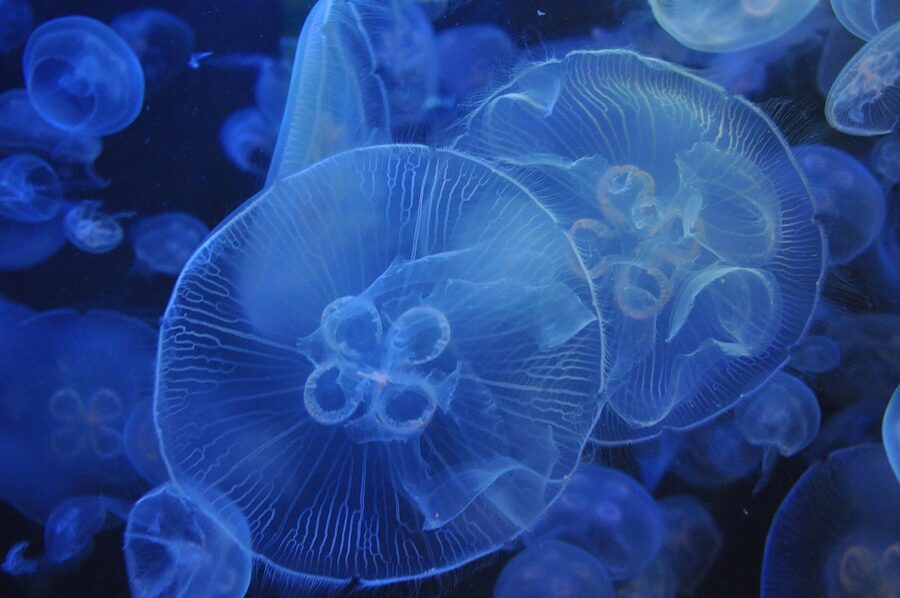
Photography: allowed everywhere, no flash anywhere. The vibrations of flash through water genuinely stress the animals, especially the octopuses and the deep-sea fish. Lean your phone gently against the glass to cut reflection.
Accessibility: the whole route is step-free, with elevators between the lower tank floor and Planeta Aqua. Strollers are fine. Wheelchairs too. The Oceanarium walkway has a fixed-position bench off to the side if anyone needs to step off.
Bags: Port Vell is a busy tourist zone, and the aquarium itself is very dark and visually distracting. Keep your bag in front of you, especially in the tunnel where most people are looking up.
Time needed: 90 minutes for adults moving briskly. Two hours plus if you’re with kids and stopping at Explora!. Three hours if you’re a slow reader who wants to take the panels seriously.
Food: there’s a cafeteria inside, but it’s not what you came for. Walk back across the bridge into Maremagnum (the mall) for a cleaner sit-down meal, or push on ten more minutes to Barceloneta for actual local food. La Cova Fumada near the beach invented the bomba (a deep-fried potato-meat ball with two sauces), and it’s the kind of cash-only, no-reservations place that’s genuinely worth the queue.
Combining the aquarium with the rest of Port Vell
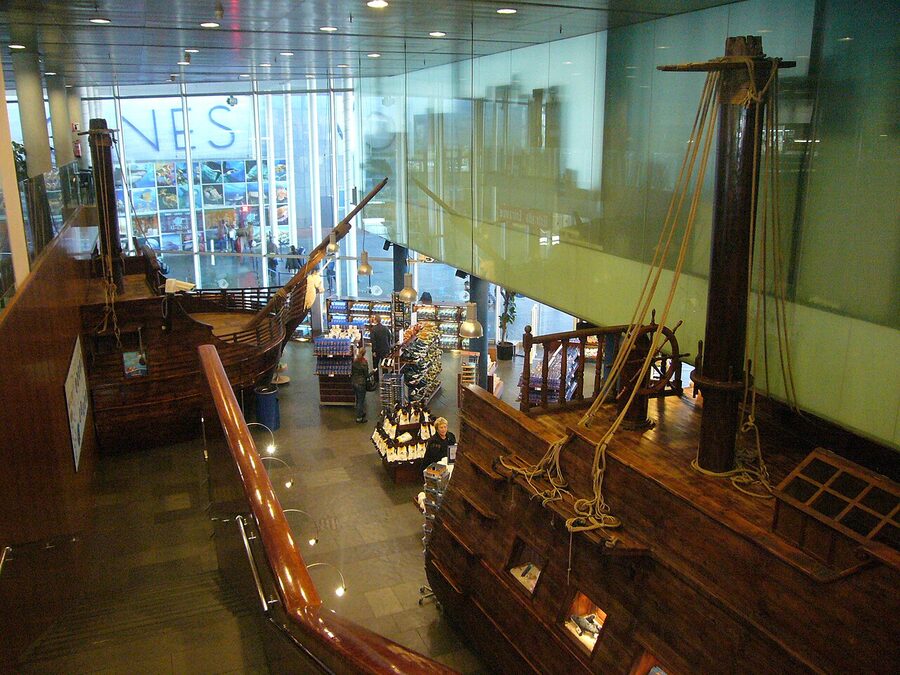
Port Vell is the easiest pairing area in the city. Once you exit the aquarium, here’s what’s a five to fifteen-minute walk away.
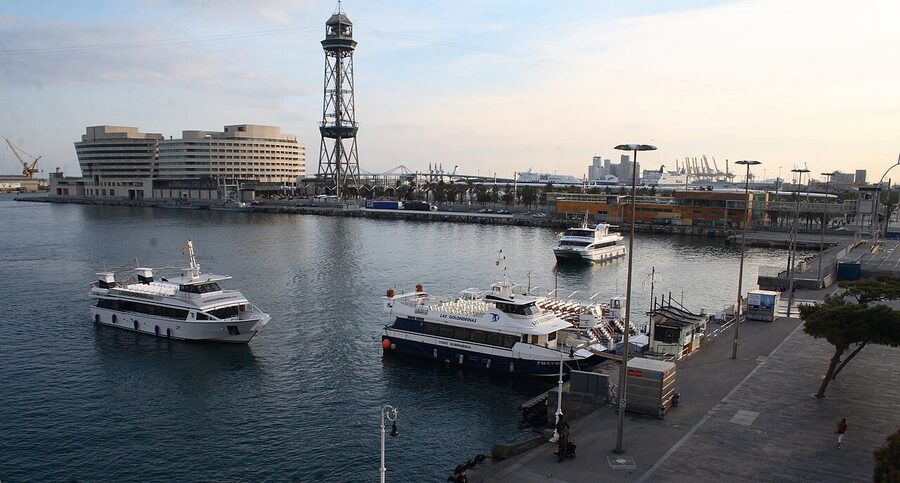
Las Golondrinas harbour boats leave from the foot of the Columbus column. A 40-minute coastline tour costs about 9 euros, and the kids who liked the aquarium will like watching the city from the water.
The Museum of the History of Catalonia sits just back across the bridge, in the old port-warehouse building. Skip the museum if you’ve had enough indoor time, but the rooftop café has the best free view of the marina; nobody buys a ticket just for that, but you can.
Barceloneta beach is a fifteen-minute walk along the boardwalk. You go from staring at fish in tanks to seeing the actual Mediterranean, which is a satisfying narrative arc.
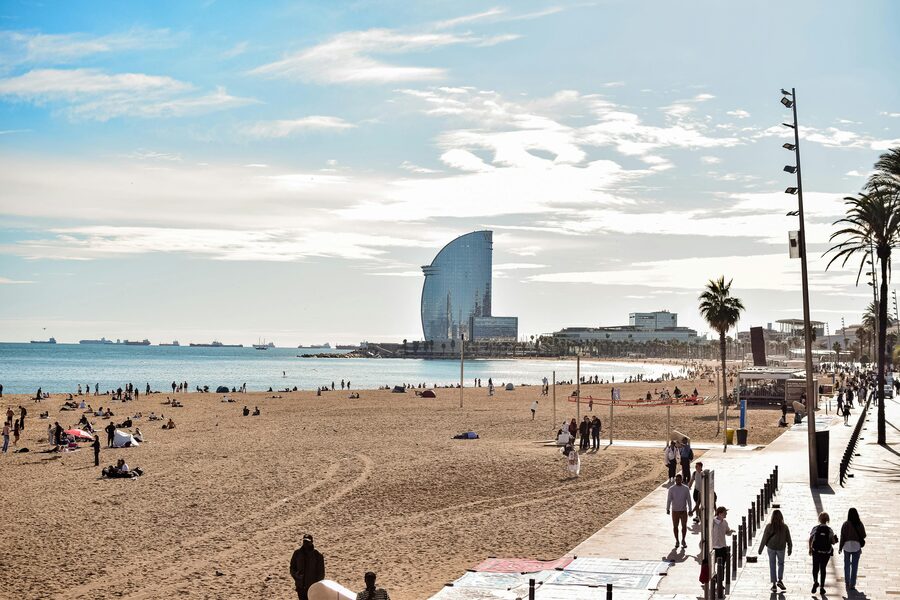
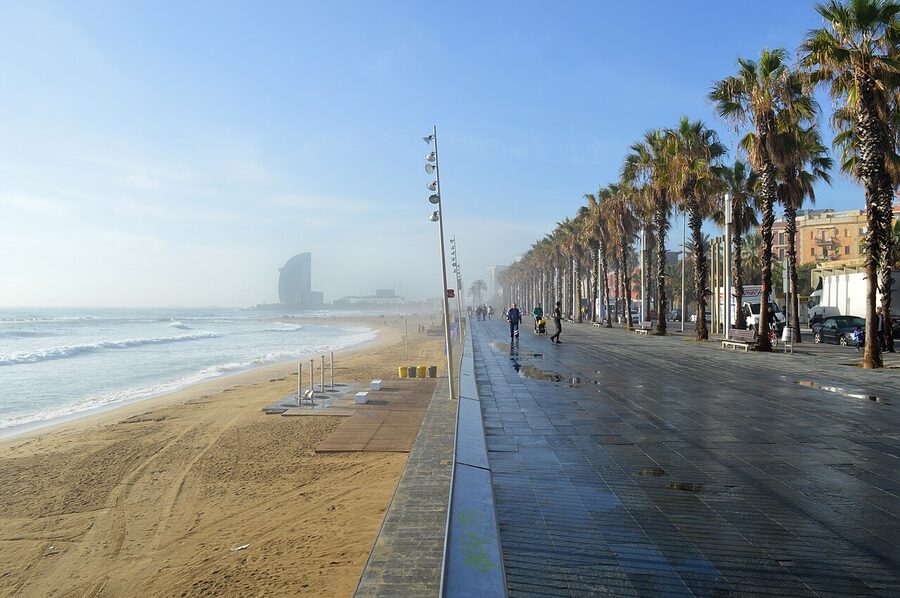
Montjuïc is the other natural pairing: ride the cable car up after lunch and you’ve got the whole port stretched out below you. Our cable car booking guide has the timing and ticket combos for that.
If you’re stretching to a full Barcelona day, the Modernista circuit pairs naturally too. La Pedrera and Casa Batlló are both walkable from Plaça de Catalunya at the top of La Rambla, and the family-friendly Casa Vicens sits up in Gràcia for an early-evening stop.
Should you actually go?
If you’re travelling with kids: yes. The shark tunnel and Explora! together are a full afternoon, and on a rainy day there’s no better Plan B in the city.
If you’re an adult traveller without kids: it depends. The Mediterranean tanks and the Oceanarium are good. Planeta Aqua is interesting. The price is fair and the location is convenient. But it’s not a world-class aquarium in the Monterey Bay or Lisbon Oceanário sense, and Barcelona has stronger one-off attractions if you only have two days. I’d put a Sagrada Família visit and a Park Güell morning ahead of it on a short trip. On a longer trip, an aquarium afternoon fits cleanly.
Skip it if: you’re allergic to crowded indoor spaces, you’ve already seen a major aquarium in the past year, or you have less than two days in Barcelona.
What to do once you’ve left the building
Port Vell is the easy half-day. The harder choice is what to do with the rest of your trip. If you’re staying central, the Modernista cluster is the next obvious move; we’ve got separate guides on Park Güell, La Pedrera, and Casa Batlló that go into ticket types and timing properly. For evenings, the flamenco show at the Palau Dalmases is the one I’d actually pay for; the cheap tablao versions on La Rambla are fine but not memorable. And if you’re staying three days or longer, the Montserrat half-day with tapas is the easiest day-trip the city offers. See our Montserrat tour writeup for which version actually includes the funicular.