
You’re standing on a stone alley in Girona’s old town, looking up at a Gothic cathedral that doubles as a Game of Thrones set. Two hours ago you were on a Barcelona kerb with a coffee. By lunch you’ll be eating grilled fish in a Costa Brava cove with the Mediterranean three steps away. That’s the whole point of this day trip.
You’re picking a guide for the day. They drive, they translate, they herd you back to the van so you don’t get lost. Your job is to pick the right combination of stops and the right kind of trip. This guide walks you through that.
- In a Hurry? Three Picks
- Why people pair Girona with Costa Brava
- Pick the right type of day trip first
- The three tours I’d actually book
- 1. Girona & Costa Brava Small-Group Tour: 0
- 2. Costa Brava Kayak & Snorkel Day Trip: 3
- 3. Girona & Dalí Museum Small-Group Tour: 0
- What you actually see in Girona
- What you actually get on the Costa Brava half
- The kayak version: what’s it actually like
- If you swap the coast for Dalí
- What to bring
- How early do you have to book
- The history bit, briefly
- Beach time vs town time: how to choose
- More Barcelona day-trip thinking
In a Hurry? Three Picks
- Best classic tour: Girona & Costa Brava Small-Group Tour. About $120, ten hours, max eight people in the van.
- Active alternative: Costa Brava Kayak & Snorkel Day Trip. About $103, eight hours, sea caves and cliff jumping.
- Add the Dalí Museum: Girona & Dalí Museum Small-Group Tour. About $120, ten hours, Figueres swap for the beach time.
Why people pair Girona with Costa Brava
It’s not random. Girona sits about 100km north of Barcelona on the AP-7. The coast starts another 30 minutes east. So a single day, with one driver and one van, can hit a medieval town in the morning and a cove for lunch. You don’t have to choose.
The other reason: train versus car. You can technically do Girona by Renfe high-speed in 38 minutes, but you can’t reach the prettier Costa Brava bits without a car. The villages I’ll talk about below (Tossa, Calella de Palafrugell, Llafranc, Begur, Pals) all need wheels. So a guided day trip from Barcelona is genuinely the easy way.
The downside: it’s a long day. Most of these run nine to twelve hours including pickup and drop-off. If you want a slow morning at your hotel, this isn’t your day.
Pick the right type of day trip first
There are basically four flavours:
- Classic Girona + Costa Brava combo. Girona’s old town in the morning, a coastal village (usually Tossa de Mar or Calella de Palafrugell) in the afternoon. Optional lunch. This is what most people book and it’s the right call for a first visit.
- Kayak and snorkel. Skip Girona entirely, head straight to a beach near Lloret de Mar or Tossa, get into a sea kayak, paddle to caves. You’ll need a swimsuit and zero squeamishness about cliff jumping (optional, not pushed).
- Girona + Figueres + Dalí Museum. Swap the coast for the Salvador Dalí Theatre-Museum. This is the right pick if you’re an art person and you don’t care about the sea.
- Big sampler combo. Montserrat plus Girona plus Costa Brava in one day. Twelve hours. You see everything, but you see all of it for 45 minutes each. Useful if you have one day and refuse to choose.
The classic combo wins for most travellers. It’s the one with the most reviews, by a wide margin, because it gets the balance right: enough Girona to feel the town, enough beach to feel like you went to the Mediterranean.
The three tours I’d actually book
I picked these for three reasons: they’re the most-reviewed in their category, they’re each different enough that you can pick by mood, and the operators have been running them for years.
1. Girona & Costa Brava Small-Group Tour: $120
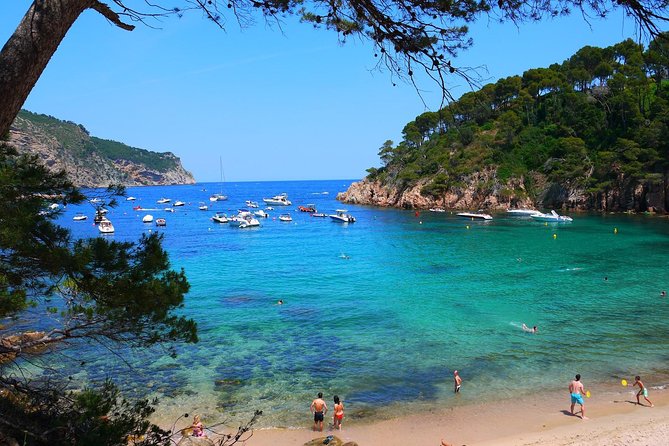
This is the version run by In Out Barcelona Tours and it’s the most-booked Girona day trip on the market by some distance. Hotel pickup is included, the group is capped at eight, and the route hits Girona’s old town in the morning before driving to a Costa Brava village in the afternoon. Our full review covers exactly which villages they stop at. It varies by season but Tossa de Mar is the regular pick.
2. Costa Brava Kayak & Snorkel Day Trip: $103
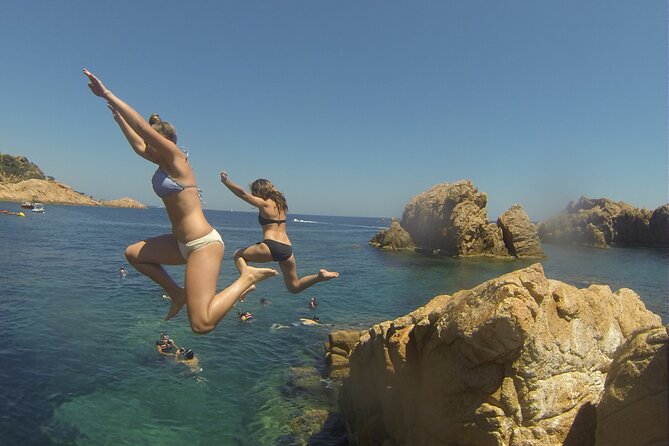
This swaps the medieval town for sea caves, snorkelling, and cliff jumping you can opt out of. Excursions Barcelona has been running it for years and the guide-to-guest ratio is tight, so you’re not herded. Our review goes into the lunch and what fitness level you actually need. Short answer, almost none, the kayaks are stable sit-on-tops.
3. Girona & Dalí Museum Small-Group Tour: $120
If you’d rather see a Surrealist’s masterwork than a beach, this is yours. Same eight-person van, same Girona morning, but the afternoon is Figueres and the Dalí Theatre-Museum. Our review breaks down how much time you actually get inside the museum. About 90 minutes, which is enough for a first visit.
If you genuinely can’t choose between the coast and Montserrat, there’s a 12-hour combo that bundles Montserrat, Girona and Costa Brava for around $133, but think hard about how tired you’ll be by hour ten.
What you actually see in Girona
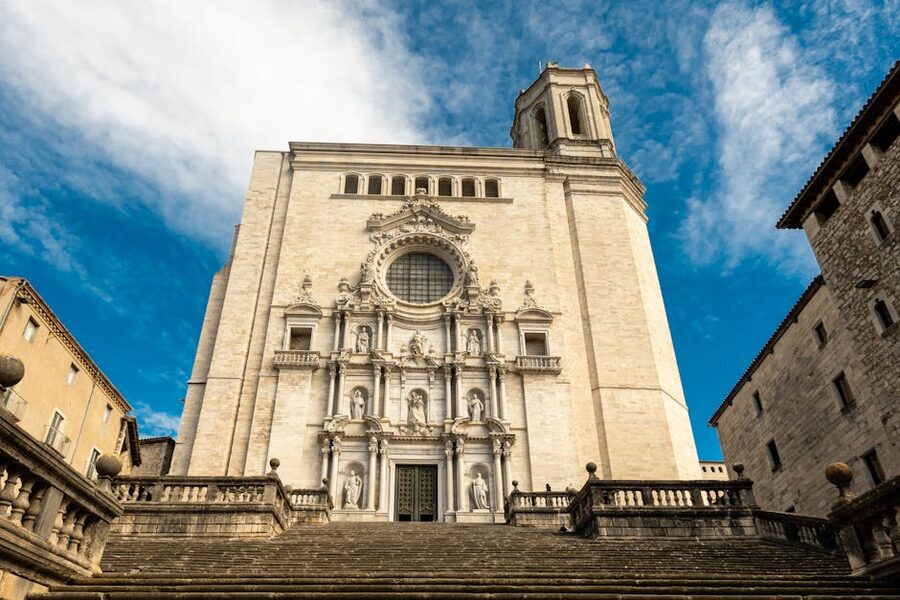
You get about two hours on foot. That’s enough for the highlights, not enough for any single museum. Here’s what you’ll actually walk through:
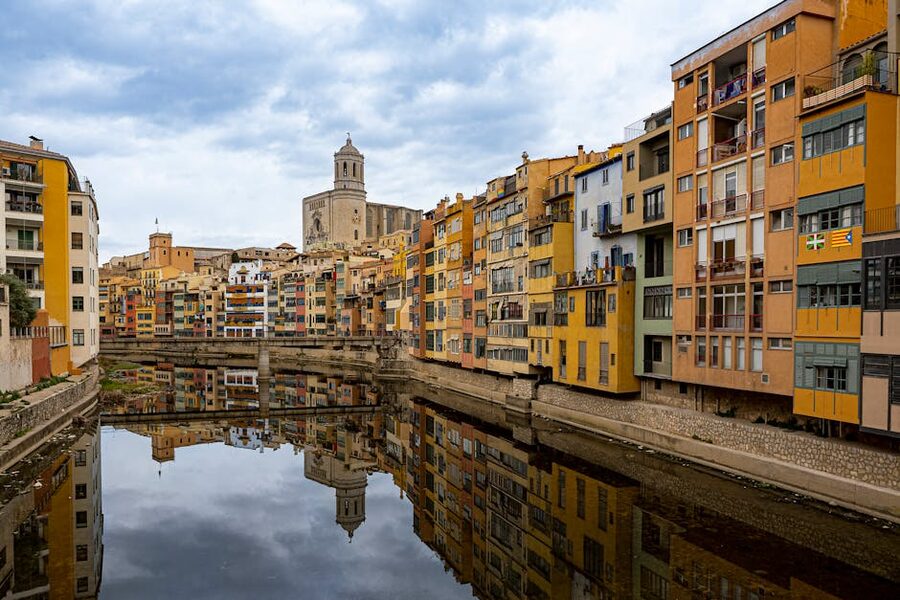
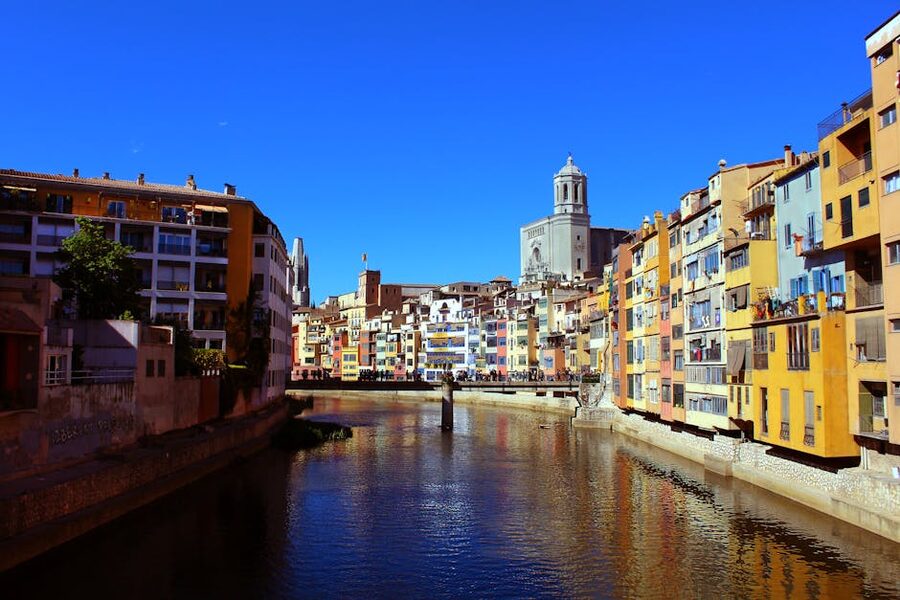
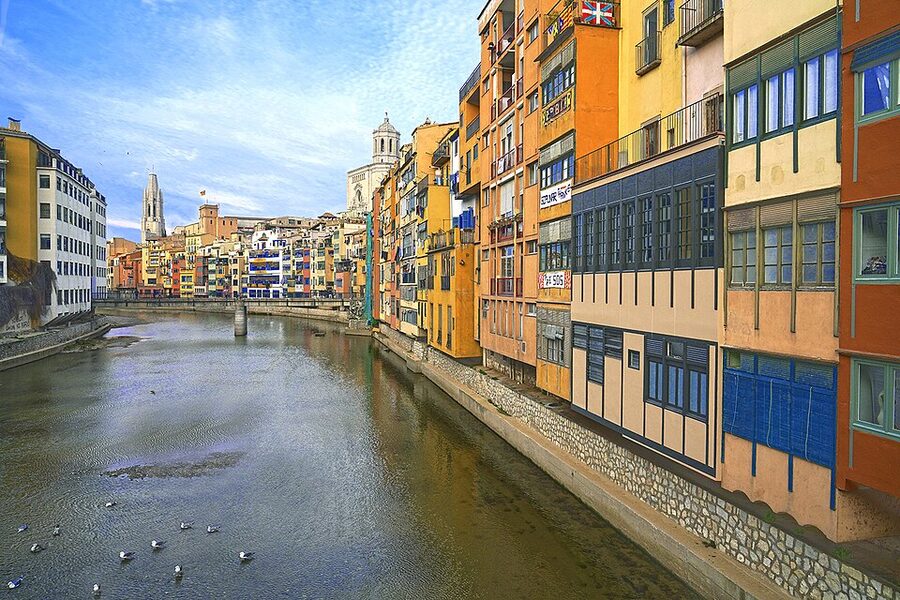
The Onyar river houses. Yellow, ochre, salmon, terracotta. They tumble straight down to the water and the reflection is the shot you came for. Pont de Pedra (the old stone bridge) and Pont de Sant Agustí are the best angles. Don’t bother with the Eiffel bridge unless your guide insists.
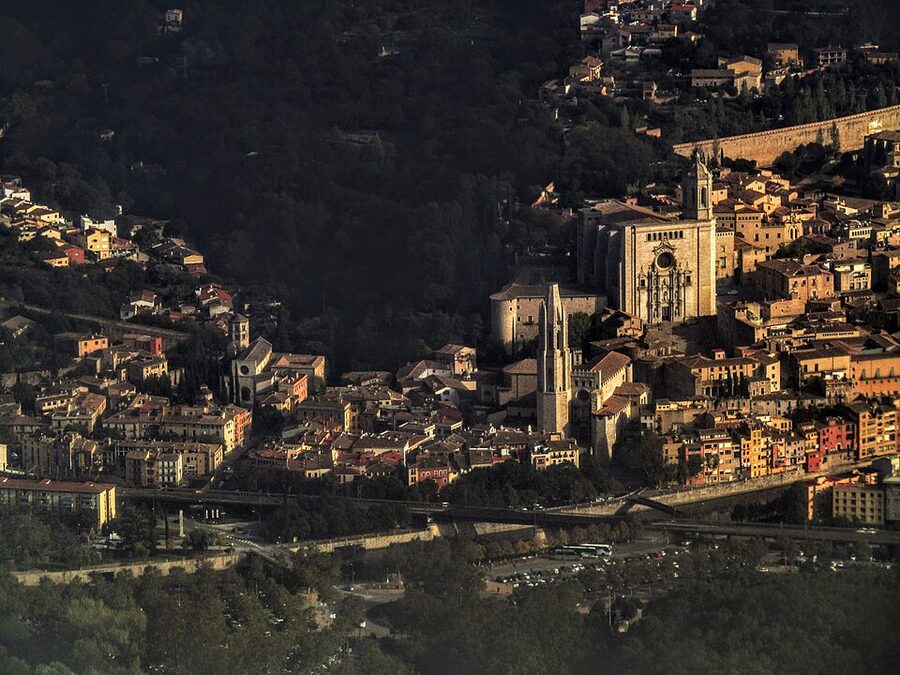
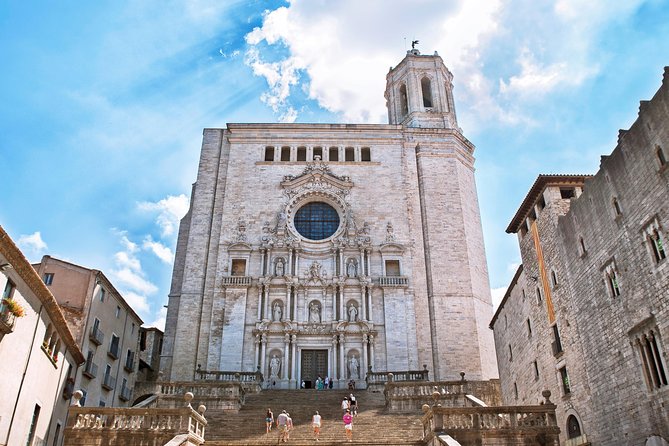
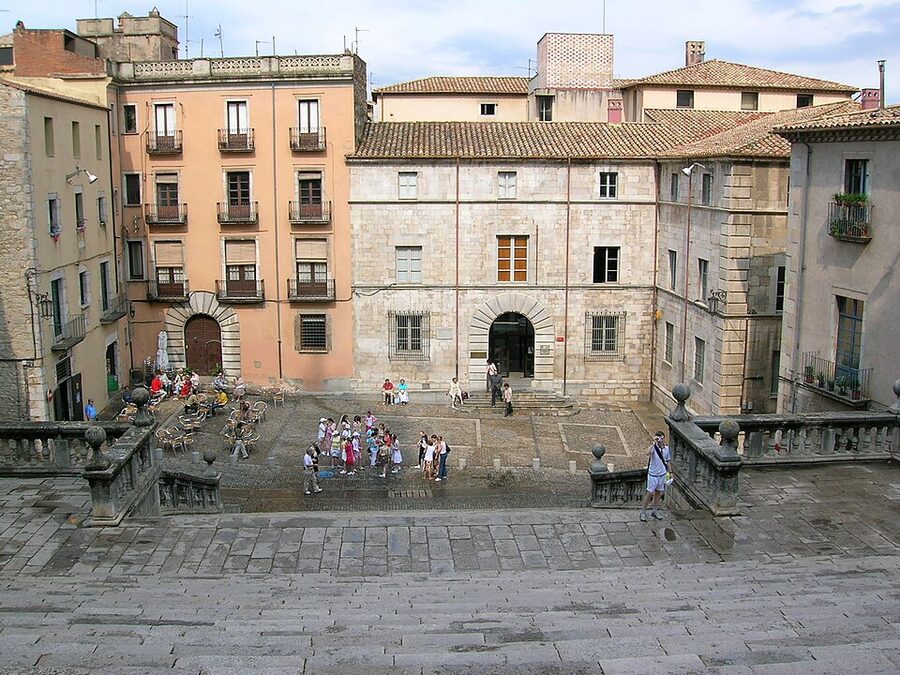
The cathedral steps. There are 90 of them, climbing from the Plaça de la Catedral up to the facade. If you’ve watched Game of Thrones, this is where the Sept of Baelor scenes were filmed. Your guide will mention it. The steps were closed to filming for two months in 2015. The town still talks about it.
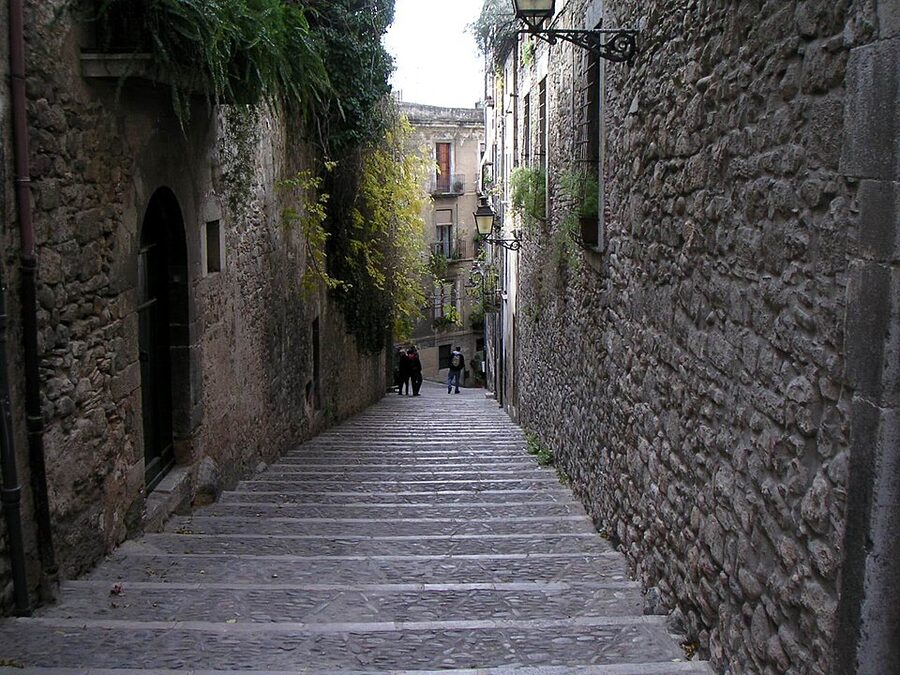
The Call, Girona’s medieval Jewish quarter. This is what makes the old town different from a hundred other Spanish old towns. The alleys are narrow, the stone is dark, and you can still see the slot in a doorway where the mezuzah used to sit. There’s a small museum (Museum of Jewish History) but most day-trip groups don’t go in; the alleys are the experience.
The Roman bridge and the city walls. The Passeig de la Muralla wraps along the top of the old fortifications. It’s a 20-minute walk with city views on one side and gardens on the other. Most guides skip it. Ask if you can have ten minutes up there if your group looks game.
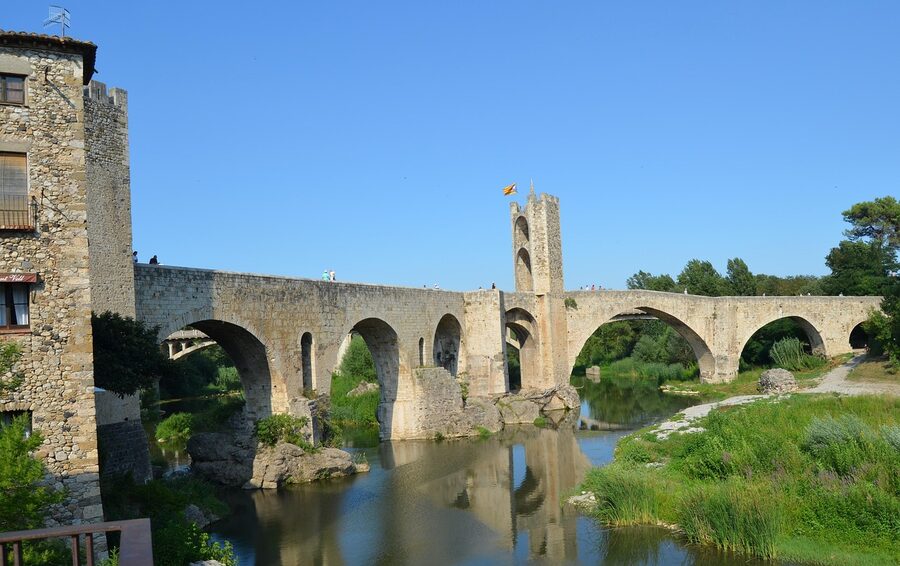
What you actually get on the Costa Brava half
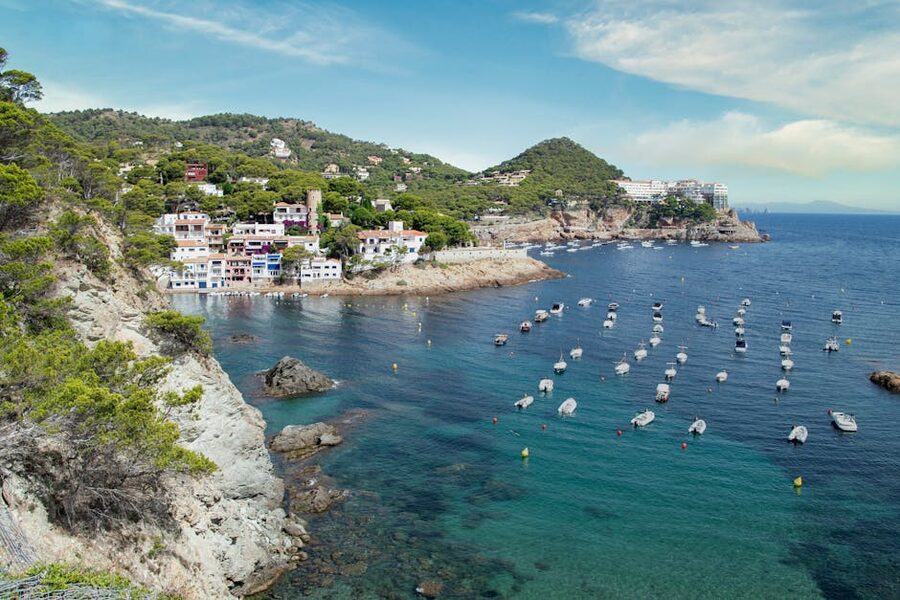
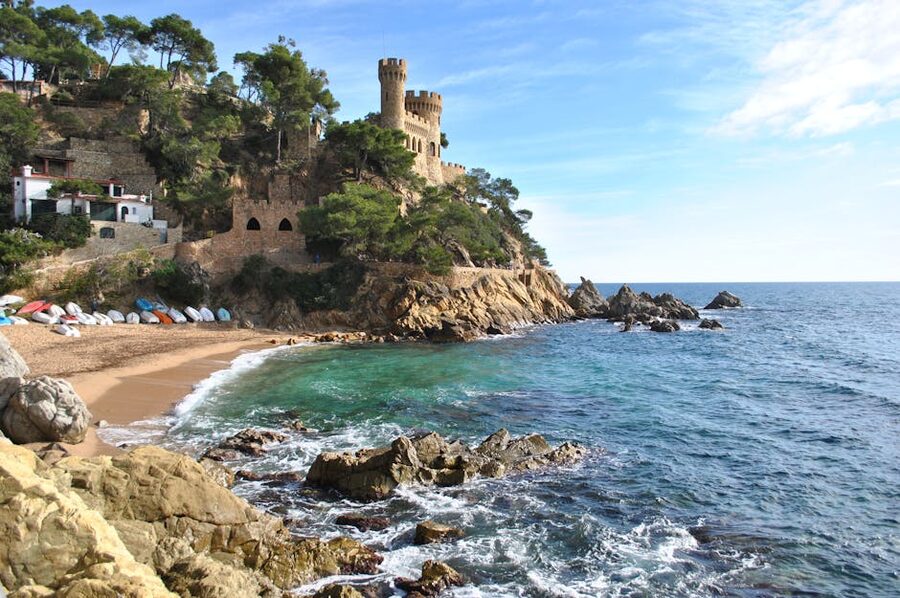
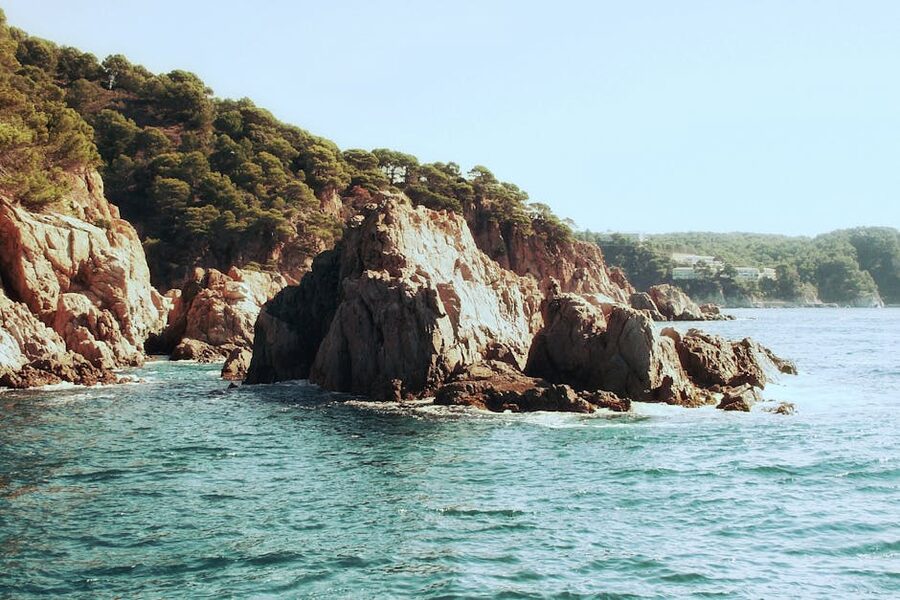
Costa Brava means “rough coast” and the name fits. It’s not flat sandy beach the whole way like the Costa del Sol. It’s pine-covered cliffs cut by small coves, mostly tucked behind whitewashed villages.
Which village your tour stops at depends on the operator and the season. The big ones in rotation:
Tossa de Mar. The one you’ve seen on Instagram. Vila Vella, the medieval walled old town, sits above the beach with crenellated walls and four watchtowers. You’ll get about 90 minutes here on most tours. Climb the path to the lighthouse for the framing shot, walk back down through the alleys for lunch.
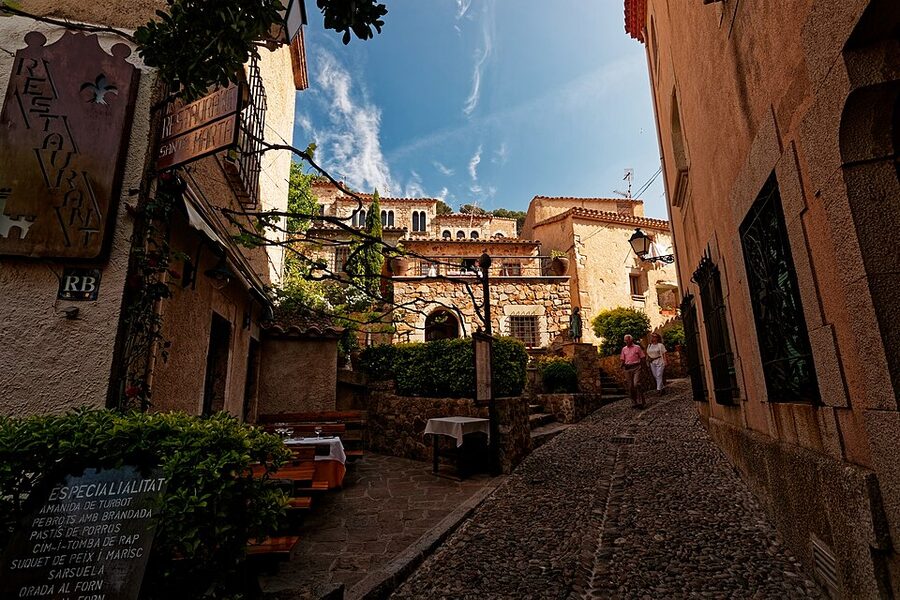
Calella de Palafrugell. Quieter, prettier, fewer crowds. Whitewashed fishermen’s houses on the water, a sweep of cove, and a coastal path called the Camí de Ronda that follows the old smugglers’ route. Some tours pause here instead of Tossa, especially mid-summer when Tossa goes hectic.
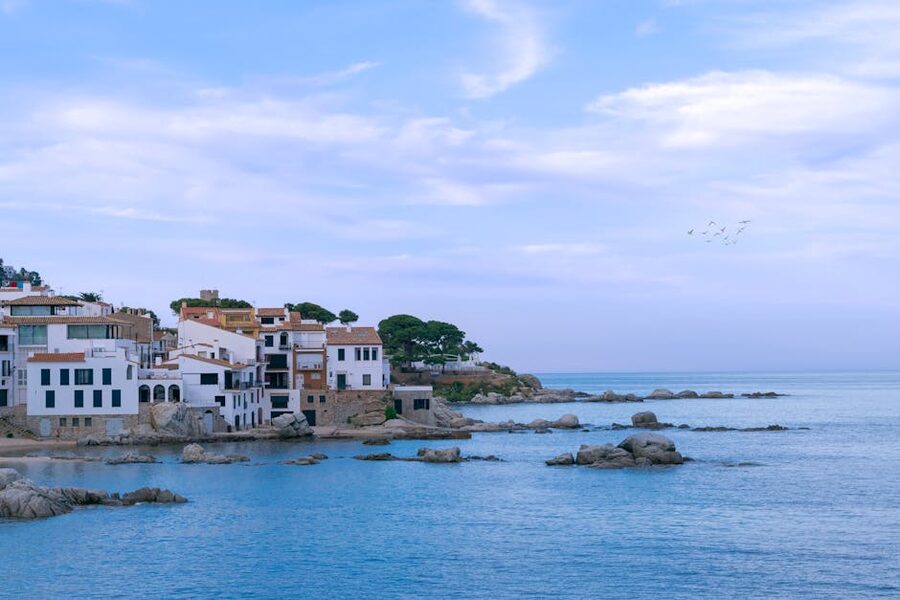
Llafranc and Begur. Rarer stops, but if you book a private or smaller tour, you can sometimes negotiate either. Llafranc is one cove over from Calella, with a much better swim beach. Begur sits up on a hill behind the coast with castle ruins and a view that goes for miles.
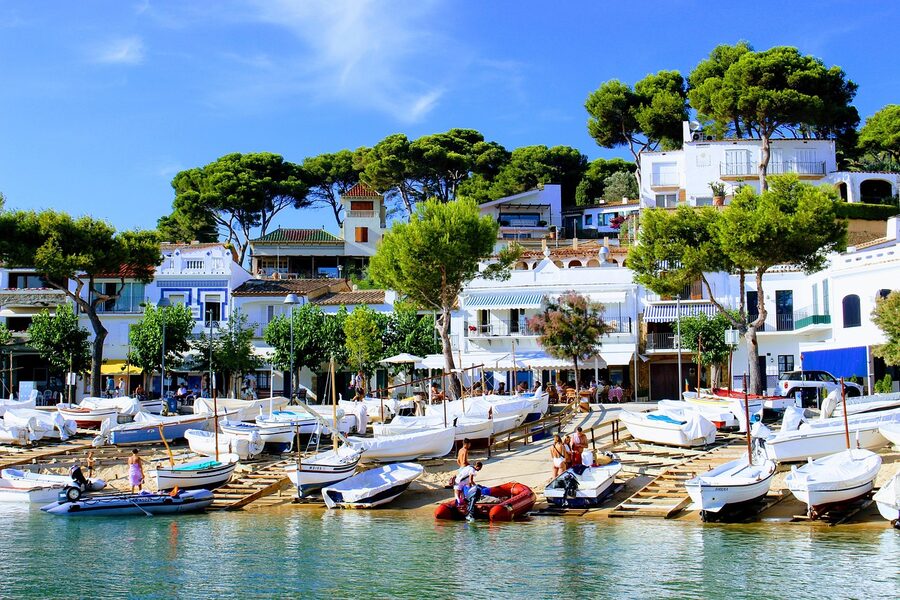
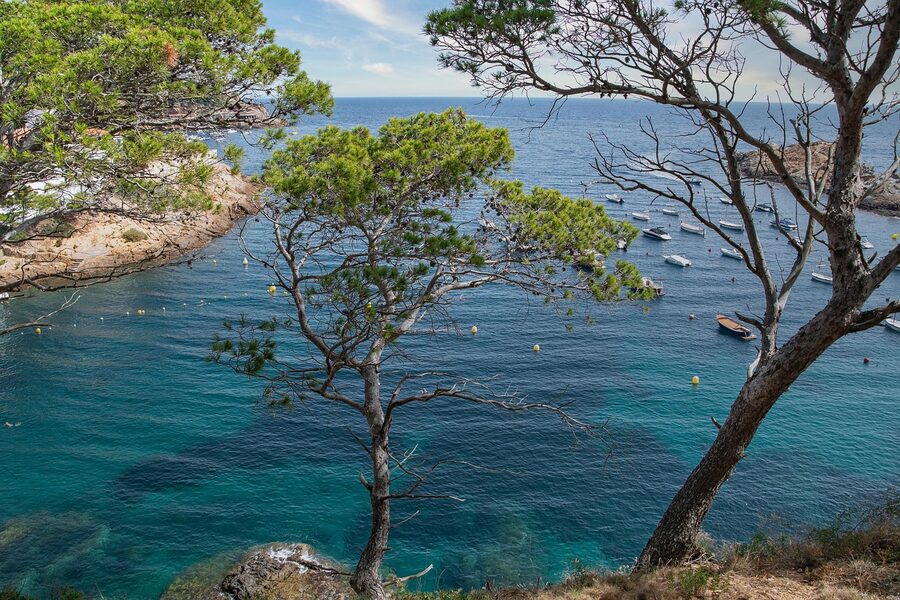
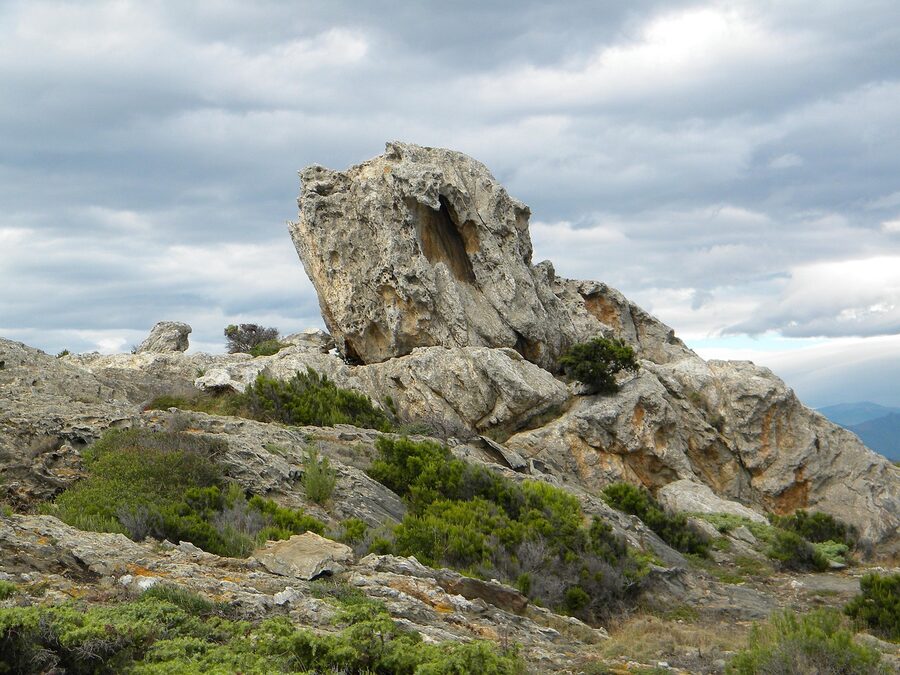
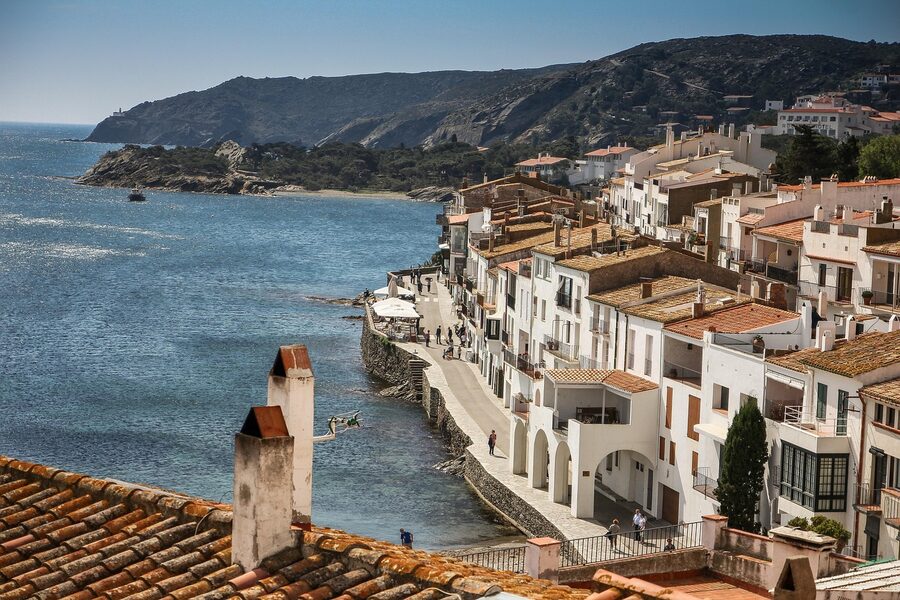
Cap de Creus and Cadaqués. The far north, near the French border. You’ll only get here on Dalí-themed tours since Cadaqués is where he lived. The peninsula at Cap de Creus is the easternmost point of the Iberian peninsula and looks like the moon got dropped on the coast.
The kayak version: what’s it actually like
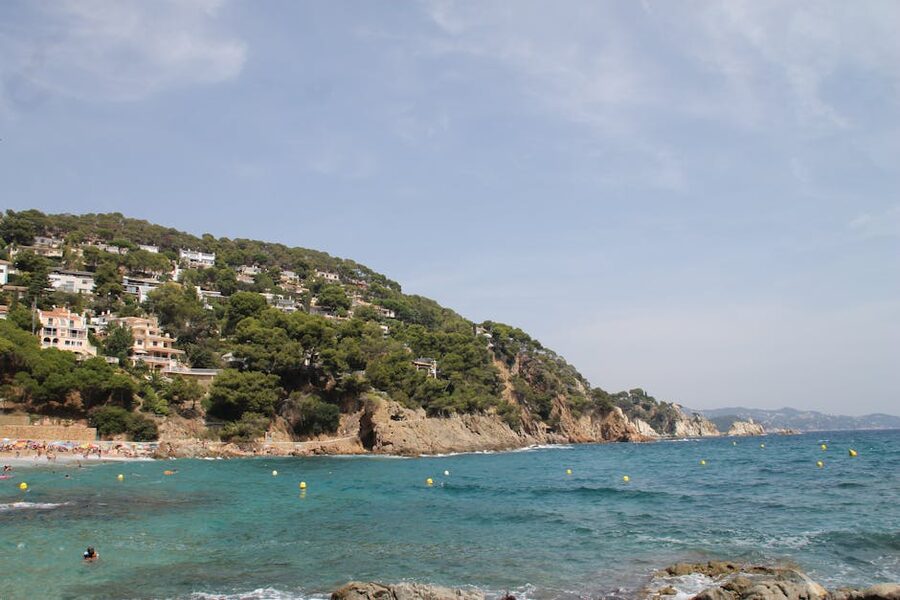
Different beast. You skip Girona, drive straight to a cove (usually around Lloret de Mar), get a 15-minute briefing, and push off. Kayaks are double sit-on-tops. They’re stable. You will not capsize unless you actively try.
You paddle along the cliffs into sea caves. The guide picks the calm ones. There’s usually a pause at a small beach for snorkelling. The gear is included, the visibility is good in summer, and you’ll see schools of small fish, occasional octopus, sea urchins on the rocks. Cliff jumping is offered, optional, never pushed. The biggest jump is about four metres. Plenty of people skip it.
Lunch is a beach picnic from the operator: bread, ham, cheese, fruit, water. Not gourmet. Adequate. If you’d rather have a sit-down meal after the kayaking, there’s a version of the same trip with a proper restaurant lunch built in for a slightly higher price.
The downside: it’s a long drive home. By 4pm you’ll be tired, salty, and faced with another two hours in the van back to Barcelona. Bring a change of clothes for the ride.
If you swap the coast for Dalí

The Dalí Theatre-Museum in Figueres is exactly what you hope a Dalí museum will be. He designed the whole building, picked the layout, painted ceilings, hid jokes in everything. There are roughly 1,500 works on display. Some are paintings, some are stage sets, some are jewellery, some are a Cadillac that rains inside.
The downside: most day tours give you about 90 minutes inside. That’s enough to walk through, not enough to read every wall card. Go in knowing you’ll skim.
Your tour ticket includes entry, which matters because the museum sells out hours in advance in summer. If you’re trying to do this independently you’ll spend half your day chasing the timed-entry ticket. The guided tour skips that line entirely.
What to bring
Skip the long packing list nonsense. You need:
- Walking shoes that can handle stone alleys for two hours.
- A swimsuit and a small towel if your tour stops at the coast. Even non-kayak tours often offer a 30-minute beach pause.
- Sunscreen. The Mediterranean sun is heavier than it looks, especially on water.
- A hat. Girona has very little shade in the upper old town.
- Water. Most operators give you a bottle, but bring your own backup.
- Cash for lunch. Most tours don’t include a sit-down meal; you’ll buy your own. Budget €15-20 a person at a coastal village.
What you don’t need: hiking boots, a guidebook, anything in Catalan.
How early do you have to book
It depends on the season and the operator size.
For the small-group tours capped at eight, book at least a week ahead in May, June and September. In July and August make it two weeks. They sell out. If your dates are fixed you’ll regret leaving it.
For larger group tours (anything with 20+ seats in a coach), you can usually book one or two days ahead. The trade-off is obvious: you’re with 39 strangers and a megaphone, not eight people and a guide who knows your name.
The kayak tour runs roughly April through October. October mornings can be cold; the water stays warm into November but the wind picks up.
The history bit, briefly
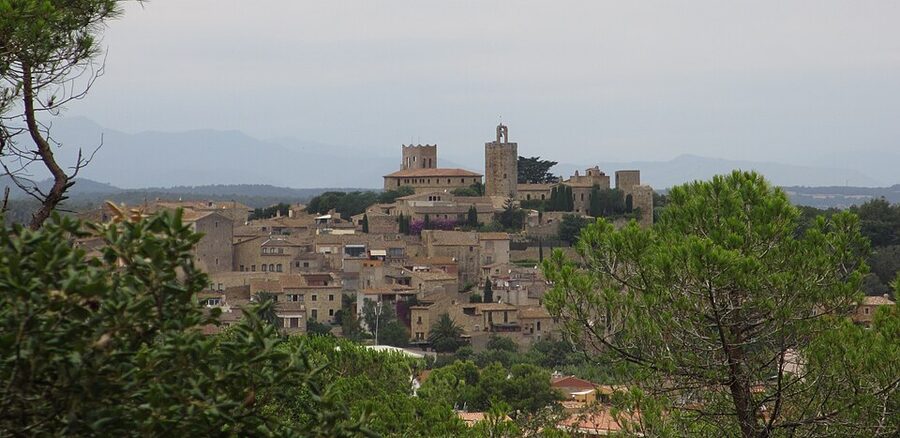
Girona is one of the oldest continuously inhabited cities in Catalonia. The Romans called it Gerunda and it sat on the Via Augusta, the road that ran from Rome to Cádiz. The Moors took it in 715, the Franks took it back in 785, and it’s been a Catalan stronghold since. The cathedral started as a Romanesque church, became Gothic in the 14th century, and the facade you see is mostly 18th-century Baroque on top.
The Call thrived from the 9th century until 1492, when Spain expelled the Jewish population. The walls are mostly the same stones from then.
The Costa Brava only became “Costa Brava” in 1908, when a journalist named Ferran Agulló coined the term in a newspaper article. The fishing villages were quiet until the 1950s, when the postwar tourism boom turned places like Tossa into international destinations. The reason places like Cadaqués stayed white and small: local building codes that pre-date the boom.
Beach time vs town time: how to choose
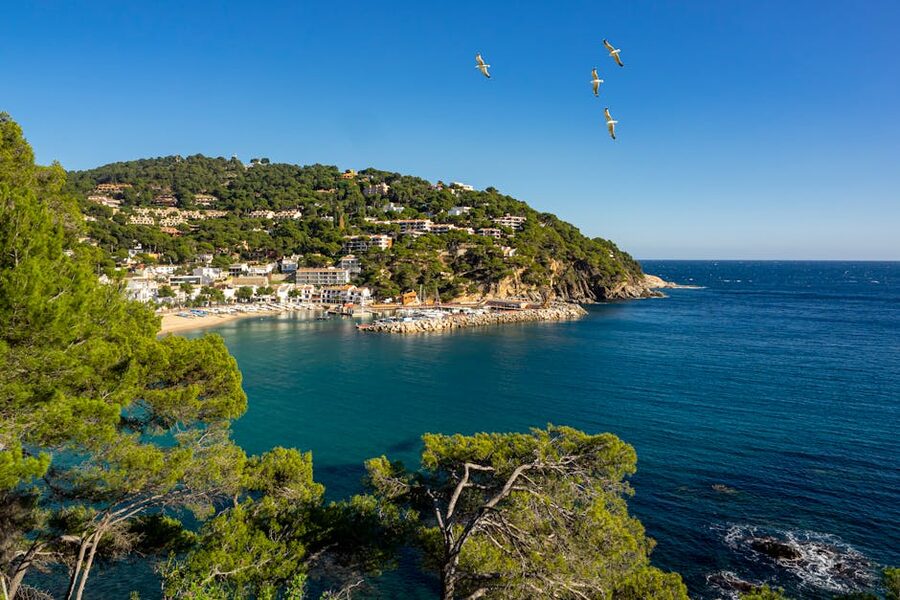
If you only have one day, do the classic combo. You get a serious old town in the morning, real beach in the afternoon, and you don’t have to think about where to eat or how to drive. That’s the value.
If you have two days, do the classic combo on day one and the kayak tour on day two. Both are different enough that you won’t feel repetitive.
If you have three days and you’re an art person, slot in the Dalí tour. The museum is genuinely a one-of-a-kind. If you’re not an art person, skip Dalí and use the third day to slow down somewhere else, maybe a flamenco show in Barcelona at night.
More Barcelona day-trip thinking
If you’re working out which Barcelona day to book first, think about the rhythm of your stay. Costa Brava and Girona is the long full day; do it when you’ve slept well. Save the in-city Gaudí stuff for the afternoon you arrive. Sagrada Familia tickets and Park Güell both work in a few hours and don’t require a van. A catamaran sunset cruise is the right call when you want sea time without the four-hour drive back to Barcelona. The biggest mistake is trying to cram everything into one trip; pick two day-out anchors and let the rest be the city itself.