
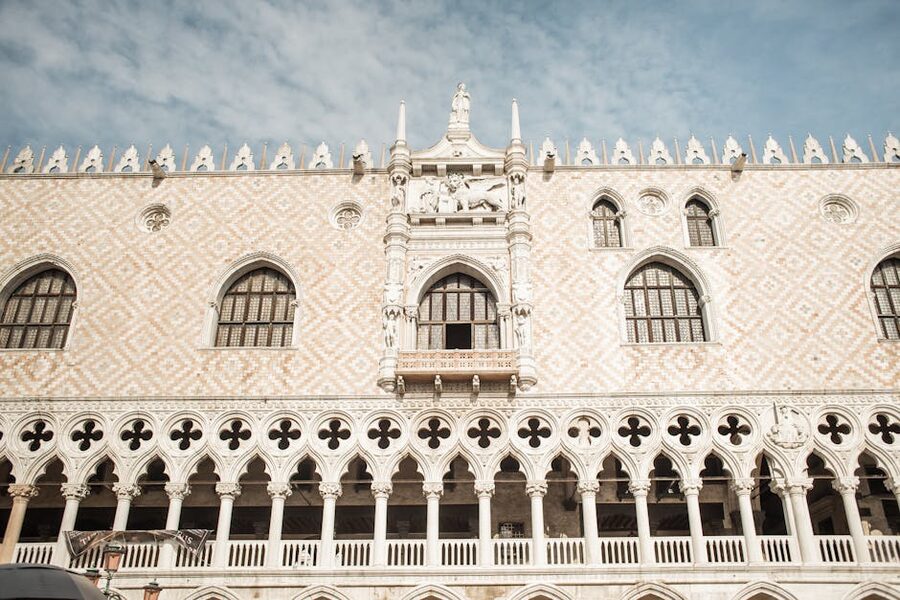
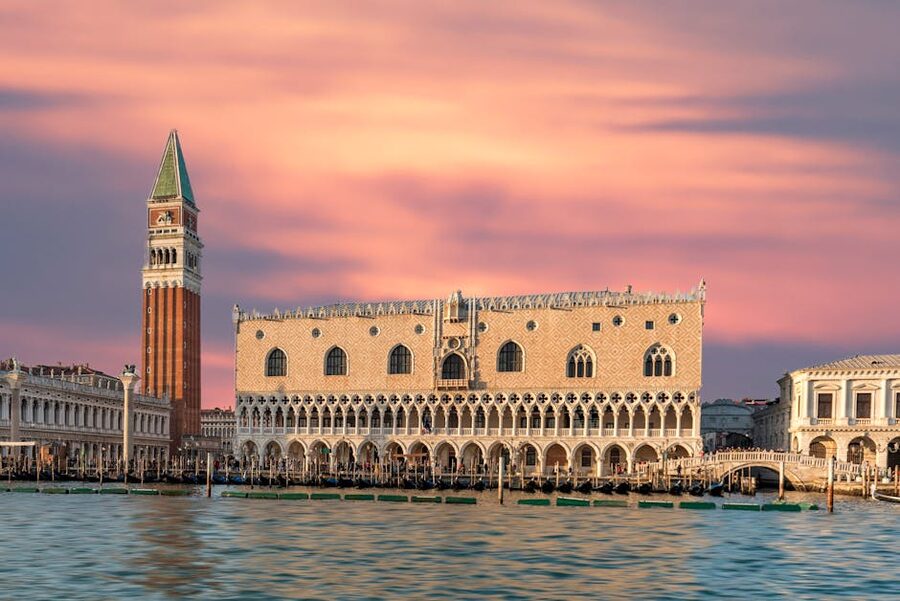
Here’s a fact that catches most first-time visitors off guard: the Doge’s Palace was never a royal residence. For nearly a thousand years, Venice refused to have a king. The most powerful man in the city lived in a building deliberately designed to keep him in check.
Once you know that, the whole place reads differently. The lavish ceilings aren’t a flex. They’re a warning.
- In a Hurry? Quick Picks
- How the Two Sites Actually Connect
- The Tickets, Plain and Simple
- Best Tours for the Combo
- 1. Doge’s Palace Reserved Entry Ticket:
- 2. Doge’s Palace + St Mark’s With Terrace Access: 3
- 3. Skip-the-Line Doge’s Palace and St Mark’s Tour: 1
- What’s Actually Inside the Doge’s Palace
- The Bocche di Leone
- The Bridge of Sighs and the Prisons
- Inside St Mark’s Basilica
- The Pala d’Oro
- The Horses and the Loggia
- What to Wear and Bring
- Timing the Visit
- Doing It Without a Tour
- Should You Pay Extra for the Secret Itineraries Tour?
- A Bit of Context: What Was the Republic, Exactly?
- Common Mistakes to Avoid
- Where Most People Eat (And Where to Avoid)
- If You Have a Whole Day in Venice
- What If You Only Have a Few Hours?
- Where to Go Next
In a Hurry? Quick Picks
1. Doge’s Palace Reserved Entry Ticket: about $41. Cheapest skip-the-line option. Doge’s only, no Basilica, no guide.
2. Doge’s Palace + St Mark’s With Terrace Access: about $123. The combo most people actually want. Both sites, plus the rooftop view of the square.
3. Skip-the-Line Doge’s Palace + St Mark’s Tour: about $101. Slightly cheaper combo without the terrace upgrade.
How the Two Sites Actually Connect
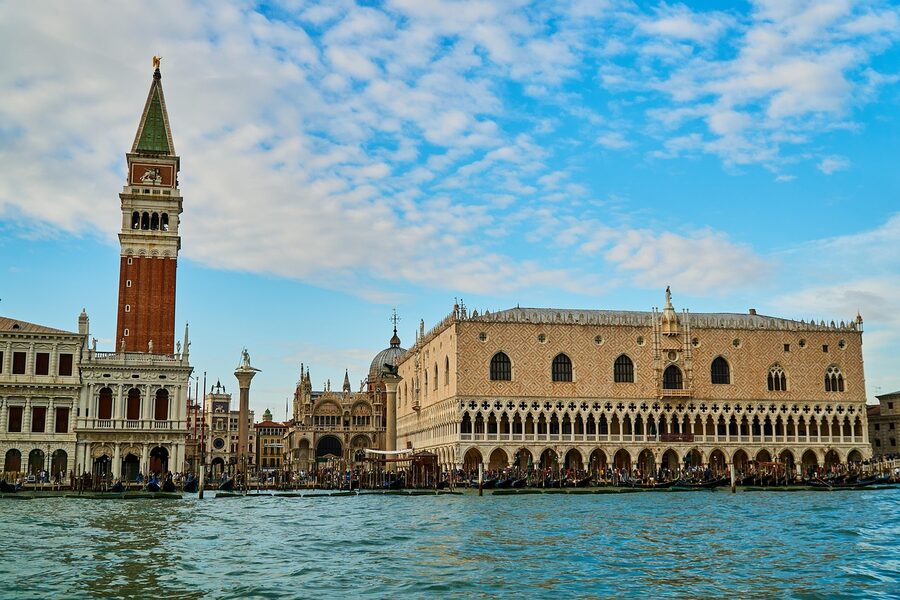
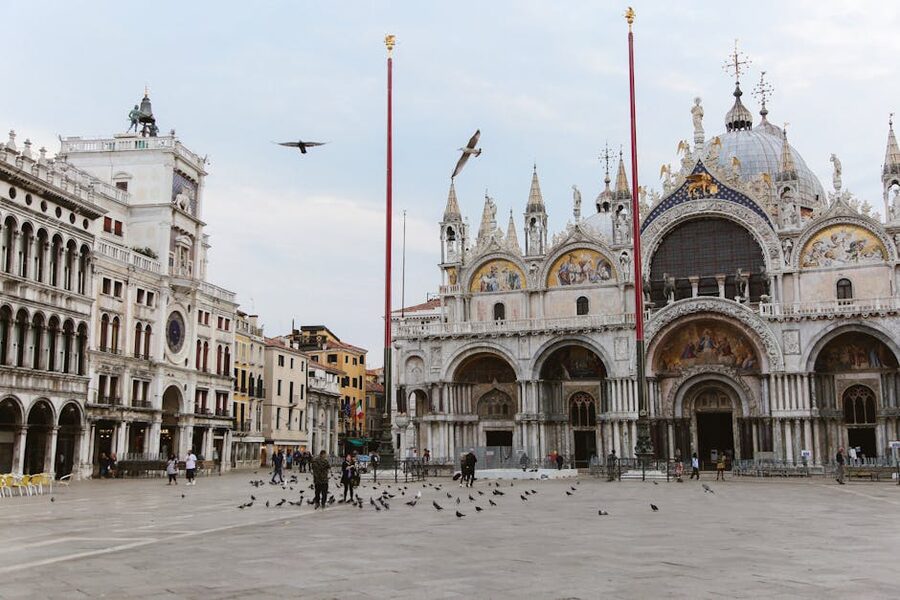
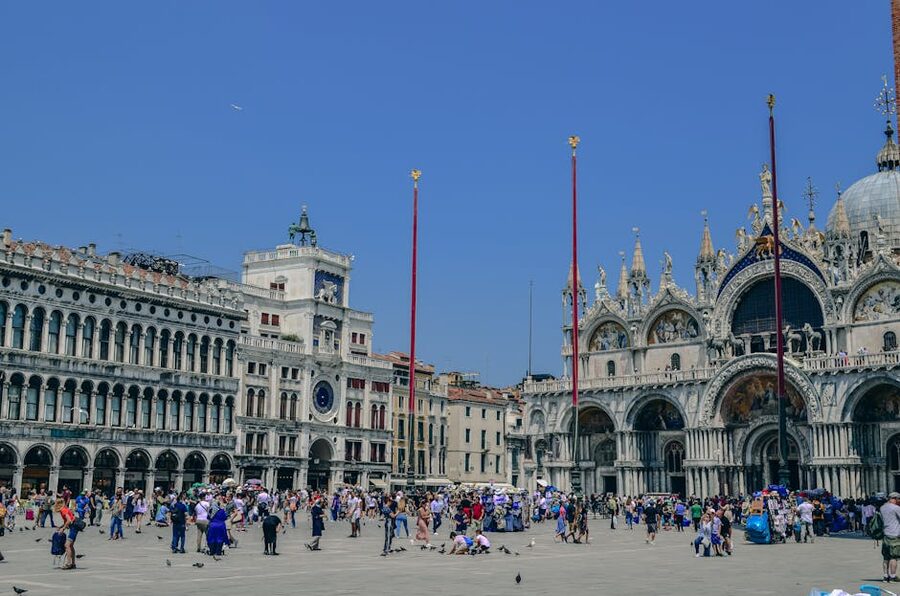
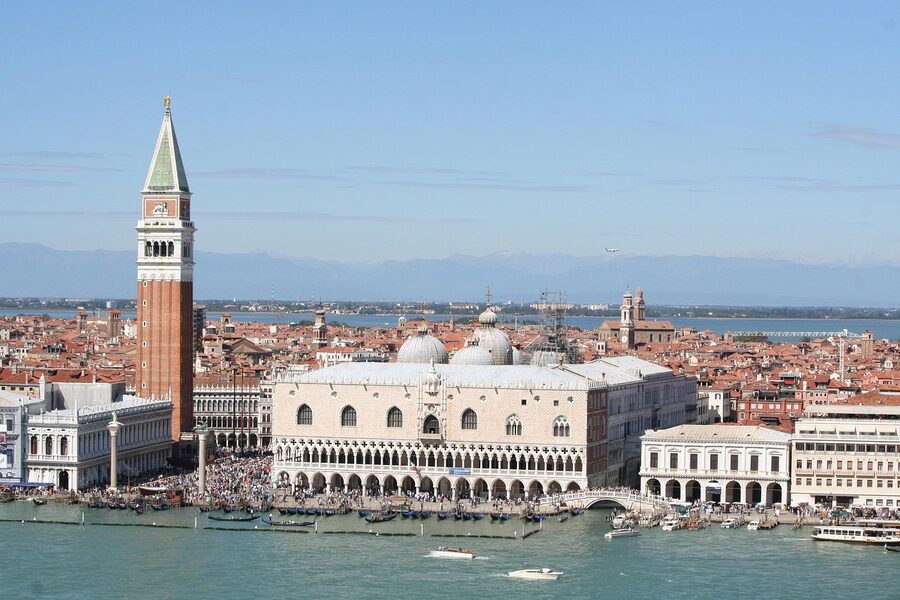
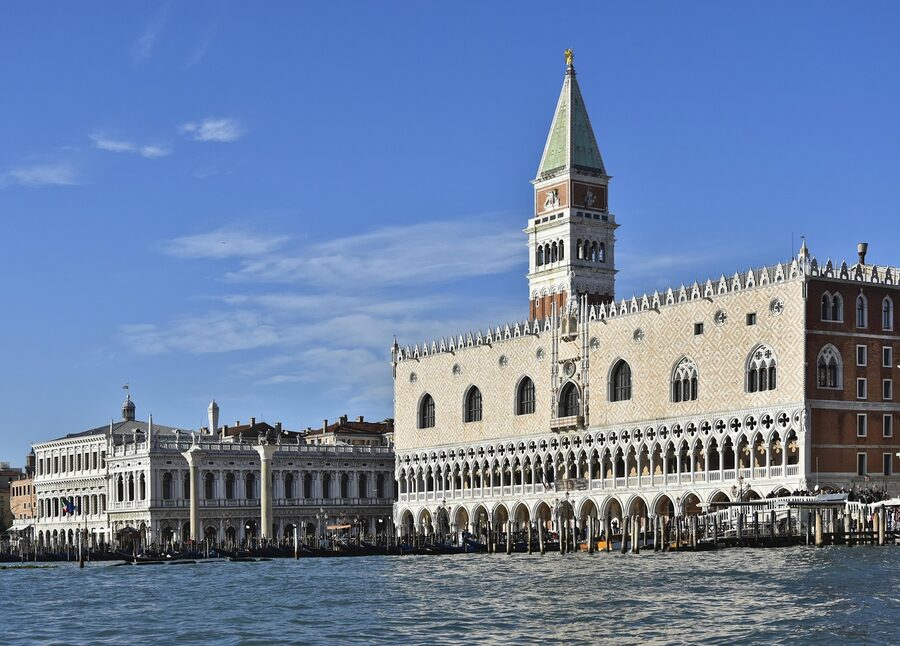
St Mark’s Basilica and the Doge’s Palace are not just neighbours. They were designed as a unit.
Here’s the setup. The Basilica was the Doge’s private chapel for centuries, not a public church. It only became Venice’s official cathedral in 1807. The Palace next door was the seat of every council that mattered, and the apartments where the Doge actually slept. A small private door connected the two, so the Doge could walk straight from his bedroom to the high altar without ever stepping into the square.
That’s why visiting them back to back makes sense. You’re following the same path Venetian power followed for almost a thousand years. Try to do them on separate days and you lose half the point.
The Tickets, Plain and Simple
This is where most travel guides go fuzzy. There are two separate ticketing systems, run by different bodies, and they don’t talk to each other.
Doge’s Palace is run by the Fondazione Musei Civici di Venezia. The basic ticket is the St Mark’s Square Museums pass, which also covers Museo Correr, the Archaeological Museum, and the Marciana Library. You can’t buy a Doge’s-only ticket from the official site. The pass is the entry-level option.
St Mark’s Basilica is run by the Procuratoria di San Marco. Basic entry to the church itself was free for years and is now a small fee. The Pala d’Oro (the gold altarpiece behind the high altar), the museum upstairs, and terrace access are each separately ticketed, or you bundle them in a combined ticket for around €20. If you only want the Basilica without the Palace, the fast-track entry with audio guide is the simplest version.
So if you want everything, that’s two timed-entry tickets, two security lines, and two different websites to navigate. This is the single biggest reason most visitors end up booking a guided combo tour. A good guide hands you both tickets, walks you through both security lines, and saves you the booking headache.
Best Tours for the Combo
I pulled the three most-booked tours from our database and ranked them by what you actually get for the money. The first option is for budget travellers who only care about the Palace. The other two are full combo experiences.
1. Doge’s Palace Reserved Entry Ticket: $41
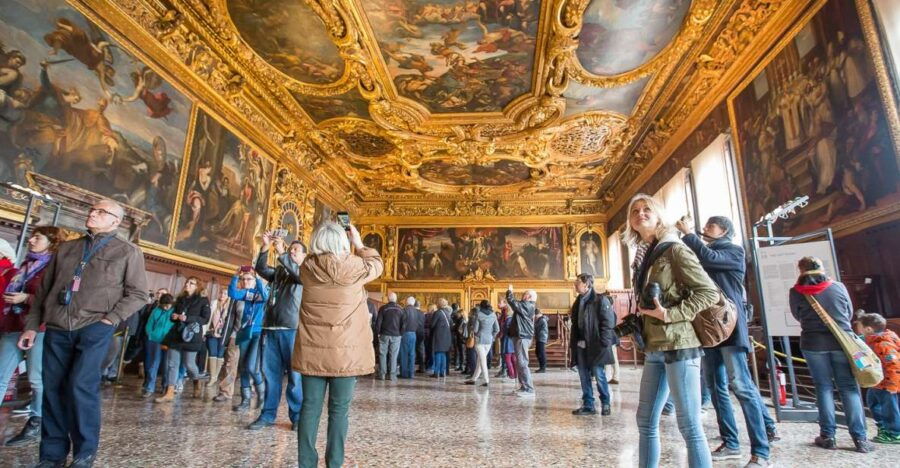
This is the volume leader on GetYourGuide for a reason: at around $41 it’s the cheapest legitimate way to get inside without queueing for an hour. Our full review of the reserved entry ticket covers the timing options. It only gets you the Palace, so if you also want the Basilica you’ll need a second ticket on the day.
2. Doge’s Palace + St Mark’s With Terrace Access: $123
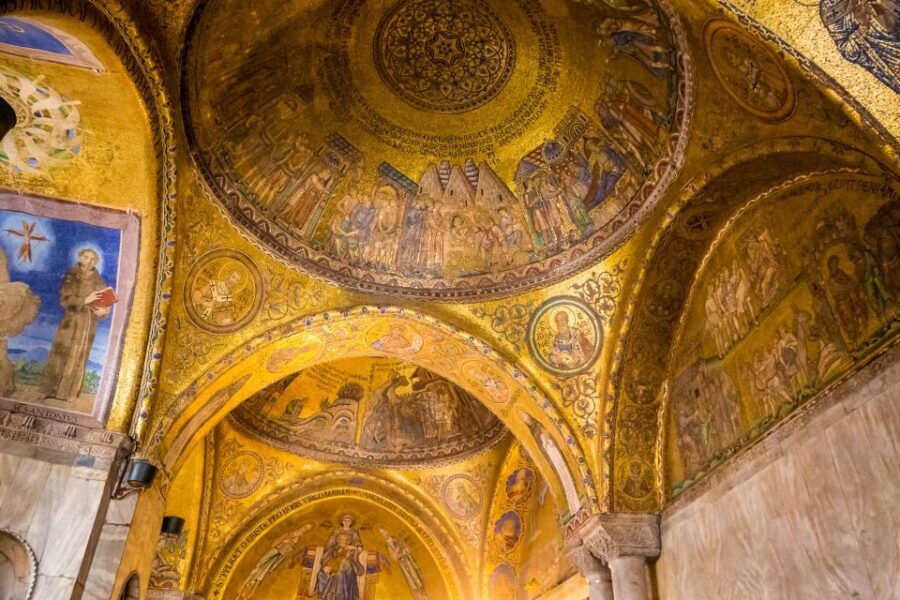
This is the one most people end up booking and the one I’d choose. The terrace pass is the differentiator: you get the rooftop view that the basic Basilica ticket doesn’t include, plus a guide who walks you through both buildings in sequence. Our detailed write-up of the terrace tour covers the small-group sizing and the early entry options.
3. Skip-the-Line Doge’s Palace and St Mark’s Tour: $101
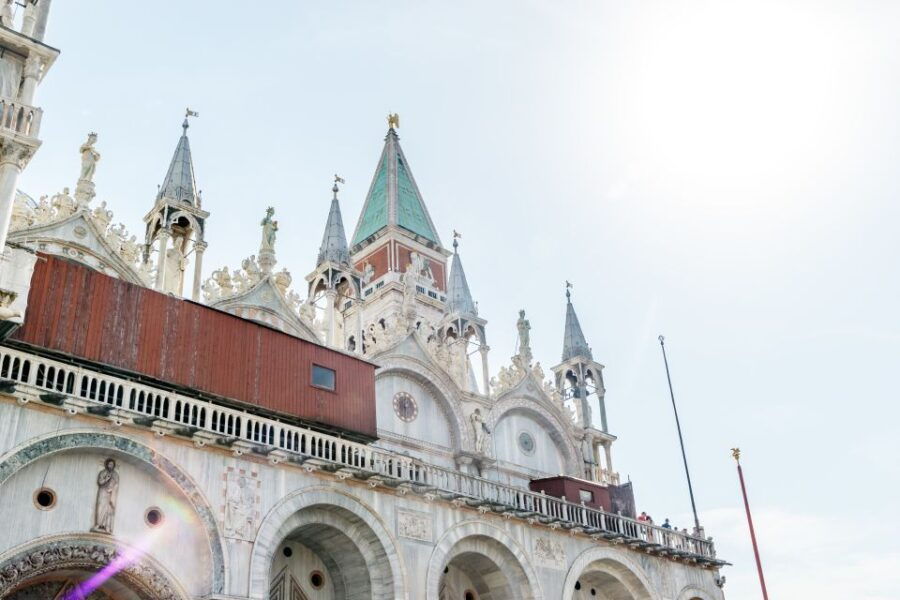
About $20 cheaper than the terrace tour. You still get both buildings with a licensed guide and skip-the-line entry, just no rooftop access. Our comparison of the skip-the-line combo notes that the guide quality is the same. Pick this one if you’ve already been on a campanile somewhere and don’t need another rooftop.
What’s Actually Inside the Doge’s Palace
Roughly 90 minutes covers it if you’re moving steadily. Two hours if you stop to read every plaque. The route is one-way and signposted, so you can’t really get lost.
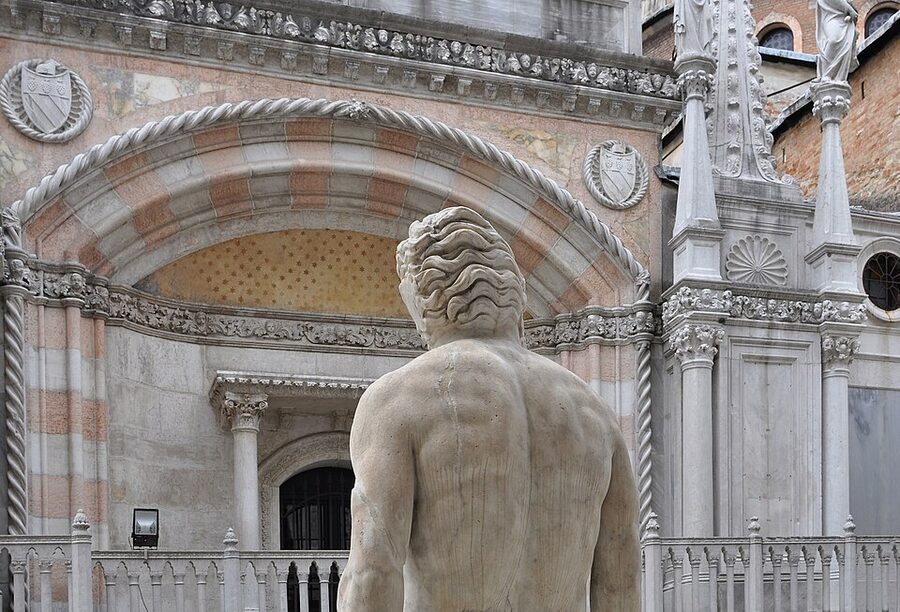
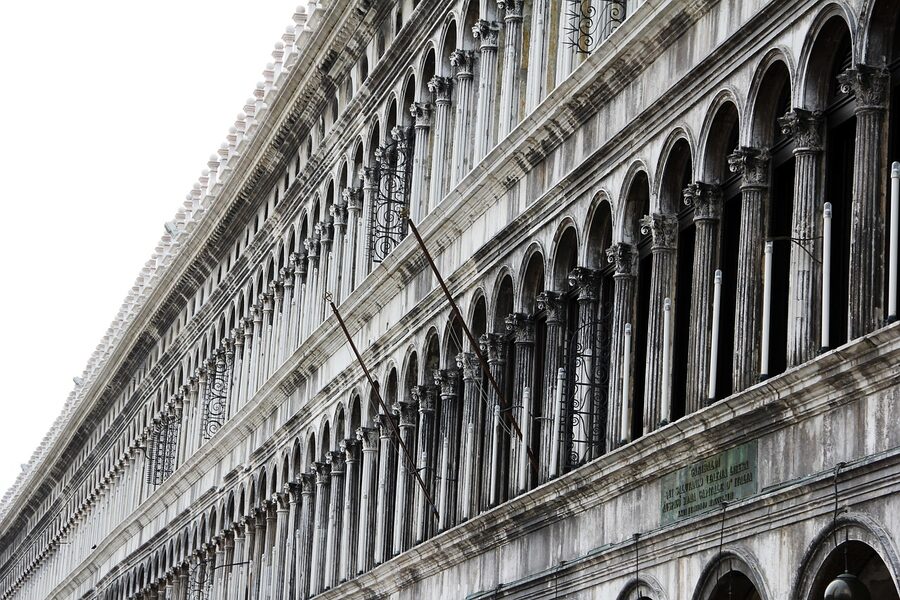
You start in the courtyard, with the famous Scala dei Giganti staircase guarded by huge statues of Mars and Neptune. Then up the Golden Staircase, designed to remind every foreign ambassador exactly how rich Venice was. The next 20 rooms are state apartments and council chambers. Most have ceiling paintings by Tintoretto, Veronese, or both.
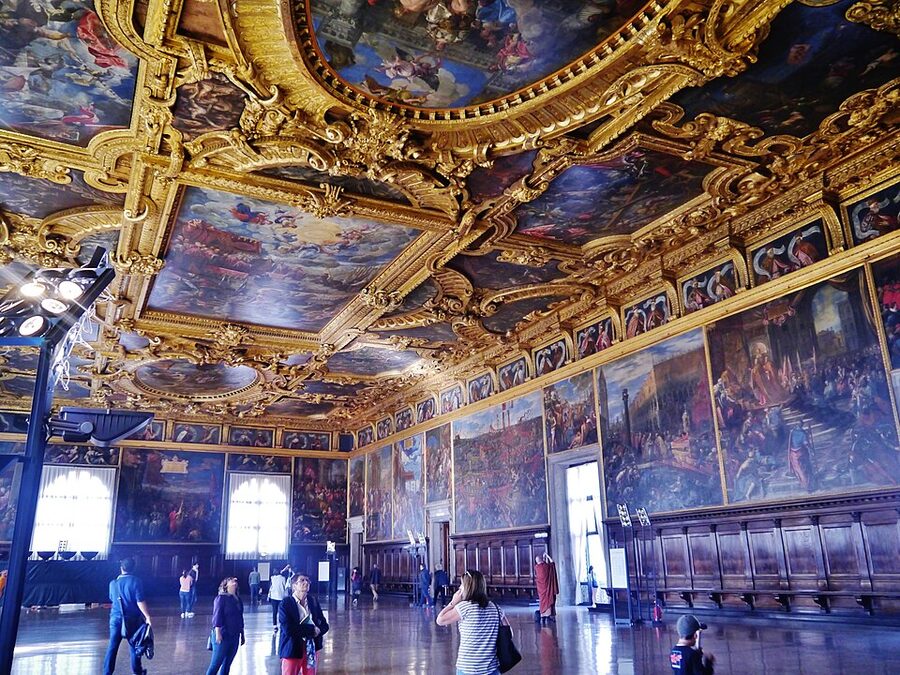
The room you’ll remember is the Sala del Maggior Consiglio, the Hall of the Great Council. It’s enormous, around 53 metres long, and the wall behind the Doge’s seat is taken up by Tintoretto’s Paradiso, the largest oil painting on canvas in the world. Above your head, a row of 76 portraits of past Doges runs along the frieze. One is missing. The black panel covers Marin Faliero, the Doge who tried to overthrow the republic in 1355 and was beheaded for it.
The Bocche di Leone
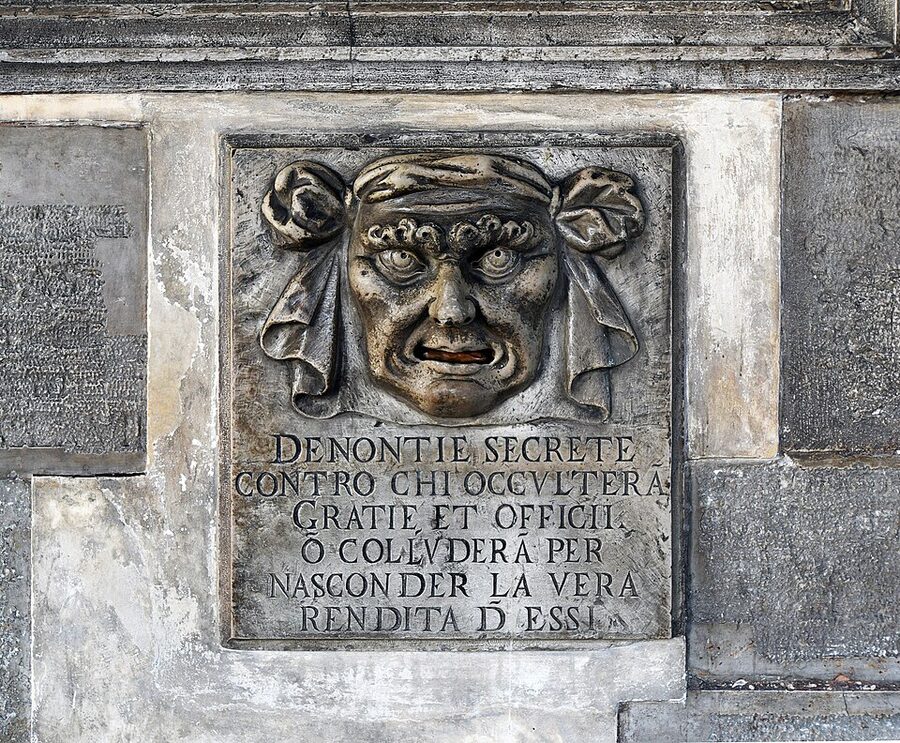
Halfway through the tour, look for slots carved into the walls shaped like lion’s mouths. These are the bocche di leone, anonymous denunciation boxes. Any citizen could drop a note accusing a neighbour of tax fraud, treason, or moral offence. The accusations were read by the Council of Ten in secret, and the accused often had no idea who’d reported them.
Most are gone, defaced when Napoleon’s troops arrived. The few that survive are unsettling for how casually they’re embedded in the wall. It’s the bureaucratic infrastructure of an informant state, hidden in plain sight.
The Bridge of Sighs and the Prisons
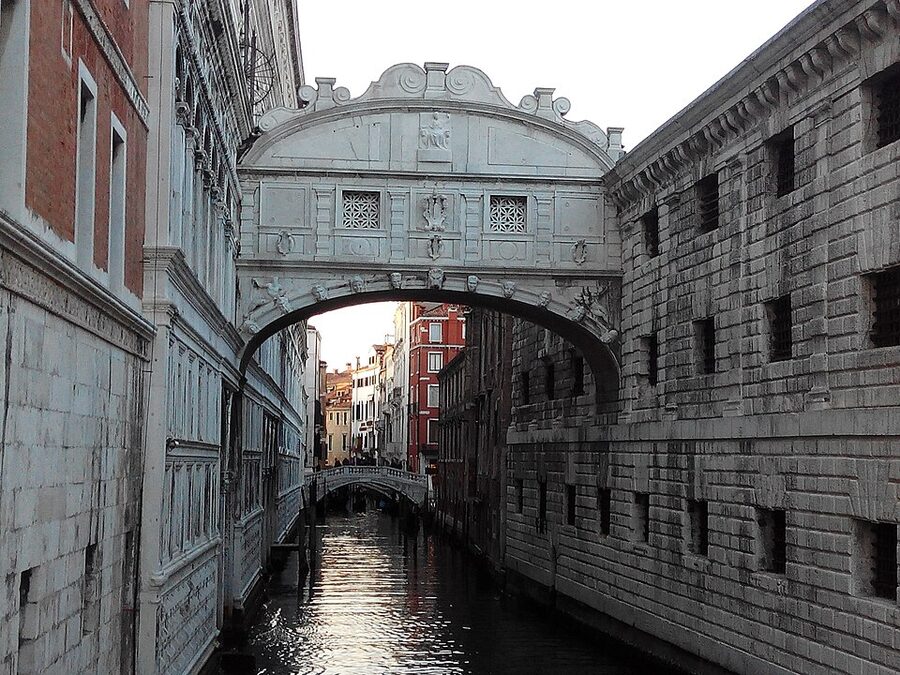
The route ends with a crossing of the Bridge of Sighs. It connects the palace to the New Prisons across a small canal, and prisoners walked it on their way to interrogation or imprisonment. The bridge has small stone-grilled windows. The “sighs” are supposedly the last glimpses of freedom inmates would catch through them.
That’s the Romantic-era story. The reality is more boring. By the time the bridge was built in 1600, capital sentences were rare and most cells held minor offenders. But the corridors are genuinely creepy, especially the Pozzi, the lowest cells where flooding was a daily problem.
Inside St Mark’s Basilica
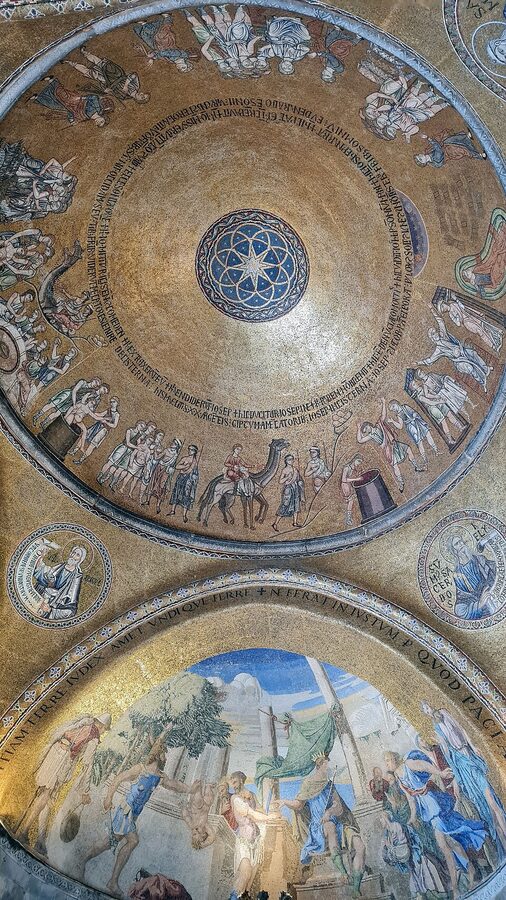
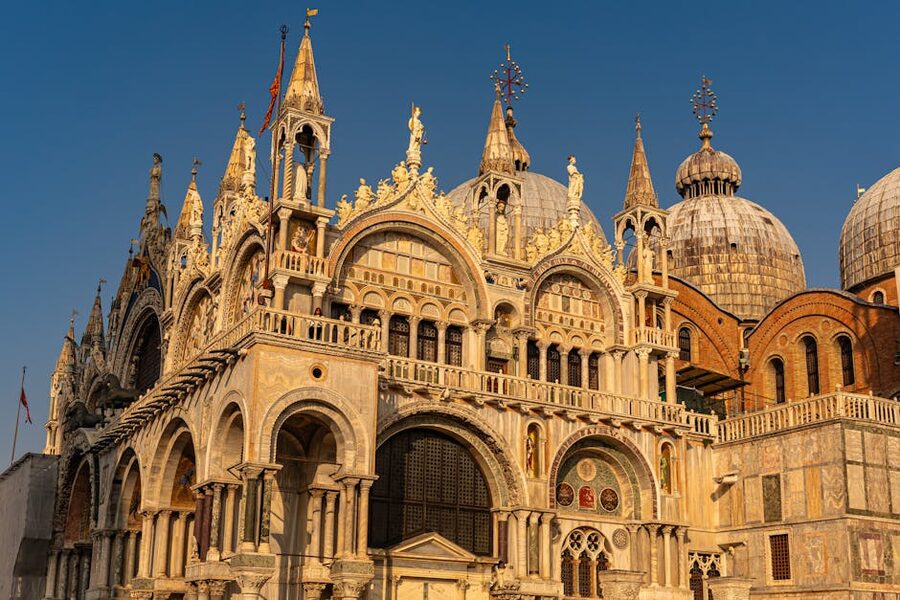
If you’ve done the Palace first, the Basilica feels small. It is. The interior is roughly Greek-cross shaped, dense, low-ceilinged, and covered top to bottom in gold mosaic.
The mosaics cover about 8,000 square metres. Most date from the 12th to 13th centuries, with restorations and additions running into the 1800s. The base layer is gold leaf set behind glass, which is why the whole interior reads as a single shimmering surface when lit. On a sunny morning, sunlight refracts off the floor patterns and everything turns warm gold.
The Pala d’Oro
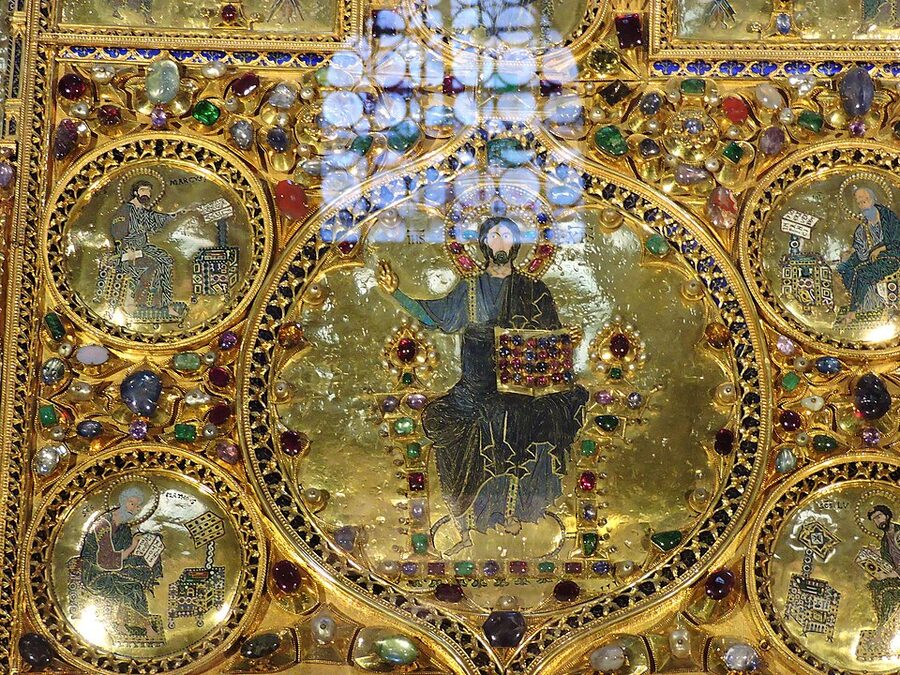
Behind the high altar is the Pala d’Oro, an altarpiece studded with around 1,300 pearls, 300 emeralds, 300 sapphires, and a few hundred other stones. It was commissioned in stages between 976 and 1345, with much of the gem and metalwork looted from Constantinople in the Fourth Crusade. The current frame is Gothic, but most of the enamels are Byzantine.
You need a separate ticket to get behind the altar. Worth it. From a distance the Pala just looks gold. Up close it’s hundreds of individual figures, each one its own miniature painting in enamel and gold leaf.
The Horses and the Loggia
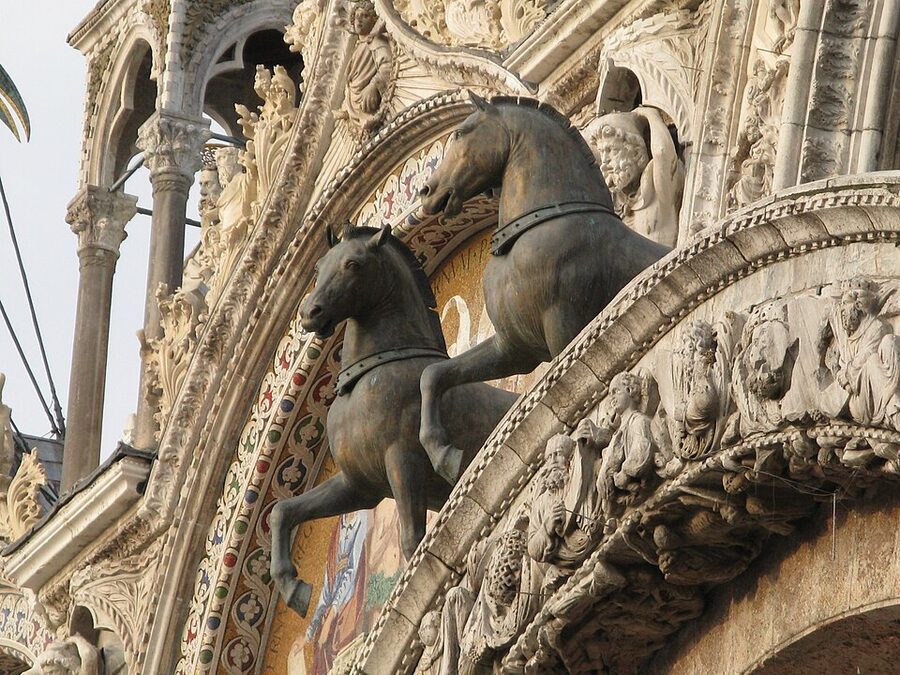
The four bronze horses you see on the basilica’s facade are replicas. The originals are inside the museum upstairs, and they’re worth the climb. They were made in classical antiquity, probably Greek, and were stolen from Constantinople in 1204 by Doge Enrico Dandolo, who was 90 years old and blind at the time. The Venetians dragged them home and bolted them onto the basilica as a trophy. Napoleon stole them again in 1797. They came back in 1815. They were finally moved indoors in the 1980s for conservation.
If you book a ticket that includes terrace access, you walk out from the museum onto the loggia and stand right next to the replicas, with the entire square laid out below.
What to Wear and Bring
The Basilica has a strict dress code. Shoulders covered. Knees covered. They check at the door. In summer this catches a lot of people in shorts and tank tops, who then have to either rent a paper cover-up at the entrance or come back later. Bring a light layer in your day bag.
Big bags aren’t allowed. Anything bigger than a small backpack has to go in the cloakroom on the north side of the square, which is free but adds 10 minutes to your visit. A crossbody or small daypack is fine.
Phones and small cameras are okay. No flash inside the Basilica. No tripods. Selfie sticks technically aren’t banned but the staff will ask you to put them down if they see one out.
Timing the Visit
Doge’s Palace officially opens at 9 AM. A handful of small-group tours offer 8 AM early entry, where you’re inside before the official opening. If you can get one of those slots, do it. The Sala del Maggior Consiglio is genuinely empty for the first 20 minutes.
The Basilica opens at 9:30 AM Monday to Saturday, 2 PM on Sundays (morning is reserved for mass). Last entry is around 5 PM.
Realistic timing for both:
- 90 minutes inside Doge’s Palace
- 15 minutes to walk across the square and pass through Basilica security
- 30 to 45 minutes inside the Basilica if you don’t add the museum or terrace
- Add 30 minutes for the terrace and Pala d’Oro upgrade
So budget around three hours total for both, give or take. If you’re on a guided tour the times are tighter because the guide moves you along.
Doing It Without a Tour
It’s possible. Plenty of people manage. Here’s the playbook if you want to handle it solo.
Book Doge’s Palace through the official site at visitmuve.it. Pick the earliest time slot that’s available, ideally 9 AM. The basic ticket is the St Mark’s Square Museums pass.
For the Basilica, go to basilicasanmarco.it and book the combined ticket that includes the Pala d’Oro, the museum (Loggia dei Cavalli), and terrace access. Around €20. Pick a time slot at least an hour after your Palace ticket, to give yourself slack.
Show up to both 15 minutes before your slot. Even with skip-the-line tickets you have to clear security, which can take 10 minutes if a cruise ship just docked.
The downside of going solo is that without a guide, the Doge’s Palace is essentially a series of pretty rooms with sparse English signage. The whole point of the building is the political history, and that doesn’t read off the walls. If you go DIY, download a good audio guide before you arrive. Rick Steves’ free Audio Europe app has a decent one for both sites.
Should You Pay Extra for the Secret Itineraries Tour?
The Doge’s Palace runs a separate Itinerari Segreti (Secret Itineraries) tour that takes you into rooms not on the standard route: the torture chamber, the lead-roof prisons (the Piombi, where Casanova famously escaped from in 1755), and the small administrative offices used by the Council of Ten.
You book it directly through the museum, around €32 on top of your standard ticket. It runs in English at fixed times, usually 9:55 AM and 11:35 AM. About 75 minutes long. You join your standard tour after.
It’s not for everyone. The rooms are smaller, less visually impressive than the state apartments, and the guide does most of the talking. If you’re already on a guided combo tour, skip it. If you’re going DIY and you’re a history nerd, it’s the best add-on the Palace offers.
One more option worth knowing: a few operators bundle Doge’s, Basilica, and a gondola ride into a single half-day. Our writeup of the Venice-in-a-day combo covers the trade-off (less time at each site, but you don’t have to coordinate three bookings).
A Bit of Context: What Was the Republic, Exactly?
Worth knowing before you walk in. The Venetian Republic, the Serenissima, lasted from 697 to 1797. That’s 1,100 years. It was an oligarchic republic, run by a closed circle of about 200 noble families, with the Doge elected from among them as a kind of figurehead-CEO with limited real power.
The Doge was elected for life, but he was watched constantly. He couldn’t open his own mail without witnesses. He couldn’t leave the city without permission. His wife wasn’t allowed to receive foreign visitors. Every decree he signed was countersigned by the Council. Every dinner he hosted had a councilor at the table. The whole system was designed to prevent any single person, even the Doge, from gathering enough power to become a king.
That’s what you’re walking through when you visit the Palace. Not a king’s home. A bureaucracy’s headquarters, dressed up to impress foreign ambassadors.
Common Mistakes to Avoid
A few things first-time visitors get wrong, in roughly the order they happen.
Booking the Doge’s Palace and Basilica for the same time slot. Won’t work. They’re back-to-back visits, not parallel ones. Book at least 90 minutes apart.
Showing up at the Basilica without a Pala d’Oro ticket. The basic Basilica ticket gets you in the door, but the Pala d’Oro behind the high altar is a separate add-on. If you came all this way, get the combined ticket.
Treating the Doge’s Palace like an art museum. The art is incidental. The Palace is about politics. If you read the room labels as captions for paintings rather than briefings on what happened in each room, you’ll be bored by the third hall.
Not allowing time between the two sites. Even if both are timed-entry, the security lines can swallow 20 minutes on a cruise day. Build in a buffer.
Climbing the Campanile in between. Tempting, but it’ll blow your timing. The Campanile lift queue can be 45 minutes in summer. Do it before or after, not in the middle.
Where Most People Eat (And Where to Avoid)
The cafes ringing the square (Florian, Quadri, Lavena) are famous, beautiful, and shockingly expensive. A coffee at Florian costs around €11 if there’s an orchestra playing, €7 if there isn’t. The view is real and the history is real (Florian opened in 1720). Whether it’s worth €11 is up to you.
For a proper meal, walk five minutes north into the smaller calle around Campo San Bartolomeo. Prices drop sharply. Bacari (Venetian wine bars) like Cantina Do Spade or All’Arco serve cicchetti, small plates, for €1.50 to €4 each. Stand at the bar, order three or four, drink an ombra (small glass) of wine for €2.50. That’s a real Venetian lunch.
Near the Doge’s Palace specifically, avoid anything advertising “tourist menu” in three languages. Walk back across the Bridge of Sighs into the eastern quarter and you’ll find places where Italians actually eat.
If You Have a Whole Day in Venice
The Palace and Basilica eat a morning. Half a day if you take it slow. The afternoon is the question.
If you’ve never done one, this is when most people book a Venice gondola ride, ideally pre-arranged through one of the smaller squares away from the cruise crowd. The boats near the Doge’s Palace are fine, but the going rate (€90 for 30 minutes) is the same anywhere, and the routes from less central piers see fewer traffic jams. Our Venice gondola booking guide breaks down which piers are worth it and which aren’t.
Otherwise, it’s worth wandering into the Castello district just east of the Palace. It’s where most actual Venetians still live. Quiet streets, small canals, no souvenir shops. Walk far enough and you’ll hit the Arsenale, the medieval shipyard where Venice built the fleet that ran the Mediterranean for 500 years.
What If You Only Have a Few Hours?
Cruise passengers and quick layovers, this section’s for you. If you’re only in Venice for half a day, here’s the cut.
Skip the Doge’s Palace. Sounds drastic. But the Palace works best at full length, and rushing it means you’ll just see expensive ceilings without context. Spend that time inside the Basilica instead, then take the lift up the Campanile (the Basilica’s bell tower) for €10 and a full lagoon view.
If you must do the Palace, book the cheapest reserved-entry ticket and rip through it in 45 minutes. You’ll catch the highlights (Sala del Maggior Consiglio, Bridge of Sighs) without trying to read every plaque.
The combined Basilica ticket with Pala d’Oro and museum is the highest-density experience in Venice. If you only do one paid attraction in the city, make it that.
Where to Go Next
If Venice is part of a longer Italian trip, the booking logic from this article (timed entry, two-system tickets, guided combos) repeats almost everywhere else. The two big follow-ons are Florence and Rome: the Uffizi in Florence works the same way as Doge’s Palace, and the Vatican Museums in Rome are the closest analogue to the Basilica. Same playbook, different city.
Back in Venice, the one experience most visitors regret skipping is a gondola.