
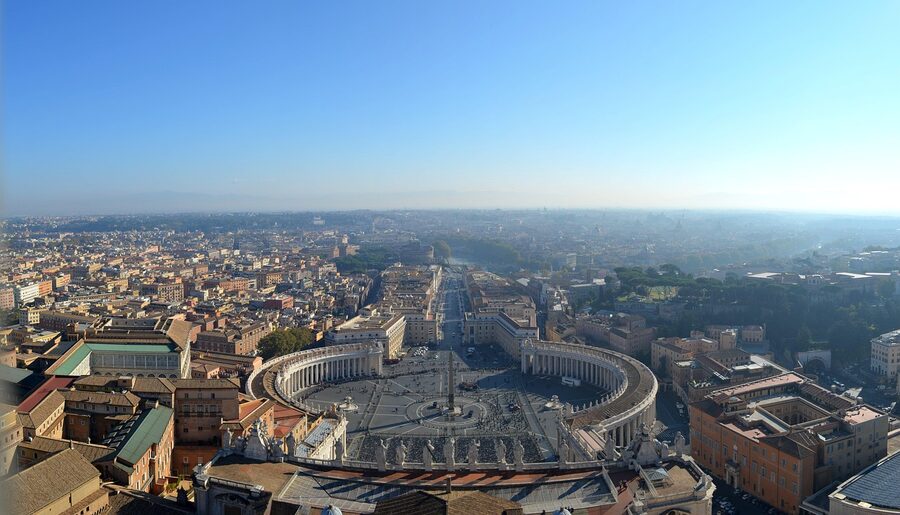
You squeeze through the last spiral, the rope handrail brushing your shoulder, and step out onto the lantern walkway. Rome opens up below — colonnades curling around the square like arms, the Tiber bending past Castel Sant’Angelo, the Colosseum tiny in the haze. Five hundred and fifty-one steps. That’s the payoff.
St Peter’s is the strange one of Rome’s headline sights. The basilica itself is free. The dome climb costs a few euros. The crowds inside the church are real but the line moves. And almost nobody who comes to Rome books it properly.
Short on time? Three picks
- Best dome-focused tour — $64. St Peter’s Basilica, Papal Tombs and Dome Climb (small-group guided) — basilica, grottoes and dome in one go.
- Cheapest legit dome ticket — $17. Dome entry + audio guide — self-guided, multilingual, the best value on the page.
- Vatican Museums combo — €69+. Vatican Museums + Sistine Chapel + St Peter’s combo — one ticket covers the whole walled city.
- Short on time? Three picks
- What Actually Costs Money Here
- Should You Climb the Dome?
- Stairs or Lift?
- Best Time to Go
- Dress Code (This Bit Matters)
- The Three Tours Worth Booking
- 1. St Peter’s Basilica, Papal Tombs and Dome Climb (small group) —
- 2. St Peter’s Basilica with Dome and Papal Tombs (small group or private) —
- 3. St Peter’s Basilica and Dome Entry Ticket with Audio Tour —
- Combining With the Vatican Museums
- What’s Inside the Basilica You Should Actually See
- The History You’ll Want To Know
- St Peter’s Square
- What Else Is Right Here
- Practical Bits Most Guides Skip
- Eating Near the Vatican
- If You Only Have Half a Day
- Two More Worth Knowing About
- Other Rome Bookings Worth Looking At
What Actually Costs Money Here
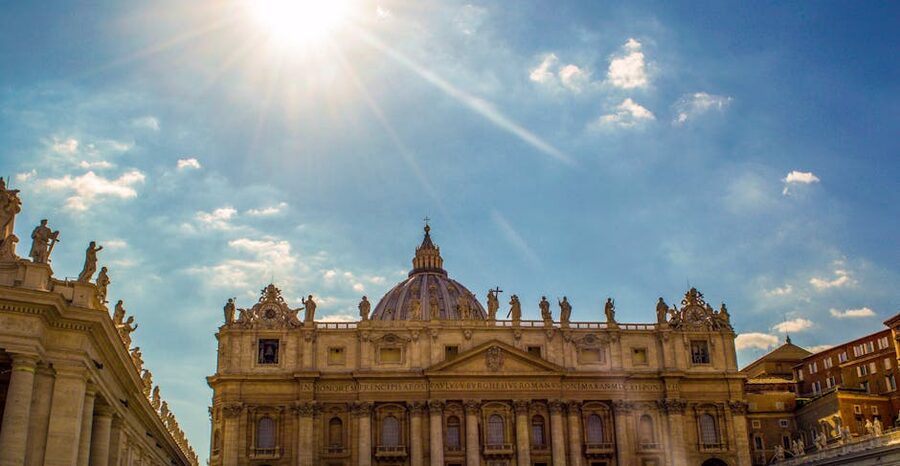
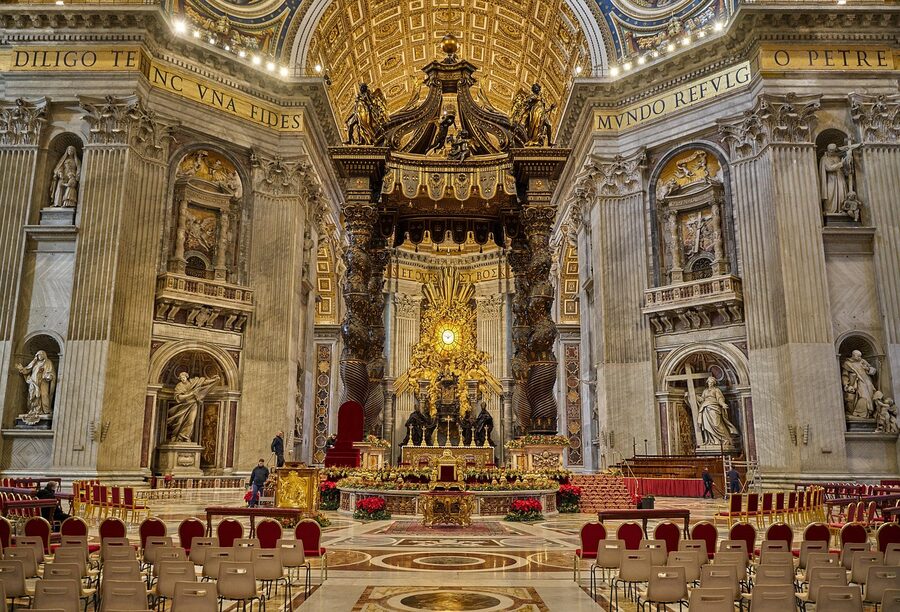
This is the thing nobody explains clearly. The basilica itself is free. You can walk in, see the Pietà, stand under Bernini’s Baldachin, look up into Michelangelo’s dome — all of it free. There’s no entry ticket. There’s a security line, and that’s the only barrier.
What you pay for:
- The dome climb — €17 stairs only, €22 with the lift to the roof terrace. Bought at the kiosk inside the basilica or on the official Vatican website. The lift saves you the first 230 steps; the second 321 are stairs no matter what.
- A guided basilica tour — adds context, skip-the-line for security, usually bundles the dome and the papal tombs. Around $20–$70 depending on group size.
- The Scavi (necropolis under the basilica) — separate booking through the Vatican Excavations Office, weeks ahead, very limited. Not the same as the grottoes.
- Vatican Museums and Sistine Chapel — different ticket entirely, separate entrance on the other side of the wall. Most people combine the two in one day. Our Vatican Museums and Sistine Chapel guide walks through that side of the visit.
The basilica and the Vatican Museums are physically separate. They share a wall but you cannot walk from one to the other inside. You exit the museums through the Sistine Chapel, then either follow the guide-only shortcut into St Peter’s or walk back out, around the square, and queue separately. Most combo tours use the shortcut. That’s the main reason to book the combo rather than two single tickets.
Should You Climb the Dome?
Yes. With one caveat about the second half.
The climb has two parts. The first 230 steps (or the lift) take you up through the inside of the basilica’s outer wall to the lower roof terrace. This part is wide, well-lit, and the route past the cordonata stairs and the rooftop chapels is genuinely interesting. There’s a small Vatican post office up there, a water fountain, restrooms, and the only places to sit. From the terrace you also stand level with the dome’s exterior and the giant facade statues.
The second 321 steps are different. You’re squeezed between the inner and outer shells of Michelangelo’s dome — the structure leans inward, so you walk on a slight tilt. The final stretch is a tight spiral with a thick rope handrail running down the middle. It’s not dangerous. It’s not even particularly hard if you can do stairs. But it is narrow, and the walls press in. If small spaces bother you, the second half will bother you.
What you get at the top: the highest viewpoint in central Rome (136 metres), the only place to see Bernini’s colonnades from above, and a clear sightline to the Pantheon, Trajan’s Column, the Colosseum, the Palatine, and on a good day the Alban Hills out toward Castel Gandolfo. The lantern walkway is caged — there’s a tall metal mesh railing all around — which is ugly but understandable. Two people can pass each other but only just.
Skip the climb if: you have bad knees, you’re scared of tight spaces, or it’s the middle of August at 2pm. Otherwise do it.
Stairs or Lift?
The lift only goes to the roof terrace level. From there it’s still 321 steps to the top. You’re saving the easy half, not the hard half. €5 for it.
I’d take the stairs. Three reasons:
One — the cordonata ramps in the first section are part of the experience. They’re not regular stairs, more like shallow Renaissance-era bricked ramps designed for mules and ceremonial processions. Michelangelo did the same thing on the staircase up to the Capitoline Museums. You won’t see the cordonata if you take the lift.
Two — the line for the lift is usually longer than the stairs queue, especially mid-morning. The stairs entrance is right past the dome ticket check, on the southeast side of the basilica. Follow the green “Ingresso Cupola” signs.
Three — the first 230 are not bad. Wide steps, frequent windows, the occasional bench. If you can climb to a third-floor flat without stopping, you can do this section without thinking.
Best Time to Go
Open as early as possible. The dome opens at 7:30am in summer, 8:00am in winter. The basilica security line at 7:30 is short — sometimes nonexistent. By 9:30 it’s wrapped halfway around the colonnades. By 11 it’s a real wait, anywhere from 30 minutes to two hours.
Climb the dome first thing, then drop down into the basilica afterwards. Most people do it the other way around — wander through the basilica, then head up — and end up at the top of the dome at 1pm with the city in flat midday haze. Worse light, worse photos, hotter climb.
If you’re combining with the Vatican Museums (and most people should), do the museums in the very early slot, exit through the shortcut into St Peter’s around 11:30, and climb the dome on a tour that’s already inside the basilica. That’s the only sensible way to fit both into a morning. Our Vatican Museums guide covers the early-entry options.
Avoid: Wednesday mornings (papal audience, the square is set up with chairs and the basilica opens late), Sunday around noon (Angelus blessing from the window, basilica very full), and any major religious holiday or canonisation. Check the Vatican calendar before booking — it’s published months ahead.
Dress Code (This Bit Matters)
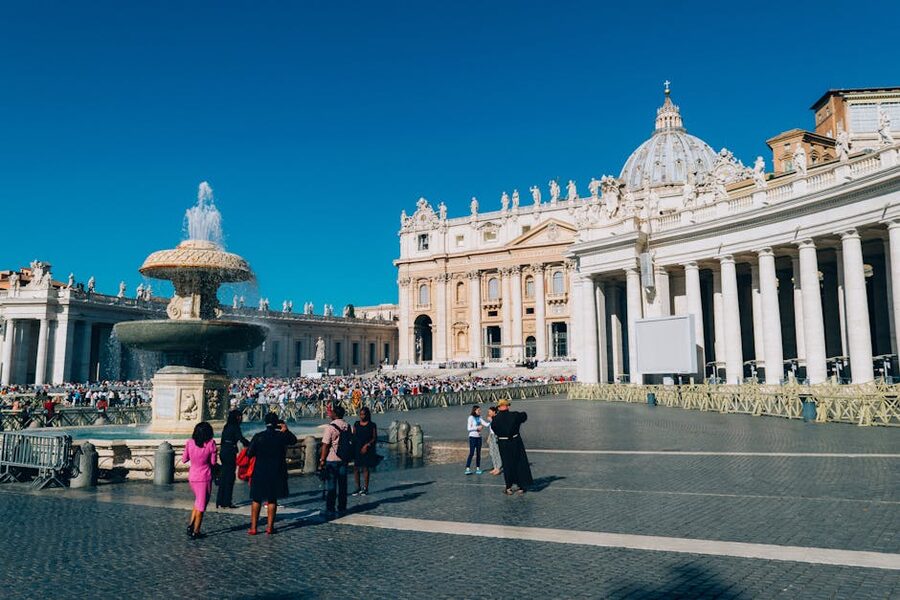
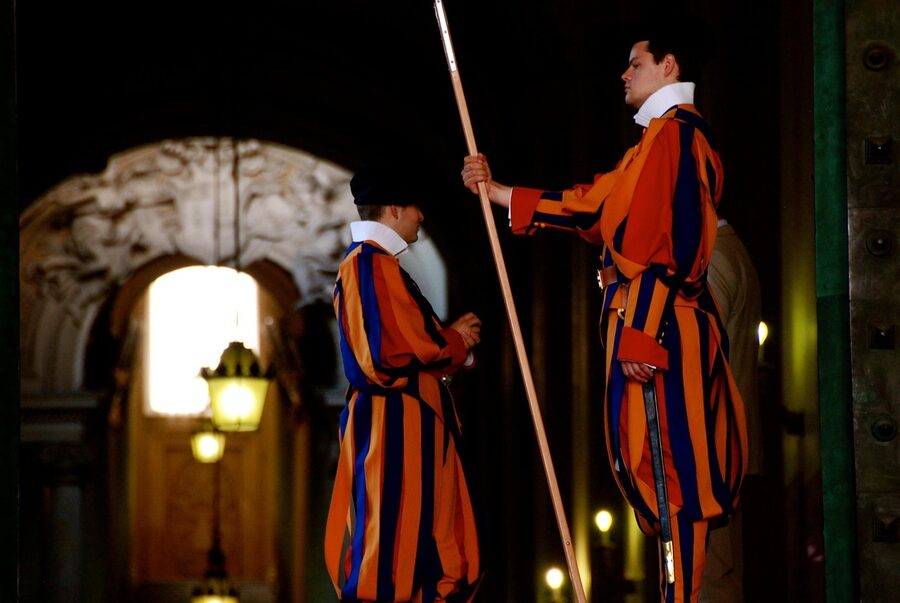
This catches more first-timers than any other Vatican rule. Shoulders covered. Knees covered. No sleeveless tops, no shorts above the knee, no short skirts, no sheer fabric on the upper arms. They will turn you away at security if you’re not compliant. There are vendors right outside the colonnades selling overpriced shawls and paper scarves — the going rate is €10 for something worth €1.50. Bring a light scarf or a thin cotton shirt in your bag. Both work for men and women.
Same rules apply for the Vatican Museums on the other side. The dome climb has no separate dress check (you’ve already passed security), but if you’re getting up there in shorts and a vest because the security guard didn’t catch you, you’ll regret it on the lantern in February.
The Three Tours Worth Booking
If you want a guide rather than a self-guided ticket — and for a building this layered, a good guide adds a lot — these three are the ones I’d point friends at. Sorted by what they actually deliver, not by price.
1. St Peter’s Basilica, Papal Tombs and Dome Climb (small group) — $64
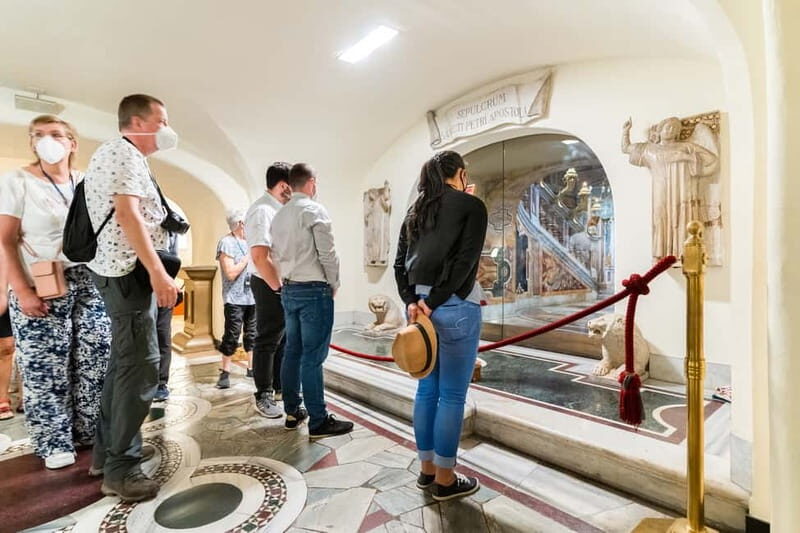
This is the cleanest version of “St Peter’s, properly”. A small group, an English-speaking licensed guide, fast-track through security, the basilica’s main highlights with real context, the papal tombs in the Vatican Grottoes, and the dome climb included. Our full review goes into the queue-skip mechanics. Skip it if you’ve already done the Vatican Museums combo — there’s overlap. Otherwise it’s the default pick.
2. St Peter’s Basilica with Dome and Papal Tombs (small group or private) — $22
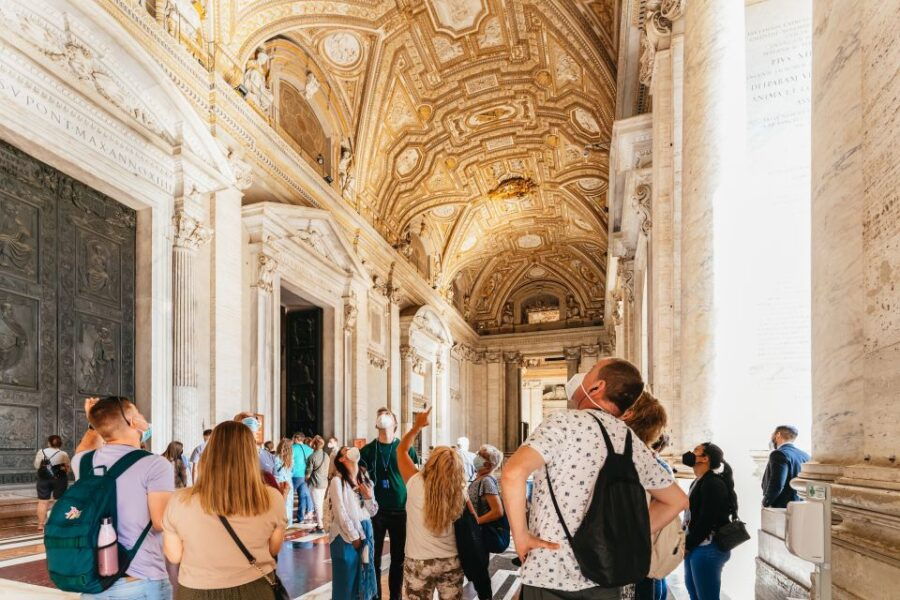
Same building, same dome, similar route, much better price. The difference is operator: this one runs a high volume of small-group departures and offers a private upgrade. Reviews say guides are knowledgeable but groups can be larger than the listing suggests, especially in peak season. Worth it for the price if you don’t mind 12-15 people instead of 6.
3. St Peter’s Basilica and Dome Entry Ticket with Audio Tour — $17
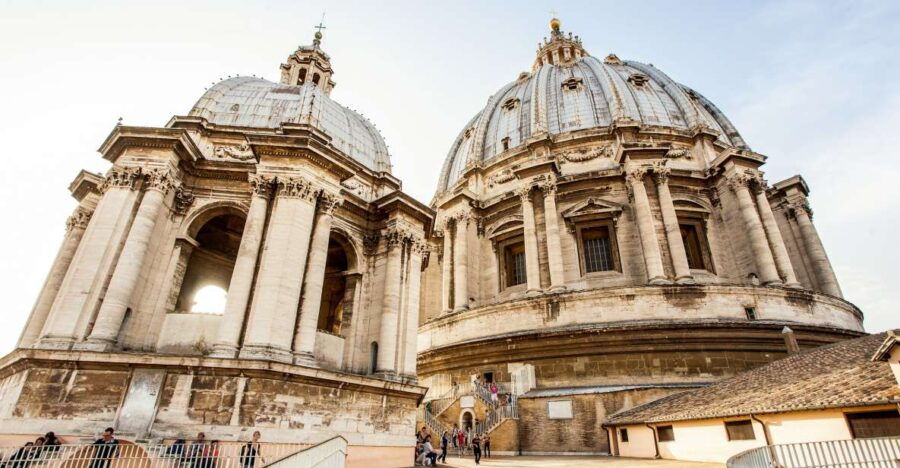
If you don’t want a stranger talking through the basilica with you, this is the tour. Self-guided, audio in seven or eight languages, dome included, same skip-the-line entry. The audio is decent rather than brilliant, but at this price it’s the best value on the page. Bring your own earbuds — the app uses your phone.
Combining With the Vatican Museums
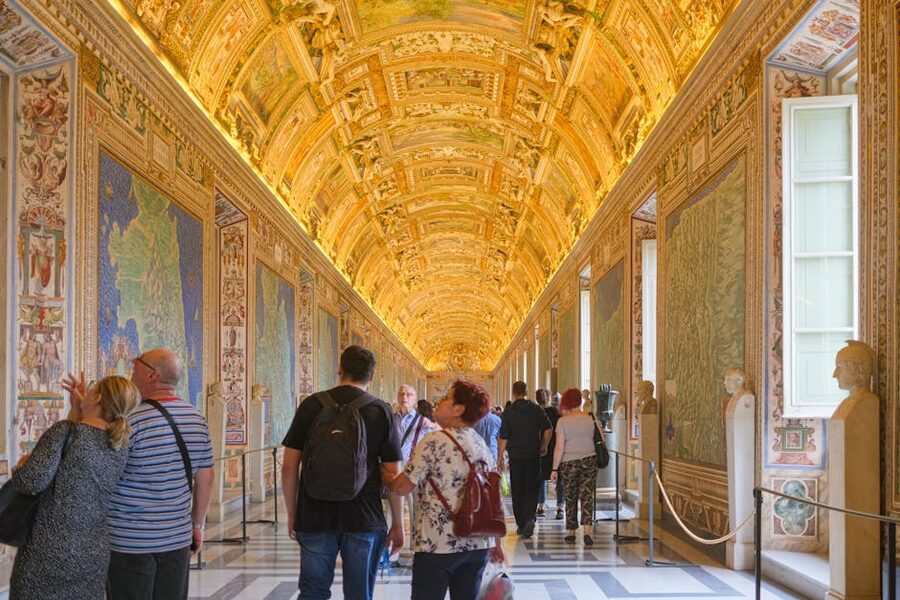
Most people doing one trip to Rome want to do both — the Vatican Museums (Sistine Chapel) and St Peter’s — in the same morning. This is sensible. They’re both inside the Vatican walls and a guided combo tour uses the connecting passage between the Sistine Chapel and St Peter’s Basilica that ordinary visitors can’t access.
If you book separately, here’s the choreography: book the very earliest Vatican Museums entry slot (usually 7:30 or 8:00am), do the museums in 2.5–3 hours, exit through the Sistine Chapel, walk back outside, around the wall, and queue at St Peter’s security. You’ll arrive around 11:30am, by which point the basilica security line is at its worst. The combo tour skips this transfer.
The combo tickets I’d actually consider: the small-group Vatican + Sistine + St Peter’s tour is the most-booked version on the market, and the group skip-the-line variant is the budget option. Both run mornings and afternoons, both use the connecting passage. The dome climb is sometimes added as a paid extra, sometimes not — read the inclusions before you book.
Skip the combo if you’re tight on time — pick one. The Vatican Museums alone are 4 km of corridors. Doing them properly plus St Peter’s plus the dome in one morning is a six-hour day, minimum.
What’s Inside the Basilica You Should Actually See
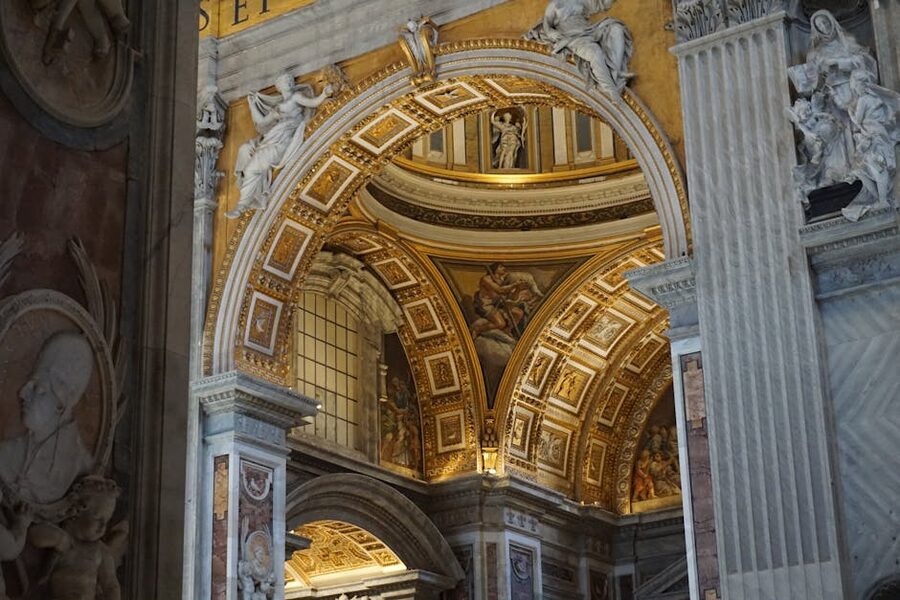
People rush through this part. Don’t. The basilica deserves a slow loop, even if you don’t have a guide.
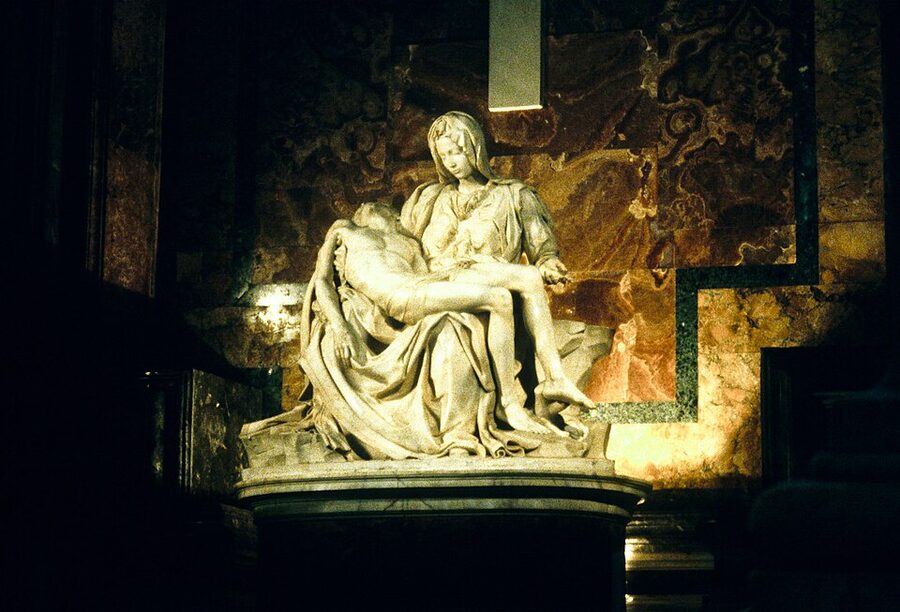
Michelangelo’s Pietà — first chapel on the right as you enter. Behind bulletproof glass since 1972 (a man with a hammer attacked it). It’s the only sculpture Michelangelo ever signed. The signature is on Mary’s sash. He was 24 when he carved it. You can stand five metres away and the marble looks soft.
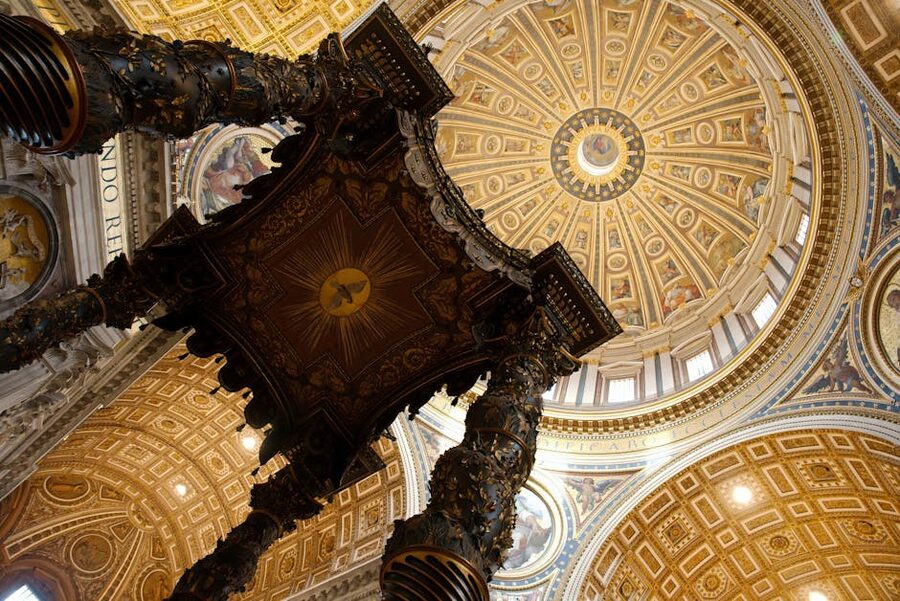
Bernini’s Baldachin — the four-pillared bronze canopy over the papal altar in the centre. Twenty-nine metres tall. The bronze came from melting down the portico of the Pantheon, which is one of those facts that hits harder when you’ve seen both buildings. Our Pantheon guide covers what’s left of the original portico — short answer: the columns, the pediment, and a complaint stuck on the door of the basilica.
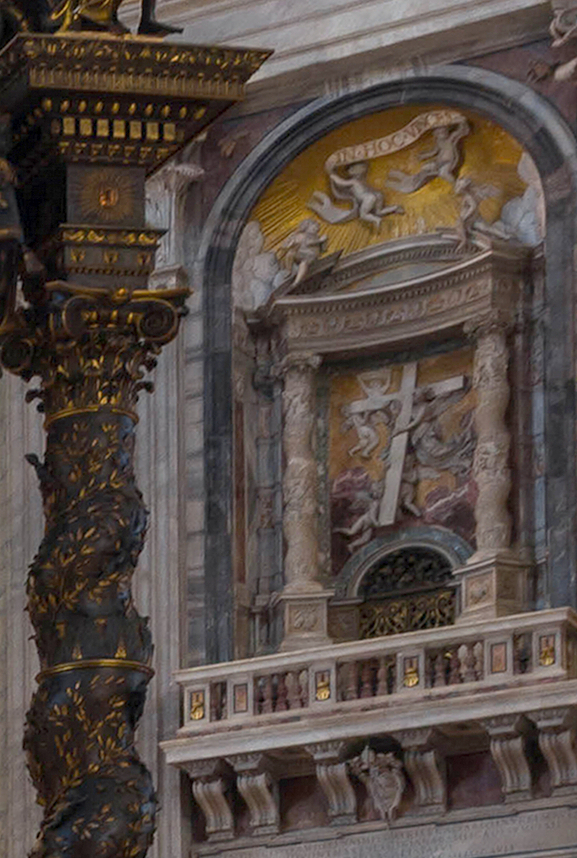
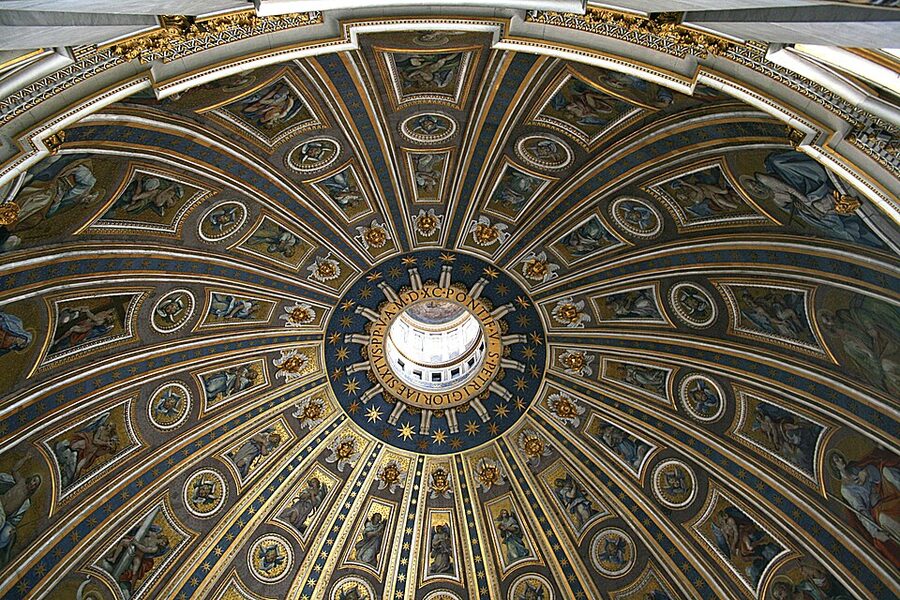
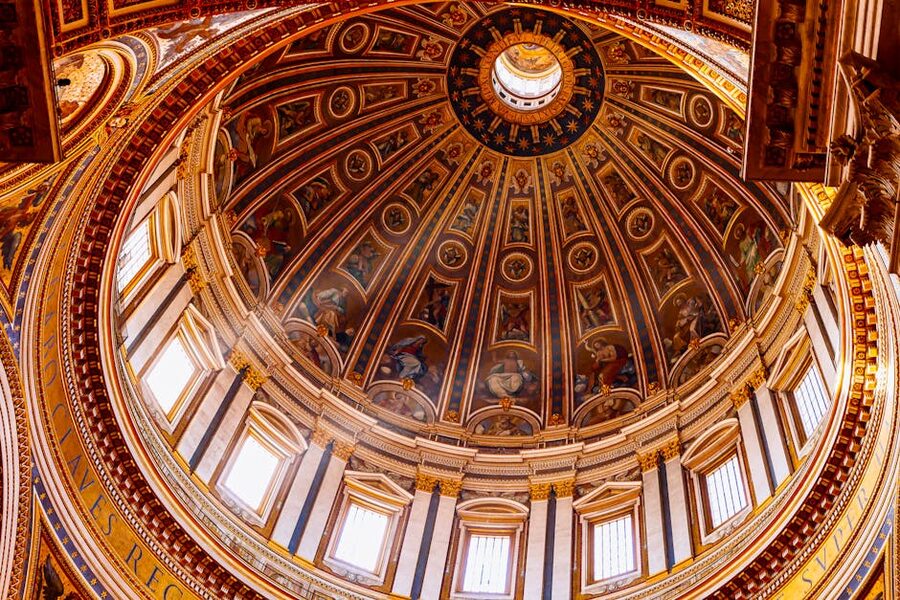
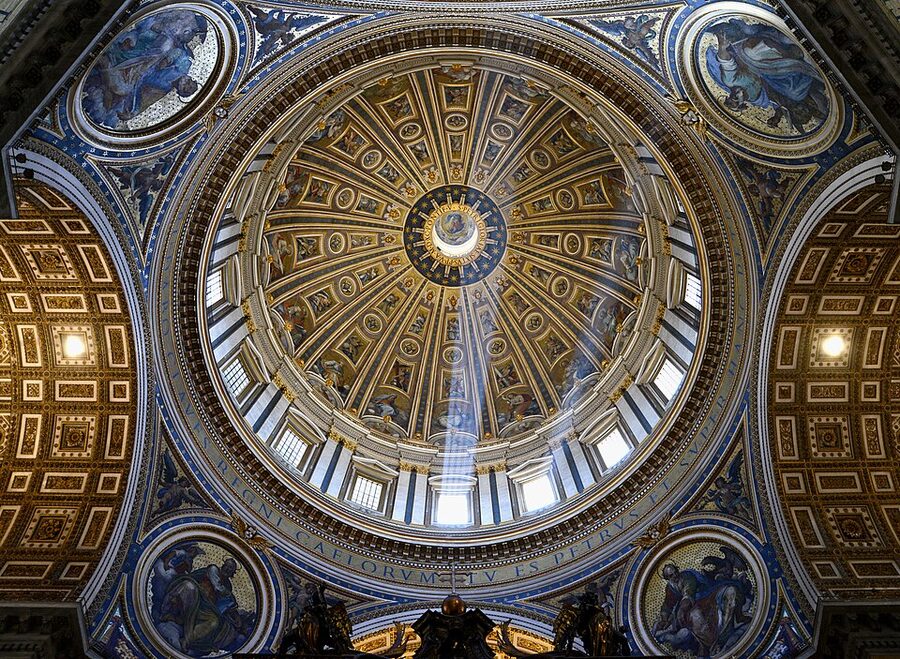
The dome inscription — looking up from the floor, the gold ring around the base of the dome reads “TV ES PETRVS ET SVPER HANC PETRAM AEDIFICABO ECCLESIAM MEAM” — “You are Peter, and on this rock I will build my church”. Each letter is two metres tall. It’s hard to grasp from the floor. From the inner balcony halfway up the dome climb, you stand level with the letters, and the scale rearranges itself.
The four medallions of the evangelists — set just below the inscription. Each medallion is 8.5 metres across. From floor level they look small. They aren’t.
The Vatican Grottoes — entrance is usually inside the basilica near the right transept (it moves; signage is fine). Free. This is where most of the popes are buried, including John Paul II, who’s the busiest tomb. The grottoes sit on the level of the original 4th-century basilica that Constantine built. The newer floor of the current basilica is one storey above. You walk down to history rather than up to it. The grottoes are not the Scavi — those are the Roman necropolis under the grottoes, separate booking, very limited access.
The History You’ll Want To Know
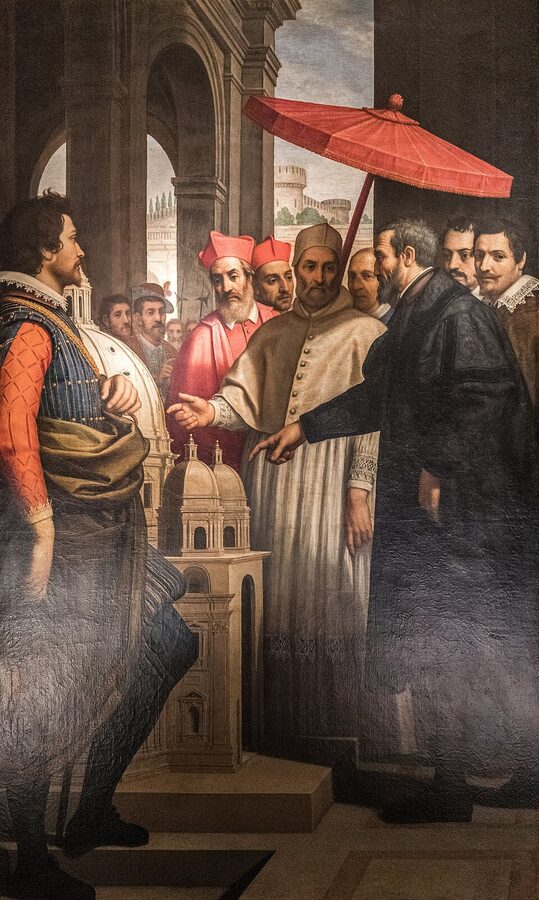
The current basilica is the second one. The first, Old St Peter’s, was built by Constantine in the 320s AD, directly over what Romans believed was the tomb of the apostle Peter — crucified upside down in Nero’s circus, which sat roughly where the basilica now stands.
By 1500 the original basilica was 1,200 years old and visibly falling apart. Pope Julius II demolished it in 1506 and commissioned a replacement. The build took 120 years and ate through 18 architects, including Bramante (started it), Raphael (took over after Bramante died), Michelangelo (designed the dome, age 71), Maderno (added the long nave) and Bernini (the colonnades and the Baldachin). Each architect changed the plan. The result is layered like archaeological strata — Renaissance dome on a Baroque facade on a basilica plan that started life as a Greek cross.
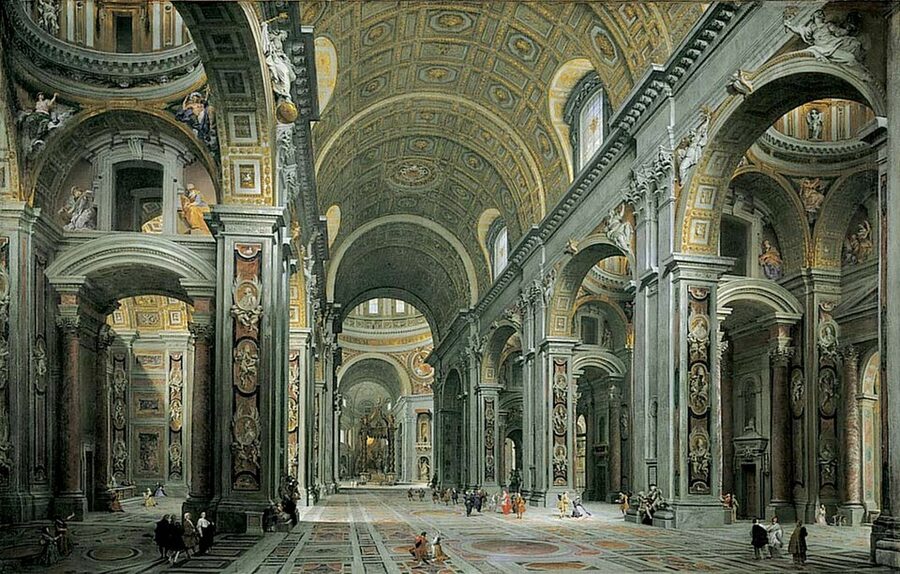
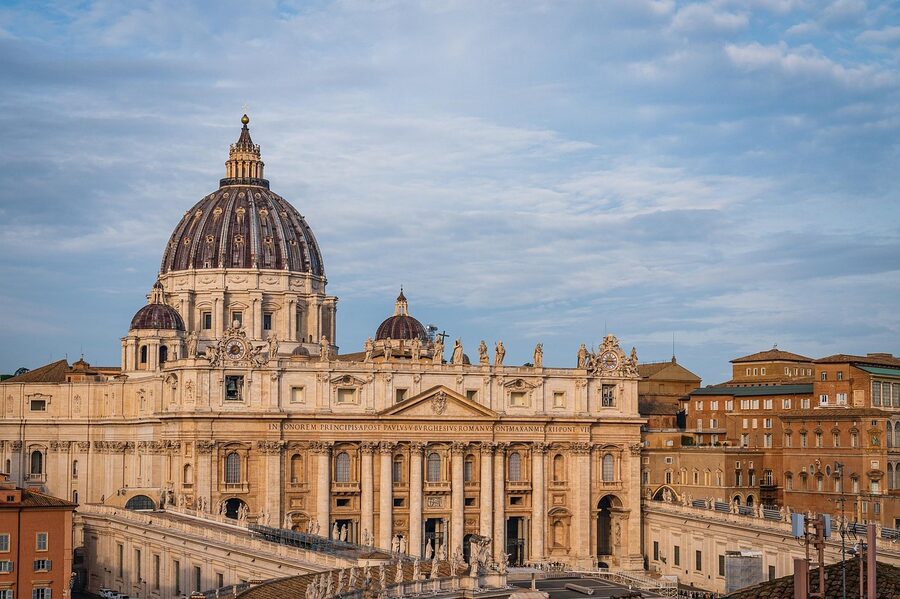
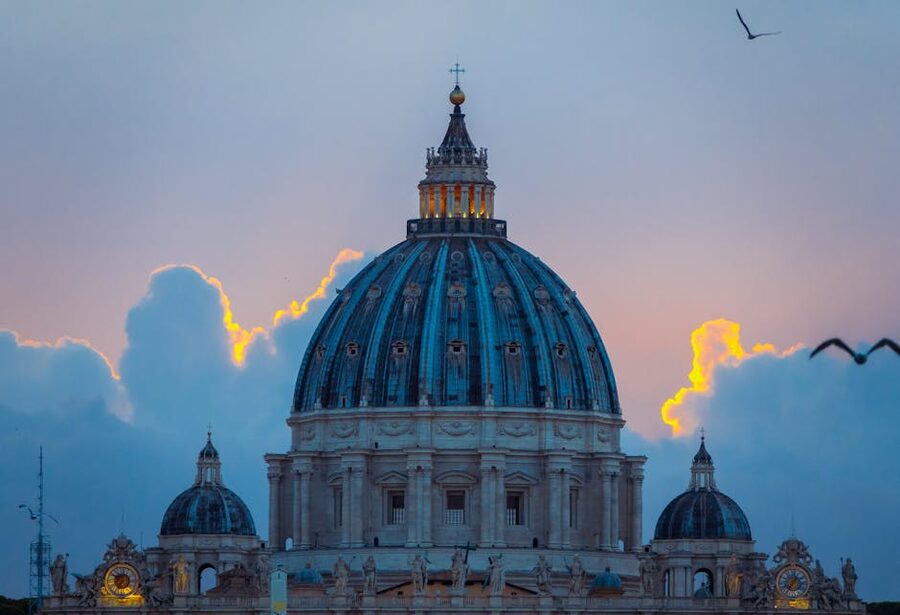
Michelangelo’s dome is the technical centrepiece. Outer diameter just under 60 metres, inner about 42 metres. He designed it as a double shell — two domes nested with a stairwell between them, an idea he borrowed from Brunelleschi’s Florence cathedral but built taller and more vertical. He died in 1564 with only the drum complete. Della Porta finished it in 1590 and slightly increased the curvature, making it more pointed than Michelangelo’s original sketches. Whether that’s an improvement is one of the longest-running arguments in art history. (Michelangelo lost.)
The Pantheon’s dome, for context, is about 1.5 metres wider — and 1,400 years older. The Pantheon comparison is the one piece of trivia every guide mentions. They’re right to. Standing inside both buildings on the same day teaches you more about Roman engineering than a week of museums.
St Peter’s Square
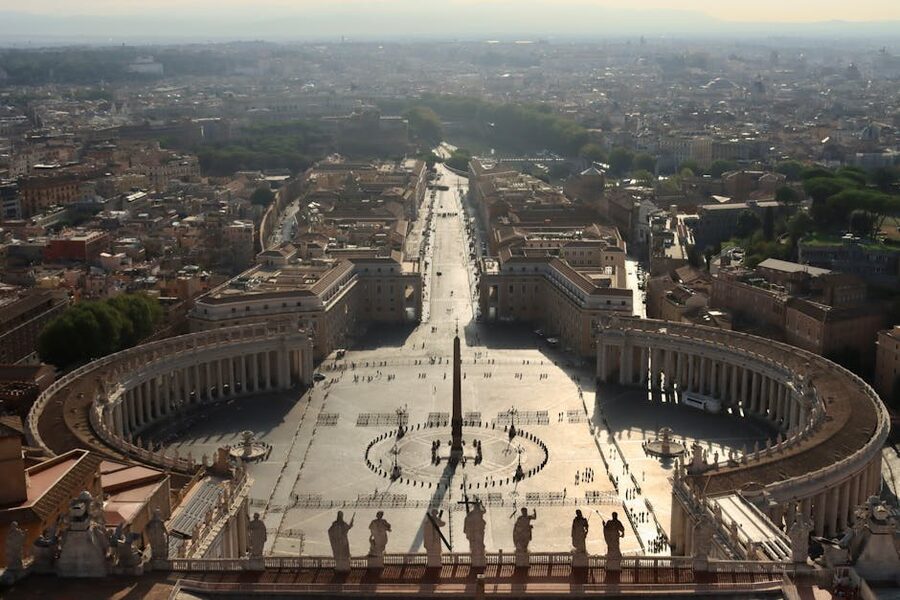
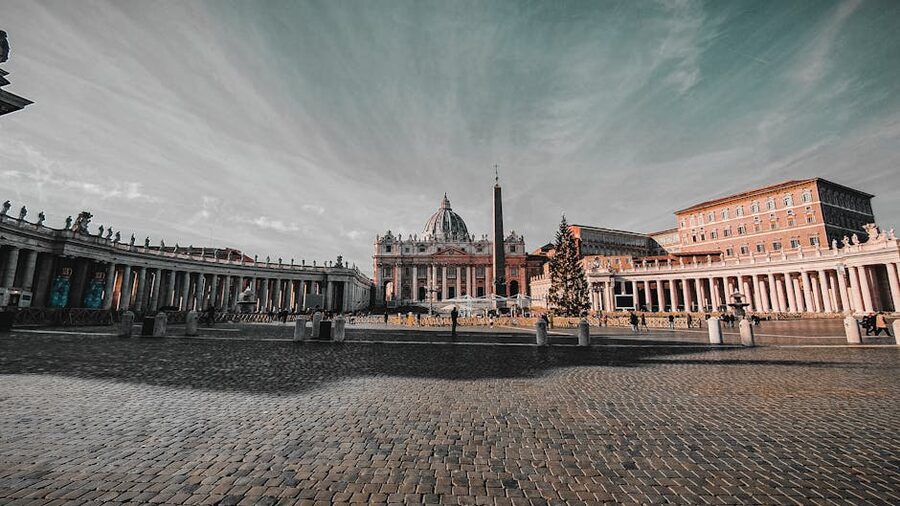
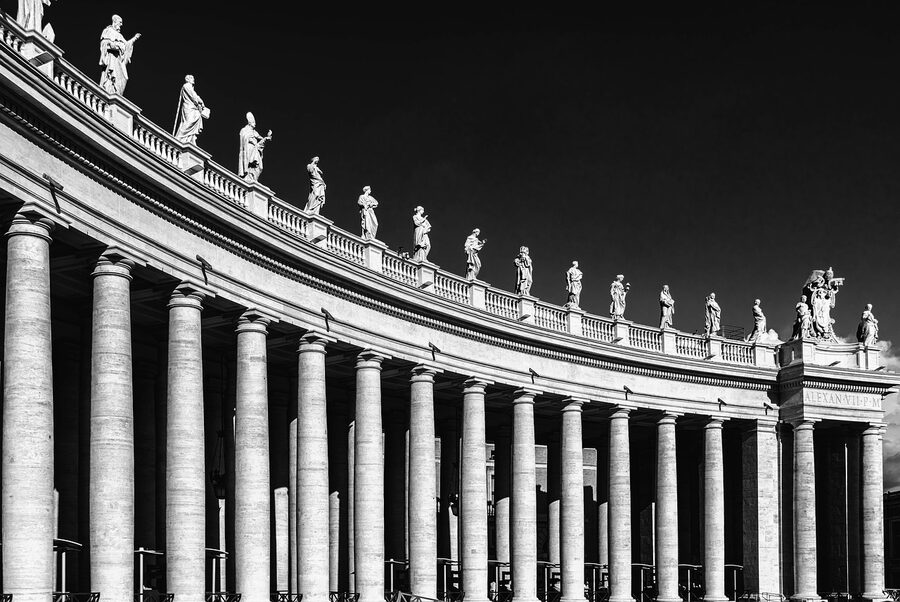
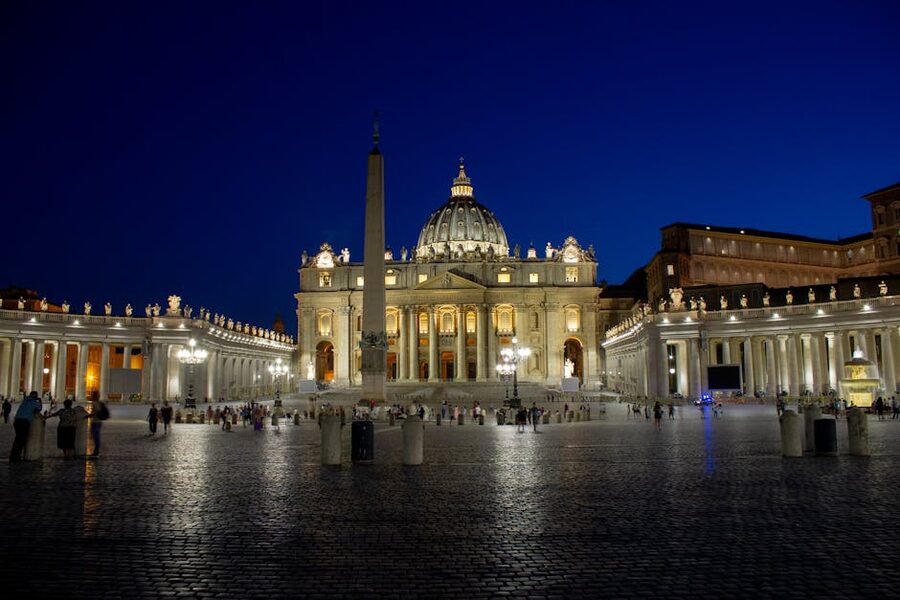
The square is Bernini’s. He laid it out in 1656–1667 with two semicircular colonnades — 284 columns, four deep — meeting at a trapezoid in front of the basilica. His own description was that the colonnade is “the church reaching out to embrace pilgrims and heretics”.
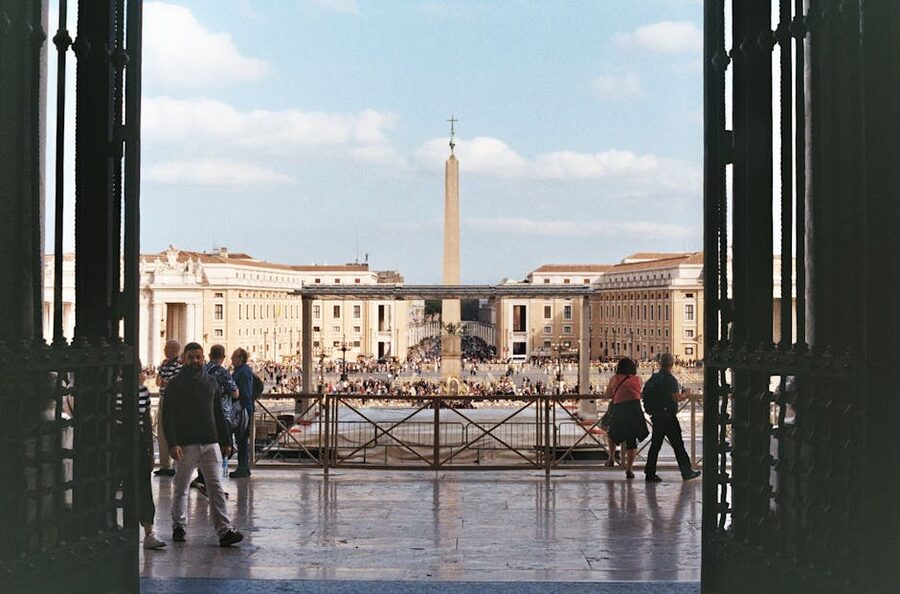
The obelisk in the centre is older than anything else here. Caligula brought it from the Egyptian city of Heliopolis in 37 AD as the central turning post for his circus, the Circus of Nero. Peter was crucified somewhere in that circus. The obelisk is the one piece of stone in the entire complex that was definitely there on the day. It was moved to its current spot in 1586 — 900 men, 140 horses, four months, and total silence ordered by the pope on pain of death so the engineers could hear instructions. (Apparently a sailor shouted “wet the ropes!” mid-haul, saved the lift, and got rewarded with the right to provide palms for Easter, which his family in Bordighera still does.)
If you’ve got time after the dome, the colonnades themselves are worth a slow walk. There are two stone discs set into the pavement on either side of the obelisk — stand on either disc and the four-deep columns line up perfectly into a single colonnade, an optical effect Bernini designed in.
What Else Is Right Here
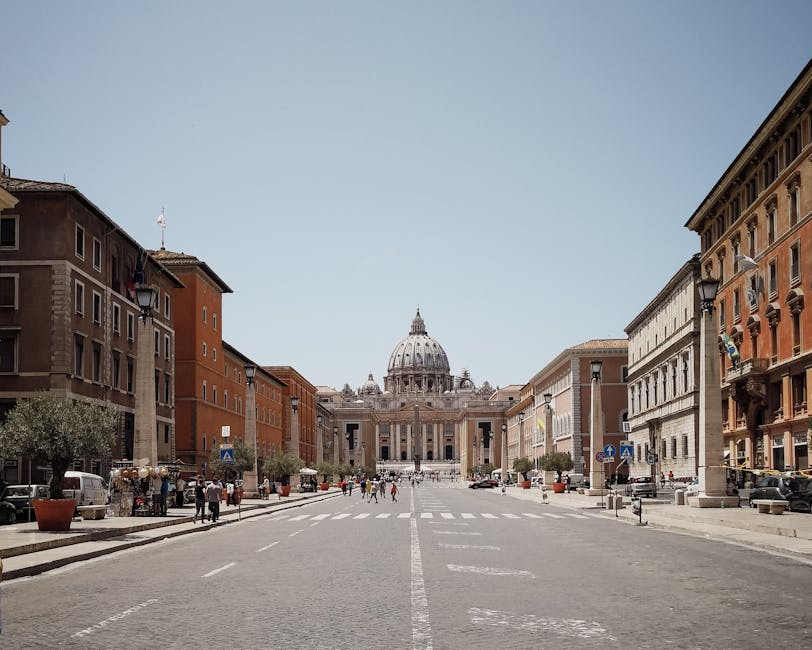
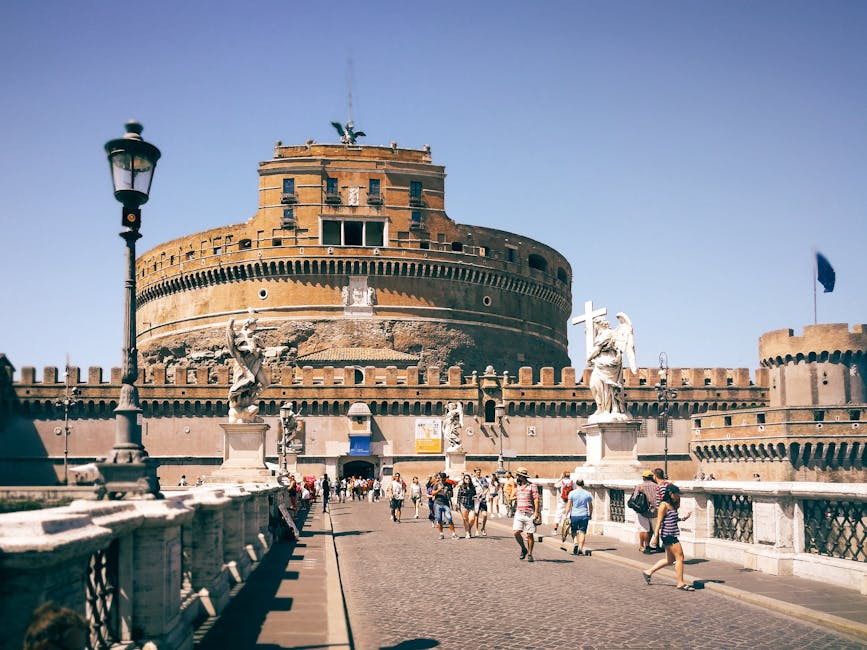
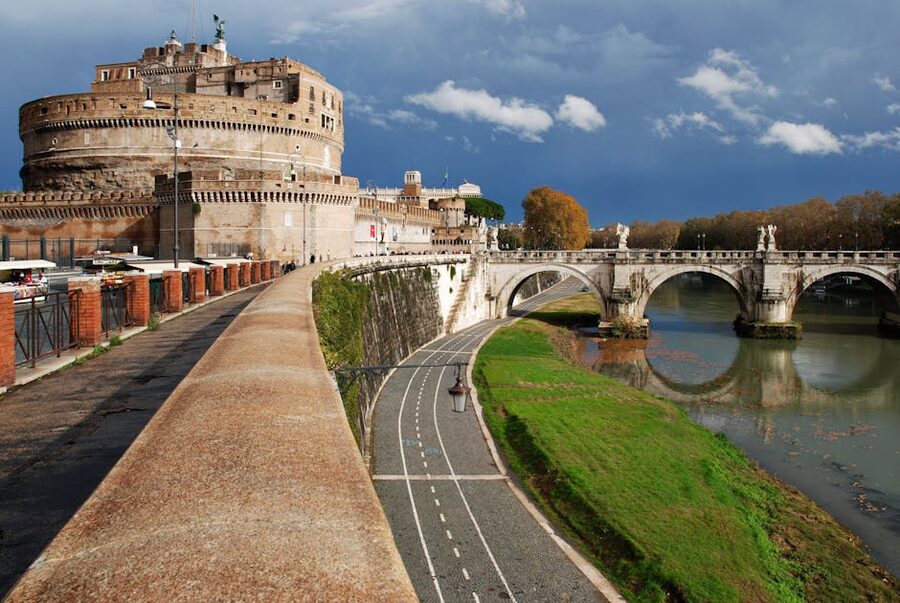
Five-minute walk east of the square is Castel Sant’Angelo, the cylindrical Tiber-side fortress that started life as Hadrian’s mausoleum, became a papal fortress, and now contains a museum and a roof terrace with a view of the dome you’ve just climbed (or are about to). Worth doing the same day. Our Castel Sant’Angelo guide covers ticket options. The walk between the two takes you over the Ponte Sant’Angelo, which is lined with Bernini’s angel statues and has the best Tiber-side view of the basilica.
Twenty minutes east on foot, or one stop on the Metro A, is the Spanish Steps. Twenty-five minutes south is the Pantheon (covered separately in our Pantheon ticket guide — yes, you now need a paid ticket to enter, since 2023). Forty minutes south-east is the Colosseum and Roman Forum, the other Roman flagship — see our Colosseum, Forum and Palatine guide. Most three-day Rome trips do Vatican on day one, Colosseum on day two, neighbourhoods on day three.
For getting around between the headline sights, a three-circuit hop-on-hop-off bus is the lazy option that actually works in Rome — the Metro doesn’t reach St Peter’s directly (the closest stop is Ottaviano, a 10-minute walk) and taxis are a faff. The Roma Pass is worth checking, but note: the Vatican is not in Rome. The pass does not cover the Vatican Museums or St Peter’s dome. Different country, different ticket.
Practical Bits Most Guides Skip
- Bag size. Anything bigger than a small daypack gets refused at security or routed to a cloakroom near the Vatican Museums (separate building). For St Peter’s basilica entry there’s no cloakroom — you carry your bag the whole way.
- Water. Bring a refillable bottle. There’s a fountain on the roof terrace next to the post office, and several cold-water nasoni (drinking fountains) around the square. Don’t pay €3 for a bottle from a vendor.
- Photography. Allowed inside the basilica, no flash. Allowed on the dome climb. Selfie sticks technically banned but rarely policed. Tripods absolutely banned.
- Toilets. None inside the basilica itself. The only ones are on the roof terrace (during the dome climb) and outside the colonnades. Plan accordingly.
- Mass. Multiple masses daily. Weekday mornings are quietest. The papal mass on Sundays at noon is a different scale of crowd. If you want to attend a regular mass, the early ones (7am, 8am) are local and short and the basilica is at its calmest.
- Postcards. The Vatican post office on the roof terrace sells “Vatican City” stamps and will postmark from there. The mail genuinely does send from the Vatican system, not the Italian one — slightly faster, and a fun souvenir.
- Wifi. Patchy. The basilica has nothing official. Bring offline maps.
- Pickpockets. The square and the security queue are the two highest-risk spots in central Rome. Front pockets, zipped bags, no phone in back pocket. The Roman pickpocket scene is professional.
Eating Near the Vatican
The 200 metres immediately east of the colonnades is the worst food in central Rome. Plastic-menu, English-only-greeting, photo-of-pasta-on-a-board kind of restaurants. Walk five blocks further east into Prati or south across the river into Trastevere and the quality jumps and the price drops by a third.
For a sit-down meal that’s also a Vatican-area bookable activity, a pasta and tiramisu class by the Vatican is one of the better options — small group, hands-on, you eat what you make. For a longer evening, the Trastevere twilight food tour across the river is the most-booked food experience in Rome and a 25-minute walk from St Peter’s. Both are far better uses of money than the trattorias on the corner of Borgo Pio.
If You Only Have Half a Day
The half-day version, in order:
- 7:30am — security line at the basilica. Be in by 7:45.
- 7:45 — head straight to the dome entrance on the southeast side. Climb. Stairs not lift. Top by about 8:30.
- 8:45 — back down on the lower terrace. Coffee from the stand, water, bathroom.
- 9:15 — basilica interior. Pietà first (right side as you enter), then a slow walk down the nave to the Baldachin and the dome inscription. Twenty minutes minimum, an hour if you want it properly.
- 10:15 — Vatican Grottoes. Free. Twenty minutes for the highlights.
- 10:45 — out. Walk to Castel Sant’Angelo via Ponte Sant’Angelo. Coffee with a view.
That’s the basilica done well. If you also want the Vatican Museums, that’s a different morning. Don’t try to combine on the same half-day unless you’ve booked a guided combo — the transfer kills the schedule.
Two More Worth Knowing About
If you want a guide but cheaper than the small-group tours, the guided tour with dome climb is a solid mid-tier pick — bigger group, lower price, same dome access. And if you’re set on doing the Vatican Museums plus St Peter’s plus the dome in one go, the Vatican Museums + Sistine Chapel + St Peter’s combo bundles the lot, including the connecting passage. That second one is the most efficient single-ticket option in the Vatican.
Other Rome Bookings Worth Looking At
Most people who do St Peter’s also do the Vatican Museums and Sistine Chapel on the same trip, which is the obvious next step on the Vatican side of the wall. Across town, the Colosseum, Forum and Palatine is the other half of any first Rome visit — the imperial-Roman bookend to the Renaissance-Catholic story you’ll have just walked through. And once you’ve seen Michelangelo’s dome up close, the Pantheon is the building it’s compared to — go directly from one to the other and the engineering history snaps into place.