
Stand at the western edge of the Roman Forum at 8am and you can hear your own footsteps on the basalt slabs of the Via Sacra. By 10:30am the same path is solid bodies, the air smells of sun-baked stone and tour-group sunscreen, and you’ll wonder why you bothered. The Colosseum and Forum reward early starts more than almost any other ticket in Europe, and getting that ticket is the whole game.
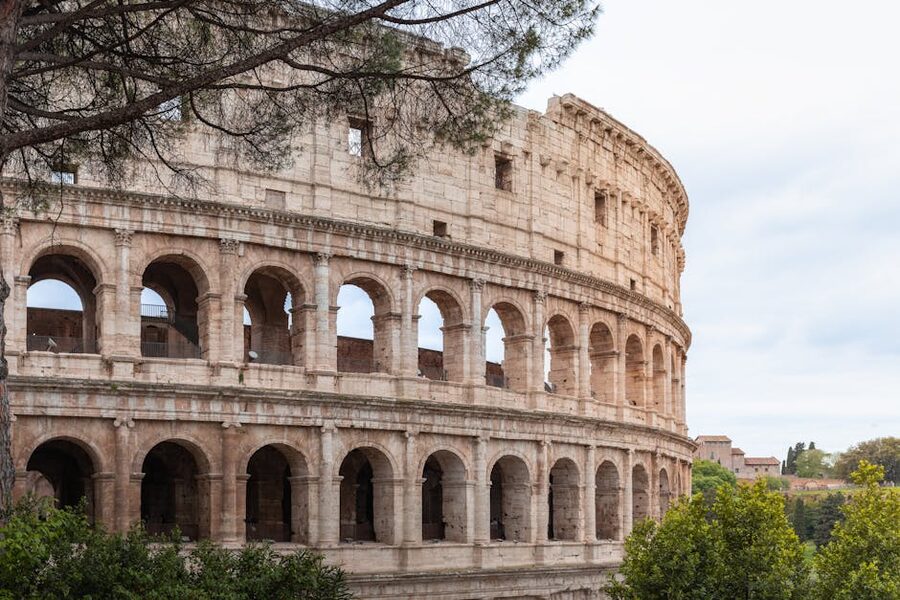
I’ve done this complex four times now, twice on guided tours and twice on my own with the Rick Steves audio guide. What I’ll tell you below is the actual mechanics — when tickets drop, which tier is worth paying for, why “skip-the-line” still has a line, and how to time the Forum so you’re not melting in July sun. There’s also a fast-track section if you’re booking tonight for tomorrow morning.
In a hurry? My three picks:
- Colosseum, Roman Forum & Palatine Hill Guided Tour — $69. The default. Skip-the-line entry, a guide who actually knows the Caesars from the Severan emperors, and 2.5 hours that make sense of what you’re looking at.
- Colosseum & Forum with Audio Guide App + Optional Arena — $41. The cheap, flexible move. Skip-the-line entry, app on your phone, optional arena floor add-on. Best if you’d rather wander than walk in a group.
- Colosseum Underground and Ancient Rome Tour — $160. The splurge. The hypogeum tunnels under the arena floor — booked separately you can’t get them at all. Worth it once.
- What you’re actually buying
- The four ticket terms you need to know
- Prices, in plain numbers
- The 30-day rule, and why your alarm has to be set for 2:45am
- What if you can’t get a ticket?
- My three picks for booking the visit
- 1. Colosseum, Roman Forum & Palatine Hill Guided Tour —
- 2. Colosseum & Forum with Audio Guide App + Optional Arena —
- 3. Colosseum Underground and Ancient Rome Tour — 0
- Tier 2 alternatives if those three are full
- The Forum and Palatine Hill — what you’re actually walking through
- What I’d make sure to find
- The Palatine viewpoint nobody finds
- The Colosseum visit — what to actually do once you’re inside
- How long you’ll be inside
- The “skip-the-line” thing — what it actually skips
- A bit of history so you know what you’re standing in
- What actually happened in the games
- Tips that will save you a real headache
- How to get there, and where to go after
- Pairing the Colosseum with a Vatican day
- Day trips after Rome
- Things I wish I’d known on my first visit
- Eating around the Colosseum
- So which ticket should you actually buy?
- What to read next
What you’re actually buying
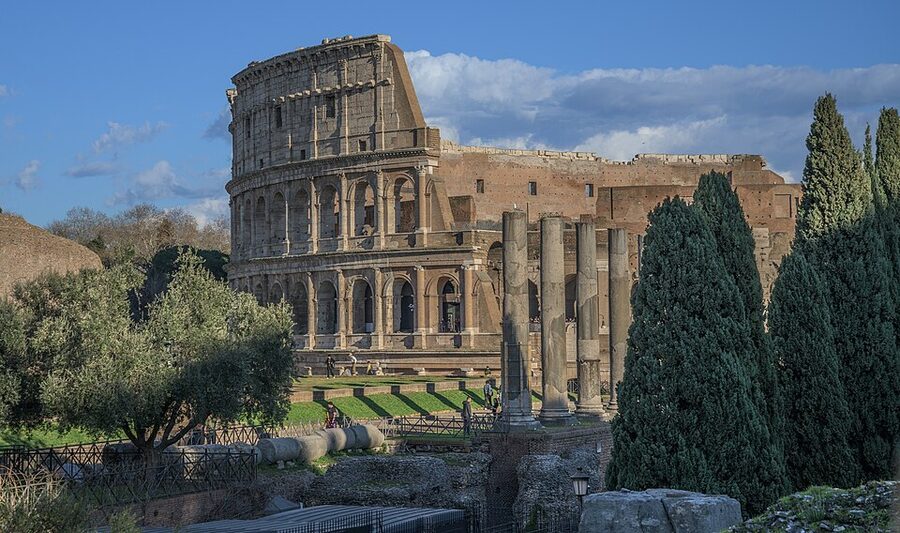
Here’s the thing nobody tells you upfront. The Colosseum, Roman Forum, and Palatine Hill are one site administratively, the Parco archeologico del Colosseo. You don’t buy three tickets. You buy one combined ticket that gets you into all three. The Forum and Palatine share an enclosed area (you walk between them without exiting), and the Colosseum sits across a pedestrian street to the east.
The single ticket is valid for 24 hours from your Colosseum timeslot. So if you enter the Colosseum at 9am Tuesday, you have until 9am Wednesday to do the Forum and Palatine. Most people do all three the same day. I’d recommend that too — splitting them across days adds a second security queue you don’t need.
The four ticket terms you need to know
The official site uses confusing names. Decode them once and you can navigate the booking page in under five minutes.
- “The Colosseum” — first and second levels of the amphitheatre. The basic visit. This is what 90% of visitors do.
- “The Arena” — the wooden floor where the gladiators fought. You step out where they did. Adds about 20 minutes to the visit and is genuinely worth the upgrade if you can get it.
- “The Underground” — the hypogeum, the tunnels and lift shafts beneath the arena floor where animals and gladiators waited. Capacity is tightly capped, group only, and tickets vanish in seconds.
- “The Attic” — fourth and fifth levels reached by elevator. Views from the top of the outer ring. Equally hard to book as the Underground, less of a payoff in my view.
Prices, in plain numbers
- 24h Colosseum + Forum + Palatine (basic): €18 full / €2 reduced (EU citizens 18-25) / free for under-18s
- Full Experience with Arena floor: €24 full
- Full Experience with Underground + Arena: €30 full
- Forum + Palatine only (Forum Pass Super): €24 — gets you into the gated “Super Sites” inside the Forum complex like the Casa di Augusto
Add €2 booking fee per ticket online. That’s the “skip-the-line” fee, which is misleading — more on that below. Buying through a third party like a guided-tour operator usually bundles the ticket cost into a higher per-person price, but you get a guide and (in most cases) you skip both queues.
The 30-day rule, and why your alarm has to be set for 2:45am
Tickets release on the official site exactly 30 days in advance, to the day, at 09:00 Rome time. That’s 2:45am Eastern, 11:45pm Pacific the night before. If you want a morning slot in May, June, July or September, you need to be on the site at the second they drop.
The basic Colosseum + Forum + Palatine ticket usually has afternoon slots available even on the day. The Arena upgrade is competitive but doable a few days out. The Underground sells out in roughly two minutes and the Attic the same. Don’t plan a trip around getting Underground tickets unless you’re prepared to fail and book a guided underground tour instead — which leads us to our review of the Colosseum Underground tour below.
What if you can’t get a ticket?
This happens constantly. Three options, in order of what I’d actually do.
1. Book a guided tour. Operators like Crown, Walks, and a dozen others hold ticket allocations. They often have availability when the official site is sold out. The downside is you pay €50-100 more than ticket-only, but for first-time visitors I’d argue a guide is worth it anyway. The Forum is mostly knee-high foundations — without context, it’s a 30-minute walk through rubble. With a guide, it’s two hours of “wait, that’s where Caesar was cremated?”
2. Try Get Your Guide or Viator. They aggregate dozens of operators on one page. Filter by guide language and ticket type. If it says “skip-the-line included,” that’s the official €18 ticket bundled into the price. If it doesn’t, you’ll meet at the entrance and the operator brings their own ticket. Both are fine — just check what’s included.
3. Buy on the day. The on-site ticket office opens at 8:30am and the queue can be 90 minutes in summer. Tickets sometimes sell out by lunchtime in peak season. I wouldn’t rely on this unless you’re in Rome for a week and have flexibility to come back.
My three picks for booking the visit
I’ve sorted these by how I’d actually rank them, which is mostly by what gives you the most for the money. The Underground option is for people who’ve already been to the Colosseum once and want something new.
1. Colosseum, Roman Forum & Palatine Hill Guided Tour — $69
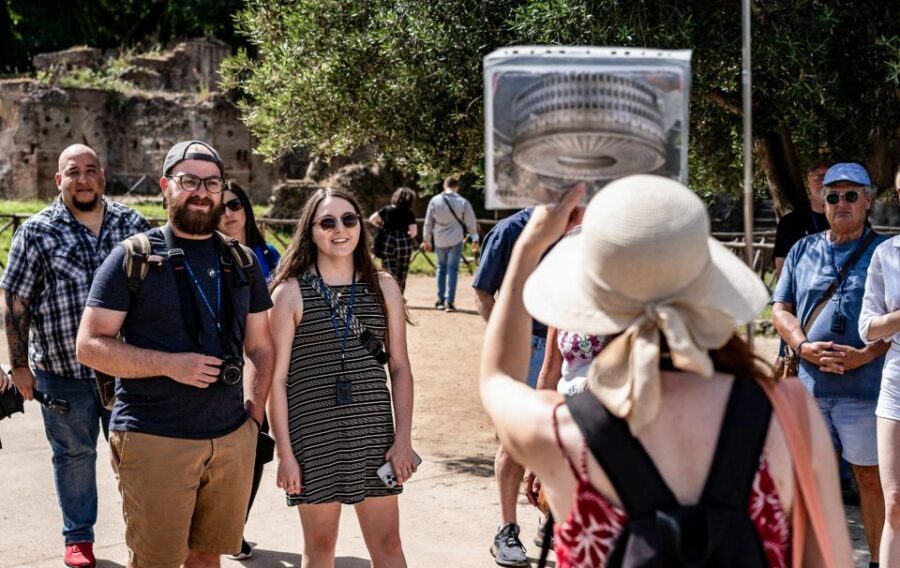
This is the most-booked Colosseum guided tour on the market and there’s a reason. You get a passionate guide (mine was an archaeology PhD candidate), the official €18 ticket, and skip-the-line access — covered in our deeper write-up. The 2.5 hour length is tight but pulls all three sites together so you actually understand how they fit. Don’t do this in July afternoon heat — book the morning slot.
2. Colosseum & Forum with Audio Guide App + Optional Arena — $41
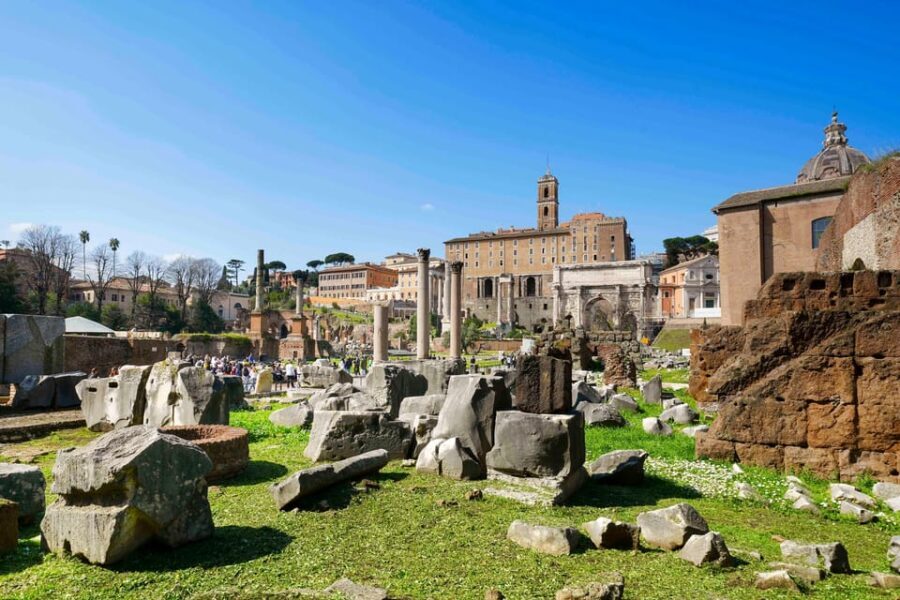
If you’d rather not be in a group, this is the answer — it’s the option we walk through in detail for self-paced visitors. The audio app covers the Colosseum, Forum, and Palatine in one download, in eight languages. Pace is yours. The optional arena floor add-on bumps it to about $54 and is worth it. The one catch: app reliability has been flaky for some users, so download offline before you arrive.
3. Colosseum Underground and Ancient Rome Tour — $160
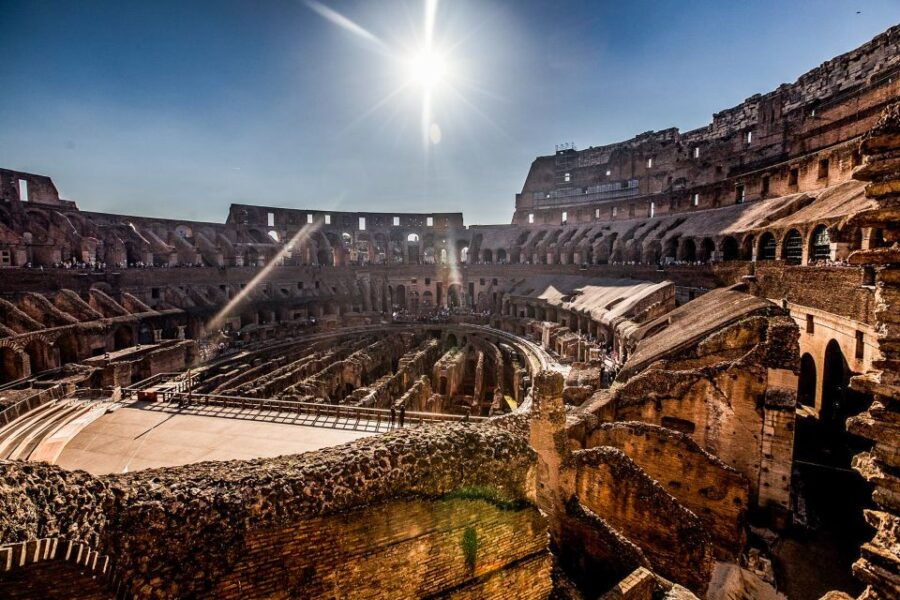
The hypogeum is genuinely a different experience — narrow corridors, lift shafts where animals were raised to the arena, the back-of-house of a 2,000-year-old machine. Our underground tour breakdown covers what’s included and the meeting point. Group sizes are smaller than the standard guided tour because the underground passages are narrow. Best for second-time visitors or hardcore history nerds. Not for kids under 8 — the steps and tight spaces aren’t friendly.
Tier 2 alternatives if those three are full
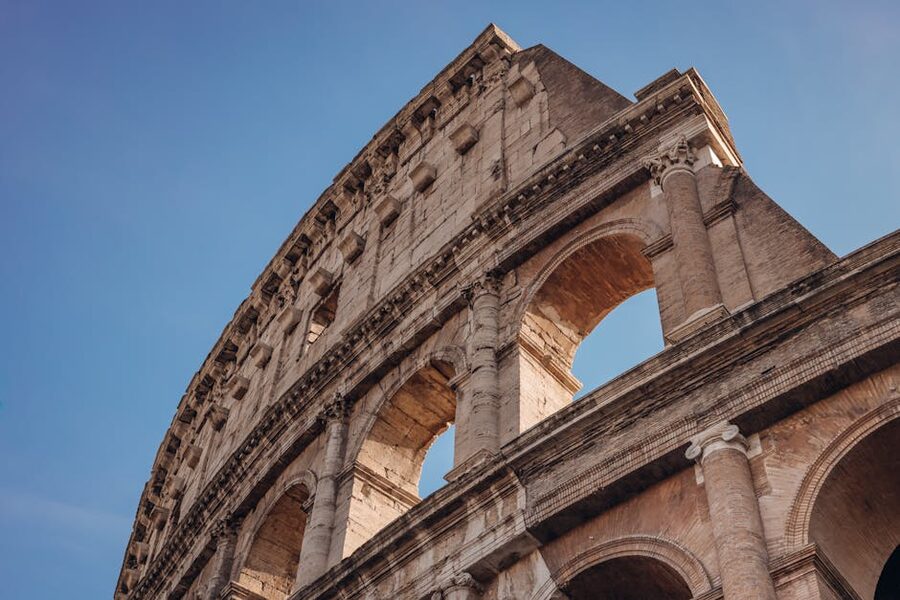
Three tours that are slightly less famous but get you into the same monuments. Useful if your dates are tight.
- Rome: Colosseum, Palatine Hill and Roman Forum Guided Tour — $52. Almost identical to my top pick, slightly smaller-group, $17 cheaper. If pick 1 is sold out for your date, check this first.
- Rome: Skip-the-Line Tour to Colosseum, Forum, Palatine Hill — $55. Slightly longer (3 hours), well-rated, generally has more availability than the headline tours.
- Rome: Colosseum, Forum, Palatine Hill Tour with Optional Arena. A guided alternative if you specifically want arena floor access without paying the full Underground premium.
The Forum and Palatine Hill — what you’re actually walking through
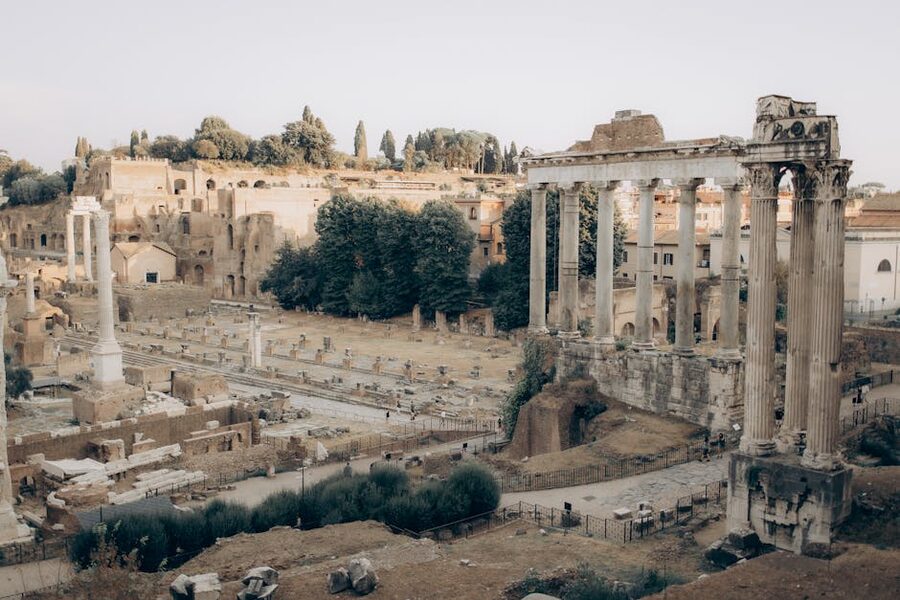
Most visitors do the Colosseum well and the Forum badly. They blow through it in 25 minutes because it looks like a field of broken columns and they don’t know what they’re seeing. Don’t be that person. Half the reason to visit at all is the Forum.
Here’s the geography. You enter from the Via Sacra side near the Arch of Titus (closest to the Colosseum) or from the western end via the Via dei Fori Imperiali. Walk slowly down the Via Sacra — you’re literally walking the same paving stones the triumphal processions used. The basalt is worn smooth in the centre by 2,000 years of feet and cart wheels.
What I’d make sure to find
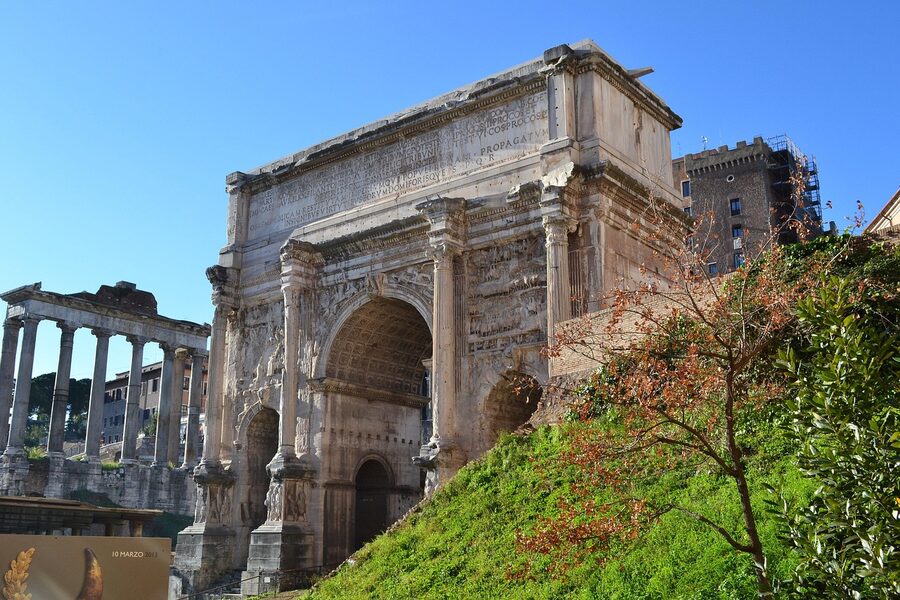
- The Arch of Titus — at the eastern end nearest the Colosseum. Built in 81 CE to commemorate the sack of Jerusalem in 70 CE. Look up under the arch on the inner walls — you’ll see the menorah being carried out of the Second Temple. It’s one of the few images of the Temple’s contents that survives in any form.
- The Curia Julia — the Senate house started by Julius Caesar after the old one burned down. Brick, plain, almost ugly from outside. The interior preserves the original 3rd-century AD Diocletian rebuild including the marble inlay floor.
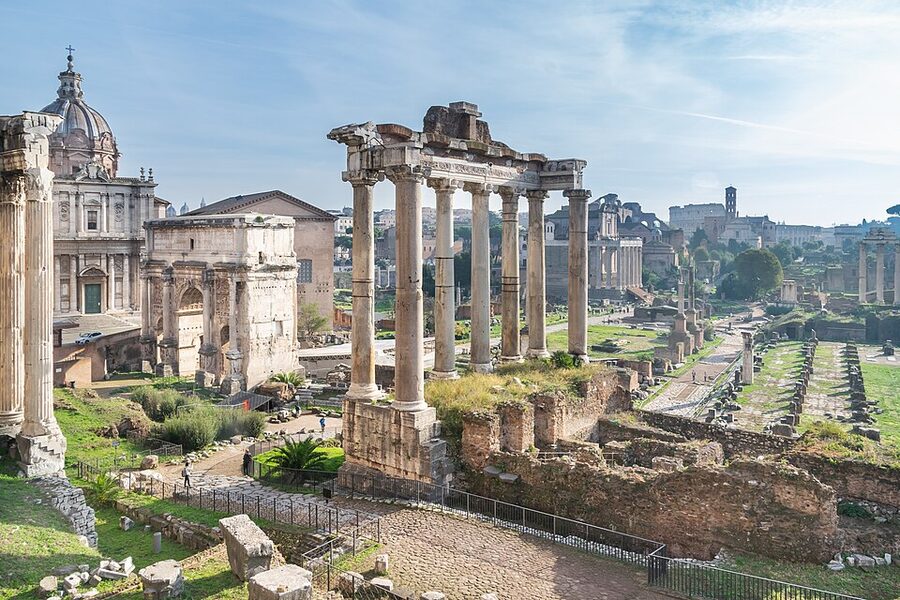
- The Temple of Saturn — the eight standing Ionic columns at the western end. The state treasury was kept inside.
- The Arch of Septimius Severus — the triple arch right at the foot of the Capitoline. 203 CE, commemorating the Severan campaigns against the Parthians.
- The Temple of Vesta and the House of the Vestal Virgins — the round temple where the sacred fire of the city burned. The Vestals’ house is the long rectangular complex behind it with the row of statue plinths.
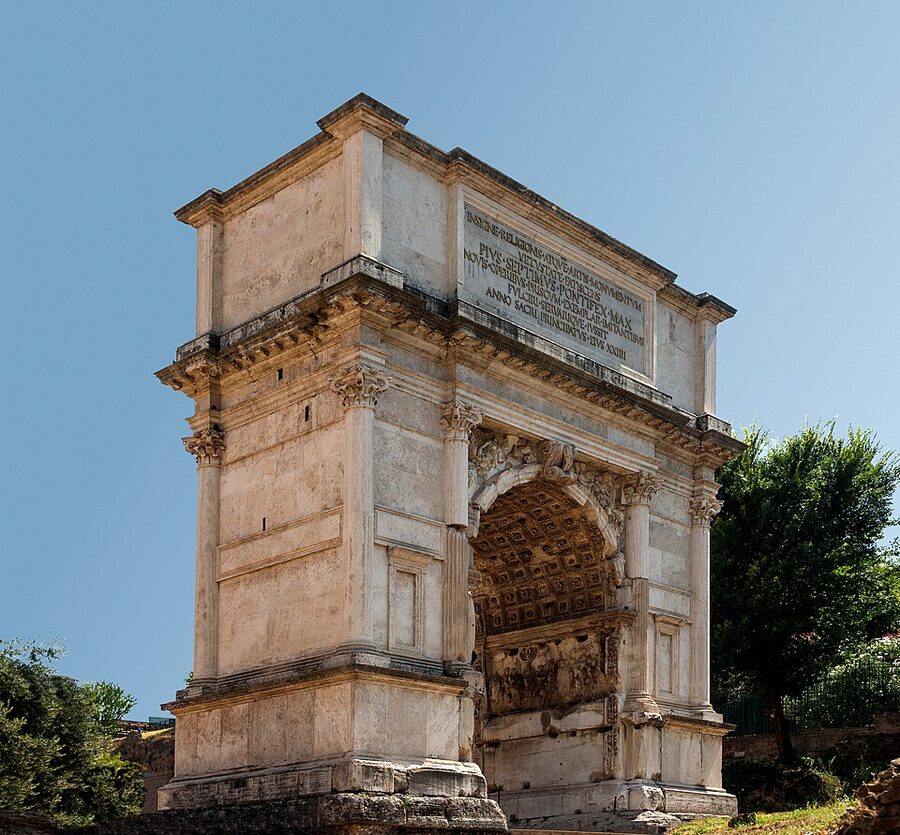
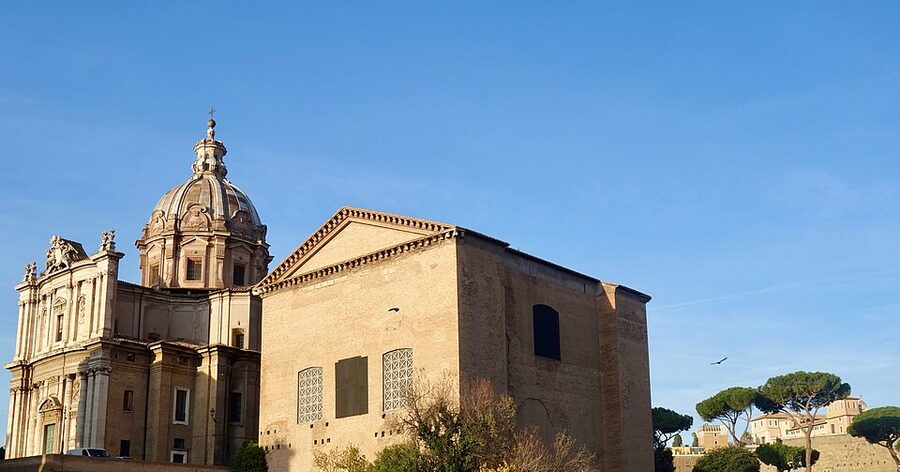
If you have a Forum Pass Super or your guided tour includes the Super Sites, also find the Casa di Augusto and the Chiesa di Santa Maria Antiqua. The latter is a 5th-century church with original frescoes that was buried for almost 1,000 years and only excavated in the 20th. It’s one of the oldest surviving Christian sites in Rome.
The Palatine viewpoint nobody finds
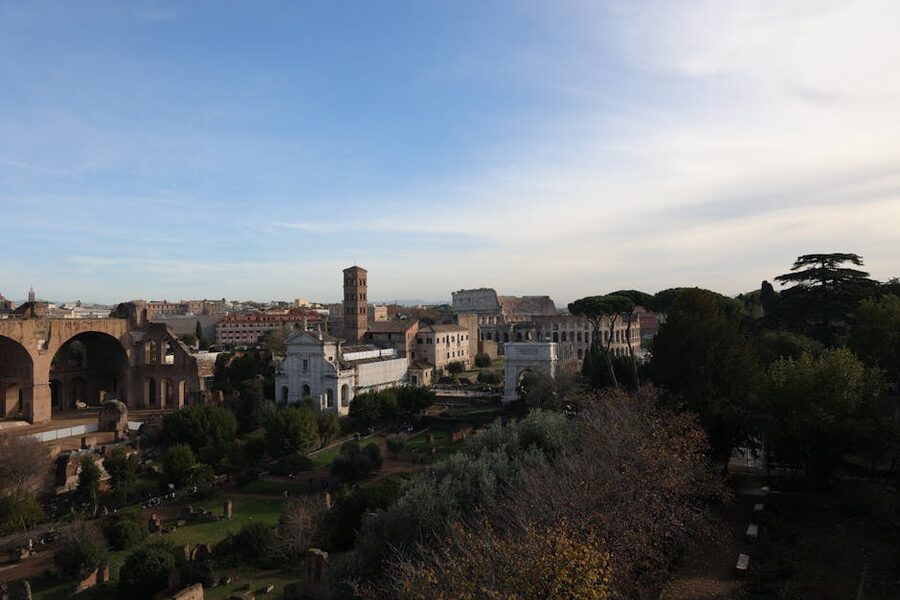
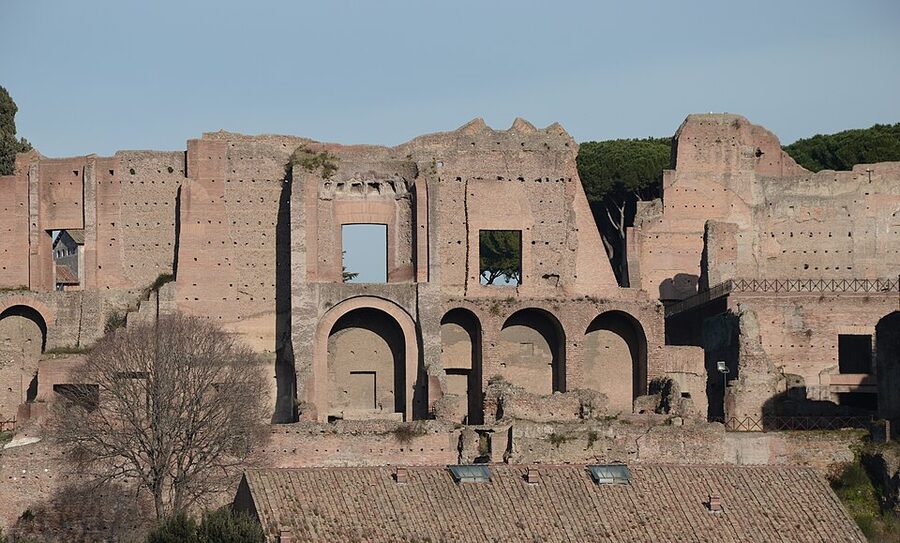
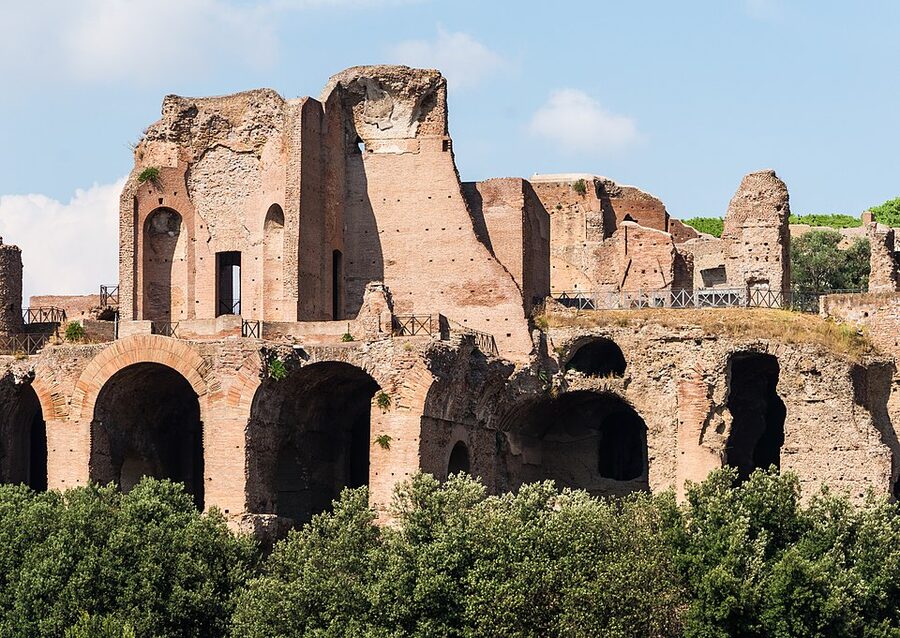
The Palatine is the southern hill above the Forum and it gets skipped by maybe 60% of visitors. Don’t skip it. It’s where the imperial palaces were — Augustus, Tiberius, Domitian all had complexes here, and the word “palace” comes directly from Palatium. The Domus Augustana ruins are massive, terraced, and almost empty even when the Forum below is solid people.
Climb up the path past the Casa di Livia and head south. There’s a viewpoint at the corner of the imperial palace gardens looking down over the Circus Maximus — the chariot racing track. From there the Forum view is the postcard one, with the Capitoline behind and the Colosseum framed to your left. It’s the best viewpoint of the whole archaeological park and most groups never get there.
The Colosseum visit — what to actually do once you’re inside
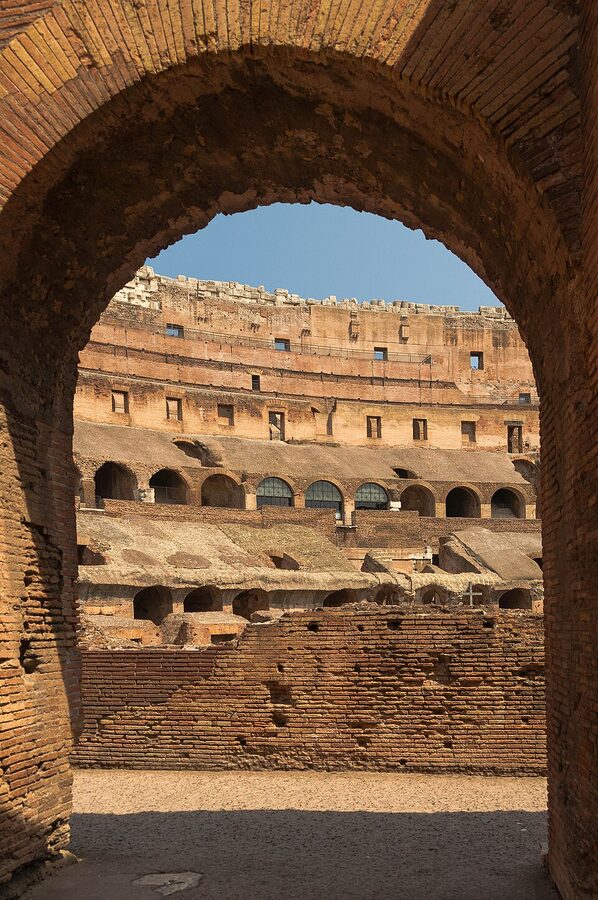
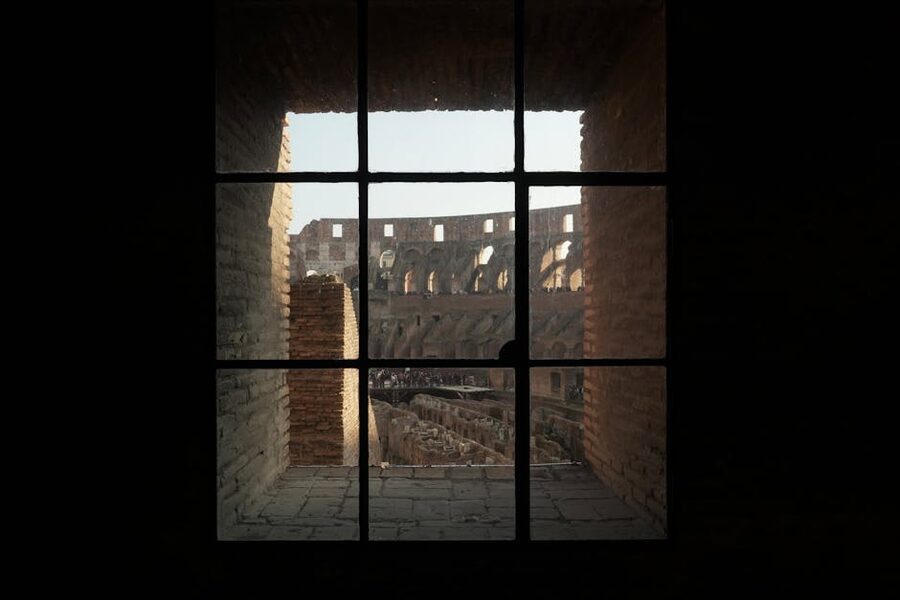
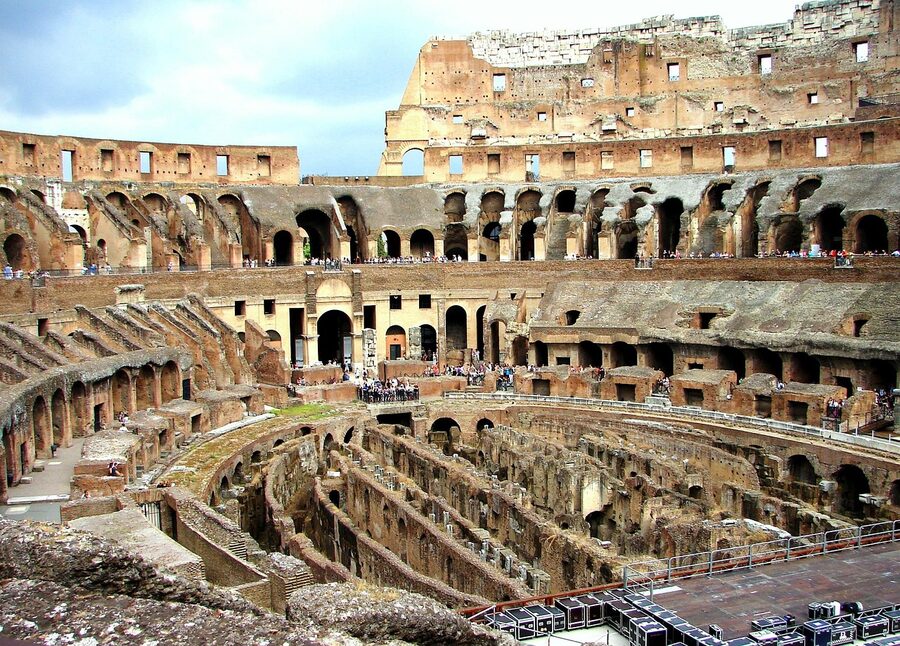
Once you’re past security, you enter on the second tier and walk around the inner ambulacrum (the circular corridor) with views down into the arena. The wooden cross-section of arena floor at the eastern end is partial — most of the floor is open to show the hypogeum tunnels below. If you’ve got the basic ticket, this is your view.
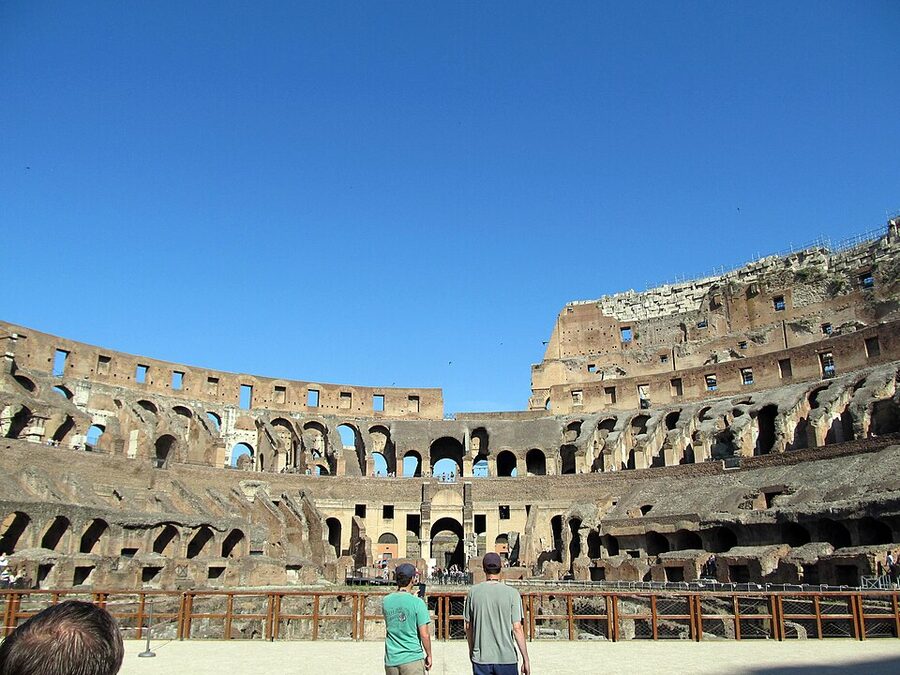
If you’ve got an Arena Floor ticket, look for the timed entry to the wooden platform at the east end. You walk out where the gladiators did, with the Imperial box (the pulvinar) on your left. It’s a 20-minute window, then you exit back into the main visit. Worth the upgrade if you can manage it.
How long you’ll be inside
- Basic visit, no audio: 45 minutes
- Basic visit with audio app: 75 minutes
- Guided tour of the Colosseum: 75-90 minutes (then they often release you to do the Forum on your own)
- Guided tour of all three monuments: 2.5-3 hours
- Underground tour: Add 60-90 minutes for the hypogeum portion
The “skip-the-line” thing — what it actually skips
Worth its own paragraph because I’ve seen people get angry about this. There are two queues at the Colosseum entrance. One is the ticket office — for people buying same-day. The other is the security check, which everyone goes through. “Skip-the-line” means you skip the ticket office queue. You do not skip the security queue, which can still be 20-30 minutes in summer at peak times.
If a tour says “skip-the-line included” they mean you go straight to the security line. If you bought online direct, same thing. Nobody skips security. Don’t shoot the messenger.
A bit of history so you know what you’re standing in
This is the section the audio guide usually rushes through. The Colosseum was started in 72 CE under Vespasian, the first Flavian emperor. He was making a point — Nero, the previous emperor, had seized this exact piece of land and built himself a private palace and a colossal gold-plated statue of himself (the Colossus Neronis, which is where the building gets its informal name). When Vespasian came to power, he tore down Nero’s palace, drained Nero’s private lake, and built a public stadium on the spot. It was meant to be read as “the people get the land back.” Vespasian died before it was finished. His son Titus inaugurated it in 80 CE with 100 days of games.
The technical achievement is genuinely staggering. They built a 50,000-seat amphitheatre, four storeys high, with a complex of underground service tunnels and a retractable canvas awning system, in eight years. With nothing more advanced than the wheel, the pulley, and Roman concrete. People worry about the political climate of the 1st century AD when they read the names — civil wars, mad emperors, the Year of the Four Emperors in 69 CE — and forget that engineering was peaking through it all.
What actually happened in the games
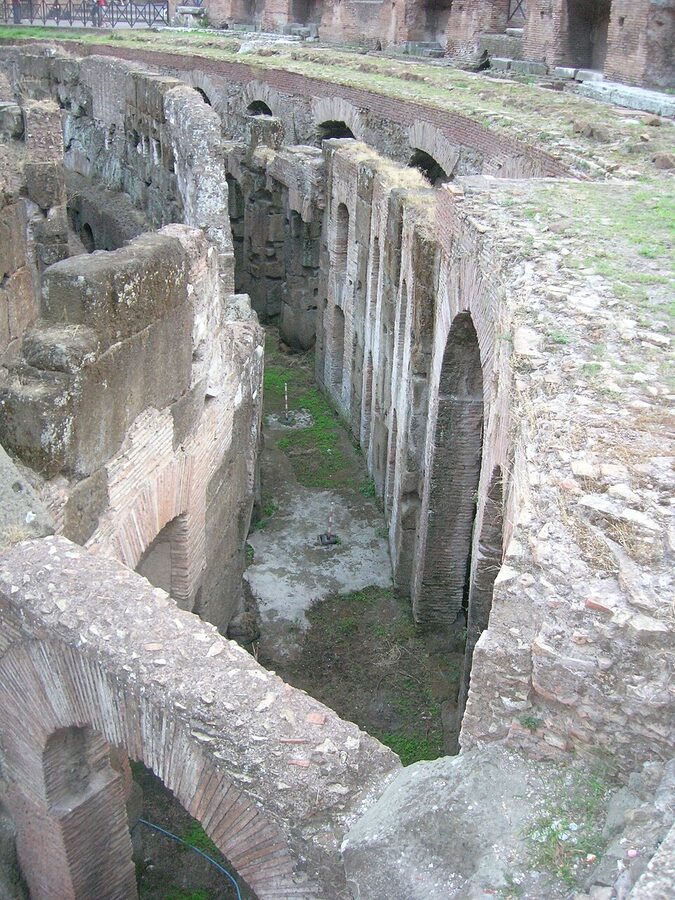
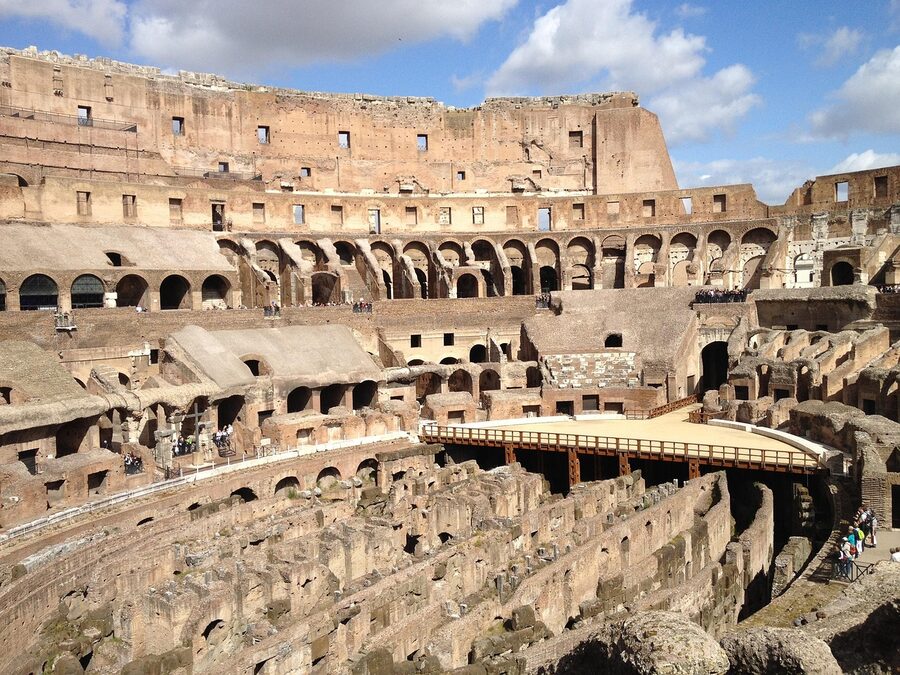
This is where pop culture gets it most wrong. The day of games was structured. Morning was animal hunts (the venationes) — exotic imported animals against trained hunters. Lunchtime, when the audience went out for food, was when the public executions happened — that’s the slot where condemned criminals were killed. Most spectators avoided it. Afternoon was the gladiators.
And the gladiators — most of the time, did not fight to the death. Gladiators were valuable trained athletes owned by sponsors who’d invested years in their training. Killing your star regularly was financially insane. Bouts were closer to MMA matches with serious injury risk than the Hollywood image. Win-loss records matter. Crowd-pleasing matters. Most fights ended in submission, with the loser asking for missio (release). Studies of gladiator skeletons from the cemetery at Ephesus suggest a mortality rate per bout of around 10% — high but nowhere near the cinematic image.
The naval battles (the naumachiae) people talk about? Probably happened a couple of times very early on, before the hypogeum was built underneath the arena. Once the underground tunnels existed, you couldn’t flood the arena anymore. So the famous mock sea battles took place at other purpose-built venues like Augustus’s flooded arena across the Tiber.
Tips that will save you a real headache
From four visits and a lot of mistakes:
Bring your passport. The name on your ticket has to match a government photo ID. They check at the gate and they’re not lenient. A driver’s license might work but they’re trained to ask for the passport. Bring it.
The Forum has no shade. None. In June, July, and August this matters more than you think. Hat, water bottle, sunscreen, ideally an early-morning slot. I made the mistake of doing the Forum at 1pm in late June and had to bail after 35 minutes. Don’t be me.
The bathrooms are limited. There are toilets near the Colosseum entrance and at one point in the Forum near the Curia. That’s it. Use them when you see them.
You can’t bring large bags. The size limit at security is small backpack only — roughly 30L. Anything bigger gets refused. There’s no left luggage on site, so don’t show up with your day pack and wheelie suitcase.
Eat outside the complex, not inside. There’s no real food inside the archaeological park. Walk five minutes to the Monti neighbourhood north of the Colosseum (start at Via Madonna dei Monti) — you’ll find small family trattorias for €15-25 a head. Avoid the restaurants directly on Via dei Fori Imperiali. You’ll pay €18 for a sad pasta.
Don’t bother with the audio guide kiosk inside. If you didn’t buy an audio app online or download Rick Steves’ free audio tour beforehand, you’re better off walking around silently and looking up the highlights at lunch later. The on-site audio kiosks are slow, expensive, and outdated.
Combine it with the Roma Pass if you’re staying 3+ days. The Roma Pass covers Colosseum entry as one of two free attractions plus 72 hours of public transport — works out cheaper than buying everything individually if you’re hitting at least three big sites.
How to get there, and where to go after
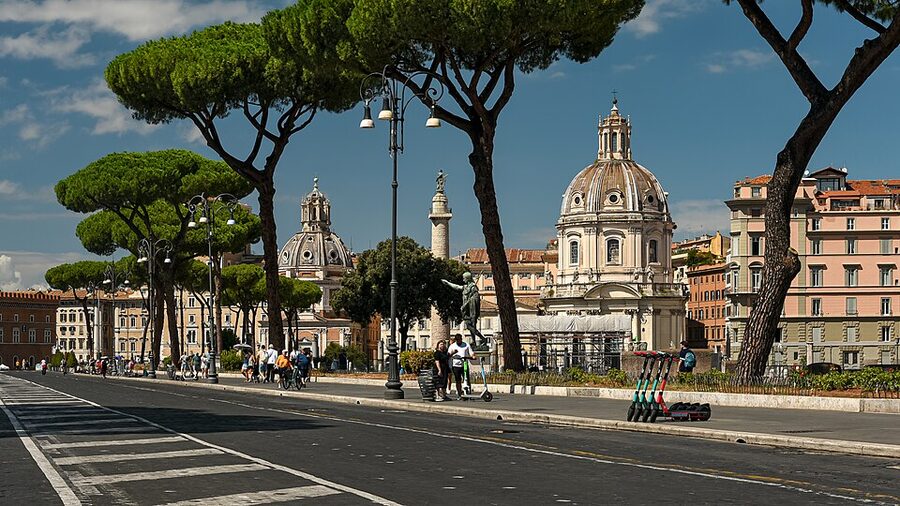
Take Metro Line B to Colosseo. The exit puts you at the Colosseum’s north side — you literally can’t miss it. From central Rome (Termini, Piazza Venezia, Trastevere) it’s a 20-30 minute walk and worth it for the approach down Via dei Fori Imperiali, which gives you views into the Forum from above the whole walk down.
HOHO buses stop at Colosseo as well — the 3-circuit hop-on hop-off ticket is the most-booked Rome transport option. If you’re already on a Roma Pass, the metro is faster and free.
After the Colosseum, options. If you’ve got energy left: walk west across the Forum and up to the Capitoline. The Capitoline Museums are the oldest public museums in the world (1471) and house the original She-Wolf statue. If you want food: head north into Monti for the trattoria options I mentioned above. If you’ve still got monumental ambition: the Pantheon is a 25-minute walk west and free to enter — though if you want a guaranteed entry slot, the Pantheon fast-track ticket jumps you past the queue.
For something different the next day, Castel Sant’Angelo by the Vatican has terrace views and almost no queue. Or do the Borghese Gallery on the other side of the centre — the timed-entry Borghese ticket needs to be pre-booked.
Pairing the Colosseum with a Vatican day
Most first-time visitors do the Colosseum on one day and the Vatican on another, and that’s the right call. They’re both 3-4 hour visits and stacking them in 24 hours is brutal. Our Vatican Museums and Sistine Chapel guide covers the booking logistics on that side — booking windows are similar but the systems are completely different platforms. St Peter’s Basilica is free to enter, separate from the Museums, and the dome climb is worth doing on the same day as the Museums to save crossing town twice.
Day trips after Rome
If you’ve done the Colosseum and want to go deeper into Roman life, Pompeii on a guided day trip is the obvious next move. You leave Rome at 7am, you’re at Pompeii by 10am, you spend three hours with an archaeologist on site, and you’re back in Rome for dinner. The contrast with the Colosseum is the point — the Colosseum is the official monumental face of Rome; Pompeii is the snapshot of how regular Romans actually lived.
Things I wish I’d known on my first visit
Cumulative wisdom from visit 1 (terrible — afternoon, July, no shade, no plan) through visit 4 (great — early morning, March, guided, prepared):
The audio kiosks at the official site are bad. Buy an audio app online or use Rick Steves’ free version. The official ones are clunky and the headphones smell of last summer.
You can do the Forum twice. Your ticket is 24 hours, single Colosseum entry. So you can leave the Forum after lunch and re-enter once more before closing. Useful if you ran out of energy.
The shade map of the Forum: there’s about 12 minutes of shade total, all of it under the Arch of Septimius Severus or behind the rostra at the western end. Plan accordingly.
Take the metro back. Don’t walk back to Termini in 35 °C heat. The Colosseo metro stop is right there and tickets are €1.50.
The Forum smells. Specifically the eastern entrance area near the Arch of Titus — there’s a drainage issue in summer. Don’t sit on the steps there. Move further west.
The Sant’Angelo terrace at sunset (a 25-minute walk away) is the best free view of the Vatican dome. Pair it with your Colosseum afternoon — Colosseum 2pm, Castel Sant’Angelo 6pm, dinner in Trastevere. That’s a full day with one paid ticket.
Eating around the Colosseum
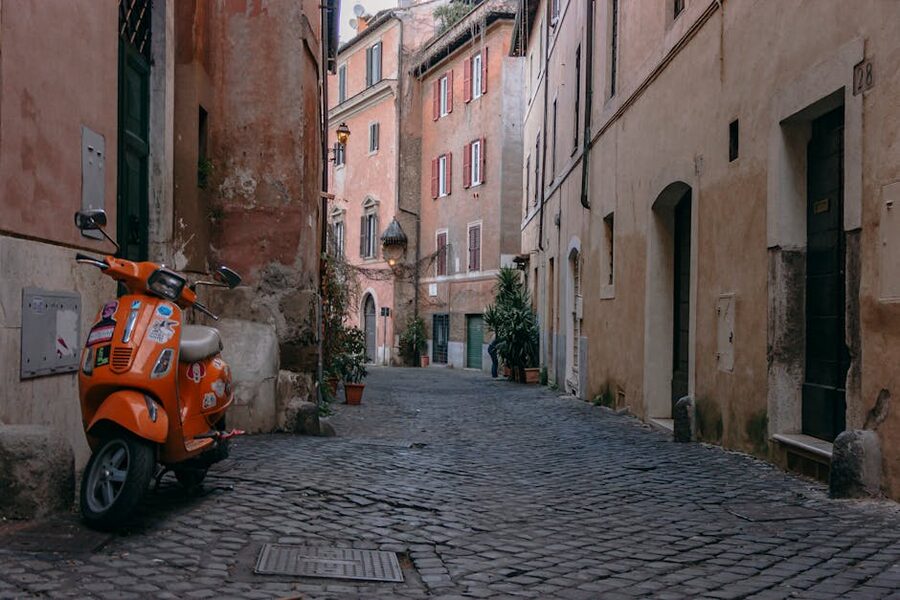
The food situation immediately around the Colosseum is bad. The restaurants on Via dei Fori Imperiali charge €18 for spaghetti and they know they can. Walk five minutes north into Monti instead. Or, if you want a proper food experience built around Rome, do a food tour on a different day — the Trastevere twilight food tour covers four neighbourhood spots in 3.5 hours and is the move I’d make for a first-night Rome dinner. Or if you’d rather make food than eat it, a pasta and tiramisu class near the Vatican sets you up with a skill that justifies the trip.
So which ticket should you actually buy?
Short answer:
- Never been to Rome before, want to understand what you’re looking at: the $69 guided tour. The Forum without context is wasted on first-timers.
- Been to Rome before or you’re a confident solo traveller: the $41 audio app with the optional Arena floor add-on. Self-paced, cheap.
- Repeat visitor or serious history nerd: the $160 Underground tour. The hypogeum is genuinely the only thing you can’t see on a normal visit.
- You forgot to book and it’s tomorrow: check the $52 alternative guided tour first — the operators have separate allocations and they often have spots when the official site is sold out.
Whatever you book, book the morning slot. The 8:30am or 9am window has half the crowds of midday and the temperature difference in summer is the difference between a great visit and a miserable one. The 5pm slot is the second-best — light goes warm, crowds thin out, and you can stay until 7:15pm closing.
What to read next
If you’re putting together a Rome itinerary, the natural pairs to this Colosseum guide are the other three sites you’ll be lining up tickets for. Start with how to book the Vatican Museums and Sistine Chapel — same booking logic, completely different system, slightly more painful website. Then St Peter’s Basilica and the dome climb, which is free to enter but the dome climb has its own ticket. And for the third anchor of a four-monument Rome trip, getting Pantheon tickets, which switched to a paid-entry system recently and now has its own queue logic to learn.