
Here is the surprising thing about the Vatican Museums: a single building takes in around 25,000 visitors a day. The world’s most famous museum complex moves humanity through it like a giant ticket-stamping machine, and your job is to make sure you are not the one being stamped.
I’ve been through the museums in every possible mode — solo with a basic ticket, in a tiny semi-private group, in a cattle-class big tour, and once at the very end of the day when the corridors were almost empty. The differences were huge. This guide is about getting it right the first time.
In a hurry? Three solid picks
- Cheapest skip-the-line ticket — from $38 — go in early, leave when you want, no guide. Check availability
- Best value with a guide — from $22.93 — adds St Peter’s Basilica access on the same ticket. Check availability
- Skip-the-line with assistance — from $43 — easiest option if you’ve never been and want a guide on hand. Check availability
- In a hurry? Three solid picks
- How the Vatican Museums actually work
- Tickets, tours, and what the difference actually is
- Guided vs self-guided
- Best Vatican Museums and Sistine Chapel tours
- 1. Vatican Museums and Sistine Chapel Entrance Ticket — from
- 2. Vatican Museums, Sistine Chapel and St Peter’s Guided Tour — from .93
- 3. Vatican Museums and Sistine Chapel Skip-the-Line Entry Ticket — from
- When to go: the difference between heaven and hell
- The free-Sunday trap
- The dress code is real and they enforce it
- What you’ll actually see inside
- Pio Clementino: the marble wing
- Egyptian and Etruscan rooms (the underrated bit)
- The corridor of long galleries
- The Raphael Rooms
- The Sistine Chapel
- What’s actually around the Vatican
- The two big cards: Roma Pass vs Vatican Pass
- Practical stuff that nobody explains
- Documents
- Bags and security
- Food and water
- Bathrooms
- Photos
- Accessibility
- How early should you book
- Visiting with kids
- Day trips you can pair with this
- The bookable mistakes I see most often
- What else to read
How the Vatican Museums actually work
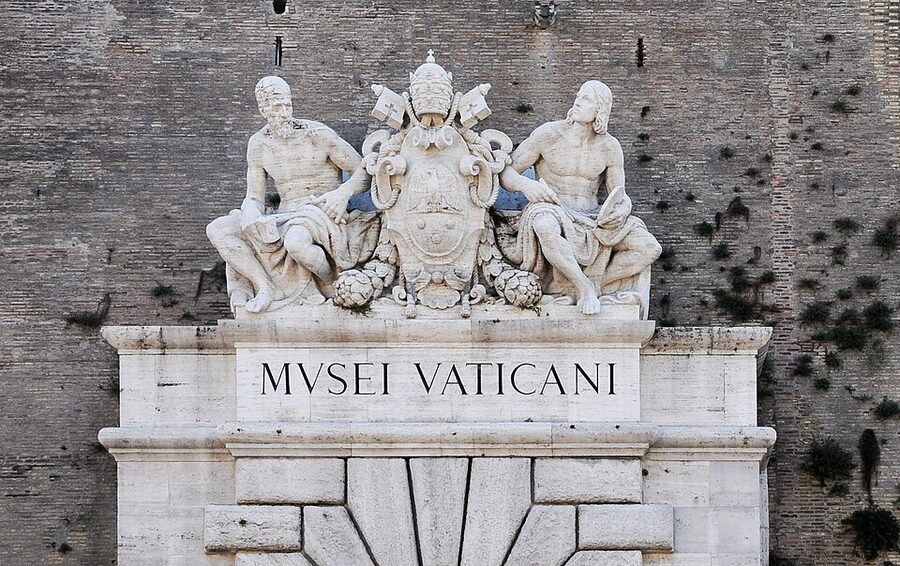
The museums are not one museum. They’re a stitched-together complex of about 26 collections inside the old papal palace, plus the Sistine Chapel at the end. You walk in at the Viale Vaticano entrance, follow a one-way route, and exit either back where you started or through St Peter’s Basilica if your tour has that access.
Address for your taxi or maps app: Viale Vaticano 100. This matters because Google Maps defaults “Vatican City” to St Peter’s Square, which is not where you go in. The museum entrance is on the north side of the Vatican walls, a 7-minute walk around the corner from the square.
The route is roughly: Pio Clementino sculpture wing → Egyptian and Etruscan rooms (most people skip these, more on that later) → long corridors of tapestries and maps → Raphael Rooms → Sistine Chapel → exit. Most people spend three hours. Art-obsessive types easily spend five. If you want to power through to the Sistine Chapel only, an hour is the realistic minimum given the distances inside.
Tickets, tours, and what the difference actually is
Every online ticket is timed entry, which means it is functionally a skip-the-line ticket. There is no premium “fast track” tier — Italian tourist forums are full of people who paid extra for what they already had. The only line that nobody can skip is security at the door, which moves quickly.
The cheapest legitimate option is the official site at museivaticani.va. It works fine and you save a few euros. The downsides: clunky checkout, only English and Italian, no audio guide bundling, refunds are slow if your plans change.
Most people end up booking through GetYourGuide or Viator instead because the cancellation terms are friendlier (free cancel up to 24 hours on most products) and the audio guides are better integrated. The price gap is usually $5-10 — not nothing, but worth it if there’s any chance you’ll need to reschedule. The flagship option here is the basic Vatican Museums and Sistine Chapel entrance ticket, which is the most-booked Vatican product on the market by a wide margin.
Guided vs self-guided
Self-guided saves money and gives you flexibility on pace. It works if you’ve done some homework on what you want to see, or if you rent the official audio guide at the entrance for a few extra euros. Without either, you’ll wander past masterpieces without knowing they’re masterpieces. There are almost no info panels.
Guided tours cost more but solve the navigation problem and let you ask questions. A small-group guided tour is what I’d recommend for a first visit, especially if you’re combining Vatican with St Peter’s the same morning — the Vatican plus St Peter’s guided tour combo is by some distance the most popular structured option, and it solves the basilica access problem in one ticket. The Sistine Chapel-to-basilica passage that tour groups use is closed to general ticket holders, so booking a guided tour is genuinely the path of least resistance.
Private tours are an upgrade I’d only suggest if you’re with elderly parents, kids who’d struggle with a group, or a serious art enthusiast who wants to ask questions for two hours straight. Otherwise the small-group format is fine.
Best Vatican Museums and Sistine Chapel tours
I’ve dug through the tour data and these are the three I’d actually book based on what they include and how reliably they deliver. None of them are flashy. They’re the boring, well-executed picks.
1. Vatican Museums and Sistine Chapel Entrance Ticket — from $38
This is the simplest skip-the-line ticket, no guide, just timed entry through GetYourGuide’s dedicated channel. Our full review covers the audio guide add-on, which I’d consider essential if you’re going self-guided. Best for confident travellers who’ve done their reading.
2. Vatican Museums, Sistine Chapel and St Peter’s Guided Tour — from $22.93
Three hours, English-speaking guide, gets you into all three sites with no separate basilica queue. This is the tour I tend to recommend for first-timers, and our full write-up goes into the secret-corridor handover from Sistine Chapel to basilica that this tour can use. Pricing is unusually low for what’s included.
3. Vatican Museums and Sistine Chapel Skip-the-Line Entry Ticket — from $43
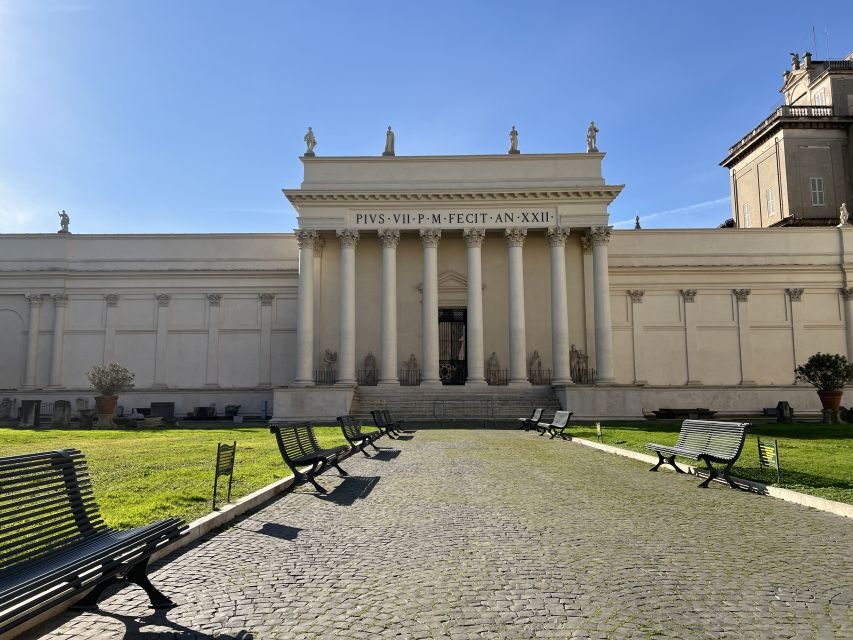
Same skip-the-line as the cheaper option, but with assistance at the entrance to point you in the right direction. Our review goes into why the human-at-the-door element is worth $5 if it’s your first time. Good for anxious travellers and language-nervous first-timers.
Honourable mentions if those three are sold out: the small-group Vatican plus St Peter’s tour tends to have last-minute availability, and the guided museums-and-chapel tour is a solid mid-budget pick if you don’t need the basilica.
When to go: the difference between heaven and hell
The single best thing you can do is book the 8am slot, Tuesday or Thursday, off-peak season. That combination means about half the daily crush, and you’ll be at the Sistine Chapel by 9.30am while the day-trippers are still queueing for breakfast.
If 8am is too cruel after a late dinner, the second-best option is the late afternoon, around 4pm to 5pm. Last entry is 6pm. Tour groups are clearing out by then and you have the chapel to yourself for the final 30 minutes some days. Closing time is 8pm but they start herding people toward the exit at 7.30.
Avoid: any time after 11am on a Saturday, the entire month of August (no air conditioning, queues outside in 35-degree heat), and the days before and after Catholic holidays. The crowd doubles. The art doesn’t get more rewarding.
The free-Sunday trap
The last Sunday of every month is free entry, 9am to 2pm. Sounds great. It’s not. The crowds become almost impassable, the air gets foul, security is overwhelmed, and the Sistine Chapel is essentially a standing-room-only church service. Skip it. Pay the €20-or-whatever and go on a Tuesday.
If you’re trying to squeeze a lot of Rome into a single visit, pair the museums with a same-day timed entry to the Colosseum, Roman Forum and Palatine Hill — that’s the other half of any first Rome trip and the morning slots dovetail well with a 4pm Vatican entry.
The dress code is real and they enforce it
Italian friends who haven’t been in years will tell you the dress code is “relaxed now”. They are wrong. The Vatican enforces it about half the time, and when they do, they don’t bend the rules and they don’t refund your ticket.
The rules, copy-pasted directly from the Vatican’s own dress code page:
- No sleeveless tops, no spaghetti straps. Short sleeves are fine.
- No shorts above the knee. This means men in summer too — bring trousers or knee-length shorts.
- No miniskirts.
- No hats inside (sunglasses pushed up onto the head are also a no in some halls).
- Visible offensive tattoos can be flagged. Long sleeves cover this.
What gets people turned away most often: women in summer dresses with thin straps, men in athletic shorts. The fix is a thin scarf for shoulders and a pair of light trousers in a tote bag. Sandals are absolutely fine — there is no footwear rule.
What you’ll actually see inside
Most first-time visitors mentally divide the museums into “the Sistine Chapel” and “everything else”, which is wrong. The “everything else” is one of the great art collections in the world, and rushing through it to get to the chapel is the rookie mistake. Slow down.
Pio Clementino: the marble wing
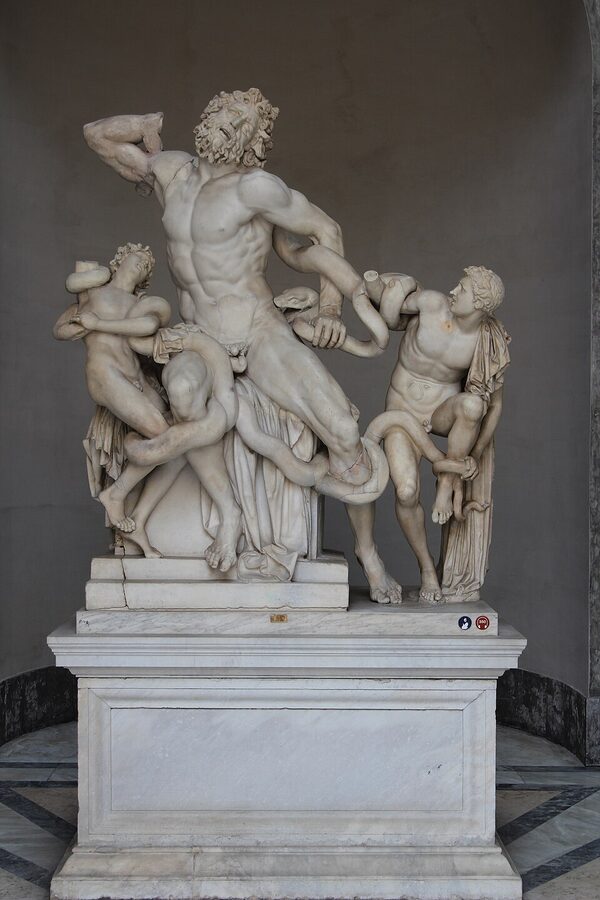
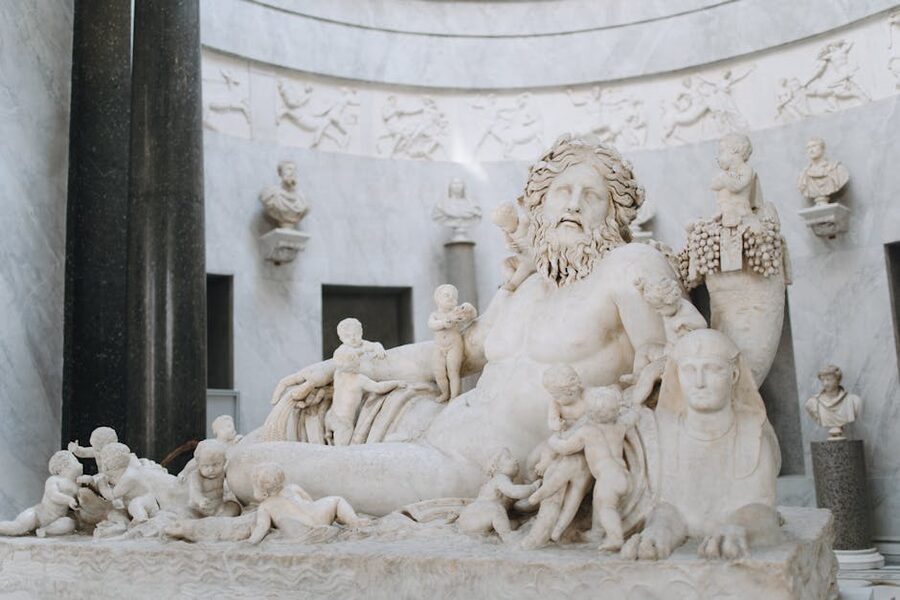
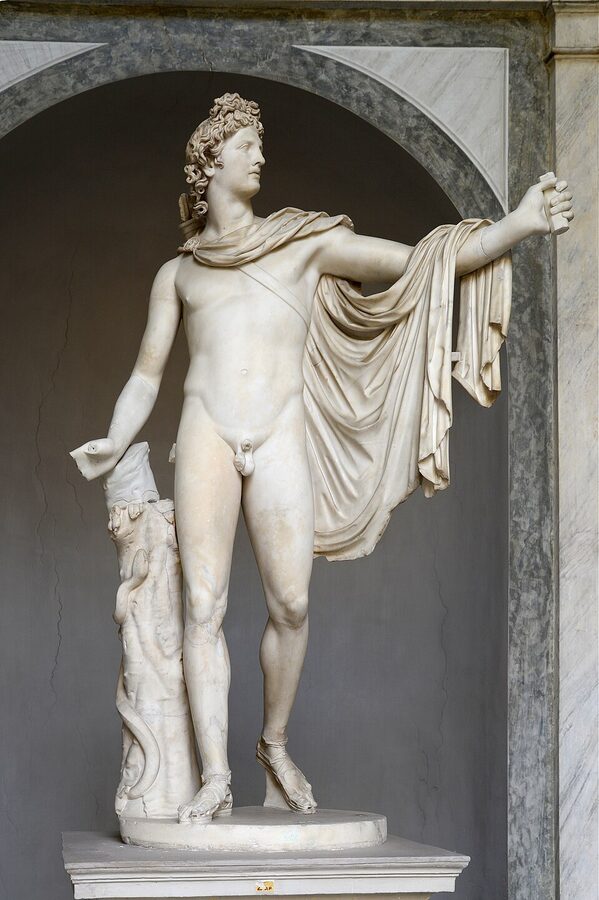
The Pio Clementino sculpture wing is the first major collection most routes hit. The Octagonal Court holds the Laocoön and the Apollo Belvedere, two of the most important ancient statues to survive. The Hall of Animals is unexpectedly fun — Roman animal sculptures, mostly recreations from Roman copies of Greek originals, including a marble crocodile that looks weirdly contemporary.
Egyptian and Etruscan rooms (the underrated bit)
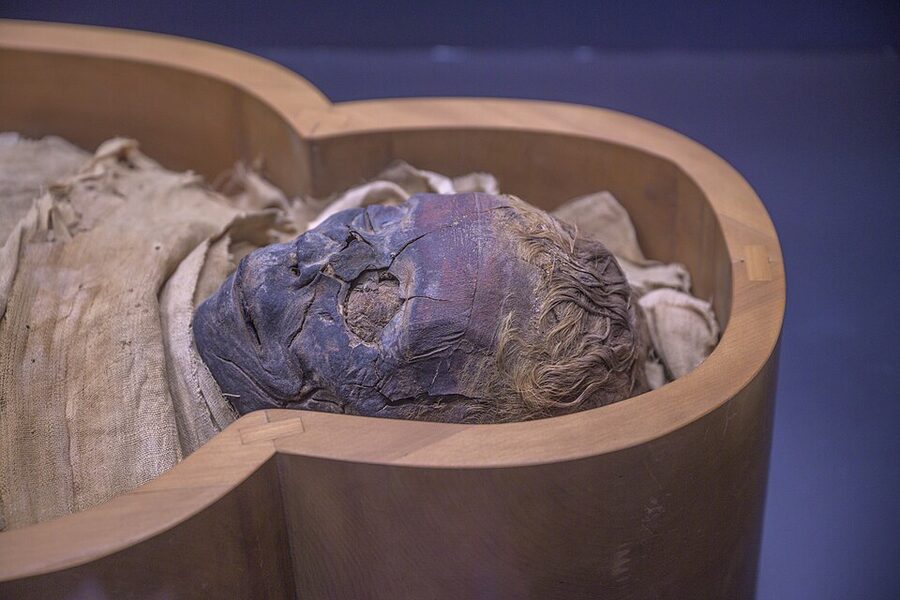
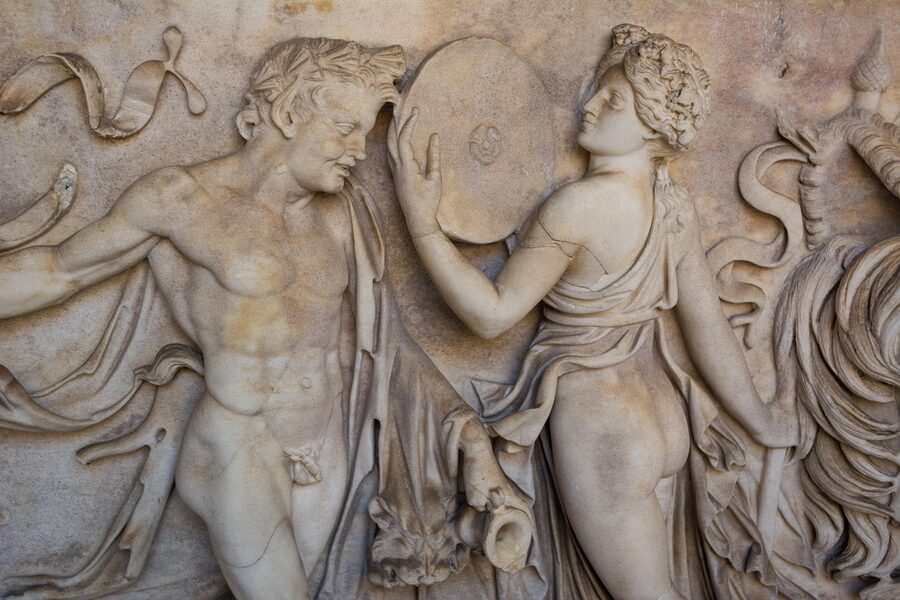
Almost nobody goes into these. Tour guides tend to skip them because they’re not on the Renaissance highlight reel. You should go in if you have time. The Egyptian collection includes mummies and a sarcophagus from Thebes that is in better condition than most of what’s in Cairo. If you’ve got kids, this is the room they’ll remember.
The corridor of long galleries
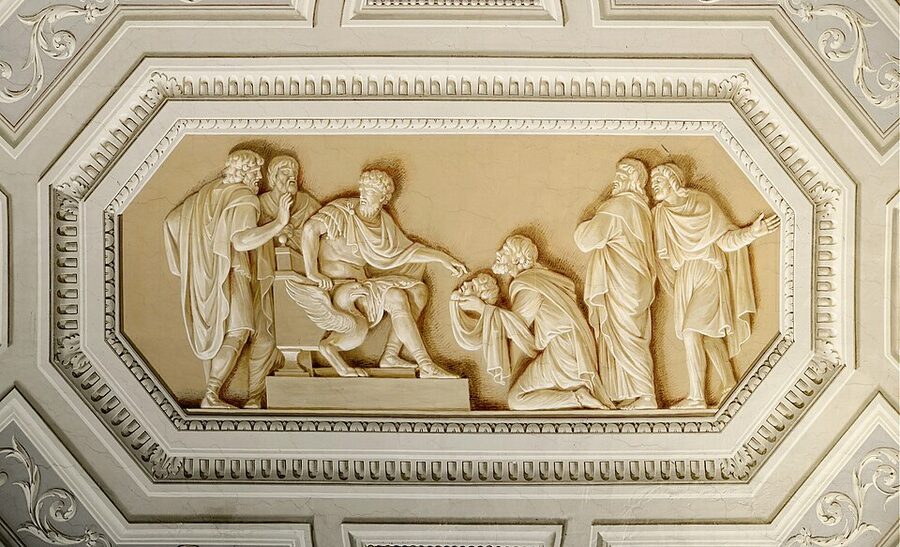
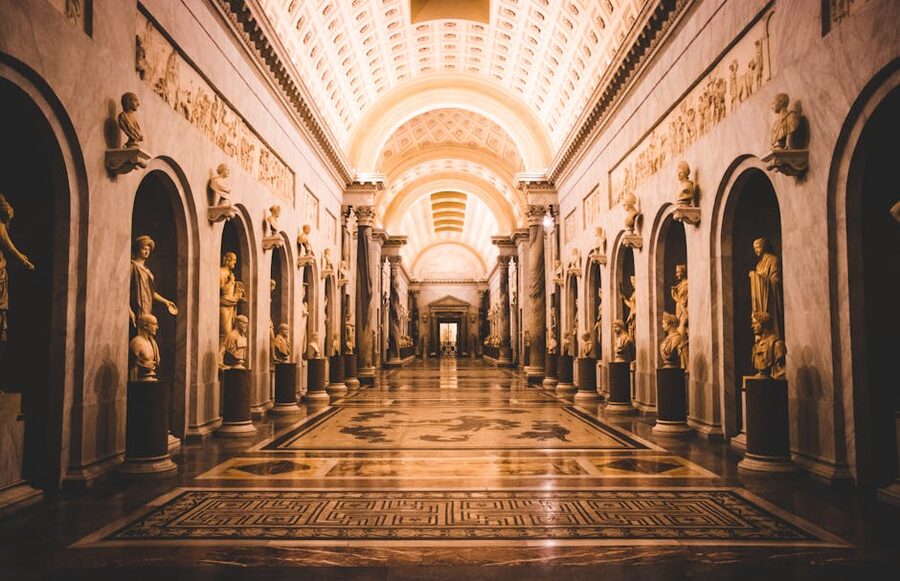
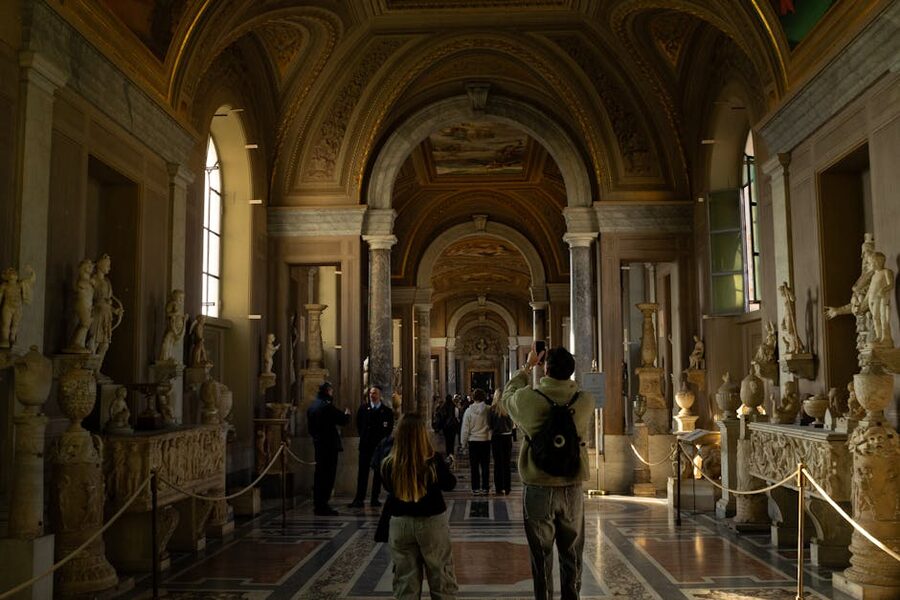
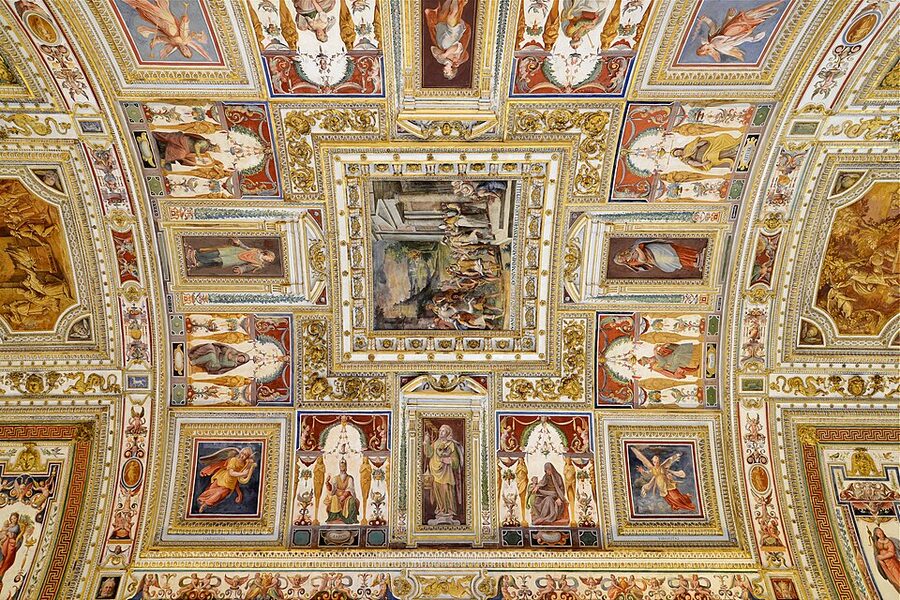
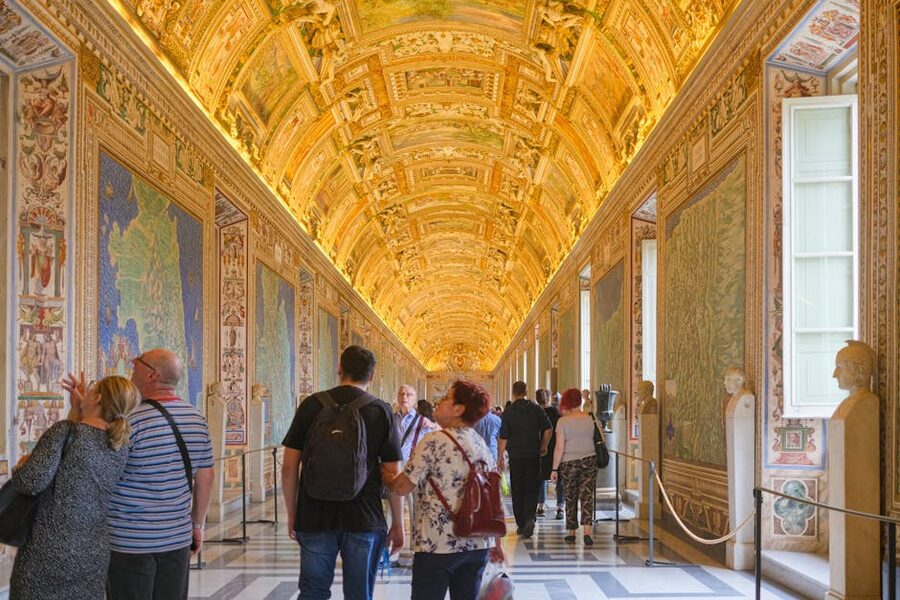
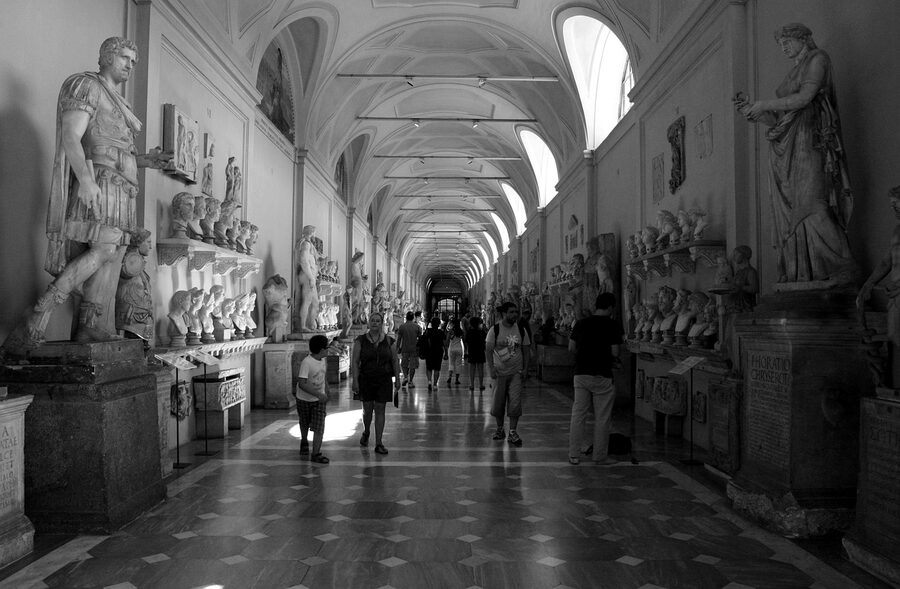
After the sculpture wings you funnel into a 200-metre stretch of three back-to-back galleries: Candelabra, Tapestries, then Maps. This is where most tour guides do a brisk monologue and march you through. Resist. The Gallery of Maps especially is one of the most photographed spaces in the museums for a reason — 40 huge frescoed maps of 16th-century Italy line both walls under a gilded ceiling that hurts to look at.
The Raphael Rooms
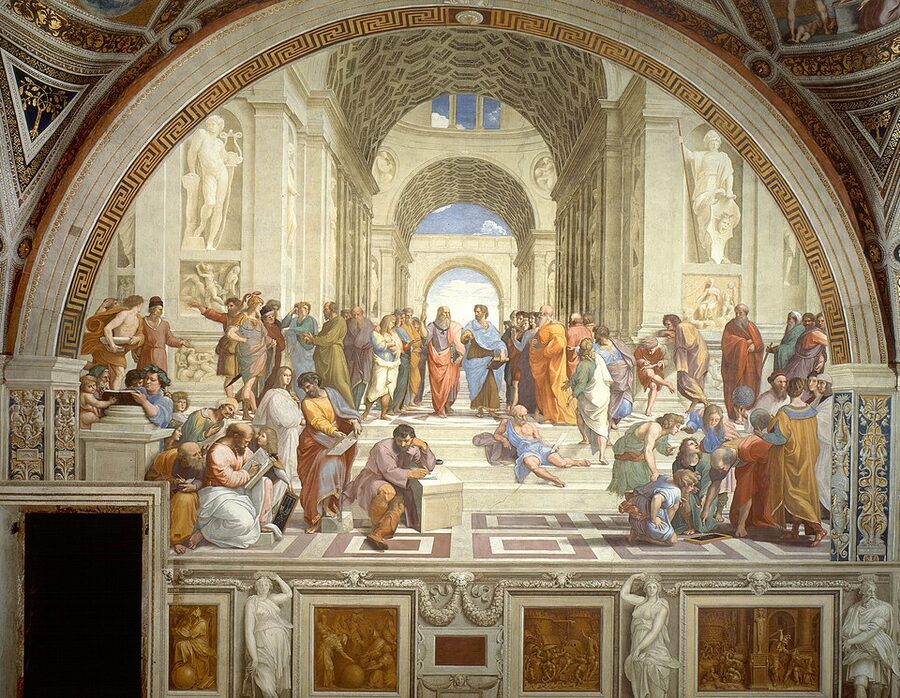
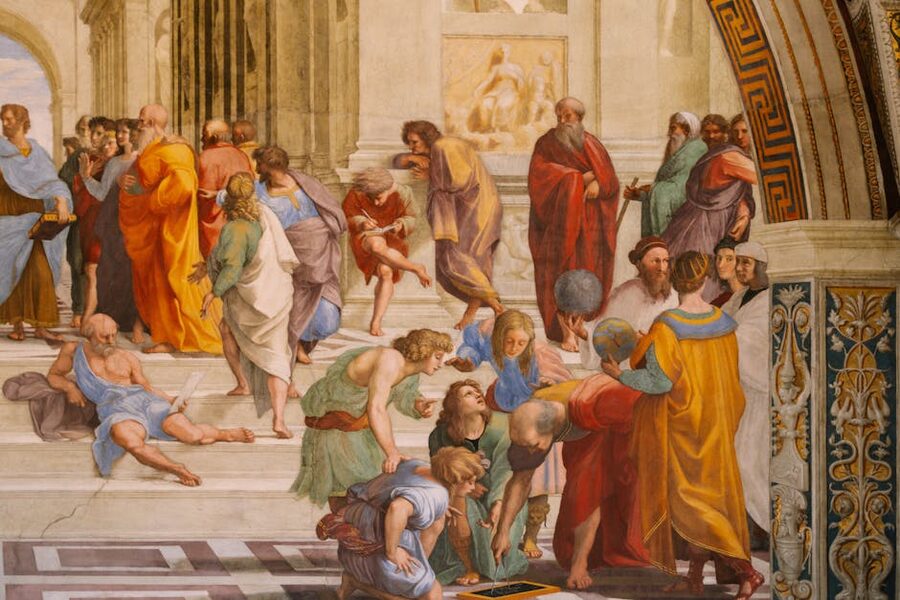
Four rooms painted by Raphael and his workshop between 1508 and 1524, originally Pope Julius II’s private apartments. The School of Athens is the famous one — every Greek philosopher you’ve heard of, painted with the faces of Renaissance artists Raphael was friends with. It’s in the Stanza della Segnatura. Look for the brooding figure in the foreground writing on a step: that’s Heraclitus, painted with Michelangelo’s face, added late after Raphael saw what was happening next door in the Sistine Chapel.
The Sistine Chapel
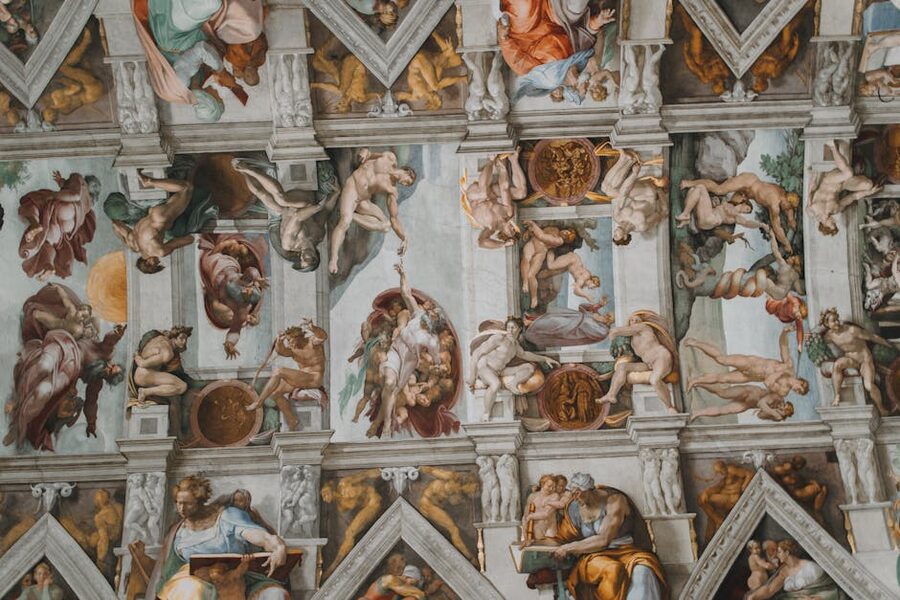
You’ll know you’re getting close when the route narrows and the guards start hushing people. The Sistine Chapel is at the deepest point of the museum loop — there’s no shortcut. The room itself is smaller than most people expect, about the size of a tennis court, and louder than people expect — guards shout “silenzio” every two minutes and it never works.
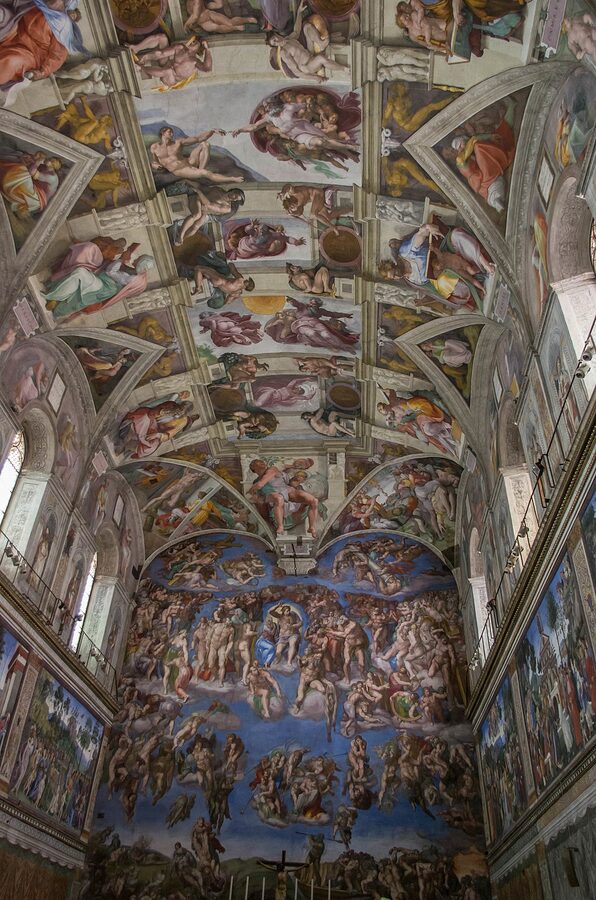
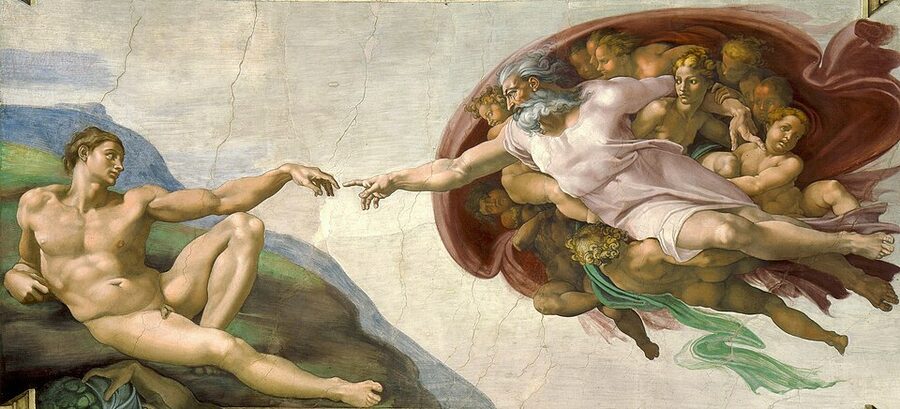
Find the wooden benches along the side walls. They are first-come-first-served and they are the only way to actually study the ceiling without giving yourself neck cramp. If they’re full when you arrive, hover near one for ten minutes and someone will leave.
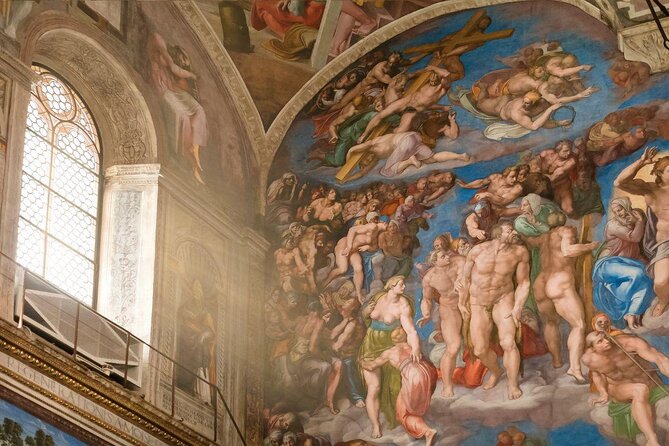
The altar wall is Michelangelo’s Last Judgment, painted 25 years later when he was 60 and angrier. The bottom shows the damned being dragged into hell, the top shows Christ ungently sorting souls. The figure being flayed alive that Christ is gesturing toward — Michelangelo painted his own face onto that flayed skin.
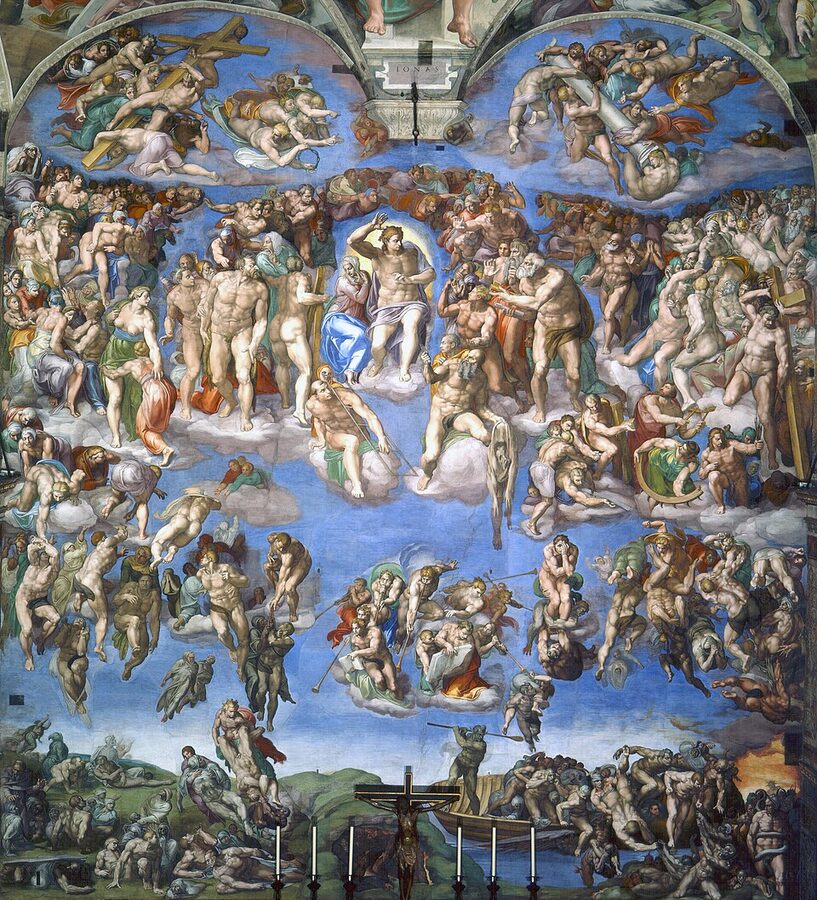
No photos in the Sistine Chapel. Strictly enforced. Guards will spot a phone screen from across the room and shout. Just look. Phones away.
What’s actually around the Vatican
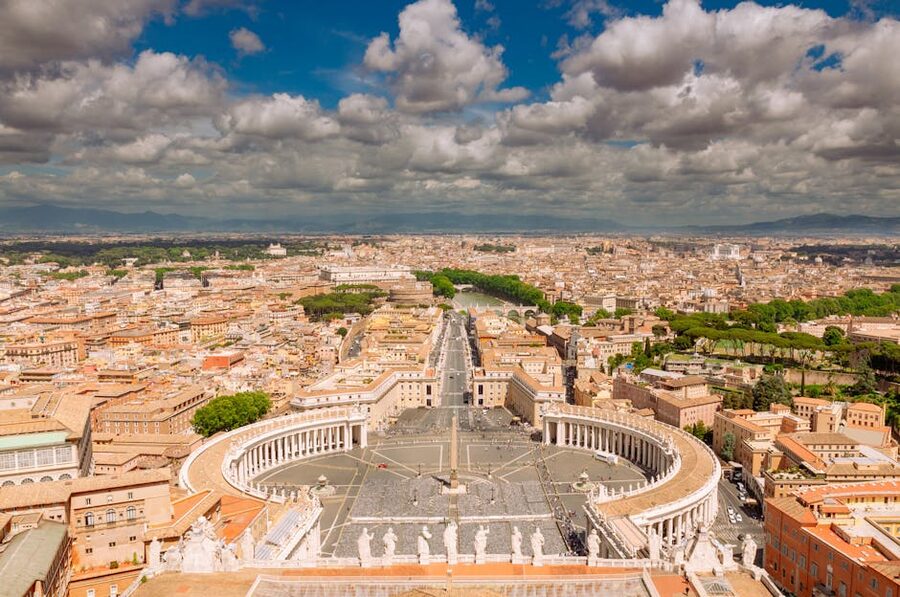
The exit from the Sistine Chapel either dumps you back at the start or — for tour groups — feeds you straight into St Peter’s Basilica. If you’re on a basic ticket, you’ll need to walk five minutes around the wall to get to the basilica entrance independently, and there’s a separate (free) entry queue for that.
The smart move is to book a single tour that covers both — the Vatican plus Sistine Chapel and St Peter’s combo uses the internal corridor and saves an hour on a busy day. If you specifically care about the dome climb, you’ll need the St Peter’s Basilica and dome guide for the logistics — that has its own ticket and it’s a separate climb.
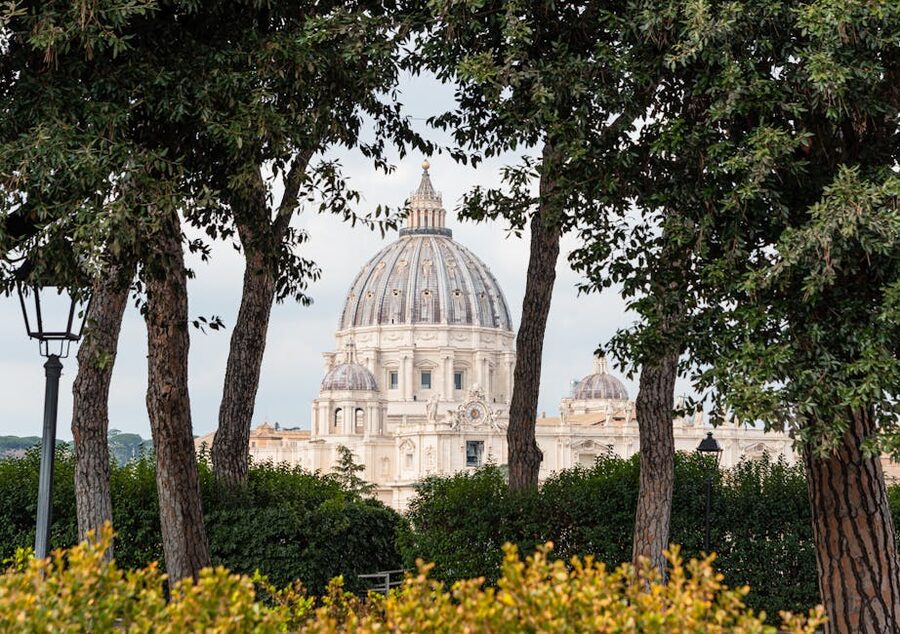
Castel Sant’Angelo is a 10-minute walk from the basilica along Via della Conciliazione — the riverside fortress where popes hid during sieges, now a museum with the best terrace view in Rome. A timed Castel Sant’Angelo ticket works as a relaxed afternoon pairing if you’ve finished the museums by 1pm.
For dinner, the Prati neighbourhood north of the museums is worth the walk — quieter than Trastevere, no tour groups, real Roman trattorias. If food is high on your list, a pasta and tiramisu class near the Vatican is one of the better value evening activities in this part of town. The Prati food and wine tour is a low-key alternative if you’d rather eat than cook.
The two big cards: Roma Pass vs Vatican Pass
Most first-time visitors ask whether they should bundle Vatican entry into a city pass. Short answer: usually no, but it depends.
The Roma Pass is Rome’s official city card and it does not include the Vatican Museums (the Vatican is a separate sovereign state, awkward but true). It does include Colosseum and Roman Forum entry plus public transport, which makes it useful if you’re doing the rest of Rome over 2-3 days.
The Vatican Pass with city highlights bundles museums plus a few city sites and transit, but the math only works out if you’d hit at least three of the included attractions. Run the numbers before booking — a basic museums ticket plus separate Colosseum and bus tickets is often cheaper.
Practical stuff that nobody explains
Documents
Tickets are nominative — the name on the ticket has to match a passport or EU ID card. They check randomly and they will refuse entry if the names don’t match. Book the ticket in the name of whoever’s actually going.
Bags and security
Standard airport-style security on entry. Backpacks are fine; large suitcases are not. There’s a free cloakroom inside if you’re caught between hotels. No selfie sticks, no tripods, no large camera bags — they’ll send you back to the cloakroom for those.
Food and water
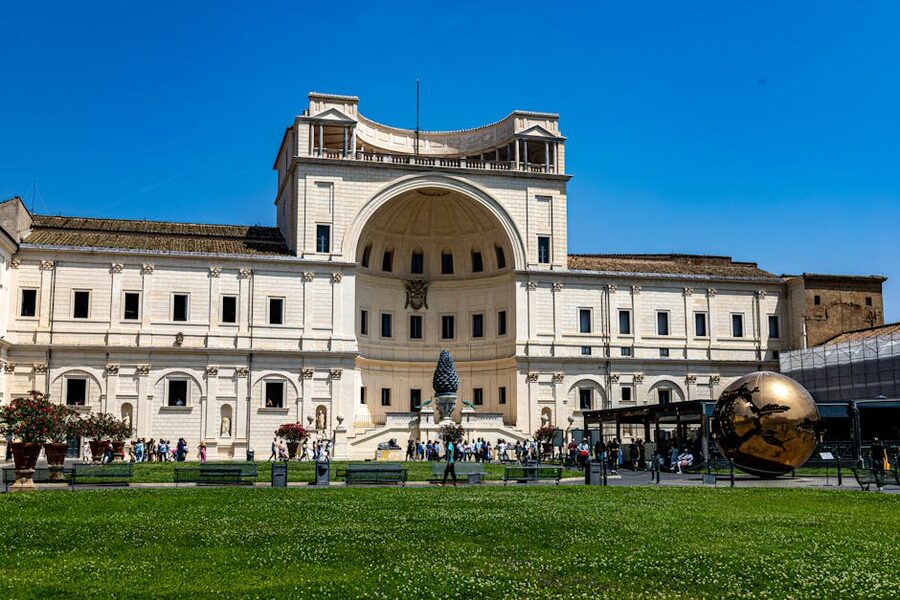
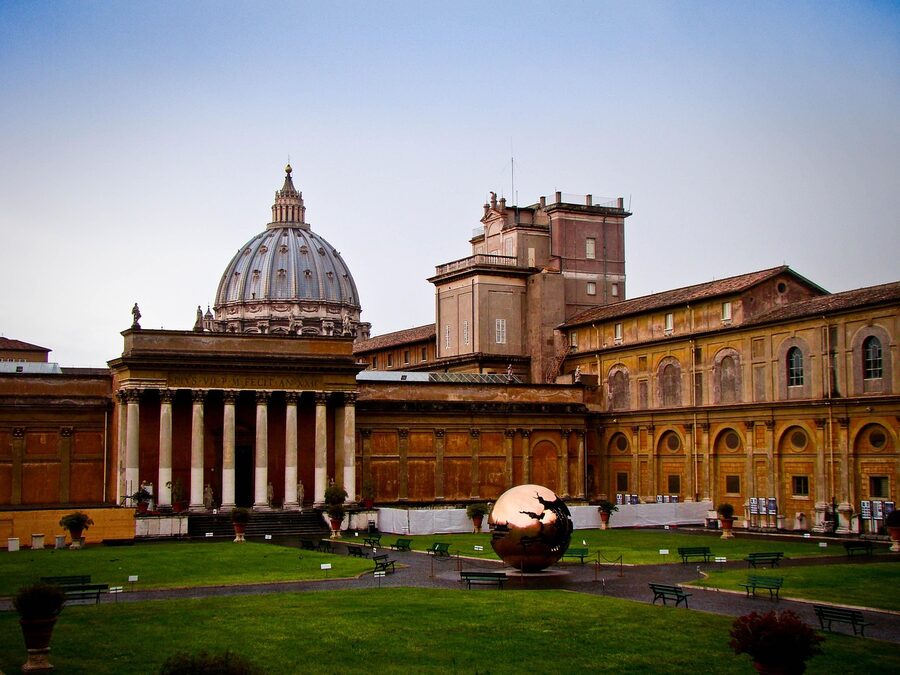
You’re allowed to bring a small snack and water in your bag, but no eating in the exhibition halls. There’s a decent self-service cafeteria in the Pinecone Courtyard area, plus a smaller bistro near the entrance. Both are overpriced. Better to eat properly before or after.
Bathrooms
Multiple, well-signposted, generally clean. The ones nearest the Sistine Chapel exit have the longest queues — go before you reach the chapel, not after.
Photos
Allowed almost everywhere except the Sistine Chapel. No flash, no tripods. Phone cameras only really work in well-lit halls — the long galleries are dimmer than they look in photos.
Accessibility
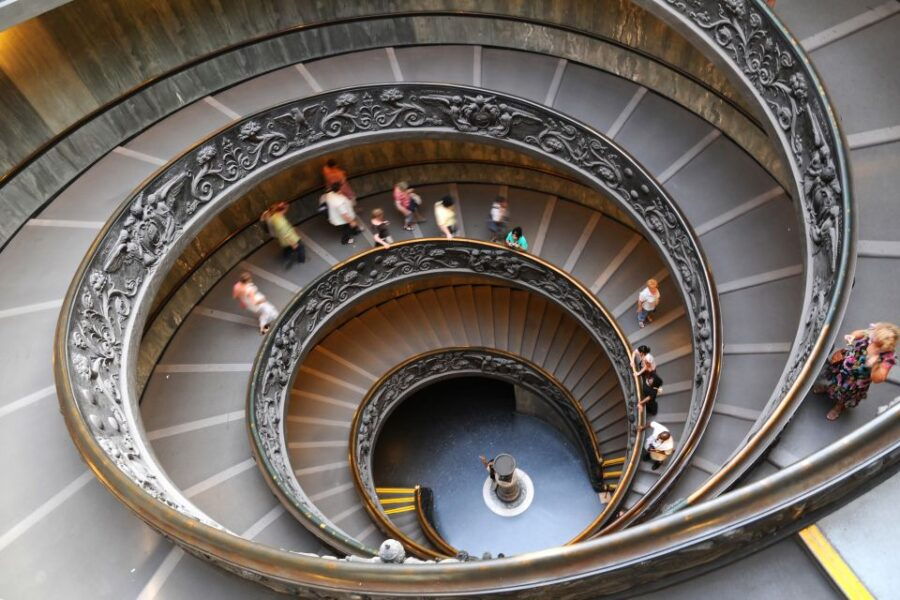
The official accessible route exists but doesn’t follow the standard tour path. If you have mobility limits, book a private tour and tell them upfront — they’ll route differently. Standard group tours involve stairs you can’t avoid. Strollers get priority entry but you’ll fold them on the staircases.
How early should you book
The Vatican releases the entire calendar year of tickets in mid-January. From that moment, peak slots (8am, 9am, 10am, weekends, school holidays) start filling up.
For a March-October trip, I’d book at least 4-6 weeks ahead. For July-August or any major Catholic holiday, book 8-10 weeks ahead. Last-minute Sistine Chapel slots in summer are a coin flip — sometimes they appear because of cancellations, often they don’t.
If your dates are flexible, the cheap window is the second and third weeks of November (after the all-saints rush, before Christmas markets), or the last week of January through the second week of February. The crowds halve.
Visiting with kids
The Vatican Museums are not naturally child-friendly. There’s a lot of walking, the rooms are loud-then-quiet-then-loud, and the art is mostly without context for under-10s. That said, kids can love it if you set up a couple of treasures hunts.
Things that work: tell them the Octagonal Court has the Laocoön and that “this statue was found in a vineyard 500 years ago and started a whole art revolution”. Show them the Egyptian mummies. Find the marble crocodile in the Hall of Animals. Point out that one Sistine Chapel figure in the Last Judgment is being flayed alive (warning: this will get questions).
What doesn’t work: trying to do the whole thing self-guided in the middle of the day. Book a kid-friendly small-group tour or skip the museums and do a private golf cart tour of central Rome instead — a half-day Vatican visit followed by an outdoor afternoon is the realistic structure.
Day trips you can pair with this
If you’re doing 3+ days in Rome, the Vatican is one of the four heavyweights. The other three are the Colosseum and Roman Forum complex, the St Peter’s Basilica with the dome climb, and the Pantheon with its skip-the-line ticket. Realistically you can do two of these in a day. Don’t try to do three.
For a longer trip, a Pompeii day trip with an archaeologist guide is the standard “Rome plus one” — leaves at 7am, back by 8pm, exhausting but worth it. The crypts and catacombs tour is a half-day option that pairs nicely with the Vatican on the same theme of underground religious history.
The bookable mistakes I see most often
Booking the wrong day. Wednesdays the museums close at lunchtime if there’s a Papal Audience in St Peter’s Square. Always check the calendar before locking a date.
Buying the “audio guide included” upgrade thinking it’ll explain everything. The official audio guide is okay but not great — it covers maybe 40% of what a human guide would. If you want commentary, book a guided tour, not the audio.
Skipping the Sistine Chapel because “we already saw it on TV”. You haven’t. Photos shrink it and flatten the ceiling. Standing under it with your neck back is a completely different experience.
Booking a tour that ends “near the Vatican” and assuming that means you’re inside. Read the inclusions carefully — many cheaper Rome highlights tours stop at St Peter’s Square but don’t include museum entry.
Wearing exactly the wrong outfit on a hot day. They will turn you away. The fix is keeping a thin cover-up in your day bag at all times in summer.
What else to read
Once you’ve planned the Vatican visit, the rest of central Rome falls into place. The Colosseum, Roman Forum and Palatine Hill guide handles the ancient half of the city — pair the two sites on different days, not the same morning. The Pantheon ticket guide is shorter but covers the new fast-track ticket system that started in 2023, which trips up a lot of first-timers expecting free entry. And if you’re climbing the basilica dome the same week, the St Peter’s Basilica and dome climb guide walks through which entrance to use and why the elevator-plus-stairs combo is the right choice.