
The guide stopped walking. She pointed at a small bronze plaque in the park grass. “A watch was found here in 1946. It had stopped at 8:15. That was the exact second the bomb exploded, 580 metres above our heads.”
Nobody on the tour said anything for about 30 seconds. You’re not supposed to.
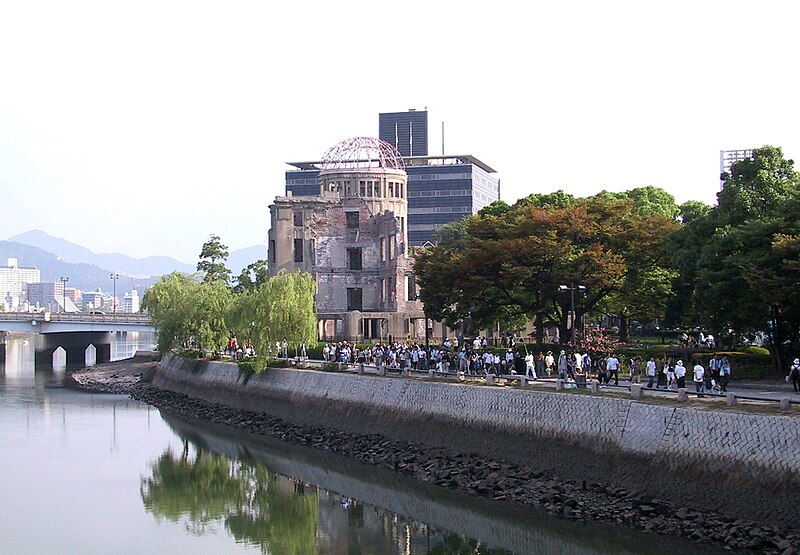

Hiroshima walking tours are different from every other tour in Japan. They’re guided by locals — many of them descendants of survivors — who walk you through the Peace Memorial Park, the museum, and the surrounding neighbourhoods while telling you exactly what happened on August 6, 1945, and how the city chose to rebuild.
These are not happy tours. They are necessary tours. And they’re also, weirdly, some of the most uplifting experiences you can have in Japan — because the story of Hiroshima is ultimately about resilience, peace-building, and a city that deliberately chose forgiveness over revenge.
Short on time? Here are my top picks:
Best historical depth: Hiroshima Historical Walking Tour — Why A-Bomb Was Dropped — $35, 2.5 hours, 893 reviews. The most-reviewed Hiroshima tour. Focuses on the history of why and how the bombing happened.
Most comprehensive: Hiroshima Peace Walking Tour at World Heritage Sites — $95, perfect 5.0, 872 reviews. Premium version with museum entry and deeper exploration.
Cover more ground: Hiroshima in a Nutshell: Morning Bike Adventure — $73, perfect 5.0, 524 reviews. Bike tour covering the peace memorial plus the castle and other landmarks.
- What a Hiroshima Tour Actually Covers
- The Atomic Bomb Dome
- The Children’s Peace Monument
- The Peace Memorial Museum
- Hiroshima Castle
- The 3 Best Hiroshima Walking Tours
- 1. Hiroshima Historical Walking Tour — Why A-Bomb Was Dropped —
- 2. Hiroshima Peace Walking Tour at World Heritage Sites —
- 3. Hiroshima in a Nutshell: Morning Bike Adventure —
- What Really Happened on August 6, 1945
- Hiroshima Today: The Rebuilt City
- Combining with Miyajima
- Hiroshima Food: What to Eat While You’re There
- Practical Tips
- Getting to Hiroshima
- A Full Day in Hiroshima
- More Experiences
What a Hiroshima Tour Actually Covers
Every Hiroshima walking tour revolves around the Peace Memorial Park and its museum. But the good tours take you well beyond just those two stops.
The Atomic Bomb Dome
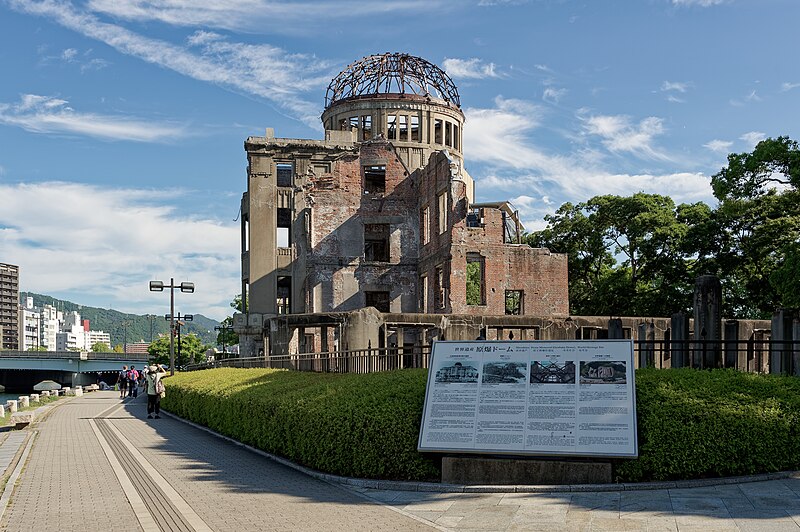
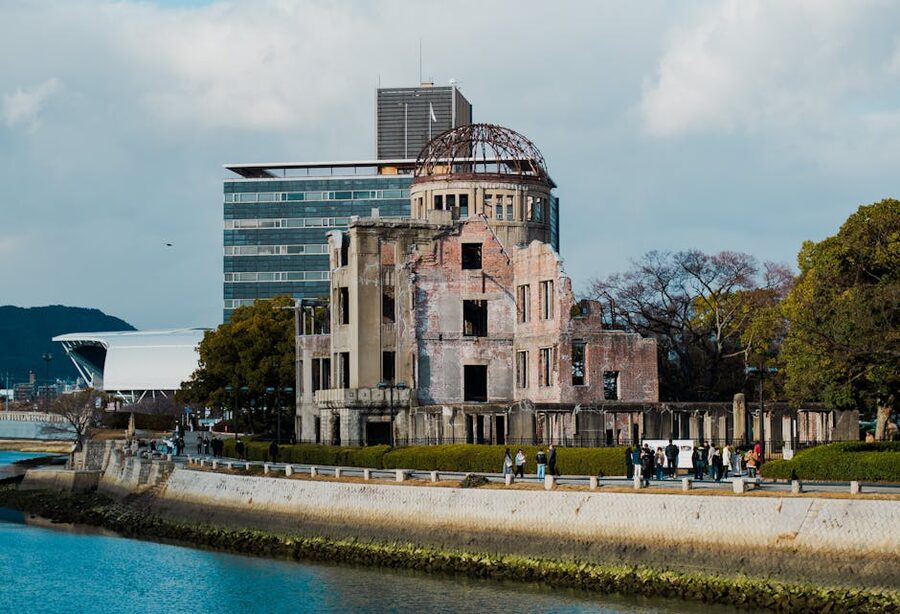
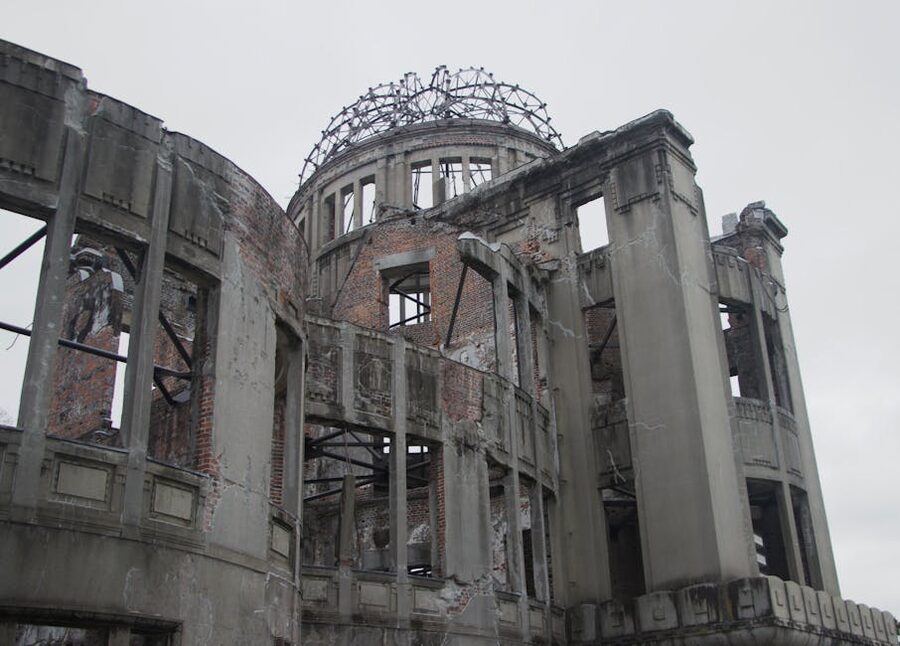
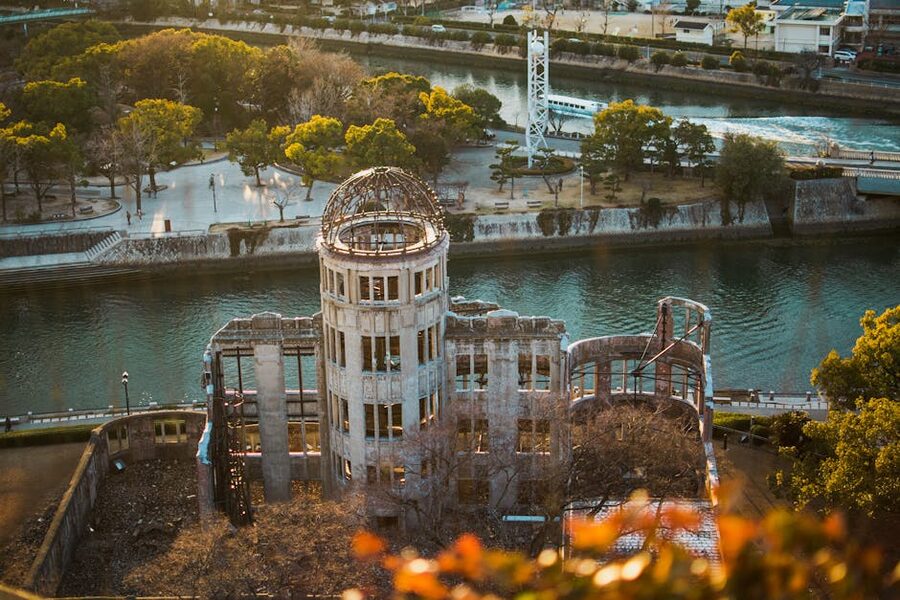
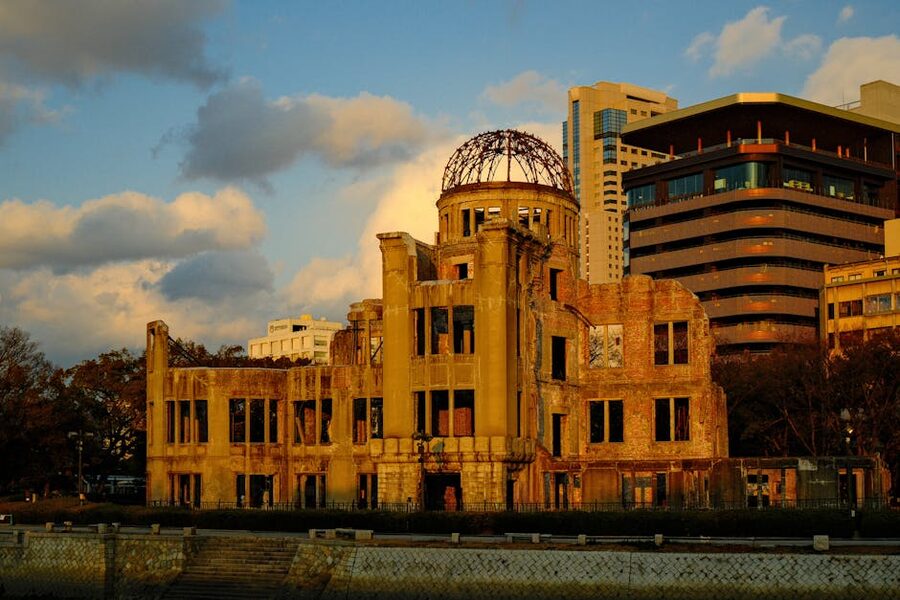
Most tours begin here. The bomb detonated roughly 160 metres southeast of the Dome and about 580 metres in the air. Everyone inside the building died instantly. Almost everyone within a 1-kilometre radius died within days. The fact that the Dome’s frame survived at all is considered a kind of miracle — or at least a quirk of physics that the blast wave hit the walls from above rather than the side.
The Dome has been left exactly as it was after the explosion. No restoration, no rebuilding. Just stabilisation to prevent collapse. It’s now a UNESCO World Heritage Site and a symbol of peace.
The Children’s Peace Monument
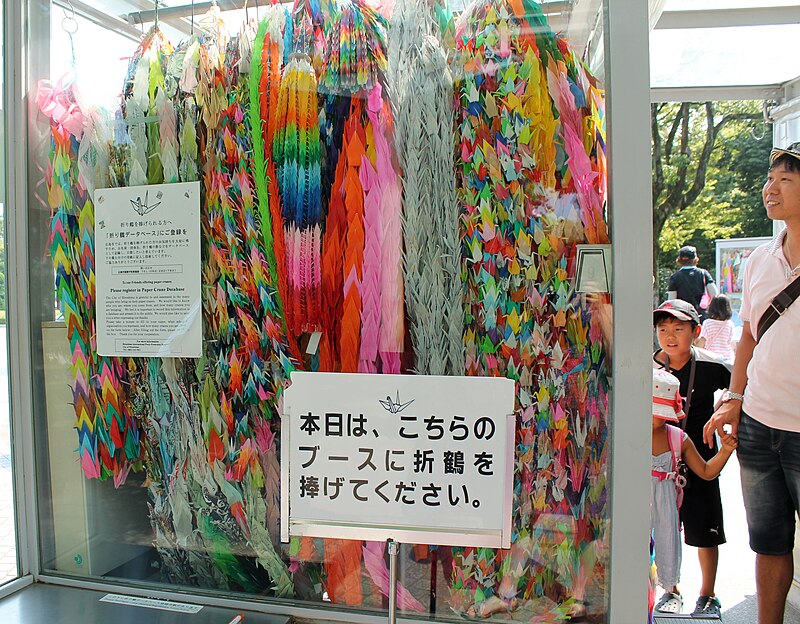
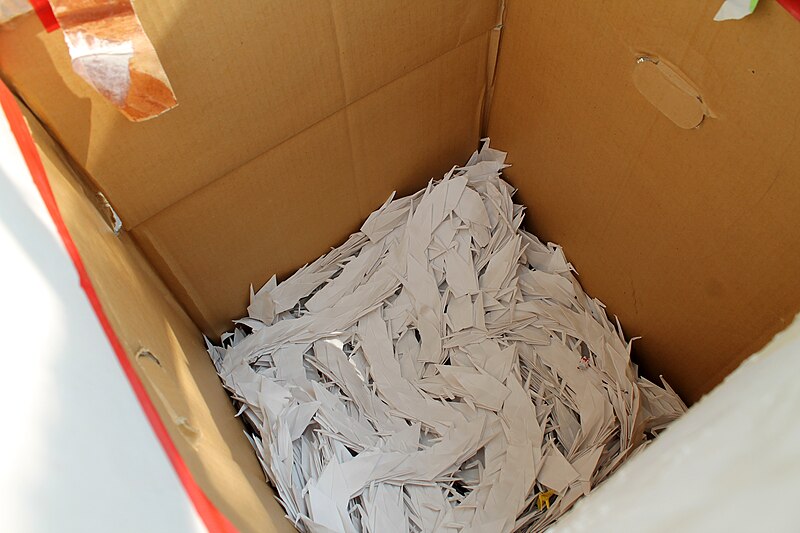
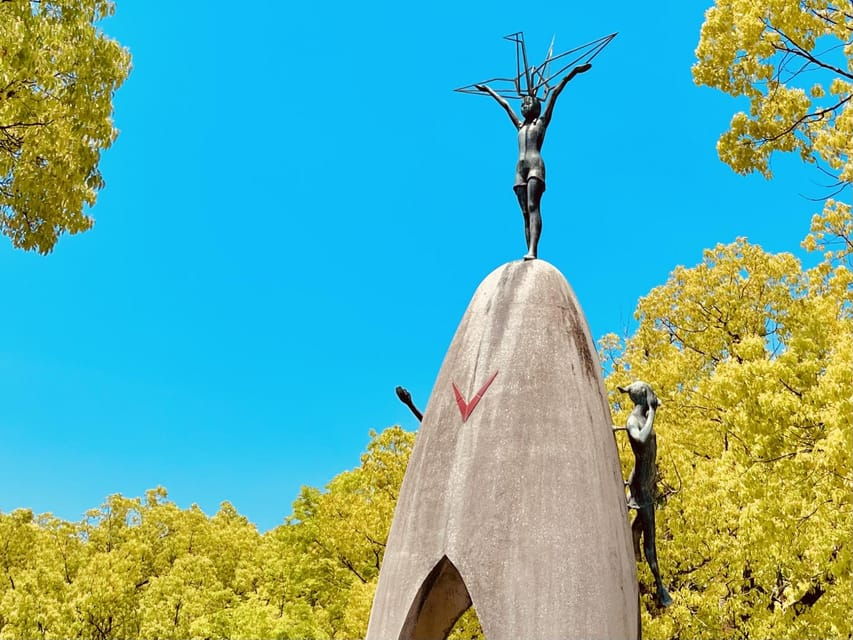
Every year, children from all over the world fold paper cranes and send them to this monument. The cases around the base contain millions of them. The tour guides will explain the Sadako story in detail, and if your group has children, the guide often gives them a paper crane to fold as part of the visit.
The Peace Memorial Museum
The museum is the emotional core of any Hiroshima visit. It’s split into several sections: the lead-up to the bombing, the moment itself, the aftermath, and the long-term effects. The items on display — a child’s lunchbox with the contents carbonized, a wristwatch stopped at 8:15, clothing with shadows burned into it — are the kind of things you’ll remember for years.
Your guide won’t lead you through every exhibit. Most tours give you free time inside the museum (usually 60-90 minutes) and then regroup outside. The museum is that kind of experience — you need to process it at your own pace.
Hiroshima Castle
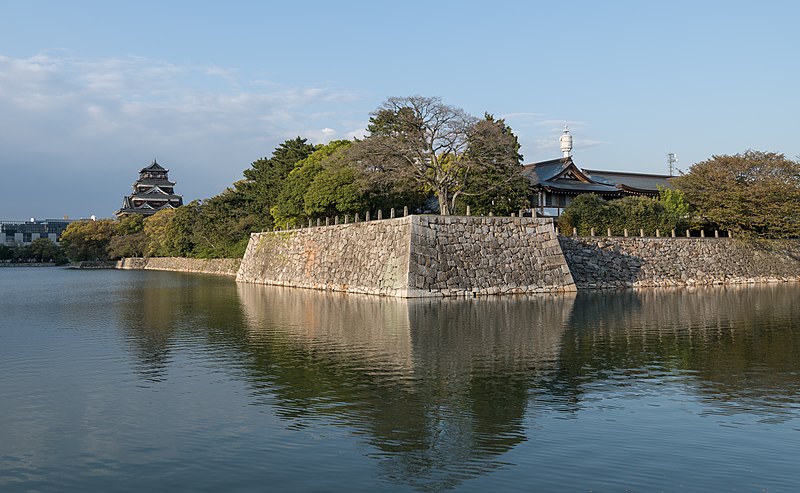
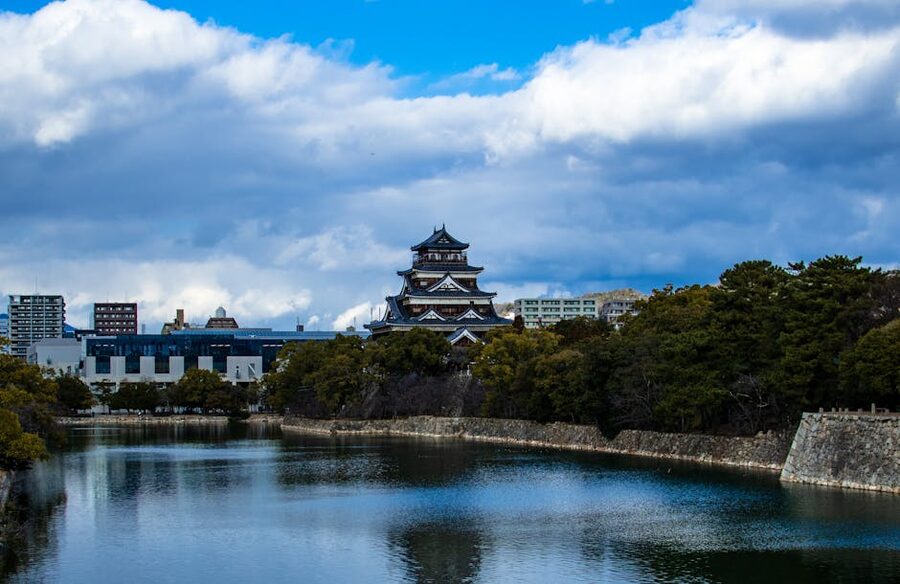
Many tours include Hiroshima Castle as the second major stop. The castle is a 1958 reconstruction — the original was destroyed in 1945 along with most of the city — but the museum inside covers Hiroshima’s pre-bombing history. It’s a necessary counterbalance to the Peace Park’s focus on one single day.
The 3 Best Hiroshima Walking Tours
1. Hiroshima Historical Walking Tour — Why A-Bomb Was Dropped — $35
893 reviews at $35. This is the most popular Hiroshima tour and the best value by a wide margin. 2.5 hours of walking plus storytelling, with a guide who can answer the hard questions about why the bomb was dropped, what the alternatives were, and how modern Japan thinks about it. Our full review covers the tour content and which questions the guides typically address.
2. Hiroshima Peace Walking Tour at World Heritage Sites — $95
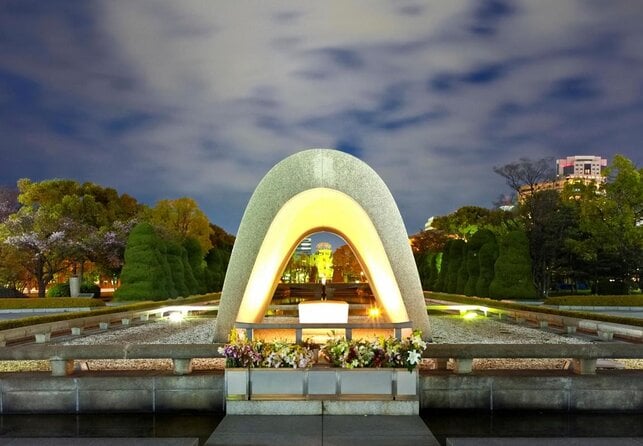
Perfect 5.0 across 872 reviews at $95. This is the longer, slower version — more time at each monument, more detailed storytelling, and usually includes museum entry. Best for visitors who want to spend a half-day properly understanding Hiroshima rather than just seeing the landmarks. Our review explains the longer format and what the extra time gets you.
3. Hiroshima in a Nutshell: Morning Bike Adventure — $73
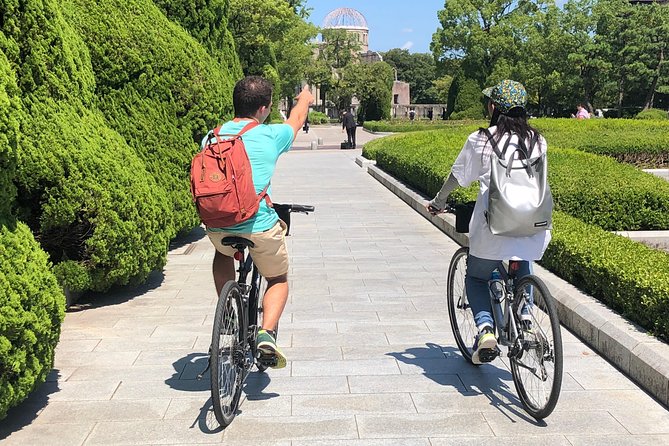
Perfect 5.0 across 524 reviews at $73. Bike tours cover twice as much ground as walking tours — you’ll get to the castle, the Shukkeien garden, the peace park, and several other spots you wouldn’t reach on foot. Max from a recent visit called it “very thorough and interesting” and highly recommended. Our review explains the bike route and physical effort required.
What Really Happened on August 6, 1945
Every Hiroshima tour covers this, but there’s value in going in with the basic facts already in your head.
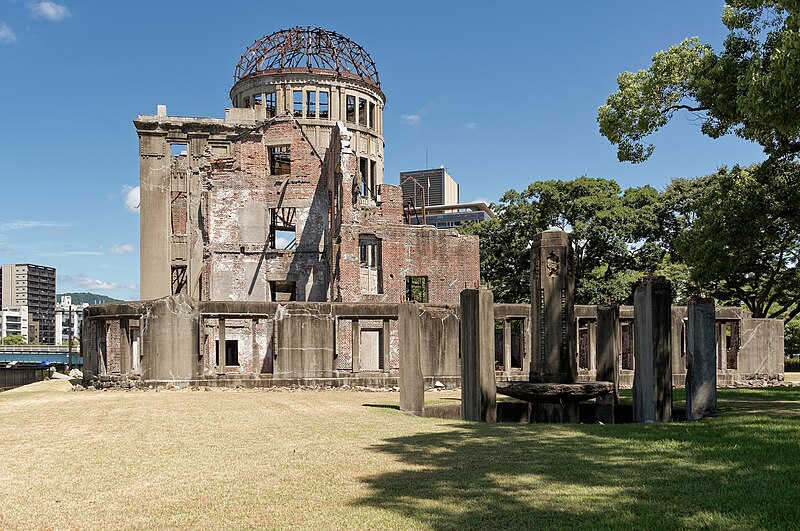
At 8:15am on August 6, 1945, the American B-29 bomber Enola Gay dropped a uranium fission bomb named “Little Boy” over the centre of Hiroshima. The bomb detonated 580 metres above Shima Hospital, approximately 160 metres southeast of where the Atomic Bomb Dome stands today.
The explosion was equivalent to approximately 15 kilotons of TNT. Within 1 kilometre of the hypocenter, nearly everyone died instantly — either from the thermal pulse (which reached 3,000-4,000°C at ground level) or from the blast wave (which reached pressures of 19 tons per square metre). Within 2 kilometres, structures were completely flattened. Within 5 kilometres, major damage occurred.
Estimates of the death toll vary. The most widely accepted figure is 70,000-80,000 killed immediately, with another 70,000-100,000 dying from radiation sickness, burns, and injuries in the weeks and months that followed. By the end of 1945, approximately 140,000 of Hiroshima’s 350,000 residents had died.
Three days later, on August 9, the US dropped a second atomic bomb on Nagasaki. Japan surrendered on August 15. The war ended.
Why this matters when you visit: The walking tours put faces, names, and stories to these numbers. You’ll hear about specific victims, specific buildings, specific survivors. The numbers become real in a way that no book or documentary can match.
Hiroshima Today: The Rebuilt City
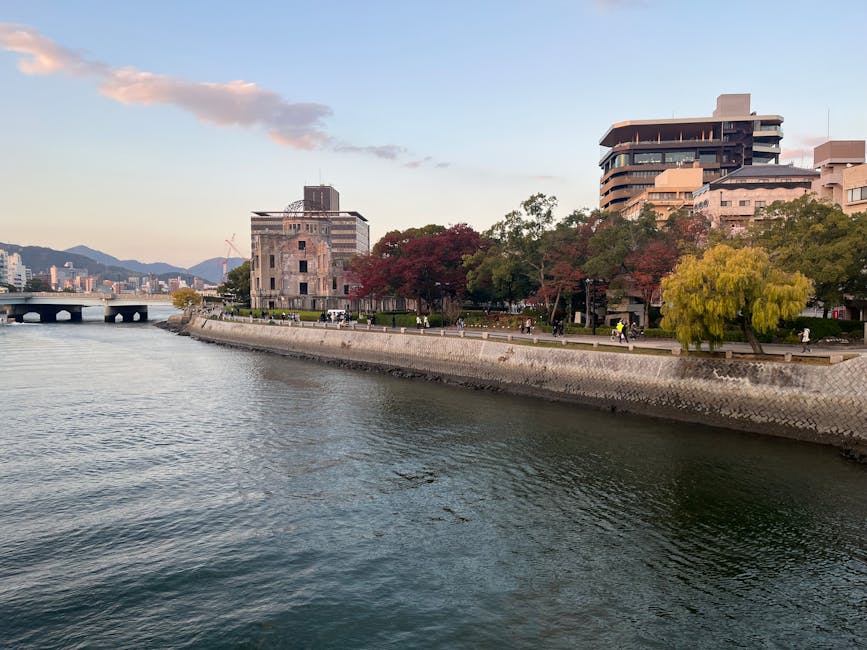
Hiroshima didn’t need to survive. After the bombing, many observers believed the city would be uninhabitable for 75 years due to radiation contamination. Tokyo considered abandoning it permanently. Some American scientists believed nothing would ever grow there again.
They were all wrong. Plants started growing back within weeks. Oleander bushes bloomed in 1946. The first post-war rice harvest succeeded. By 1949, Japan’s Diet passed the Hiroshima Peace Memorial City Construction Law, which designated Hiroshima as a “peace memorial city” — the first official use of the term.
The rebuilding was deliberate and symbolic. Rather than returning the city to its pre-war configuration, the planners rebuilt it around peace as a theme. The Peace Memorial Park replaced the commercial district. The Peace Memorial Museum was built directly across from the Dome. New schools, new streets, new hospitals — all designed to show that the city had chosen to build rather than mourn.
Today Hiroshima has 1.2 million residents and is one of Japan’s most livable cities. The commercial district moved south. The restaurants, bars, and shopping are all within walking distance of the Peace Park. Hiroshima is a genuinely pleasant city to visit — not despite its history but because of how it has chosen to carry that history.
Combining with Miyajima
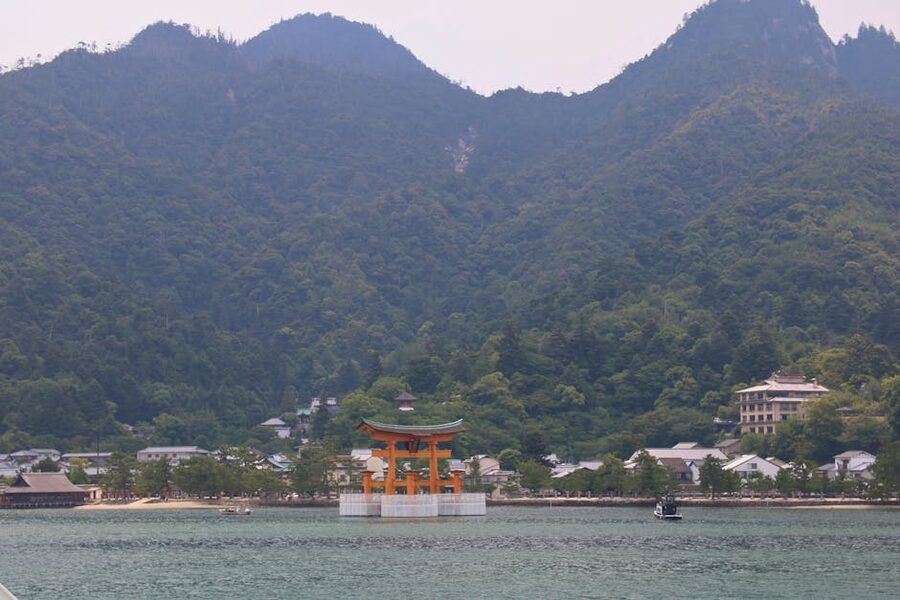
Miyajima Island is a 40-minute trip from central Hiroshima (train + ferry) and it’s where most visitors spend their afternoons after the morning Peace Park tour. Our Hiroshima and Miyajima day trip guide covers the combined-day tours if you want to do it all in one booking.
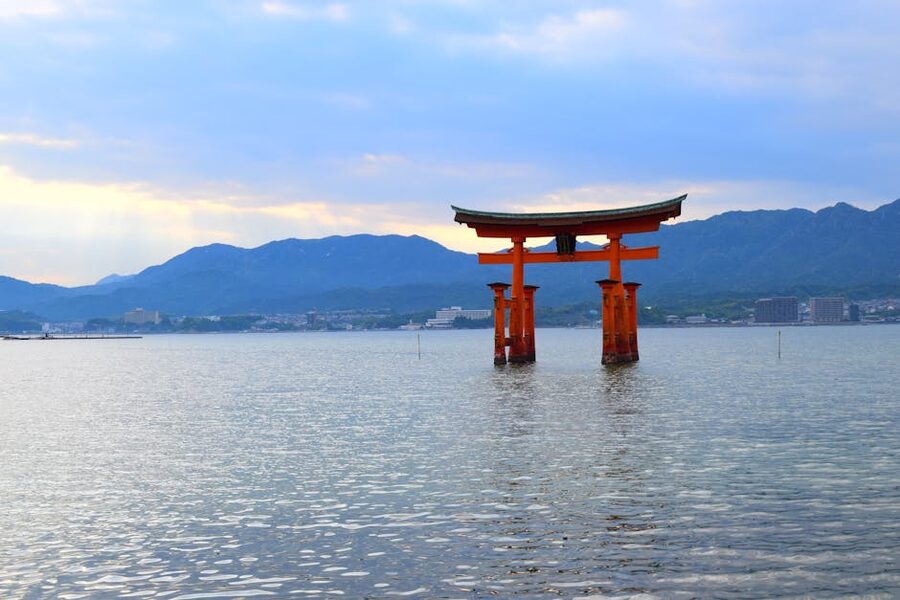
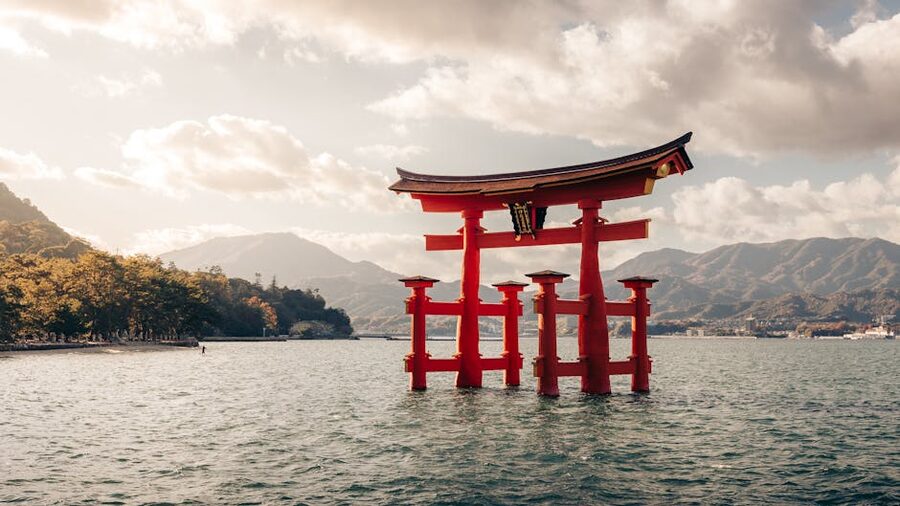
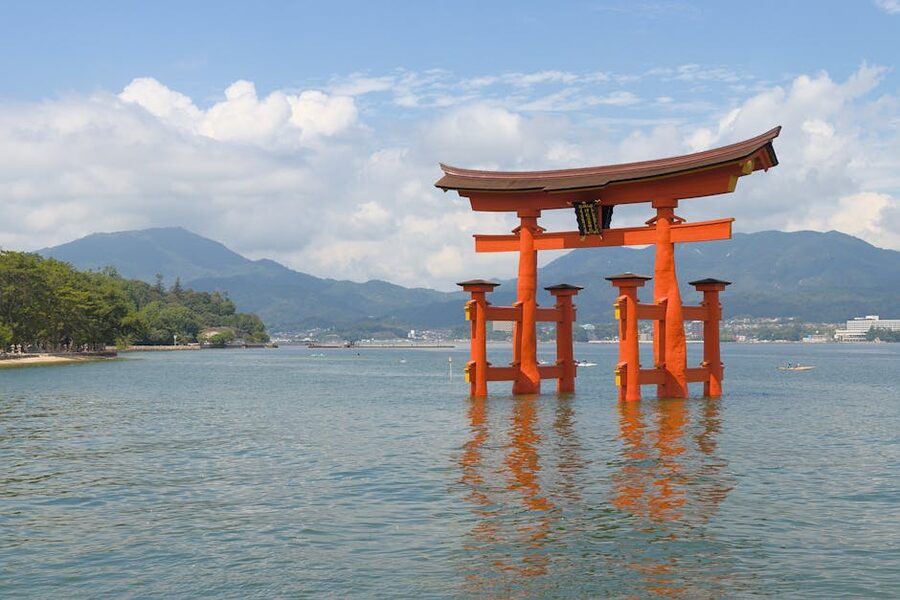
Miyajima is intentionally chosen as the afternoon counterpoint to the heavy morning. The torii, the temple, the deer walking the streets — it’s Japan at its most calmly beautiful. After the Peace Park, you need it.
Hiroshima Food: What to Eat While You’re There
Hiroshima has its own food specialties you won’t find elsewhere in Japan.
Hiroshima-style okonomiyaki: The local variant of Japan’s savoury pancake. Layered instead of mixed — the bottom is a thin crepe, then noodles (the Hiroshima innovation), then cabbage, pork belly, egg, and topping. Completely different from Osaka’s mixed version. Locals will argue passionately about which is better. The answer is: both, but they’re different dishes.
Momiji manju: Maple-leaf-shaped cakes filled with red bean paste, chocolate, matcha, or custard. Miyajima invented them. Every shop on the island sells them and they all taste slightly different.
Oysters: Hiroshima Bay produces some of Japan’s best oysters. October to March is peak season. Grilled, fried, in chowder, as oyster rice — the local restaurants put them in everything.
Onomichi ramen: The Hiroshima prefecture ramen style — soy-based broth with pork back fat floating on top. Not the same as Hakata or Sapporo ramen.
Practical Tips
When to book: 2-3 days ahead. Some peak dates (August 6 anniversary, cherry blossom season) book faster.
Duration: Most walking tours are 2.5-3 hours. The bike tour is 3-4 hours. Budget half a day total including travel to/from the meeting point.
What to wear: Comfortable walking shoes. The tours cover 3-5km on flat paved paths. Dress respectfully for the memorial sites — not formal, but not beach clothes.
Age: Appropriate for kids 10+. Younger children may find some of the museum content upsetting. The tours can skip the museum if you’re with small kids.
Photography: Allowed everywhere except certain museum exhibits (posted). The Dome and the monuments are all photographable. Be respectful — don’t do tourist poses or silly selfies.
Language: All tours in English. The guides are usually native English speakers or bilingual Japanese with deep local knowledge.
Accessibility: The Peace Memorial Park is fully wheelchair-accessible. The Dome has flat paved paths around it. The museum has elevators. Contact the operator for specific accessibility needs.
Cash: Not strictly needed — most places accept cards — but the castle museum and some small vendors are cash-only. Bring 2,000-3,000 yen.
Getting to Hiroshima
From Tokyo: 4 hours by Shinkansen (bullet train) from Tokyo Station to Hiroshima. JR Pass covers it.
From Kyoto/Osaka: 1.5-2 hours by Shinkansen. This is the easiest day trip option.
From Hiroshima Station: Tram line 1 (the “Peace Loop”) runs directly to the Peace Memorial Park. 15 minutes from the station, about 240 yen.
Staying overnight: Worth doing if you want to see Miyajima plus the Peace Park without rushing. Many visitors spend one night in Hiroshima to fit both into a proper itinerary.
A Full Day in Hiroshima
Here’s the day that works for most visitors.
Morning (8-9am): Arrive in Hiroshima. Take the tram to the Peace Memorial Park.
9-12pm: Walking tour — Dome, Children’s Peace Monument, eternal flame, Peace Museum.
Lunch: Hiroshima-style okonomiyaki at Okonomi-mura (a building full of okonomiyaki stalls, each with their own version). About 1,000-1,500 yen per serving.
Early afternoon: Train to Miyajimaguchi, ferry to Miyajima Island (40 min total). Visit Itsukushima Shrine and wander the deer-populated streets.
Late afternoon: Return to Hiroshima. Visit Hiroshima Castle if time allows, or relax in Shukkeien Garden.
Evening: Dinner at a local restaurant. Train back to Kyoto/Tokyo or stay overnight.
More Experiences
Hiroshima is one of the essential day trips from central Japan. Our Hiroshima and Miyajima day trip guide is the natural next read — the combined day tour packages. For another contrast experience in Japan, the Kyoto samurai kenbu show is the cultural counterpart — warrior tradition vs peace memorial. Tokyo’s Asakusa Sensoji tour covers old Tokyo’s historical neighbourhood — a good contrast to Hiroshima’s newer post-war identity. And for another heavy emotional destination, visitors often compare the Hiroshima tours with the Cambodia Killing Fields tour — two of the most important history-focused walking tours in Asia.