
There were 60 of us. Sixty strangers from a dozen countries, crammed into a basement bar in Shibuya, holding free shots of something bright green, and the guide — a guy with the energy of someone who drinks Red Bull instead of water — was counting down from five. By the time we hit the second bar, the Australians had adopted the solo Korean traveller, the German couple were teaching the Japanese group a drinking game, and I was explaining cricket to a Brazilian who kept nodding enthusiastically while clearly not understanding a word. That’s what a Tokyo pub crawl is. Not a tour. A social detonation.
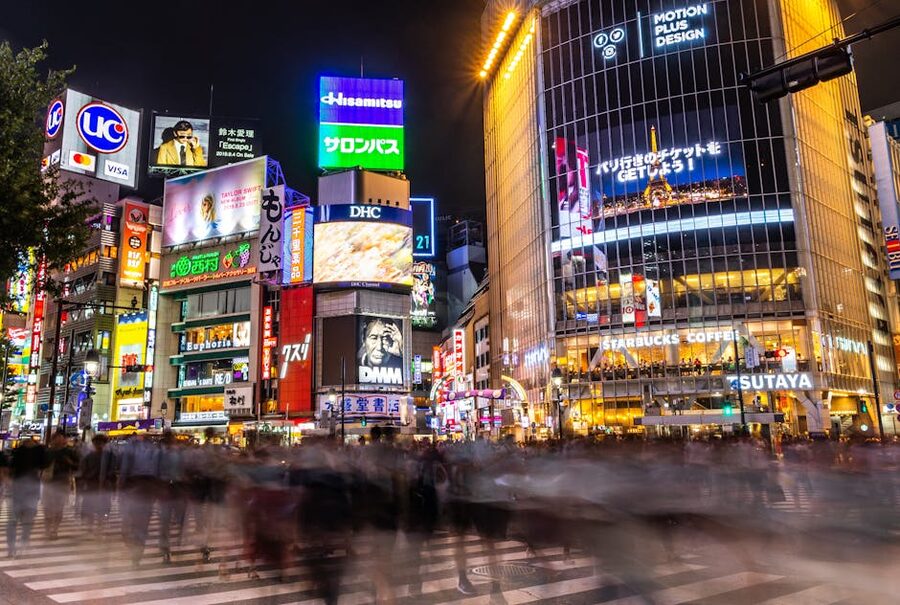
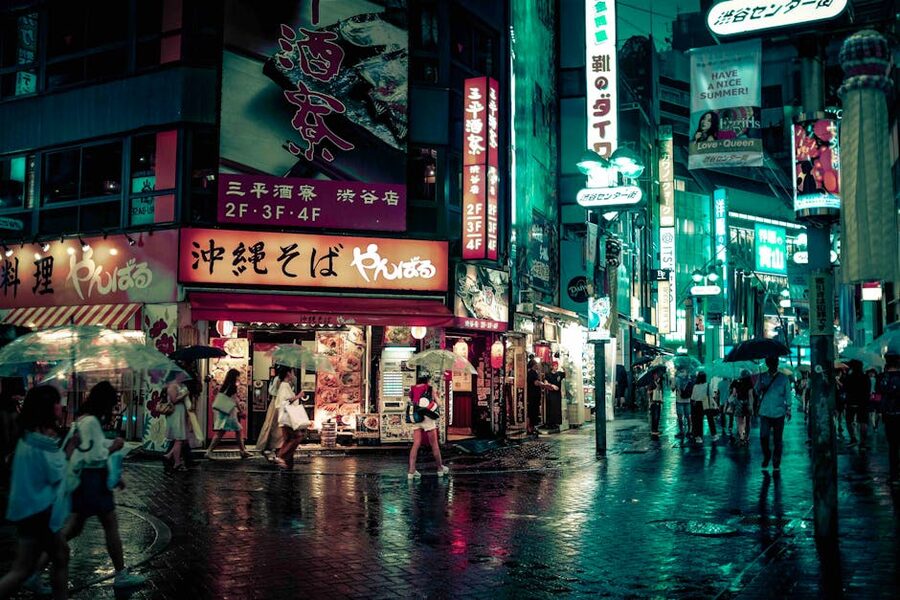
Tokyo pub crawls are group nightlife experiences. You join 20-60 strangers, follow a guide through 3-4 bars and a club, get free shots at each venue, and pay a flat fee that covers entry and drinks deals. They run in Shibuya, Shinjuku, and Roppongi — Tokyo’s three biggest nightlife districts. The vibe is party, not cultural tour. If you want quiet izakaya hopping with a guide explaining sake, that’s a bar hopping tour — different thing entirely. Pub crawls are louder, bigger, and designed for meeting people.
Short on time? Here are my top picks:
Best overall: Tokyo Pub Crawl and Bar Tour — $27, 5 hours, 951 reviews. The biggest group (up to 60+), free shots at each venue, ends at a club. Starting from Shibuya.
Best value: Tokyo Pub Crawl (Roppongi) — $25, 604 reviews. Roppongi-based, slightly smaller groups, strong international crowd.
Most local: Japanese Speaking Experience with Pub Locals — $29, 518 reviews, perfect 5.0 rating. Smaller group in Shibuya, focused on meeting Japanese locals at neighbourhood pubs.
- What Actually Happens on a Tokyo Pub Crawl
- The Meeting Point (8-9pm)
- Bar 1: The Ice-Breaker (9-10pm)
- Bar 2: The Local Spot (10-11pm)
- Bar 3: The Wildcard (11pm-12am)
- The Club (12am onwards)
- The 3 Best Tokyo Pub Crawls
- 1. Tokyo Pub Crawl and Bar Tour —
- 2. Tokyo Pub Crawl (Roppongi) —
- 3. Japanese Speaking Experience with Pub Locals —
- Shibuya vs Shinjuku vs Roppongi: Where to Crawl
- Shibuya
- Shinjuku (Golden Gai & Kabukicho)
- Roppongi
- Pub Crawl vs Bar Hopping Tour: What’s the Difference?
- Solo Travellers and Safety
- How to Book
- What’s Included (and What’s Not)
- Practical Tips
- Getting There
- More Tokyo Nightlife
What Actually Happens on a Tokyo Pub Crawl
Here’s the typical flow. The details vary between operators, but the structure is consistent.
The Meeting Point (8-9pm)
Most crawls start around 8-9pm. You meet near a landmark — Hachiko statue in Shibuya, or a specific bar entrance in Roppongi. The guides check you in, hand out wristbands or name tags, and give a brief welcome speech. This is the awkward phase. Sixty strangers standing in a circle, not sure who to talk to. It lasts about 10 minutes. Then the shots start and the awkwardness evaporates.
Bar 1: The Ice-Breaker (9-10pm)
The first bar is always the social one. Spacious enough for the full group, with music low enough to talk. Free welcome shots. The guides run mixing games — speed introductions, drinking games, group challenges. The purpose is simple: break down barriers fast so people talk to each other instead of standing against the wall checking their phones. It works. By the end of the first bar, you know at least 5-6 people’s names and countries.
Bar 2: The Local Spot (10-11pm)
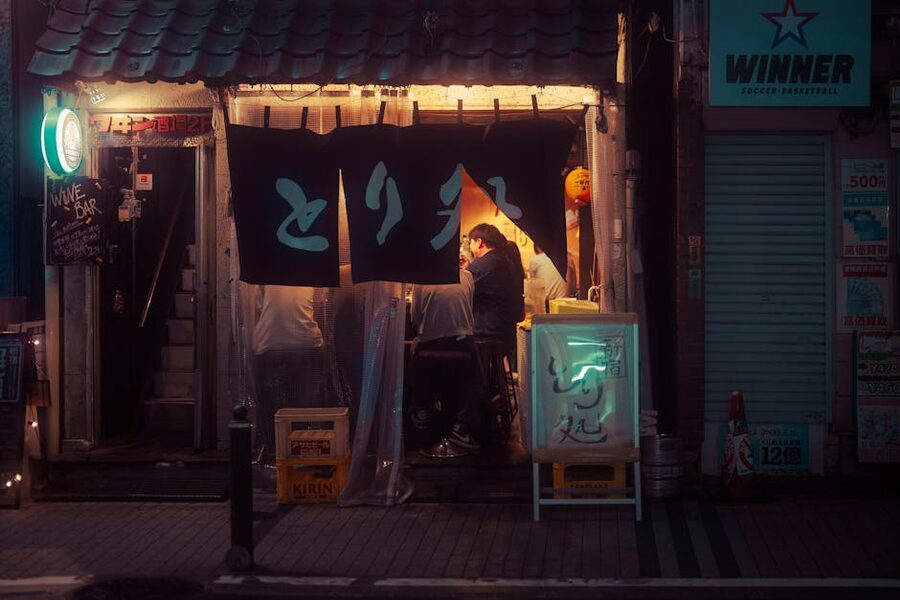
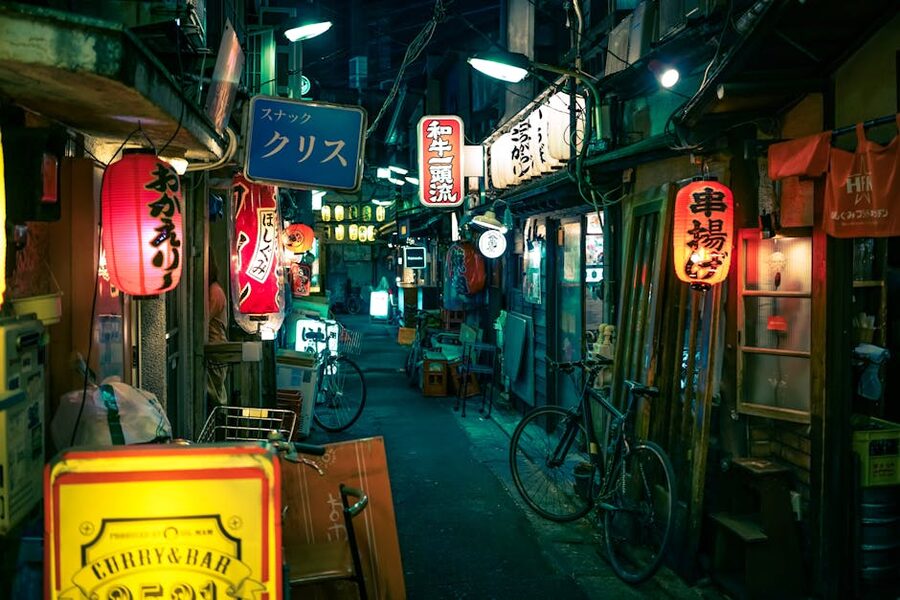
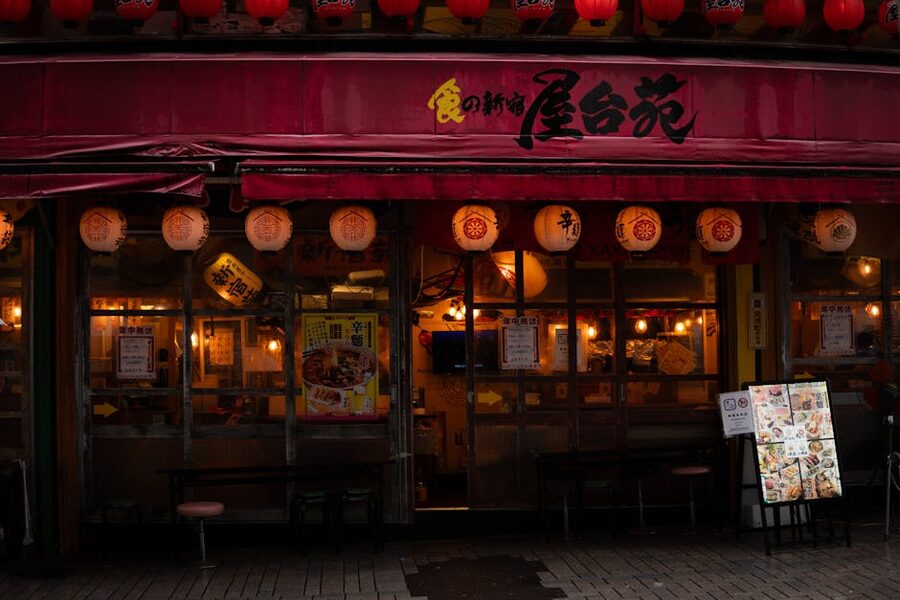
The second venue is usually smaller, more local. A standing bar, an izakaya, or a themed bar (there’s one crawl that hits a ninja bar). The group often splits across two or three small venues on the same street. This is where the night starts to feel like your own — you’re not following the group anymore, you’re hanging out with the 4-5 people you clicked with at bar one.
Bar 3: The Wildcard (11pm-12am)
Third bar is the guide’s choice. Could be a karaoke room (always a hit), a rooftop bar with a Shibuya skyline view, or a dive bar with ¥300 drinks. More shots. More mixing. By this point, the energy has built to the point where people are switching between conversation groups naturally. The solo travellers have been absorbed into the group. The shy people from bar one are leading drinking games.
The Club (12am onwards)
The crawl officially ends at a nightclub with free or discounted entry. Shibuya and Roppongi have clubs that stay open until 5am. The guide’s role is done — you’re on your own from here. Most people stay. The group you’ve built over three bars usually sticks together for at least the first hour at the club. After that, Tokyo’s nightlife takes over.
The 3 Best Tokyo Pub Crawls
1. Tokyo Pub Crawl and Bar Tour — $27
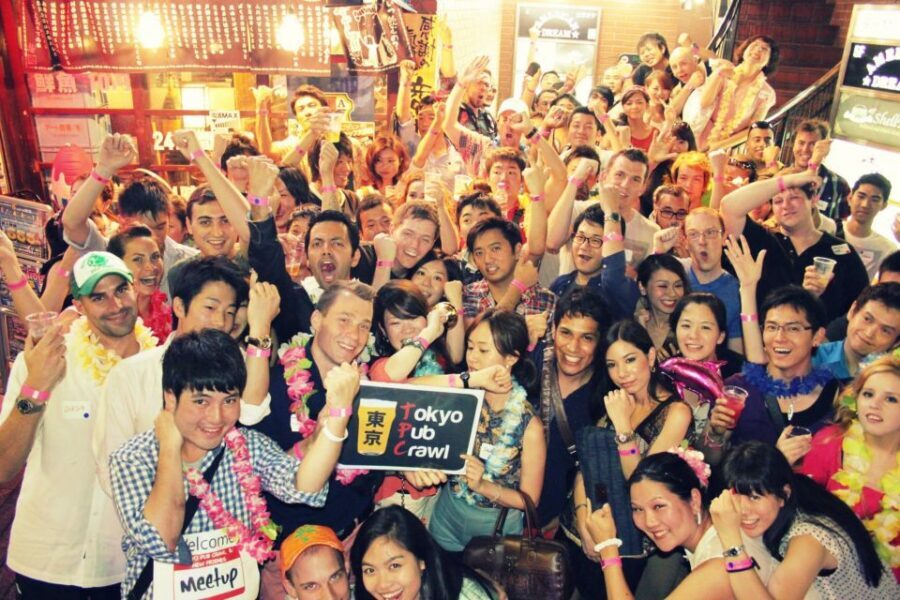
The flagship Tokyo pub crawl — 951 reviews, $27, and 5 hours of nightlife. Starts in Shibuya. You hit 3+ bars with free shots at each, then finish at a club with free entry. Matthew, who came on a recent crawl, called it the best bar crawl he’d ever done in any country. Over 60 attendees, good bar selection, and he made friends he went out with the next night. Our full review covers the venues and what to expect.
2. Tokyo Pub Crawl (Roppongi) — $25
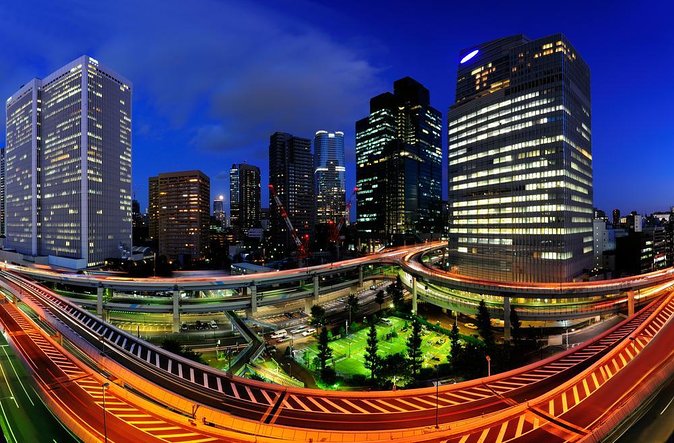
The Roppongi-based crawl has 604 reviews and starts at $25. Roppongi is Tokyo’s most international nightlife district — the bars are used to foreign visitors, the staff often speak English, and the music ranges from hip-hop to house to J-pop. Our review compares the Roppongi vibe to the Shibuya version.
3. Japanese Speaking Experience with Pub Locals — $29
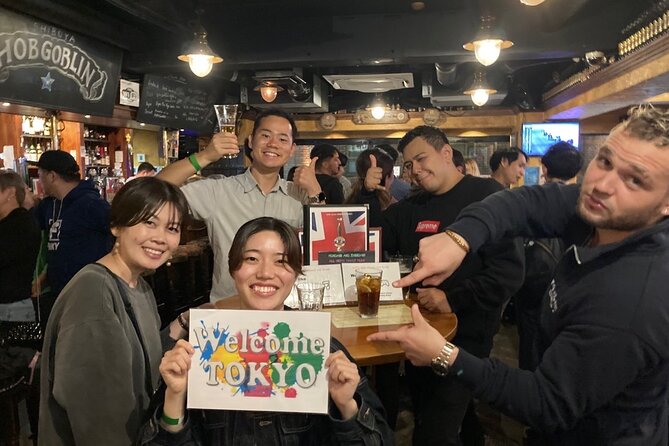
A perfect 5.0 across 518 reviews. This isn’t really a pub crawl — it’s a guided introduction to Japanese drinking culture. Smaller groups, neighbourhood bars in Shibuya, and the focus is on meeting locals rather than partying with travelers. Candice, who visited recently, was a great host who got everyone laughing and dancing. Our review explains what makes this one unique.
Shibuya vs Shinjuku vs Roppongi: Where to Crawl
Each district has a different personality at night. The pub crawl you choose often depends on where it starts.
Shibuya
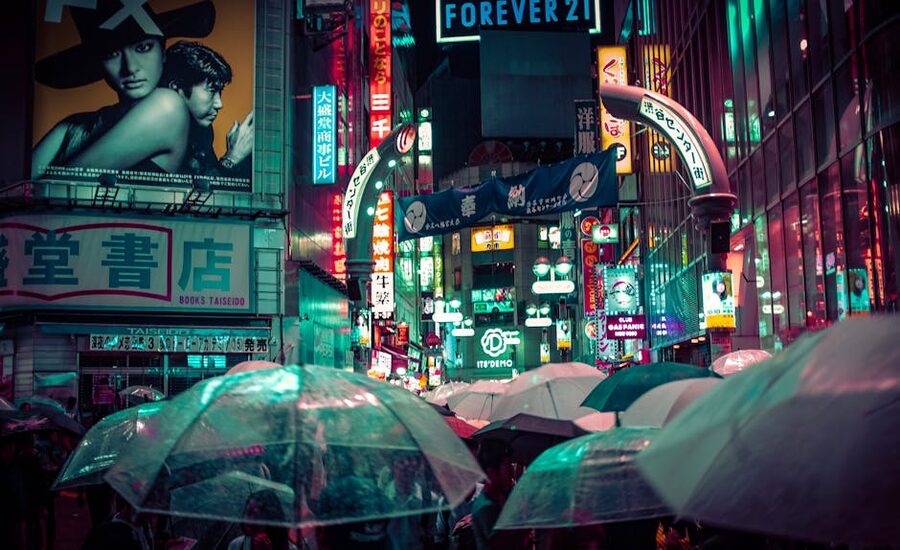
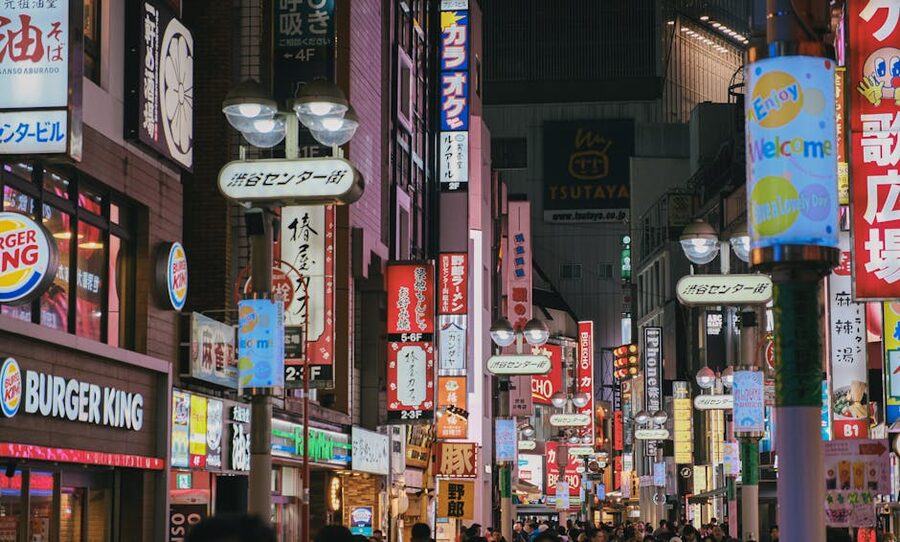
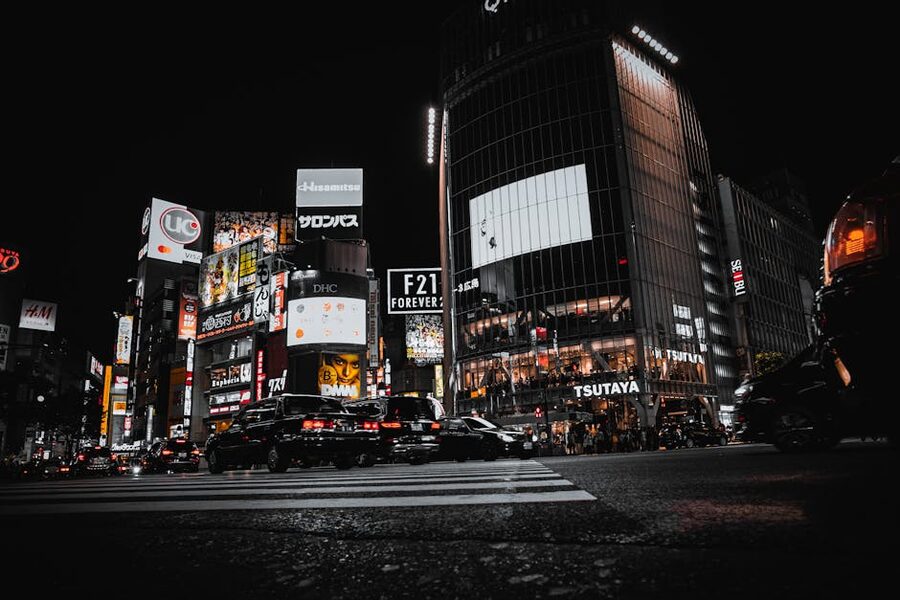
The youngest, most energetic nightlife district. Centre Gai is the main strip — loud, neon, packed with 20-somethings. The backstreets behind it hide hundreds of small bars stacked vertically in narrow buildings. Most Tokyo pub crawls start in Shibuya because it has the widest range of venues — from standing bars to rooftop cocktail spots to basement clubs. The energy is high and the crowd skews young and international.
Shinjuku (Golden Gai & Kabukicho)
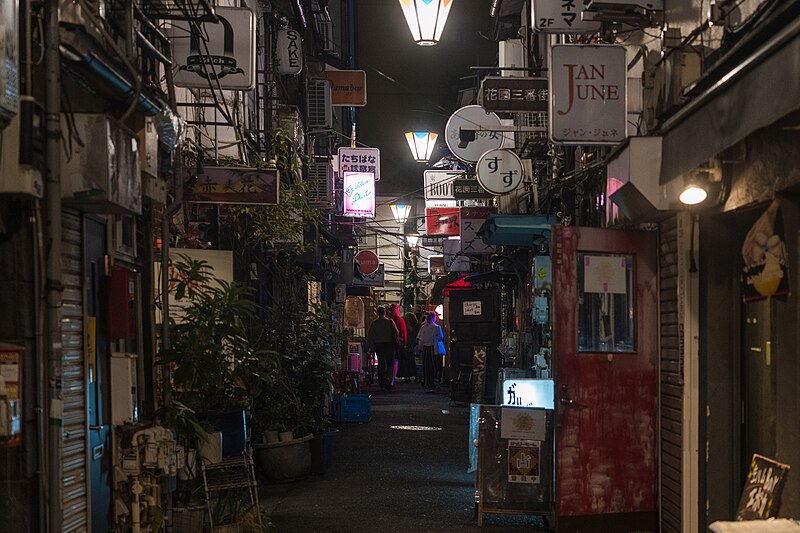
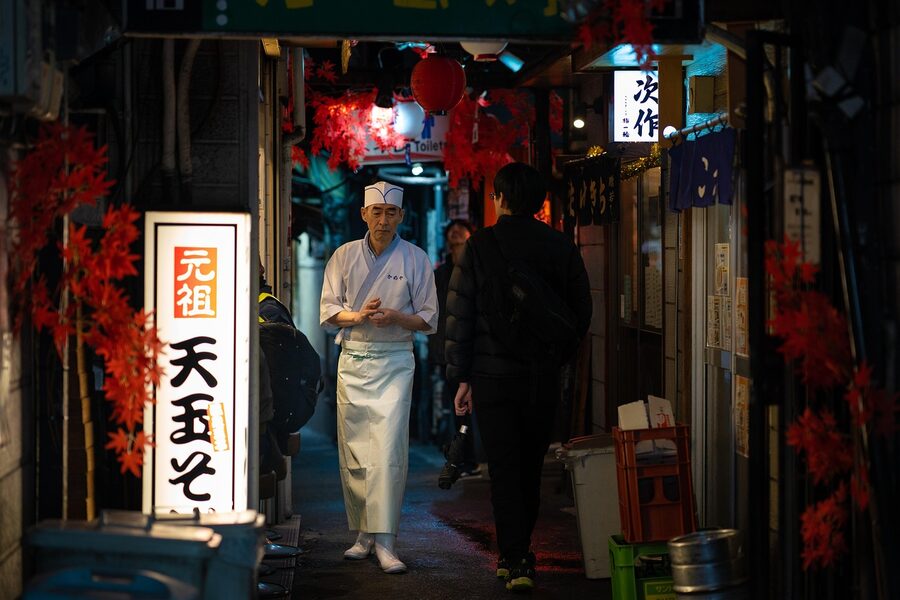
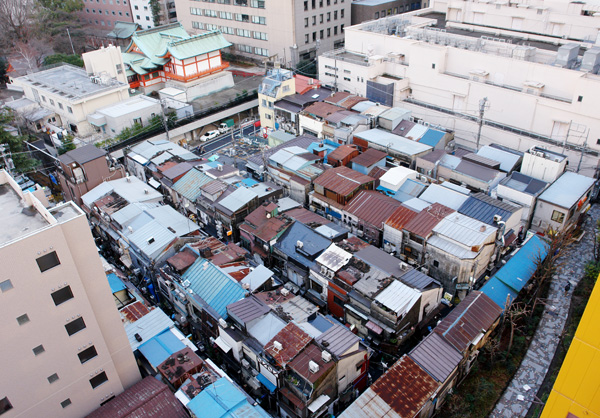
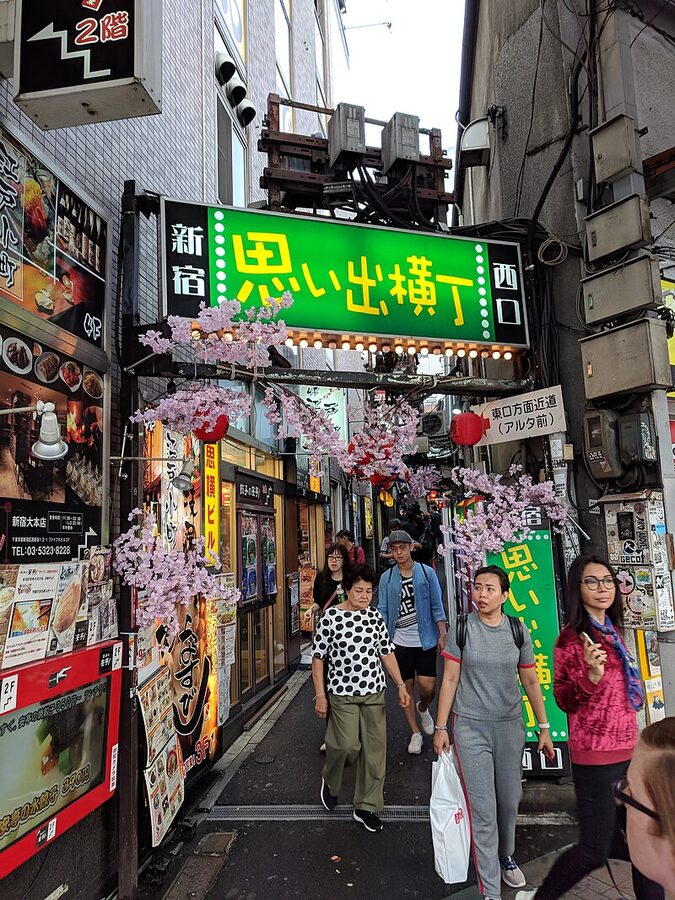
Shinjuku splits into two nightlife zones. Golden Gai is the famous one — six narrow alleys with over 200 tiny bars, most seating fewer than 10 people. It’s atmospheric, intimate, and can be intimidating to navigate alone. Some bars charge cover fees, some are regulars-only, and the signs are all in Japanese. A guide is genuinely useful here. Our Shinjuku night walking tour guide covers Golden Gai in depth.
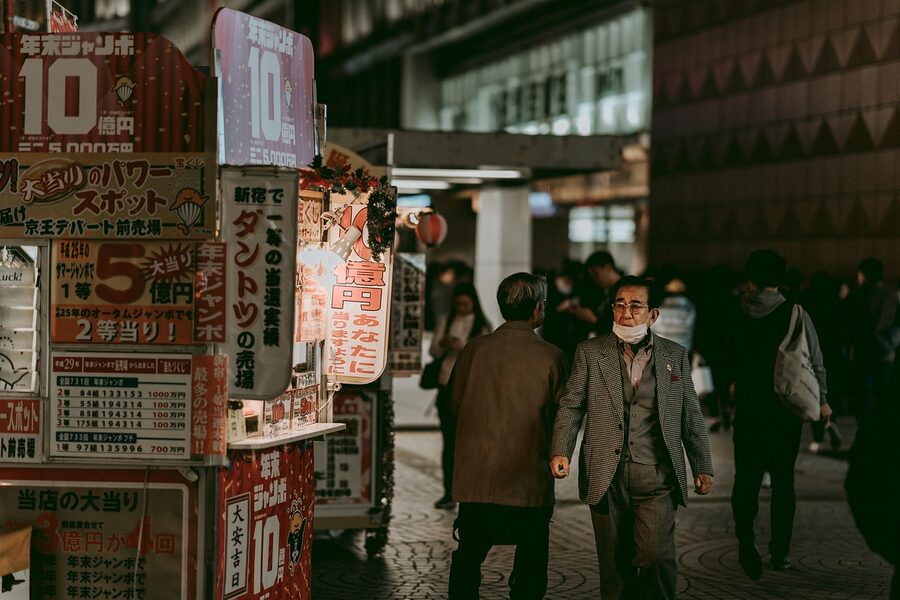
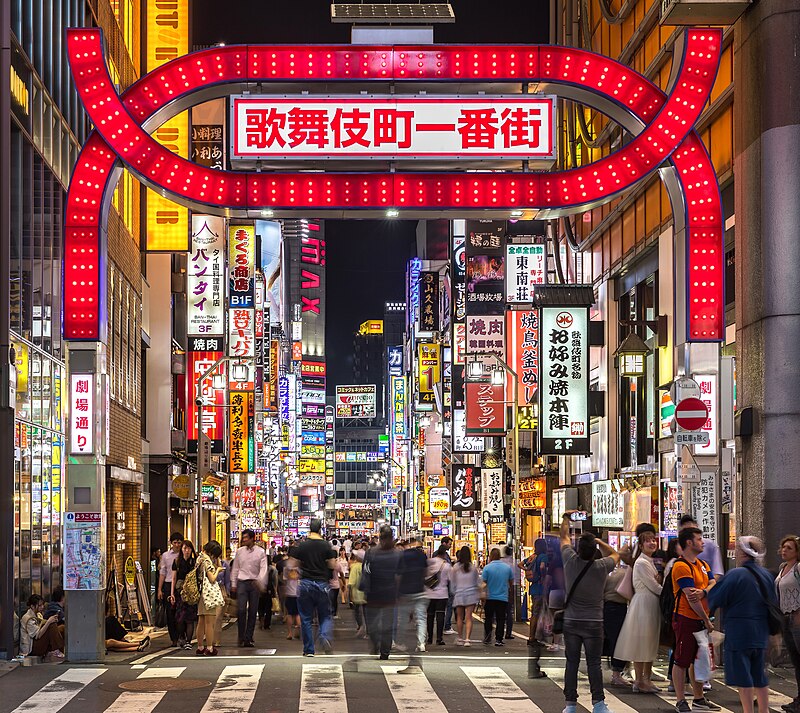
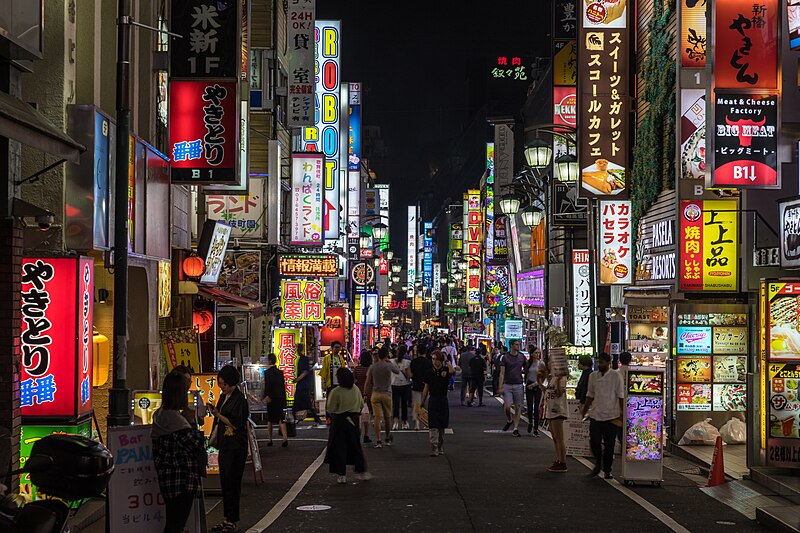
Kabukicho is the bigger, louder side of Shinjuku nightlife. Named after a kabuki theatre that was planned but never built, it’s Tokyo’s largest entertainment district. Neon everywhere, touts on every corner (politely decline and keep walking), and a mix of mainstream clubs, karaoke chains, and themed restaurants. The pub crawls that pass through Kabukicho stick to the established, safe venues.
Roppongi
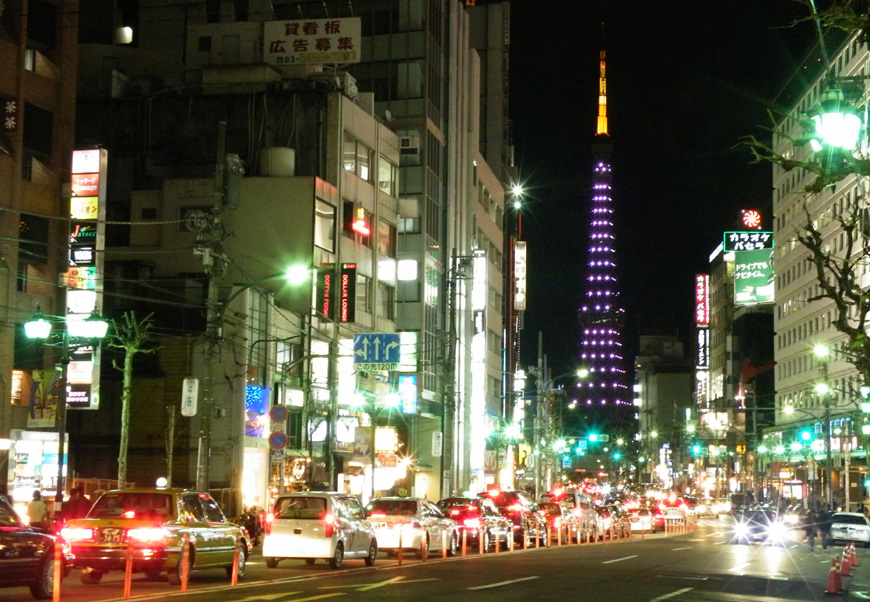
The most international of the three. Roppongi has been Tokyo’s foreign nightlife hub since the 1960s when the US military base was nearby. Today it’s where expats, international business travellers, and travelers drink. The bars are larger, English is widely spoken, and the club scene is more mainstream (hip-hop, EDM, Top 40). If Golden Gai feels too Japanese and Shibuya feels too chaotic, Roppongi is the comfortable middle ground.
Pub Crawl vs Bar Hopping Tour: What’s the Difference?
Tokyo offers both pub crawls and bar hopping tours. They sound similar but the experience is very different.
Pub crawl: 20-60 people, party atmosphere, free shots, 3-4 bars + a club, ends after midnight, focus on socialising and nightlife. Think stag do energy. The guide is more MC than educator.
Bar hopping tour: 4-12 people, intimate, a guide who explains Japanese drinking culture, visits to local izakayas and standing bars, includes food, ends around 10-11pm. Think cultural experience with drinks. The guide is knowledgeable about sake, shochu, and Japanese bar etiquette.
Neither is better. They serve completely different needs. Pub crawl = party + people. Bar hopping = culture + cuisine. Some visitors do both on different nights.
Solo Travellers and Safety
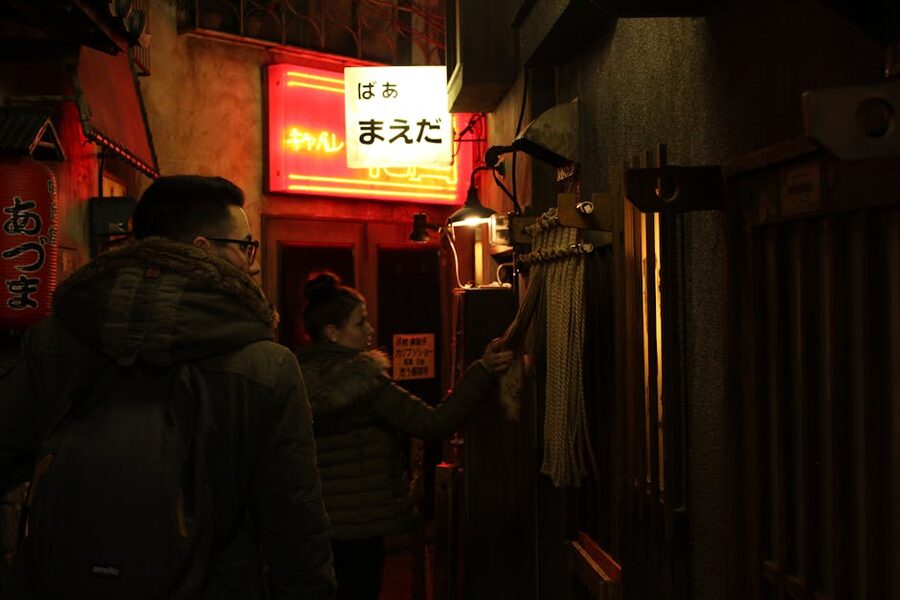
Pub crawls are one of the best solo traveller activities in Tokyo. About 40-50% of attendees on any given night are solo. The format is specifically designed to break ice — the games, the shots, the movement between venues all force interaction. By the second bar, “solo” doesn’t exist anymore. You’re part of the group.
Female solo travellers: Tokyo is one of the safest cities in the world for nightlife. The organised pub crawls add another layer — the guides are trained, the venues are vetted, and you’re always in a group. Several operators specifically market to female solo travellers and the reviews consistently confirm it feels safe. That said, standard nightlife precautions apply everywhere: watch your drink, keep your phone charged, and have your hotel address saved for the taxi ride home.
General safety: Tokyo’s crime rate is extremely low. The main “danger” on a pub crawl is drinking too much — the shots add up fast. Pace yourself. Eat before you go (this is essential, not optional). The last trains run around midnight, so if you’re not planning to stay at the club until 5am, keep an eye on the time. After midnight, taxis or walking are your options.
How to Book
When to book: 1-2 days ahead is usually fine. Weekend crawls (Friday and Saturday) fill up faster. Same-day booking is possible but not guaranteed.
Where to book: GYG and Viator have the most reviews and the easiest cancellation policies (free up to 24 hours). The operators also sell directly through their websites (tokyopubcrawl.com, etc.) but the booking protection is better through the platforms.
Which night: Friday and Saturday have the biggest groups and most energy. Weeknight crawls exist (usually Thursday) and run smaller — 15-25 people. Some people prefer the weeknight vibe: less chaotic, easier to talk, more chance to actually get to know people instead of shouting over music.
What to wear: Casual. Trainers are fine. Some clubs have a “no shorts, no sandals” policy but the guides will tell you in advance if there’s a dress code at the final venue. Don’t dress up too much — you’ll be walking between bars in the humidity.
What to bring: Cash (some bars are cash-only), your phone (charged), and your hotel address saved somewhere accessible. Don’t bring valuables. Small crossbody bag beats a backpack.
What’s Included (and What’s Not)
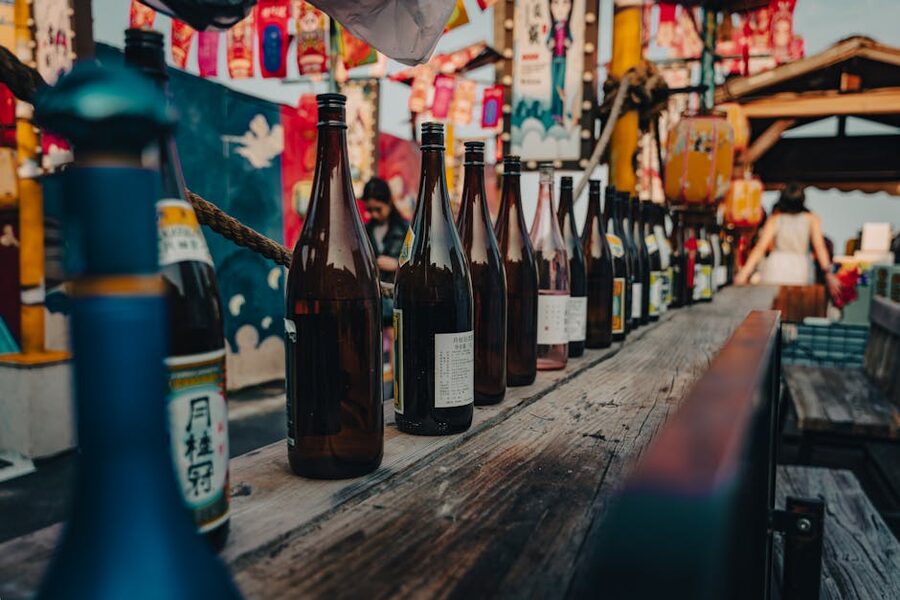
Typically included: Guide/host for the evening. Free shots at each venue (usually 1-2 per bar). Club entry (or heavily discounted entry). Group activities and games. Name tags or wristbands.
Typically NOT included: Your own drinks beyond the free shots. Food. Transport to/from the meeting point. Transport home after the club.
Real cost of the night: The ticket is $25-29. Budget another ¥3,000-5,000 ($20-35) for drinks you buy yourself. Add ¥2,000-3,000 for food before or during. A taxi home after midnight runs ¥2,000-5,000 depending on distance. Total: about ¥10,000-15,000 ($65-100) for the full evening including everything. That’s cheaper than most solo nights out in Tokyo.
Practical Tips
Eat before you go. This is the single most important piece of advice. The crawls don’t include food and the shots start immediately. A proper meal before 8pm is the difference between a great night and a terrible morning. Ramen, curry, or a bento from the konbini — something substantial.
Last train is around midnight. Tokyo trains stop running between midnight and 1am depending on the line. If the crawl ends at a club at midnight, you have about 30 minutes to get to a station. Most people either stay at the club until 5am (when trains resume) or take a taxi. Budget for the taxi.
Drink water between shots. The guides will offer you shots at every bar. You don’t have to accept all of them. Nobody will judge you for pacing yourself. Konbini (convenience stores) are everywhere — a ¥100 bottle of water between bars is smart money.
Exchange contacts early. If you meet someone you click with, swap LINE IDs or Instagram handles at bar one or two, not at the club when you can barely see your phone screen. The people you meet on pub crawls often become your travel companions for the rest of your trip.
The guides work on tips. Not required in Japan, but pub crawl guides are the exception. If your guide made the night, ¥1,000-2,000 is appreciated.
Getting There
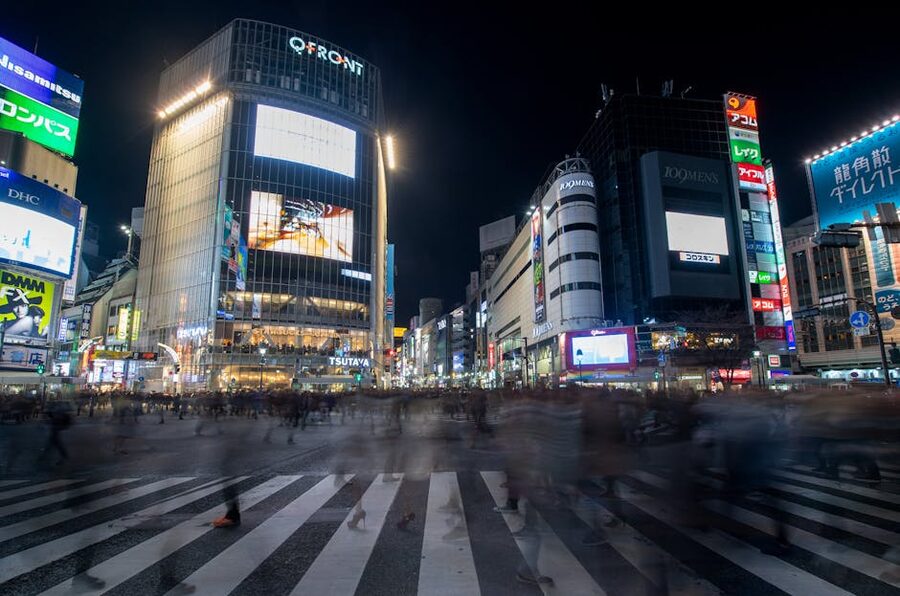
Shibuya crawls: Shibuya Station (all major lines). Meet at Hachiko statue. Take the JR Yamanote Line from anywhere in central Tokyo.
Roppongi crawls: Roppongi Station (Hibiya Line or Oedo Line). The meeting points are usually within 2 minutes of the station.
Shinjuku crawls: Shinjuku Station (all major lines). The world’s busiest station — follow signs to the East Exit for Kabukicho and Golden Gai.
More Tokyo Nightlife
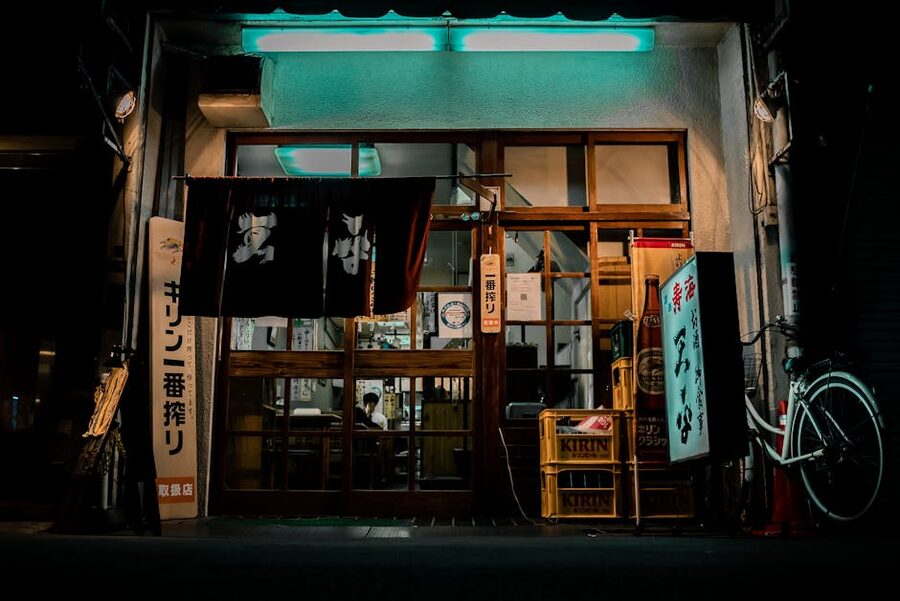
The pub crawl is the party option. For the cultural side of Tokyo after dark, our Tokyo bar hopping guide covers intimate izakaya tours with food and sake education. The Shinjuku night walking tour takes you through Golden Gai and Omoide Yokocho with a guide who explains the history. For daytime Tokyo, our Asakusa temple walking tour and Tsukiji fish market food tour are the best morning activities — get the culture done before the hangover kicks in. And if you’re feeling ambitious, the yakatabune dinner cruise on the Sumida River is the classy alternative to a pub crawl — traditional boat, dinner, drinks, and Tokyo Bay views.