Here is the blunt truth about Bali’s beaches: most of them are not actually very good. Kuta is grey sand and a muddy shore break. Seminyak is better for sunset cocktails than for swimming. Canggu’s beaches look like a construction site from above. Sanur is calm but shallow and weedy.
Even the much-loved Balangan and Bingin on the Bukit peninsula are narrow strips of coarse sand at the base of crumbling cliffs that vanish at high tide. You can have a wonderful trip to mainland Bali and spend almost none of it in the water. And then, a 45-minute speedboat ride southeast of Sanur, there is an island that is not really like Bali at all.
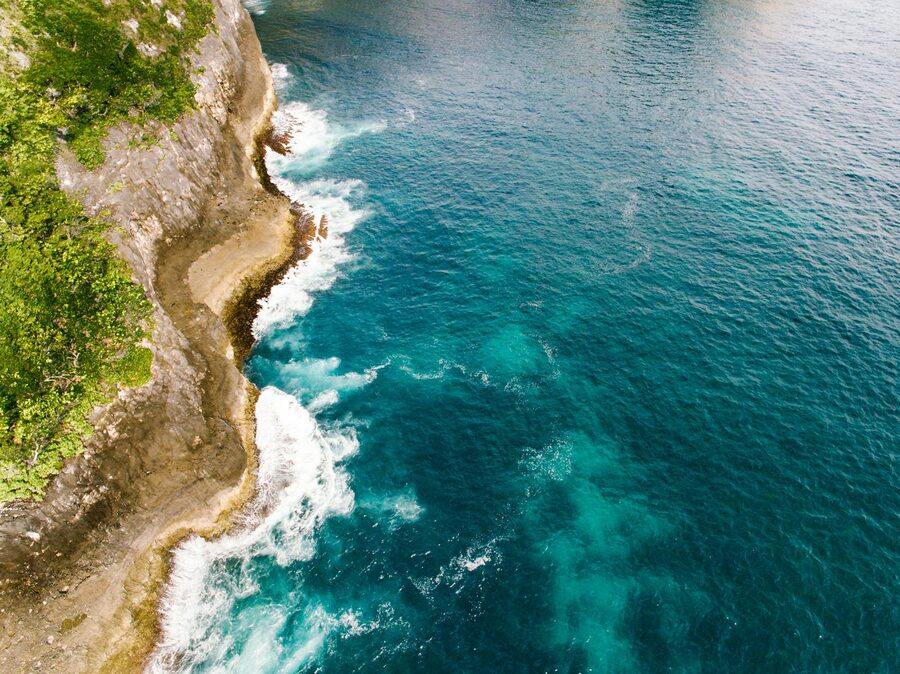
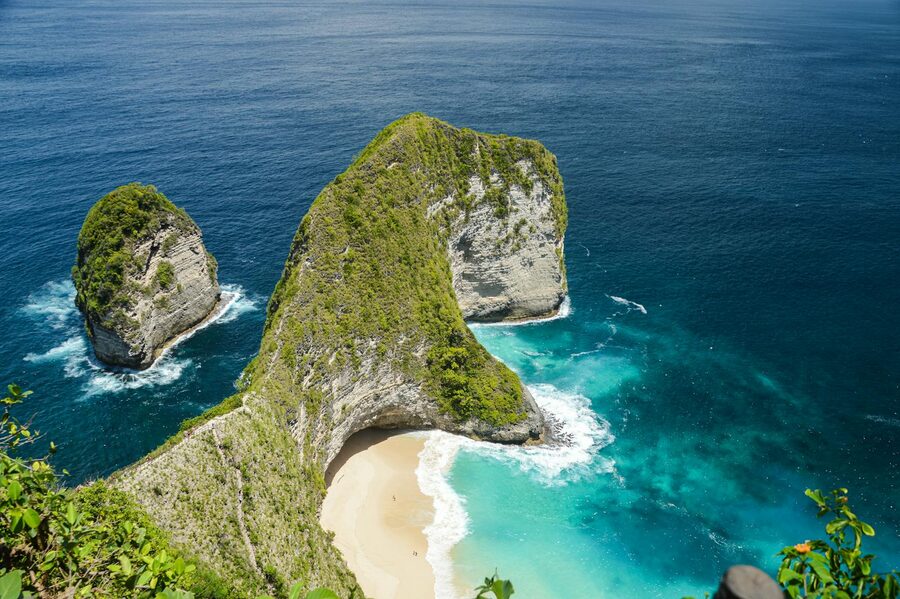
Nusa Penida is where the Indian Ocean gets taken seriously. Its beaches are dropped to the bottom of 200-meter limestone cliffs, its snorkeling runs rival the Great Barrier Reef for fish density, and its single most photographed headland — the long green ridge at Kelingking — is why half the people you know keep that one photo as their phone wallpaper.
If you have one day out of Bali, this is where it should go.
We have spent the last several weeks digging through the Nusa Penida day-trip market. The options are not evenly matched. Some operators run cramped ferries and stuff four stops into six stressful hours; others run premium speedboats with small groups and actually give you enough time in the water. A handful include the manta ray snorkeling that is, honestly, the reason most people go.
Below, we walk through the three tours we would actually book, what the logistics of a day trip to Nusa Penida look like in practice, and the tradeoffs between the famous west-island “Instagram loop” and the quieter east-island itinerary that most first-timers never hear about.
- Why Nusa Penida Doesn’t Look Like the Rest of Bali
- The Logistics of a Day Trip to Nusa Penida
- 1. Premium All-Inclusive Full Day Tour from Bali to Nusa Penida
- 2. Nusa Penida by Private Boat — Snorkeling 4 Spots, Swim with Mantas
- 3. Nusa Penida Snorkeling 3 Spots with GoPro & West Land Tour
- West Loop or East Loop? The Nusa Penida Decision Most Tours Do Not Mention
- Getting to Nusa Penida: Boats, Harbours, and the Seasickness Question
- What to Bring for a Nusa Penida Day Trip
- What a Nusa Penida Day Costs (Honest Breakdown)
- The Best Time of Year to Visit Nusa Penida
- Planning the Rest of Your Bali Trip
- Common Questions About Nusa Penida Day Trips
- Our Honest Pick
Why Nusa Penida Doesn’t Look Like the Rest of Bali
Nusa Penida is the biggest of three islands that sit between Bali and Lombok, separated from the mainland by the narrow, current-heavy Badung Strait. Its geology is what makes it feel so different. Where most of Bali is built on soft volcanic soil covered in rice terraces and jungle, Nusa Penida is a raised plateau of hard Pleistocene limestone.
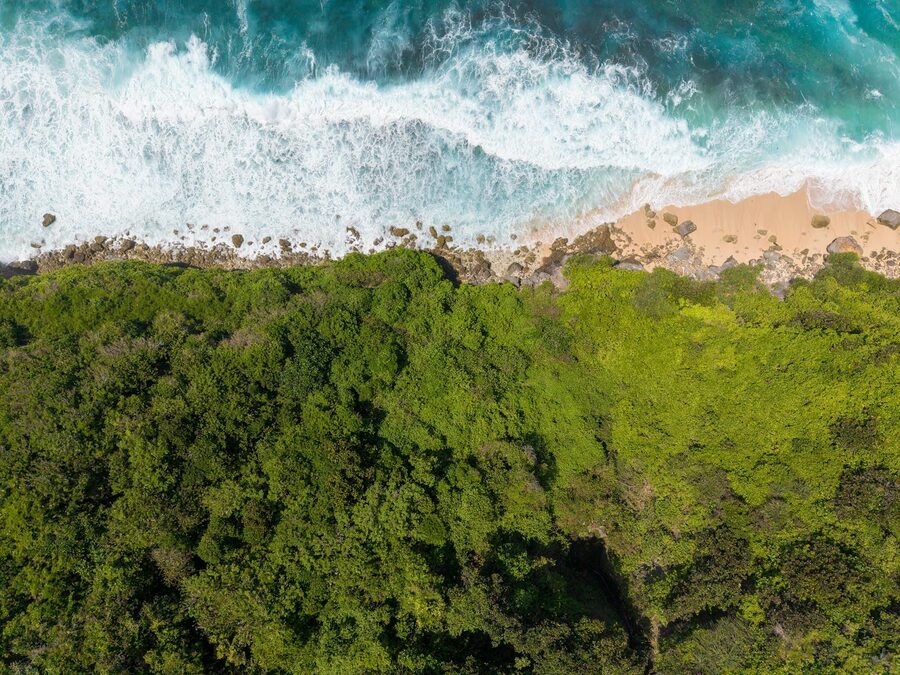
The entire southern coast is a ring of white cliffs that drops more or less straight into the ocean for kilometers at a time. Rainwater vanishes through the porous rock instead of pooling on the surface, which is why the interior is dry and scrubby compared to Ubud’s humid green bowl. There are no rice paddies. There are no volcanoes. There is barely any surface water at all.
The island feels, weirdly, more like the Mediterranean coast of southern Italy than like the rest of Indonesia.
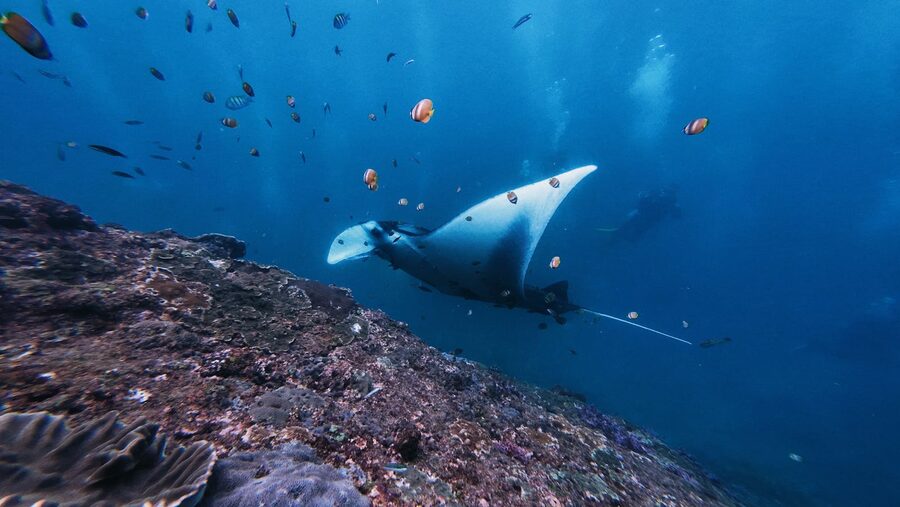
That geology is also why the swimming is so good. The cliffs mean the reefs start right at the shoreline rather than a long walk through shallow silt, and the Badung Strait is a nutrient-rich current highway that funnels plankton past the island’s southern edge — which is exactly why the oceanic manta rays show up at Manta Point almost every day of the year. It is one of the most reliable manta encounters anywhere in the world, which is a sentence we do not use lightly.
A few things that are worth knowing before you book:
- The “island” is actually small. Nusa Penida is only about 200 square kilometers, but the road network is old, narrow, and slow. A lap of the famous southern viewpoints and the east coast is genuinely a full day of driving on bone-jarring roads, and this is why organized day tours exist — self-driving a scooter on Penida is possible, but every traveler we have ever spoken to who did it had a story about a near-miss on a blind corner.
- The west and east sides are completely different experiences. The west-island loop (Kelingking, Broken Beach, Angel’s Billabong, Crystal Bay) is the famous one. The east-island loop (Diamond Beach, Atuh Beach, Thousand Islands viewpoint, Tree House) is quieter, less crowded, and arguably more beautiful. Most day tours cover one or the other, not both. Read the itinerary before you book.
- The cliff-top crowds are real. Kelingking in particular has been on the viral photo circuit since around 2017, and in dry-season peak months you can expect to queue for the main photo spot. Going with a tour that leaves Bali early (first boat at 7:30 a.m.) is the single best thing you can do to beat the buses that arrive from the ferry around 10:30.
- The snorkeling is what separates an OK day from a great one. If a tour skips Manta Point, or only offers snorkeling as an optional upsell, book a different tour. The snorkeling is the thing.
The Logistics of a Day Trip to Nusa Penida
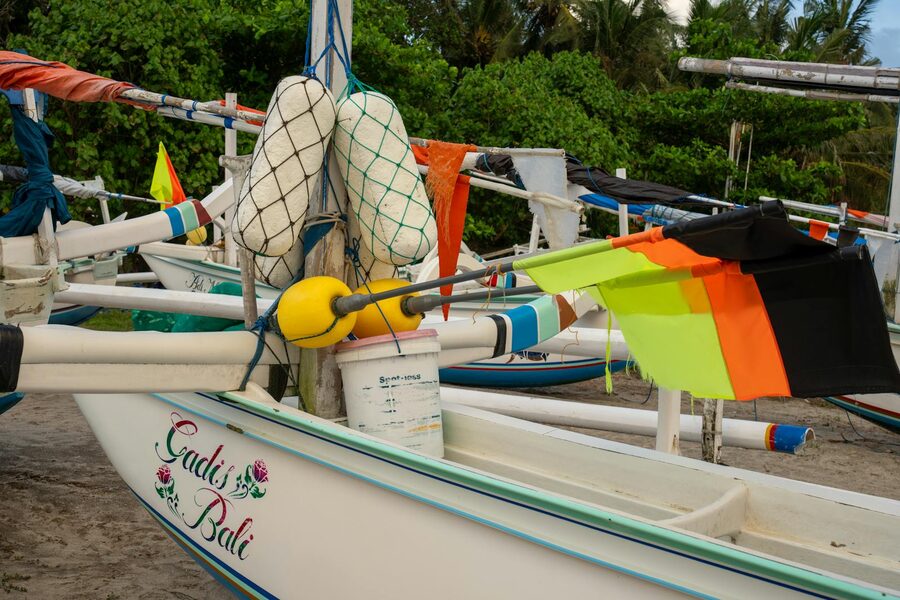
Every organized tour follows roughly the same shape, and it helps to know the shape before you read the individual listings. The vast majority of boats leave from Sanur on Bali’s southeast coast, because the crossing to Penida’s Toya Pakeh harbour is the shortest and calmest route — about 45 minutes on a premium speedboat, closer to an hour on a public ferry that trades comfort for price.
You will almost certainly be picked up from your hotel between 5:30 and 7:00 a.m. depending on where in Bali you are staying. Ubud travellers get picked up the earliest because the drive from Ubud to Sanur can push 90 minutes in morning traffic. Seminyak and Canggu are closer to 6:15. Uluwatu and Jimbaran are the latest, because you are already close to Sanur.
Once you land at Toya Pakeh, the tour has to decide between two competing priorities: time on the land loop, or time in the water. A good tour gives you both. A bad tour sacrifices one for the other. The land portion is done in 4x4s, usually Suzuki Jimnys, because the roads out to Kelingking and Broken Beach are too rough for normal vans in several spots.
You will typically get picked up from the harbour, driven 35 to 50 minutes to the first viewpoint, and then run as a caravan through the headline stops with short 15 to 25 minute windows at each.
Lunch is usually at a cliff-edge warung overlooking the ocean, and then the tour either loops back to the harbour or heads out to Manta Point on the same speedboat you arrived in for an hour of snorkeling before the crossing home.
You are back in Sanur by about 4:30 to 5:30 p.m. Total door-to-door time is 11 to 13 hours. It is a long day. It is worth it.
1. Premium All-Inclusive Full Day Tour from Bali to Nusa Penida
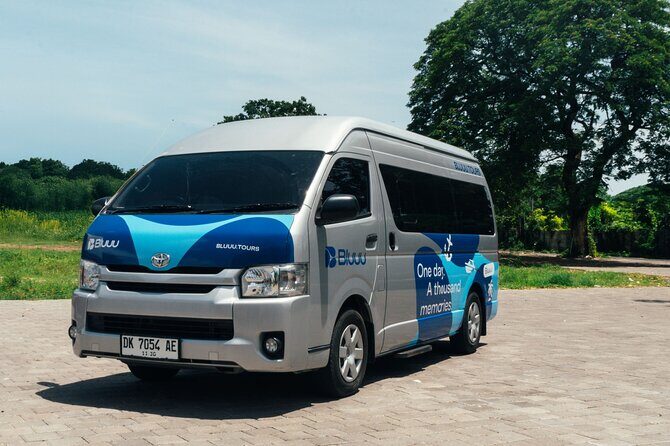
If you only read about one tour in this guide, start with this one. An 8,054-review sample size at a flat 5.0 average is a number we have almost never seen on Viator for any tour in Indonesia, and it is doing a lot of work on our confidence level.
We read through a few dozen of the most recent reviews and the thing that keeps surfacing is not the sights — Kelingking gets rave notes from everyone who books any Penida tour — but the operational polish. The pickups are on time. The 4×4 convoy does not wait 40 minutes for stragglers. The lunch is genuinely good, not the beige chicken-and-rice tray that some budget operators ship in.
And the tour actually includes both the west-island viewpoint loop and Manta Point snorkeling, which is the combination we would consider the non-negotiable baseline for a first visit.
The format is the full-day flagship. Hotel pickup between 5:30 and 6:45 a.m. depending on your location. Transfer to Sanur harbour and onto a premium speedboat with reserved seating. The crossing to Toya Pakeh takes 45 minutes in calm conditions and you are on Nusa Penida by about 8:15, which is early enough that you get Kelingking before the day-trip mega-buses arrive.
The land loop hits Kelingking viewpoint, Broken Beach (Pasih Uug), Angel’s Billabong, and Crystal Bay in sequence, with a lunch stop at a cliff-top warung. The snorkeling session runs either at Crystal Bay or out at Manta Point depending on sea conditions. You are back on the boat by about 3:30 and in Sanur by 4:30. Transfer back to your hotel by early evening.
What we like:
- The 8,054-review sample size is its own quality signal. A 5.0 rating at that volume is genuinely hard to fake, and when we cross-checked the last 80 or so reviews we found almost no meaningful complaints — the few that did exist were weather issues (cloudy photos) and not operational failures.
- “All-inclusive” is not marketing fluff on this one. Round-trip hotel pickup from most of south and central Bali, return speedboat transfer, air-conditioned 4×4 convoy with driver, English-speaking local guide, snorkeling gear, cliff-top lunch, and bottled water are all bundled. You do not arrive at the harbour to discover a $15 “boat fee” you did not see on the listing.
- The combination of west loop plus snorkeling is the right call for first-timers. A lot of cheaper tours give you either the Instagram viewpoint loop or the snorkeling, and you have to pick one. This tour gives you both in a single day without cutting either short, which is the main reason it keeps the 5-star average.
- Free cancellation up to 24 hours before the departure. Nusa Penida weather in the wet season (November to March) is unpredictable and the crossing can get cancelled by rough sea. A flexible cancellation window is not a nice-to-have on a boat tour, it is essential.
What to be aware of:
- $78.81 is not the cheapest Penida day tour on the market. You can find ferry-based day trips for under $40. In our read of the reviews the extra money goes to the faster boat, the better land transport, and the fact that this tour actually includes snorkeling gear. The cheap tours tend to make you rent gear at Crystal Bay for an extra $10 anyway, so the real price gap is narrower than it looks.
- The land loop is still a bus tour pace. If you are hoping for unhurried solo photo time at Kelingking, you will not get it on any group tour, and this one is no exception. 20 minutes per stop is standard. Consider the private boat option below if that matters.
- Crossing can be rough in the wet season. This is true of every Penida tour, not a fault of this operator, but the speedboat ride is genuinely bumpy between November and March. If you get seasick, take medication before boarding.
Who this is for: first-timers, travellers who want the headline experience with zero logistics, and anyone who wants both the Instagram viewpoints and the manta snorkeling in one day. This is the default “just book this one” recommendation.
2. Nusa Penida by Private Boat — Snorkeling 4 Spots, Swim with Mantas
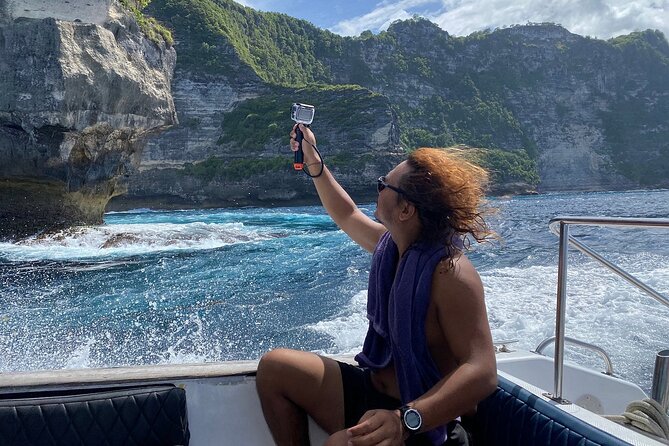
This is the tour we would book if the snorkeling is the reason you are going to Nusa Penida at all. It is structurally different from the all-inclusive above: instead of a land-heavy day with a single snorkeling stop, this one is a four-stop underwater-focused tour on a private boat, with an optional land loop added on.
A 5.0 average across 6,424 reviews is again an enormous sample, and the complaints we saw in the recent reviews were almost entirely about wet-season weather rather than operator quality.
The format is what sets it apart.
You meet your private boat at Toya Pakeh after a standard transfer from Sanur, and then you spend the morning hopping between four distinct snorkeling sites on the island’s north and west coast: Manta Point for the namesake oceanic manta encounters, Manta Bay for a second shot if Point one is crowded or the sea is choppy, Gamat Bay for the coral gardens and reef fish, and Crystal Bay for the drop-off wall and turtles.
Each stop is 30 to 45 minutes in the water — far longer than the 20-minute courtesy stop you get on the combined tours above. A cliff-top lunch follows, and if you booked the combined version, the afternoon runs through Kelingking, Broken Beach, and Angel’s Billabong at land-tour pace before heading home.
What we like:
- Private boat means no group compromise. You are not waiting for 14 other people to finish getting back on the boat. You are not sharing mask-and-fin time with a couple who have never snorkeled before. The captain moves when you are ready to move.
- Four snorkeling stops is almost double what any shared tour offers. The marine life at Nusa Penida is genuinely spectacular, and spending two or three hours in the water across four different underwater environments is a completely different day from the 45-minute Crystal Bay dip most tours give you.
- Higher manta-encounter success rate. Because you have two manta spots on the itinerary, you dramatically reduce the chance of a no-show day. Oceanic mantas come and go with the currents, and the two-point coverage is the single best hedge against wet-season bad luck.
- Private means flexible timing. If a storm rolls in at 11 a.m., you can flip the itinerary. If Manta Point is crystal clear at 9:30, you stay longer. Shared tours cannot do this.
What to be aware of:
- $100.89 is a per-person price on a private boat, which means value scales with group size. For two people it is objectively expensive. For a family of four or a group of six it is one of the best-value premium tours on the island. Read the booking page carefully — the Viator listing sometimes shows total-boat pricing and sometimes per-person, depending on group size.
- Snorkeling-focused means less time on land. If your priority is the Kelingking photograph and you are ambivalent about the underwater part, this is not the right tour. Book the all-inclusive above instead.
- You need to be comfortable in open water. Manta Point is not a calm lagoon. The currents are real, the water can be choppy, and while the guides are excellent and the boat is always nearby, it is a genuinely oceanic experience. A nervous first-time snorkeler may want to start elsewhere.
Who this is for: couples and families with a real interest in snorkeling, anyone who has been to Bali before and already photographed Kelingking, confident swimmers, and anyone who would rather spend three hours with manta rays than ninety minutes queueing for a cliff photo.
3. Nusa Penida Snorkeling 3 Spots with GoPro & West Land Tour
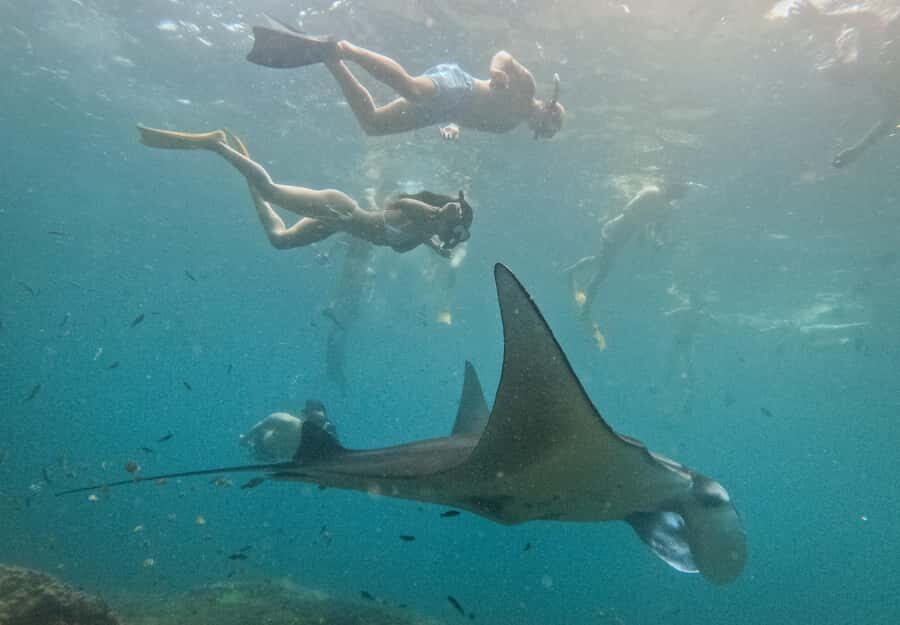
And now the budget pick, which is the one we would book if you are already staying on Nusa Penida, or if you have come over on a cheap public ferry and are looking to buy the day’s activities separately once you arrive.
At $16 per person this is roughly one-fifth the price of the Viator premium tour, and for the money you get a surprisingly complete day: three snorkeling stops and a west-island land loop with 3,857 reviews backing it up at 4.7 stars.
The rating is slightly lower than the two Viator tours above, but it is still high for an Indonesia group activity at this price, and the reviews that drop stars tend to do so for reasons like “the boat left slightly late” or “the guide was not fluent in English” rather than anything safety-related.
The format is flexible, which is why the advertised duration is a wide 2 to 9 hours — you are effectively booking an a la carte day. The snorkeling section is three stops: Manta Bay (a more sheltered manta spot than Manta Point, with slightly less reliable encounters but much calmer water), Gamat Bay (coral and reef fish), and Crystal Bay (the drop-off wall).
A GoPro is included for photos and short videos, which is a thoughtful inclusion that normally costs an extra $20 to $30 to rent at the harbour. After lunch, the optional land portion covers Kelingking, Broken Beach, Angel’s Billabong, and Crystal Bay viewpoint. You can book the snorkeling only, the land only, or both as a combined day.
What we like:
- $16 is an extraordinary price for a guided snorkeling day with a GoPro. The numbers alone are the reason to consider this tour, and the 4.7 rating across 3,857 reviews is solid evidence that the operator is not cutting corners that matter.
- The included GoPro is a genuine cost savings. If you do not own an underwater camera, having one handed to you with the memory card already inserted saves you the hassle of renting at the harbour — and the underwater photos from Manta Bay and Gamat Bay are the ones you will actually want from this day.
- Modular pricing. You can book the snorkeling-only half if you have already done the land loop on a previous trip, or build a custom full-day that matches your priorities.
- Excellent value if you are already on Penida. travellers who are staying in Penida accommodation overnight, or who are on a multi-day Nusa islands trip, get the full Penida experience at a fraction of the Bali-transfer price.
What to be aware of:
- Pickup is from Nusa Penida, not from Bali. You have to get to the island yourself. If you are day-tripping from Bali, add the ferry cost and time to your calculations — the real total is closer to $40 door to door rather than $16.
- Manta Bay is not Manta Point. The encounter rate is slightly lower. In our read of the reviews, people who went in the dry season (April to October) mostly reported seeing mantas; wet-season reviews had a higher “we saw none” rate.
- Smaller boats and less reserved seating than the Viator premium tours. The boat ride between stops is more casual. This is fine if you are used to Southeast Asian boat travel, worth noting if you are not.
Who this is for: budget travellers, anyone already staying on Nusa Penida overnight, travellers who want the underwater portion without the full premium day, and anyone who wants GoPro photos included.
West Loop or East Loop? The Nusa Penida Decision Most Tours Do Not Mention
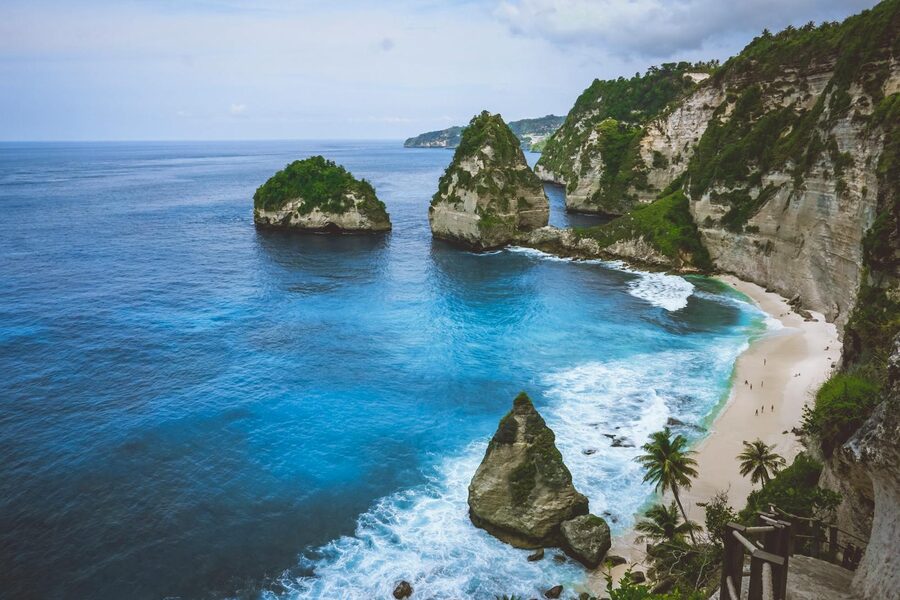
Every headline day tour from Bali, including the three above, runs the west-island loop: Kelingking, Broken Beach, Angel’s Billabong, Crystal Bay. This is the famous one, and for good reason. Kelingking is the single most iconic viewpoint in Indonesia.
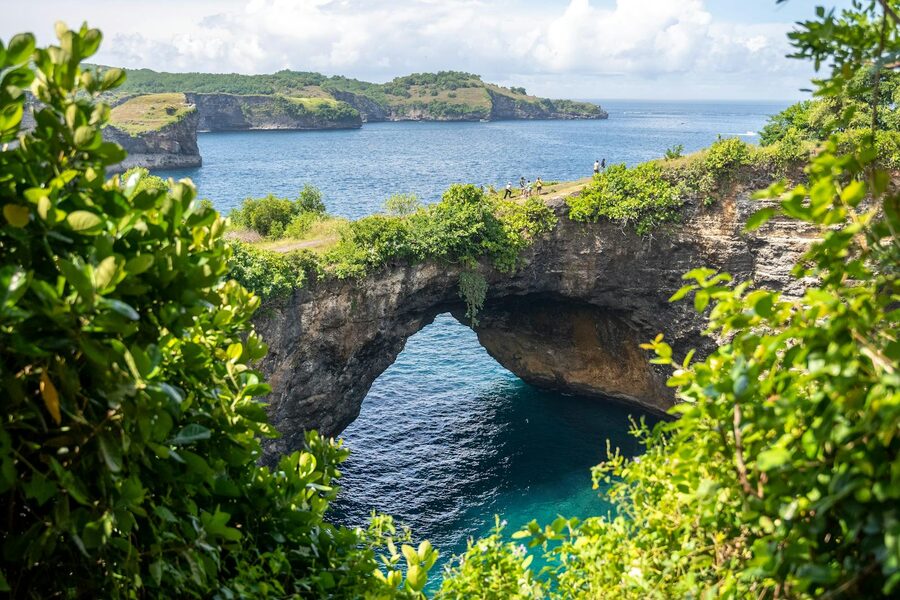
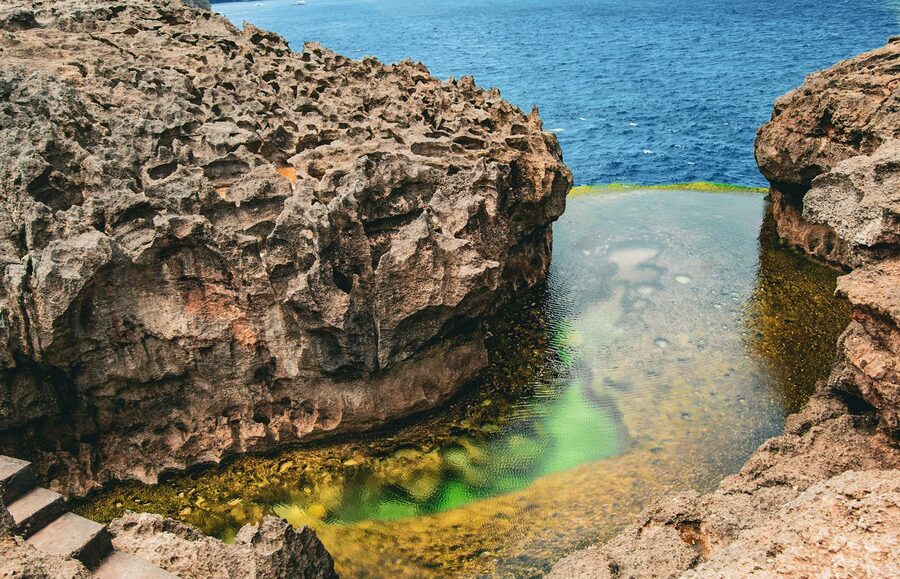
Broken Beach is a natural stone arch at the base of a cliff crater, and Angel’s Billabong is a tidal rock pool that spills directly into the ocean through a ten-meter infinity edge. The photos do not lie. The problem is that everyone else on a day tour is also at these places, at the same time, because the boats arrive in a cluster from 10:00 a.m. onward.
The east island is the alternative. Diamond Beach is a white-sand cove at the base of a sheer cliff, accessed via a staircase that drops roughly 200 steps to the sand, with a pyramid-shaped rock formation rising from the shallows that is genuinely as dramatic as anything on the west side. Atuh Beach is right next door, a wider crescent with the Thousand Islands viewpoint directly above it.
The Tree House at Rumah Pohon is a famous bamboo hut perched on a clifftop with a view that makes its 40-minute Instagram queue briefly feel worth it. And the crowds are, on most days, a fraction of Kelingking’s.
The tradeoff is that the east side is about 60 minutes of additional driving from Toya Pakeh on notably worse roads, which is why most day tours from Bali cannot fit it into their schedule without dropping a viewpoint on the west.
Our rule of thumb: if this is your first trip to Bali and you only have one day on Nusa Penida, book the west loop. Kelingking is Kelingking and you should see it once. If you have been to Bali before, if you are staying on Nusa Penida for two nights, or if you are specifically trying to beat the crowds, the east loop is almost always the better day.
Atuh Beach at 9 a.m. is something you will remember. Kelingking at noon on a Saturday in July is something you will tell stories about for the wrong reasons.
Getting to Nusa Penida: Boats, Harbours, and the Seasickness Question
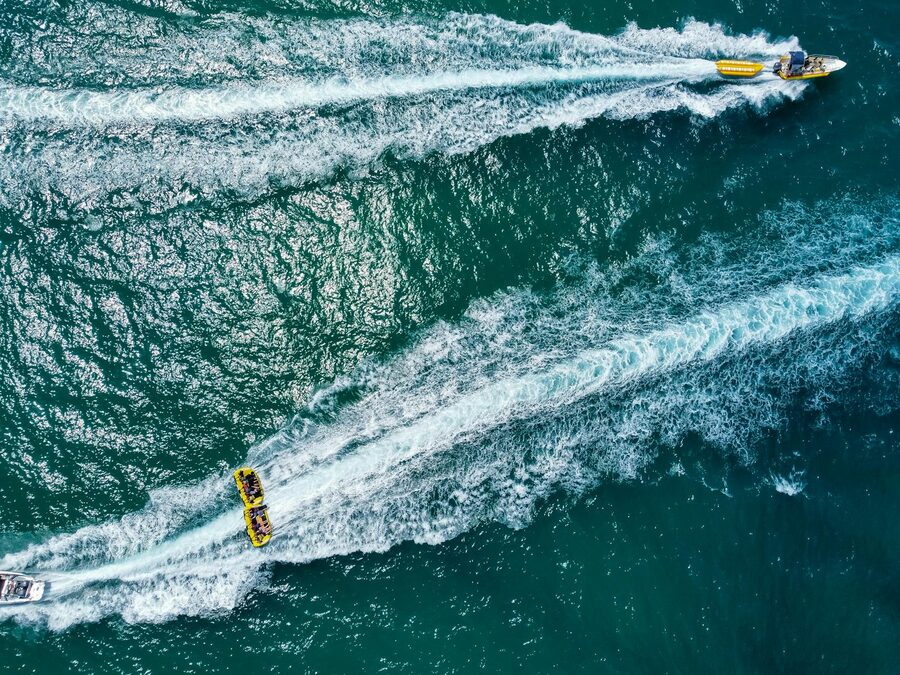
Almost every tour boat leaves from Sanur harbour on Bali’s southeast coast. Sanur is the closest mainland point to Nusa Penida, the crossing is the shortest at roughly 45 minutes in calm conditions, and the fast-boat operators have been running the same route for years. Nusa Penida’s main harbour, Toya Pakeh, is on the island’s northwest coast and is less than 15 minutes by car to the Crystal Bay snorkeling area, which makes it the logical starting point for the west loop.
A word on seasickness. The Badung Strait between Bali and Nusa Penida is a notoriously current-heavy stretch of water, and on rough days the crossing can be genuinely uncomfortable. Premium speedboats handle it better than the older, cheaper models, and the first boat of the morning (usually the 7:30 or 8:00 a.m. departure) tends to get the calmest conditions because the wind has not yet picked up.
If you are prone to motion sickness, take Dramamine or a similar over-the-counter medication an hour before departure, sit toward the back of the boat where the motion is less violent, and look at the horizon, not at your phone.
We have done the crossing probably fifteen times and have seen every combination of weather — it is almost always fine, it is occasionally rough, and it is almost never dangerous with a reputable operator.
What to Bring for a Nusa Penida Day Trip
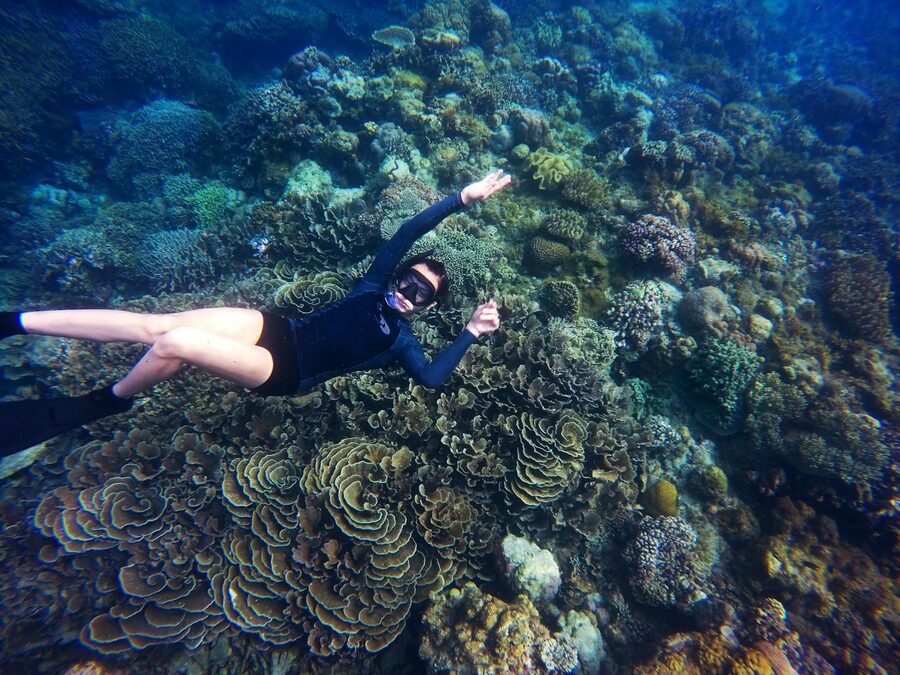
We have watched a lot of travellers arrive at Sanur harbour at 7 a.m. with the wrong bag. A day trip to Nusa Penida is not a beach-day outing — it is an 11-hour expedition that involves cliffs, salt water, a long 4×4 ride on dusty roads, and a return boat crossing in your still-damp swimsuit. Pack accordingly.
- A dry bag. Non-negotiable. Boats get spray. The speedboat floor on the return leg is wet. Your phone, camera, wallet, and spare clothes need to live in something sealed.
- Swimsuit worn under your clothes. You will not have a changing room at Manta Point. You change on the boat, or you change before you board.
- Reef-safe sunscreen. The sun in Nusa Penida is equatorial and relentless, and the reefs at Manta Point and Crystal Bay are visibly stressed in places. Use a mineral sunscreen (zinc oxide or titanium dioxide base) rather than an oxybenzone chemical one.
- A rashguard or long-sleeve swim shirt. Our strongest packing advice for Bali in general. You are going to spend two or three hours in direct tropical sun while in the water, and a rashguard prevents the single worst sunburn you can get on a trip to Indonesia.
- Proper walking shoes, not flip-flops. Kelingking’s viewpoint area has gravel paths. Broken Beach has stone steps. The Tree House has uneven bamboo. Flip-flops work but closed-toe trail shoes or at least sturdy sandals are much better.
- A refillable water bottle. Most premium tours include drinking water, but the volume is often not enough for the full day in the sun. Add 1.5 liters of your own on top.
- Cash in small rupiah notes. Some of the viewpoints have a small donation box or parking fee (usually 10,000 to 20,000 IDR, about $0.65 to $1.30) that your tour will not cover.
- Motion sickness tablets if you are prone to it. Dramamine, Bonine, or Indonesian Antimo pills from any local pharmacy for about 5,000 IDR.
- A GoPro or waterproof phone case. The manta snorkel is the photo you will most regret not capturing. Tour 3 above includes a GoPro in the price; otherwise rent or bring your own.
What a Nusa Penida Day Costs (Honest Breakdown)
One of the things that consistently surprises first-time visitors is how much the budget and premium day tours diverge on final out-of-pocket spend. On paper, a public ferry crossing plus scooter rental looks like it will cost $25 for the day. In practice, it rarely does. Here is what we see as a realistic itemized range for each tier.
- Budget DIY: Ferry from Sanur return $20, scooter rental $8, petrol $3, entrance fees at 4 viewpoints $4, lunch $6, snorkeling gear rental at Crystal Bay $10, spare water and snacks $3. Realistic total per person: around $54. Plus the opportunity cost of spending 90 minutes of your day navigating Nusa Penida’s roads solo on a scooter you do not know.
- Mid-tier group tour: Day tour advertised at $38 to $50, which typically includes ferry, van transfers, a guide, and entrance fees, but not snorkeling gear or a real lunch. Add $10 for gear and $8 for decent lunch. Realistic total: $56 to $68.
- Premium shared tour (like Tour 1 above): All-inclusive $78.81 per person covers everything that matters. Add perhaps $5 to $10 in tips and small viewpoint fees. Realistic total: $84 to $89.
- Private boat (like Tour 2): $100 per person for a group of four or more. Slightly higher tips because the service is more attentive. Realistic total: $110 to $120.
The striking takeaway is that the budget tier is only about $30 cheaper than the premium tier after you account for all the hidden costs. On a one-day experience that you will remember for years, we almost always recommend paying the extra $30 for the premium all-inclusive rather than spending the morning haggling over ferry tickets and getting wet on the return crossing in a boat that should have been retired a decade ago.
The Best Time of Year to Visit Nusa Penida
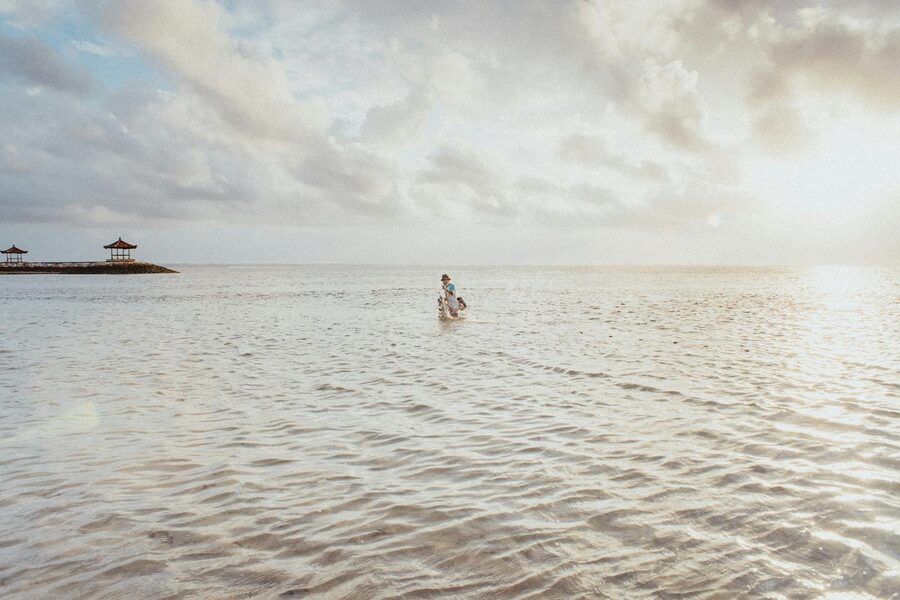
Nusa Penida has two seasons. The dry season runs from roughly April to October, with June, July, and August as the peak. During these months the sea is usually calm, the sky is blue, Kelingking is clear for photos, and the snorkeling visibility at Manta Point can hit 25 meters.
The downside is that this is also the busiest season, and the Kelingking viewpoint, Angel’s Billabong, and Crystal Bay can get genuinely crowded by mid-morning. If you are going in July or August, book the earliest possible departure and consider the private boat for snorkeling.
The wet season runs from November to March. The sea is rougher, the crossings from Sanur are occasionally cancelled due to weather (usually in January and February), and the Kelingking photo is less reliable because of afternoon cloud. On the other hand, the crowds drop significantly, the island’s interior is green instead of dusty brown, and the water temperature is slightly warmer.
The shoulder months of April and October are the sweet spot — dry-season weather with much smaller crowds — and if you can time your Bali trip to fit them, these are the months we would pick.
Manta rays can be seen year-round at Manta Point, but the peak encounter rate is April to May and October to November, which overlap with the shoulder months. This is not a coincidence. Book your snorkeling-focused tour in one of those windows if the mantas are your priority.
Planning the Rest of Your Bali Trip
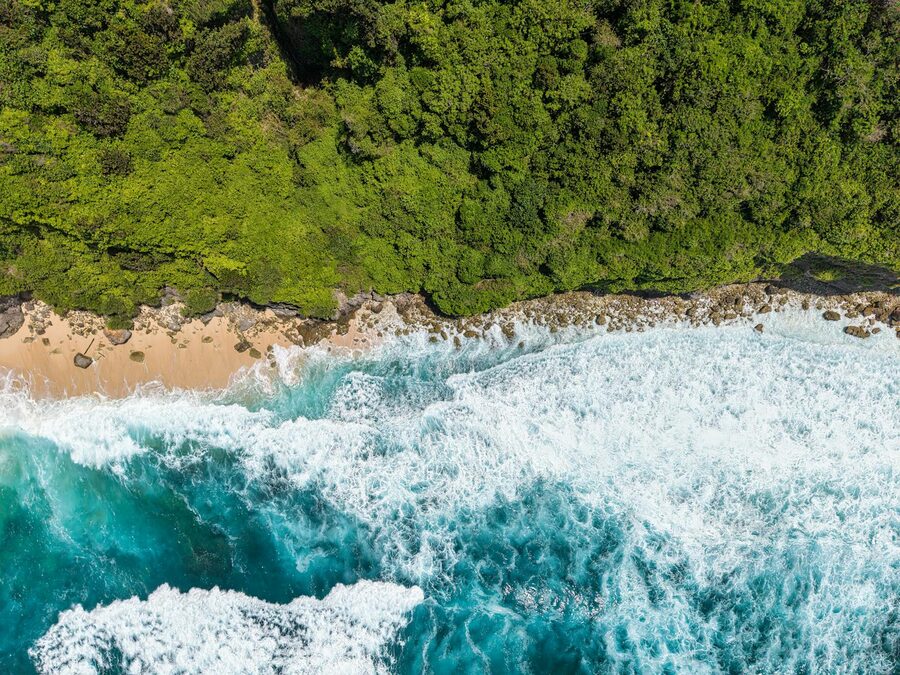
A Nusa Penida day trip is one of the three or four can’t-miss experiences in a Bali itinerary, and it pairs naturally with two other mainland days that we have already written up in detail.
If you are still deciding how to structure your week, a good template is: two nights in Ubud for the culture and the interior, one night around Kintamani for the volcano sunrise, three to four nights in the south near Seminyak, Canggu, or Uluwatu for the beaches and the nightlife, with a Nusa Penida day trip slotted into the southern half of the itinerary when you have a full day free.
We have also written a detailed guide to the Mount Batur sunrise hike and hot spring tours, which is the other can’t-miss early-morning expedition for your Bali week. If you are spending time in Ubud and want a structured half-day of temples, rice paddies, and coffee plantations, we cover the options in our guide on how to book an Ubud tour in Bali.
Both of these pair well with a Nusa Penida day — we would not do them on back-to-back days because the early starts are brutal, but spaced two days apart they give you the three best daylight experiences in Bali with one “rest day” between each.
For travellers who are extending the trip beyond Bali into Southeast Asia, we have also covered Vietnam and Thailand extensively. Our guide to the Ha Giang Loop from Hanoi is the natural follow-up for anyone who loved the motorbike scenery of Bali’s interior, and our Halong Bay and Lan Ha Bay cruise guide covers the Vietnamese equivalent of a Nusa Penida day on the water.
For a Thailand leg that mirrors the speedboat-and-viewpoints rhythm, the Phi Phi Islands day trip from Phuket is the clearest structural match for what you get on Penida, and the Koh Tao snorkeling and island tour is the best comparable snorkeling day in southern Thailand if the manta-ray session here is what hooks you.
For a longer southern Thailand trip, Krabi’s 4-island and Phi Phi combination runs on a very similar daily rhythm, and the Phang Nga Bay James Bond Island tour is its own twist on the speedboat-and-limestone-cliffs format. If you are flying back through Bangkok, a Bangkok food tour or an Ayutthaya day trip both slot neatly into a long layover.
Common Questions About Nusa Penida Day Trips
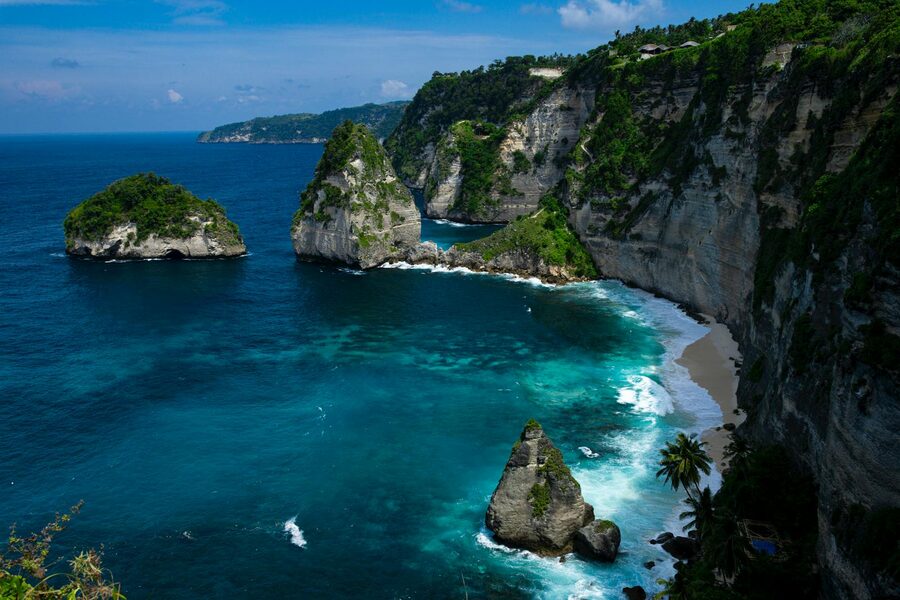
Is a Nusa Penida day trip worth it, or should you stay overnight?
A day trip is worth it if you have only one free day in Bali and you want the headline experience. The four or five hours you actually spend on the island are enough to hit Kelingking, one or two other viewpoints, and a snorkeling session, which is the core of what makes Nusa Penida famous. That said, if you have two nights to spare, staying overnight is significantly better.
You avoid the 5:30 a.m. pickup, you get the early-morning viewpoints before the day-trip boats arrive, you can do both the west and east island loops, and the sunset from the Thousand Islands viewpoint on the east side is arguably the single best moment of a Bali trip. If this is your second or third time in Bali, we would always recommend two nights over a day trip.
Can you do the west loop and the east loop in one day?
Technically yes, realistically no. The driving alone between the two loops is 90 minutes one-way on difficult roads, and combining them into a single day means you only get 10 to 15 minutes at each viewpoint instead of the already-short 20. It is a blur that leaves you with more photos than memories. Pick one loop for a day trip. Do the other on a return visit.
Is the road from Toya Pakeh to Kelingking really as bad as people say?
It was. For years the road out to Kelingking was genuinely rough broken-up asphalt that forced you into a 4×4. Large sections have been repaired over the last two years and it is now mostly fine in a regular van, though the final two kilometers are still bumpy enough that most operators stick with Suzuki Jimnys out of habit.
The bigger issue is not surface quality but narrowness — the road is a single lane in both directions for much of its length, and passing an oncoming truck on a blind corner is a weekly event. This is the main reason we would not recommend self-driving a scooter on Nusa Penida.
Is snorkeling with manta rays at Manta Point safe?
Yes, with sensible precautions. Oceanic manta rays are filter feeders and have no stinger, no teeth, and no interest in humans beyond briefly investigating the shape of a passing snorkeler. The bigger risks at Manta Point are the currents, which can be strong on the outgoing tide, and the boat traffic during peak hours. A reputable tour with a guide in the water and a boat nearby mitigates both.
If you are an uncomfortable swimmer, wear a full life vest — not a shame, the guides recommend it and it does not spoil the experience.
What happens if the weather cancels the crossing?
Reputable operators will either reschedule you for a later day or refund in full. This is the single biggest reason to book through Viator or GetYourGuide with their flexible cancellation policies rather than with a random Sanur beach kiosk — in our experience the platform-booked tours always handle weather cancellations cleanly, while the independent kiosks sometimes vanish.
Our Honest Pick
If you are reading this while half-asleep in a Seminyak villa the night before a Bali free day, here is the simplest possible answer. For a first-time visit on a day trip, book the Premium All-Inclusive Full Day Tour from Bali to Nusa Penida — it is the $78.81 option above, it has the 8,054 five-star reviews, and it bundles everything that matters into a single booking.
If you are a confident swimmer and the snorkeling is your priority, pay the extra $22 and book the Private Boat four-spot snorkeling tour, ideally with at least two other travellers in your group so the per-person cost scales down.
And if you are already on Penida overnight, or on a tight budget, the $16 GetYourGuide snorkel and west-loop combination is a legitimately great deal that more than pays for itself in the included GoPro alone.
Whichever one you pick, book the earliest possible crossing, bring a dry bag, take your motion-sickness medication before you board, and be on the boat back by 4 p.m. with salt in your hair, a sunburn on the backs of your knees, and a photo at Kelingking that you will not delete from your camera roll for a decade.
A day at Nusa Penida is still the single best day most first-timers have in Bali — and a lot of the people who say “we should have stayed longer” are the ones who loved it most. If that happens to you, book the next ferry back the following morning and do the east loop. You will not regret it.