
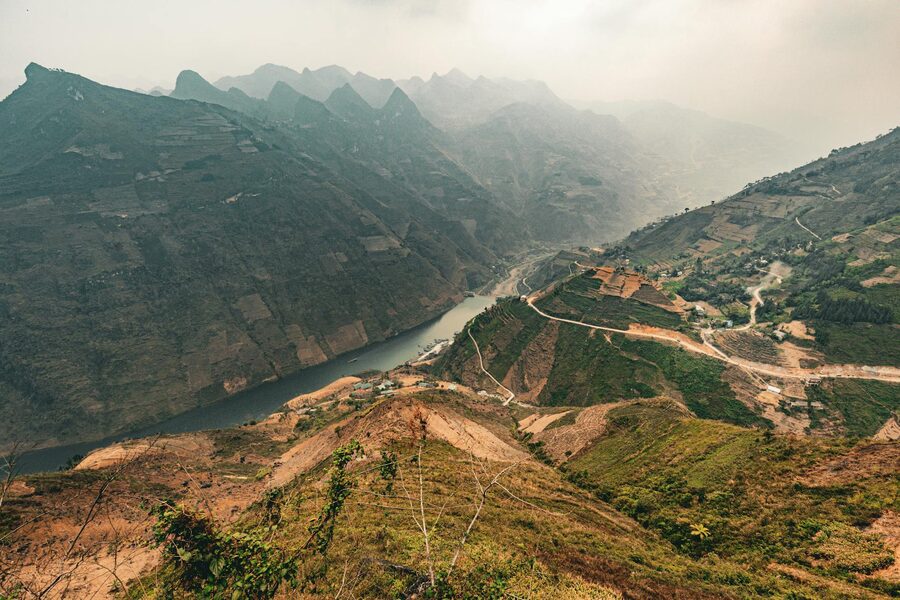
The road to Ma Pi Leng Pass doesn’t just climb — it corkscrews. One minute you’re looking down at the Nho Que River glinting a ridiculous shade of jade 800 meters below, the next you’re nose-to-nose with a water buffalo that has decided the tarmac is his. Corn terraces stack up the slopes like crooked staircases.
A H’mong grandmother waves from a doorway cut straight into the limestone. And somewhere behind you, the engine of a small Honda Win is still warm from the last climb.
That is the Ha Giang Loop in roughly two hundred words. It’s a three-to-four-day motorbike circuit through Vietnam’s northernmost province, hugging the Chinese border, crossing the Dong Van Karst Plateau UNESCO Global Geopark, and weaving through villages where Sunday markets still trade pigs for brocade. Ten years ago it was the domain of backpackers with dog-eared Lonely Planets.
Now it’s arguably the single most talked-about overland experience in Southeast Asia, and for once the hype lines up with the landscape.
We’ve spent a lot of hours on the phone and in the inbox with travellers who’ve come back from this route, and even more hours reading the 8,000+ written reviews across the three tour operators we’ll unpack below.
What follows is a proper breakdown of how to book the loop, what each tour style actually feels like from the saddle, and which of the three tour options we’d put our own money on for different types of rider. No fluff. No “discover the magic.” Just the working guide we wish someone had handed us the first time.
- Why the Ha Giang Loop Is Worth Every Aching Tailbone
- The Three Ways to Ride the Loop
- 1. Ha Giang Loop 3 Days Small Group From Hanoi
- 2. Ha Giang Loop 3D/2N Private Room + Free Stay Hotel
- 3. High Quality Small Group with Easy Riders, 3 Day Private Room
- Which Tour Should You Actually Pick?
- Getting to Ha Giang From Hanoi
- What to Pack for the Loop
- The Highlights You’ll Actually Remember
- What Dinner Looks Like at a Ha Giang Homestay
- How Hard Is the Riding, Really?
- Pricing, What’s Included, and What’s Not
- Booking Tips From Too Many Loop Trips
- Is the Ha Giang Loop Safe?
- Frequently Asked Questions
- The Bottom Line
Why the Ha Giang Loop Is Worth Every Aching Tailbone
If you’ve already bounced around northern Vietnam — Hanoi’s Old Quarter, the limestone towers of Halong and Lan Ha Bay, a day trip out to Ninh Binh — the Ha Giang Loop is the logical next step up. Everything you thought was dramatic gets dialed up. The karst is taller, the roads are emptier, the villages aren’t staged for day-trippers, and the rain (when it comes) rolls across the valleys in visible sheets you can watch arrive from ten minutes out.
A few things to set expectations before you book anything:
- It is a motorbike trip. You’re either riding a small automatic or semi-automatic yourself, or you’re sitting behind a local driver known as an “easy rider.” There is no bus version. There is no minivan version. The whole point is the road.
- It is physically demanding. Even as a passenger, six-plus hours a day on the back of a bike through switchbacks takes a toll. Bring layers and a real rain jacket.
- The weather decides the day. October and November tend to give the most stable skies. March to May is when the H’mong flower festivals bloom and the terraces start to green up. July through September is lush but wet. Winter (December–February) can get genuinely cold at altitude, and the passes have been known to fog over for days.
- Ha Giang town itself is a staging post. You don’t fly there. You ride or take a sleeper bus from Hanoi, roughly six hours overnight, which most tour packages either include or handle for you.
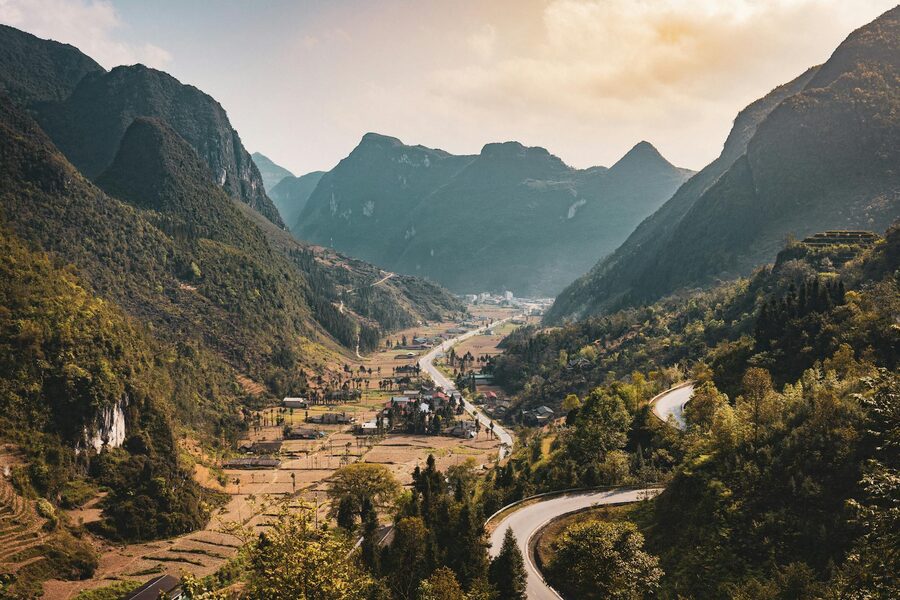
The loop proper typically covers 350–400 kilometers and passes through Quan Ba, Yen Minh, Dong Van, and Meo Vac before looping back. There are detours into Lung Cu (Vietnam’s northernmost flag point), pit stops at the Hmong King’s Palace, boat rides through the Tu San Canyon beneath Ma Pi Leng Pass, and plenty of homestay evenings involving rice wine and a lot of mot hai ba zo.
The route is fixed enough that you’ll hit the big sights no matter which operator you choose — the differences are in how you ride, who you ride with, and how cushioned the evenings are.
The Three Ways to Ride the Loop

Before we get into the specific tours, it’s worth understanding the three fundamentally different ways to do this trip, because they aren’t small differences. They determine who you’ll ride next to, what you’ll eat, where you’ll sleep, and how tired you’ll be at 9 p.m.
Self-drive small group. You ride your own motorbike (typically a 110cc Honda semi-automatic — do not worry, anyone who can ride a bicycle and has the patience to practice for an afternoon can learn it). A lead guide rides up front. A tail guide rides in the back. Somewhere in the middle, there’s a support vehicle carrying your big bag and a spare bike for the inevitable breakdown.
You stop at scenic viewpoints, local markets, and homestays together as a group of usually 8–15 riders. This is the classic backpacker version, and it’s what most reviews online are describing when they say “the best thing I did in Vietnam.”
Easy rider (you sit on the back). Same route, same homestays, same stops — but you’re a passenger behind a local driver. No license stress, no learning curve, no worrying about gravel on the first switchback of the day. The trade-off is that you’re trusting a stranger at 50 km/h on a mountain road, so the quality of the operator matters enormously.
This is our pick for first-timers to Asia, anyone without a bike license, and couples where one person wants to ride and the other absolutely does not.
Private room upgrades. The default experience on this loop is dormitory homestays — mattresses on the floor of a stilt house, shared bathroom, 10 people to a room. It is wonderful and cultural and also kind of brutal after three straight nights. Private room upgrades put you in a standalone room with an actual door and, usually, a private bathroom. It adds maybe $30–50 to the total cost and is, we think, the single best value add on the entire trip.
OK — with that context in place, here are the three tours that rise above the noise.
1. Ha Giang Loop 3 Days Small Group From Hanoi
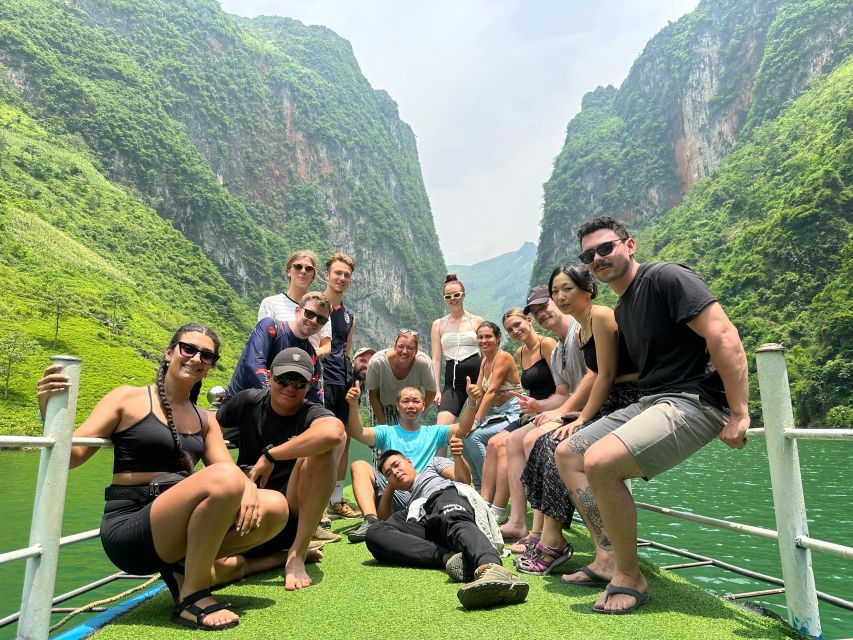
This is the tour we’d hand a first-time loop rider who’s landing in Hanoi with a vague plan and wants everything sorted in one booking.
It starts and ends in the Old Quarter, which sounds like a small detail and is in fact a huge one: you don’t have to figure out the sleeper bus to Ha Giang town yourself, you don’t have to coordinate luggage storage, and you don’t have to worry about the handoff between the bus company and the tour operator at 5 a.m. in a place where nobody is speaking English. They do it for you.
You show up at the hotel, someone collects your bag, and you’re on a bike by the time the sun hits the karst.
The three-day format is the sweet spot for most travellers. Four days gives you an extra rest morning but bleeds a whole day out of the rest of your Vietnam itinerary. Two days is, frankly, a grind — you’re on the bike from dawn to dusk and miss half the viewpoints.
Three days means roughly six hours of riding per day with proper stops, a full evening at the Dong Van homestay, and enough time at Ma Pi Leng Pass to actually eat a sandwich rather than just snap a photo and peel out.
Group size here is capped small enough that you’re not waiting 20 minutes for every photo stop but big enough that you’ll make friends over dinner. travellers consistently call out the lead guide’s English, the quality of the bikes (which is not something you can take for granted in this price bracket), and the food at the homestay — lots of it, family-style, with the owners eating at the table with the group.
That last part matters more than it sounds. The best evenings on this route happen when the homestay family is participating, not just serving.
What we like: the Hanoi-to-Hanoi logistics make it idiot-proof for a first-timer; the three-day pacing is balanced; the price is fair for what’s included (bike, fuel, guide, accommodation, most meals, and the Hanoi round-trip bus).
What to know: the default accommodation is the dormitory setup we mentioned — functional, atmospheric, but not for light sleepers. If that’s you, either book a private room upgrade with this operator or read on to the next option.
2. Ha Giang Loop 3D/2N Private Room + Free Stay Hotel
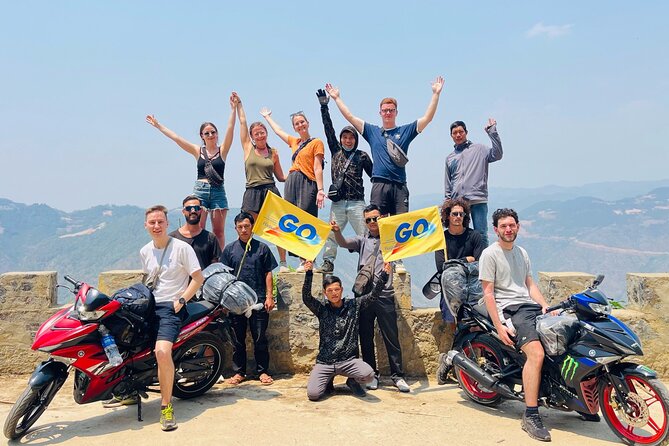
This is the tour we book when we want a proper bed every night. The “free stay hotel” headline is not marketing fluff — it’s an actual night at a hotel in Ha Giang town before the loop begins, which sounds like a nice-to-have until you realize how genuinely useful it is. You roll off the Hanoi sleeper bus at 5 a.m. bleary, dusty, and not ready to ride a mountain pass.
You get a real bed for a few hours, a shower, a buffet breakfast, and then the loop starts at a reasonable mid-morning hour. It’s the kind of small logistical decision that changes the first day from a survival exercise into an actual holiday.
From there you get the core three-day loop — same roads, same viewpoints, same Meo Vac market if your days line up — but with private rooms every night. We cannot oversell how much of a difference this makes on day two. You’ve been on a bike for six hours, you’re cold, your jacket is damp, and instead of climbing over three strangers to get to your sleeping spot, you close a door and it’s just you. Shower has hot water. The walls aren’t paper thin. You sleep.
The trade-off, apart from the price bump to $170, is that you’re trading some of the communal rowdiness of a big homestay for privacy. You’ll still eat dinner with the group, still share rice wine, still end up cross-legged on someone’s floor hearing bad Vietnamese karaoke — but you’ll be doing it by choice rather than by architectural necessity.
For couples, honeymooners, and anyone over about 35, this is the tour we recommend without hesitation. The near-perfect 5.0 rating across almost a thousand reviews is not an accident.
What we like: the bookending hotel nights, the private rooms upgrade being baked in rather than bolted on, the fact that this operator is based in Ha Giang town rather than Hanoi (so the bikes know the roads and the drivers live on them).
What to know: you still need to get yourself from Hanoi to Ha Giang town, though they’ll help book the sleeper bus. Factor an extra $15 each way for the bus ticket when you compare prices against the previous tour.
3. High Quality Small Group with Easy Riders, 3 Day Private Room
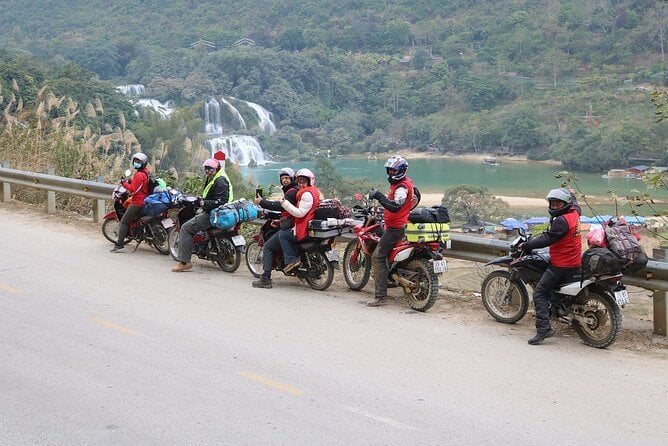
This is the option we send to anyone who messages us saying “I want to see the loop but I don’t ride a motorbike.” Easy rider means a local driver handles the bike and you sit on the back, relaxed, both hands free for photos. It sounds simple but it changes everything. You don’t have to think about gears on a muddy switchback.
You can actually look at the scenery instead of the tarmac. And at the end of the day, you don’t have stiff forearms from gripping a throttle for six hours.
The “high quality” in the name is doing real work. This tour charges nearly double what the self-drive options cost, and the reason is the driver. These aren’t randoms pulled off the street — they’re local guys from Ha Giang town, mostly H’mong or Tay, most of them have been riding these roads since they were twelve, and a number of them speak solid English.
They’re also, as you’d hope for the price, riding bigger and newer bikes than the $136 self-drive fleet. You feel it on the steep climbs. You really feel it on the long descents.
Group size is capped small — typically 6–10 people — and the private room setup is the same as option two, meaning you sleep in your own room every night. What’s different is the rhythm. An easy rider tour has a more relaxed pace because the drivers are adjusting for the passenger, not themselves. You stop more. You get off the bike more.
You spend more time in villages because your driver knows which ones are interesting and which ones are just road. We’ve had travellers describe their easy rider as “the best thing about Vietnam,” and that tracks with our own experience: a good local driver on the loop becomes a guide, a translator, and a friend over three days in a way that’s genuinely rare in group travel.
What we like: zero riding stress, zero license requirement, drivers who actually know the mountain, excellent small-group vibe, private rooms included, and that quiet upgrade where the tour becomes as much about the guide as the landscape.
What to know: it’s the most expensive of the three. It’s also the best value on the list if you’re already nervous about the riding. A cheaper self-drive tour you don’t enjoy is not cheaper than a premium easy rider tour you love — that’s math we’ve watched play out too many times.
Which Tour Should You Actually Pick?
Here’s the cheat sheet:
- You ride motorbikes at home and want the cheapest legit loop experience: Tour #1 (3-day small group from Hanoi, $136). It’s the best pure-price option that still has a real guide, a real support vehicle, and a track record in the thousands of reviews.
- You want to ride but you also want a real bed every night: Tour #2 ($170). The private room upgrade plus the free hotel nights make this the best mid-tier option for couples and anyone whose sleep matters.
- You don’t ride, haven’t ridden, or don’t trust yourself on a mountain road: Tour #3 ($265). Full stop. Do not try to learn to ride a motorbike on the Ha Giang Loop. It is not the place. Pay the extra, sit on the back, take photos.
- You’re traveling solo and want to meet people: Tour #1. The bigger group means better dinner tables and more dormitory chaos, which is actually what you want on a solo trip.
- You’re celebrating an anniversary, honeymoon, or just old enough to want privacy: Tour #2 or Tour #3 depending on whether you want to ride.
One thing we’d push back on — we see a lot of travellers assume the cheapest option is the “authentic” one and the expensive options are somehow touristy. That’s not how this route works. The more expensive operators are, if anything, more deeply embedded in the local community because they can afford to pay local drivers properly.
All three of these tours stop at the same viewpoints, eat at the same homestays, and ride the same passes. The differences are in comfort and guiding quality, not authenticity.
Getting to Ha Giang From Hanoi
If your tour doesn’t include round-trip transport (only Tour #1 of the three above does by default), you’ll need to book a sleeper bus from Hanoi to Ha Giang town. It takes about 6 hours, runs overnight so you don’t lose a day, and costs around $12–15. The main operators are Cat Ba Express, Ha Giang Limousine, and Sapa Express. All three run similar routes with similar comfort levels.
Book the upper bunk if you can — it’s marginally quieter and the windows are better. Bring earplugs. Bring a hoodie. The buses run hard AC and the highway lights at every rest stop are relentless. Your tour operator will tell you exactly where to be picked up in Ha Giang town and will almost always handle the morning handoff even if you booked the bus yourself.
Spending a day in Hanoi before your loop tour is also, frankly, the right move. Let the street food tour crew take you around for your first night, catch a water puppet show on the second, and if you’ve got a third day, do a Hanoi food jeep or motorbike tour so you’re already comfortable on the back of a bike before you head north. It’s a much better on-ramp than arriving bleary-eyed and immediately climbing into a helmet.
What to Pack for the Loop
Three days on a motorbike through mountain weather is a packing problem that looks easier than it is. Here’s what we’ve learned works:
- A real rain jacket. Not a poncho from a 7-Eleven. The plastic ponchos flap in the wind at 50 km/h and shred within an hour. Spend $40 before you leave home and bring a proper waterproof shell.
- Layers, plural. A t-shirt, a fleece or long-sleeve, and the rain shell over the top. Dong Van at night in October drops to 12°C. The same day, noon at Ma Pi Leng will have you sweating.
- Closed-toe shoes. Sneakers are fine. Flip-flops are not. You’ll put your feet down at every stop, and some of those stops are gravel slopes.
- Sunglasses and a buff. The buff doubles as neck warmth and face cover when the bike in front of you kicks up dust. We cannot stress enough how much dust you will eat over three days.
- A small daypack, not a full backpack. Your main bag goes in the support vehicle. You want a 15–20 liter pack on your back with a water bottle, camera, power bank, and snacks.
- Paper cash in small bills. ATMs are sparse past Ha Giang town. Budget $40–50 in cash for snacks, soft drinks, and the occasional viewpoint entry fee.
- A real camera if you have one. Phones are great but this is one of those trips where a slightly better camera actually earns its luggage space. The light at Ma Pi Leng in the late afternoon is something else.
The Highlights You’ll Actually Remember
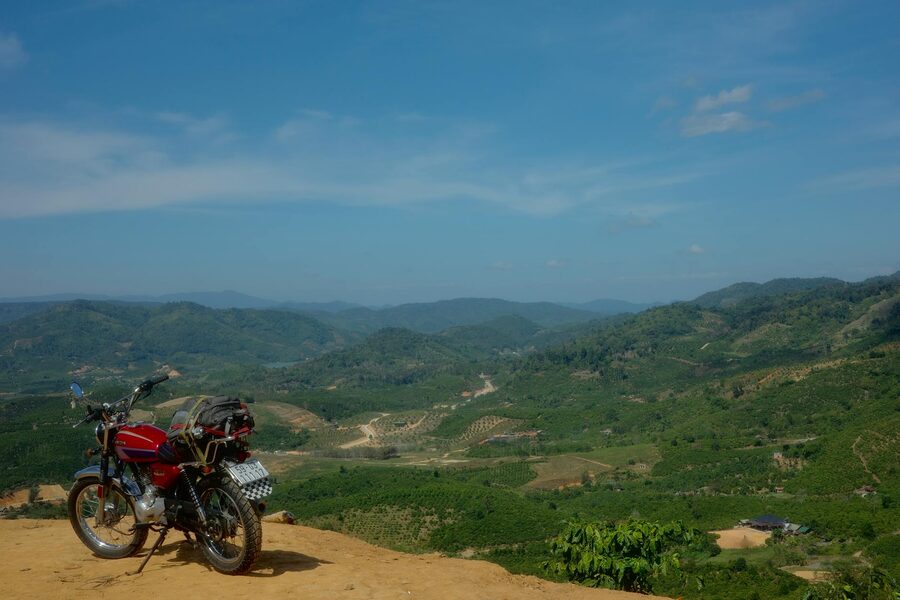
All three tours cover roughly the same route, which means a shared set of highlights that travellers and repeat travellers come back talking about. In rough order of arrival:
Quan Ba Heaven Gate and the Twin Mountains. Your first proper viewpoint of the loop, maybe 40 minutes out of Ha Giang town. Two perfectly round hills in the middle of a green valley that look, in a way that nobody quite wants to say out loud, like the subject of a Vietnamese folk joke involving a fairy and her breasts. There’s a coffee shop at the top. Stop. Drink the coffee. You’re about to earn it.
Yen Minh pine forest. Not what you’d expect in tropical Vietnam. A stretch of cool, dry, pine-covered highland that feels more Colorado than Indochina. Good for stretching the legs and, if your guide plays it right, a picnic lunch.
The Hmong King’s Palace at Sa Phin. A century-old stone mansion built by an opium lord, complete with courtyards, stone-carved details, and guided signs in English and Vietnamese. Costs maybe $2 to enter and is a legit history stop rather than a photo moment.
Lung Cu flagpole. Not every tour detours here — it adds almost an hour — but if you can, go. It’s the northernmost point of Vietnam, perched on a hill with a massive flag and a 360° view that includes the Chinese border. There are steps up. There are a lot of steps up. Bring water.
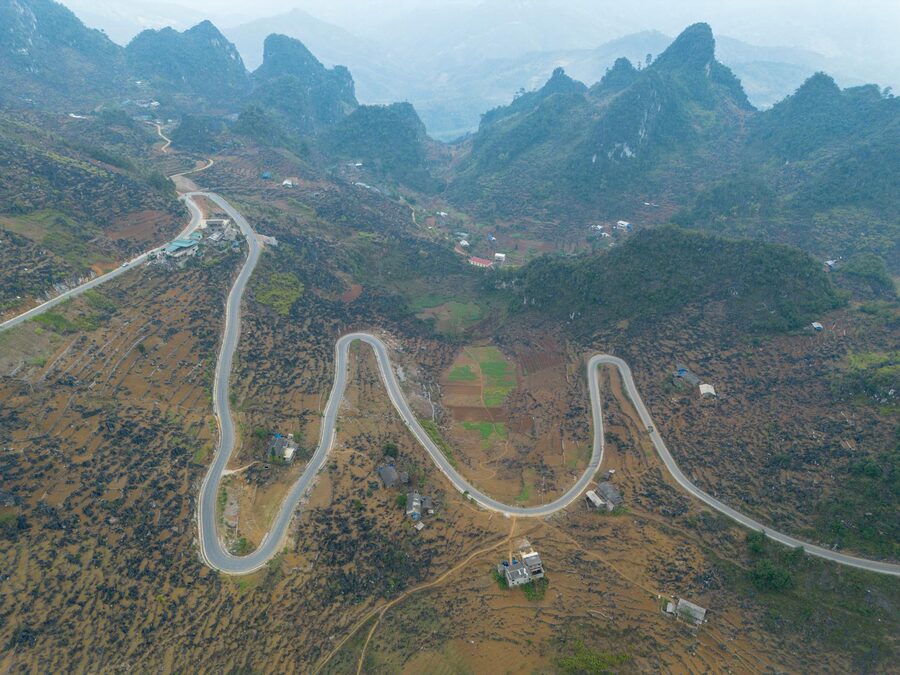
Ma Pi Leng Pass. The reason you’re here. A switchbacking ribbon of tarmac carved into a near-vertical cliff above the Nho Que canyon, 1,500 meters up. The pullouts are marked. The views are, and we’re choosing the word carefully, ludicrous. Plan to spend real time here.
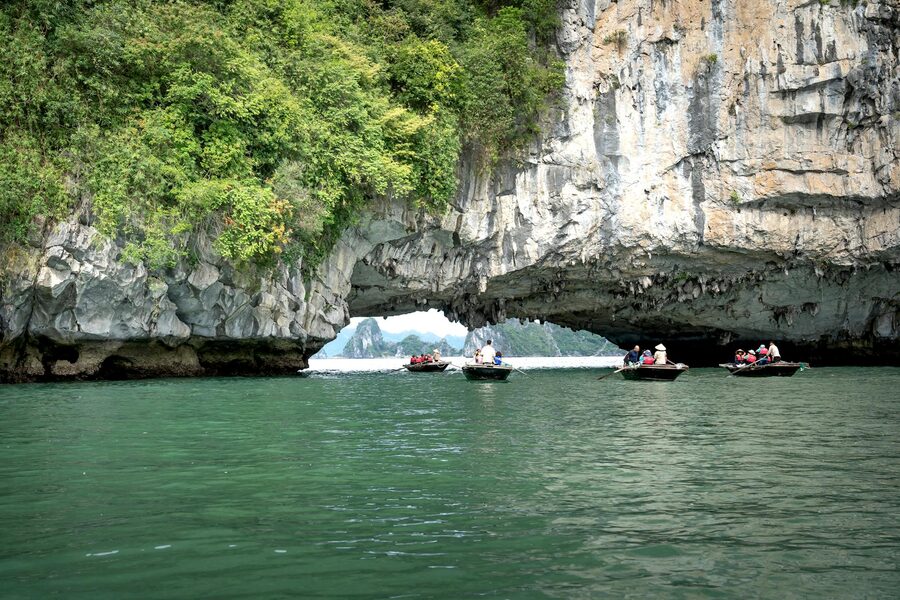
The Nho Que River boat ride. Below Ma Pi Leng, you can descend to the canyon floor and take a small boat through the Tu San slot — the deepest canyon in Southeast Asia. It’s a 90-minute round trip on the water, costs around $5, and is genuinely one of the best money-to-experience ratios on the whole route. Not all tours include it. If yours doesn’t, do it on your own.
Meo Vac Sunday Market. If your tour dates line up, the Sunday market in Meo Vac is the real deal — H’mong, Dao, and Lo Lo traders from the surrounding villages, live animals, medicinal roots, brocade, and a food street that is worth being hungry for. No amount of Hanoi walking tour can prepare you for it. It’s the opposite of a curated experience.
What Dinner Looks Like at a Ha Giang Homestay
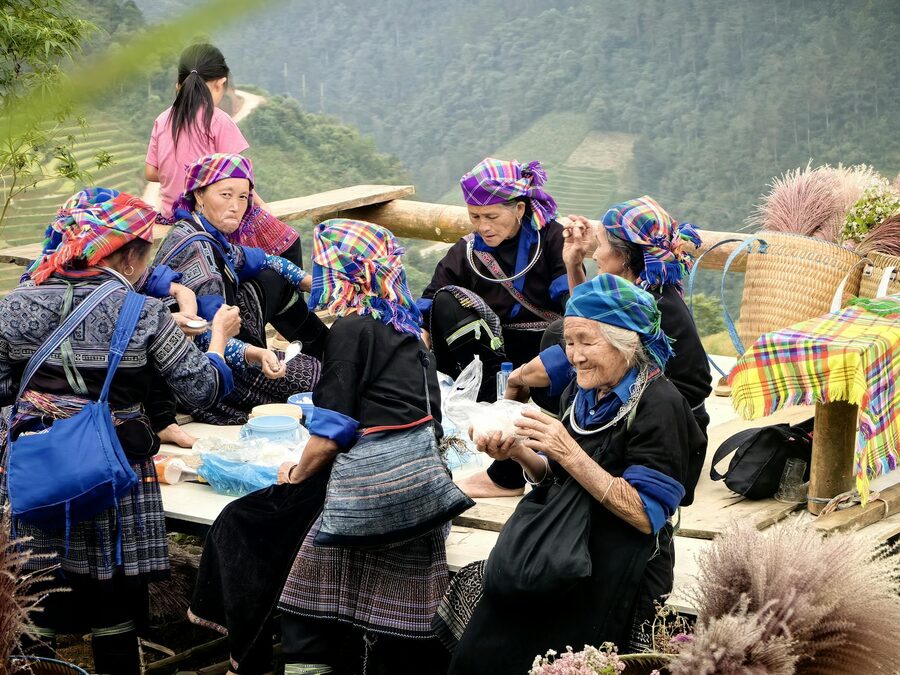
This part doesn’t get enough attention in most tour descriptions, so let’s give it some. A typical homestay evening on the loop goes roughly like this:
You arrive around 5 or 6 p.m., sore and smelling like exhaust.
You drop your bag, take a shower that ranges from “lukewarm and fine” to “oh, apparently cold water is the plan tonight.” You come back down to a long low table in the main room, where the host family has laid out roughly eight dishes: grilled pork belly, tofu in tomato sauce, stir-fried morning glory, some kind of mountain green you’ve never seen before, rice, and a big pot of soup with bones in it.
Everyone sits cross-legged or on tiny plastic stools. Beer appears. Then the rice wine appears.
Rice wine is the wildcard. It’s homemade, distilled in the village, often flavored with whatever herb is growing nearby, and it ranges from “pleasantly sharp” to “this is clearly moonshine and I can no longer feel my face.” The host will pour small glasses and run a call-and-response toast around the table.
The words are mot, hai, ba, zo — one, two, three, drink — and it’s bad form not to participate at least once. It’s also bad form to try to keep up with the host. Pace yourself. They do this every night. You do not.
Dinner runs long. People get loud. Sometimes there’s a guitar. Sometimes the village kids come through and stare at the foreigners. Sometimes the karaoke machine comes out and you discover the host has very strong feelings about 90s Vietnamese pop music. And at the end of it, you climb somewhere to sleep — the dorm or, if you picked tour #2 or #3, your own room — and the next morning it all starts again.
How Hard Is the Riding, Really?
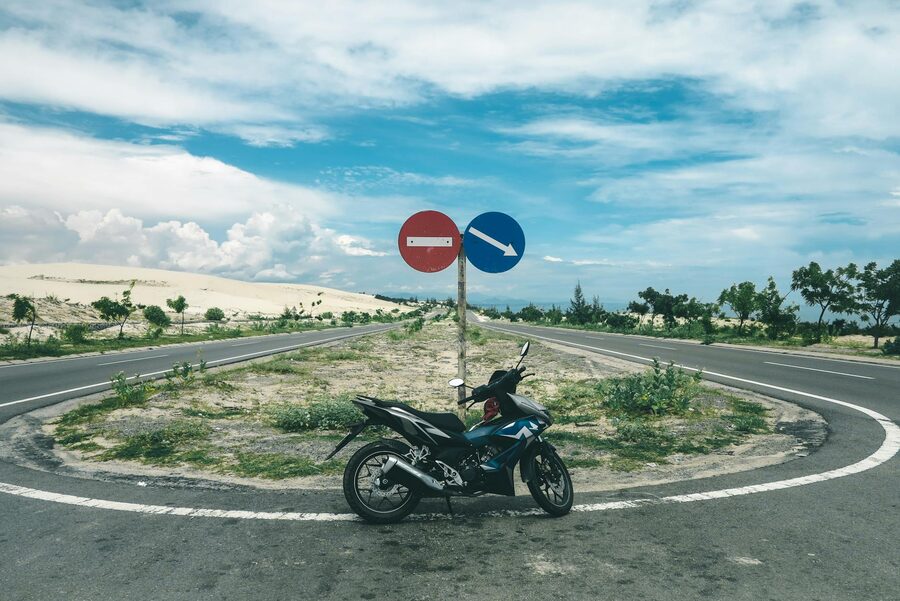
The honest answer: harder than the blog posts admit, easier than the Reddit horror stories make it sound.
The bikes are small automatics or semi-automatics, which means no clutch and either no shifting or basic left-foot shifting. If you can operate a throttle and a brake, you can ride these. The loop has no highway traffic, no aggressive intersections, and almost no urban riding after the first 20 minutes out of Ha Giang town. That part is genuinely easier than renting a scooter in Bali.
The part that trips people up is the terrain. The roads are paved but winding, sometimes narrow, sometimes wet, and occasionally broken up by landslides or construction. You’ll hit loose gravel on corners. You’ll meet trucks. You’ll be overtaken by a farmer on a scooter carrying a live pig who has no patience for your cautious line. And the switchbacks on the steep sections demand real attention — miss the gear, miss the brake, and the physics gets unforgiving.
Our rule: if you’ve never ridden a motorbike before in your life, and you land in Hanoi five days before the tour, you are not going to become a confident mountain rider in that window. Take the easy rider option (tour #3). If you’ve ridden scooters on holidays in Thailand or Bali a few times, and you’re comfortable with the basics, the self-drive tours (#1 or #2) are well within reach.
If you ride back home, you’re going to love this trip and should absolutely pick whichever tour matches your sleep preferences.
Pricing, What’s Included, and What’s Not

Here’s how the three tours stack up on inclusions:
| Tour | Price | Duration | Rooms | Hanoi bus | Bike type |
|---|---|---|---|---|---|
| #1 Small Group from Hanoi | $136 | 3d/2n | Dorm | Included both ways | Self-drive |
| #2 Private Room + Free Hotel | $170 | 3d/2n + 1 hotel | Private | Help to book | Self-drive |
| #3 Easy Rider Premium | $265 | 3d/2n | Private | Help to book | Easy rider |
Things that are almost never included and you should budget for separately: the Nho Que boat ride ($5), entry fees at Hmong King’s Palace and Lung Cu ($2–3 each), tips for your guide and driver ($15–25 total is considered generous and standard), drinks beyond what comes with dinner, and any souvenirs from the markets. Figure an extra $40–60 on top of the tour price per person.
Travel insurance is not included and, for a motorbike trip in Vietnam, you absolutely should have it. Check that your policy explicitly covers motorbike riding — many don’t by default, and the ones that do usually require you to have a valid motorcycle license. If you don’t have a license, the easy rider tour sidesteps this issue cleanly.
Booking Tips From Too Many Loop Trips

A few things we’ve learned by watching how bookings actually unfold:
- Book 2–4 weeks out for shoulder season, 6–8 weeks out for peak. October and early November fill up fast because it’s the best weather window. March also books heavily because of the flower festivals. Monsoon months are generally wide open.
- Read the recent reviews, not the star average. All three tours on our list are 5-star averages. What matters is the last 30 days of reviews — operator quality drifts, guides change, bikes age. If the most recent reviews are still glowing, you’re good.
- Confirm the pickup point in writing. Getting picked up in Hanoi and getting picked up in Ha Giang town are different experiences. Make sure you know which city your tour starts from and whether the bus is handled for you.
- Tell the operator about any riding injuries in advance. A bad knee will change what bike they put you on and whether they recommend the easy rider upgrade.
- Don’t book through a third party you can’t reach on WhatsApp. Both Viator and the direct operator are fine. Random kiosks in the Hanoi Old Quarter selling the loop for $90 are not. The $50 you save is the difference between a working bike and a working-ish bike, and “working-ish” on Ma Pi Leng is not something you want to find out about at 60 km/h.
Is the Ha Giang Loop Safe?

It’s safer than it looks and more dangerous than people joking about it admit. The roads are in better condition than most travellers expect. The tours have support vehicles and proper guides. The bikes, if you book a reputable operator, are maintained. Crashes do happen — the most common are low-speed slides on wet gravel in corners, usually resulting in scraped knees and bruised pride rather than anything serious.
The big risk factors are the ones you control: riding beyond your skill level, not wearing proper footwear, pushing through exhaustion on day three, and trying to keep up with more experienced riders in your group. A good guide will manage this. A great guide will explicitly slow the group down when someone looks rattled. If your guide isn’t doing that, ride your own pace and let them wait for you — this is a service you paid for.
Helmets are provided by all three tour operators. Wear them. Actually strap them. If yours is loose, ask for a different one before you leave Ha Giang town. And if the weather turns genuinely bad — fog on Ma Pi Leng is no joke, visibility can drop to ten meters — the sensible operators will delay the day and wait it out. That’s a feature, not a failure.
Frequently Asked Questions
Do I need a motorcycle license?
Technically yes, if you’re self-driving, Vietnam requires an International Driving Permit with a motorcycle endorsement. In practice, most tours do not ask to see one. Your insurance provider absolutely will if you make a claim, so if you don’t have the endorsement, take the easy rider tour and skip the issue entirely.
How much cash do I need?
$50–70 on top of your tour price for tips, snacks, entry fees, and the Nho Que boat ride. Small bills are better. There’s one ATM in Dong Van and it has been known to run out.
Can I do the loop on my own without a tour?
Yes, and plenty of travellers do. You rent a bike in Ha Giang town, download the offline map, and ride it. We do not recommend this for first-timers. You lose the support vehicle, the guide, the homestay introductions, and the breakdown insurance. The savings are maybe $30 a day. The risk multiplier is considerably bigger than that.
Is three days enough, or should I do four?
Three is the sweet spot for most travellers. Four is better if you have the time and want an extra day in Dong Van or Meo Vac. Two days is too short. If you only have two days and you really want to see the region, consider an alternative like a private car day trip from Hanoi to a closer mountain destination instead.
What about food if I have dietary restrictions?
Vegetarian is handled fine — homestays will make tofu, eggs, and vegetable dishes without too much fuss. Vegan is possible but you need to tell the operator at booking. Gluten-free is difficult because soy sauce is everywhere. Severe allergies need to be communicated very clearly and very early.
Is it cold?
It can be. At altitude in October and November, expect 10–15°C at night. December and January can drop to single digits. June to September is warm and wet. Pack like you’re going hiking, not like you’re going to the beach.
Can I charge my phone and camera at the homestays?
Yes, there are outlets, but they’re sometimes shared and sometimes erratic. Bring a 10,000 mAh power bank and you won’t have to worry about it.
Is there Wi-Fi?
Intermittent. The homestays often have it but it’s slow. A local SIM card with 4G will be more reliable for the parts of the loop with cell coverage, which is most of it now.
The Bottom Line
The Ha Giang Loop is one of those trips that grows in your head after you get back.
The photos look great, sure, but what actually sticks is weirder and harder to explain: the smell of wood smoke in a village where nobody is pretending for you, the wind at the top of Ma Pi Leng, the exact shade of green that the Nho Que River turns when the afternoon light hits it, a homestay grandmother laughing at your Vietnamese pronunciation, the specific kind of tired you feel at the end of day two that somehow flips into the specific kind of happy you feel at the start of day three.
If you’re landing in Hanoi and you’ve got four days spare, pick the tour that matches who you are. Confident rider on a budget, go Tour #1 at $136. Comfort-conscious couple or solo traveler who values sleep, go Tour #2 at $170. Non-rider or nervous rider who wants the experience without the riding stress, go Tour #3 at $265.
There’s no wrong answer among these three — we checked the reviews, we cross-referenced the operators, and all three have earned their 5-star ratings across thousands of trips.
Wherever you land, pair the loop with the rest of the north. Spend a couple of days in Hanoi for the food scene and a water puppet show before you head north. Add a sleeper train or two down to Halong Bay after the loop for a slower mirror of the landscapes you just rode through. A quick Ninh Binh day trip makes for a gentler complement to the same karst story.
Then keep going south and fold in the cooking classes in Hoi An, a Marble Mountains visit near Da Nang, and if your route takes you further, the Imperial Citadel at Hue, a Saigon motorbike food tour, the Cu Chi Tunnels day out, and a Mekong Delta tour to round the country off.
The loop is the crown jewel of the north, and it deserves to sit inside a bigger trip that gives you the contrast to actually feel how special it is.
Book early, pack smart, sleep when you can, and do not try to drink the host under the table. You’ll be fine.