
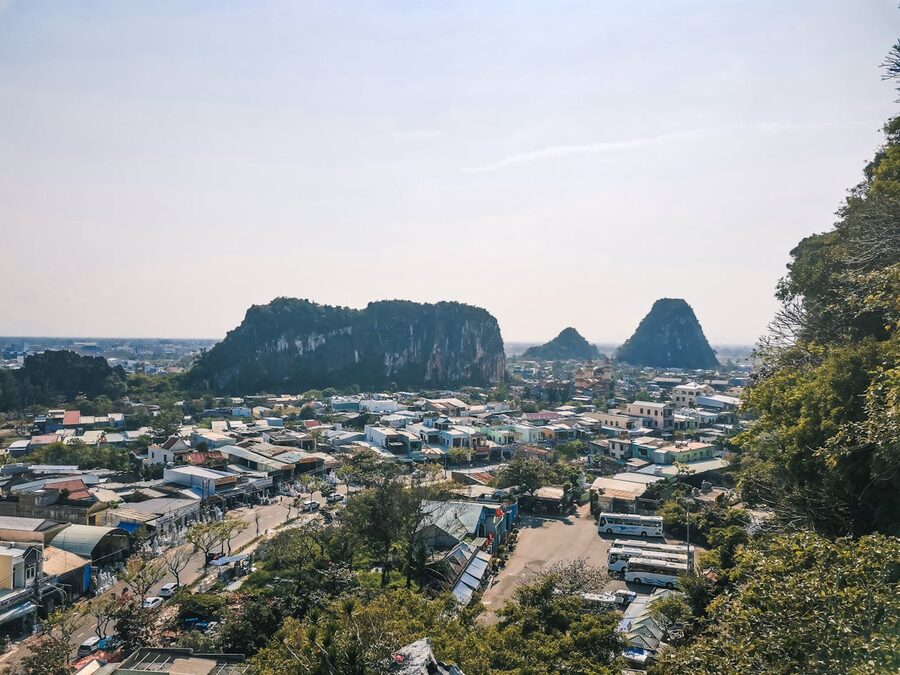
Five limestone peaks named after the five elements — water, wood, fire, metal, earth. That is the Marble Mountains in Da Nang, and most visitors only climb one of them. Thuy Son (the water mountain) gets all the foot traffic, all the Instagram posts, and all the tour buses. The other four just sit there, quietly being mountains.
I went on a weekday morning in March and still shared the staircase with about 200 people. But once you get past the main pagoda level and start ducking into the smaller caves, the crowds thin to almost nothing. I spent twenty minutes alone inside Huyen Khong Cave watching sunlight pour through a hole in the ceiling, and it was one of those travel moments you do not really plan for.
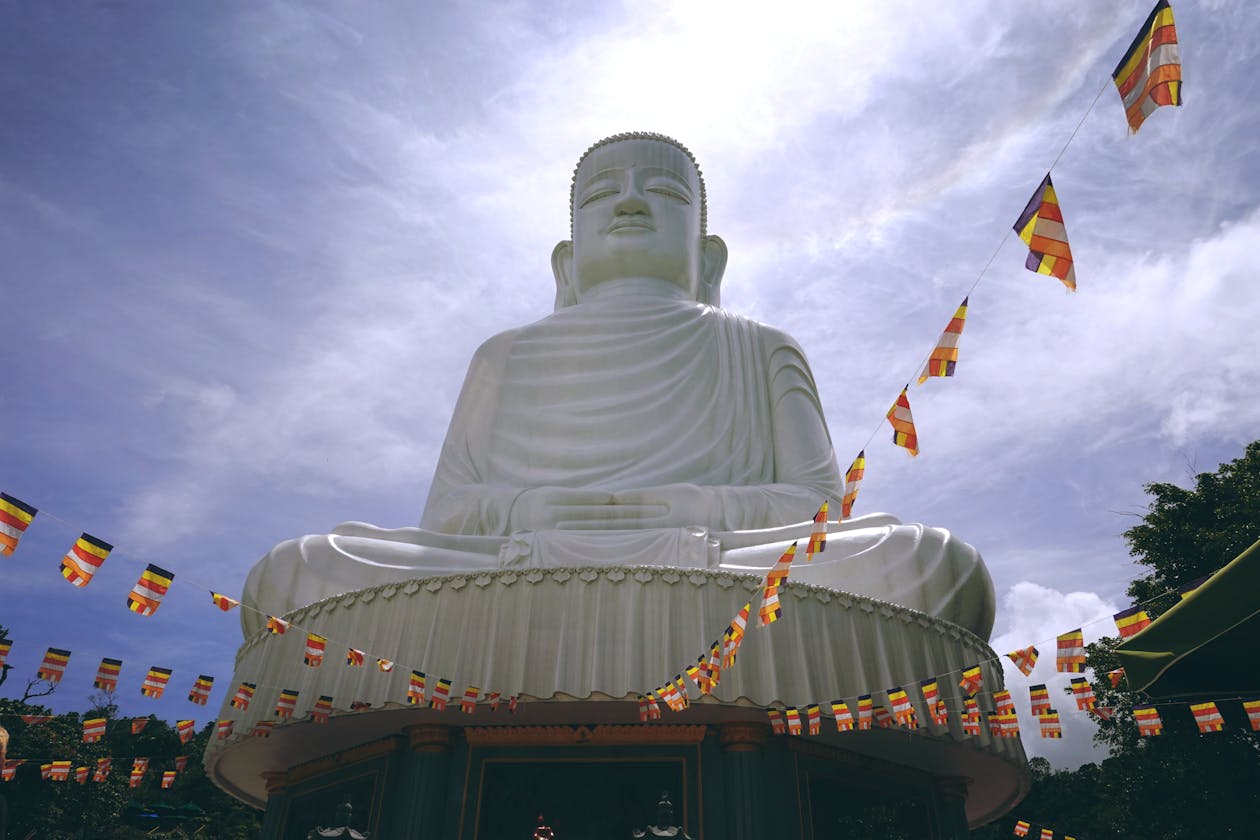
The Lady Buddha statue at Linh Ung Pagoda is usually bundled into the same half-day trip, and it makes sense — she is about 20 minutes north by car. At 67 meters tall, she is the tallest Buddha statue in Vietnam, and you can actually see her from the beach at My Khe if you squint. The pagoda grounds are free to enter and genuinely peaceful, which is more than I can say for most tourist stops in central Vietnam.
If you are working out whether to do this independently or book a tour, I have broken it all down below — ticket prices, logistics, what is actually worth seeing inside the mountains, and the three best tours if you would rather have someone else handle the driving.
Short on time? Here are my top picks:
Best overall: Lady Buddha, Marble Mountains & Am Phu Cave — $23. Hits all three sites with pickup from Da Nang or Hoi An. Over 5,000 reviews.
Best for adventurers: Marble Mountains + Monkey Mountain — $26. Small group morning tour that adds Son Tra Peninsula to the mix.
Best day trip combo: Ba Na Hills & Golden Bridge — $21. Different itinerary entirely, but the best-rated full-day tour from Da Nang.
- Tickets, Prices, and What You Are Actually Paying For
- Going Solo vs. Booking a Tour
- What You Will Actually See Inside the Mountains
- The Lady Buddha and Linh Ung Pagoda
- The Best Tours to Book
- 1. Lady Buddha, Marble Mountains & Am Phu Cave —
- 2. Ba Na Hills & Golden Bridge (Full Day) —
- 3. Marble Mountains, Am Phu Cave & Monkey Mountain —
- When to Go
- Getting There
- Tips That Will Save You Time and Sweat
- More Vietnam Guides
Tickets, Prices, and What You Are Actually Paying For
The Marble Mountains are not one single ticket. There are two separate admission fees, and the elevator is extra on top of that.
Marble Mountains (Thuy Son): 40,000 VND (~$1.60 USD). This gets you onto the mountain and into all the pagodas, caves, and viewpoints above ground level. You buy your ticket at the booth near the base of the stairs, or at the elevator entrance if you are taking the lazy route up.
Am Phu Cave: 20,000 VND (~$0.80 USD). Separate ticket, separate entrance. The cave entrance is at ground level, to the left of the elevator. It is a themed cave depicting heaven and hell in Buddhist mythology — colorful statues, mood lighting, dripping ceilings. Takes about 20-30 minutes.
Elevator: 15,000 VND (~$0.60 USD) per trip. Only goes to the lower level. My advice: take the elevator up to save your legs, then walk down the stairs. You will want that energy for the steep sections higher up.
So the grand total for everything? About 90,000 VND — roughly $3.60. That is entry to the mountains, the cave, plus one elevator ride. For what you get, it is absurdly cheap.
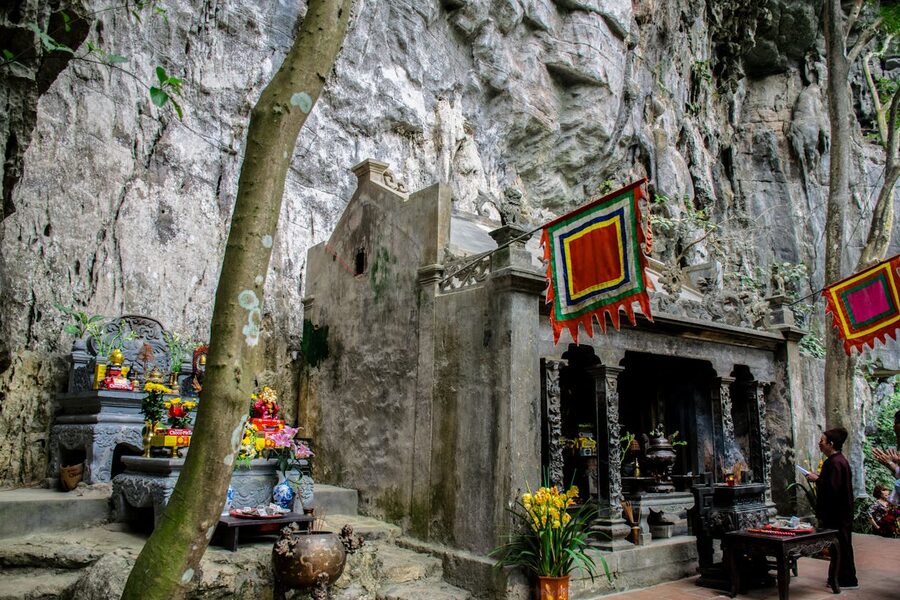
Lady Buddha / Linh Ung Pagoda: Free. No ticket needed. The pagoda grounds are open to visitors and there is no entry fee. Just dress modestly (cover your shoulders and knees) and keep your voice down inside the main hall.
Going Solo vs. Booking a Tour
This is a fair question because the Marble Mountains are only about 9 km south of central Da Nang. You could Grab there for under $3. So why would anyone book a tour?
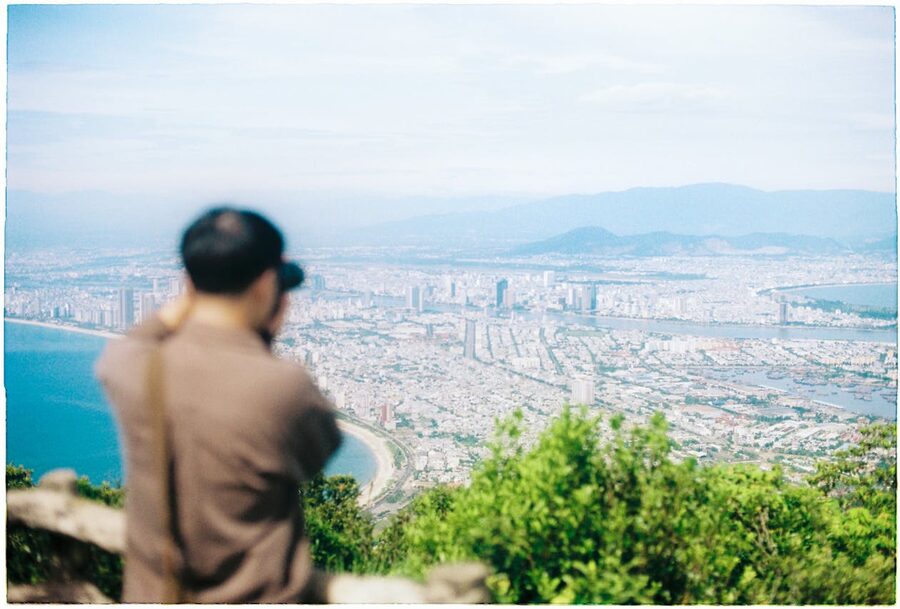
Go solo if: you are already staying in Da Nang, you do not mind navigating the cave system without context, and you want to spend as long as you like. Budget for 2-3 hours at the mountains, plus 45 minutes at Lady Buddha, plus Grab rides between them. Total cost: maybe $8-10 including transport.
Book a tour if: you are staying in Hoi An (it is 30+ km away and Grab gets expensive), you want the history explained, or you simply do not want to deal with logistics. The $23 tour from GetYourGuide covers pickup, all three sites, and a guide who actually knows the mythology behind the cave shrines. That last part matters more than you would think — without context, Am Phu Cave is just weird statues in a damp tunnel.
Most people staying in Hoi An book a tour because the transport alone would cost nearly as much. If you are in Da Nang, it is more of a toss-up.
What You Will Actually See Inside the Mountains
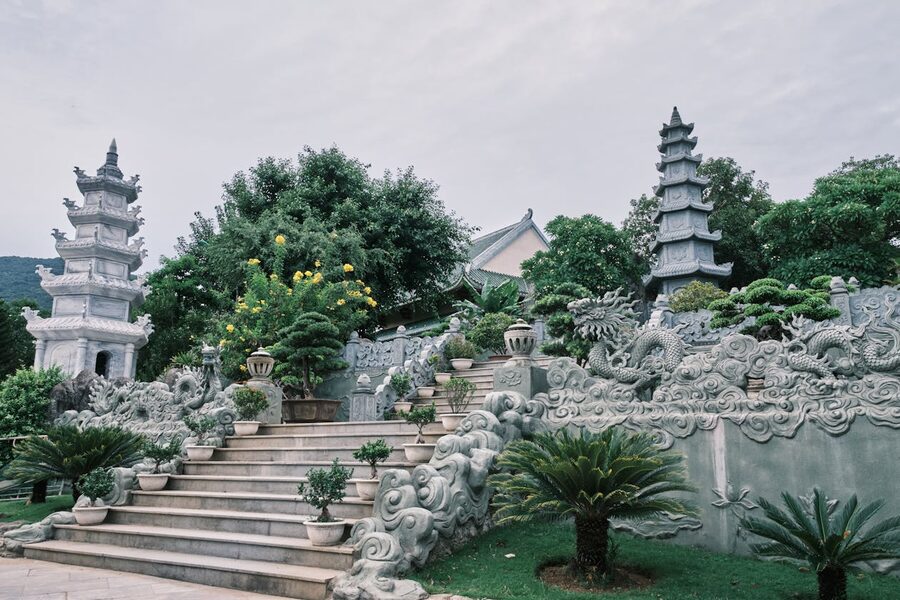
Thuy Son is the only mountain open to visitors, and there is more up there than most people realize. The main route takes you past Linh Ung Pagoda (not the same one as Lady Buddha — confusing, I know), through Tam Thai Tu pagoda, and up to several cave systems.
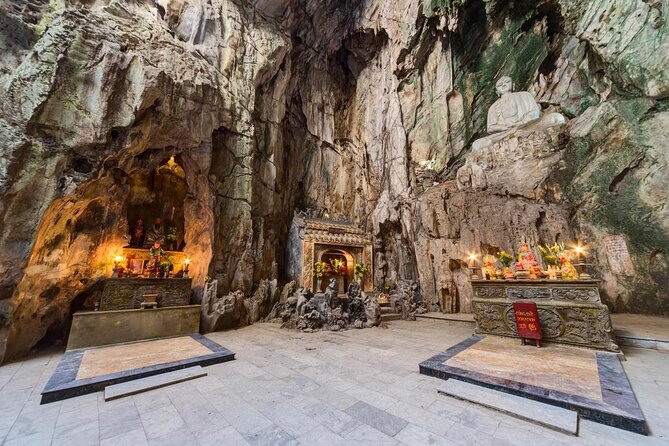
Huyen Khong Cave is the crown jewel. It is a large natural cavern with Buddhist and Hindu shrines, and the ceiling has holes that let in shafts of natural light. The effect changes throughout the day — late morning gives the most dramatic beams. During the Vietnam War, the Viet Cong used this cave as a hospital, and you can still see bullet holes in the rock from American bombing raids. The mix of sacred art and war history in one space is unlike anything else I have encountered in Vietnam.
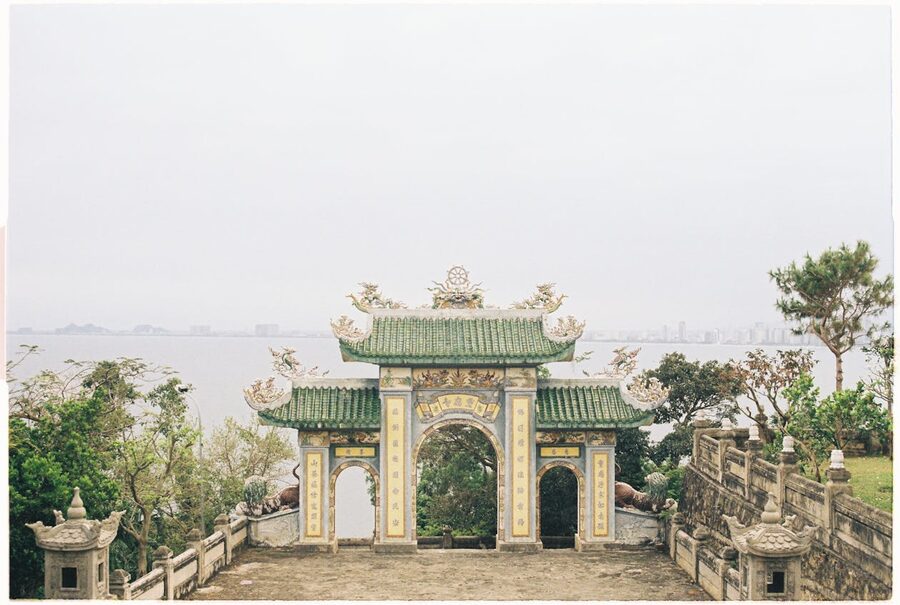
Tang Chon Cave is smaller and darker. You will need to watch your head and your step — the floor gets slippery from the constant dripping. There is a small shrine inside and a chimney-like opening above that frames the sky. Fewer travellers bother with this one, which is exactly why you should.
Am Phu Cave is at ground level (separate entrance, separate ticket). This one is more theme park than natural wonder — it is a walk-through cave decorated with scenes of Buddhist hell and heaven. Colorful statues of demons, sinners being punished, the whole thing. Kids seem to love it. I found it entertainingly bizarre. Budget 20-30 minutes.
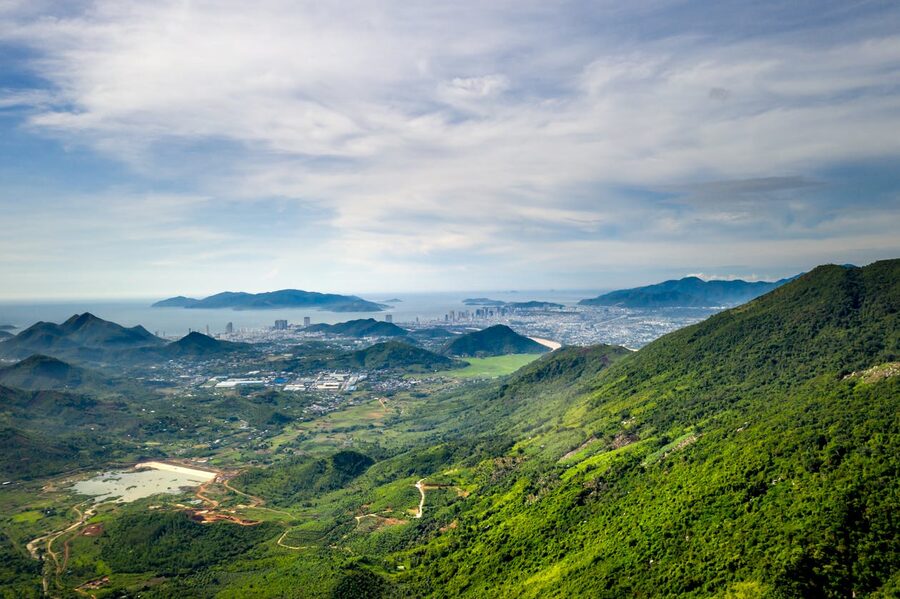
The viewpoints at the top of Thuy Son are the reward for all those stairs. You get panoramic views of Da Nang to the north, the coast to the east, and the other four marble peaks below. On a clear day, the colors are ridiculous — turquoise ocean, white sand, green mountains, grey limestone. Bring water. There is nowhere to buy any once you pass the midpoint.
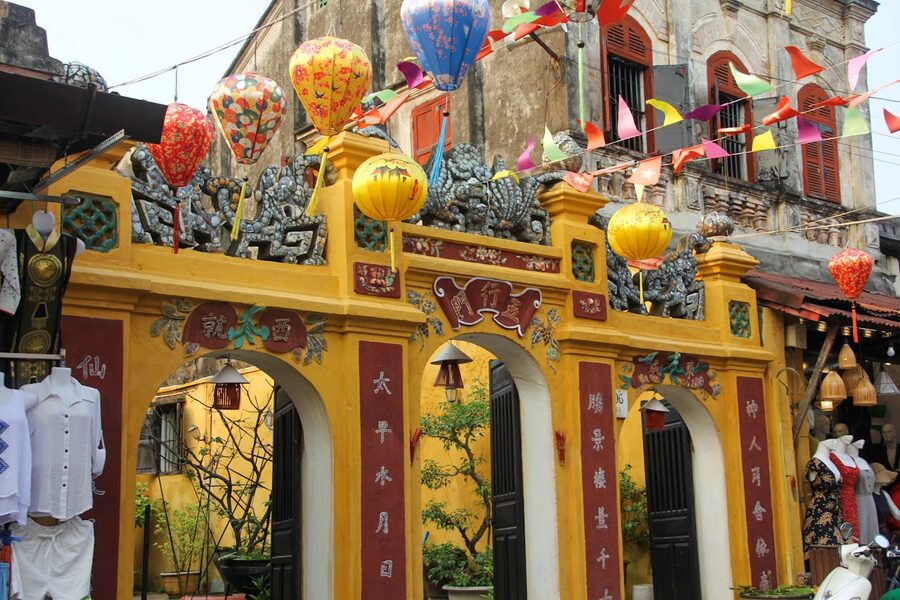
Between the caves, you will pass through open-air terraces dotted with pagodas and banyan trees. Some of these trees are hundreds of years old, their roots gripping the limestone like fingers. The monks who live here maintain small shrines in alcoves you might miss if you are rushing. Slow down. The whole mountain rewards curiosity more than speed.
At the base of the mountains, Non Nuoc Village is a marble-carving village that has been operating for centuries. The sculptors here produce everything from tiny Buddhas to life-sized lions. It is worth wandering through even if you do not buy anything — watching them work massive blocks of stone with hand tools is something else entirely. The village used to quarry marble directly from the mountains, but that was banned in the 2000s to protect the site. Now they import stone from other provinces, but the skill and tradition remain the same.
The Lady Buddha and Linh Ung Pagoda
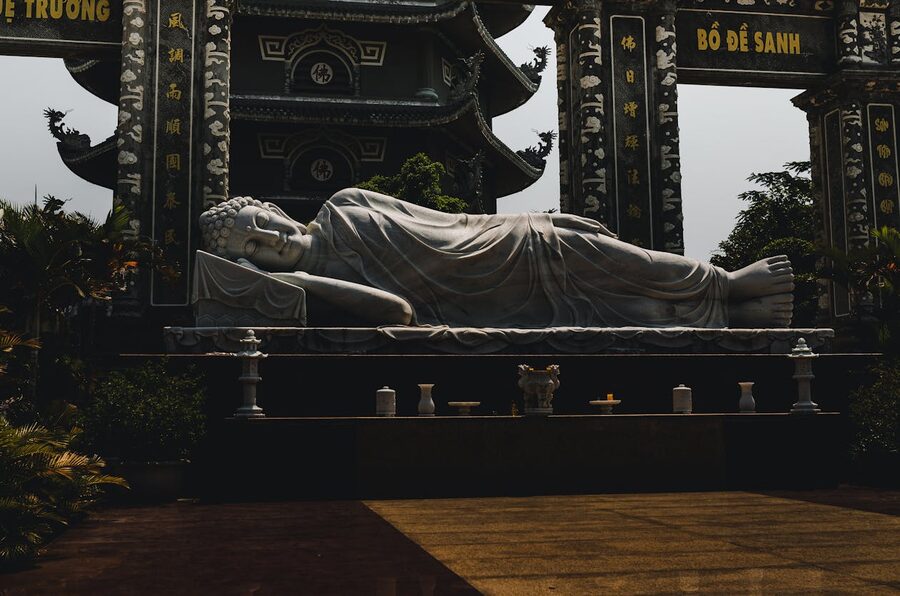
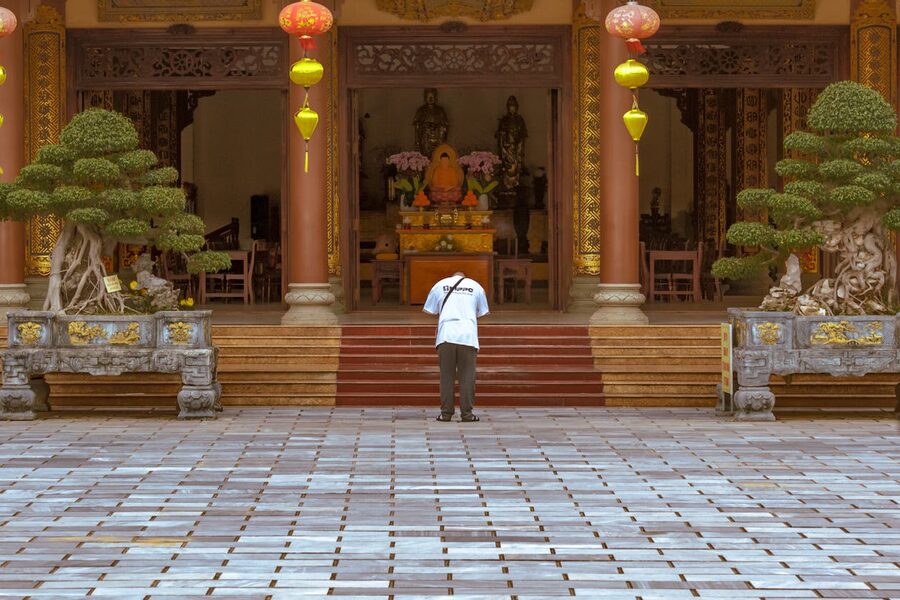
Linh Ung Pagoda sits on Son Tra Peninsula, about 20 minutes north of central Da Nang. The 67-meter Lady Buddha (Quan Am) faces the sea, and according to local belief, she protects fishermen from storms. The statue was completed in 2010 and you can go inside the base, which has 17 floors — each one housing a different Buddha figure. The staircase inside is narrow and the lighting is dim, so it feels a bit like climbing a lighthouse. Each floor has a small altar and a different Buddha pose, and by the time you reach the top you have seen more Buddha statues than you probably have in your entire life.
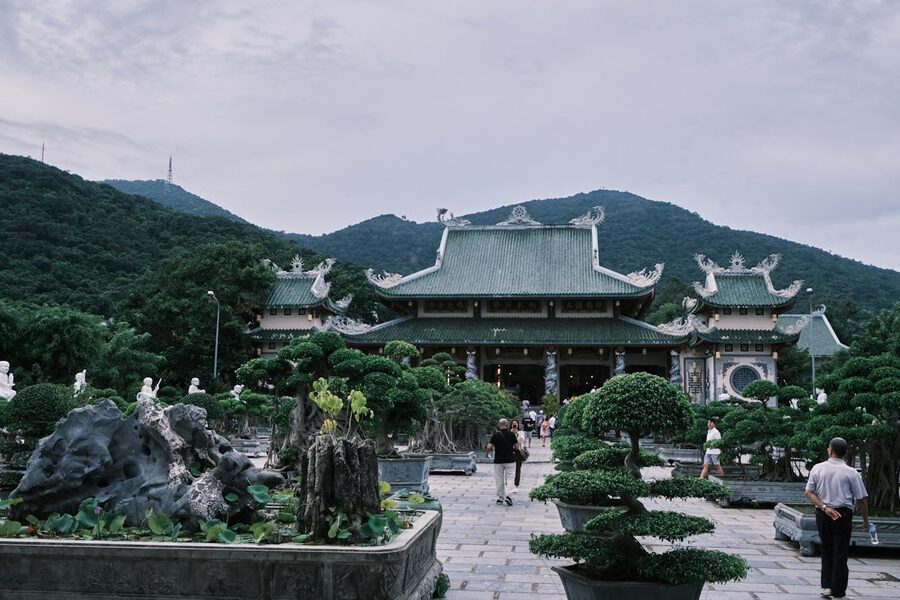
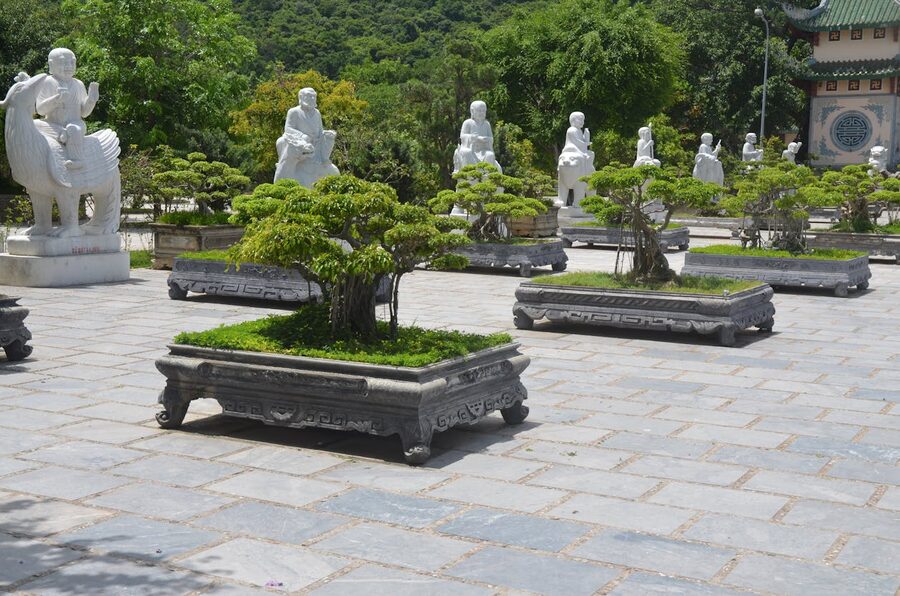
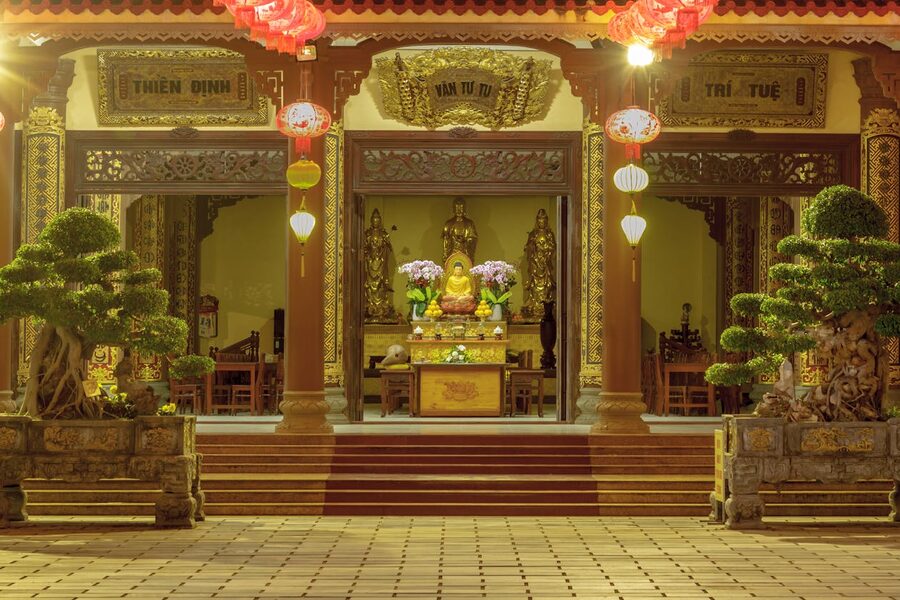
The pagoda grounds are large and well-maintained. You will find a courtyard with 18 Arhat statues (the expressions on their faces are worth a close look — each one is distinct), a main prayer hall, and gardens with ocean views. The whole complex is free to enter. I spent about 45 minutes here and could have stayed longer.
One thing to note: the Hoi An basket boat rides and Hoi An cooking classes are popular same-day combos if you are based in Hoi An and doing a multi-stop day. The Lady Buddha is on the way back from the Marble Mountains to Da Nang, so it slots in naturally.
The Best Tours to Book
I went through the three highest-rated tours for the Marble Mountains and Lady Buddha combo. These all include hotel pickup, transport, and a guide — the only things you will pay extra for are drinks and the Am Phu Cave ticket (some tours include it, some do not).
1. Lady Buddha, Marble Mountains & Am Phu Cave — $23
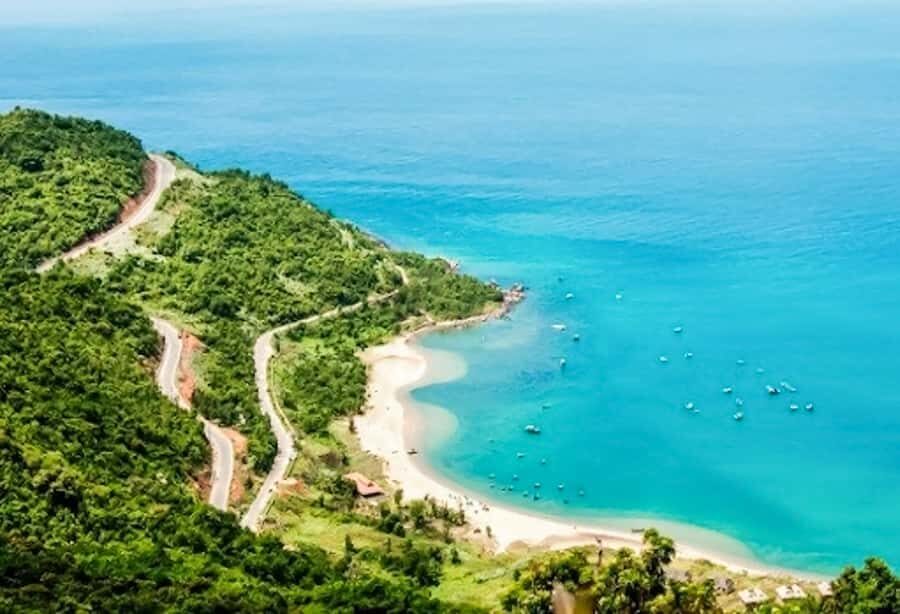
This is the one most people book, and with over 5,000 reviews at a 4.7 rating, it is hard to argue with the track record. The tour runs as a half-day trip from either Da Nang or Hoi An, hitting Lady Buddha, the Marble Mountains, and Am Phu Cave in about 4.5 to 5 hours. At $23 per person, that includes pickup, all entry fees, and a guide.
The main knock on this tour is pacing. Some visitors mention it feels a bit rushed at the mountains — you get around 90 minutes total, which is enough to see the major caves and pagodas but does not leave time for lingering at viewpoints. If you are the type who likes to wander, this might frustrate you. But if you want efficiency and want all three sites done before lunch, it delivers.
2. Ba Na Hills & Golden Bridge (Full Day) — $21
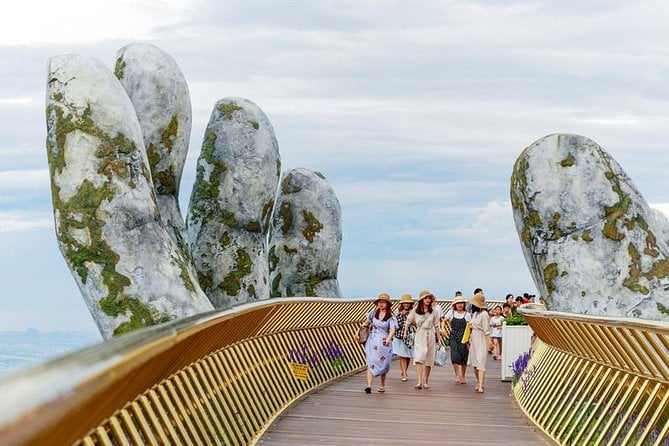
This is not a Marble Mountains tour — it is the other big day trip from Da Nang, and I am including it because plenty of people debate between the two. Ba Na Hills sits at 1,400 meters in the Truong Son Mountains and features the famous Golden Bridge (the one held up by giant stone hands). The tour runs as a $21 per person small group from Hoi An or Da Nang, and with a perfect 5.0 rating across 2,600+ reviews, it is the highest-rated full-day tour in central Vietnam.
The cable car ride up is 5.8 km and genuinely spectacular — one of the longest in the world. Up top you will find French-styled gardens, a fantasy village, pagodas, and an amusement park. It is kitschy but fun. If you have two days in Da Nang, do Marble Mountains one day and Ba Na Hills the other. If you only have one day and care more about photos than caves, go here.
3. Marble Mountains, Am Phu Cave & Monkey Mountain — $26
This is the one I would pick if I were doing it again. It is a morning-only small group tour that covers the Marble Mountains and Am Phu Cave, then heads up to Son Tra Peninsula — also known as Monkey Mountain. At $26 per person, it is only $3 more than the standard tour but adds a completely different landscape: dense jungle, military ruins, and a chance to spot the red-shanked douc langur, a monkey so colorful it looks photoshopped.
The small group format (max 10 people) means you actually get to talk to the guide, and the morning timing is smart — you hit the Marble Mountains before the big tour buses arrive around 9:30 AM. Perfect 5.0 rating with over 1,000 reviews. The only downside is it does not include Lady Buddha, so you would need to visit separately (it is on the same peninsula as Monkey Mountain, about 10 minutes by Grab).
When to Go
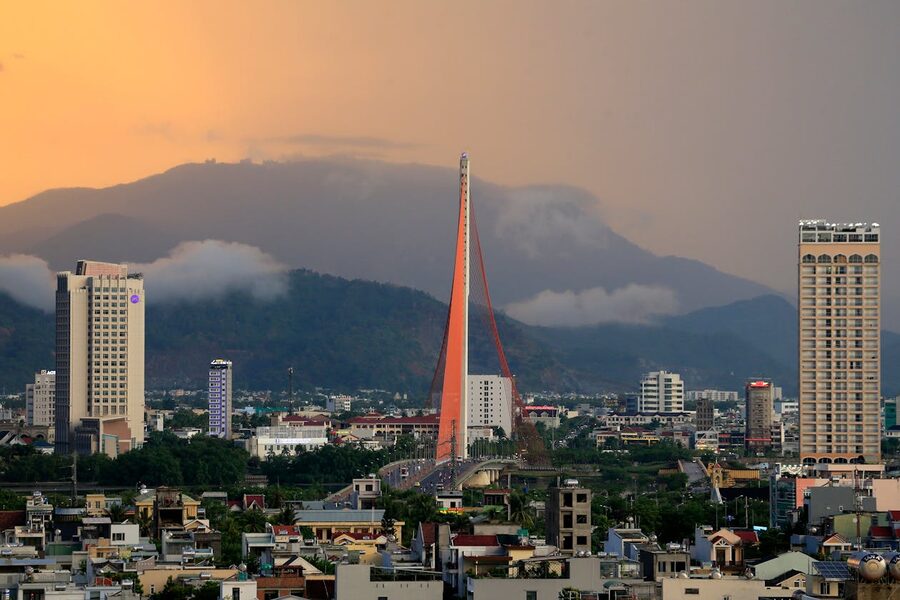
Opening hours: Marble Mountains are open 7:00 AM to 5:30 PM daily. Am Phu Cave closes at 5:00 PM. Linh Ung Pagoda (Lady Buddha) is open from around 7:00 AM to 6:00 PM, though I have heard of people visiting slightly earlier.
Best time of day: Get there at opening. By 9:30 AM the tour buses start rolling in and the main staircase gets congested. The caves are also cooler in the early morning. If you are going solo, 7:00-9:00 AM is the sweet spot.
Best months: March through May is ideal — dry, warm, and less humid than summer. June through August works too but it is hotter and you will sweat through your shirt climbing the stairs. September through February is rainy season in central Vietnam, and wet limestone steps are no joke. I would not skip it because of rain, but wear proper shoes and go slow.
How long to budget: Plan 2-2.5 hours for the Marble Mountains if you want to see the caves and viewpoints properly. Am Phu Cave adds 20-30 minutes. Lady Buddha is 30-45 minutes. If you are doing all three independently, a full morning from 7 AM to noon covers it comfortably.
Getting There
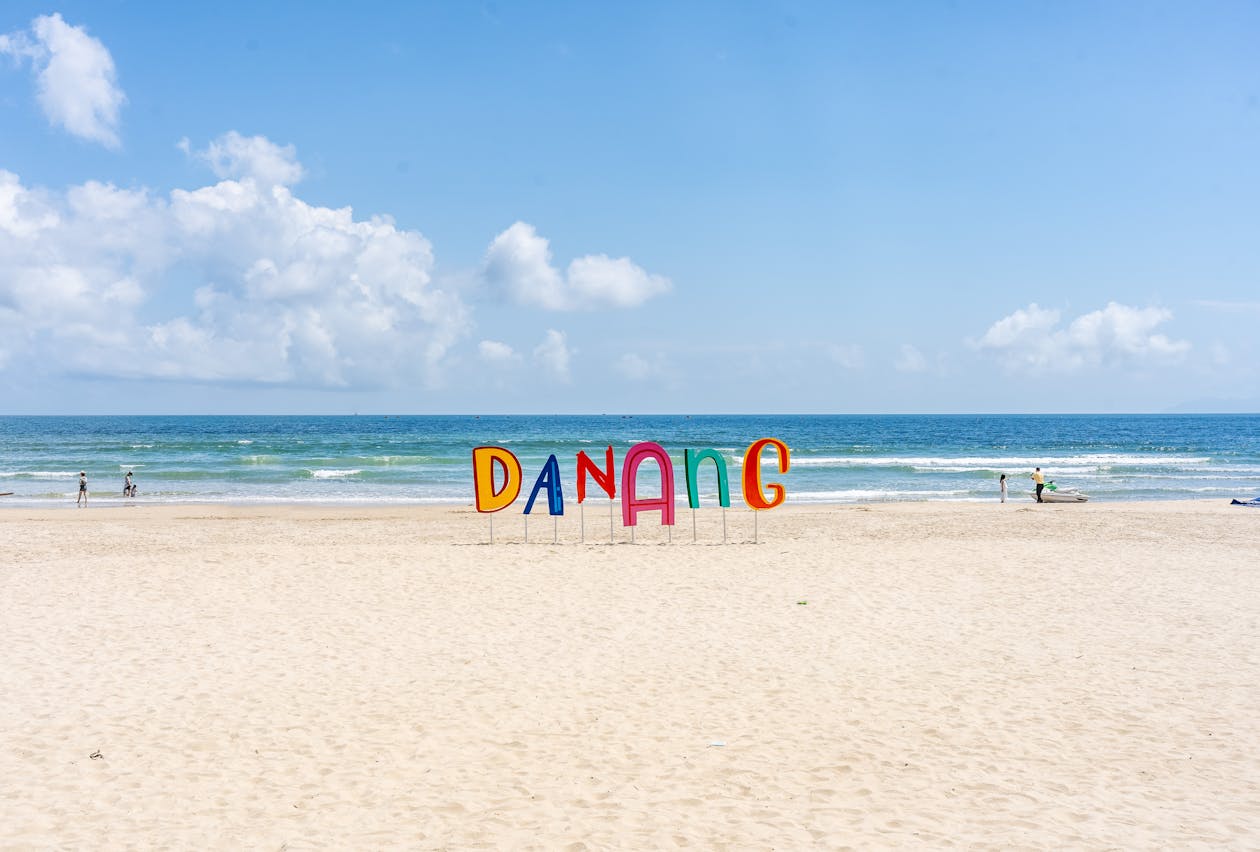
From Da Nang city center: About 9 km south, 15-20 minutes by Grab. Costs around 60,000-80,000 VND ($2.50-3.30). This is the easiest option.
From Hoi An: 27 km north, about 40-50 minutes by Grab. Costs around 200,000-250,000 VND ($8-10). At that price, a $23 tour with pickup makes more financial sense, especially if you are also visiting Lady Buddha.
By motorbike: If you have rented one (and you are comfortable with Vietnamese traffic), it is a straightforward ride down the coast road. Parking at the Marble Mountains costs 5,000-10,000 VND — you will need to negotiate.
Lady Buddha from the Marble Mountains: About 15 km north, 20 minutes by Grab. No public bus connects them directly. Tours include this transfer, which is one of the practical arguments for booking one.

Tips That Will Save You Time and Sweat
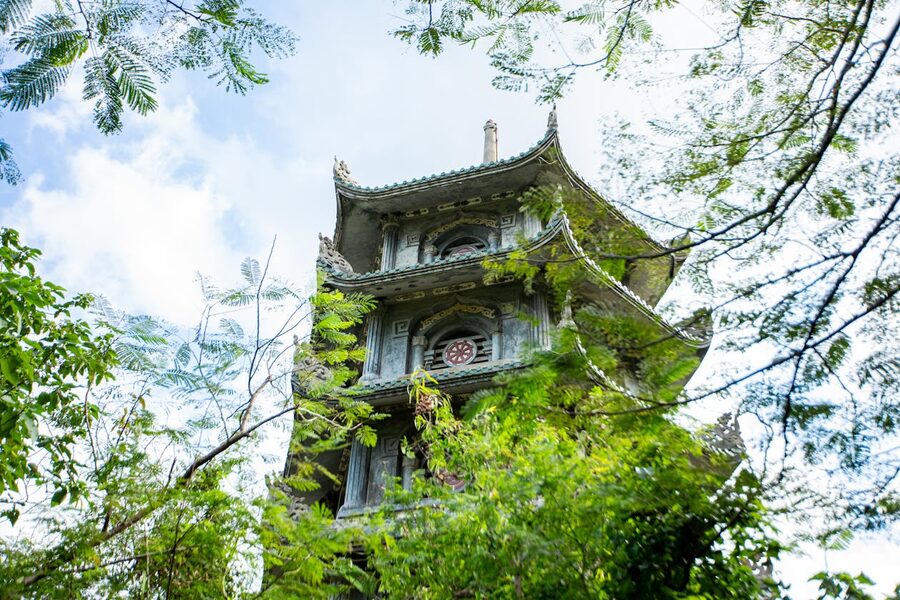
Elevator up, stairs down. Your legs will thank you at the viewpoints if you do not burn them out on the initial climb. The elevator only goes to the lower level anyway — you will still have plenty of stairs above that.
Wear proper shoes. The cave floors are wet and the stairs are uneven limestone. Flip-flops are a recipe for a twisted ankle. Sneakers or hiking sandals with grip.
Bring water. There is a small rest area with drinks partway up, but above that, nothing. A liter per person minimum, more if it is hot.
Dress modestly for Lady Buddha. Cover your shoulders and knees. The pagoda provides wraps if you forget, but it is easier to just plan ahead.
Skip the marble shops if you are flying home. The carvings in Non Nuoc Village are gorgeous, but a 30 kg marble Buddha is not carry-on friendly. If you are shipping things home or driving to Hoi An, browse away.
Combine with Hoi An. If you are doing this as a day trip from either direction, the Marble Mountains sit almost exactly halfway between Da Nang and Hoi An. Hit the mountains in the morning, have lunch in Hoi An old town, then do a basket boat ride in the coconut forest or a cooking class in the afternoon. That is a full day and two destinations for under $40 total if you go solo.
Do not forget Am Phu Cave is separate. It is easy to miss because the entrance is at ground level, away from the main mountain staircase. If you want to see it, do it first — the cave is air-conditioned by nature and makes a good warm-up before the climb.
More Vietnam Guides
If you are building out a central Vietnam itinerary, the Hoi An basket boat rides through the coconut forest are one of the best half-day activities in the region — cheap, fun, and totally different from the temples-and-caves vibe. The lantern-making classes are worth it if you are spending an evening in the old town.
For the other direction, the Ho Chi Minh City street food tours by motorbike are wild in the best way. And if you are heading north from Da Nang, Hanoi street food scene is a whole different world — start with the walking food tours. Further out, the Halong Bay and Lan Ha Bay cruises and Ninh Binh day trips from Hanoi are two of the most popular day trips in northern Vietnam.
For something completely different, the Hanoi water puppet show is one of those things you do not expect to enjoy as much as you do. And if you are venturing south, the Mekong Delta tours from Saigon make for a solid day trip. The Cu Chi Tunnels are also worth the drive from the city — sobering and fascinating in equal measure.