
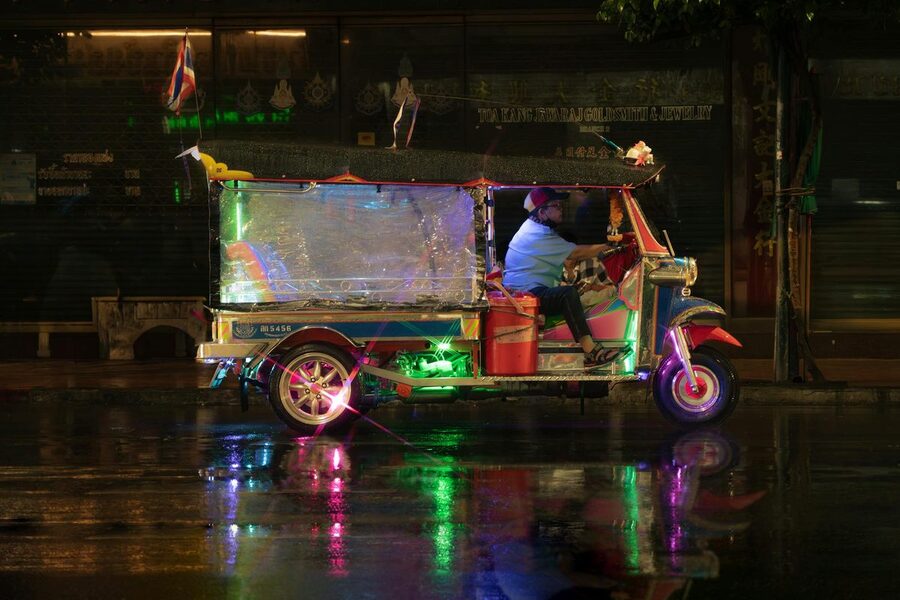
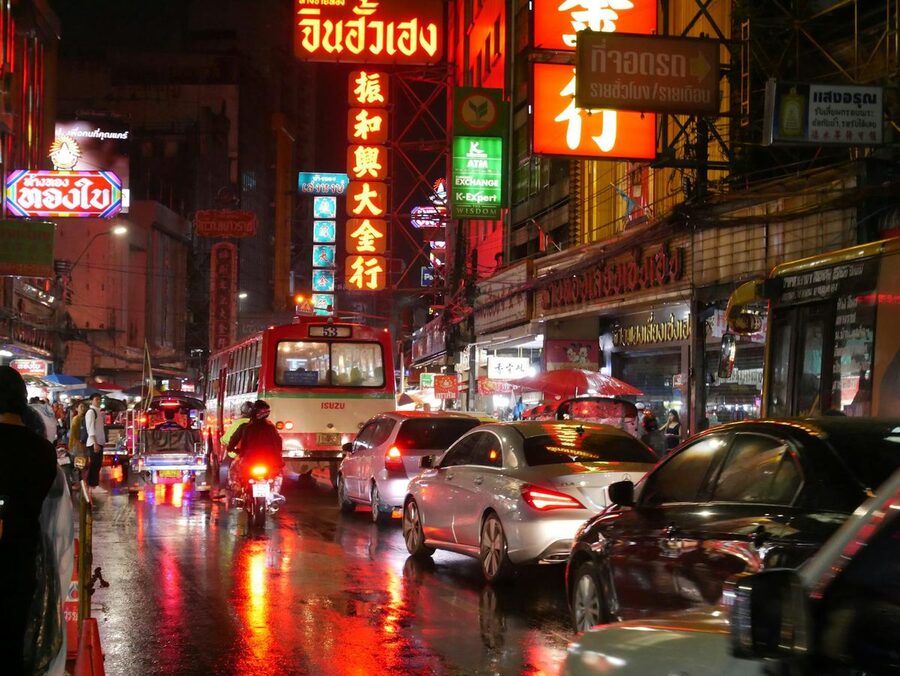
The tuk-tuk lurched left through a gap in traffic that didn’t exist thirty seconds ago. Neon from a pharmacy sign streaked across the windshield in green and pink, and somewhere behind us a motorbike honked twice, then three times, then gave up. My driver grinned over his shoulder and said something I couldn’t hear over the engine.
That was the first five minutes.
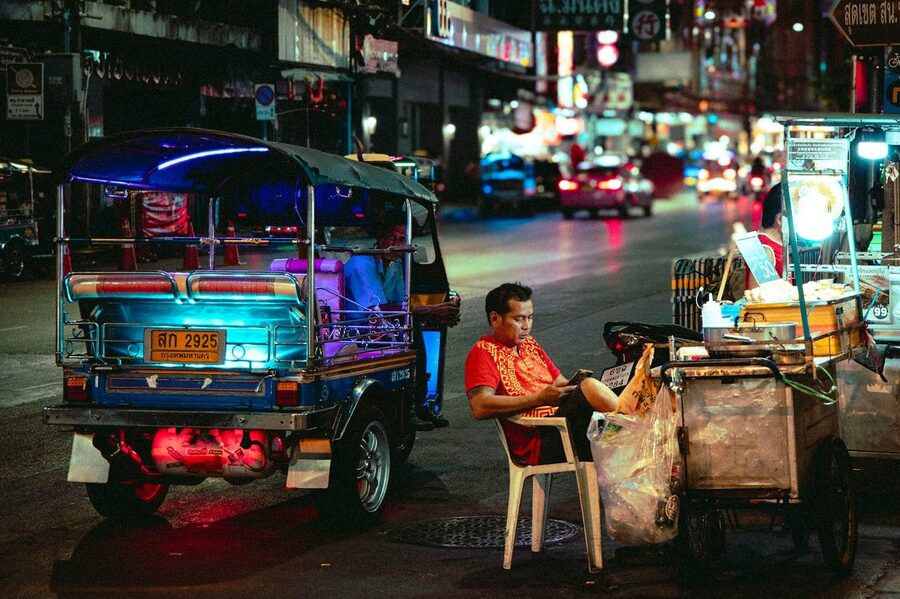
A Bangkok tuk-tuk night tour is one of those things that sounds like a tourist trap until you actually do it. Then you realize it’s the fastest way to see the city’s best temples, markets, and street food in a single evening, without spending half of it stuck in a taxi scrolling your phone. The open-air ride is the experience. Wind in your face, exhaust in your lungs, and a city that looks completely different once the sun drops.
I’ve done three of these tours across different trips and price points. Here’s how to book the right one, what to expect, and which tours are actually worth the money.
Short on time? Here are my top picks:
Best overall: Bangkok by Night: Temples, Markets and Food by Tuk-Tuk — $79. The complete package. Temples, Chinatown food, flower market, and a local guide who knows every back alley.
Best for food lovers: Bangkok Midnight Food Tour by Tuk Tuk — $82. If you care more about eating than sightseeing, this one goes deeper on the food and runs later into the night.
Best budget: Tuk-Tuk Tour Bangkok by Night with Chinatown Meal — $41. Half the price of the others and still covers the essentials, including a proper Chinatown dinner.
- How Tuk-Tuk Night Tours Work
- Can You DIY a Tuk-Tuk Night Tour?
- The Best Bangkok Tuk-Tuk Night Tours
- 1. Bangkok by Night: Temples, Markets and Food by Tuk-Tuk —
- 2. Bangkok Midnight Food Tour by Tuk Tuk —
- 3. Tuk-Tuk Tour Bangkok by Night with Chinatown Meal —
- When to Book a Tuk-Tuk Night Tour
- How to Get to the Meeting Point
- Tips That Will Save You Time and Money
- What You’ll Actually See on the Tour
- Planning the Rest of Your Bangkok Nights and Days
How Tuk-Tuk Night Tours Work
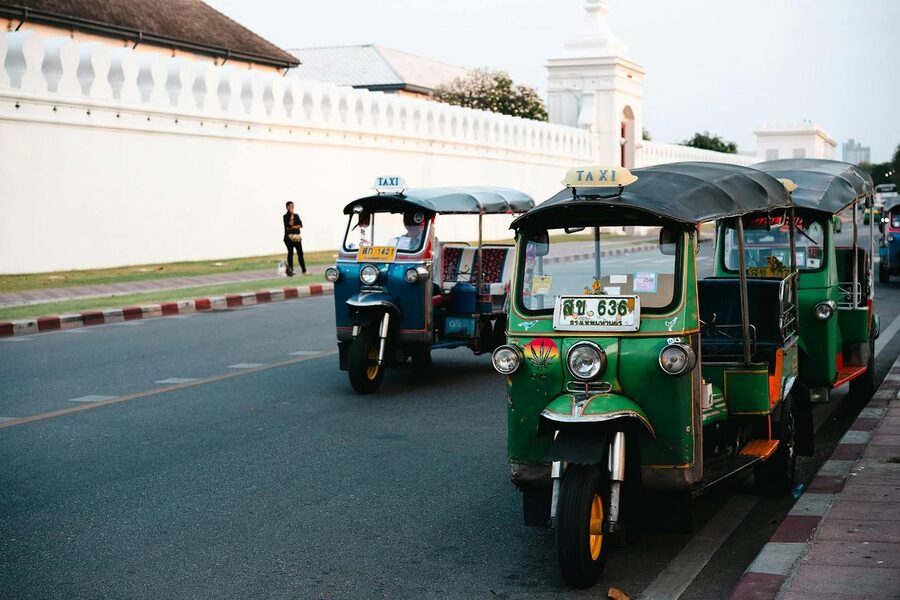
You can just flag down a tuk-tuk on Khao San Road and ask the driver to show you around. Plenty of people do. But you’ll spend most of the night negotiating prices, dodging gem shop scams, and wondering if you’re about to get ripped off. The organized tours eliminate all of that.
Here’s how the booked tours typically work:
Most operators pick you up from your hotel between 5:30pm and 7pm, depending on the tour. You meet your guide, get assigned a tuk-tuk (usually shared with one other couple), and head out. The routes vary but almost always include a mix of temples, Chinatown, a market, and food stops. Tours run 3 to 4 hours on average.
The guides speak English, carry cash for food purchases, and handle all the logistics. You just sit in the back and take it in. Some tours include all food and drinks in the price. Others budget separately for food — check before you book.
Important: these are not private tuk-tuks. You’re in a small group of 8-12 people spread across several tuk-tuks, with a guide leading the convoy. If you want a private tuk-tuk, it costs roughly double.
Can You DIY a Tuk-Tuk Night Tour?
Technically, yes. Practically, it’s hard to pull off well.
The problem isn’t finding a tuk-tuk — they’re everywhere. The problem is that independent tuk-tuk drivers in Bangkok have earned their reputation. Many will quote you 200 baht then take you to a tailoring shop or gem store instead of where you asked to go. They get a commission from the shop, you lose 45 minutes of your night. It happens constantly.
The guided tours use their own vetted drivers who know the route, skip the scams, and actually take you to the good spots. The food stops alone are worth it — these guides know which stall has the best pad see ew on Yaowarat Road, not just the first one you see.
If you’re on a tight budget, you can take a Grab to Chinatown, walk around Yaowarat Road, and eat at the street stalls yourself. But you’ll miss the temples, the flower market, and the thrill of the tuk-tuk ride itself. For most people, the $41-$82 tour price is well worth it.
The Best Bangkok Tuk-Tuk Night Tours
I’ve narrowed it down to three tours. All three are five-star rated with hundreds (or thousands) of reviews, and each one covers a slightly different angle. Pick based on whether you care more about the full experience, the food, or the price.
1. Bangkok by Night: Temples, Markets and Food by Tuk-Tuk — $79

This is the one to book if you want everything — temples lit up at night, Chinatown street food, the flower market, and a local guide who treats the tuk-tuk convoy like a military operation. Run by Expique, the same company behind several of Bangkok’s top-rated walking tours, and it shows in the organization.
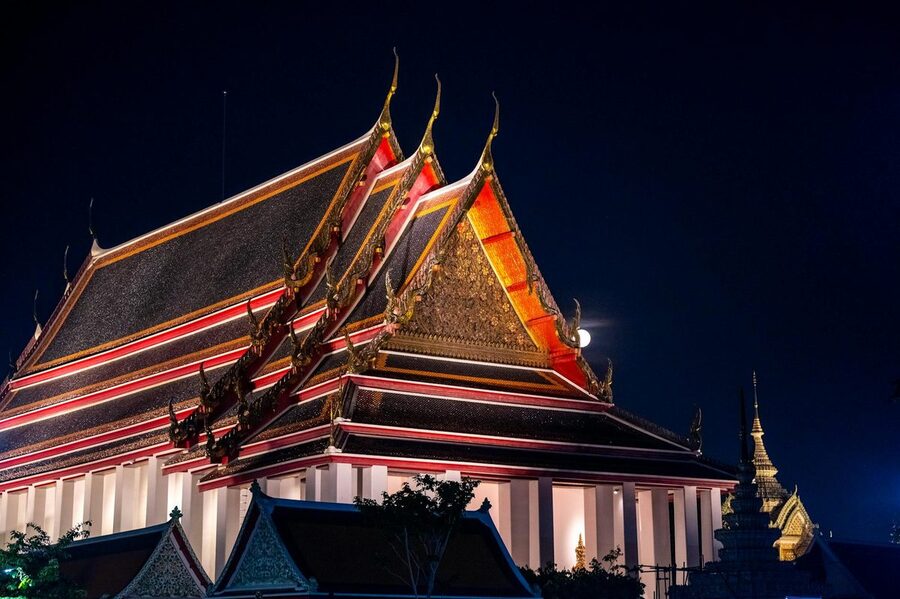
With nearly 4,000 five-star reviews, this is the most-booked tuk-tuk night tour in Bangkok by a wide margin. At $79 it’s not cheap, but the food is included, the route covers ground you’d never find alone, and the guides actually know the history behind each stop. The Grand Palace and Wat Pho look completely different at night compared to the daytime crush.
2. Bangkok Midnight Food Tour by Tuk Tuk — $82
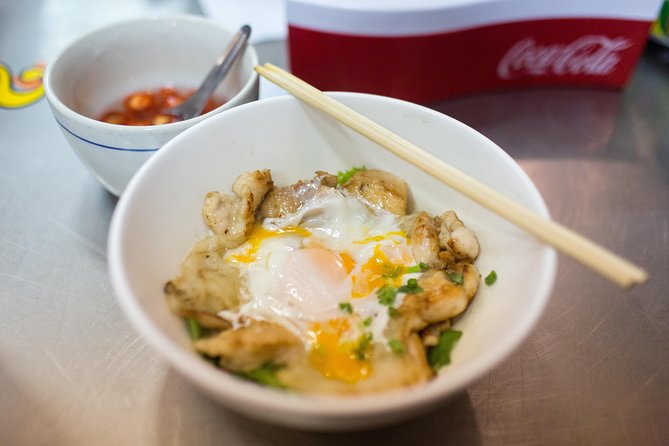
If the first tour is “Bangkok at night with food,” this one is “Bangkok food with a tuk-tuk.” The emphasis is squarely on eating. Run by Bangkok Food Tours, it starts later (around 8pm) and runs until close to midnight. You’ll hit street stalls, hole-in-the-wall restaurants, and late-night markets that most travellers never see.
Over 2,500 reviews and a perfect five-star average. At $82 it’s the most expensive option, but the food quality justifies it — you’re eating at spots the guides have spent years finding. If you want the deeper Bangkok food tour experience wrapped in a tuk-tuk ride, this is it. All food and drinks are included in the price.
3. Tuk-Tuk Tour Bangkok by Night with Chinatown Meal — $41
At $41, this is less than half the price of the other two. Run by WanderSiam, a smaller operator, it covers a similar route — temples, Chinatown, markets — but the group sizes can be slightly bigger and the food stop is a sit-down Chinatown dinner rather than a progressive street food crawl.
Over 600 reviews at a perfect 5.0 rating. The trade-off is less food variety and a slightly more structured feel, but honestly? For the price, it’s very solid. If you’re traveling on a budget and just want the tuk-tuk experience without dropping $80, this one delivers. The Chinatown meal alone — think roast duck, dim sum, and noodle soup — would cost you close to $15 if you found it on your own.
When to Book a Tuk-Tuk Night Tour
Bangkok is hot year-round, which is exactly why these tours run at night. But some months are better than others.
Best months: November through February. This is Bangkok’s “cool” season — meaning it’s still 28-30C but the humidity drops and it almost never rains. Night tours are genuinely comfortable.
Shoulder months: March through May. It gets brutally hot, sometimes 38C during the day, but nights cool to around 30C. Tuk-tuks have open sides so you get a breeze, which helps. But you’ll still sweat.
Rainy season: June through October. It rains most afternoons, sometimes hard, but usually clears by evening. Most tour operators run rain or shine and will provide ponchos. A rainy night in Bangkok is actually spectacular — the neon reflects off wet streets and the city glows. Just be prepared to get a bit damp.
Tours run every night, 7 days a week. But Friday and Saturday nights are the busiest for street food vendors, so the markets are more lively. Book at least 2-3 days in advance during high season (November-January) since popular tours sell out.
How to Get to the Meeting Point
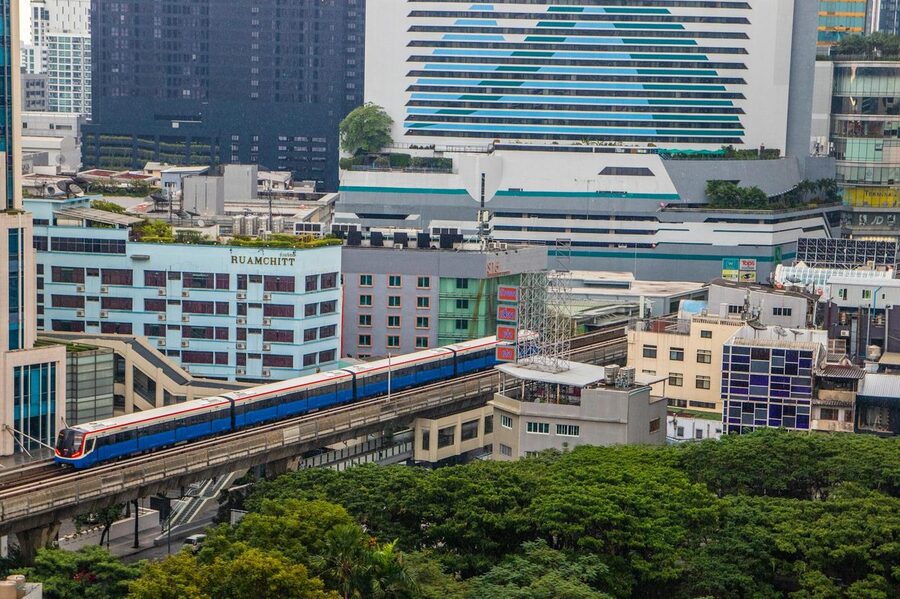
Most tours include hotel pickup, which makes this easy. The driver will collect you from your lobby and bring you to the meeting point. If your hotel is outside central Bangkok (past On Nut or in the airport area), some operators charge a small supplement or ask you to meet at a central location instead.
If you need to get yourself to the meeting point:
BTS Skytrain: The fastest way around Bangkok. Runs until midnight. If meeting near Chinatown, take the BTS to Saphan Taksin and taxi the rest, or use the MRT to Hua Lamphong station.
MRT: The underground system connects to Hua Lamphong (near Chinatown) and Silom. Less crowded than the BTS in the evening.
Grab: Bangkok’s ride-hailing app. Cheaper than taxis and no negotiation. A Grab from Sukhumvit to Chinatown runs about 100-150 baht ($3-5).
Water taxi: If you’re staying along the river, the Chao Phraya Express Boat runs until about 7pm. The longtail boat canal tours are a separate experience worth doing during the day.
Tips That Will Save You Time and Money
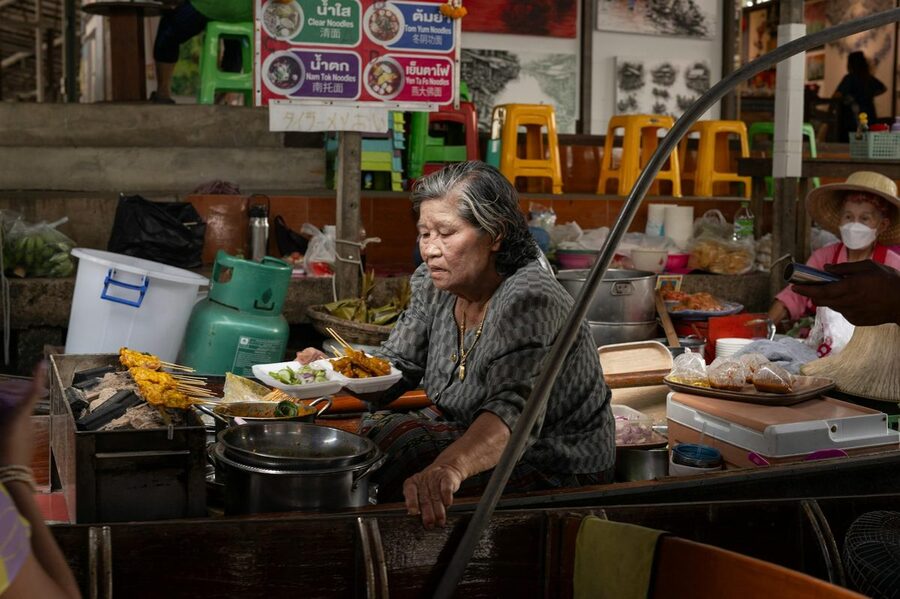
Bring cash in small bills. Even though food is usually included, you’ll want cash for drinks, souvenirs at the markets, and tips. ATMs are everywhere but charge 220 baht ($6) per withdrawal. Get cash before the tour starts.
Wear comfortable shoes. You’ll be getting in and out of tuk-tuks and walking through markets. Flip-flops work but closed-toe shoes are better for temple visits (some require them). If you prefer exploring on two wheels during the day, the Bangkok bike tours cover backstreets and hidden neighborhoods that even tuk-tuks skip.
Skip dinner before the tour. The amount of food on these tours is serious. I made the mistake of eating a late lunch before my first one and regretted it by the third food stop. Come hungry.
Charge your phone. You’re going to want photos and your phone will die fast in the heat. Bring a battery pack.
Sit on the left side of the tuk-tuk. This is a small thing, but in Bangkok traffic flows on the left, so the left seat gives you better views of the temples and storefronts as you pass.
Temple etiquette: cover your shoulders and knees. Most guides will remind you, but some temples will turn you away. A light scarf in your bag solves this.
Don’t compare prices with street tuk-tuks. An independent tuk-tuk driver will quote you 200-300 baht for a short ride. That’s just transport. The tour price ($41-82) includes a guide, food, entry fees, and 3-4 hours of curated stops. Completely different value proposition.
What You’ll Actually See on the Tour
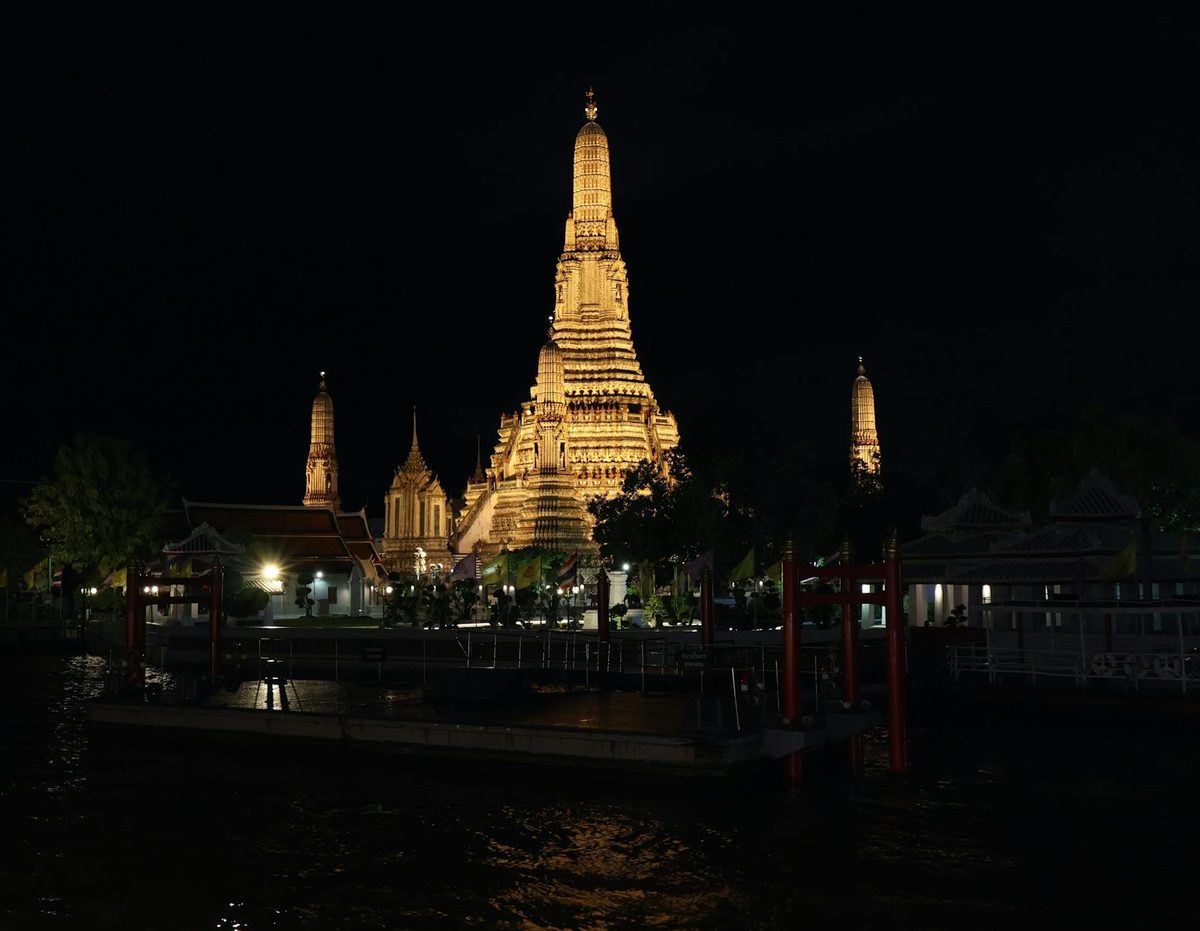
Every tour operator tweaks their route, but here’s what most cover:
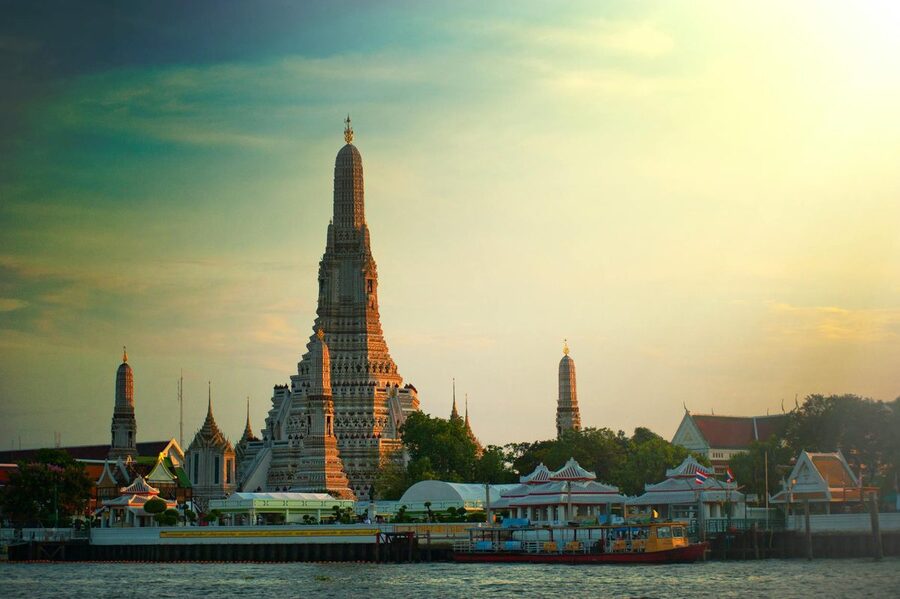
Wat Arun (Temple of Dawn): Ironic name for a night tour stop, but Wat Arun lit up after dark is one of the most beautiful things in Bangkok. Most tours view it from across the river rather than going inside. The daytime tours let you climb the spires.
Wat Pho (Reclining Buddha): Some tours include a stop here. The enormous reclining Buddha is 46 meters long and covered in gold leaf. At night the crowds are thinner and the atmosphere is quieter.
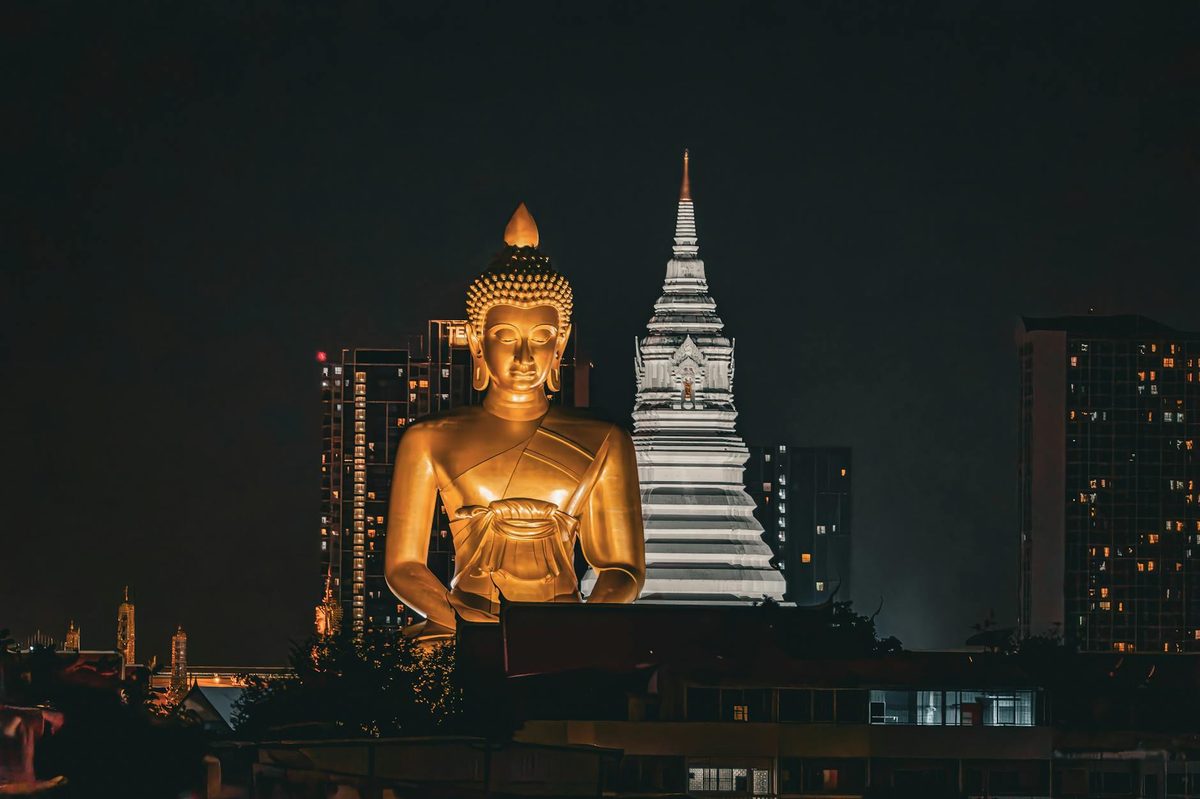
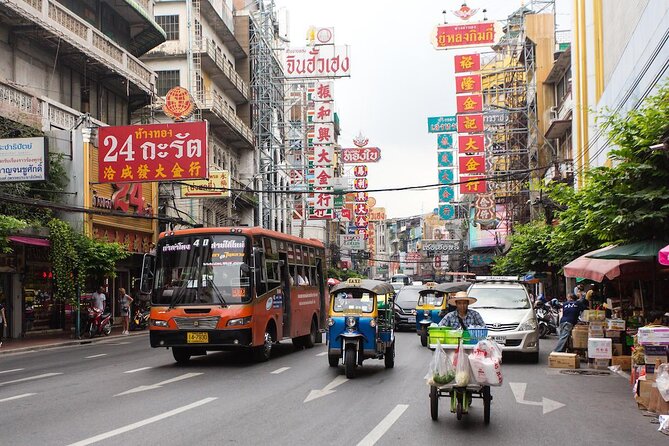
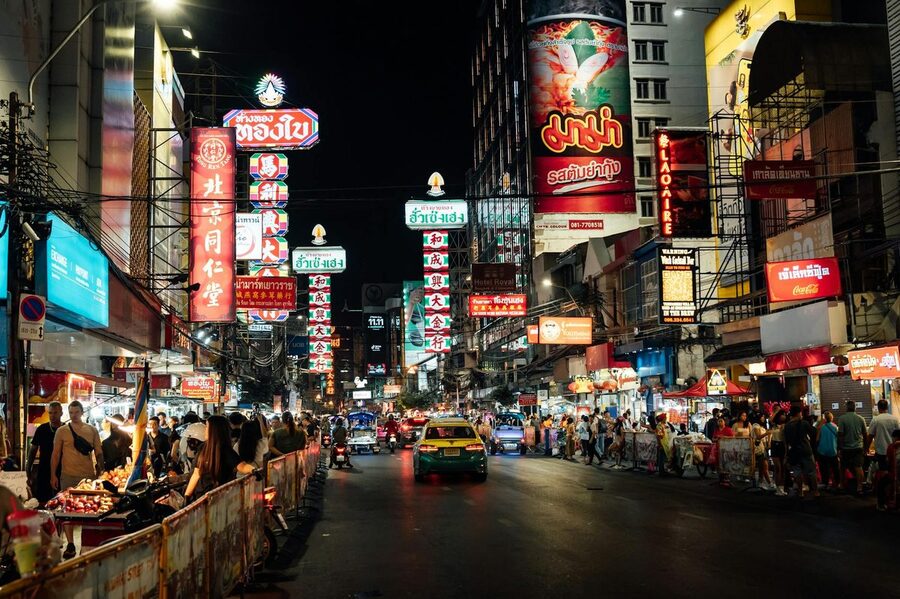
Chinatown (Yaowarat Road): The main event for food. Yaowarat Road after dark is Bangkok at its most intense — smoking woks, neon signs in Chinese and Thai, and tables spilling onto the sidewalk. This is where you’ll eat the best pad thai, roast duck, and crispy pork belly of your trip. If the street food gets you hooked, a hands-on Thai cooking class the next morning lets you learn to make some of these dishes yourself.
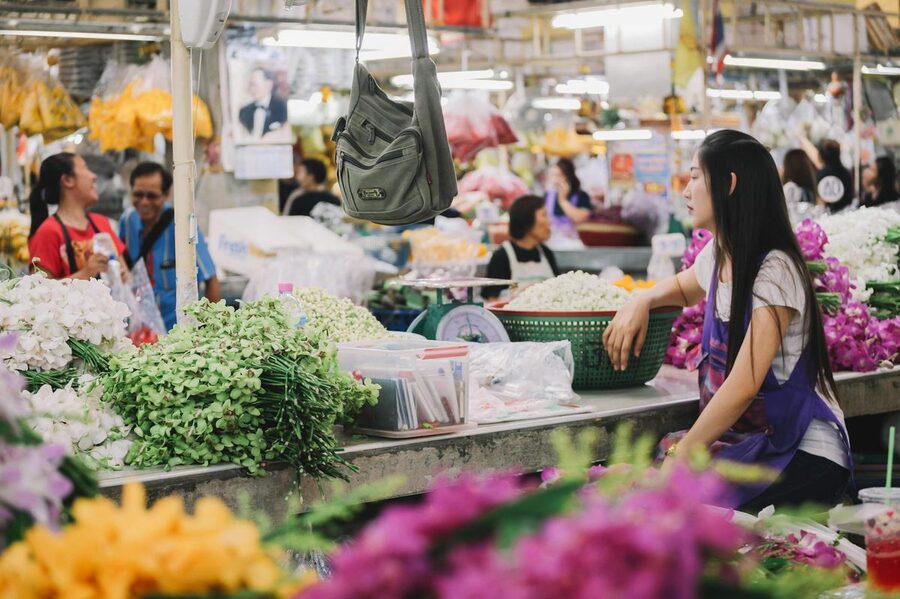
Pak Khlong Talat (Flower Market): Open 24 hours but most beautiful between 8pm and midnight when the fresh deliveries arrive. Mountains of jasmine, marigolds, orchids, and roses. The smell alone is worth the stop.
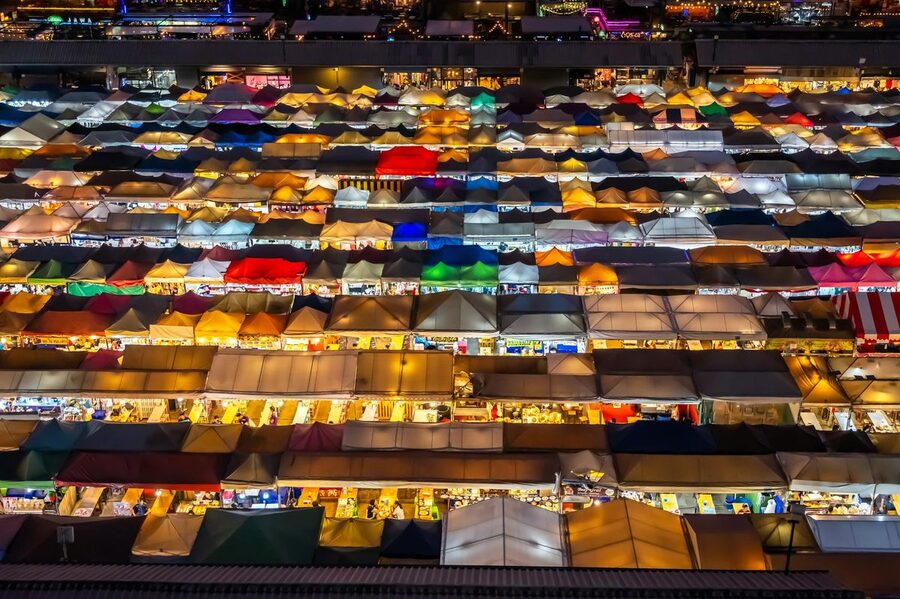
Night markets: Depending on the tour and the night of the week, you might stop at Rot Fai Market, Jodd Fairs, or a smaller local market. These are less touristy than Chatuchak and have better food.
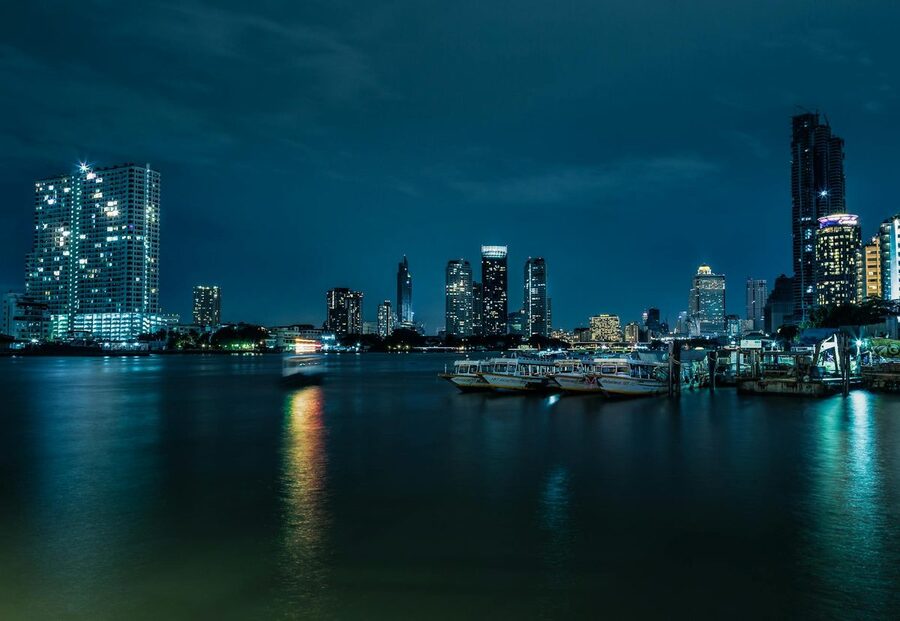
The ride itself: Don’t underestimate this part. Weaving through Bangkok traffic in an open tuk-tuk at night — past skyscrapers, through narrow alleys, across bridges with the river glowing below — is genuinely thrilling. It’s not comfortable. It’s not quiet. But it’s the most Bangkok thing you can do. The only thing that comes close is catching a live Muay Thai fight at Rajadamnern Stadium, which makes a solid second evening activity if you have two nights.
Planning the Rest of Your Bangkok Nights and Days
A tuk-tuk night tour works best on your first or second evening in Bangkok, when the city still feels overwhelming and having a guide makes everything click. After that, you know the lay of the land well enough to branch out.
For daytime, the Grand Palace, Wat Pho, and Wat Arun circuit is the obvious first move — you already saw these temples lit up at night, and walking through them in daylight reveals details the floodlights hide. The bike tours through Bangkok’s backstreets reach neighborhoods no tuk-tuk bothers with, and they pair naturally with a longtail boat ride through the canals on the same day.
If the street food on Yaowarat got you hooked, a dedicated Bangkok food tour goes deeper into neighborhoods the tuk-tuk only passes through. The Chao Phraya dinner cruise is the opposite vibe — white tablecloths, air conditioning, and the same river views from a completely different angle. For a second evening out, Muay Thai at Rajadamnern Stadium is raw, loud, and unlike anything else in the city.
Outside Bangkok proper, the floating market and train market day trip and the Ayutthaya temple ruins excursion are both full-day commitments that are worth it if you have three or more nights. And if you want one last look at the city from above, the Mahanakhon SkyWalk is best at sunset — book the 5pm slot and watch the neon switch on from 314 meters up.