
In 1767, the Burmese army burned Ayutthaya to the ground. They melted the gold off every Buddha statue, toppled temple spires, and left a capital that had ruled Southeast Asia for 417 years in ashes. What’s left today is still one of the most powerful archaeological sites in the region — and it sits just 80 kilometers north of Bangkok.
Getting there on your own is straightforward enough (trains run from Bangkok’s Bang Sue Grand Station for under 100 baht), but figuring out which temples to prioritize, how to get between them once you’re there, and whether to add a floating market or river cruise takes real planning. That’s where a guided day trip earns its keep.
I’ve done this trip both independently and with a tour, and there’s a genuine case for each. But if you’re working with limited time in Bangkok — and most people are — a structured day trip squeezes the most out of 7-9 hours and removes the guesswork completely.
Short on time? Here are my top picks:
Best overall: Ayutthaya Temples Guided Tour with Lunch — $28. Best value for a full temple circuit with a local guide and included lunch. Over 10,000 reviews.
Best combo: Ayutthaya & Ayothaya Floating Market Day Trip — $48. Combines the ruins with a floating market stop. Good if you want both in one shot.
Best premium: Ayutthaya Day Tour with River Cruise — $77. Returns to Bangkok by boat along the Chao Phraya. The cruise alone justifies the price bump.
- How to Visit Ayutthaya on Your Own
- Independent Visit vs. Guided Day Trip
- The Best Ayutthaya Day Trips from Bangkok
- 1. Ayutthaya Temples Guided Tour with Lunch —
- 2. Ayutthaya & Ayothaya Floating Market Day Trip —
- 3. Ayutthaya Historical Park Guided Day Trip —
- 4. Ayutthaya Day Tour by Bus with River Cruise —
- 5. Floating Market and Ayutthaya Guided Day Tour —
- When to Visit Ayutthaya
- How to Get to Ayutthaya from Bangkok
- Tips That Will Save You Time
- What You’ll Actually See in Ayutthaya
- Planning the Rest of Your Bangkok Trip
How to Visit Ayutthaya on Your Own
You have three ways to reach Ayutthaya independently from Bangkok, and each one has trade-offs.
By train is the cheapest option. Third-class tickets from Bang Sue Grand Station cost 20-100 baht depending on the service, and the ride takes about 1.5 to 2 hours. The downside: trains run on Thai railway time, which is to say they’re often late, and the station is a short tuk-tuk ride from the historical park itself.
By minivan is faster — about 1 to 1.5 hours depending on traffic. Vans leave from Victory Monument (Mo Chit) and cost around 60-80 baht. They drop you closer to the old city than the train does, but they don’t run on a fixed schedule and wait until they’re full before departing.
By private taxi costs around 1,500-2,000 baht for a return trip with a driver who waits. Not cheap, but if you’re splitting between 3-4 people, the per-person cost approaches what a group tour charges — and you set your own pace.
Once you’re in Ayutthaya, the temples are spread across the old island. Walking between them isn’t realistic in the heat. Most independent visitors rent a bicycle (50 baht/day near the train station) or hire a tuk-tuk driver for the day (200-300 baht for 3-4 hours). Back in Bangkok, a tuk-tuk night tour through Chinatown and the temple district is a fun way to spend the evening after a day at the ruins.
Entry fees are separate for each temple. Most charge 50 baht per site, and if you’re hitting five temples, that adds up to 250 baht before transport. A six-temple pass costs 220 baht from the visitor center and saves you a bit.
Independent Visit vs. Guided Day Trip
An independent trip gives you flexibility and saves money if you’re comfortable navigating Thai transport. You can spend an hour at one temple and ten minutes at another. You eat where you want, leave when you want, and don’t wait for 40 other people to take photos at every stop.
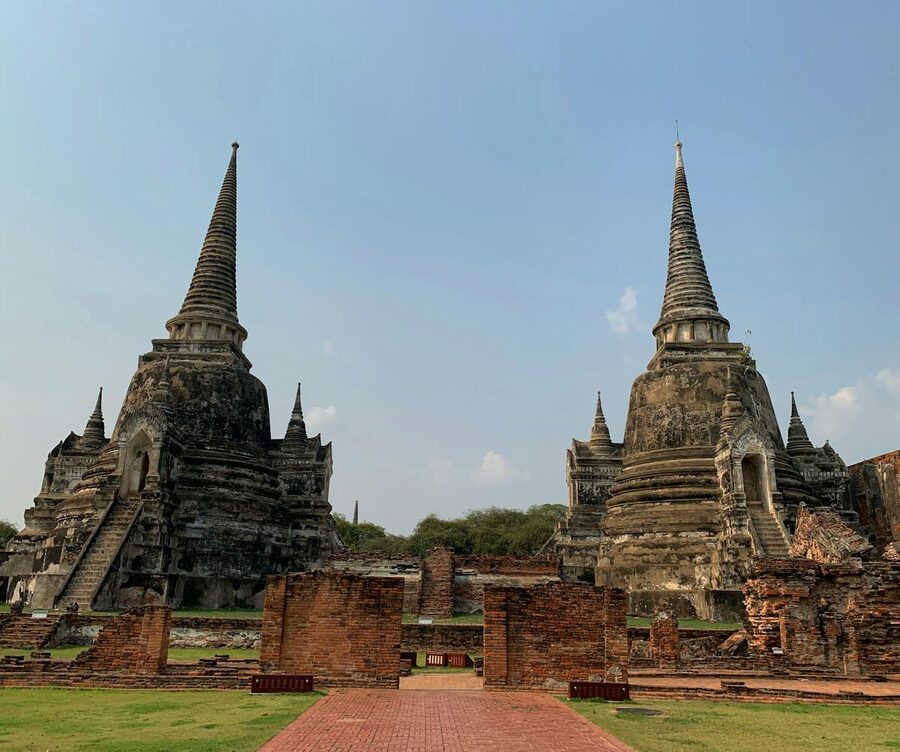
But I’ll be honest: the ruins at Ayutthaya are far more interesting when someone explains what you’re looking at. Without context, they’re beautiful piles of old brick. With a guide, you’re standing in the room where kings were crowned, or looking at the exact spot where a 16-meter gold Buddha once sat before the Burmese stripped it bare.
A guided tour makes more sense if:
- You have one day and want maximum coverage
- You care about history and context (and you should — this place has 417 years of it)
- You don’t want to deal with Thai transport logistics
- You want lunch included so you’re not wandering around in midday heat looking for a restaurant
Go independent if:
- You’ve been to Ayutthaya before and want to revisit specific temples
- You want to spend a full day or overnight
- You’re on a tight budget (train + bicycle + entry fees totals about 350 baht vs. $28+ for a tour)
- You specifically want to visit temples that aren’t on the standard circuit
The Best Ayutthaya Day Trips from Bangkok
I’ve gone through all the major Ayutthaya day trip options and narrowed it down to the five that are genuinely worth booking. Each offers something different — from budget temple circuits to full-day combos with floating markets and river cruises.
1. Ayutthaya Temples Guided Tour with Lunch — $28
This is the one I’d pick if you just want the core Ayutthaya experience without any add-ons. At $28 it’s the cheapest guided option, and the 7-hour format packs in the major temples without dragging. Over ten thousand people have reviewed this tour and given it 4.7 stars, which at that volume tells you it’s consistent.
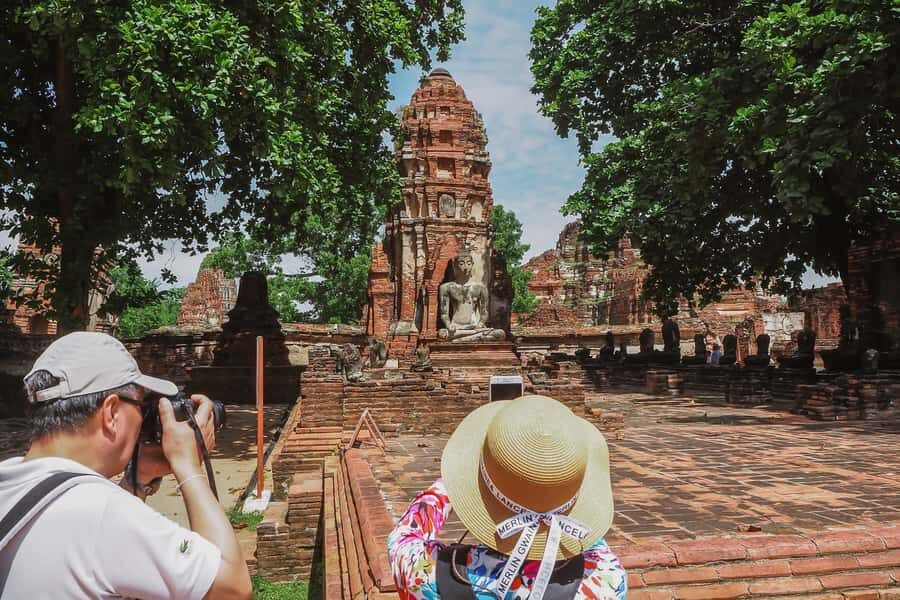
You get hotel pickup in Bangkok, a knowledgeable local guide, entry to the main temples including Wat Mahathat (the famous Buddha head in the tree roots) and Wat Phra Si Sanphet, and a Thai lunch. It’s straightforward and well-paced. The only downside is it’s a group tour, so you’re moving with the crowd.
2. Ayutthaya & Ayothaya Floating Market Day Trip — $48
If you want temples AND the floating market experience without booking two separate day trips, this is the smart play. The $48 price tag is reasonable given you’re covering two distinct experiences in 8 hours. The floating market near Ayutthaya is more touristy than the Damnoen Saduak and Maeklong markets closer to Bangkok, but it’s still worth the stop.
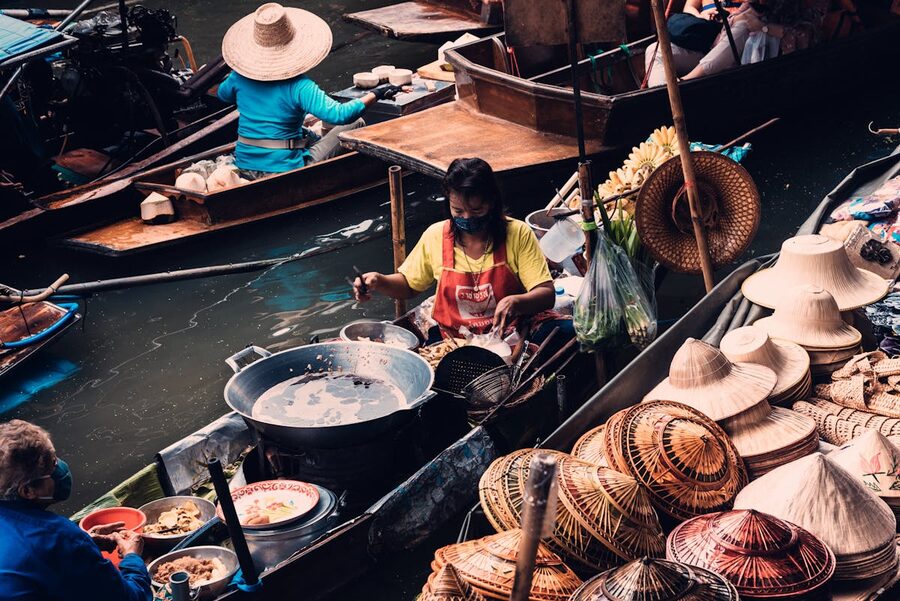
The tour itinerary covers the key temples plus a chunk of time at the Ayothaya Floating Market, where you can grab boat noodles, grilled seafood, and Thai desserts from vendors in small wooden boats. Over 6,000 reviews at 4.7 stars. It runs a bit longer than the temple-only options, so factor that into your Bangkok evening plans.
3. Ayutthaya Historical Park Guided Day Trip — $28
Same price point as the first option ($28) but this 9-hour version takes a slower pace and covers more ground. If you’re the type who wants to actually read the plaques, take your time with photos, and not feel rushed through each site, this is the better fit.
The extra two hours compared to the 7-hour tour make a real difference. You’re not sprinting between temples, and the guide has time to go deeper into the history at each stop. Three thousand reviews at 4.6 stars — slightly lower than the first option, but the longer format attracts people who want more substance and less conveyor belt.
4. Ayutthaya Day Tour by Bus with River Cruise — $77
This is the premium option, and the price reflects the river cruise back to Bangkok along the Chao Phraya. At $77 it’s nearly triple the basic tour, but you get a completely different return journey — gliding past riverside temples, villages, and eventually the Bangkok skyline instead of sitting in traffic on the highway. If the river appeals to you but you’d rather do it in the evening, a dedicated Chao Phraya dinner cruise is a standalone option worth considering.
The tour covers the standard temple circuit in the morning, includes a buffet lunch on the boat, and docks at River City Pier in central Bangkok around 5pm. About 1,900 reviews at 4.3 stars — the lower rating mainly comes from the lunch quality, which is buffet-standard rather than impressive. But the cruise itself is genuinely lovely, especially if the weather cooperates. Worth noting: this option doesn’t work if you need to be back in Bangkok by early afternoon.
5. Floating Market and Ayutthaya Guided Day Tour — $51
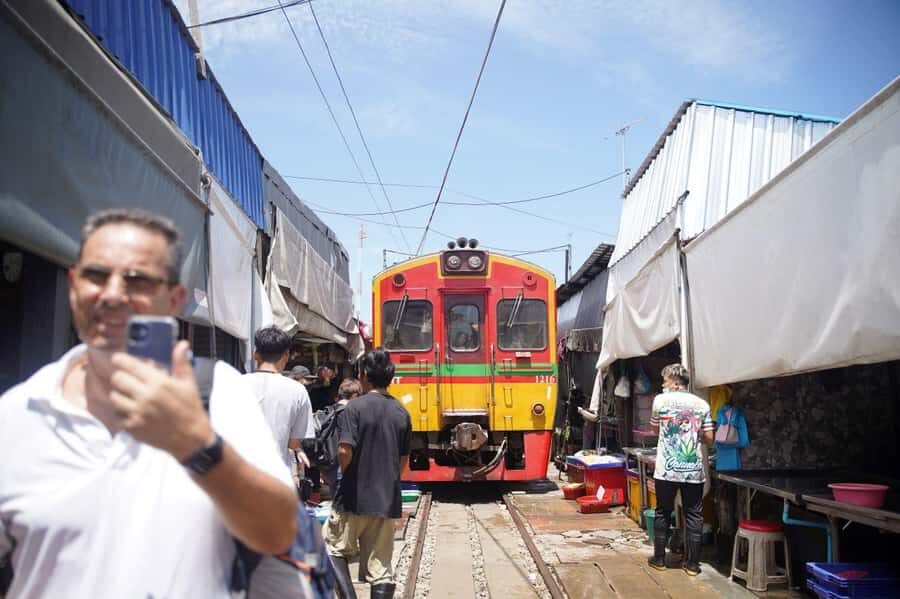
This is the marathon option. Twelve hours, two major attractions, and $51 for everything. The itinerary starts with a floating market visit (not the Ayothaya one — this tour hits a different market) before heading to Ayutthaya for the afternoon temple circuit.
At 1,600 reviews and 4.6 stars, this combined tour scores well because it eliminates the need to book two separate day trips. The downside is obvious: it’s a long day. You’re leaving Bangkok early and returning late. If you have the stamina for it and you’re short on time in Bangkok, it’s efficient. If you’d rather take your time, book the temples and the floating market on separate days.
When to Visit Ayutthaya
The historical park is open daily from 8:00am to 6:00pm, and most day trips from Bangkok depart between 6:30am and 8:00am to beat the worst of the afternoon heat.
Best months: November through February is Thailand’s cool season. Temperatures hover around 25-30 degrees Celsius, humidity is lower, and rain is rare. This is also peak tourist season, so expect bigger crowds at the main temples.
Shoulder season: March and April are brutally hot. I mean 38-40 degrees hot. The ruins are almost entirely exposed with very little shade, and you’ll be miserable by noon. If you’re visiting during these months, take the earliest possible departure and accept that you’ll need breaks.
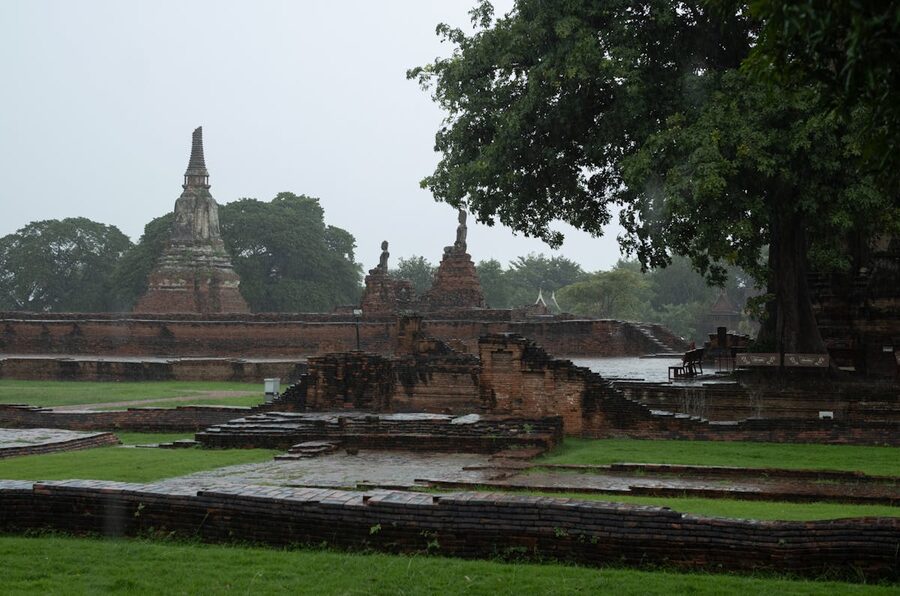
Rainy season: June through October brings regular afternoon thunderstorms. But they’re usually short bursts, not all-day rain. Morning visits are often fine, and the ruins look genuinely spectacular when wet. Fewer travellers too.
Time of day matters more than season. The first 2-3 hours after opening are always the best, regardless of when you visit. Tour buses from Bangkok typically arrive between 10am and 11am, so if you leave Bangkok at 6:30am, you’ll have the major sites nearly to yourself before the crowds roll in.
How to Get to Ayutthaya from Bangkok
If you’re on a tour: Pickup is included. Most tours collect you from your hotel or a central meeting point in Bangkok between 6:30am and 8:00am. The drive takes 1.5-2 hours depending on Bangkok traffic, which is consistently terrible during morning rush hour. Some tours use minivans, others use full-size buses. The van tours tend to be faster and less waiting around.
If you’re going independently: Your cheapest option is the train from Bang Sue Grand Station. Third-class costs 20 baht (yes, twenty baht — about $0.60), second-class costs 50-100 baht, and the journey takes about 1.5 to 2 hours. Trains run roughly every hour from 5am. The Ayutthaya train station is on the east bank of the river — you’ll need to take a quick ferry (5 baht) across to the historical park area.
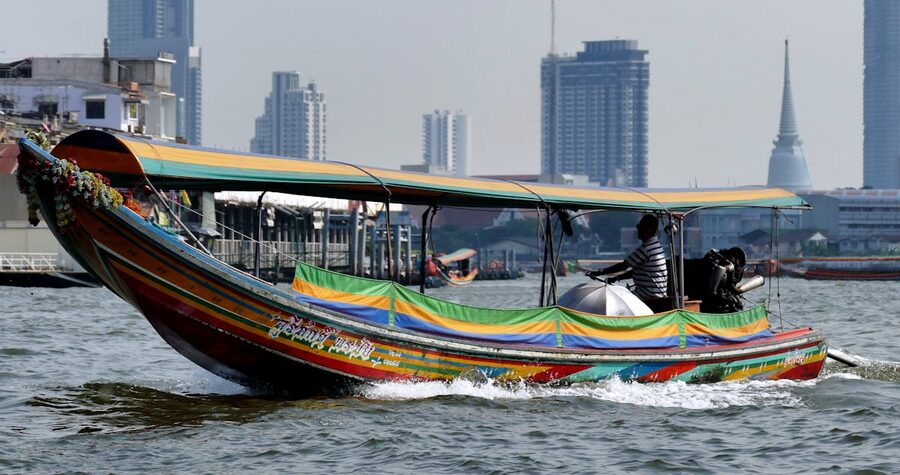
Minivans from Victory Monument are faster and cost 60-80 baht. They drop you right in the old city. Grab and Bolt taxis from central Bangkok run about 800-1,000 baht one way. For a completely different perspective on Bangkok’s waterways before or after your Ayutthaya trip, a longtail boat canal tour through the old klongs shows a side of the city most visitors miss.
Tips That Will Save You Time
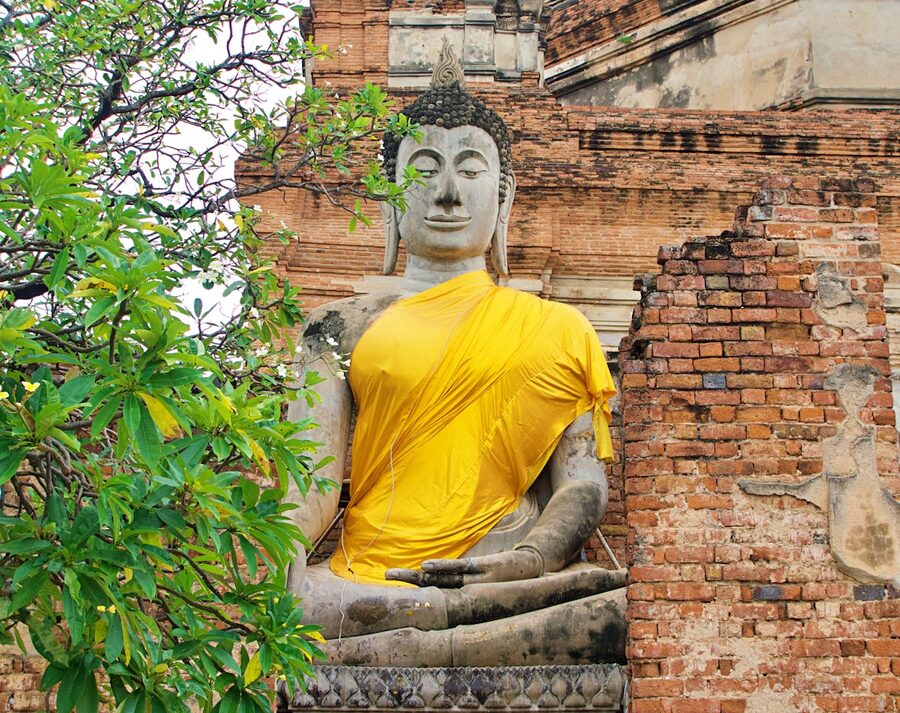
Dress code applies. Ayutthaya’s temples are active religious sites. Shoulders and knees should be covered. Most guided tours mention this, but independent visitors get caught out all the time. Bring a light scarf or sarong.
Sunscreen and water are non-negotiable. There’s almost zero shade between temples. I’ve seen travellers dropping from heat exhaustion at Wat Mahathat in April. Carry a liter minimum and reapply sunscreen every couple of hours.
The Buddha head in the tree roots at Wat Mahathat is the single most photographed thing in Ayutthaya. Guards enforce a rule: when posing with it, your head must be lower than the Buddha’s. You’ll see everyone crouching. Don’t be the person who argues with the guard about it.
Rent a bike only if you’re comfortable cycling in heat. It’s flat terrain and the distances between temples are manageable (1-3 km), but the midday sun makes cycling genuinely unpleasant. A tuk-tuk costs 200-300 baht for a 3-4 hour circuit and your driver waits while you explore each site. If you prefer guided cycling, Bangkok itself has some excellent options — our Bangkok bike tour guide covers the best routes through backstreets and canal paths.
Bring cash. Most temple entry fees are cash only, and the smaller food stalls near the ruins don’t take cards. ATMs exist but they’re clustered near the train station, not at the temple sites.
The six-temple pass (220 baht from the visitor center) saves money if you’re visiting five or more temples. Individual entries are 50 baht each. Most guided tours include entry fees in the price, so check before buying separately.
What You’ll Actually See in Ayutthaya
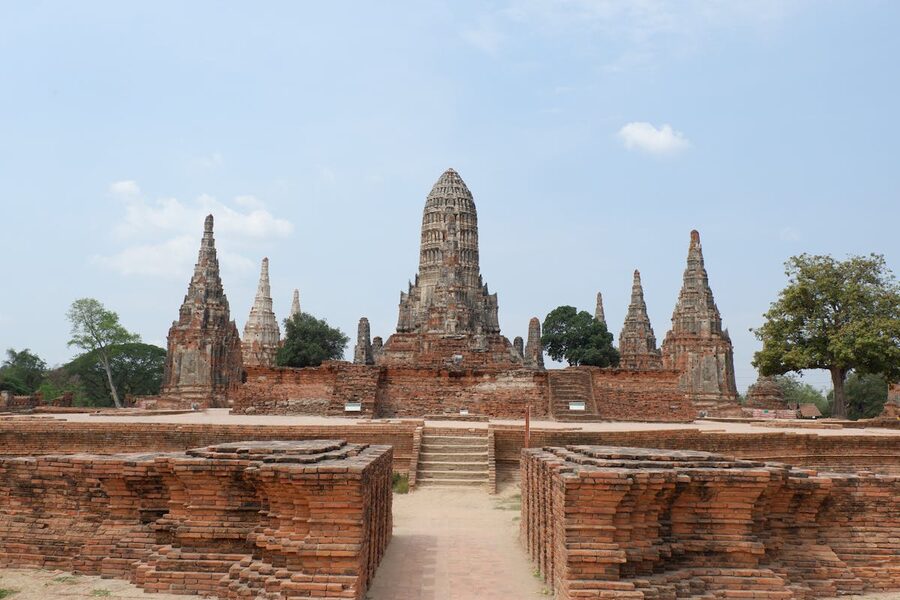
Ayutthaya was the capital of the Kingdom of Siam from 1351 to 1767, and at its peak it was one of the largest cities in the world. We’re talking a population of around a million people at a time when London had maybe 600,000. European traders, Japanese samurai, Chinese merchants, and Persian diplomats all had enclaves here. Three rivers surrounded and protected the island city.
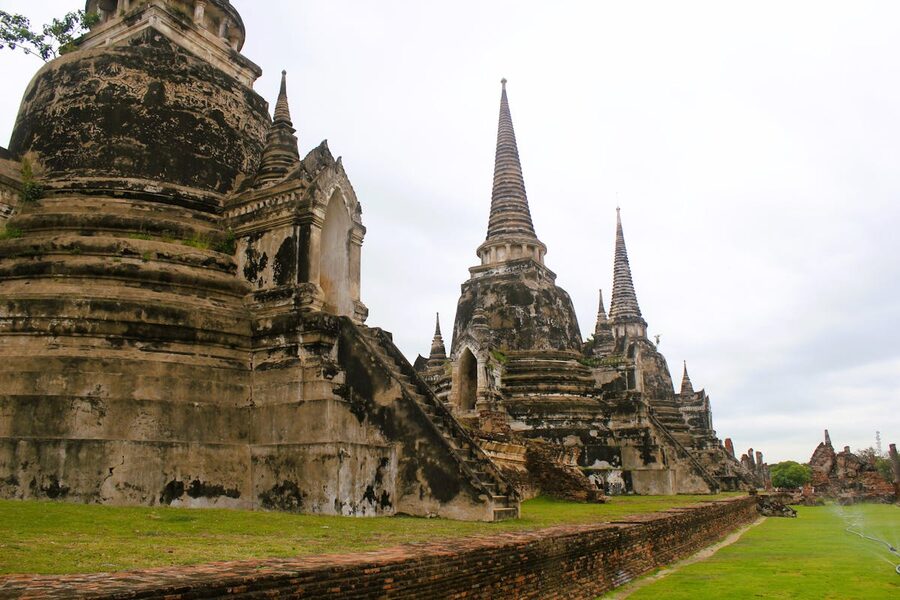
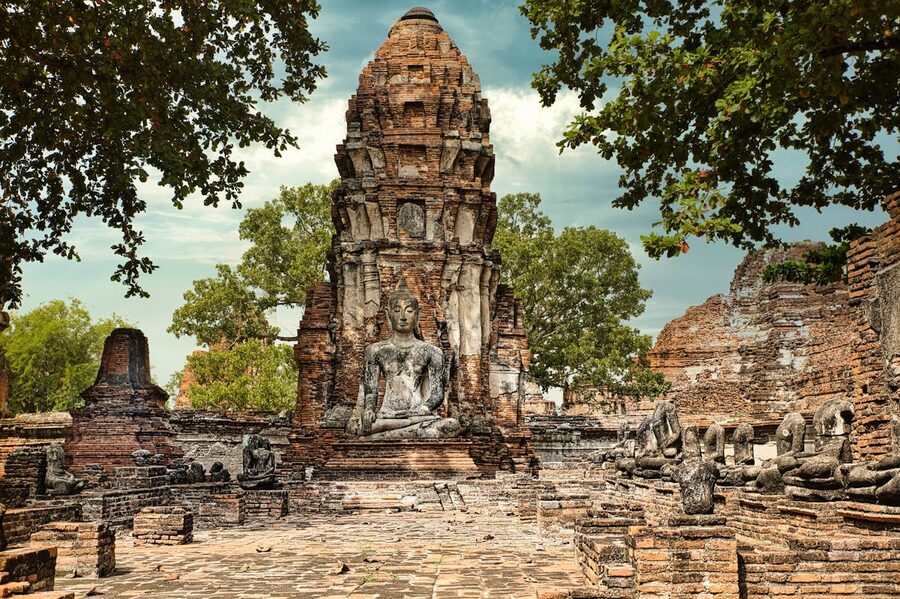
Wat Mahathat is usually the first stop on any tour. The famous Buddha head entwined in banyan tree roots is here, along with rows of headless Buddha statues. The Burmese army systematically decapitated them during the sack of the city.
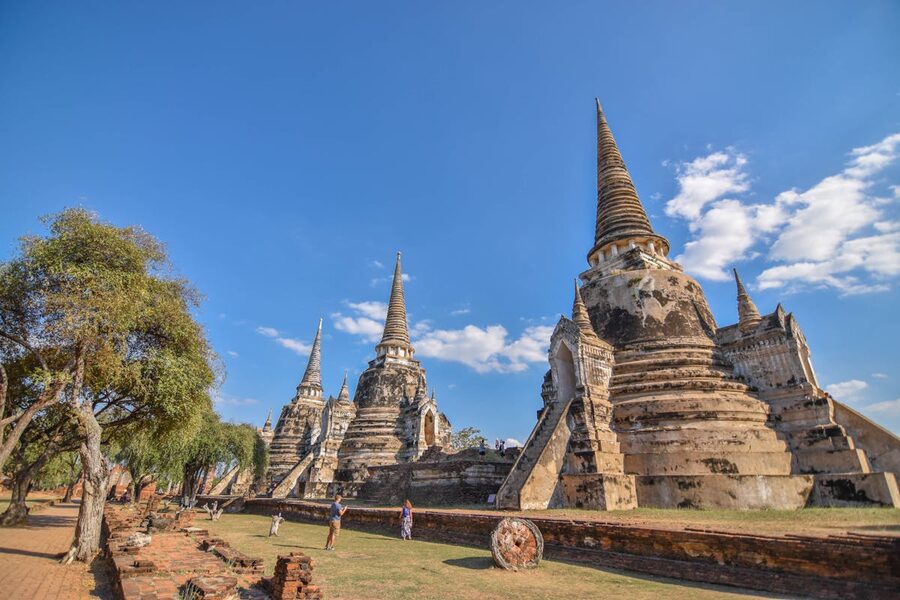
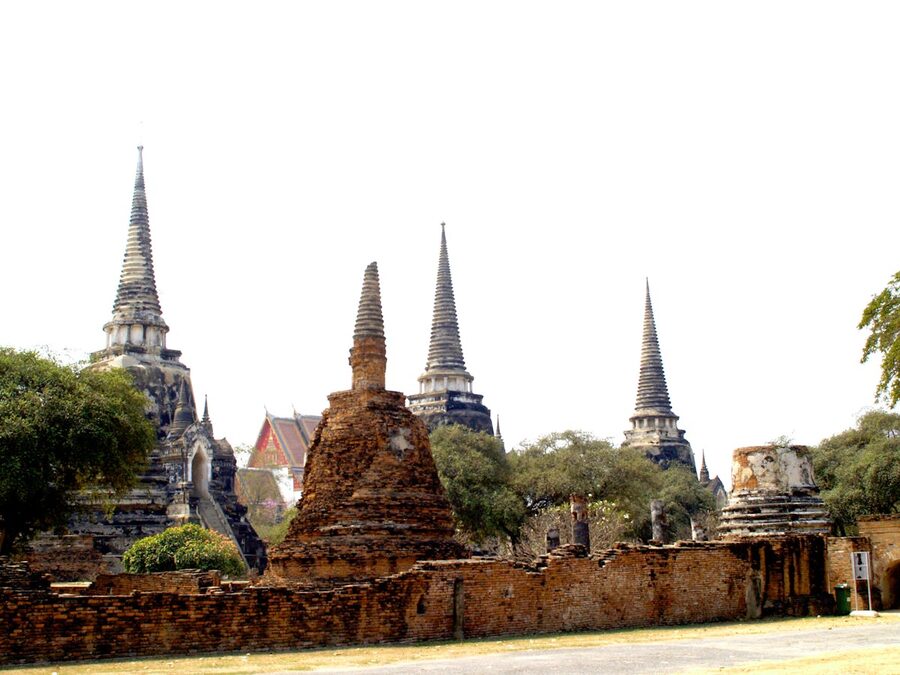
Wat Phra Si Sanphet was the grandest temple in the kingdom, equivalent to Wat Phra Kaew in Bangkok. The three bell-shaped chedis that remain once held the ashes of three kings. It sat on the grounds of the Royal Palace, which is now just foundations and grass.
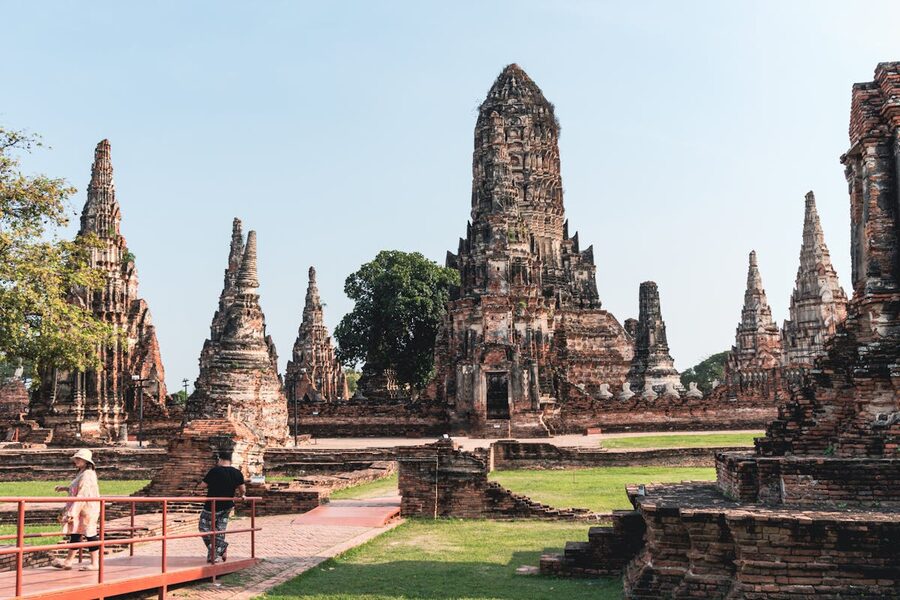
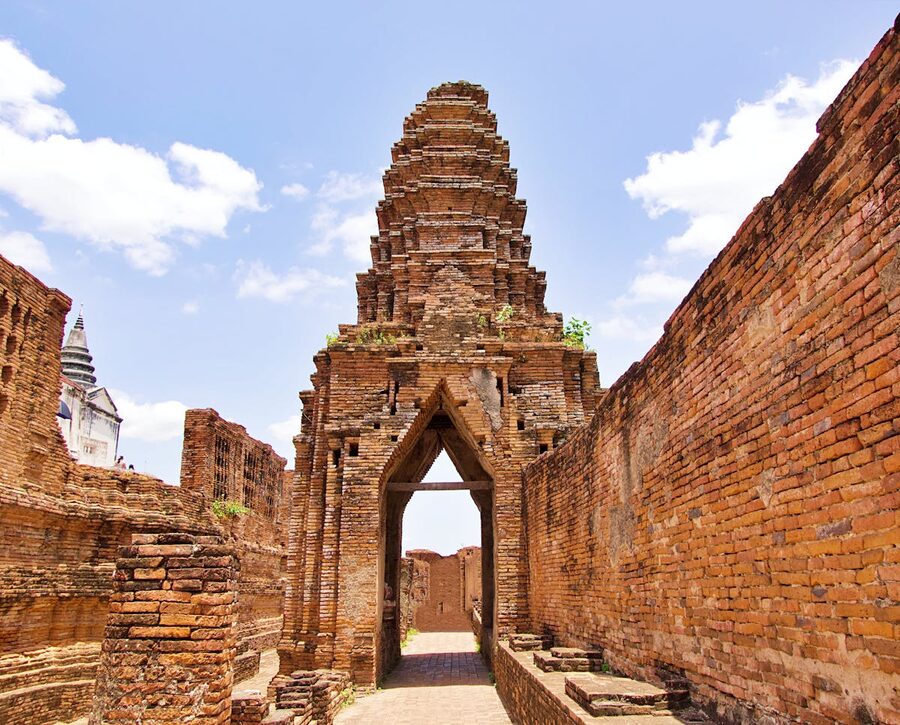
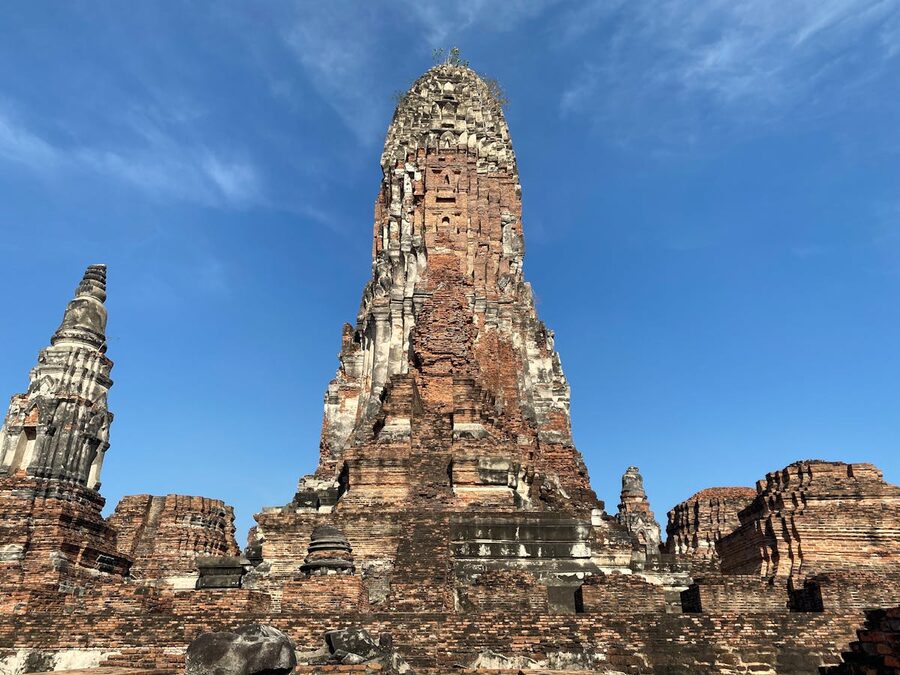
Wat Chaiwatthanaram is the most photogenic temple and the one you’ll see on every postcard. Its Khmer-style towers are modeled after Angkor Wat, and the riverside setting makes it especially atmospheric at sunset. Some tours skip this one because it’s across the river from the main cluster — check your itinerary.
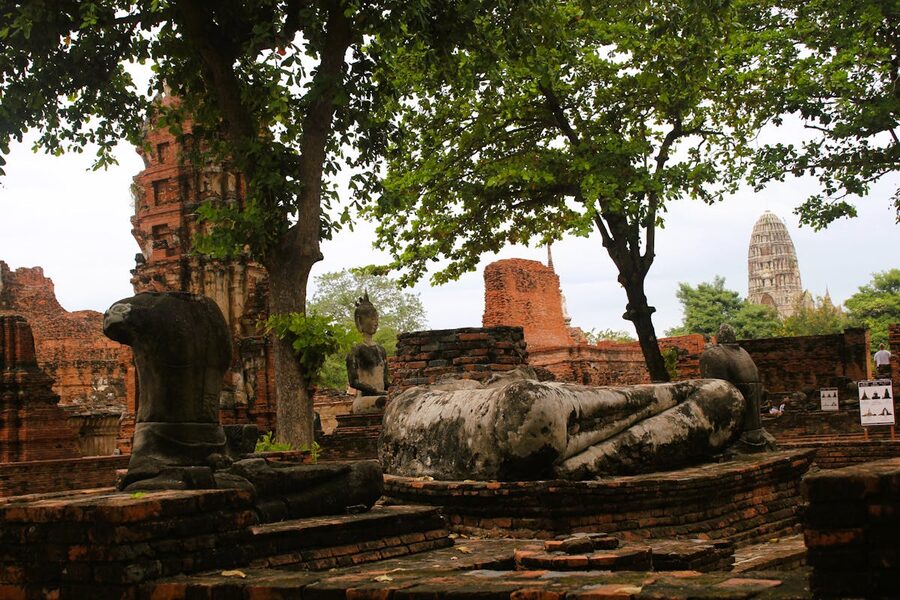
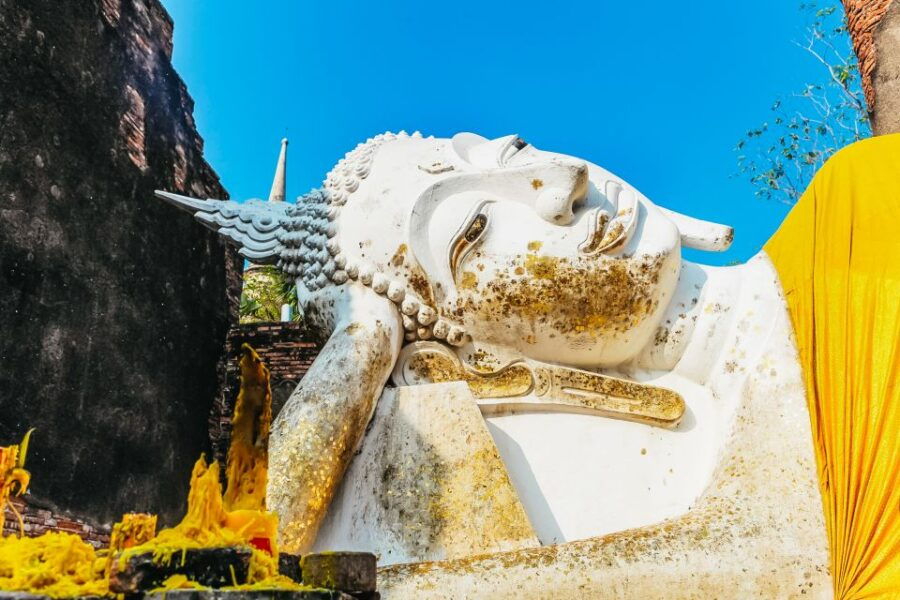
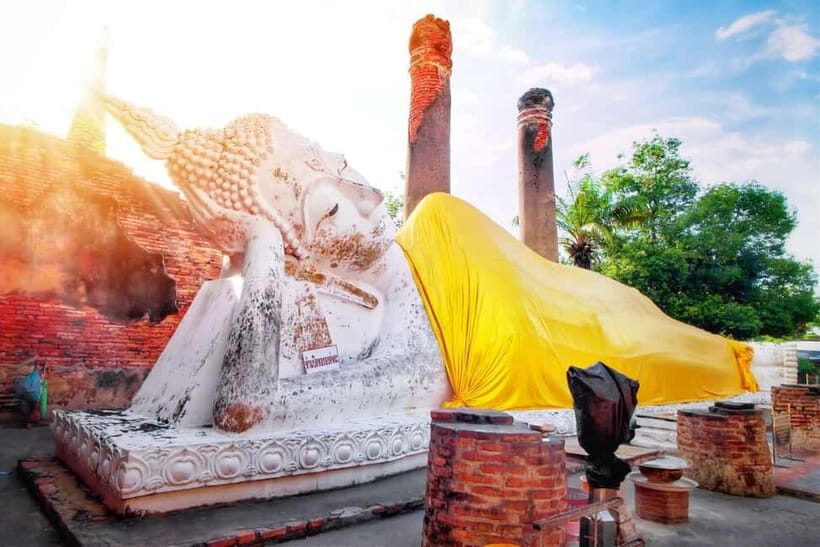
Wat Yai Chai Mongkhon has a massive reclining Buddha and a large chedi you can climb for views over the park. It’s usually less crowded than Wat Mahathat and has a more peaceful atmosphere.
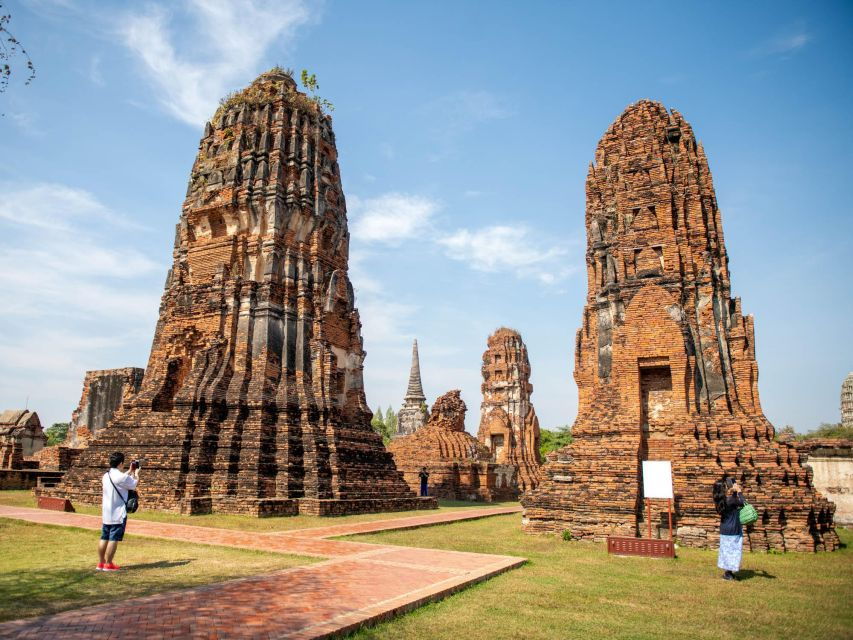
Wat Ratchaburana features two surviving prang (Khmer-style towers) and a crypt that once held gold artifacts, most of which were looted in the 1950s. You can climb down into the crypt, which is a genuinely claustrophobic experience — not great if you’re uncomfortable in tight spaces.
The historical park covers a huge area. Even with a full-day tour, you’re only seeing the highlights. If this place hooks you (and it might), consider an overnight stay to hit the second-tier temples and the night market.
Planning the Rest of Your Bangkok Trip
Ayutthaya fills a full day, but Bangkok has enough going on to keep you busy for a week. The other essential temple circuit is the Grand Palace, Wat Pho, and Wat Arun loop — if Ayutthaya shows you what Siam was, these three show you what it became. Most people knock that out in a morning and still have the afternoon free.
For your other days, the Damnoen Saduak and Maeklong train market combo is the day trip that pairs best with Ayutthaya, especially if you do temples one day and markets the next.
Evenings open up even more options: a guided food tour through Bangkok’s street stalls is probably the single best way to eat your way through the city without ordering blindly, and catching a Muay Thai fight at Rajadamnern Stadium remains one of the most electric nights out in Southeast Asia.
If you are heading north afterward, Chiang Mai’s elephant sanctuaries and Thai cooking classes are the two experiences everyone builds their northern itinerary around.
This article contains affiliate links. If you book a tour through one of our links, we earn a small commission at no extra cost to you. This helps us keep writing detailed, independent guides. We only recommend tours we’ve researched thoroughly.