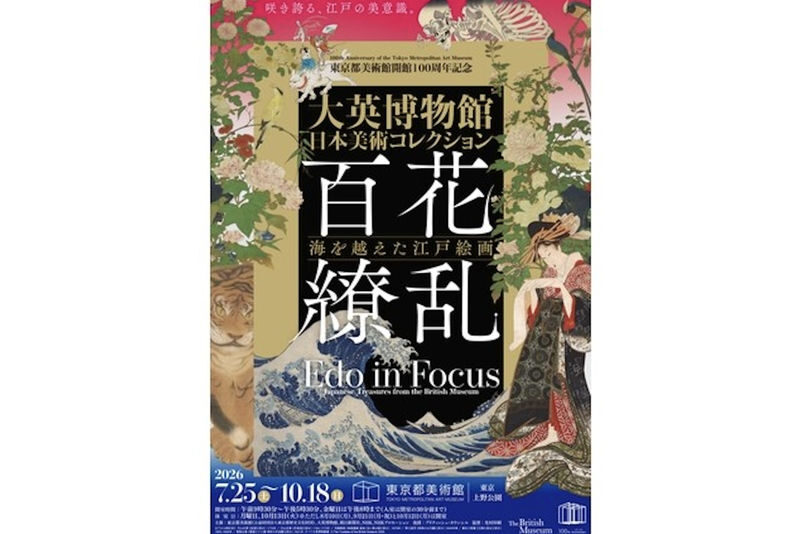
Edo comes into focus through works that rarely travel together: graceful folding screens, painted scrolls and prints by some of Japan’s best-known ukiyo-e artists. This exhibition brings a selection from the British Museum’s Japanese art collection to the Tokyo Metropolitan Art Museum for a limited run from July 25 to October 18, 2026.
I like two things in particular: the mix of large-scale screens and intimate prints gives you more than one way into Edo art, and the exhibition connects the objects with the history of how they were collected and studied. That context can turn a beautiful image into a story about cultural exchange, not just a picture on a wall.
The main drawback is that popular days can get crowded, making it harder to linger in front of individual works. The mobile ticket can also require an internet connection to display, so save the confirmation details and plan to have data available at the entrance.
- What to know before you go
- Edo art, seen through a British collection
- Screens, scrolls and prints across three floors
- More than a parade of famous images
- Making time for Ueno Park
- Ticket value and the small practical details
- Who will get the most from this exhibition
- Should you book?
- FAQ
- When is the exhibition open?
- What are the museum’s opening hours?
- Which days is the museum closed?
- How do I get to the Tokyo Metropolitan Art Museum?
- Do I need a timed-entry reservation?
- Can I take photographs inside the exhibition?
- Who can enter for free or receive a discount?
- The Best Of Tokyo!
- More Museum Experiences in Tokyo
- More Tours in Tokyo
- More Tour Reviews in Tokyo
- Not for you? Here's more nearby things to do in Tokyo we have reviewed
What to know before you go
 1 / 2
 2 / 2
- The exhibition runs July 25 to October 18, 2026, at the Tokyo Metropolitan Art Museum in Ueno Park.
- Expect Edo-period paintings and ukiyo-e, including folding screens, hanging scrolls, handscrolls, and prints by Utamaro, Sharaku, Hokusai and Hiroshige.
- The British Museum collection has about 40,000 Japanese objects. This show presents a selection, with attention to collecting, research and preservation.
- The visit is self-paced. Visitors have described the exhibition as spanning three floors, so leave room in your schedule to move through it without rushing.
- A same-day mobile ticket is listed from $14.50. It can save you from buying admission at the museum, but the display may depend on an internet connection.
- Friday has the latest hours, with the museum open until 8:00 pm. On other open days, it closes at 5:30 pm.

👉 See our pick of the 25 Best Guided Tours In Tokyo
Edo art, seen through a British collection
The British Museum was founded in 1753 and holds a large Japanese art collection, built over generations by collectors, curators and researchers. This exhibition draws from that collection, focusing mainly on art from the Edo period and adding a look at how these objects came to be held, studied and preserved outside Japan.
That framing matters. A show of famous prints alone can be a pleasant hour of looking, but the history of the collection gives you another thread to follow: how interest in Japanese art grew abroad, how people such as surgeon William Anderson contributed to the museum’s holdings, and how research has shaped what we understand about the works.
The exhibition also reflects the movement of art and ideas between countries. In the late 19th century, Japonisme swept through the West, and Japanese art attracted collectors far from Japan. Here, you can consider both the objects themselves and the chain of people and institutions that helped bring them into a major museum collection.
The show’s title, Edo in Focus, points to the period and its art, but the selection is not limited to one format. Paintings, prints and screen works offer different scales and kinds of attention. A folding screen can command a room; a print invites you to inspect its details more closely. That change of pace helps keep the visit varied.
You can also read our reviews of more museum experiences in Tokyo



Screens, scrolls and prints across three floors
The exhibition includes folding screens, hanging scrolls and handscrolls, alongside prints by eight prominent ukiyo-e artists. The named artists include Utamaro, known for portraits of women; Sharaku, associated with striking actor portraits; and Hokusai and Hiroshige, whose prints are among the best-known images of Japan abroad.
The exact arrangement of individual works is not specified, so I would not plan your visit around a particular room or sequence. Instead, give yourself time to move through the full exhibition and follow the contrasts: large painted surfaces beside smaller prints, and different ways of depicting people, places and daily life.
Folding screens are especially worth slowing down for. Their scale and format make them different from prints you might have seen reproduced in books or on screens. You can take in the overall composition first, then look for the fine details that reward a closer view. The exhibition’s selection includes especially elegant screens, so do not save them for a quick glance at the end.
The scrolls offer another kind of encounter. A hanging scroll presents an image vertically, while a handscroll is designed to be viewed in sections. The exhibition includes both, but the available details do not specify how each work is displayed. Let the museum’s arrangement guide you, and resist trying to see everything at the same speed.
The ukiyo-e prints bring a familiar set of names into a broader context. Utamaro, Sharaku, Hokusai and Hiroshige are useful points of reference, but there are eight artists represented, so expect more than a checklist of four famous names. The selection is intended to show the range of the British Museum’s holdings, not just a greatest-hits wall.
Visitors have described the exhibition as spread over three floors. That gives you a reason to pace yourself: pause when a work catches your eye, but keep some energy for the later sections. The rooms can become crowded, and that can make it difficult to see a particular piece at leisure. If you can choose your visit time, avoid treating the busiest period as a quick stop between other Ueno sights.
More than a parade of famous images
The strongest idea behind the exhibition is its attention to the life of the collection. The British Museum’s Japanese holdings grew through the work of collectors and curators, with connections that crossed borders and generations. The show considers how those acquisitions happened and how recent research adds to our understanding of them.
That historical layer is useful even if you come mainly for the art. It helps explain why Japanese works are shown in a London institution and what it means to preserve them far from their place of origin. The exhibition presents cultural exchange as an ongoing conversation, rather than a one-way story of objects leaving Japan and ending up abroad.
I would still go for the works first. Context is most effective when you have an image in mind: look closely at a screen or print, then use the explanatory material to think about its history and collection. The exhibition is designed to connect the objects with their backgrounds, but you can decide how much reading suits your visit.
This is a strong choice for anyone interested in Japanese art, but it does not require specialist knowledge. If you recognize the artists, you will have familiar names to seek out. If you do not, the mix of formats gives you a clear visual entry point, and the collection history adds a useful frame without requiring you to arrive with a textbook’s worth of background.
Making time for Ueno Park
The museum is at 8-36 Uenokoen in Taito City, within Ueno Park. From the JR Ueno Station Koen ticket gate, it is about a seven-minute walk. From Exit 7 of Ueno Station on the Tokyo Metro Ginza and Hibiya lines, or from Keisei Ueno Station, allow about ten minutes on foot.
Those walks are short enough to make the exhibition an easy addition to a day in Ueno, but the show itself deserves more than a hurried dash through the rooms. With three floors and a substantial range of formats, plan for enough time to look carefully. The exact length of a visit depends on how much you read and how long you spend with the works.
The museum’s standard hours during the exhibition are 9:30 am to 5:30 pm, with last entry at 5:00 pm. Fridays stay open until 8:00 pm, and last entry is 7:30 pm. That later closing is a practical option if you want more room in the day, though it is wise to check for updates before setting out.
The museum is closed on Mondays and Tuesday, October 13. It will open on Monday, August 10, Monday, September 21 and Monday, October 12, all specified exceptions in the exhibition schedule. Since the show ends on Sunday, October 18, do not leave it until a final-day visit if you can help it.
Ticket value and the small practical details
Admission is listed from $14.50 for a same-day ticket. The value depends on what you want from the visit: this is not a guided tour with a named guide or a bundle of extra activities. You are paying for entry to a special exhibition drawing on a substantial collection, with the freedom to take it at your own pace.
An advance mobile ticket can be handy when the ticket counter is busy. The ticket is not described as a QR-code system. Instead, you show the reservation at the entrance, and you may need an internet connection to display it. Check that your phone can access the booking page before you reach the museum, and keep the relevant confirmation easy to find.
Timed-entry reservations are not required for this ticket, though entry may involve a wait if the venue is congested. Buying ahead can save time at the sales counter, but it cannot guarantee an empty gallery. The ticket is for one person, one entry, on the day of use during the exhibition period.
Admission is free for visitors aged 18 and under, as well as high school students and younger. University and vocational students, seniors aged 65 and older, and qualifying certificate holders should bring valid identification or the relevant certificate. Free admission also applies to holders of specified disability certificates and the Atomic Bomb Survivor’s Health Handbook, with one accompanying caregiver.
On the third Saturday and following Sunday of each month, guardians residing in Tokyo who accompany children under 18 can receive a 50 percent discount on the general admission rate, for up to two guardians. Proof of address is required, and those discounted tickets are sold only at the museum ticket counter. If you are visiting as a school group, elementary, junior high, high school and special-needs school groups must arrange a reservation through the museum’s designated page.
Photography and sketching are prohibited in the exhibition except in areas where photography is explicitly allowed. Use pencils only if writing, and keep food and drinks outside the galleries. These rules help protect works with strict temperature, humidity and lighting requirements. The controlled conditions may not feel ideal to every visitor, but they are part of caring for the objects.






Who will get the most from this exhibition
I would put this exhibition high on the list for people who enjoy Japanese prints, painting, museum collections or the history of cultural exchange. It also suits a mixed-interest group: one person can focus on Hokusai and Hiroshige, while another follows the story of how the British Museum built and studies its Japanese holdings.
It is less suited to someone who wants a fast, photo-heavy attraction. Photography is restricted, the visit takes place indoors, and crowds can make it harder to linger. If your schedule is tight, choose a quieter time where possible, make a short list of artists or formats you most want to see, and leave room for unexpected discoveries.
Should you book?
Book if you want a focused look at Edo-period screens, scrolls and ukiyo-e, especially if the British Museum’s collecting history interests you as much as the art. The selection combines familiar artists with larger painted works and a story about international exchange, which gives the visit more substance than a quick stop for famous prints.
The from-$14.50 ticket is a reasonable option if you value a special exhibition and want to skip the on-site ticket purchase. Just plan around the dates and closing hours, bring internet access for the mobile voucher, and expect that a busy gallery may slow you down. If crowds or strict no-photo rules would spoil the experience for you, consider another Ueno attraction instead.
100th Anniversary of the Tokyo Metropolitan Art Museum – Edo in Focus: Japanese Treasures from the British Museum
“The exhibition is only on until October 18th, leaving just a few days. Hurry if you want to catch it! The screens are exceptionally elegant, and th…”
FAQ
When is the exhibition open?
It runs from Saturday, July 25 to Sunday, October 18, 2026, at the Tokyo Metropolitan Art Museum.
What are the museum’s opening hours?
The museum is open from 9:30 am to 5:30 pm on regular open days, with last entry at 5:00 pm. Fridays stay open until 8:00 pm, with last entry at 7:30 pm.
Which days is the museum closed?
It is closed on Mondays and Tuesday, October 13. It is open on Monday, August 10, Monday, September 21 and Monday, October 12.
How do I get to the Tokyo Metropolitan Art Museum?
The museum is about a seven-minute walk from the Koen ticket gate at JR Ueno Station. It is about a ten-minute walk from Exit 7 of Ueno Station on the Ginza and Hibiya lines, and from Keisei Ueno Station.
Do I need a timed-entry reservation?
Timed-entry reservations are not required with this ticket. You may have to wait if the venue is congested, and policies can change, so check the official exhibition website before visiting.
Can I take photographs inside the exhibition?
Photography and sketching are prohibited except in areas where photography is explicitly allowed. If you write notes, use a pencil rather than another writing utensil.
Who can enter for free or receive a discount?
Admission is free for visitors aged 18 and under and high school students and younger. University and vocational students, seniors aged 65 and older, and eligible certificate holders should bring valid proof. Tokyo residents accompanying children under 18 may qualify for a 50 percent discount on the third Saturday and following Sunday of each month; those tickets are sold at the museum counter.