
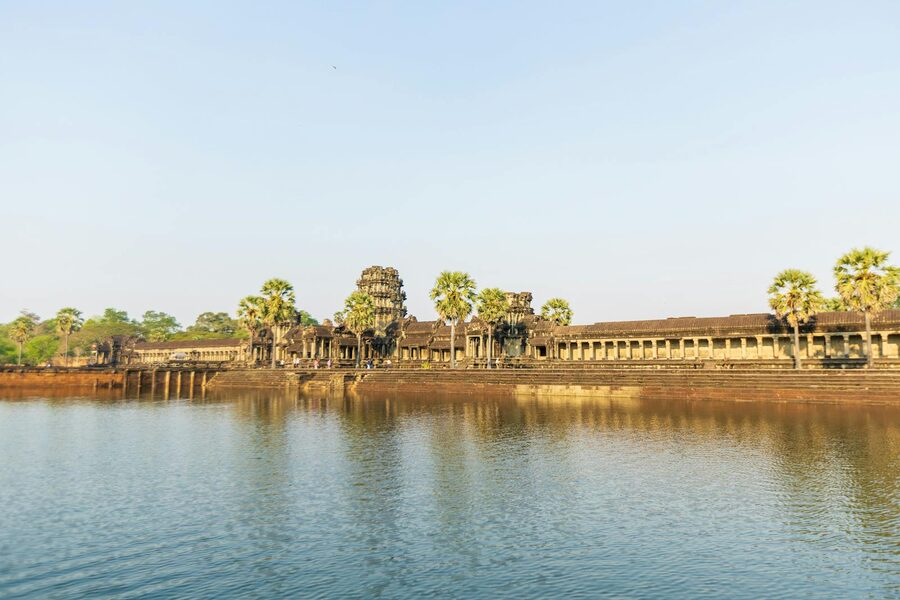
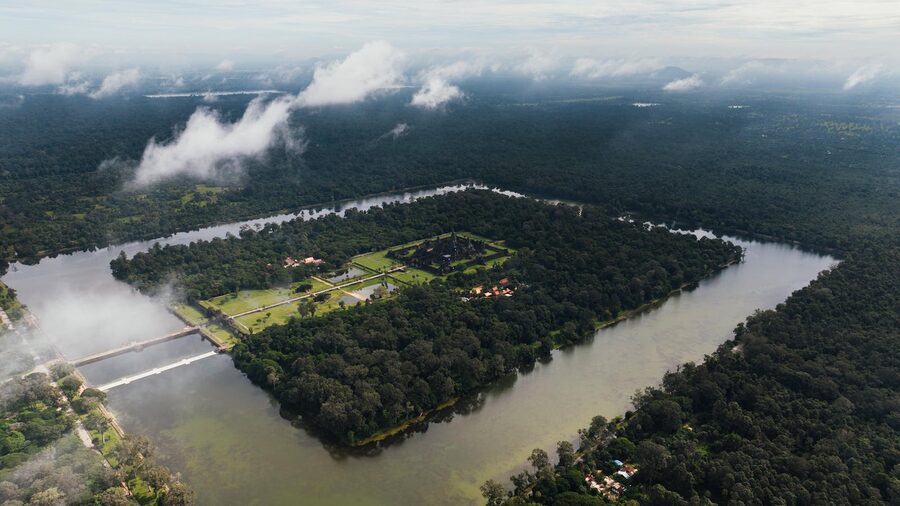
Angkor Wat is the largest religious monument ever built. Not the largest temple in Cambodia — the largest, anywhere, of any faith, in human history. The moat alone is over five kilometers around, and the original city that once surrounded it covered more ground than modern Paris.
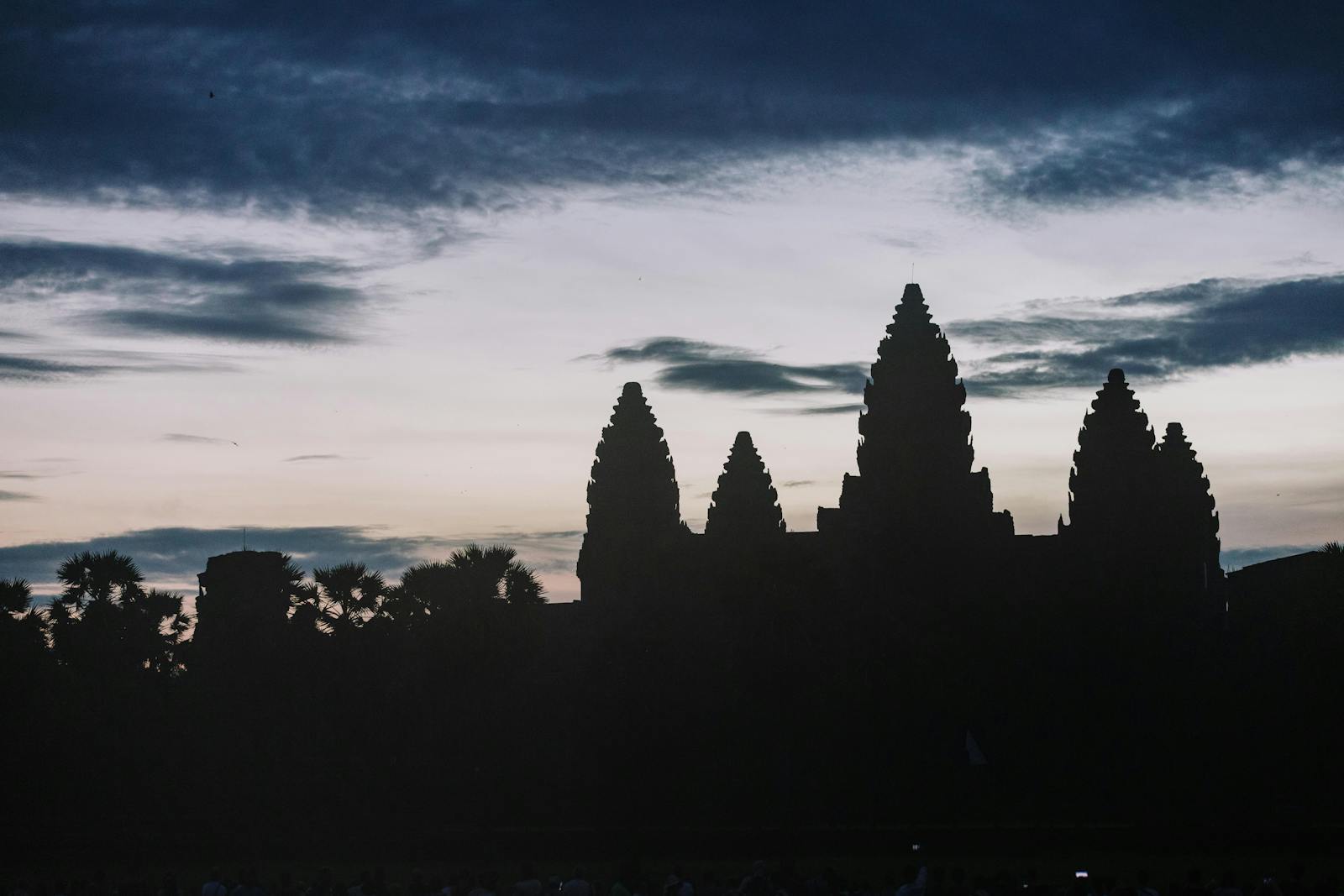
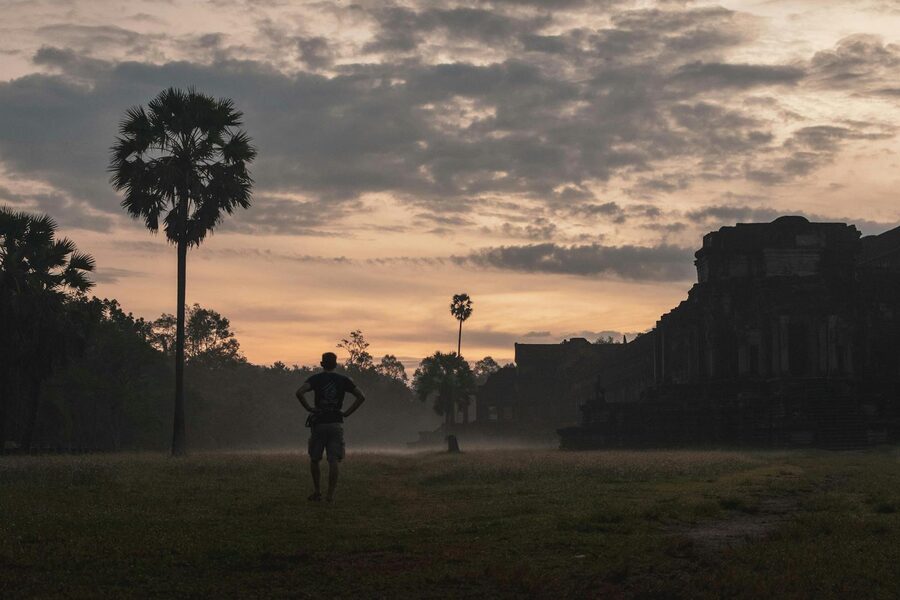
That fact is easy to say and impossible to feel until you are standing on the long sandstone causeway in the dark at 5:15am, with a headlamp bobbing on your forehead and a hundred other silhouettes moving in the same direction. Then the sky starts to turn pink behind the central towers, and you understand why everyone who sees it always says the same thing: I wasn’t ready for how big it is.
This is a booking guide for the sunrise tour specifically. I’ll cover how the ticket system actually works (it changed in 2022 and most older blogs are out of date), how to pick between the main tour operators without wasting money, and which three Siem Reap tours are actually worth booking. The short version: you are paying for a guide and transport, not for the ticket itself. The ticket is separate, and almost everyone gets that part wrong on the first try.
Short on time? Here are my top 3 picks:
Best overall: Small-Group Angkor Wat Sunrise Tour with Guide — $18. Viator’s most-booked sunrise option, tiny group, proper guide, no upsells.
Best budget: Small-Group Sunrise or Sunset Tour — $15. Same small-group format, lets you pick sunrise or sunset, full 8-9 hour day.
Best deep dive: 2-Day Tour with Sunrise and Sunset — $34. Two full days, covers outlying temples most day-trippers miss.
- How the Angkor Pass System Actually Works
- Why You Probably Should Book a Tour Instead of Going Alone
- The Best Angkor Wat Sunrise Tours to Book
- 1. Small-Group Explore Angkor Wat Sunrise Tour —
- 2. Angkor Wat Small-Group Sunrise or Sunset Tour —
- 3. Angkor Wat 2-Day Tour with Sunrise and Sunset —
- When To Go — And When Absolutely Not
- What Time to Actually Arrive
- How to Get to Angkor Wat
- Tips That Will Save You Time, Money, and Sweat
- What You’ll Actually See Inside Angkor Wat
- Ta Prohm and the Tree Roots
- Angkor Thom and the Bayon Faces
- Is Cambodia Safe and Worth the Trip?
- Planning the Rest of Your Southeast Asia Trip
How the Angkor Pass System Actually Works
The ticket is called the Angkor Pass, and it is run by a Cambodian company called Angkor Enterprise on behalf of the government. It is completely separate from any tour you book. Let me say that again because it is the single most common mistake I see: your tour fee does not include the ticket. You buy the pass yourself, in person, at the official ticket office on the outskirts of Siem Reap, or online at angkorenterprise.gov.kh.
There are three types of pass and the prices have not changed in years:
- 1-day pass — $37. Good for one calendar day of temple visits. Fine if you only have a morning.
- 3-day pass — $62. Valid for any 3 days within a 10-day window. This is the one most travellers buy.
- 7-day pass — $72. Valid for any 7 days within a month. For serious temple nerds.
Kids under 12 are free, but you need to show a passport for proof, not just tell them. Payments are in US dollars, cash or card. The ticket office opens at 4:30am during sunrise season, which is the only reason you can do the whole “arrive at Angkor Wat before dawn” thing at all.
Your face is printed on the pass. They photograph you at the ticket office and the image is laminated onto the card. Officers at every temple scan the barcode and check the photo. Trying to pass your ticket to a friend will end with a confiscated ticket and a lecture, so don’t. I have watched it happen.
The 3-day and 7-day passes are non-consecutive, which is a huge deal for sunrise planning. You can do Angkor Wat sunrise on day 1, then take a full rest day, then hit the Grand Circuit on day 3, and your pass is still valid. I recommend building a rest day in — the heat here is no joke.
Why You Probably Should Book a Tour Instead of Going Alone
I know the default advice on every budget travel forum is “just hire a tuk-tuk driver and go.” It’s cheap, flexible, you get to be your own boss. It’s also, in my opinion, the wrong choice for most first-time visitors to Angkor.
Here is the honest comparison. A tuk-tuk driver for the day runs $20-25 and will take you to the temples you name, wait for you in the parking area, and drop you back at your hotel at sunset. What he will not do is explain the temples.
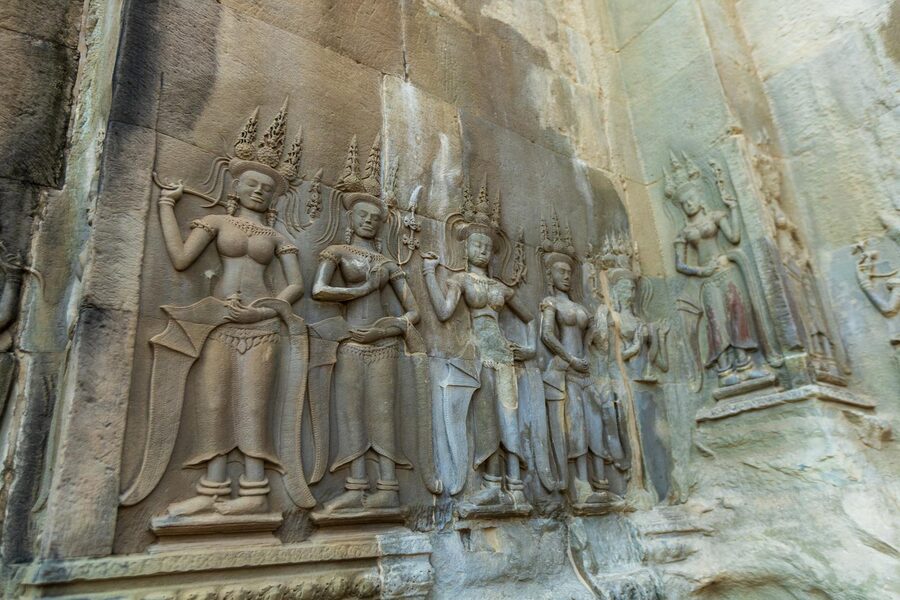
The carvings on the walls tell stories — entire scenes from the Mahabharata and the Ramayana, the Churning of the Sea of Milk, the battle of Kurukshetra — and without someone pointing them out, they are just decoration. You will walk the same corridors as the guided groups, take the same photos, and miss 90% of what you came to see.
A proper guided sunrise tour runs $15-25 with a small group, includes transport, and puts a licensed Angkor guide with you for 6-9 hours. That guide went through a formal accreditation program — the Angkor Tour Guide Association has strict requirements — and will walk you through the symbolism, the history, and the bits that are easy to miss.
For an extra $0 compared to a tuk-tuk (because you still pay the driver separately if you DIY), you get the context that makes Angkor worth the trip.
Where DIY makes sense: your second or third visit, or if you have specifically been to Angkor before and just want a quiet sunrise photo session. For a first visit, go with a guide. You will kick yourself later if you don’t.
The Best Angkor Wat Sunrise Tours to Book
These three are the ones I’d actually book, in order of best value for most travellers. All three include transport from your Siem Reap hotel, a licensed guide, and the standard small-temple circuit after sunrise. None of them include the Angkor Pass itself — you buy that separately at the ticket office on the way in, and every tour stops there first.
1. Small-Group Explore Angkor Wat Sunrise Tour — $18
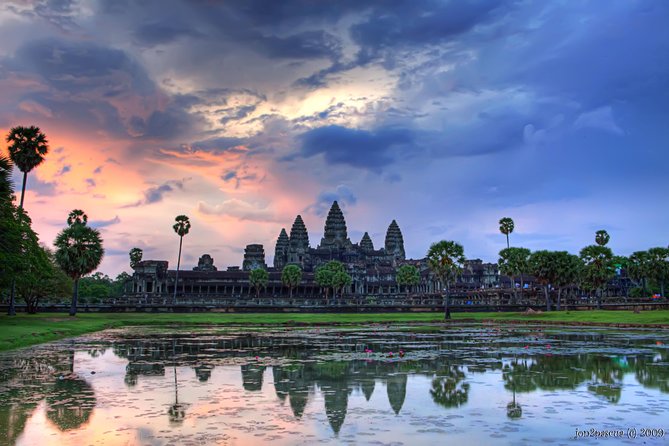
This is the most-booked Angkor Wat sunrise tour on the market, period. It’s listed on Viator as their flagship small-group option and it has racked up a huge number of five-star ratings from people who generally don’t give five stars lightly. The small-group format caps at around 12-15 people, which means the guide actually has time to answer questions without being drowned out.
What you get: a 4:30am pickup from your Siem Reap hotel, transport to the ticket office, then on to Angkor Wat for the sunrise viewing from the reflection pond. After sunrise you cover Angkor Thom (Bayon with its huge smiling faces), Ta Prohm (the tree-root temple from the Tomb Raider movies), and a few other highlights depending on time and the group’s energy level. You are back in town by early afternoon, in time for a proper nap.
At $18, this is the lowest-effort way to see the main circuit with a guide. If you only do one Angkor activity, this is the one.
2. Angkor Wat Small-Group Sunrise or Sunset Tour — $15
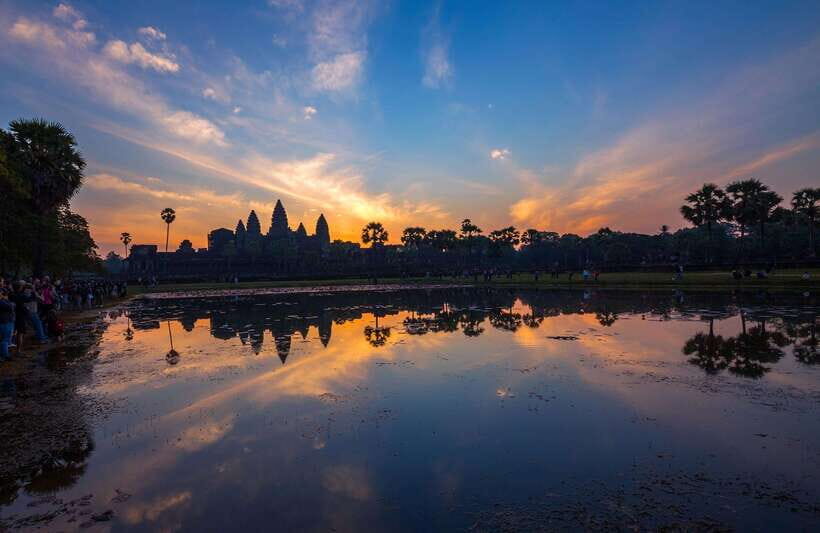
Booked through GetYourGuide, this one comes in at just $15 and gives you a useful choice: sunrise or sunset. The sunrise version is the classic Angkor Wat dawn run, but the sunset option is actually the smarter pick if you are not a morning person. Sunset in Angkor means the tour climbs Phnom Bakheng hill for the view across the jungle, and on a clear evening you can see Angkor Wat lit up by the last rays across the tree canopy. Far fewer travellers.
The tour runs 8-9 hours and hits the same core temples — Angkor Wat, Bayon, Ta Prohm, the south gate of Angkor Thom — just in a different order depending on which light window you pick. Lunch is on you, usually at a small restaurant inside the archaeological park that the guide will recommend.
The reason this one is slightly cheaper than option 1 is volume — GetYourGuide has a direct relationship with a local operator and the margin is thin. Quality is still high, and the guide is still licensed Angkor Tour Guide Association.
3. Angkor Wat 2-Day Tour with Sunrise and Sunset — $34
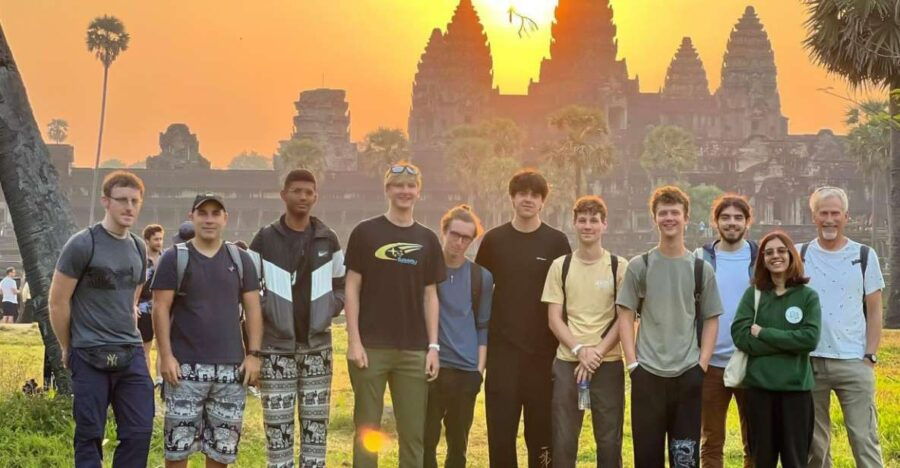
If you are the type of traveler who wants to see Angkor properly and not just tick off Angkor Wat, this is the tour to book. Two days, $34, a licensed guide both days, and you see a lot more than the standard Small Circuit. Day one covers Angkor Wat at sunrise, Ta Prohm, and the Bayon.
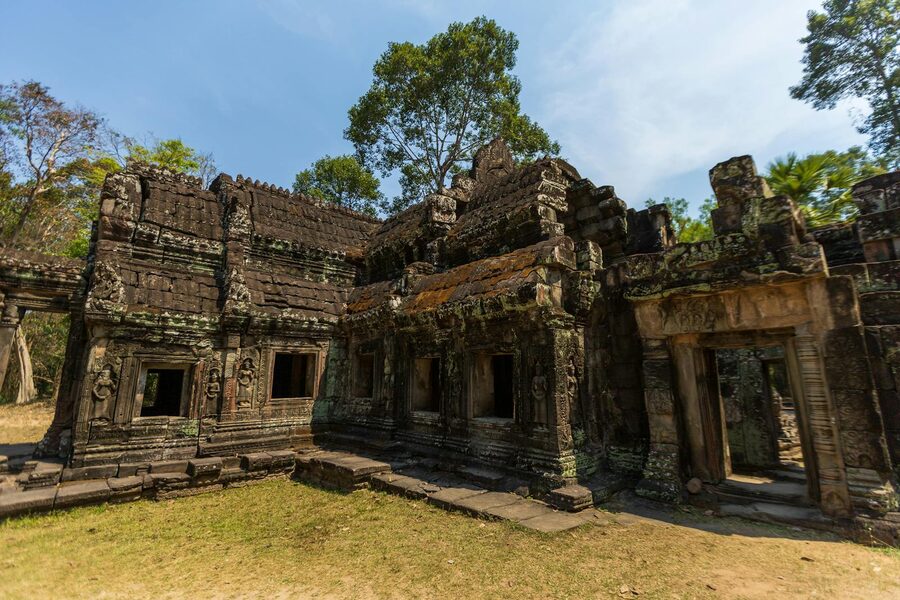
Day two takes you out to Banteay Srei (the pink sandstone “Citadel of Women” about 35 kilometers north of the main park, with the most intricate carvings in all of Angkor) and some of the outlying Grand Circuit temples like Preah Khan and Neak Pean.
Banteay Srei is the secret weapon here. Most day-trip travellers never make it out there because it is a 45-minute drive from Angkor Wat, but it is honestly one of the most beautiful structures in Cambodia. The carvings are so detailed and so shallow that experts used to think they were done by women, because no man supposedly had the patience for work that fine. (They were wrong, but the name stuck.)
The 2-day option also pairs naturally with a 3-day Angkor Pass, which is the one most people are buying anyway. You get two guided days and one free day to revisit a favorite temple on your own, or take a break.
When To Go — And When Absolutely Not
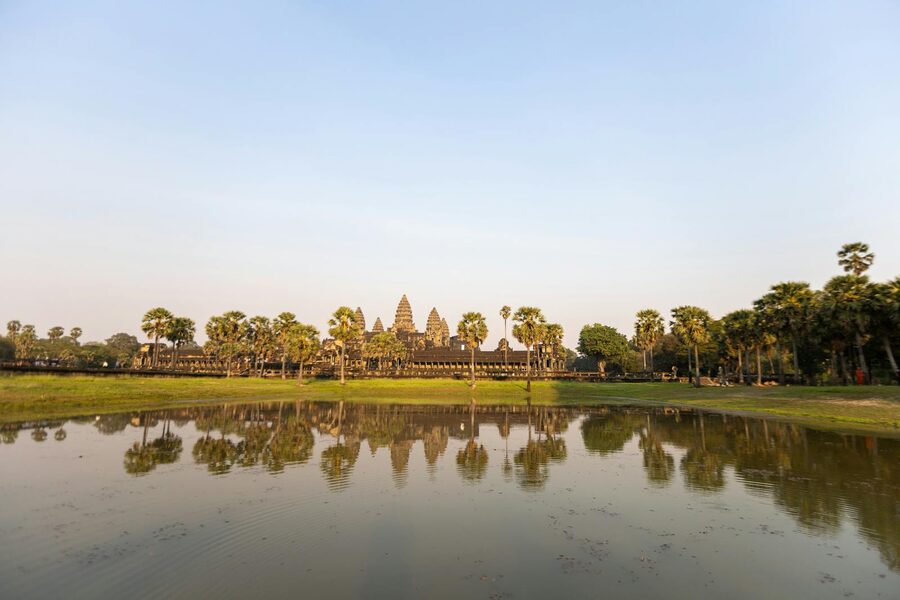
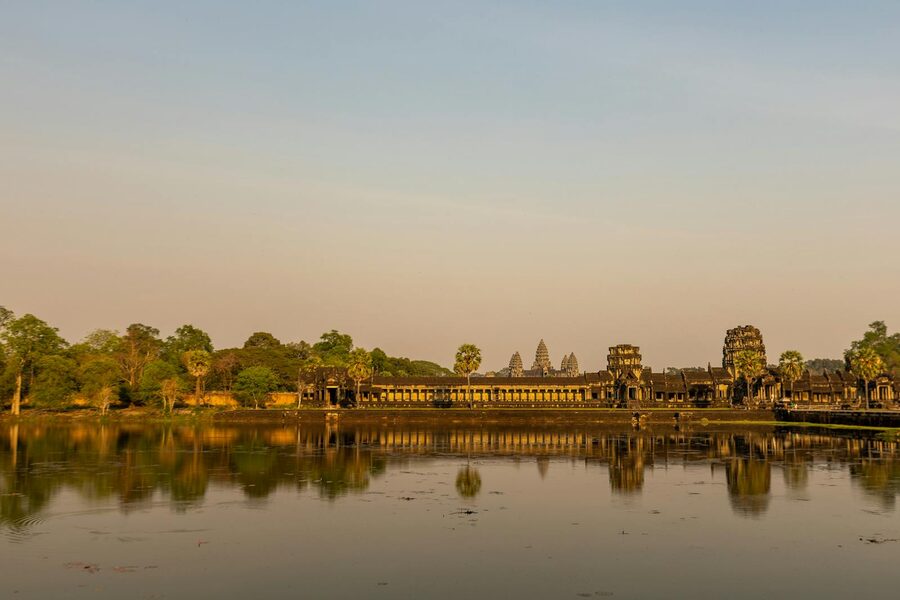
The best months to see Angkor Wat sunrise are November through February. This is the cool dry season — morning temperatures hover around 21-24°C at dawn, the sky is usually clear, and the reflection pond is full and clean. By clear I mean clear enough to get the postcard mirror shot, not clear enough that the sun actually rises on cue.
The sunrise itself is frequently obscured by low haze in any season, so don’t plan your whole trip around a perfect Instagram moment. Some mornings the sky goes pink and you get the money shot; other mornings the sun just appears out of a grey blanket at 6:30am. You take what you get.
March through May is dry but brutally hot — 38-40°C by mid-morning, and Angkor Wat has almost no shade outside the inner galleries. Avoid it if you can. June through October is the wet season. I actually like visiting in late September and early October, when the rains green up the moss on the stones and the tourist crowds drop by about 70%.
You will get afternoon downpours but most mornings are clear, and the reflection pond is at its fullest. Just accept that you will be wet at some point.
The absolute worst time to visit is Chinese New Year (late January/early February) and the Cambodian New Year Khmer Chaul Chnam Thmey (mid-April). Domestic and regional tourism peaks, the sunrise pond is shoulder-to-shoulder with thousands of people, and hotel prices in Siem Reap double. Check the calendar before you book flights.
What Time to Actually Arrive
Official sunrise times in Siem Reap shift by about 30 minutes across the year. In December the sun clears the horizon around 6:20am. In June it’s more like 5:35am. Your tour operator will pick you up about 90 minutes before that. The early hour is not optional — the reflection pond is a narrow strip along the north side of the causeway, and the prime spots fill up by 5:30am even in the rainy season.
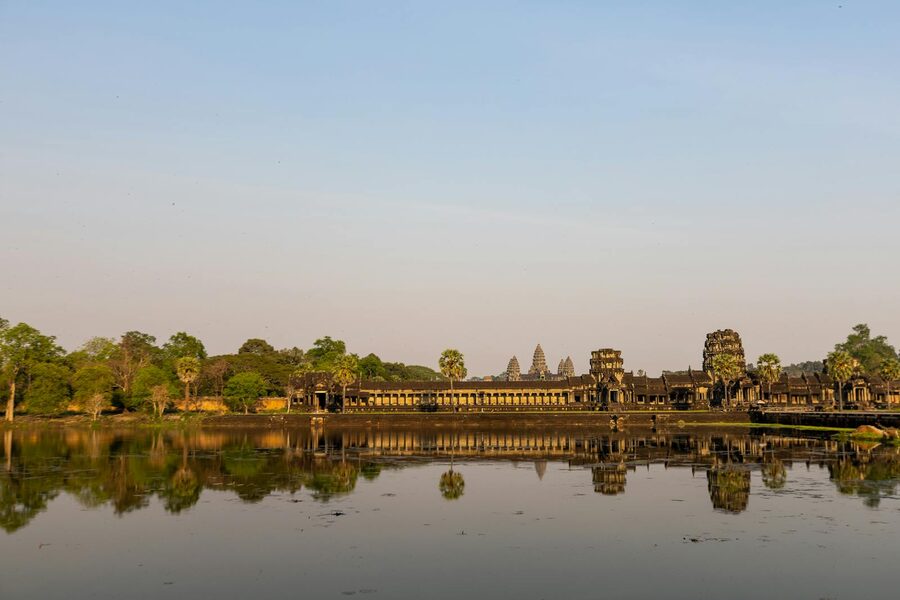
Here’s the thing nobody tells you: the actual “sunrise” — the moment the sun crests the horizon behind the central tower — happens earlier than the moment Angkor Wat actually lights up. The central tower blocks the direct sunlight for 10-15 minutes after true sunrise, so the temple stays in shadow while everything around it turns gold. This is normal, not a sign you are in the wrong spot.
Wait for it. The light on the towers hits around 6:20-6:40am depending on the month, and that is the shot you actually want.
After sunrise, most people leave. Do not leave. The period from 6:30-8:00am is when the light is best for actually walking into Angkor Wat and photographing the inner galleries, and the crowds are lighter than at any other point in the day because everyone is heading back to Siem Reap for breakfast. Stay, grab a coffee from one of the stalls by the causeway, and wander inside while the light is still cool and soft.
How to Get to Angkor Wat
Angkor Wat is 6 kilometers north of downtown Siem Reap — an easy 15-minute drive. If you book a tour, transport is included and this is not your problem. If you are going solo, the options are:
- Tuk-tuk: The default. Hire from your hotel the night before so the driver is waiting at 4:30am. Expect $20-25 for the full day including waiting time, or around $15 just for the sunrise run and return. Always agree on a price before you get in.
- Private car: Around $35-45 for the day with a driver. Worth it if you’re two or three people splitting the cost, or if you hate being cold and dusty at 5am (tuk-tuks are both).
- Bicycle: Possible, around $2-5 for a full-day rental. Not recommended unless you are experienced and confident. Pre-dawn on unlit Cambodian roads with no streetlights and trucks rumbling past is genuinely dangerous, and the park itself involves a lot of cycling in heat.
- E-bike or scooter: $8-12 per day. Better than a bicycle because you can cover more ground in the heat. You need an international license and the nerve to ride in Cambodian traffic.
The ticket office is not at Angkor Wat itself. It is a 10-minute drive east of the main park on Route 60. Every tour stops there first. Budget 15-20 minutes in the queue during peak season.
Tips That Will Save You Time, Money, and Sweat
- Dress code is enforced. To climb to the upper level of Angkor Wat (the Bakan sanctuary), you need shoulders and knees covered. Tank tops, short shorts, and spaghetti straps will get you turned away at the stairs. Bring a light sarong or scarf. Women and men both.
- Bring small US dollar bills. Cambodia runs on USD alongside the local riel, and everyone prefers clean small notes ($1, $5). Torn, stained, or old bills get refused. Change is often given in a mix of dollars and riel.
- Skip the sunrise food stalls. The coffee and noodle stalls by the west causeway have caught more travellers with food poisoning than any other source I know of in Siem Reap. Wait and eat a proper breakfast back in town.
- Bring your own water, but not too much. There are no bathrooms inside most temples and plenty of places to buy cold water around the park. A 1-liter bottle is plenty for the sunrise window.
- Hide the reflection shot from your camera’s memory. Everyone has taken that photo. The moodiest shots are from inside the inner galleries at 7am when the sun hits the carved apsaras on the walls.
- Tip your guide. $5-10 per person per day is normal and appreciated. Guides make a modest base wage and rely on tips, so factor this into your budget.
What You’ll Actually See Inside Angkor Wat
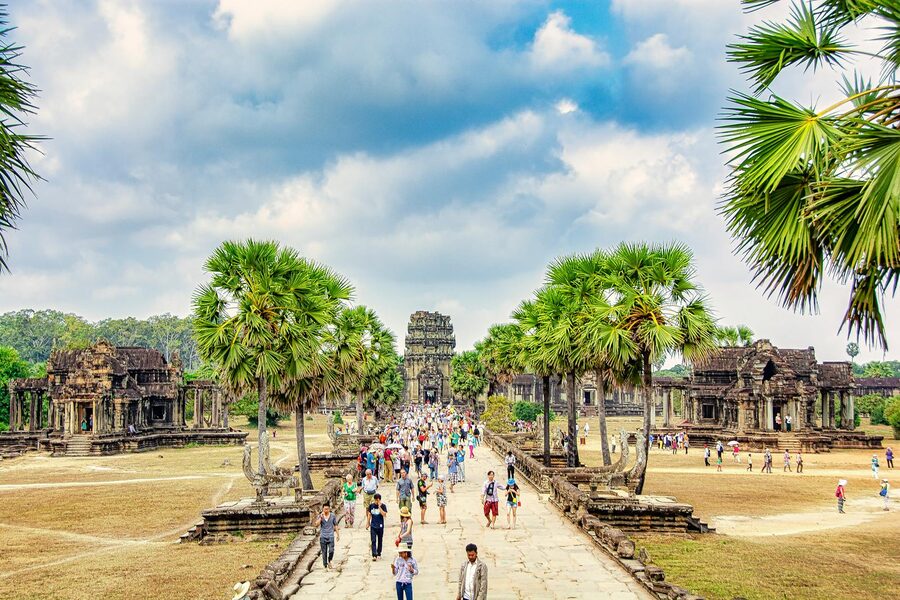
Angkor Wat is laid out in three concentric galleries around a central tower, representing the Hindu cosmological Mount Meru. You enter from the west across the long stone causeway, pass through the outer gate, and walk another 350 meters to the main temple. The causeway alone is longer than most people expect.
The outer gallery is where the big bas-reliefs live. Each side of the gallery depicts a different scene — the Battle of Kurukshetra from the Mahabharata, the Heavens and Hells, the Churning of the Sea of Milk, the Battle of Lanka from the Ramayana. These were carved in the 12th century and they still have their original detail. A good guide will slow you down here, because the stories are what give the carvings meaning.
The middle level (the Cruciform Cloister) is a shadier space with four small pools and lines of pillars. This is where you will see monks if any are around, and where the original bathing reservoirs were. It’s also the quietest part of the temple.
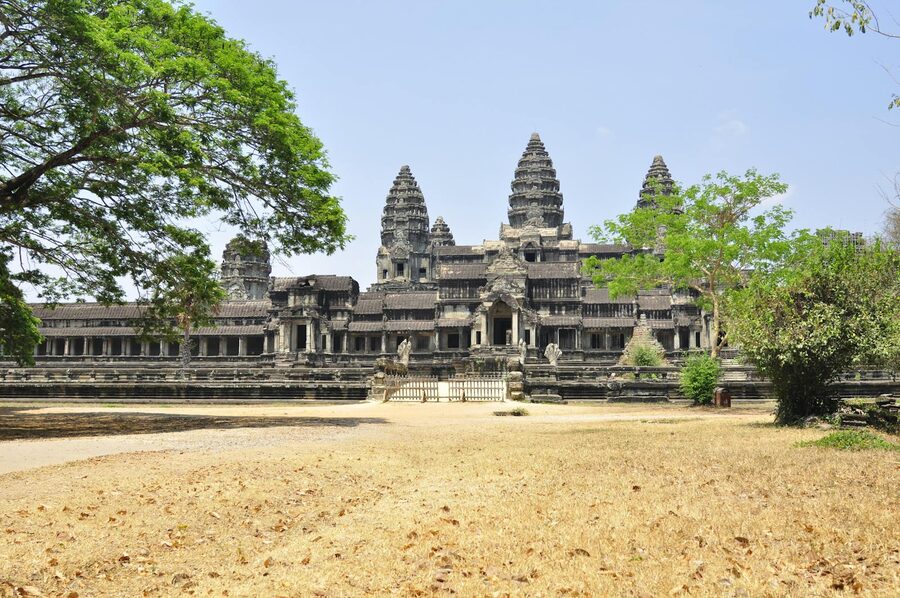
The upper level — Bakan — is the central tower sanctuary, reached by a steep wooden staircase that was added to replace the original near-vertical stone steps. This is where the dress code gets strict, and where opening hours are limited. Bakan is closed on Buddhist holy days and often has a short line in peak season. The view from the top across the outer moat and the jungle is the best in Angkor.
Most guided tours spend about 90 minutes inside Angkor Wat itself after sunrise, then move on to Angkor Thom (5 kilometers north) for the Bayon. The Bayon is the temple with the 200+ carved stone faces, and it hits differently in mid-morning light than at sunrise. After Bayon, most tours loop through Ta Prohm — the tree-root temple — before heading back to town.
Ta Prohm and the Tree Roots
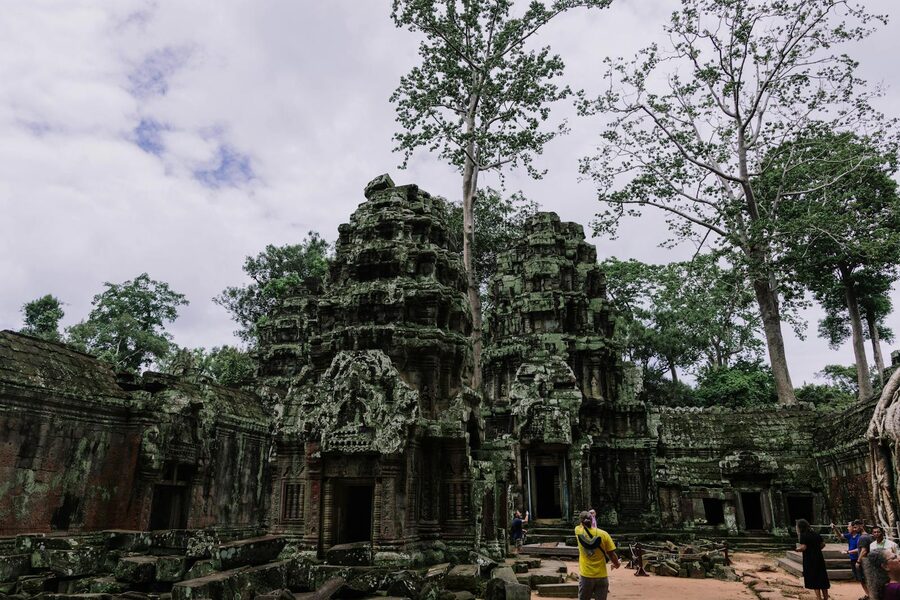
A quick note on Ta Prohm because most sunrise tours include it as the second stop and nobody tells you what you’re actually looking at. Ta Prohm was built in 1186 as a Buddhist monastery by King Jayavarman VII.
When French archaeologists rediscovered the Angkor complex in the late 1800s, they made a conscious decision to leave Ta Prohm mostly as they found it — swallowed by the jungle, with massive silk-cotton and strangler fig trees growing through the walls and into the roofs.
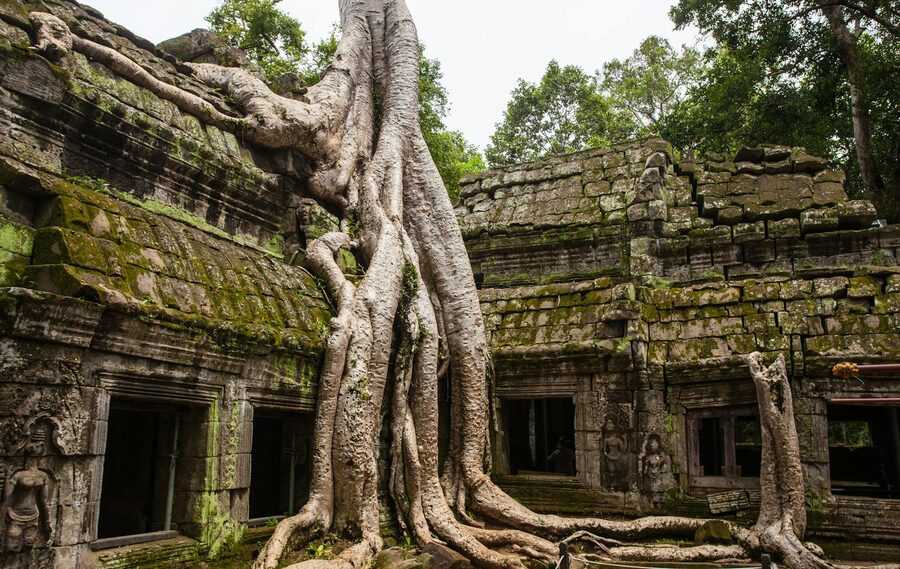
The result is one of the most photographed locations in Southeast Asia, and yes, parts of the first Lara Croft: Tomb Raider movie were shot here in 2000. The temple is genuinely being held together and pulled apart by the trees at the same time. International conservation teams are working on stabilization, but it is a slow and contentious process — everyone agrees the trees have to stay, but everyone also agrees the walls are gradually failing.
Visit now. In ten years the most famous tree-root corners will probably be fenced off.
Angkor Thom and the Bayon Faces
Angkor Thom is the walled royal city that Jayavarman VII built after the Cham invasion in 1177. It is four kilometers on a side, with a 100-meter-wide moat, and five gates.
The south gate is the one every tour uses, and it is flanked by 54 stone gods pulling on one naga (snake) and 54 stone demons pulling on the other — a depiction of the Churning of the Sea of Milk, which you will see carved in the Angkor Wat galleries as well. Most of the heads on the south gate causeway are replicas; the originals are in the Angkor National Museum in downtown Siem Reap.
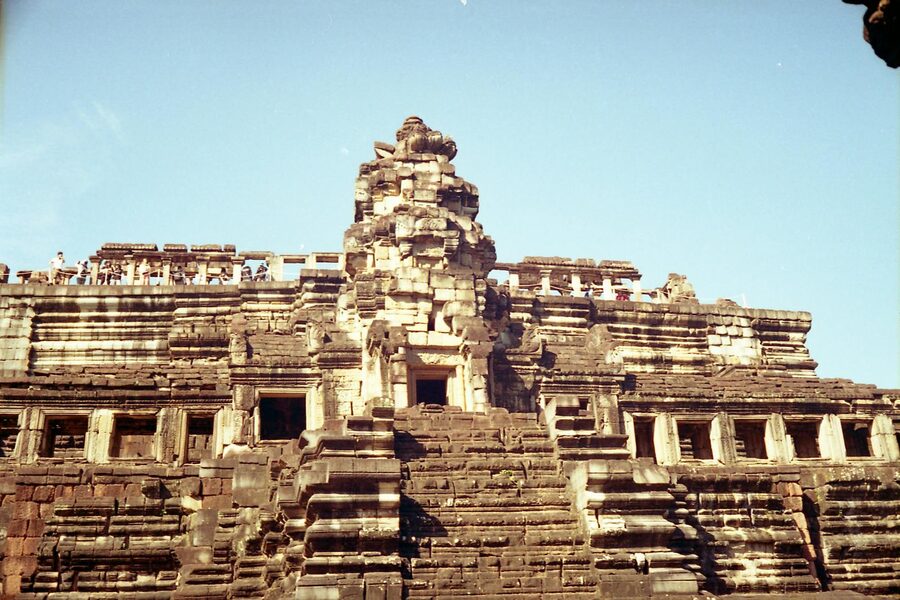
The Bayon sits in the exact center of Angkor Thom and is the one with the huge smiling stone faces on every tower. There are 54 towers with four faces each — over 200 faces in total — and the face is thought to be Jayavarman VII himself, or possibly the bodhisattva Avalokiteshvara, depending on which scholar you ask. Either way, the effect of walking through is surreal. Every corner you turn, another stone face is watching you from above.
The Bayon is also less crowded than Angkor Wat, because the sunrise herd has usually dispersed by the time tours arrive here. This is when a guide earns their fee — the carvings on the outer walls of the Bayon show everyday life in 12th-century Cambodia (market scenes, cockfights, childbirth, fish traps) and they are easy to miss if you don’t know to look.
Is Cambodia Safe and Worth the Trip?
Yes on both counts. Siem Reap specifically is one of the safer tourist destinations in Southeast Asia. It is a small city built entirely around Angkor tourism, the infrastructure is solid, and petty crime is relatively low by regional standards. Tuk-tuk scams exist (always agree on a price first), and pickpockets work the night market, but nothing out of the ordinary for a major Southeast Asian tourist hub. Stay aware, don’t flash cash, and you will be fine.
On whether it’s worth the trip — the short answer is that Angkor is one of those places I think everyone should see once. I have traveled a lot of ancient sites and almost none of them deliver what Angkor does, which is the combination of scale and detail. The Pyramids are bigger but simpler; Petra is more dramatic but smaller; Bagan has more temples but less carving.
Angkor is the only place I have been where you can spend three full days walking through 12th-century ruins and still not run out of new things to see.
A sunrise tour gets you the greatest hits in one morning for under $20. For a lot of travellers, that is enough. For others it is just the starting point, and they end up staying a week. Either way, book the tour, go early, bring water, and stay for the quiet hour after the sunrise crowd leaves.
Planning the Rest of Your Southeast Asia Trip
Most travellers combine Siem Reap with Bangkok or Ho Chi Minh City, and for good reason — the overland route into Cambodia from either city is straightforward and the temples pair beautifully with the urban chaos of Bangkok or the riverine energy of the Mekong Delta.
If you are building a broader itinerary, the Cu Chi Tunnels day trip from Ho Chi Minh City is a natural pairing — a completely different side of Southeast Asian history, equally worth a morning. From the Vietnamese side, a Mekong Delta tour is the other half of a perfect South Vietnam week.
North of there, Ninh Binh from Hanoi has its own limestone-karst-and-temple magic that rivals Angkor for scenery if not scale.
If you are flying via Bangkok, the Grand Palace and Wat Pho tour is a half-day that covers Thailand’s equivalent landmark temples, and the Ayutthaya day trip is the closest Thai analog to Angkor — a ruined royal capital in the jungle, minus the crowds. For something lighter, a Bangkok longtail canal tour is the best introduction to the city I know of.
And if you have time for Chiang Mai, the elephant sanctuary visit is non-negotiable — it is the one genuine animal encounter in the region that I trust ethically.
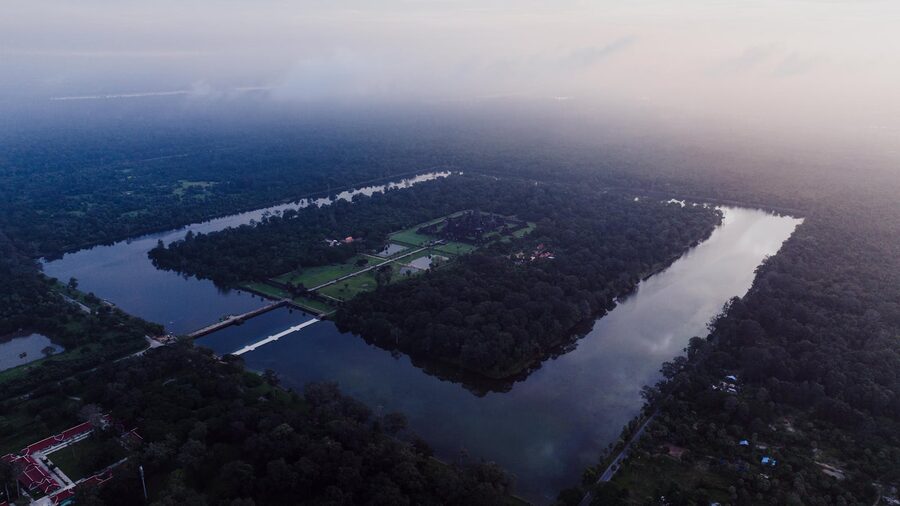
Whichever way you piece it together, Angkor Wat sunrise belongs at the top of your list. Book the tour, buy the pass, set the 4am alarm, and go see the biggest temple on earth turn pink in the dark.