
The Golden Triangle covers India’s three most iconic cities — Delhi, Agra, and Jaipur — in three days, and it’s named for the literal triangle shape the route draws on a map. Each leg is roughly 200 to 250 kilometers, and the loop hands you the Taj Mahal, Mughal forts, Rajput palaces, and the chaos of Old Delhi in a single sweep.
If it’s your first trip to India, this is almost certainly the route you should take. It’s the most booked multi-day tour in the country for good reason — it compresses a lifetime of postcard images into 72 hours, and the logistics of doing it yourself are just painful enough that letting someone else drive is worth every rupee.
I’ve spent a lot of time sifting through the Golden Triangle tours on our database — there are hundreds of them, ranging from $90 budget runs to $2,000 luxury loops with five-star heritage hotels. This guide walks through how the route actually works, which tours I’d pick for different budgets and travel styles, and the small details that separate a great trip from one where you spend day three regretting your driver.
Short on time? Here are my top 3 picks:
Best overall: All Inclusive 3 Days Golden Triangle Tour From Delhi — $127. The most booked option with over a thousand perfect reviews. Hotels, guides, and all entries included.
Best budget: All-Inclusive Delhi to Agra and Jaipur 3-Day Golden Triangle Tour — $110. Same cities, same three days, $17 cheaper, still all-inclusive.
Best premium: Four-Day Private Luxury Golden Triangle Tour — $160.70. Private car, four days instead of three, and a slower pace that actually lets you breathe between monuments.
- How the Golden Triangle Route Actually Works
- Private Tour vs Group Tour — What You’re Actually Choosing
- The Best Golden Triangle Tours to Book
- 1. All Inclusive 3 Days Golden Triangle Tour From Delhi — 7
- 2. All-Inclusive Delhi to Agra and Jaipur 3-Day Golden Triangle Tour — 0
- 3. Four-Day Private Luxury Golden Triangle Tour — 0.70
- When to Visit the Golden Triangle
- How to Get to the Starting Point
- Tips That Will Save You Time and Money
- What You’ll Actually See on the Golden Triangle
- More India Guides
How the Golden Triangle Route Actually Works
The route is a closed loop. You start in Delhi, drive south to Agra (roughly 230 km on the Yamuna Expressway, about 3.5 hours), then west to Jaipur (235 km, 4 to 5 hours on the newer highway), then northeast back to Delhi (280 km, around 5 hours). Total driving: around 12 to 14 hours spread across three days.
The classic split is one full day in each city. Day one is Delhi — typically a mix of Old Delhi (Red Fort, Jama Masjid, Chandni Chowk) and New Delhi (India Gate, Humayun’s Tomb, Qutub Minar). Day two is Agra — sunrise at the Taj Mahal, then Agra Fort, then the drive to Jaipur. Day three is Jaipur — Amber Fort, City Palace, Hawa Mahal, Jantar Mantar — before a final drive back to Delhi.
Three days is the minimum workable version. It’s intense, the drives are long, and you’ll feel it by the end. Four days adds breathing room — usually an extra half day in Jaipur, which is the city most people regret rushing through. Five days is luxurious and lets you slot in Fatehpur Sikri (the abandoned Mughal capital between Agra and Jaipur, which is stunning and often skipped).
Private Tour vs Group Tour — What You’re Actually Choosing
This is the biggest decision and it’s worth getting right. A private Golden Triangle tour gives you your own car, your own driver, and usually your own guide at each monument. You set the pace, you stop where you want, and you can skip things that don’t interest you. The tradeoff is cost — private tours start around $250 per person and go up from there.
A small group tour uses a shared minivan (usually 6 to 12 people) and follows a fixed schedule. You get the same monuments and hotels but less flexibility. The upside is price — group tours start around $110 per person all-inclusive, which is remarkable value for three days with hotels, meals, guides, and transport.
Here’s the honest take: if you’re traveling as a couple or with family, the private tours at $250 to $400 per person are usually worth it. You’ll be in the car for hours each day and having your own space matters more than you’d think. If you’re a solo traveler or a pair on a tight budget, the group tours around $110 to $130 are genuinely good — the drivers and guides are the same caliber, the hotels are fine, and you’ll meet other travellers in the van.
The thing NOT to do is the cheapest group tour you can find for $60 or $70. Those exist and they cut corners on hotels (highway roadside places, not city-center), rush the monuments, and skip the smaller sites. Three days of bad hotels and being herded is a miserable way to see India.
The Best Golden Triangle Tours to Book
These are the three tours I’d actually book myself, pulled from the highest-rated, most-reviewed Golden Triangle options in our database. Each one has hundreds of five-star reviews and a track record long enough that the quality is predictable.
1. All Inclusive 3 Days Golden Triangle Tour From Delhi — $127
This is the tour I’d pick if someone asked me cold. It’s the highest-reviewed Golden Triangle option in our database with well over a thousand verified five-star reviews, and at $127 for three full days including hotels, guides, entry fees, and all transport, it’s one of the best value tours I’ve seen for any multi-day trip in Asia.
The itinerary is the classic loop — Delhi day one, Taj Mahal at sunrise on day two, Jaipur on day three — and the hotels are three-star properties in each city center, not highway motels. The guides are local to each city, which matters because nobody knows the Amber Fort like a Jaipur local and nobody can read Mughal carvings in Agra like someone who grew up in the shadow of the Taj.
The one thing to know: this is small group, not private. You’ll be in an air-conditioned minivan with up to 12 other travellers. If that sounds fine, book it. If you want your own space, scroll down to the luxury option.
2. All-Inclusive Delhi to Agra and Jaipur 3-Day Golden Triangle Tour — $110
This is the budget pick that I’d actually trust. At $110 all-in it’s cheaper than option one by $17, and the reviews are almost as strong — over eight hundred of them, all five stars. The itinerary is basically identical: Delhi sightseeing, Agra with sunrise Taj Mahal, Jaipur with Amber Fort and City Palace, same three-day window.
What you’re giving up for the lower price is mostly small stuff — slightly more basic hotels (still fine, still clean, still central), and the minivan might be a little more crowded on busy weekends. The guides and driving are the same quality because it’s run by a long-established Delhi agency with a fleet of both this tour and premium versions.
One detail worth noting: travellers consistently call out the drivers by name. That’s usually a sign of a well-run operation where the staff actually care. If you’re solo or on a tight budget and $17 matters, this is the tour to book.
3. Four-Day Private Luxury Golden Triangle Tour — $160.70
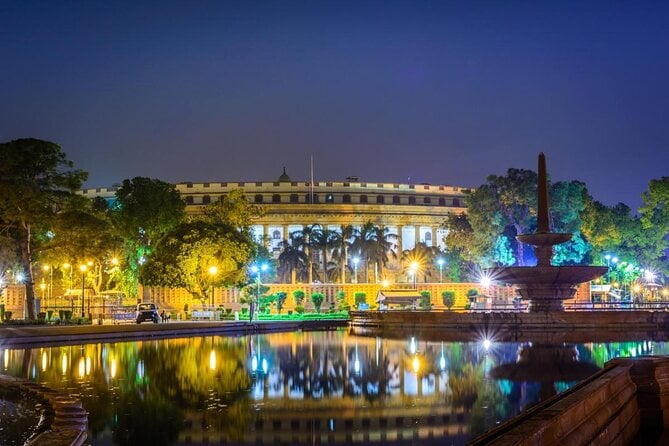
This is the one I’d choose for a honeymoon, a family trip, or anyone who wants the Golden Triangle without the rushed edge. At $160.70 per person (based on two travellers) you get four days instead of three, your own private car and driver for the entire trip, and the pace actually lets you enjoy each monument instead of sprinting between them.
The extra day usually goes to Jaipur, which is the city most travellers regret cutting short on the three-day version. You’ll have time for Jal Mahal (the water palace), a stepwell or two, and maybe a meal at a rooftop restaurant overlooking the old city. The private car also means you can stop for chai at roadside dhabas on the drives, which is one of the small pleasures of traveling in northern India that group tours never allow.
Over eight hundred five-star reviews and the operator has been running this exact tour for years. If the price difference from the group tours — roughly $30 to $50 more per person — is within budget, this is the upgrade worth paying for.
When to Visit the Golden Triangle
The high season runs October through March and that’s the window you want. Temperatures sit in the 15 to 28 Celsius range during the day, the humidity is low, and the haze that plagues Delhi for most of the year mostly lifts. The tradeoff is that this is also when everyone else visits, so the Taj Mahal at sunrise can be genuinely crowded between December and February.
April and May are punishingly hot — Delhi and Agra can hit 45 Celsius, and walking around Agra Fort at noon in May is a test of endurance I wouldn’t recommend to anyone. Some tours still run in this window at discount prices, but your memories will be mostly of sweating.
Monsoon (June through September) is the wild card. It rains in bursts, not constantly, and the tourist crowds thin out dramatically. I actually like monsoon for the Golden Triangle — the monuments photograph beautifully with dramatic clouds, prices drop 20 to 30 percent, and the drives between cities are cooler. The downside is that some days you’ll get soaked walking between buildings.
October and February are my two top picks. October catches the end of the monsoon greenery without the winter haze, and February has the clearest skies and the best Taj Mahal sunrise photos of the year.
How to Get to the Starting Point
Almost every Golden Triangle tour starts from Delhi, which is fine because Delhi has the best international connections in India. Indira Gandhi International Airport (DEL) is served by every major airline and you can fly direct from most of Europe, Southeast Asia, the Middle East, and the US East Coast.
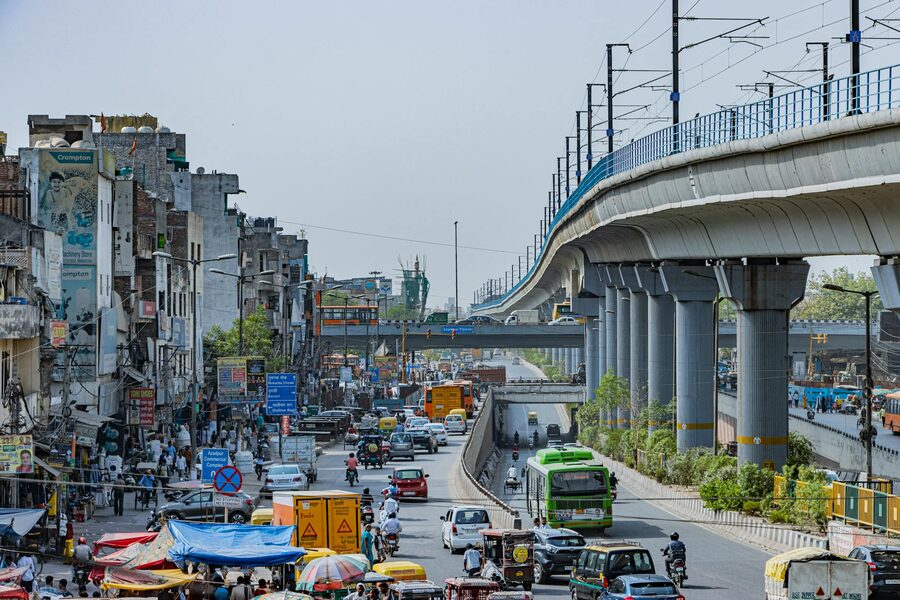
Most tours offer hotel pickup in Delhi from a list of central neighborhoods — Connaught Place, Karol Bagh, Paharganj, Aerocity, and the South Delhi area around Saket and Hauz Khas. Book your Delhi hotel in one of these areas and the pickup will be straightforward. If you stay far out (Gurgaon, for instance, or Noida) some tours will charge an extra pickup fee.
If you’re arriving on an overnight flight, I’d recommend staying one night in Delhi before the tour starts. The jetlag plus immediate 5 AM Taj Mahal wake-ups make for a rough first two days. Aerocity is the best neighborhood for this — it’s right by the airport, has good business hotels, and you can catch up on sleep before the tour begins.
Tips That Will Save You Time and Money
Carry small bills for tips. The drivers and guides on these tours work on tips and it’s customary to tip at the end of each day. Around 300 to 500 rupees per day for the driver and 200 to 300 per monument guide is reasonable. Having change matters because nobody will have it for you.
Wear slip-on shoes. The Taj Mahal requires you to either remove shoes or wear shoe covers inside the main mausoleum. Multiple monuments have similar rules. Laces will make you miserable.
Book the sunrise Taj Mahal option. If a tour gives you a choice between morning and afternoon Taj Mahal, always pick sunrise. The light is better, the crowds are thinner, and the marble changes color as the sun comes up — which is the whole reason people say the Taj is magical.
Check Monday closures. The Red Fort in Delhi is closed on Mondays. The Taj Mahal is closed on Fridays. Good tours schedule around these closures but double-check before booking — if your three-day tour starts on Sunday and reaches Delhi on Monday, you’ll miss the Red Fort.
Carry hand sanitizer and tissues. Sounds obvious but nobody packs enough. Indian public bathrooms are hit or miss and having supplies on you makes the long drive days much more pleasant.
Don’t drink tap water. All decent tours provide bottled water in the car. If you need more, buy sealed bottles from reputable shops, not street vendors. The last thing you want is a stomach bug starting on day two of a three-day trip.
Rupees at the airport, not in Delhi. Exchange your first $100 worth at the airport so you have cash for tips and small purchases from day one. The rates in the city aren’t significantly better and you don’t want to be hunting for an ATM on tour day one.
What You’ll Actually See on the Golden Triangle
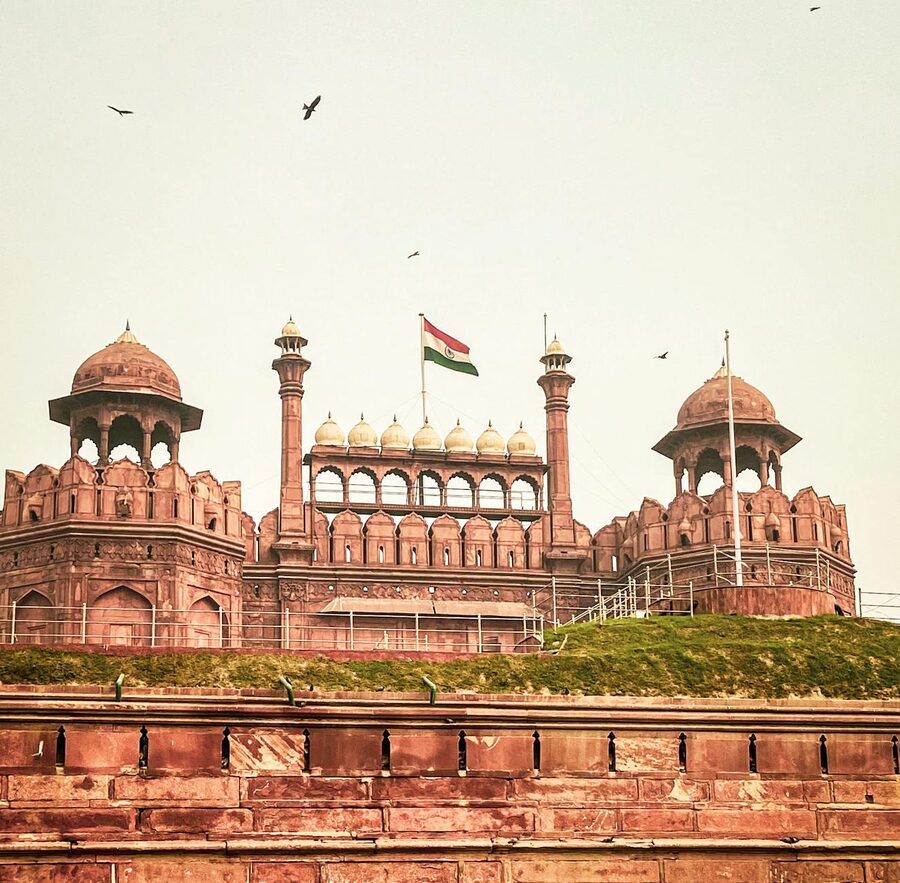
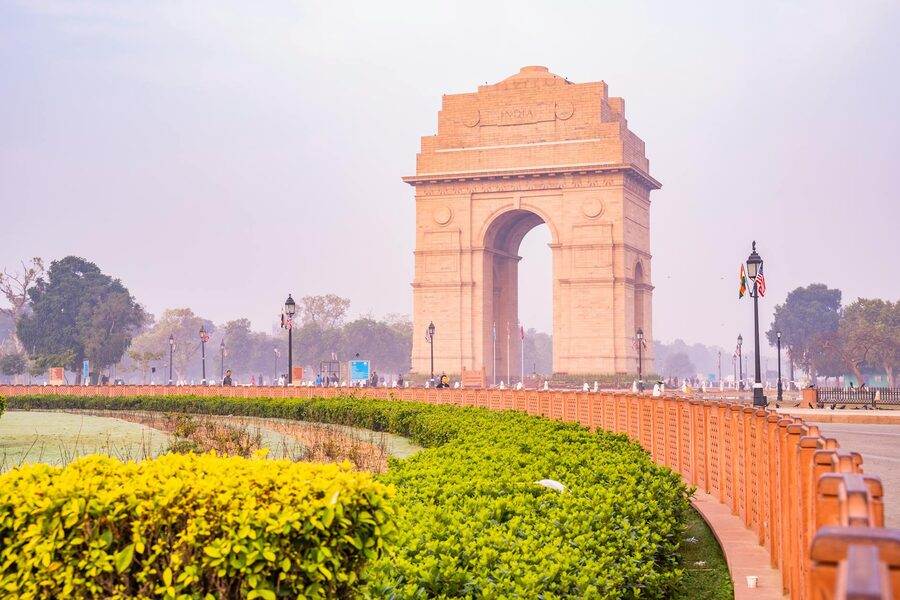
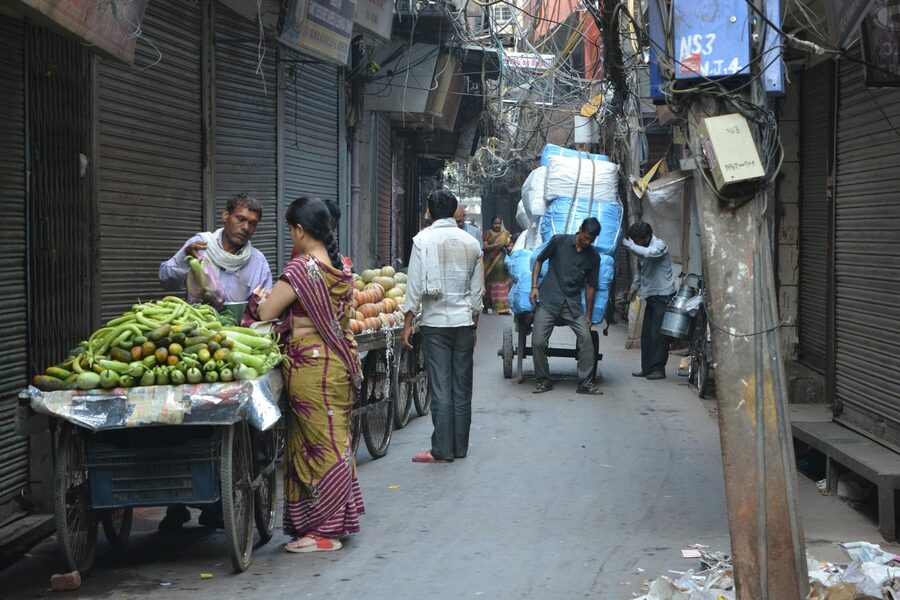
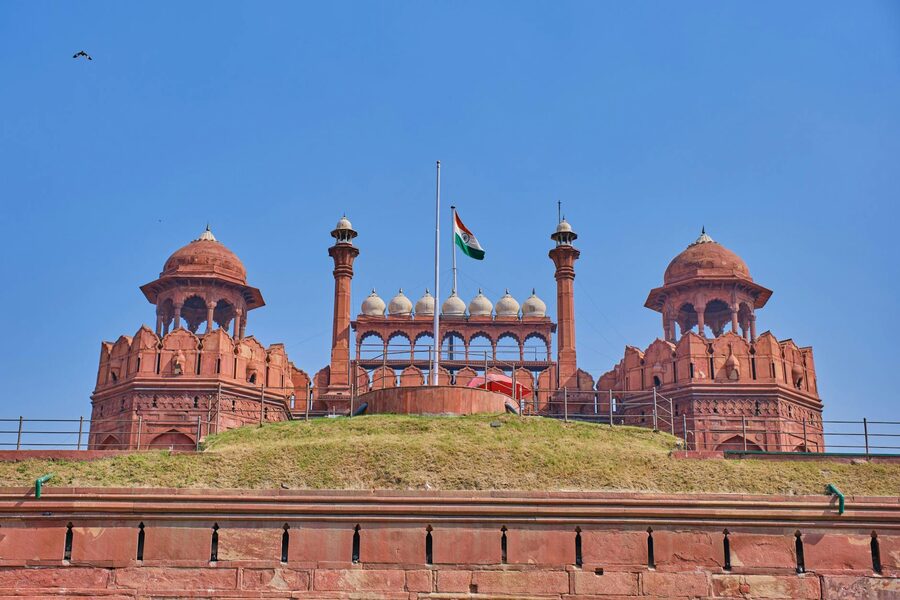
Day one in Delhi is a whiplash tour of two cities in one. Old Delhi gives you the Red Fort (huge Mughal fortress, red sandstone walls), Jama Masjid (India’s largest mosque), and Chandni Chowk (the chaotic old bazaar, ideally done by rickshaw). New Delhi gives you India Gate (the war memorial and arguably Delhi’s most recognizable landmark), Humayun’s Tomb (a direct architectural ancestor of the Taj Mahal), and Qutub Minar (a 12th-century victory tower 73 meters tall).
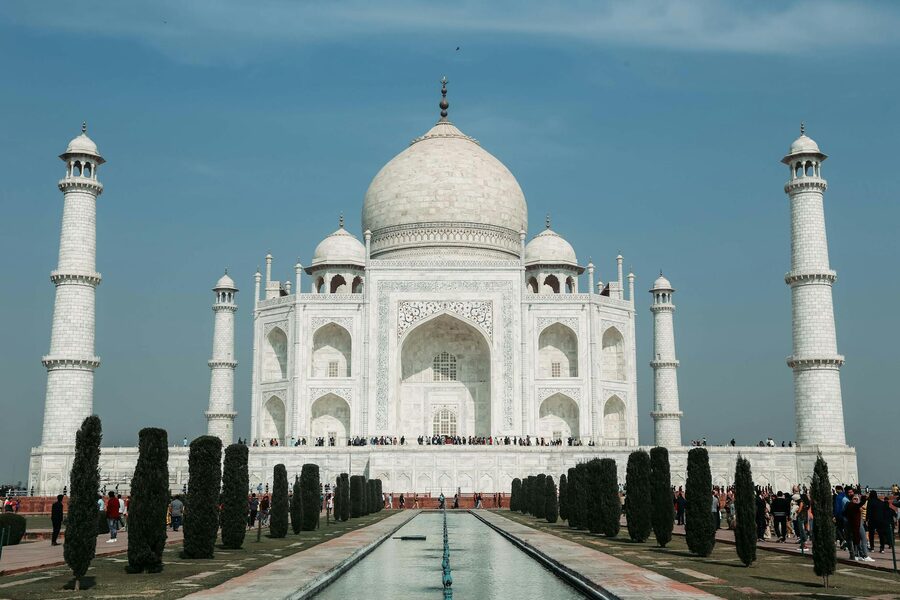
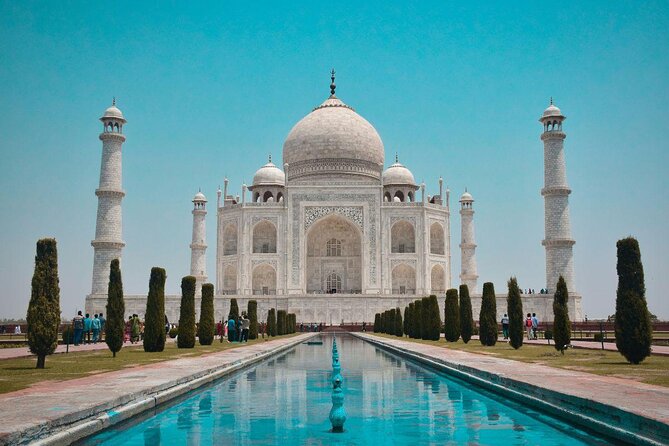
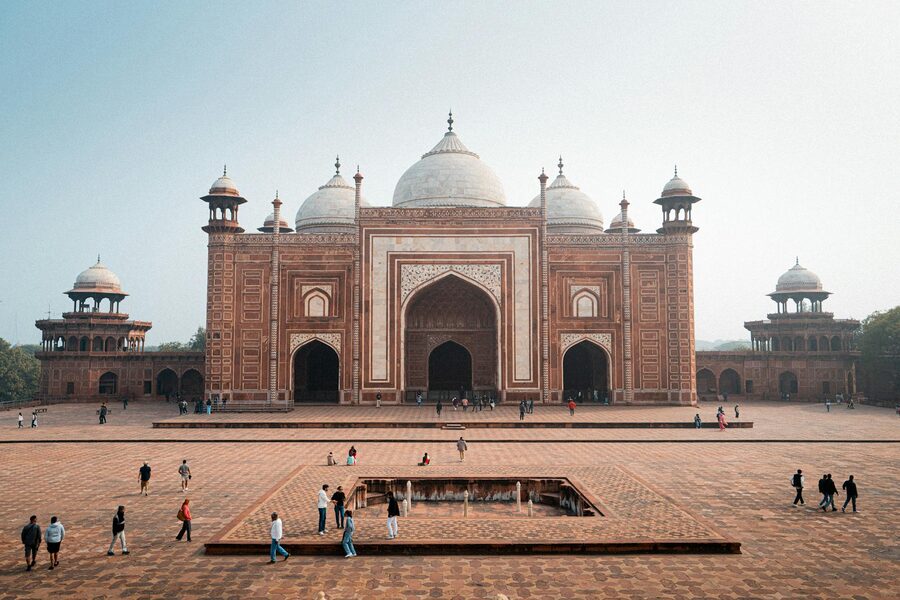
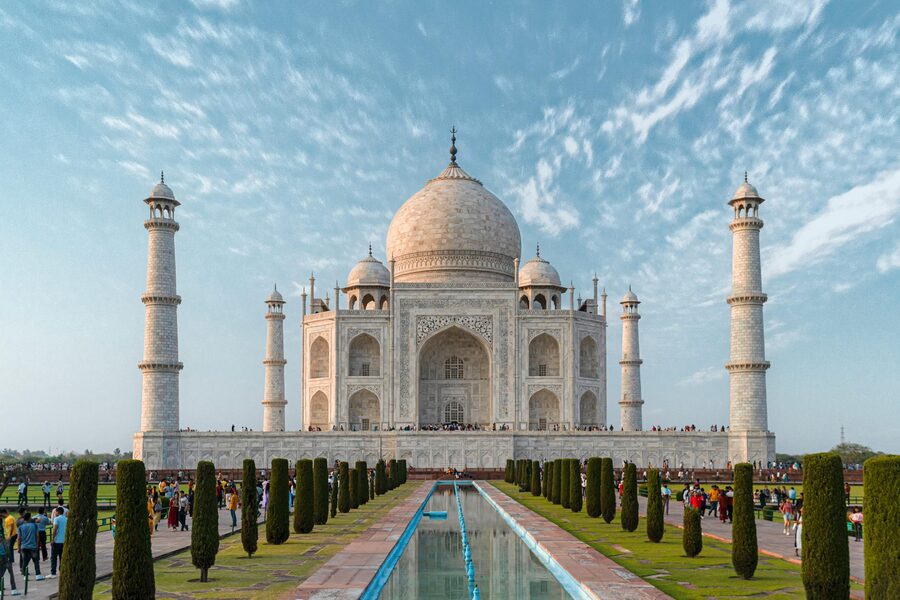
Day two in Agra is dominated by the Taj Mahal, which deserves every word of praise it gets. Commissioned by Shah Jahan in 1632 for his late wife Mumtaz Mahal, it took over twenty years to build and used marble hauled from Rajasthan by elephant. The main mausoleum is the star but the gardens, the mosque on the west side, and the guest house on the east side are all worth attention.
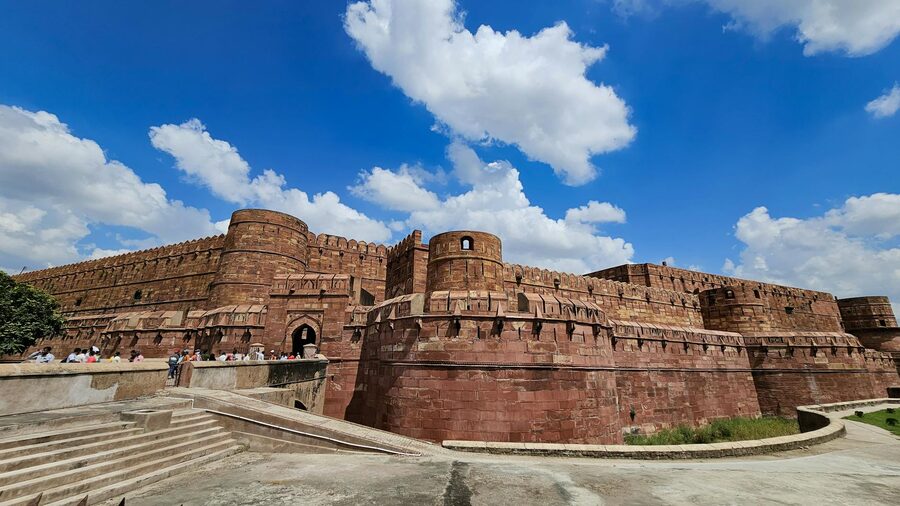
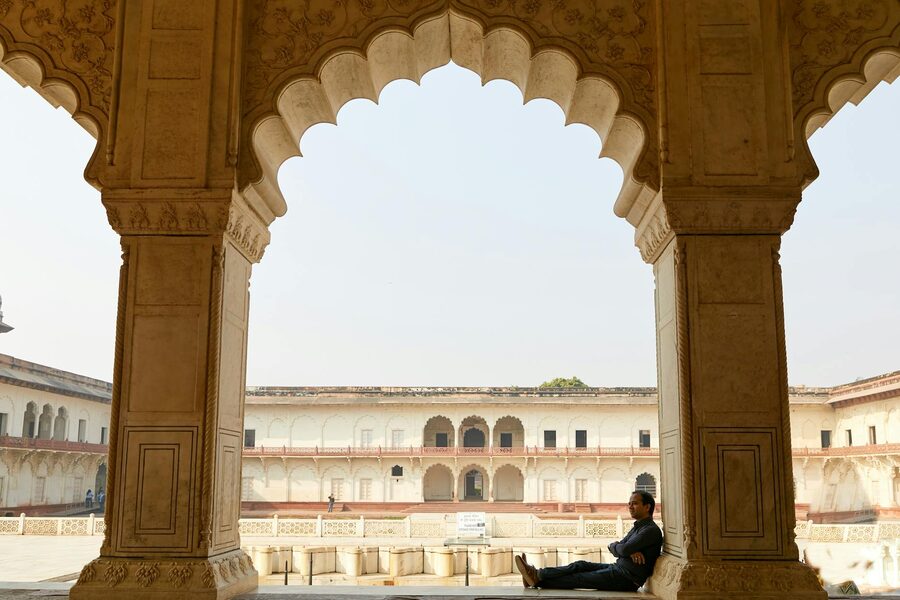
After the Taj, most tours do Agra Fort — a working Mughal citadel with UNESCO status, where Shah Jahan was eventually imprisoned by his son and could only see the Taj Mahal from a distance.
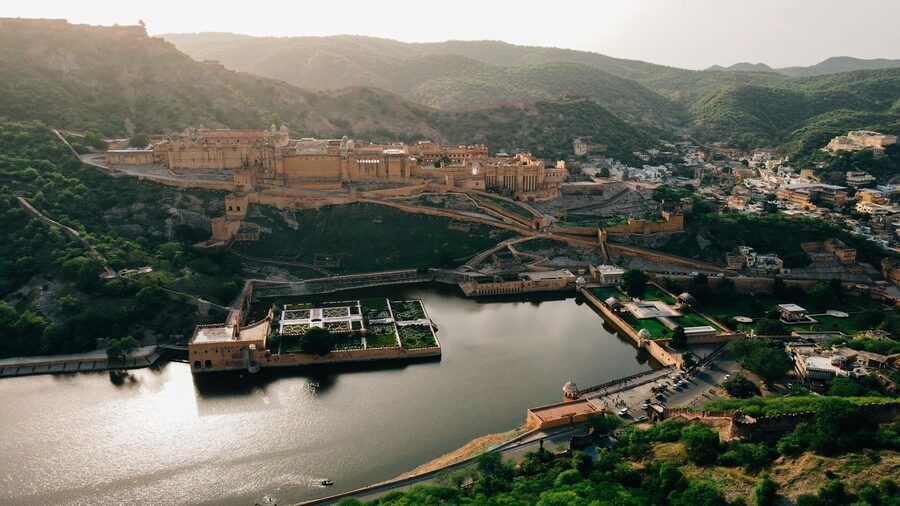
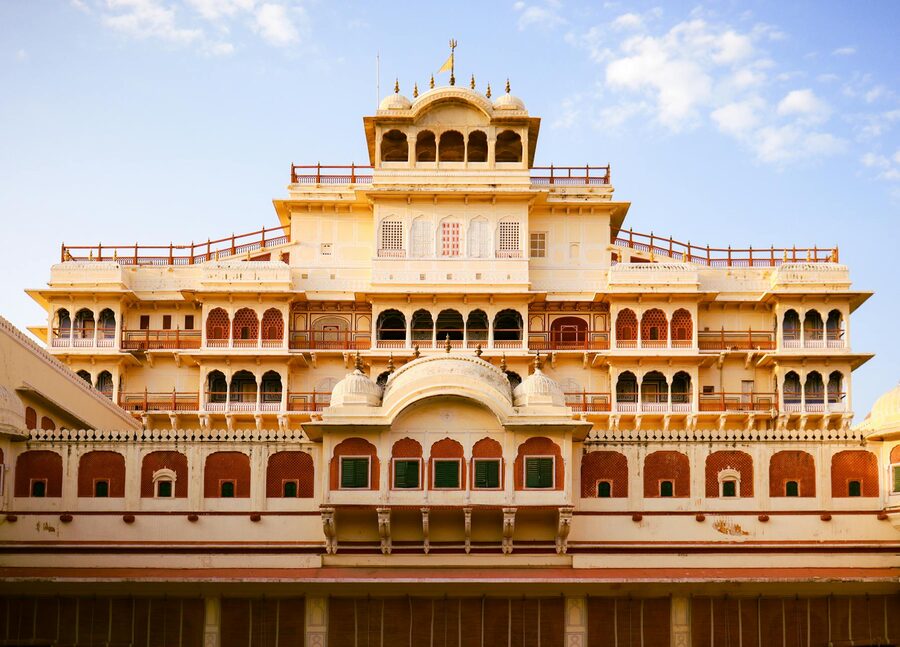
Day three in Jaipur is the richest city of the three in terms of sheer variety. Amber Fort sits on a hilltop above a lake and contains the famous Sheesh Mahal (Hall of Mirrors). City Palace is still the royal residence of the Jaipur family and part of it is open to the public.
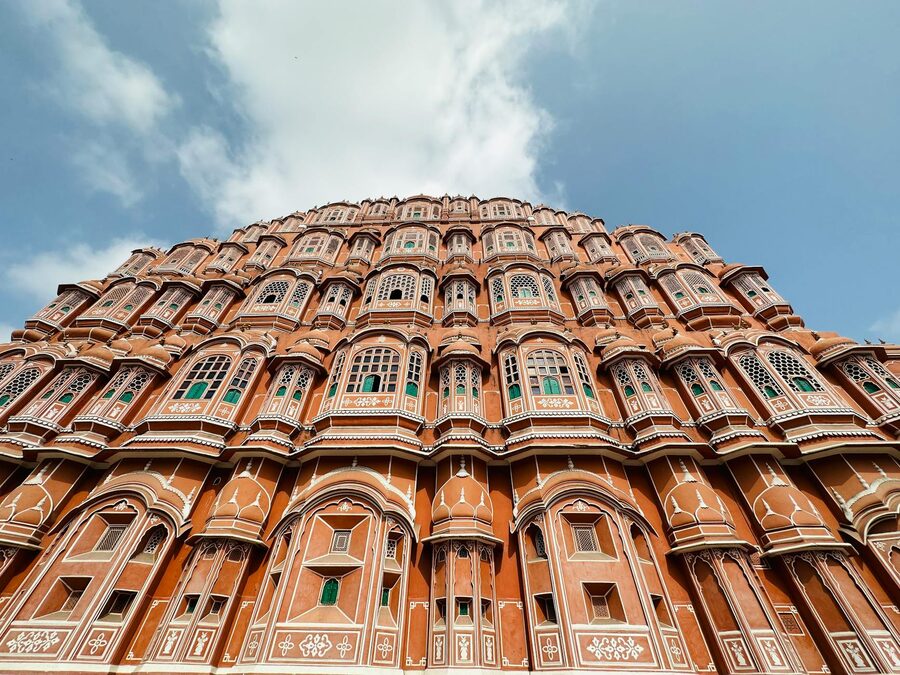
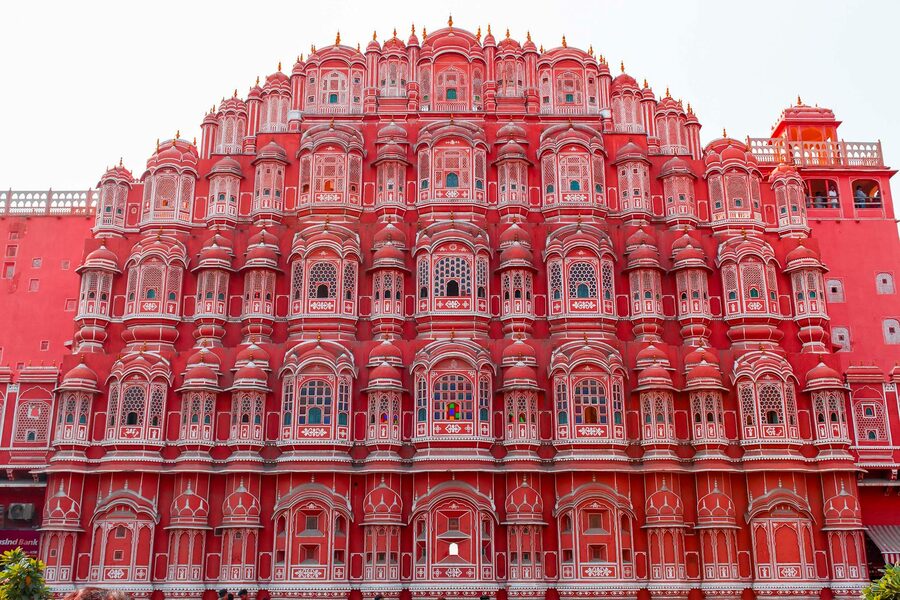
Hawa Mahal — the Palace of Winds — is a five-story honeycombed pink facade that royal women used to watch street processions without being seen. Jantar Mantar is an 18th-century astronomical observatory with giant sundials that still work.
If your tour includes Fatehpur Sikri between Agra and Jaipur, consider yourself lucky. It’s the abandoned Mughal capital that Akbar built in 1571 and then abandoned fifteen years later because the water supply failed. It’s eerie, gorgeous, and uncrowded compared to the main sites — one of my favorite stops anywhere in India.
More India Guides
If you’re building out a longer India itinerary, the single-city guides for each Golden Triangle stop are worth reading before your trip — our Taj Mahal day trip guide has more detail on the Agra sunrise logistics, and the Jaipur city tour guide breaks down the Pink City monuments with more depth than the rushed day-three version.
For Delhi specifically, the Old and New Delhi city tour guide and the Old Delhi food walk cover the capital in the kind of depth that a Golden Triangle day trip can never reach. If Mumbai is also on your list, our Mumbai sightseeing guide and Elephanta Caves guide are the natural next reads.
And if you want to understand the layered reality of urban India beyond the monument trail, the Dharavi walking tour is a completely different side of the country worth experiencing.