Kamakura’s bamboo grove, its great bronze Buddha and Mount Fuji’s high slopes make an appealing pair: one day of temple town and Pacific coast, one day of volcanoes, ponds and lake views. The tour links them from Tokyo by road, with an overnight in Odawara.
I like that Hokoku-ji includes a green tea stop alongside its bamboo walk, and that the next day combines several different ways to see Fuji, from Oshino Hakkai and Lake Kawaguchiko to the Fifth Station. The main trade-off is pace: fitting this much into two days means long drives and short visits, and groups may be large.
- The short version: plenty to see, little time to linger
- What this two-day route does well
- Day one: bamboo, Buddha and a free hour by the sea
- Day two: steam vents, pond views and a lake crossing
- Guides and group size: the key comfort factor
- What the price covers, and what it does not
- Who should book this tour?
- FAQ
- How long is the tour?
- What places does the tour visit?
- Is admission included at the main sights?
- Are meals included?
- Are flights included in the price?
- What language is the tour guided in?
- How large can the group be?
- Is the tour physically demanding?
- Is a visit to Owakudani guaranteed?
- Will the tour always reach Mount Fuji’s Fifth Station?
- The Best Of Tokyo!
- More 2-Day Experiences in Tokyo
- More Tours in Tokyo
- More Tour Reviews in Tokyo
- Not for you? Here's more nearby things to do in Tokyo we have reviewed
The short version: plenty to see, little time to linger
 1 / 7
 2 / 7
 3 / 7
 4 / 7
 5 / 7
 6 / 7
 7 / 7
- Hokoku-ji’s bamboo grove gives you a peaceful start, with admission and green tea included.
- Kamakura’s Great Buddha adds a landmark visit with time to take in its scale.
- Enoshima is your flexible lunch stop, with free time to explore the island or find a meal.
- Day two brings several Fuji perspectives, including Owakudani, Oshino Hakkai, Lake Kawaguchiko and the Fifth Station when conditions permit.
- The group can range from 2 to 72 people, so the guide experience may feel different in a small group than a full coach.
- From $476, the price includes one night’s accommodation, guided transport, listed admissions and buffet breakfasts, but not flights or lunch and dinner.

👉 See our pick of the 25 Best Guided Tours In Tokyo
What this two-day route does well
This is a compact way to see a broad stretch of Japan beyond Tokyo without planning each connection yourself. Kamakura brings temples, a historic Buddha and the coast; the second day shifts to volcanic terrain, mountain views and a lake. That variety is the tour’s central value.
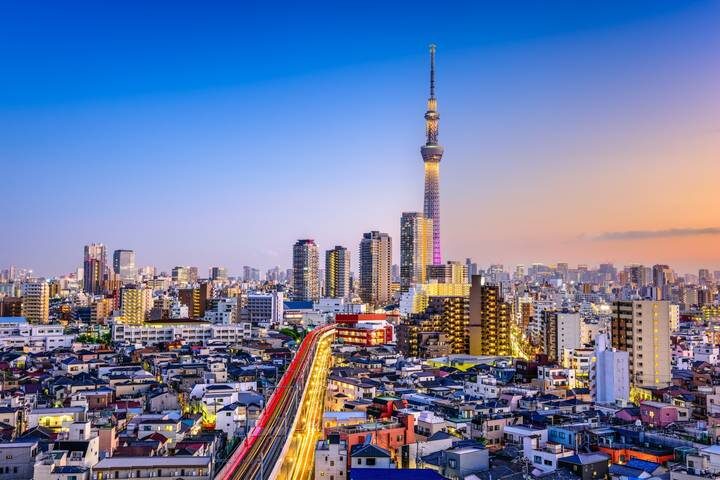
The tour begins in Tokyo and returns there at the end of day two. Between those points, you travel by road through Kamakura, Enoshima, Odawara and the Hakone and Fuji region. With a guide managing the route and transfers, you can focus on the stops rather than coordinating trains, local buses and admission times.
The arrangement does require some give and take. You get a sampler of several places, not a leisurely stay in any one of them. If you want time for long temple visits, a full afternoon on Enoshima or an overnight near Fuji, this schedule will feel compressed.
You can also read our reviews of more tours and experiences in Tokyo
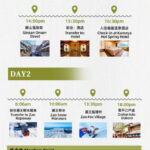

Day one: bamboo, Buddha and a free hour by the sea
You leave Tokyo early for Kamakura, a city that served as Japan’s capital for two centuries and is known for its temples, shrines and gardens. The first listed stop is Hokoku-ji Zen Temple, where admission to the bamboo forest is included.
The grove offers a quieter opening than a day built only around famous monuments. You can walk among the bamboo and have a cup of green tea, also included. Keep expectations grounded: this is a visit within a busy sightseeing day, not a long retreat. Still, the pause gives the morning a gentler rhythm before the coach moves on.
Next comes the Great Buddha, or Daibutsu. Admission is included, and the statue’s scale is the point: take a few minutes to look carefully rather than treating it as a quick photo stop. The day’s schedule is tight, so your time here may be limited. If this is a major reason for choosing the tour, be ready to make the most of the stop rather than expecting a long visit.
From Kamakura, the route follows the Pacific coast toward Enoshima. The island is connected to the mainland by a bridge, and you have free time to walk around or find lunch. This flexibility is useful after a morning of scheduled stops, but lunch is not included. Bring money for a meal and keep an eye on the group’s return time.
Enoshima is a welcome change of scene, with the coast replacing temple grounds and city streets. How much you can see depends on the length of the free-time window, which is not specified. I would treat this as a chance to stretch your legs, eat and enjoy the setting, not as time for an exhaustive island visit.
The final stop is Odawara Castle, a medieval fortress restored in the 20th century and associated with the Edo period. Admission is included. It makes a fitting end to the day, though it also means you will have covered several stops and road miles before checking in for the night.
You stay in Odawara. The hotel is selected with price, quality and location in mind, but it is not promised to be a luxury property or in the city center. Rooms have a private bathroom and television; some may also have a minibar, safe and hair dryer. Hotels are generally described as having access to public transport nearby, though the specific hotel is not named in advance here.
Day two: steam vents, pond views and a lake crossing
The second morning heads through the Hakone region toward Fuji. The first planned stop is Owakudani, known as the Valley of Hell for its volcanic crater, steam vents and sulfur gases. It is a striking contrast with the temple sites from day one, and a practical reminder that this is an active volcanic area.
Access can close if volcanic activity or toxic gases make a visit unsafe. If that happens, the tour substitutes Kitaguchi Hongu Fuji Sengen Shrine. The change is sensible, but the two stops offer different experiences: one is a volcanic site, the other a shrine. Do not count on seeing Owakudani no matter the conditions.
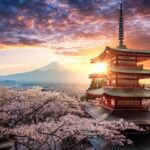
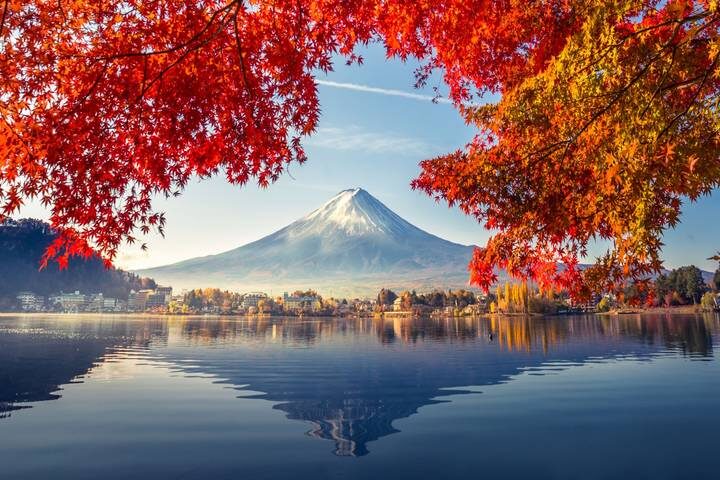
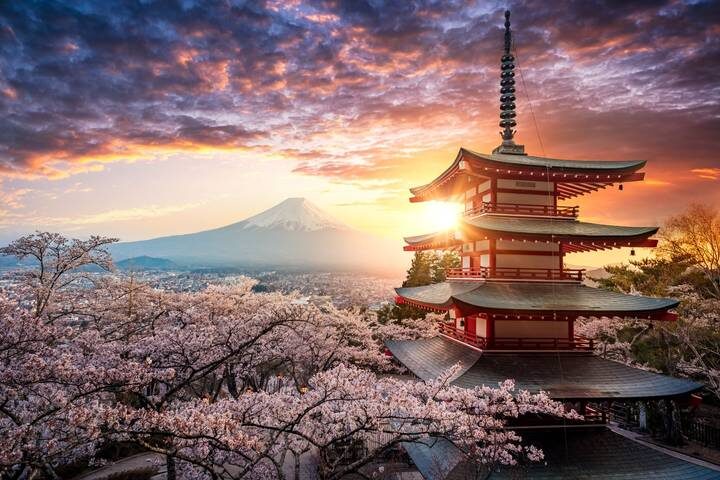
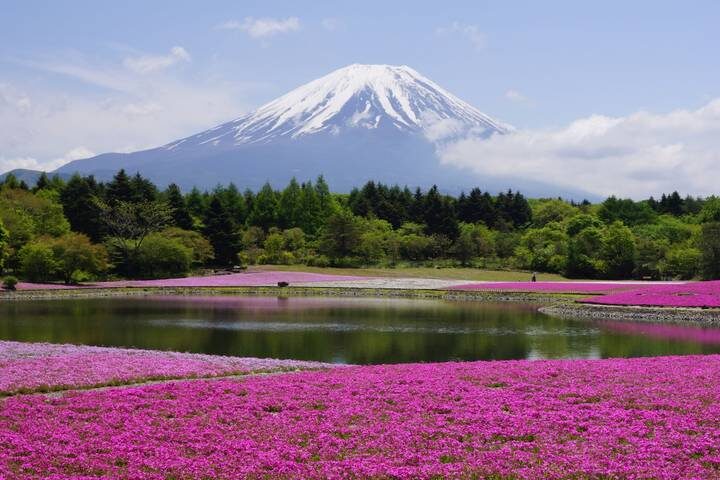
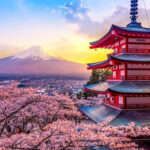
From there, you continue to Oshino Hakkai, a small village with eight ponds and views of Mount Fuji. This is one of the route’s chances to see the mountain from a different angle, weather permitting. The stop adds a village setting to a day otherwise shaped by roads, viewpoints and organized activities.
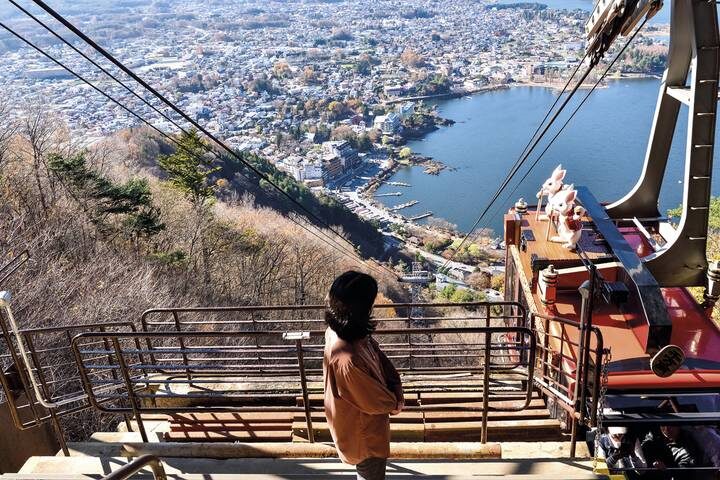
At Kawaguchiko, you take a scenic boat ride on Lake Kawaguchiko. It is a change of pace after the drive and a chance to see the surrounding mountains from the water. The tour includes the ride, but the exact length is not provided, so think of it as a scheduled highlight rather than a full lake excursion.
The day’s high point is the road ascent to Mount Fuji’s Fifth Station, at 2,305 meters (7,562 feet). The elevation gives you a different vantage point from the lakeside and village stops, and the route passes through forests. The mountain road is often closed in winter because of snow or weather; in that case, the coach goes as far as conditions allow.
The Fifth Station visit is not a climb to the summit. It is an accessible high-altitude stop, but weather and road access shape what you see. Cloud can obscure views, and seasonal closures can shorten the ascent. If reaching the highest possible point is essential to your plans, remember that this tour cannot guarantee access to the station.
After the Fuji region, you return to Tokyo at the end of the day. The tour does not include an airport transfer, and the operator advises checking your flight time and adding an extra night if needed. That is good advice: do not assume you can finish this full day of sightseeing and comfortably catch a flight soon afterward.
Guides and group size: the key comfort factor
The tour is fully guided in English, with groups ranging from 2 to 72 people. That maximum matters. A large group can make boarding and gathering slower, and it may be harder to hear explanations at outdoor stops. Some past participants wished for smaller groups or radio guide devices, so ask whether audio equipment is provided before you book.
Guide assignments can change during the tour. Guides named Ken, Erika and Jose were praised for their storytelling, warmth and care, but you should not expect a particular person on your departure. The guide may also be changed once or more during the trip.
The service can be bilingual, usually English and Spanish. Depending on group size, the tour may have two leaders or one guide explaining in both languages. If you need English explanations throughout, confirm how language arrangements work for your departure.
The group format has a practical upside: transport, timing and site visits are handled for you. It can also mean repeated explanations and a more structured day than you would get traveling independently. The physical rating is low intensity, and all ages are welcome, but low intensity does not mean an easy pace. Early starts, coach time and several stops can still make the days tiring.
What the price covers, and what it does not
The price starts at $476, based on the cheapest room option. For two days, that includes accommodation for one night, guided transfers, listed site admissions and buffet breakfasts. The included admissions cover Hokoku-ji’s bamboo forest, the Great Buddha and Odawara Castle; the scenic boat ride on Lake Kawaguchiko is also part of the program.
The hotel is not sold as a luxury stay. Europamundo describes its properties as chosen for quality, price and location, with private bathrooms and televisions in rooms. Room sizes, bed sizes and facilities can vary. If you value a polished hotel experience above a packed sightseeing schedule, check the accommodation details before booking.
Flights before and after the tour are not included. Lunch on Enoshima and other meals beyond the listed breakfasts are also not included, so budget for food and any personal purchases. The starting price is strongest value if you want the transport, guide and admissions bundled together; it is less compelling if you prefer to move slowly or choose every stop yourself.
Europamundo has an operator rating of 4.1 out of 5 across its profile, while this specific two-day tour is rated 4.3 out of 5 across 10 ratings. The category scores are also 4.3 for itinerary, transport, guide, accommodation and food. Those numbers suggest a generally solid experience, but the small number of tour ratings means they are best treated as a useful signal, not a guarantee.




Who should book this tour?
I would choose this tour if you have only two days to spare, want to see both Kamakura and the Fuji region, and prefer having transport and site logistics arranged. It suits first-time visitors, families and anyone who likes a guided overview more than a do-it-yourself schedule.
It is also a good match if you value variety: a bamboo grove, a giant Buddha, a coastal island, a castle, volcanic steam, village ponds, a lake boat ride and a high mountain stop all appear in two days. Just go in expecting a busy schedule, not extended time at each place.
I would look for a slower alternative if you want long, unhurried temple visits, independent time in Enoshima, or a guaranteed visit to Mount Fuji’s Fifth Station. Weather and volcanic conditions can change the plan, and the large possible group size may affect how easily you hear the guide.
Book it for range and convenience, not for a slow pace. At the starting price, it brings together a wide set of sights and transport that can be awkward to arrange in two days. Before committing, check the room option, language setup, group size and your return-to-Tokyo timing.
Discovering Kamakura and Mount Fuji by Europamundo – 2-Day Tour
“Good use and management of time. Groups should be smaller or use some device to be able to hear the guide at visited sites.”
FAQ
How long is the tour?
The tour lasts two days. It starts in Tokyo, includes an overnight stay in Odawara and returns to Tokyo at the end of the second day.
What places does the tour visit?
The route includes Kamakura, Enoshima, Odawara, the Hakone region, Owakudani or Kitaguchi Hongu Fuji Sengen Shrine, Oshino Hakkai, Lake Kawaguchiko and Mount Fuji’s Fifth Station when access permits.
Is admission included at the main sights?
Admission is included for Hokoku-ji’s bamboo forest, the Great Buddha in Kamakura and Odawara Castle. The scenic boat ride on Lake Kawaguchiko is also included.
Are meals included?
Buffet breakfasts are listed for both days. Lunch and dinner are not listed as included, and you have free time for lunch on Enoshima.
Are flights included in the price?
No. Flights before and after the tour are not included, and the departure transfer to the airport is also not included.
What language is the tour guided in?
The tour is guided in English. Depending on the group, service may be bilingual, usually English and Spanish, with one or two tour leaders.
How large can the group be?
The group size ranges from 2 to 72 people. Guide assignments can change during the tour.
Is the tour physically demanding?
It is rated low intensity and welcomes all ages. The days do include several stops, early travel and road transfers, so the pace may still feel tiring.
Is a visit to Owakudani guaranteed?
No. Owakudani may close because of volcanic activity or toxic gases. If it is closed, the tour visits Kitaguchi Hongu Fuji Sengen Shrine instead.
Will the tour always reach Mount Fuji’s Fifth Station?
No. The road is often closed in winter because of snow or weather, and the tour goes as far as conditions allow.