Sumo makes more sense when you see it from the edge of the ring, not from a distant arena seat. At Tokyo Sumo Beya, you get a close look at training and matches, then can test your strength against a wrestler and share chanko nabe, the hot pot associated with sumo wrestlers.
I like two things in particular: the English-language explanations make the rituals easier to follow, and the chance to take part turns a demonstration into a physical lesson. One consideration: at US$150.75 per person, this is a special-occasion outing, not a low-cost introduction, and the two-hour schedule leaves little room for a long visit.
- What makes this sumo experience worth considering
- Inside Tokyo Sumo Beya in Kiyosumi
- A short introduction before the action
- Watching training and matches up close
- Taking your turn against a wrestler
- Chanko nabe while the show continues
- Is the two-hour visit good value?
- Timing, meeting point, and booking details
- Who should book this Tokyo sumo experience?
- FAQ
- How long is the sumo experience?
- Where does the experience take place?
- What start times can I choose?
- Where does the experience end?
- Is the tour conducted in English?
- Is food included?
- Can I take part in a sumo challenge?
- What is the child price?
- The Best Of Tokyo!
- More Tours in Tokyo
- More Tour Reviews in Tokyo
- Not for you? Here's more nearby things to do in Tokyo we have reviewed
What makes this sumo experience worth considering
 1 / 9
 2 / 9
 3 / 9
 4 / 9
 5 / 9
 6 / 9
 7 / 9
 8 / 9
 9 / 9
- The venue is a sumo stable. You see the sport in a working-style setting rather than only from arena seats.
- Training and matches are part of the visit. The close view helps you notice the ritual and force behind each movement.
- You can challenge a wrestler. Volunteers may try warm-ups and a one-on-one push or bout.
- The explanations are in English. A guide and English-speaking staff help make the sport’s customs clear.
- Chanko nabe is served during the show. The meal links the spectacle to the food sumo wrestlers eat to build their bodies.
- There are two daily start options. Choose 11:00 a.m. or 7:00 p.m., with the return at the same location two hours later.

👉 See our pick of the 25 Best Guided Tours In Tokyo
Inside Tokyo Sumo Beya in Kiyosumi
The meeting point is Tokyo Sumo Beya, at 2-chome-10-11 Kiyosumi, Koto City, Tokyo. The Japanese address is 北の湖部屋. This is not a tournament arena: the draw is seeing sumo at close range in a stable setting, where training and the everyday culture of the sport take center stage.
That setting changes what you can notice. In a large arena, a bout is the main event, and the wrestlers may seem distant. Here, you can watch training, learn the basic context, and see how a match fits into a larger routine. The venue is described as an actual sumo stable associated with a famous wrestler who has retired. It gives the presentation a stronger connection to the sport than a themed restaurant show would.
The stable is in Kiyosumi, within Koto City. Plan your own route to the address, since transportation to the venue is not listed as part of the experience. Arrive 15 minutes before your selected start time, and keep the mobile voucher handy.
You can also read our reviews of more tours and experiences in Tokyo.


A short introduction before the action
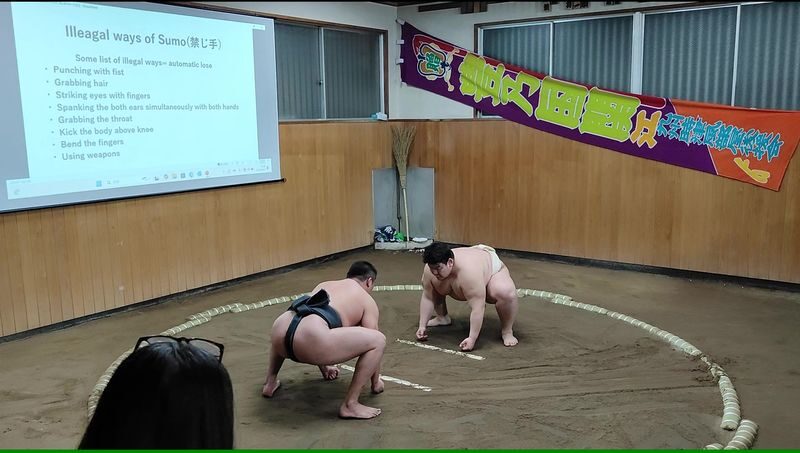
The two-hour program includes an introduction to sumo’s history and culture. This matters because sumo is more than two large athletes trying to push each other out of a ring. A guide explains what you are watching and helps put the sport’s customs and practice into context.
The explanations are in English, and the staff also speak English. That should make it easier to follow the demonstration and ask questions as it unfolds. One session was led by Charlie, who handled the hosting and referee duties as well as the explanations. Guide assignments can vary, so don’t count on a particular person.
The format is lively rather than a formal lecture. The host can use humor to keep the room engaged, while still explaining the sport. That balance is useful if you are new to sumo, or if you are bringing someone who may be more interested in the show than in a history lesson.
Watching training and matches up close
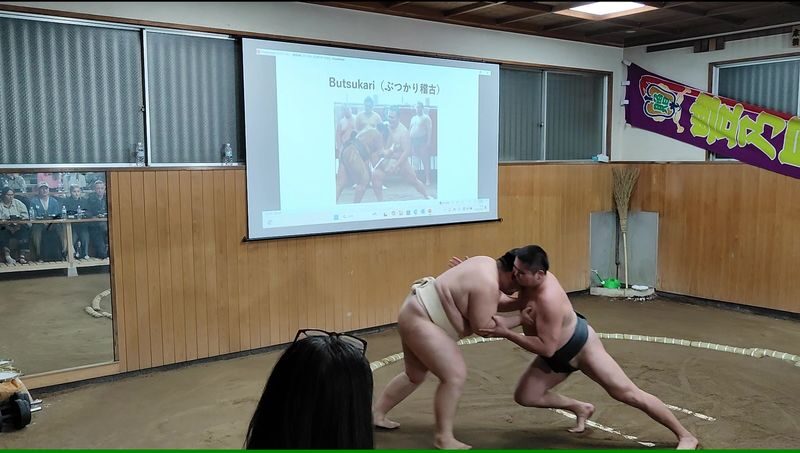
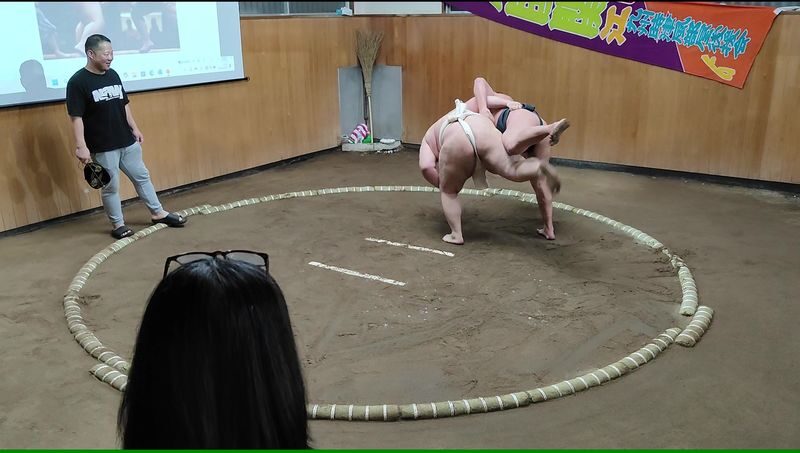
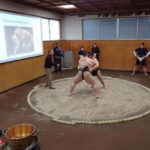
You can expect to see sumo wrestlers train, followed by actual matches. The appeal is proximity: you are not watching from the far side of an arena, and the demonstration gives you a better chance to see the wrestlers’ movements and strength at close range.
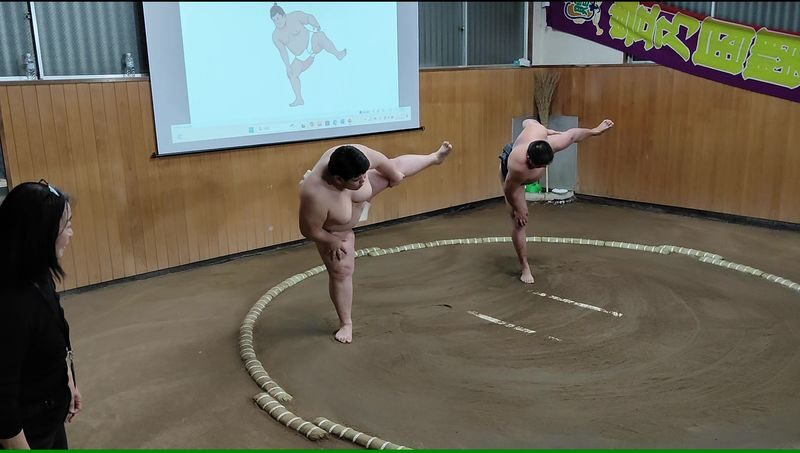
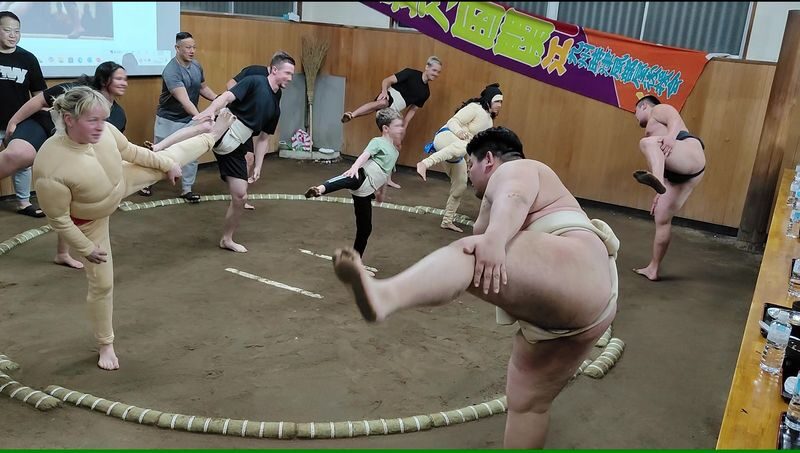
Training is a valuable part of the visit because it shows that sumo is built on repeated physical work, not just the dramatic moment of a match. One particularly useful detail from the presentation is the explanation of the warm-up exercises wrestlers perform. Those routines help connect the ritual you see to the demands of the sport.
The matches make the contrast clear. Sumo can look simple from a distance, but a close encounter helps you understand how hard it is to move a wrestler who is planted and ready. The show is designed for an audience, so think of it as an accessible demonstration rather than a private morning practice or a tournament.
Taking your turn against a wrestler
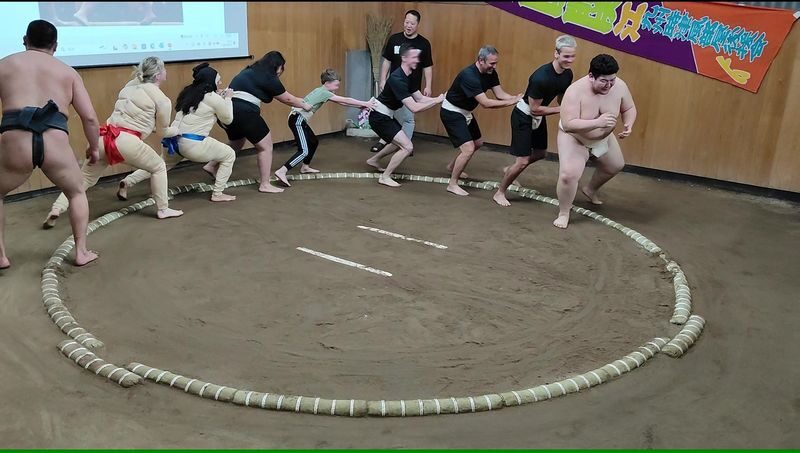
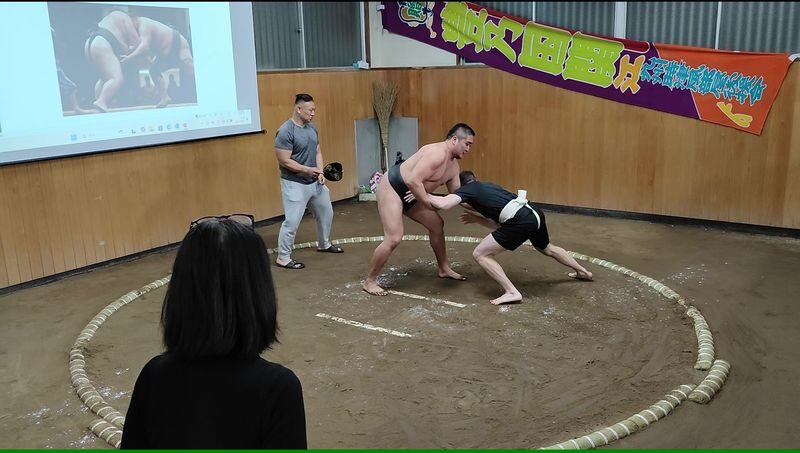
The most memorable part for many people is the chance to challenge a wrestler. Volunteers may join in warm-up exercises, dress up like a sumo wrestler, or try a one-on-one contest. You can also ask the wrestlers questions and take photos with them.
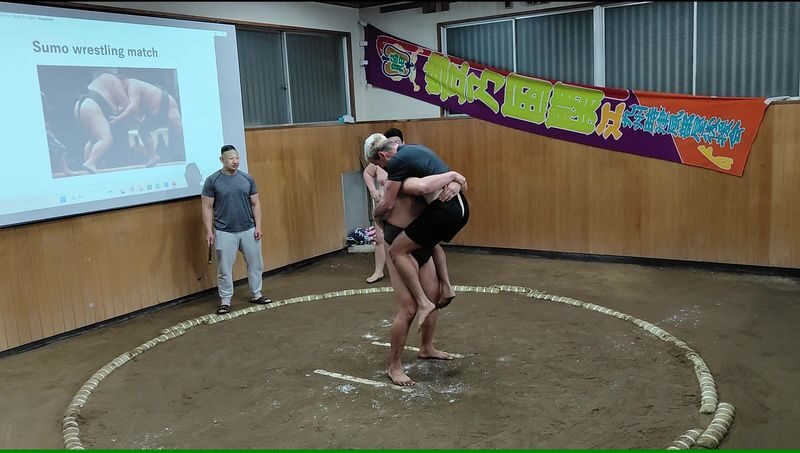
Participation is optional. You can enjoy the demonstrations from the side if you would rather not step forward. But if you are comfortable volunteering, the challenge gives you a surprisingly direct lesson in size, balance, and force. Even a strong push may not shift a wrestler much. That physical difference is hard to grasp from a seat in the audience.
The activity has appealed to both adults and children, including a sporty 60-year-old parent and a 13-year-old child. That does not mean every participant needs to be athletic. The point is to try, laugh, and feel the power involved, not to win a serious contest. The actual intensity and the way volunteers take part may vary by session, so follow the host’s instructions.
Chanko nabe while the show continues
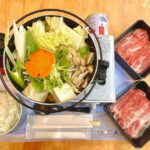
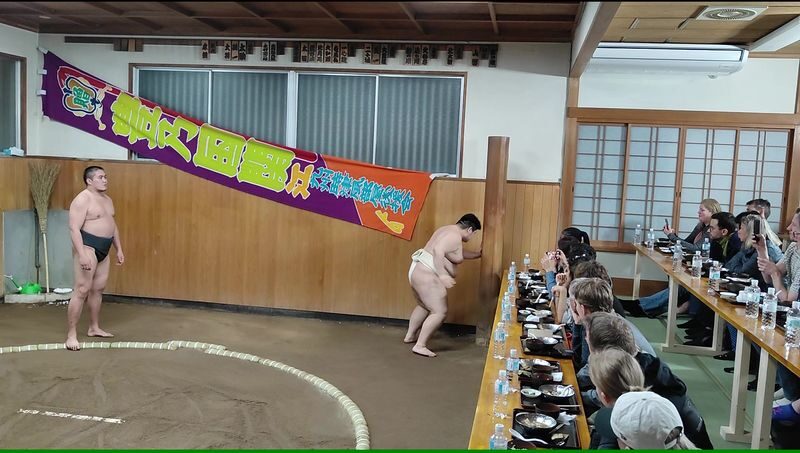
The meal is part of the event, not a separate restaurant stop. You watch the program over chanko nabe, the hot pot associated with sumo wrestlers’ efforts to build muscle and body mass. One account of the meal describes chicken hot pot with the option of second servings, so you may find it generous, but check the current package details if portion size is important to you.
Food adds a useful cultural layer. You are not only hearing about sumo from a guide; you are also trying a dish linked to the wrestlers’ daily lives. It makes the meal feel more relevant than a standard lunch break, and gives you time to keep watching and talking.
The experience is offered at 11:00 a.m. and 7:00 p.m. The daytime session returns at 1:00 p.m., while the evening session returns at 9:00 p.m. Since the meal is served during the show, the word lunch should not be taken to mean the 7:00 p.m. option is a daytime activity. If you have dietary needs, the supplied details do not specify substitutions or menu alternatives, so ask the provider before booking.




Is the two-hour visit good value?
The starting price is US$150.75 per person. That is a substantial price for a two-hour activity, but you are paying for several things in one sitting: a guided introduction, a close look at training and matches, the chance to speak with wrestlers and participate, and a meal.
I would see it as good value if you want an interactive cultural event and will take part in the challenge. The combination is the point. If you only want to watch sumo, an arena tournament or another show may suit you better, depending on what is available during your dates and what it costs. This package is most compelling when you are curious about the human scale and practice behind the sport, not just the spectacle.
The price applies to children aged four and older as well as adults. Children from birth through age three are free if they do not need a separate seat. That can make the experience easier to plan for families, although the hands-on challenge and two-hour format will suit some children better than others.
Timing, meeting point, and booking details
Choose either the 11:00 a.m. or 7:00 p.m. start when booking. The return is at the same place, with listed return times of 1:00 p.m. and 9:00 p.m., depending on your chosen session. The total duration is two hours.
Be at the stable 15 minutes before departure. The schedule can change because of traffic or weather, so avoid planning a tight connection immediately afterward. The voucher is valid only for the date and time shown, and you can present it on your phone.
The tour includes an English-speaking guide and English-speaking staff. Personal expenses and tips are not included. You can cancel for a full refund if you do so at least 24 hours before the activity date, using the destination’s local time.
Who should book this Tokyo sumo experience?
This is a strong choice if you want more than a seat and a show. It suits first-time visitors who want basic context, families with older children, and anyone curious enough to ask questions or volunteer. The combination of training, matches, food, and interaction makes the two hours feel varied.
It is less suitable if you want a full tournament, a quiet visit, or an inexpensive activity. The format is hosted and audience-facing, so expect an entertaining presentation rather than an unstructured look at a stable’s private daily routine. And if you dislike being called on to participate, you can still watch, but the hands-on element is a major part of the value.
Complete sumo experience in Tokyo
“the experercise was both entertaining and informative and the presenter and sumo's were fun and interesting”
FAQ
How long is the sumo experience?
The experience lasts two hours.
Where does the experience take place?
It takes place at Tokyo Sumo Beya, 2-chome-10-11 Kiyosumi, Koto City, Tokyo 135-0024, Japan.
What start times can I choose?
The listed start times are 11:00 a.m. and 7:00 p.m. Choose your preferred time when booking.
Where does the experience end?
It ends at the same location where it starts. Listed return times are 1:00 p.m. and 9:00 p.m., depending on your selected session.
Is the tour conducted in English?
Yes. The experience includes an English-speaking guide and English-speaking staff.
Is food included?
Yes. Chanko nabe is included and served while you watch the show.
Can I take part in a sumo challenge?
Yes. You can volunteer to challenge wrestlers, ask them questions, and take photos with them. Participation is optional.
What is the child price?
Children aged four and older pay the adult rate. Children aged zero to three are free if they do not occupy a separate seat.