Asakusa’s temple approach leads to a rather different sort of shopping street: Kappabashi Dougu Street, where shops supply restaurant kitchens and Japanese knives are a central draw. This morning tour pairs the famous sights around Sensoji with time to browse knife stores alongside a guide.
I like two things here: you get a guided introduction to Asakusa before shopping, and you can ask for candid, neutral advice while store clerks explain their products. Past guides have included Aki, Mari, Taka, and Yoko, with visitors praising their historical explanations and practical help choosing a reputable shop.
One consideration: the $81.99 starting price does not include meals, drinks, or personal purchases, so a knife will add to your budget. The tour is also not wheelchair-accessible, and its morning schedule leaves little room for a late start.
- At a glance
- From the Sumida River to Asakusa’s famous gate
- Nakamise-dori and the approach to Sensoji
- Asakusa Shrine and the meeting of traditions
- Kappabashi: choosing a knife with help
- What guide support can add
- Is .99 good value?
- Who should book this walk?
- FAQ
- How long is the tour?
- Where does the tour start?
- How early should I arrive?
- Where does the tour end?
- Is a kitchen knife included in the price?
- Is the tour wheelchair-accessible?
- Is there an age limit?
- What is included in the tour?
- The Best Of Tokyo!
- More Historical Tours in Tokyo
- More Tours in Tokyo
- More Tour Reviews in Tokyo
- Not for you? Here's more nearby things to do in Tokyo we have reviewed
At a glance

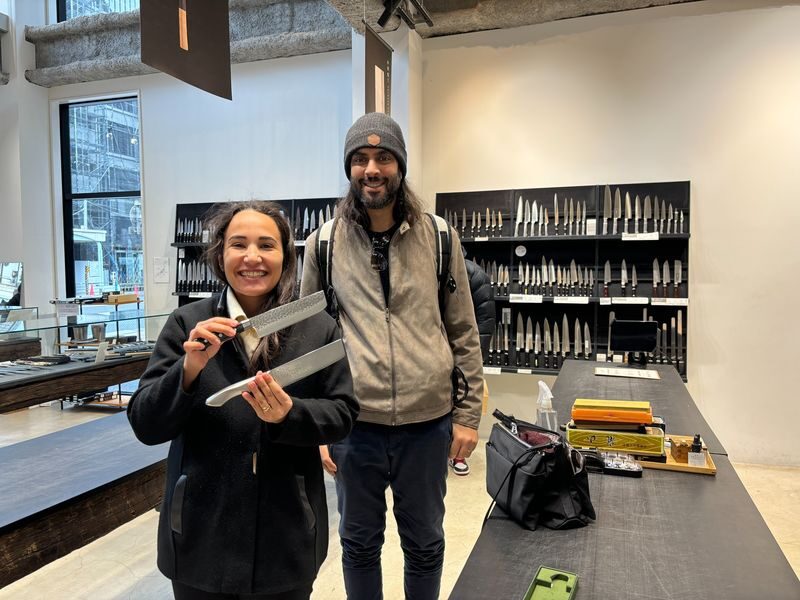
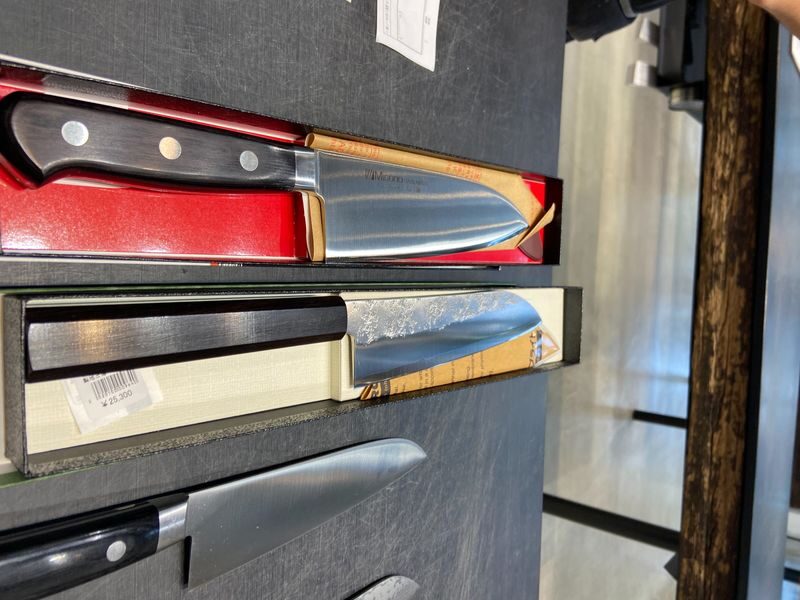
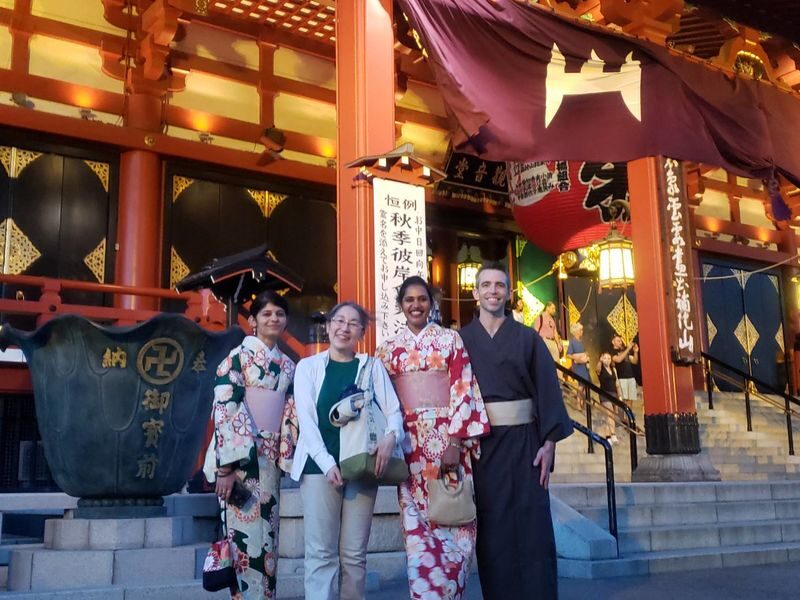
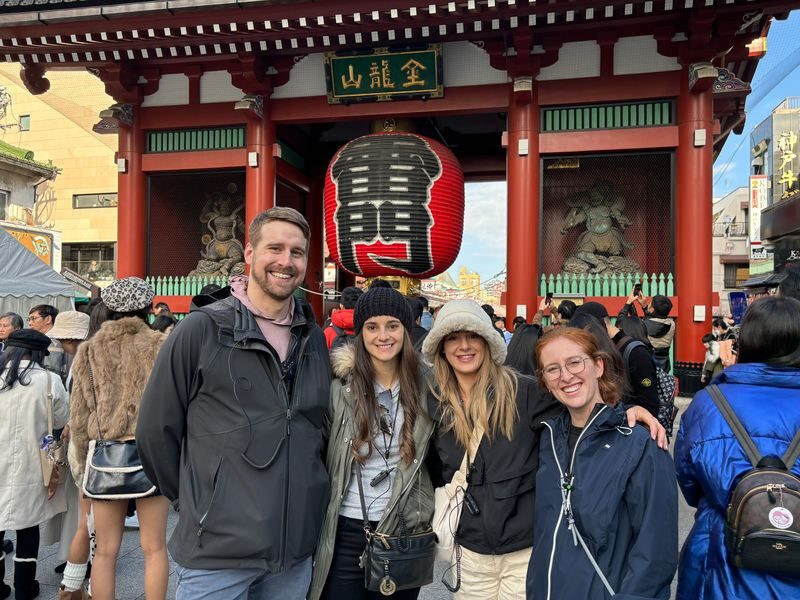
- The shopping comes after the sightseeing: The tour begins by the Sumida River and passes Asakusa’s best-known temple landmarks before reaching Kappabashi.
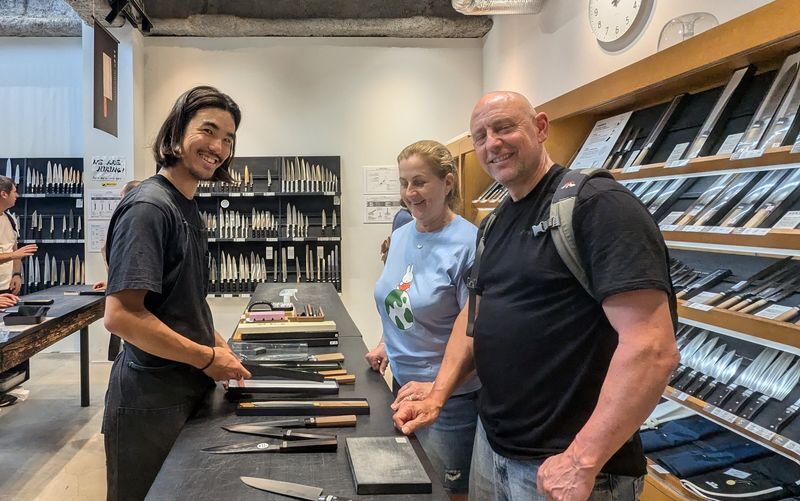
- Knife help is part of the point: Your guide can help you find suitable stores and offer a neutral perspective as you hear sales explanations.
- Kappabashi is a trade-focused street: Its shops sell supplies for restaurant operators, with kitchen knives among the main products.
- The guided walk takes about three hours and 15 minutes: It starts at 9:30 a.m. and ends on Kappabashi Dougu Street at about 12:45 p.m.
- Bring extra spending money: The tour price starts at $81.99, but food, drinks, and anything you buy are not included.

👉 See our pick of the 25 Best Guided Tours In Tokyo
From the Sumida River to Asakusa’s famous gate
The tour begins at 9:30 a.m. outside the Burger King beside Exit 4 of Asakusa Station on the Ginza Line. Arrive ten minutes early. The group first heads toward the Sumida River, a fitting place to begin because Asakusa’s story is tied to the river.
You have about 15 minutes there, with a guide introducing the area and its background. This opening sets up the history walk rather than treating the river as a photo stop on its own. If you’re eager to reach the knife shops, remember that the tour deliberately spends its first part on Asakusa.
From the river, the walk continues to the Asakusa Culture Tourist Information Center. The stop is planned for about 15 minutes. It’s useful to know this building as more than a place to pick up maps: it is also one of the area’s newer sightseeing attractions.
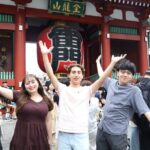
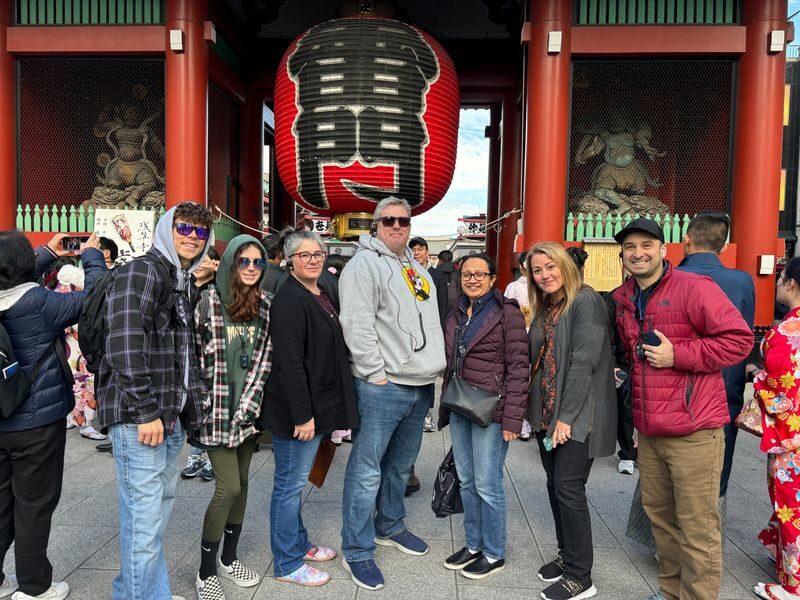
Next comes Kaminarimon, or Thunder Gate, the outer entrance gate on the approach to Sensoji. Its large red lantern and statues make it one of Asakusa’s familiar landmarks. The guide allows about 15 minutes to explain the site and its place in the route.
This is a popular spot, so expect to share it with other people visiting the temple district. A guide helps add context to a landmark you might otherwise simply photograph and pass through.
You can also read our reviews of more historical tours in Tokyo
Nakamise-dori and the approach to Sensoji
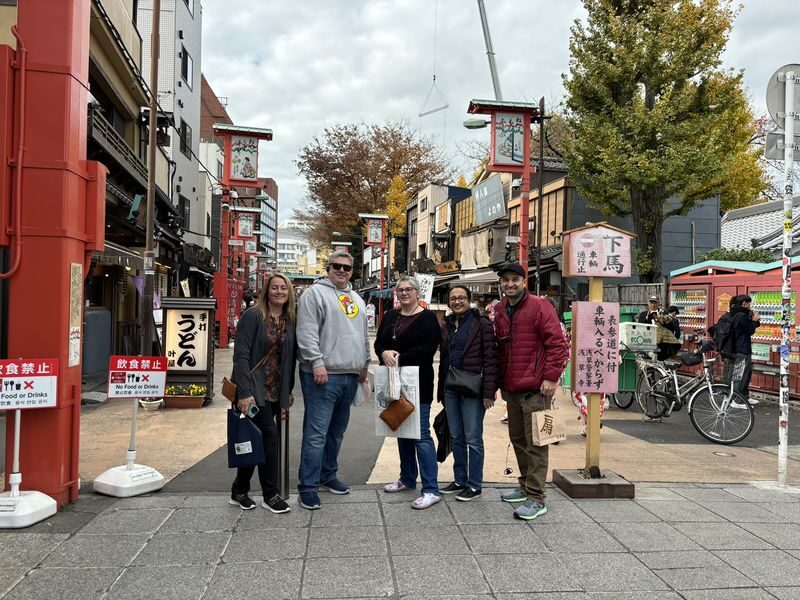
From Kaminarimon, the route follows Nakamise-dori for about 30 minutes. This 250-metre shopping street connects the outer gate with Sensoji’s main gate. Souvenir shops and food stalls line the approach, giving you a glimpse of the commercial side of a major temple precinct.
The guide-led pace is useful here. It gives you time to notice the street and hear explanations, while keeping the group moving toward the temple. If you want to browse every stall or buy snacks, keep in mind that the schedule is organized around the guided walk, not an open-ended shopping stop.
Hozomon, the Treasure-House Gate, is the inner of the two large gates leading toward Sensoji. The tour allows about 15 minutes there. Seeing it after Kaminarimon makes the temple approach easier to understand: the gates mark successive points along the route to the main hall.
The visit then continues to Sensoji’s main hall, with another 15 minutes scheduled. This is the climax of the history portion, and the guide recounts the site’s story. You’ll get more from the stop if you listen for the connections between the landmarks rather than treating each gate and building as a separate photo opportunity.
Asakusa Shrine and the meeting of traditions
The walk also includes Asakusa Shrine, with about 15 minutes for a guided visit. The temple and shrine share the same precinct and connections in their origins and worshipers. If the relationship between Buddhist and Shinto sites seems puzzling, this is where the guide can help explain it.
That short explanation is one of the tour’s strongest reasons to start with history before shopping. The route gives you a framework for understanding Asakusa as a place of religious practice and daily commerce, not just a row of famous sights.
The historical portion also helps make the later change of scene feel purposeful. You move from temple gates, a shopping approach, and sacred grounds to a street built around professional kitchen supplies. Both parts involve shopping and craft, but in very different settings.
Kappabashi: choosing a knife with help
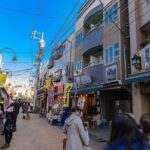
The final stop is Kappabashi Dougu Street, where the tour spends about 75 minutes. The street has dozens of shops selling equipment for restaurant operators, and kitchen knives are a mainstay. That concentration gives you a better chance of finding a knife that matches what you actually want than a random shop visit would.
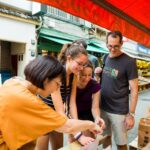
The practical advantage is guidance. You don’t need to research stores in advance or spend your limited time wandering without a plan. Your guide can point you toward relevant shops and offer a neutral view while sales clerks describe their products.
That distinction matters. A shop employee knows the items on sale, but you may want help sorting through the options and deciding which questions to ask. The tour is designed to provide that second perspective. It does not mean the guide will make the decision for you, and the knife itself is not included in the tour price.
The shop time is a meaningful part of the experience, not a quick stop tagged onto a temple tour. Still, 75 minutes is finite. If you already know exactly what you want, the guide can help you use the time efficiently; if you’re still exploring, you may need to focus on a few priorities.
The tour ends on Kappabashi, rather than returning you to the starting point. That gives you the option to continue browsing on your own or find a place to eat nearby, but those extra plans are up to you. Meals and drinks are not included.
What guide support can add
The guides’ role is the link between the two halves of the morning. On the history walk, they can point out details you might miss if you visit independently. At the shops, they can help you navigate the sales conversation and offer an outside perspective.
Guides who have led the experience include Aki, Mari, Taka, and Yoko. Their approach may vary, but the details shared about them point to useful qualities: clear explanations of local history and traditions, enthusiasm for the area, and assistance with choosing a knife. Taka has also offered dining and entertainment recommendations after the tour, while Aki helped a participant with a knife purchase.
Groups of three or more can use an earphone guide system to hear the guide clearly, even from a distance. This is a practical feature on a walk through popular streets, where people can naturally spread out. The activity includes an English-speaking guide, English-speaking staff, and the audio guide.
You can also read our reviews of more shopping tours in Tokyo




Is $81.99 good value?
At a starting price of $81.99, the main value is the combination of a guided Asakusa history walk and focused help with a purchase that can be difficult to research from afar. You’re paying for guidance and a planned route, not for a meal, a knife, or a hands-on knife-making activity.
The cost makes more sense if both parts interest you. If you only want to see Sensoji, you could visit the temple district without booking this experience. If you only want to shop for a knife, the guided Asakusa portion may feel like more time than you need. But if you want local context and help choosing where to shop, the combination is the point.
Set a separate budget for any purchase. The tour does not include personal expenses, and the knife price is not specified. The guide can help you shop, but you should still decide what you want to spend before you enter the stores.
The tour’s schedule runs from 9:30 a.m. to 12:45 p.m., though the order or timing may change with traffic and weather. It’s a compact morning, but the planned temple stops add up, so don’t expect to arrive at Kappabashi immediately after meeting the guide.
Who should book this walk?
This tour suits you if you have a real interest in Japanese kitchen knives and would also like an informed introduction to Asakusa. It is especially useful if you’re unsure which shops to visit or want someone to help you assess your options while you browse.
It also works for a first visit to the area. The guide connects the Sumida River, temple gates, Nakamise-dori, Sensoji, and Asakusa Shrine into one route, giving you more context than a quick, self-guided pass through the landmarks.
You may want to skip it if your priority is spending the whole morning shopping, if you prefer to explore the temples at your own pace, or if you need a wheelchair-accessible activity. There is no age limit, but the walk involves moving between several sights before the shopping stop.
Book this tour if the blend of local history and practical knife-shopping help is what you’re after. If you mainly want a knife-sharpening lesson or a knife-making workshop, look for a separate hands-on experience instead. This one is about seeing Asakusa with a guide, then shopping with better direction.
Asakusa: Japanese Kitchen Knife Store Visits After History Tour
“fun and educational experience going through Asakusa with our guide Aki. the end was the best when she helped me buy a Japanese knife.”
FAQ
How long is the tour?
It runs from 9:30 a.m. to about 12:45 p.m., or roughly three hours and 15 minutes. Timing may change depending on traffic and weather.
Where does the tour start?
Meet outside the Burger King next to Exit 4 of Asakusa Station on the Ginza Line. The address is Cross Bil Royal Palace, 2-chome-20-6 Kaminarimon, Taito City, Tokyo.
How early should I arrive?
Arrive ten minutes before the 9:30 a.m. departure. Late arrivals and no-shows are not eligible for a refund.
Where does the tour end?
It ends on Kappabashi Dougu Street. The tour does not return to the starting point.
Is a kitchen knife included in the price?
No. The starting price is $81.99, and personal purchases are not included. You will need to pay separately for any knife you choose.
Is the tour wheelchair-accessible?
No. The activity is not wheelchair-accessible.
Is there an age limit?
There is no age limit. Children aged 18 and over are charged the same rate as adults.
What is included in the tour?
The tour includes an English-speaking guide, English-speaking staff, and an audio guide. Meals, beverages, and other personal expenses are not included.