Broken pottery gets a second life here, not as a repaired teacup but as a small piece of wearable or decorative art. In this Kintsugi-inspired workshop, you learn why a visible repair can become part of an object’s beauty, then make something personal from ceramic fragments.
I like two things in particular: the small group, capped at six, gives you room to work at your own pace, and the one-hour format makes this an easy cultural break in a busy Tokyo day. The location is five minutes from Shibuya Station, so getting there need not become its own expedition.
One point to keep in mind: this is accessory-making, not a full restoration course for repairing a favorite broken bowl. The materials include specialized resins, and your finished piece may be a magnet, ring, or another small item rather than functional pottery.
Key points
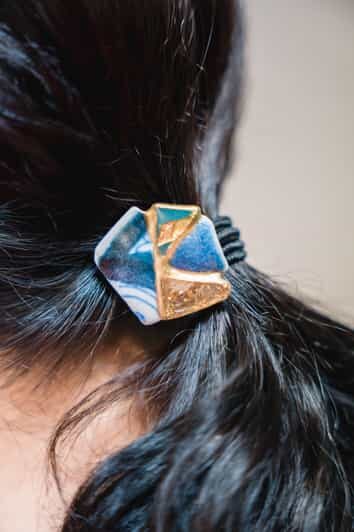
- Make a keepsake from ceramic fragments: Choose a small accessory or decorative project, with options reported to include magnets, rings, hair ties, and chopstick rests.
- Learn the idea behind Kintsugi: The workshop introduces the practice of treating an object’s history, including its breaks, as something worth showing.
- Get close guidance: Groups are limited to six, and instructors guide you through each step in English or Japanese.
- Keep the pace calm: The one-hour session offers a quieter, hands-on pause from Shibuya’s fast-moving streets.
- Take your work home: Materials and a ceramic piece are included, and the finished item comes in a protective box.
- Check the fit before booking: The activity costs $22 per person, but it is not suitable for wheelchair users.

👉 See our pick of the 25 Best Guided Tours In Tokyo
- Key points
- A small craft in the middle of Shibuya
- Kintsugi’s idea, made tangible
- Choosing your ceramic pieces
- Joining the pieces with gold
- A calm hour, with room to talk
- What you take home, and what it means
- Is good value for an hour?
- Who will enjoy this workshop most?
- Should you book it?
- FAQ
- How long does the workshop last?
- How much does it cost?
- Where is the workshop?
- What languages are available?
- What is included in the price?
- Is the workshop suitable for wheelchair users?
- The Best Of Tokyo!
- More Workshops & Classes in Tokyo
- More Tours in Tokyo
- More Tour Reviews in Tokyo
- Not for you? Here's more nearby things to do in Tokyo we have reviewed
A small craft in the middle of Shibuya
 1 / 8
 2 / 8
 3 / 8
 4 / 8
 5 / 8
 6 / 8
 7 / 8
 8 / 8
Shibuya is known for movement: station crowds, busy crossings, and shops competing for your attention. This workshop offers a useful contrast. You sit down, choose ceramic pieces, and focus on joining them into something new. The session lasts one hour, so it can fit between sightseeing plans without demanding half a day.
The location is five minutes from Shibuya Station, a practical advantage if your Tokyo schedule is tight. Allow yourself a little extra time to find the venue, since the available details give the distance from the station but not a street address or meeting-point description.
The class is run by GET AROUND JAPAN. Instructors speak English and Japanese, and the small-group limit means the session should feel more like a guided craft class than a large demonstration. Some sessions may have only a few participants. That can leave more room for questions and conversation, though the group size on your date may vary.
You can also read our reviews of more tours and experiences in Tokyo


Kintsugi’s idea, made tangible
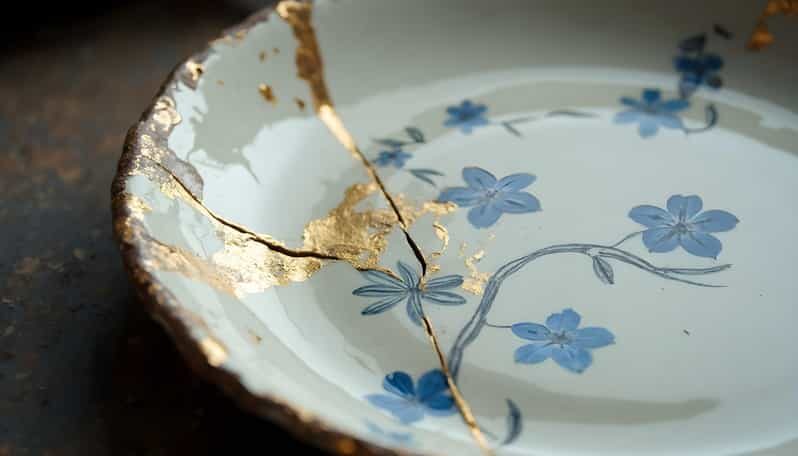
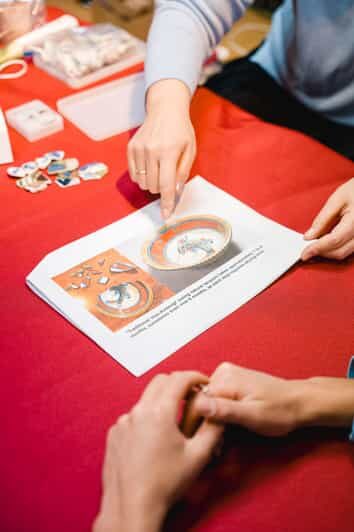
Kintsugi is often described as golden repair: instead of hiding a break, you draw attention to it with gold-colored material. The philosophy at the heart of the workshop is simple and appealing. An object’s history is part of its value, and a repair does not have to pretend the break never happened.
That idea gives the activity more meaning than a standard souvenir-making session. You are not simply decorating a ready-made trinket. You work with broken ceramic fragments and make their joins visible, creating a small object whose finished pattern depends on the pieces you select and how you arrange them.
It is worth being precise about what you will learn. The workshop uses specialized resins and gold powder, and its focus is on making accessories and small decorative items. It is a practical introduction to Kintsugi’s philosophy and a hands-on version of golden repair, but the description does not promise training in traditional, long-form restoration methods for valuable pottery. If your goal is to repair a family heirloom or master a specialist ceramic technique, this short class is not that course.
Choosing your ceramic pieces
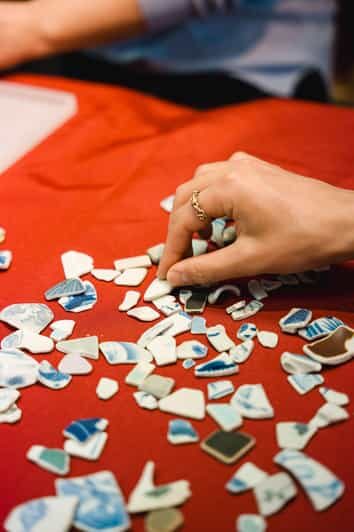
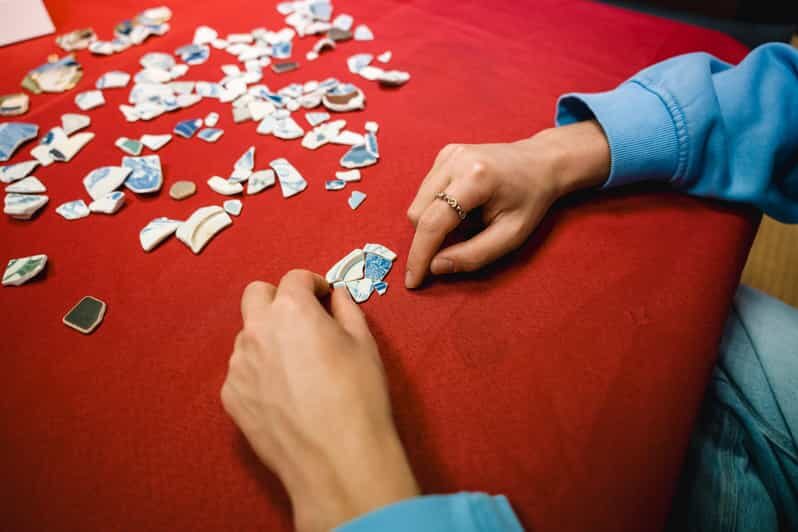
Once the session begins, you can expect an introduction to Kintsugi and the meaning behind the craft, followed by a choice of ceramic fragments and a project. Different sessions have offered items such as magnets, rings, hair ties, and chopstick rests. The exact options may vary, so treat those as examples rather than a guaranteed menu.
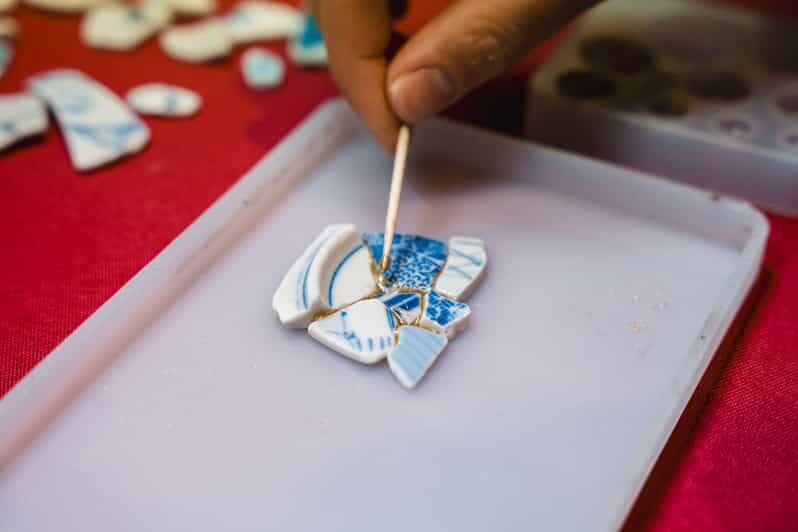
Some participants have worked with pieces described as sea pottery collected from beaches; others have used fragments from tea pottery. That gives the material a second layer of character. You are choosing not only a shape and color, but also pieces that already have a past before you join them.
This stage is a good place to take your time. A fragment that looks promising on its own may fit differently once paired with another. The instructor can help you think through the arrangement and check that the work is holding together. The creative freedom is part of the appeal, though it also means your final result depends on your choices and the care you put into assembly.
Joining the pieces with gold
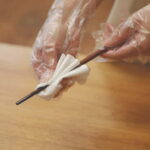
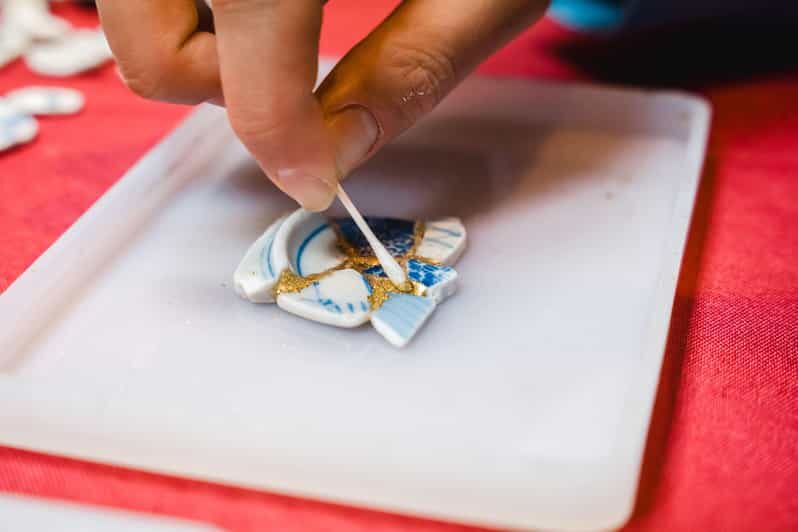
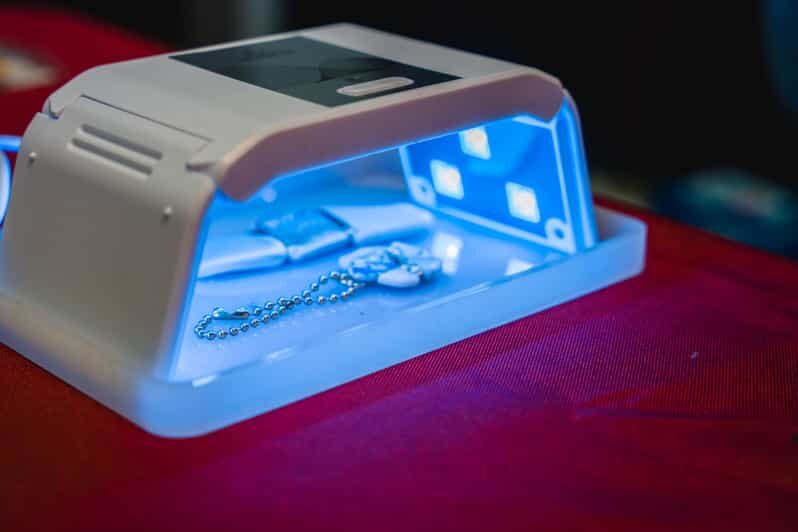
The central task is to bond the ceramic fragments and finish the join with gold-colored powder. The materials are provided, so you do not need to bring pottery or specialist tools. Instructors explain the process and guide you through the steps, with English-language help available.
Do not expect the work to be entirely effortless. Some people find the project trickier than they first imagined, especially when arranging small pieces and getting the result neat. That is not a flaw so much as the point of a hands-on class: you are doing the making, not watching someone else do it for you.
The class is described as suitable for beginners, and the instructor’s guidance helps keep the task manageable. The small-group cap is valuable here. A teacher can look over your work and offer help as you go, rather than leaving you to guess whether the pieces are aligned or secure. Still, one hour is a compact introduction, not a long studio course with time for repeated practice.
More Great Tours NearbyA calm hour, with room to talk
The mood is one of the workshop’s strongest features. The activity is often described as relaxed, therapeutic, and easy to settle into. That matters in Shibuya, where it can be pleasant to trade street noise for a table, a few materials, and one task that asks for your attention.
The class can also be social without being demanding. Instructors named in past sessions include Casey, Sho, Jay, Atsu, Ken, Miyo, and Kumiko, though your instructor will depend on the session. Their approach is described as patient and friendly, with clear explanations in English. Some participants have enjoyed conversation about Japanese culture alongside the craft, but the focus remains the making.
This could work well for a couple, friends, or a parent and child looking for something more hands-on than another round of shopping. It has also suited people taking a solo class. If you happen to be the only participant, the session may feel close to a private lesson, but that is not something you can count on when booking.






What you take home, and what it means
At the end, you leave with your handmade piece in a protective box. That is a useful detail if you still have a day of sightseeing ahead. A small magnet or accessory is easier to pack than pottery, and it carries a direct memory of the time you spent making it.
I like this kind of souvenir because the finished object is not just a symbol of Japan bought from a shelf. You had a hand in choosing its fragments and joining them. Its visible seams also make the Kintsugi idea easy to remember: a repair can become part of an object’s story rather than something to disguise.
Keep expectations grounded. The result is a small crafted item, and each person’s finish will differ. The workshop provides the materials and guidance, but it does not promise that every piece will look identical or professionally manufactured. That personal variation is part of what makes the object yours.
Is $22 good value for an hour?
At $22 per person, the price covers a one-hour guided session, all materials, and a ceramic piece to work with. You do not need to source supplies or bring an object from home. For a low-cost, indoor activity that also gives you a take-home keepsake, the price is reasonable.
The value depends on what you want from the experience. If you are looking for a deep technical course or a repair service for your own pottery, this is not the right purchase. If you want a short introduction to Kintsugi’s ideas, a creative activity, and a small souvenir you made yourself, the combination is stronger than the brief duration might suggest.
Food and drink are not included, so plan to eat before or after if you need a meal. The activity’s short length makes it easy to pair with other Shibuya plans, but it is best viewed as a focused cultural interlude rather than a full-day experience.
Who will enjoy this workshop most?
This is a good fit if you like crafts, want a cultural activity with a clear take-home result, or need a quieter indoor option in Tokyo. It can also work for families: participants have enjoyed making pieces with children and teenagers, and the instructions are intended to help complete beginners. A child will need to be comfortable following a small, careful task.
It may be less satisfying if you want extensive instruction in traditional pottery repair, a large finished object, or a class that runs for several hours. The session is brief and the projects are small. It is also not suitable for wheelchair users, an important practical limit to consider before booking.
Booking is flexible: you can reserve without paying immediately, and cancellation up to 24 hours ahead is eligible for a full refund. Starting times depend on availability. Those options help if you are still arranging your Tokyo days, but do check the specific session time and venue details before setting off.
Should you book it?
Book this if you want a calm, affordable hour near Shibuya Station and like the idea of making a small object with a story behind it. The strongest reasons are the hands-on work, attentive instruction, small group, and thoughtful take-home piece. At $22, it offers a clear return for a short activity.
Skip it if you expect a full traditional Kintsugi course or need an accessible venue for a wheelchair user. For everyone else, it is a practical way to spend an hour with your hands rather than your phone, and to leave Shibuya with a souvenir that carries your own choices in its seams.
Tokyo: Kintsugi Accessory Making Workshop in Shibuya
FAQ
How long does the workshop last?
The workshop lasts one hour.
How much does it cost?
The listed price is $22 per person.
Where is the workshop?
It is in Shibuya, about five minutes from Shibuya Station.
What languages are available?
The instructor speaks English or Japanese. Bilingual instructors are available.
What is included in the price?
All materials and a ceramic piece to repair are included. Food and drink are not included.
Is the workshop suitable for wheelchair users?
No. The activity is listed as unsuitable for wheelchair users.
You can check availability for your dates here: