
Fish Amok and Lok Lak are more than names to tick off a menu. In this three-hour class, you head to a local market with Khmer cooks, source fresh ingredients, then prepare Cambodian dishes at a family-run cooking school. The small class size, capped at eight, gives the experience a more personal feel than a big group demonstration.
I like two things in particular: you learn how locals choose ingredients, not just how to follow a recipe, and you sit down to eat what you have cooked with the rest of the class. Recipes and a certificate give you something useful to take home, too.
There is a practical caution. The specific class has a 1/5 rating based on one rating, which describes delayed replies followed by a last-minute cancellation. The provider has a 96% good-review rate across 2,714 ratings, but that broader record does not erase the warning. Also, the location details conflict: the experience is in Siem Reap, Cambodia, while the summary names Bragança District, Portugal. Confirm the pickup and venue with the operator before setting out.
- The essentials at a glance
- Start at the market, where ingredients become part of the lesson
- Cooking Fish Amok, Lok Lak, and whatever is in season
- Sit down to eat what you have made
- Three hours, with hotel transfers included
- Is .15 good value?
- A small-group idea with a real reliability question
- Who will get the most from this class?
- Should you book the Siem Reap Cooking Class?
- FAQ
- How long does the Siem Reap cooking class last?
- What dishes might I learn to cook?
- Is a market visit included?
- How many people can join the class?
- Are hotel transfers included?
- What departure times are available?
- What do I receive after the class?
The essentials at a glance
 1 / 3
 2 / 3
 3 / 3
- Small class, maximum eight students: A limited group can make it easier to follow the cooking and ask questions.
- Market visit before the stove: You go with local cooks to source fresh ingredients and hear how to buy them.
- Cambodian dishes on the menu: Fish Amok and Lok Lak are highlighted, though the menu may change with the season and ingredient supply.
- Three hours, with transfers included: Round-trip transport is part of the experience, and pickup is arranged from your hotel or personal address.
- A meal and take-home materials: Eat the dishes with your classmates, and leave with recipes and a certificate.
- Check the location carefully: The activity is described as being in Krong Siem Reap, but the summary also names a district in Portugal.
Start at the market, where ingredients become part of the lesson
The class begins with a trip to a local market to source fresh ingredients. That first stop is not just a prelude to cooking. It gives you a chance to see the produce and buying choices that shape Khmer food, with local guidance on how to select ingredients.
The details of the market visit are not specified, so expect a practical introduction rather than a promised tour of particular stalls or a set list of ingredients. The market is described as bustling, and the guide is there to share tips on buying fresh goods. If you are curious about how a dish starts before it reaches the kitchen, this is likely the part that adds the most local context.
The market also helps explain why the menu can change. Ingredient availability varies by season, so the dishes you make may not be identical on every date. Fish Amok and Lok Lak are named as examples, but neither should be treated as a guaranteed menu item. If one dish is the main reason you want to book, ask about the current menu before paying.
Cooking Fish Amok, Lok Lak, and whatever is in season
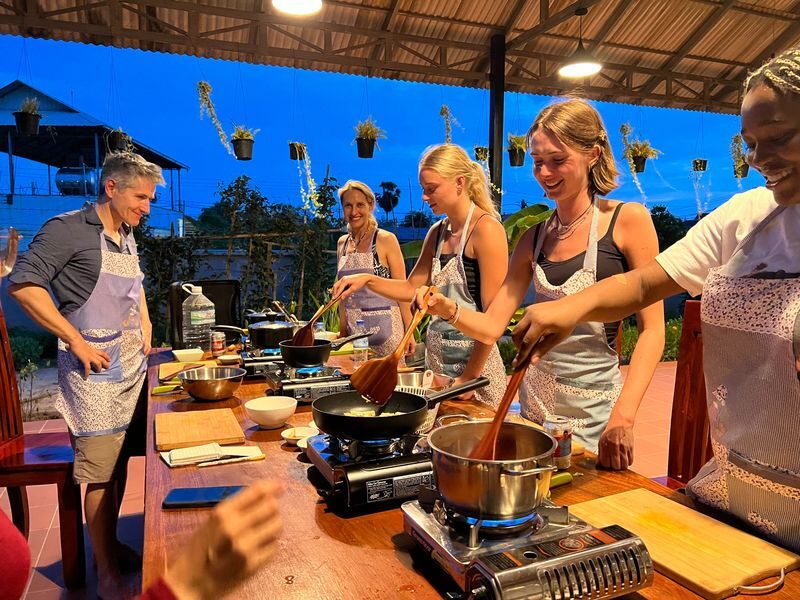
After shopping, you head to a family-run cooking school and cook with experienced Khmer chefs. The experience is hands-on, not simply a demonstration: the stated aim is for you to learn how to prepare Cambodian meals yourself. The exact recipes and cooking tasks are not detailed, so it is best to arrive ready to follow the chef’s instruction rather than expecting a fixed lesson plan.
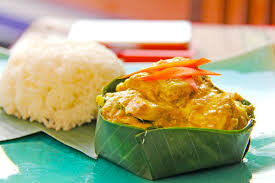
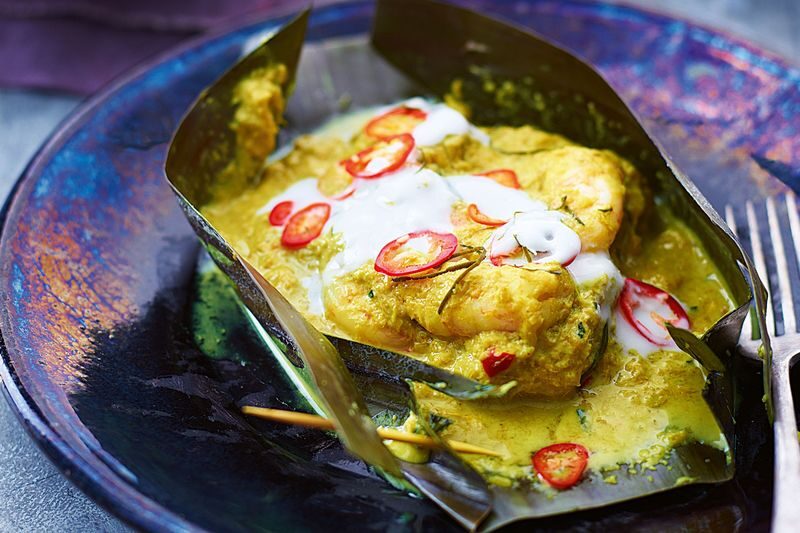
Fish Amok and Lok Lak are useful reference points when judging whether the class fits your interests. They offer a taste of Cambodian cuisine that may be less familiar than the food served at many restaurants abroad. The class presents them as local delicacies, but the seasonal menu caveat matters. A changing menu can be a plus if you value cooking with what is available, and a drawback if you have your heart set on one particular dish.
You will be cooking in a group of no more than eight students. That is small enough to make questions and close attention more plausible than in a large class, though it does not guarantee one-on-one instruction. The class is led by Khmer chefs, with an English-speaking guide included. No chef names are provided, so you cannot request a particular instructor in advance.
The school is described as family-run. That makes the experience feel more rooted in local food culture than a generic cooking demonstration, while keeping expectations grounded: the details provided do not specify the school’s history, cooking equipment, or the exact number of dishes. What is clear is the basic sequence: shop, cook, eat together.
Sit down to eat what you have made
At the end of the cooking session, everyone sits down to try the dishes together. That shared meal is a satisfying close to a short class, and it gives you time to taste the results rather than simply rush through the final steps and leave.
The meal is part of the cooking experience, not an add-on listed among exclusions. Still, the available details do not say how many dishes are served, how portions are arranged, or whether dietary needs can be accommodated. If you have allergies or other food requirements, ask the operator before booking rather than assuming the menu can be adjusted.
You also receive recipes and a unique certificate to take home. The recipes are the more practical souvenir: they give you a way to revisit the meal later, though the supplied information does not describe the format or level of detail. The certificate marks the completion of the class, a lighthearted memento of your time at the school.
Three hours, with hotel transfers included
The experience lasts three hours and includes round-trip transfers. You provide your hotel name and address when booking, and the operator confirms the pickup time in advance. This is convenient in a city where you may not know the venue or the easiest way to reach it, and it means you do not have to arrange separate transport for the market and school.
The pickup choices listed are 09:00, 12:30, and 15:30. The exact pickup time is confirmed after booking, and schedules may change because of traffic or weather. The description does not say how the three hours are divided between transport, market shopping, and cooking, so do not assume that the full three hours are spent at the stove.
The venue address is given as 8RJR+W9F, Unnamed Road, Krong Siem Reap. But the summary also labels the location as Bragança District, Portugal, which plainly conflicts with the Cambodian address and the Siem Reap focus. Treat the Siem Reap details as the intended destination, but confirm the venue and pickup directly with the operator before your class. Do not plan around the Portugal label without clarification.
Is $28.15 good value?
The starting price is US$28.15. For that amount, the package includes an English-speaking guide, round-trip transfers, the cooking experience, the meal, recipes, and a certificate. The market visit adds a useful layer: you are not only paying to prepare food, but also to learn something about choosing its ingredients.
That is a fair-looking package for a three-hour activity, particularly if transport would otherwise take extra time and money. But value depends on what you want from the class. If you are chiefly looking for a long, highly technical cooking lesson, the short duration and unspecified recipe details may leave questions. If you want an approachable introduction that links market shopping, cooking, and a shared meal, the format makes sense.
The price is listed as a starting rate, so check the amount for your chosen date and package at checkout. Personal expenses and tips are not included. The class information does not say that tips are required, only that they are outside the package.
A small-group idea with a real reliability question
The class has a promising format, but the cancellation account deserves attention. One booking was reportedly affected by unanswered inquiries the day before, followed by a cancellation shortly before the start time. That is a serious inconvenience, especially if you have planned your day around a timed pickup.
The specific class currently has a 1/5 score from one rating, while the provider’s broader record is listed as a 96% good-review rate across 2,714 ratings. Those figures point in different directions: the operator’s overall record is strong, but the class-specific warning is difficult to dismiss. With only one rating for this experience, neither number tells the whole story.
I would confirm the pickup time and that the class is operating before leaving your hotel, especially if you have a tight schedule. The booking terms allow changes up to 24 hours before the activity in many cases, but some booking types cannot be changed, and the voucher is valid only on the date and time shown. Cancellation at least 24 hours before the activity is eligible for a full refund. If the operator cancels because of extreme weather or another unforeseen event, you may reschedule or request a full refund.
Who will get the most from this class?
This is a good fit if you enjoy learning through food and want more than a restaurant meal. The market visit gives you a look at ingredient buying, while the school session lets you take part in preparing Cambodian dishes. It should also suit couples, friends, and solo visitors who like meeting a small group over a shared meal.
It may be less suitable if you need a guaranteed dish, have food requirements that have not been confirmed, or cannot tolerate last-minute changes to your plans. The menu is seasonal, the schedule can shift with traffic and weather, and there is a specific account of a last-minute cancellation. Those are manageable uncertainties for some people, but not for everyone.
Families are not specifically described, and no minimum age or child policy is provided. If you are considering the class with children, ask the operator directly rather than assuming the small-group format is designed for them.
Should you book the Siem Reap Cooking Class?
Book it if you want a compact introduction to Khmer cooking that combines market shopping, hands-on preparation, and a meal with a small group. The price includes transport and take-home recipes, and the local buying tips could be just as useful as the cooking itself.
I would pause if dependable communication is essential, or if your schedule has no room for a change. Before booking, confirm the Siem Reap location, ask which dishes are planned for your date, and check that your pickup is confirmed. If those details line up, the class offers a practical way to connect Cambodian food with the place it comes from. If the operator cannot confirm them, choose an activity with firmer arrangements.
FAQ
How long does the Siem Reap cooking class last?
The experience lasts three hours.
What dishes might I learn to cook?
Fish Amok and Lok Lak are highlighted examples. The menu may change depending on the season and ingredient availability.
Is a market visit included?
Yes. The class includes a visit to a local market to source fresh ingredients, with guidance on buying them.
How many people can join the class?
The cooking center can accommodate up to eight students per class.
Are hotel transfers included?
Yes. Round-trip transfers are included. You provide your hotel name and address at checkout, and the operator confirms your pickup time in advance.
What departure times are available?
The listed choices are 09:00, 12:30, and 15:30. Your pickup time is confirmed after booking, and schedules may change because of traffic or weather.
What do I receive after the class?
You eat the dishes with the group and receive recipes and a unique certificate to take home.