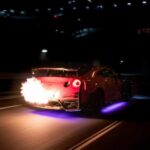
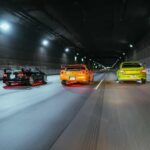
Tokyo’s car culture comes into focus on the road to Daikoku PA, where sports cars gather in a highway parking area across the bay. This 3.5-hour night outing pairs the drive in a Japanese sports car with time to look around the meet, cross Rainbow Bridge and pause for Tokyo Tower photos.
I like two things in particular: the route makes the drive itself part of the experience, rather than treating the car meet as the only event; and the small group size, capped at eight, gives the evening a more personal feel. Drivers such as Fernando, Sanjula, Kalpa and Manitha have been praised for helping with photos and keeping the group at ease.
One thing to check before booking is the departure session. A-PIT Super Autobacs is not included on Friday or certain evening departures, and the car meet is informal, so there’s no guarantee of a particular car lineup. The tour does not include drifting or street racing.
Key points
- Ride in a Japanese sports car: The experience uses JDM cars, often a Skyline R34, but the specific car may vary.
- Cross Tokyo Bay after dark: The drive includes the Bayshore Route and Rainbow Bridge.
- Spend about 50 minutes at Daikoku PA: Walk around the car meet, take photos and see what has gathered that night.
- Check the A-PIT schedule: The 30-minute shop visit is omitted on Friday and some evening sessions.
- Finish with Tokyo Tower: There are brief photo stops in the Minato area.
- Plan for a shared ride: The group limit is eight, but passengers may share a car or travel in a convoy.
👉 See our pick of the 25 Best Guided Tours In Tokyo
- Key points
- The draw is the drive, not just the car meet
- Higashi-ginza is the meeting point
- A-PIT offers a different kind of car stop
- The bay drive is part of the experience
- Daikoku PA is the main event
- Tokyo Tower gives the night a city-side finish
- Is 0 good value?
- Who should book this night drive?
- FAQ
- How long is the tour?
- Where does the tour start and end?
- Which car will I ride in?
- Is A-PIT Super Autobacs included?
- How long do we spend at Daikoku PA?
- Does the tour include drifting or street racing?
- What is included in the price?
- The Best Of Tokyo!
- More Evening Experiences in Tokyo
- More Tours in Tokyo
- More Tour Reviews in Tokyo
- Not for you? Here's more nearby things to do in Tokyo we have reviewed
The draw is the drive, not just the car meet
 1 / 8
 2 / 8
 3 / 8
 4 / 8
 5 / 8
 6 / 8
 7 / 8
 8 / 8
This tour is for people who want to see Tokyo’s JDM scene from the road and then get close to it at Daikoku Parking Area. You meet near Higashi-ginza Station and ride in a Japanese sports car, not a van. The route takes you out through Tokyo Bay, with Rainbow Bridge and the Bayshore Route adding the sort of city-at-night views that make the journey feel like a main event.
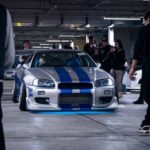
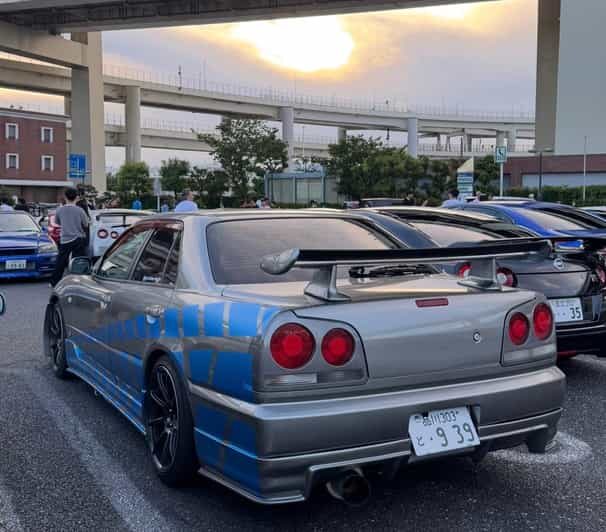
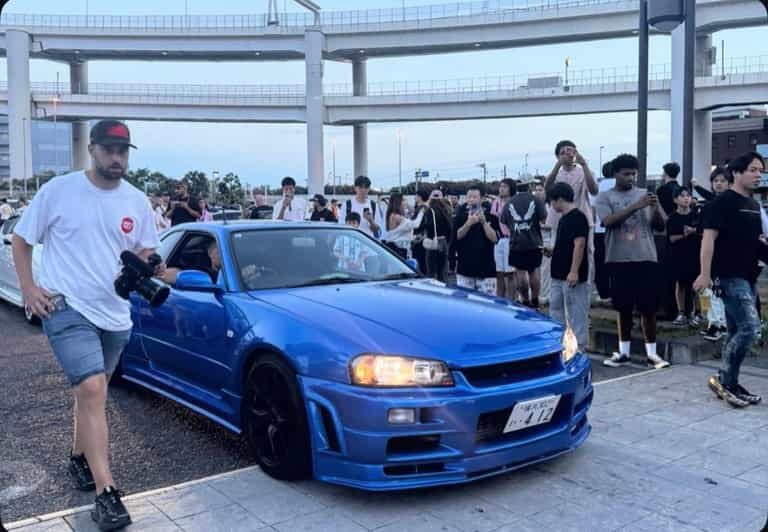
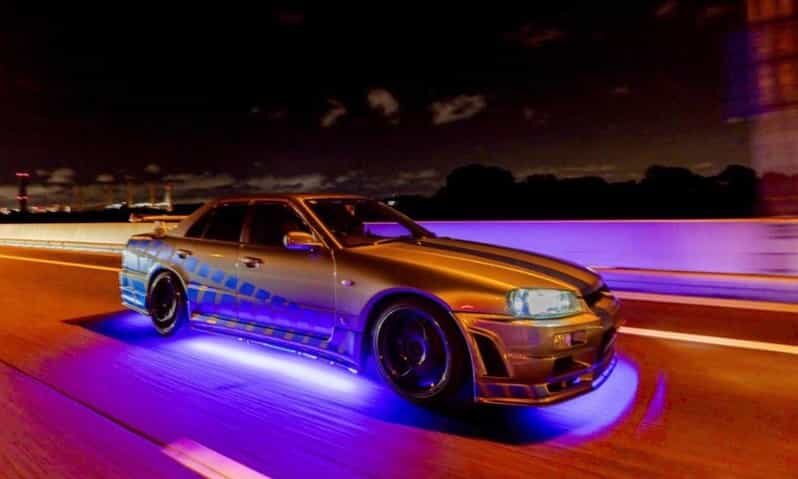
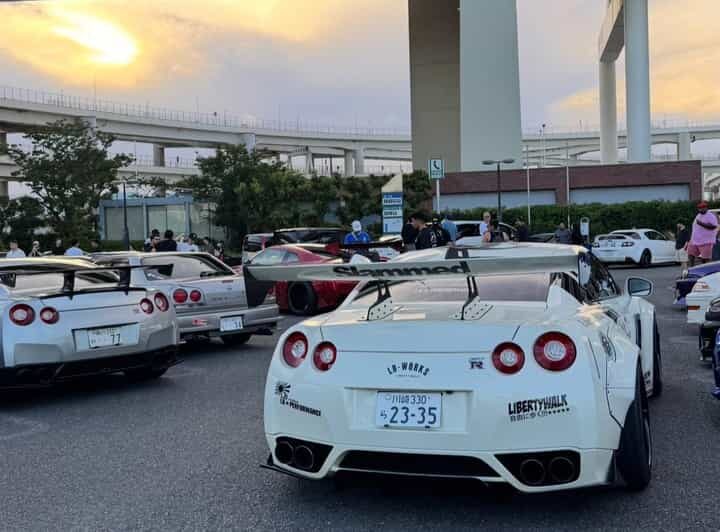
The cars are a big part of the appeal. The operator says it uses Japanese JDM sports cars and names the Skyline R34 as a regular choice. Other cars have been used, including different Skyline generations and Mitsubishi Evos. A Liberty Walk GTR35 is described as a different class, so don’t assume it is the car you will ride in. If you have your heart set on a specific model, ask before booking.
The drive is not a street-racing show. There is no drifting or illegal racing. Think spirited sightseeing in a sports car, followed by a visit to a public car meet. The tour’s appeal comes from the machines, the highway scenery and the chance to see a genuine slice of car culture, not from stunts.
You can also read our reviews of more evening experiences in Tokyo
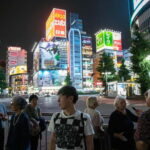
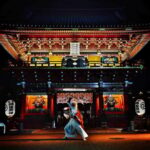
Higashi-ginza is the meeting point
The stated meeting point is Higashi-ginza Station, written in the tour details as 東銀座駅. From there, you head out by car. The advertised duration is 3.5 hours, and that total includes travel time, so the stops are short by design.
The group is limited to eight participants, but that does not mean everyone has a separate car. This is a car-share experience, and you may ride with other passengers and travel in a convoy with other cars. One family of four found the car tight when sharing with another couple and the driver. If personal space matters, or you are a larger group, ask how passengers are allocated before you reserve.
The tour is offered with English- and Japanese-speaking guides. Individual drivers vary, but names that have come up include Fernando, Sanjula, Kalpa, Manitha, Nilan and Buddhi. Practical touches have included helping passengers take photos and explaining what they are seeing. The quality of the evening depends in part on the guide, so clear communication before the tour is useful.
A-PIT offers a different kind of car stop
When included, A-PIT Super Autobacs is a 30-minute stop at a well-known Tokyo car-parts shop. It gives you a look at the retail side of Japan’s tuning culture, and there may be time to browse or buy merchandise. If you are keen on accessories and car gear, this is a worthwhile extra. If you care more about the night drive and the meet, it may be the least memorable stop.
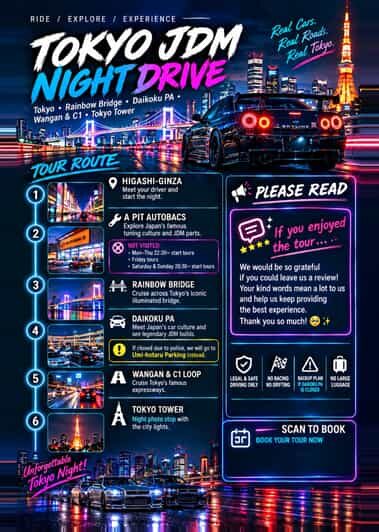
The schedule is not the same for every departure. The tour information says A-PIT is skipped on Fridays and on certain evening sessions, including departures listed at 21:00 or 22:30 in different parts of the details. Because the start times are not presented consistently, check the exact session before booking rather than assuming the shop is included.
That distinction also affects how you plan the evening. A session without A-PIT leaves more emphasis on the drive, Daikoku and the city views. If browsing the shop is a priority, confirm that your chosen departure includes it.
The bay drive is part of the experience
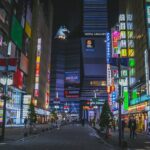
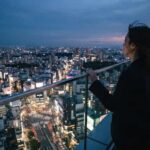
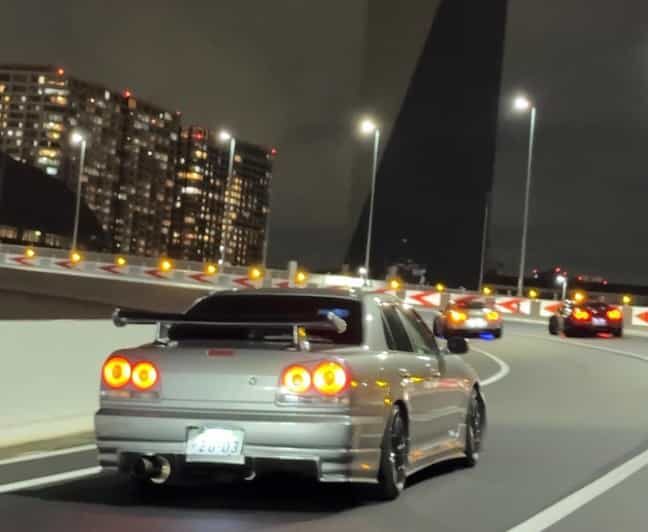
From the city, the route heads through Tokyo Bay and along the Bayshore Route, with a crossing of Rainbow Bridge. The exact order of the photo stops can vary, but the experience is built around seeing the city from the road as well as reaching Daikoku.
The bridge and highway sections matter because Daikoku is not a simple central-Tokyo walk-in attraction. The tour provides the ride to the parking area and turns the journey into a car-culture outing in its own right. Some groups travel together in a convoy, which can make the cars feel like part of the scene rather than just transport.
Keep expectations grounded: this is not a high-speed performance package, and the operator explicitly rules out drifting and street racing. You are there to enjoy a JDM car and the route within the bounds of a guided tour. If you are booking mainly for a dramatic driving stunt, this is the wrong fit.
More Great Tours NearbyDaikoku PA is the main event
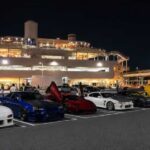
Daikoku Parking Area is the heart of the evening. You get about 50 minutes there to walk around and look at the cars. The mix changes from night to night. You may see Skylines and other modified Japanese cars, but the gathering is informal, so no particular model or turnout can be promised.
That uncertainty is part of the deal. Daikoku is a real meeting place, not a staged display with a fixed roster. The number and type of cars can change with the day, weather and whether people have gathered. Rain does not necessarily mean an empty lot, but it can make the visit less comfortable and less photogenic.
The operator says that if Daikoku PA is closed or there is no gathering, the tour switches to a prepared backup plan. That is a sensible safeguard, though it cannot make the night identical to a busy meet. Photos used to show the experience are general images of car culture; individual vehicles are not promised as part of the tour.
You have time to look, take pictures and enjoy the atmosphere, but not to linger indefinitely. If you are a serious car enthusiast, 50 minutes may pass quickly. If you are new to JDM culture, the guide and the variety of cars make the stop approachable without requiring you to know every model name.


Tokyo Tower gives the night a city-side finish
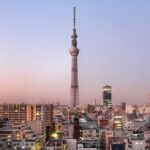
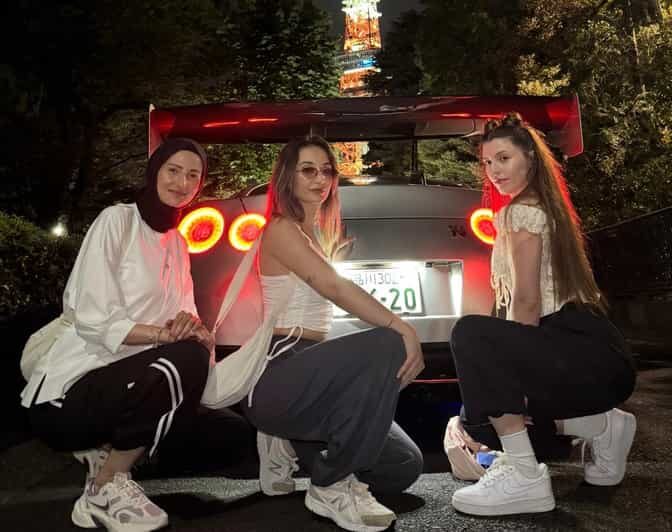
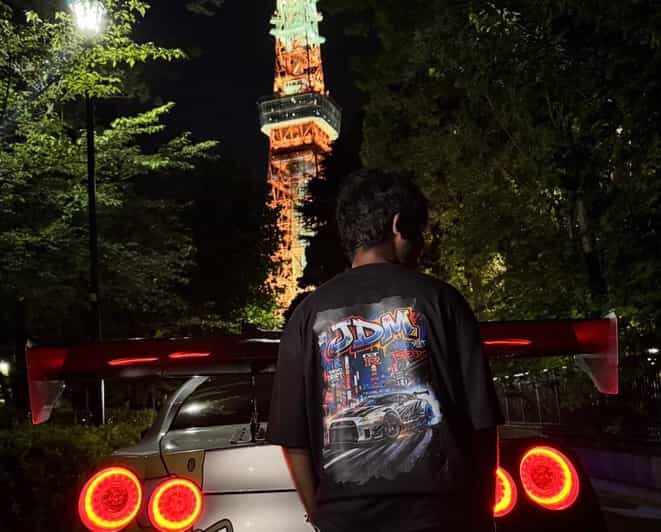
The route also includes short stops in Minato City and a Tokyo Tower photo stop, each listed at about 10 minutes. The aim is a quick chance to frame the tower behind the cars or your group, not a full visit to the tower itself. Bring your camera ready, since the time is brief.
There is also a listed Rainbow Bridge stop of about 10 minutes, though the tour’s broader description emphasizes driving across the bridge. Treat these as short scenic pauses rather than long sightseeing visits. You will get a taste of the city’s night views, not an extended tour of Tokyo landmarks.
The standard return point is Higashi-ginza Station. For the session starting at 22:30, the operator says it can provide transport back to hotels within Tokyo’s 23 wards. That hotel return is limited to that specific late session, so do not assume it applies to every departure.
Is $100 good value?
At $100 per person for 3.5 hours, the price buys more than a trip to a parking lot. It includes the sports-car ride, the bay route and Rainbow Bridge, the Daikoku visit, short Tokyo Tower and Minato stops, and, on eligible sessions, the A-PIT visit. Travel time is part of the duration, but the driving is also one of the attractions.
The value is strongest if you care about cars or want an unusual night out that combines a local car meet with city views. It is also a practical way to reach Daikoku without arranging your own transport. The price is less compelling if you mainly want a long stop at each landmark, a guaranteed specific car or a formal exhibition. This is a moving tour with brief stops, not a museum visit.
One free T-shirt is provided per group, not one per person. Count it as a small extra, not a reason to book. Free cancellation is available up to 24 hours before the activity, and the tour also offers a reserve-now, pay-later option. If the supplier cancels, the stated policy is a full refund.
Who should book this night drive?
I’d put this high on the list for JDM fans, car-loving families with older children, and anyone curious about a side of Tokyo that standard city tours rarely reach. The combination of car, highway and meet gives the evening a clear purpose. You do not need to be an expert: the city views and photo stops can make the trip enjoyable even if engine codes are not your hobby.
It is a weaker fit if you dislike shared seating, want guaranteed access to a particular car, or need a fixed lineup at Daikoku. Pregnant women are listed as not suitable. Pets, strollers, smoking, food and drinks are not allowed in the vehicle, and alcohol and drugs are prohibited. Check the session details for the A-PIT stop and the late-night hotel return before paying.
If the appeal is riding in a Japanese sports car and seeing the car scene where it gathers, the $100 fare is a fair way to spend an evening. Book it for the whole combination, not for one promised car or a guaranteed crowd.
Fast & Furious Experience:Skyline34/Daikoku&Night drive
FAQ
How long is the tour?
The experience lasts about 3.5 hours, including travel time.
Where does the tour start and end?
The stated meeting and return point is Higashi-ginza Station. For the 22:30 session, hotel transport is offered within Tokyo’s 23 wards.
Which car will I ride in?
The tour uses Japanese JDM sports cars and often uses a Skyline R34, but the exact car can vary. A specific model is not guaranteed.
Is A-PIT Super Autobacs included?
It is included on some departures as a 30-minute stop. The tour information says it is skipped on Fridays and certain evening sessions, so confirm your chosen departure.
How long do we spend at Daikoku PA?
The planned visit is about 50 minutes. The cars present vary because it is an informal car meet.
Does the tour include drifting or street racing?
No. The tour is for experiencing JDM car culture and does not involve drifting or illegal street racing.
What is included in the price?
The tour includes the drive through Tokyo Bay and across Rainbow Bridge, a visit to Daikoku PA, a view of Tokyo Tower and the A-PIT stop when that stop is part of your session. One free T-shirt is provided per group.
You can check availability for your dates here: