Sumo’s size and ceremony make more sense when you see the sport at close range. This Tokyo show brings wrestlers into the ring for traditional rituals, training movements, and live matches, with an English-speaking MC explaining what you’re watching.
I like two things in particular: the explanations make a sport with unfamiliar rules easier to follow, and the Q&A gives you a chance to hear about wrestlers’ training and daily life. The photo opportunity is a pleasant extra, and you may even get to challenge a wrestler if your name is drawn.
One thing to keep in mind: this is a demonstration, not a real tournament. The show lasts about an hour to 75 minutes, and the ring challenge has limited places, so treat it as a possible bonus rather than a promise.
- Watch rituals and techniques up close: Wrestlers demonstrate traditional movements before taking part in live matches.
- Follow the action in English: An MC explains the rules, customs, and cultural meaning of sumo.
- Ask wrestlers about daily life: The Q&A covers their training and the traditions behind the sport.
- Try for a ring challenge: Selected participants, chosen by lottery, may face a wrestler.
- Choose a Tokyo neighborhood: Book at a venue in Shinjuku, Shinjuku Kabukicho, Shibuya, or Asakusa.
- Expect a short, lively outing: The show runs 60 to 75 minutes and includes a welcome drink and a photo opportunity.
- Sumo rituals, explained at close range
- From demonstrations to live matches
- Questions with the wrestlers
- The sumo challenge is a lottery, not a guarantee
- Photos and a welcome drink
- Pick the venue that fits your Tokyo plans
- Is a fair price?
- Who will get the most from this show?
- Should you book it?
- FAQ
- How long does the sumo show last?
- Where can I see the show in Tokyo?
- Is this a real sumo tournament?
- Is the show presented in English?
- Can I challenge a sumo wrestler?
- What is included in the price?
- Can I bring luggage or buy food at the venue?
- The Best Of Tokyo!
- More Shows & Entertainment in Tokyo
- More Tours in Tokyo
- More Tour Reviews in Tokyo
- Not for you? Here's more nearby things to do in Tokyo we have reviewed
Sumo rituals, explained at close range
 1 / 5
 2 / 5
 3 / 5
 4 / 5
 5 / 5
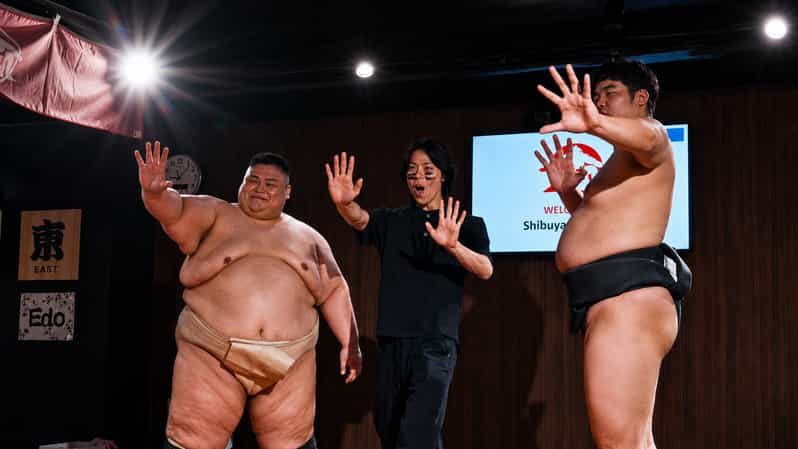
Sumo can look like a simple contest of strength if you have only seen a few seconds on television. In the ring, though, the formal movements and rules matter just as much as the collision. This show gives you a chance to see both, with an English-speaking MC making the ritual and technique understandable as they happen.
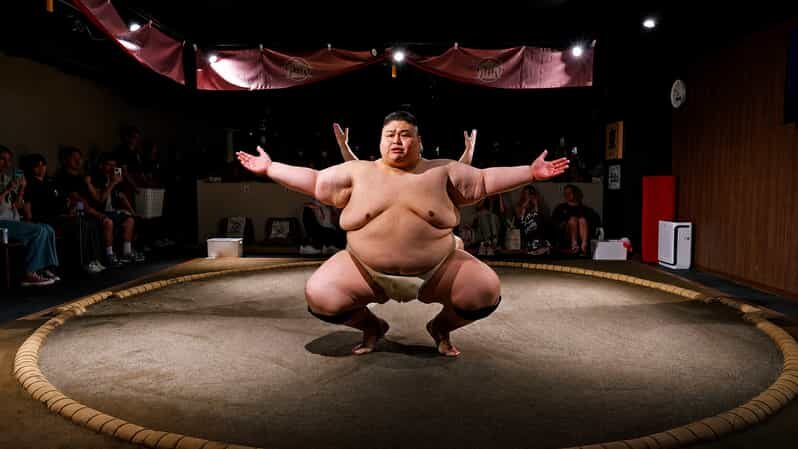
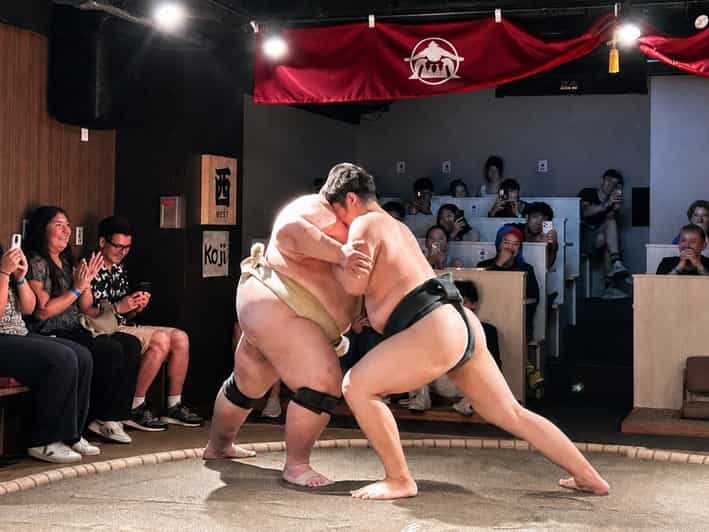
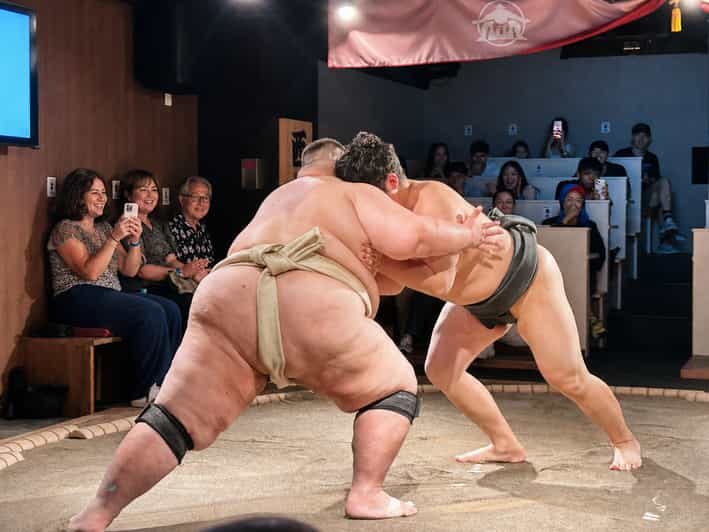
The wrestlers demonstrate traditional rituals and training movements, then face off in live matches. You’ll see how the sport’s physical power fits within a set of customs, and you won’t have to guess what a particular movement means. The MC connects the action to the rules and cultural significance of sumo, which makes the show useful for newcomers as well as entertaining.
The format is deliberately accessible. You don’t need to know sumo terminology before you arrive, and the MC is there to help you follow along. Hosts named in accounts of the experience include Aito, Rio, Shane, Dai, John, Keiji, Paula, and Theo. Your MC will depend on the session, but the format relies on an English-speaking presenter to guide the audience through the action.

👉 See our pick of the 25 Best Guided Tours In Tokyo
From demonstrations to live matches
The show combines explanation with physical demonstrations, rather than asking you to sit through a long history lesson before anything happens. First, you see rituals and training movements. Then the wrestlers put their strength and technique to work in matches. The progression gives you a simple frame for watching: notice the ritual, learn what the wrestlers are trying to do, and then watch those ideas take shape in the ring.
This is still a staged experience, not a tournament. That distinction matters if you’re hoping to see a full day of competitive sumo or an official match with tournament stakes. Instead, you get a compact introduction designed for an audience, with the wrestlers demonstrating the sport and the MC filling in the context.
The number of matches is not specified, so don’t book expecting a particular bout count. One account describes only a couple of matches, while also finding the full presentation fun. It’s sensible to think of the bouts as one part of the show, alongside the demonstrations, explanation, audience interaction, and Q&A.
The close-up setting is part of the appeal. You can see the athletes’ size and movement in a way that a screen can’t convey, and the demonstrations help make the techniques legible. If your main aim is a long, serious sporting contest, this isn’t the right format. If you want a brisk, guided look at the sport, it fits the bill.
You can also read our reviews of more tours and experiences in Tokyo

Questions with the wrestlers
The Q&A is one of the more useful parts of the experience because it shifts attention from the ring to the people who train for it. You can learn about the wrestlers’ daily life, training, and the traditions around sumo. The supplied details don’t promise a fixed list of questions or a set amount of Q&A time, so think of it as an opportunity to ask rather than a formal interview.
That personal element gives the show more substance than a string of demonstrations. You see the athletes perform, then get a chance to hear about what goes into that performance. The event stays light and audience-friendly, but it also gives you a better sense of sumo as a practiced discipline.
The MC plays an important role here, too. A clear English explanation helps keep the conversation open to people who don’t speak Japanese, and the host can connect the wrestlers’ answers to the rituals and techniques you’ve just seen. Several hosts, including John, Keiji, and Rio, have been praised for making the explanations both easy to follow and entertaining.
The sumo challenge is a lottery, not a guarantee
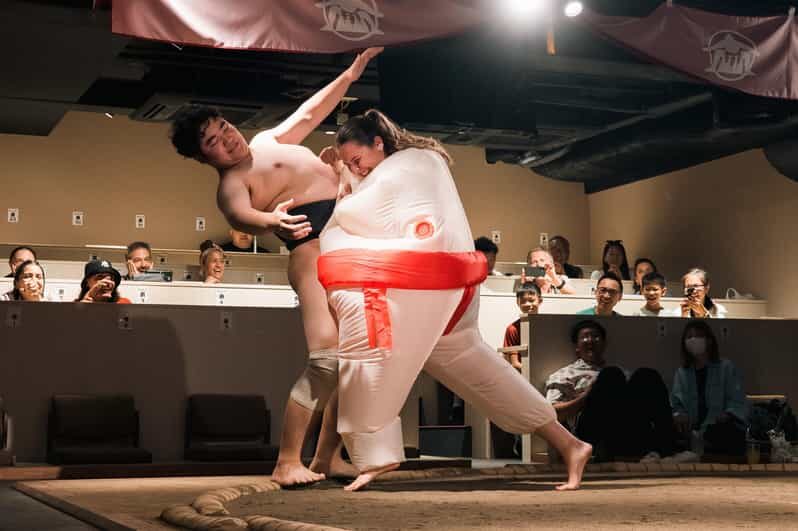
The chance to step into the ring is the show’s most memorable wildcard. Selected participants may challenge a wrestler, but places are limited and selection is by lottery. If you’re chosen, you get a rare chance to feel the scale of the sport at close range. If you aren’t, you still see the demonstrations and matches from the audience.
I’d book for the show as a whole, not on the assumption that you’ll be picked. That is especially important if you’re bringing children or anyone who has their heart set on participating. The challenge can be a fun extra, but it is not something every person can count on.
The activity is presented as an audience experience, and the information provided does not set out physical requirements or other participation rules. If being selected is important to you, check the current details with the provider before booking rather than assuming everyone can take part.
Photos and a welcome drink
A welcome drink is included, and you can take photos with the wrestlers after the show. These simple extras help round out a short event: you have a moment to meet the athletes and take home a keepsake from the experience. Additional snacks and drinks are available to buy at the venue, but they are not part of the listed inclusions.
The photo opportunity is worth keeping in mind if you’re visiting with family or friends. It offers a relaxed final moment after the demonstrations and matches, without asking you to plan a separate meet-and-greet. The details don’t specify how long the photo time lasts or whether there are limits on individual photos, so follow the venue’s instructions on the day.
Pick the venue that fits your Tokyo plans
You can choose between four locations: Shinjuku Main Venue, Shinjuku Kabukicho, Shibuya, or Asakusa. The choice is practical rather than part of the show itself. Pick the neighborhood that best fits the rest of your day, and check the exact venue when booking so you don’t mistake one Shinjuku location for the other.
The different locations make the experience easier to fit into a Tokyo itinerary, but they also mean you should pay close attention to your booking details. The activity is not described as including transportation between venues, so plan your own route to the selected location. No travel time or directions are provided here.
The session itself is short, about 60 to 75 minutes. That makes it an easy addition to a day of sightseeing, or a good indoor activity when you want something more interactive than another museum visit. Check the available start times before you settle on a venue, since the schedule depends on availability.






Is $48 a fair price?
At $48 per person, you’re paying for more than a brief look at a wrestling match. The price includes the live show, an English-speaking MC, a welcome drink, a Q&A, the chance to enter the ring if selected, and a photo opportunity. For someone curious about sumo but not planning a tournament visit, that mix of sport and cultural explanation can make the hour worthwhile.
The value depends on what you want. If you’re looking for an authentic, full-length tournament, this is not a substitute. If you want a short introduction with real wrestlers, clear explanations, live demonstrations, and audience participation, the format offers several ways to engage in one sitting.
Remember to budget separately if you want extra snacks or drinks. They are sold at the venue and are not included. The listed price also does not guarantee a turn in the ring, so count the challenge as a lucky extra rather than part of what you’re buying.
Who will get the most from this show?
This is a good fit if you’re new to sumo and want someone to explain the rules while the action is happening. It also suits families, groups of friends, and solo visitors looking for a short activity with a clear start and finish. The show’s combination of demonstration, matches, questions, and photos gives different kinds of audience members something to enjoy.
It may be less satisfying if you want a full tournament, a long lesson in sumo history, or guaranteed participation. The event is built for a broad audience and a compact time slot. That makes it approachable, but not a deep or formal study of the sport.
Don’t bring luggage or large bags, which are not allowed. The experience offers free cancellation up to 24 hours in advance, and you can reserve now and pay later. Those terms can help if your Tokyo schedule is still shifting, but check the current booking details for session times and the venue you select.
Should you book it?
Book this if you want a lively introduction to sumo that balances sport with explanation. The most useful parts are the MC’s English guidance, the chance to ask wrestlers about their lives, and the close-up demonstrations. The ring challenge and photos add a personal touch, though the challenge depends on selection.
Skip it if your priority is an official tournament or if you’d be disappointed not to fight a wrestler. For everyone else, $48 buys a compact, entertaining look at a Japanese tradition, with enough explanation to help you understand what is happening rather than simply watch bodies collide.
Tokyo Live Sumo Show & Interactive Experience
FAQ
How long does the sumo show last?
The experience lasts about 60 to 75 minutes. Check the available start times when booking.
Where can I see the show in Tokyo?
You can choose from Shinjuku Main Venue, Shinjuku Kabukicho, Shibuya, or Asakusa. Select the location that best fits your plans.
Is this a real sumo tournament?
No. It is a show with demonstrations and live matches, not a real tournament.
Is the show presented in English?
Yes. An English-speaking MC explains sumo’s rules, traditions, and cultural significance.
Can I challenge a sumo wrestler?
You may have the chance to step into the ring, but participation is limited and selected by lottery. It is not guaranteed.
What is included in the price?
The listed inclusions are the live sumo show, an English-speaking MC, a welcome drink, a Q&A session, a possible sumo challenge for selected participants, and a photo opportunity.
Can I bring luggage or buy food at the venue?
Luggage and large bags are not allowed. Additional snacks and drinks are available for purchase at the venue, but they are not included.
You can check availability for your dates here: