A private sushi lesson gives you something a restaurant meal cannot: a chance to shape the rice, handle the fish and learn how the pieces come together. In 90 minutes, you make 12 pieces, including nigiri and sushi rolls, then sit down to eat your work.
I like two things in particular: the private format, which keeps the lesson focused on your own group, and the practical, step-by-step teaching. Instructor Shiho is described as warm and patient, with useful tips on shaping rice and handling fish. That should help beginners feel at ease, not tested.
One point to weigh: the class is held in Hatchobori, not right beside Ginza, despite its Ginza-area billing. It is still walkable from Ginza, but allow time to find the building and note that the lesson itself lasts only 90 minutes.
- Make 12 pieces yourself: The class covers nigiri and sushi rolls, then includes time to eat what you have made.
- Keep the lesson private: You take part with your own group, rather than sharing the class with strangers.
- Get English instruction: The instructor guides you step by step, making the class suitable for beginners, families, children and seniors.
- Start early if it suits your plans: Sessions can begin from 8:00 AM, handy when you want to fit an activity into a short Tokyo stay.
- Learn techniques for home: You are taught practical methods you can use again when making sushi for friends or family.
- Find it in Hatchobori: The venue is a few minutes from Hatchobori Station and within walking distance of Ginza and Tokyo Station.
- A hands-on introduction, not a sushi lecture
- Shaping rice and handling fish
- Private means your group gets the lesson
- A useful early start in central Tokyo
- Is 5.95 good value?
- What you can take home from the lesson
- Who should book this sushi class?
- Should you book it?
- FAQ
- How long does the sushi class last?
- Is the class private?
- What will I make?
- Is instruction available in English?
- Where is the meeting point?
- How do I get to the venue by train?
- What is the cancellation policy?
- The Best Of Tokyo!
- More Private Tours in Tokyo
- More Tours in Tokyo
- More Tour Reviews in Tokyo
- Not for you? Here's more nearby things to do in Tokyo we have reviewed
A hands-on introduction, not a sushi lecture
 1 / 8
 2 / 8
 3 / 8
 4 / 8
 5 / 8
 6 / 8
 7 / 8
 8 / 8
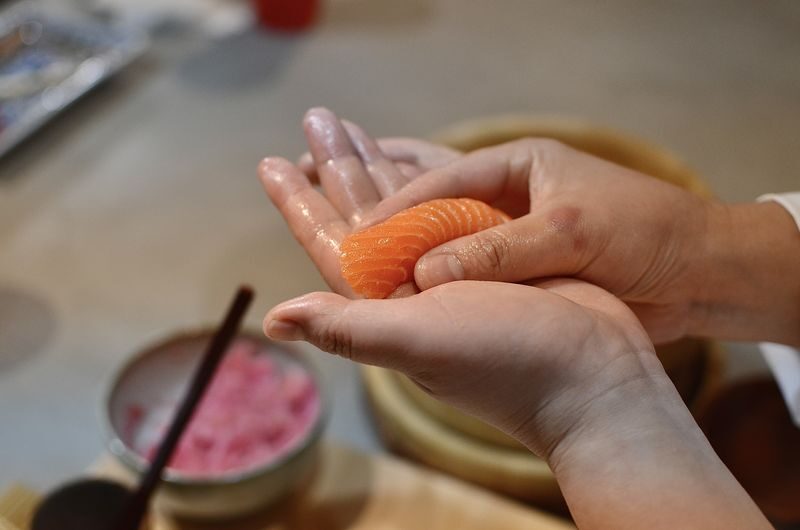
This class is built around doing. You are not simply watching a chef prepare lunch; you work through the basic steps and make a dozen pieces with guidance. That makes it a useful choice if you are curious about sushi beyond the finished plate, but do not need an advanced cooking course.
The listed package is the 1.5-hour Private Basic Sushi Making Experience. The time is long enough to learn a few core techniques without taking over half a day. For a busy Tokyo itinerary, that matters: you can make sushi in the morning and still have much of the day ahead.
The lesson covers traditional nigiri and sushi rolls. The description does not give a precise order or name every style of roll, so expect a guided introduction rather than a fixed menu of specific pieces. The goal is to learn by making, with the instructor breaking the process into manageable steps.
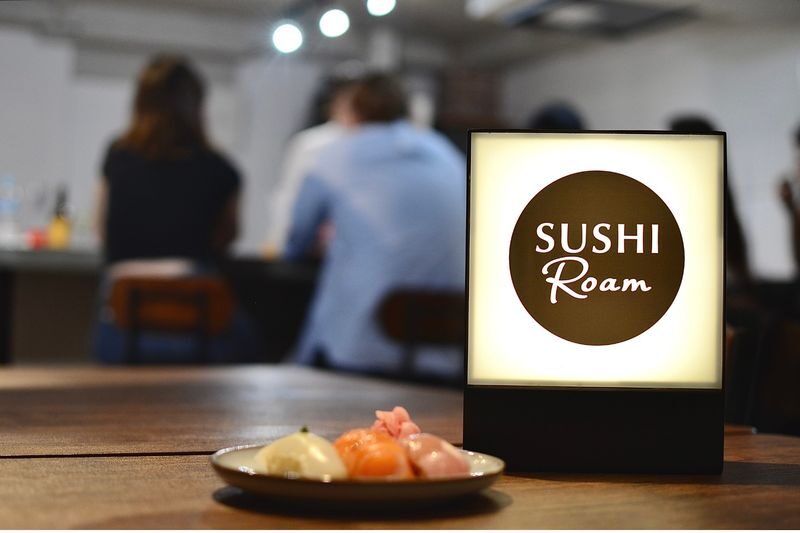
At the end, you eat the sushi you prepared. That gives the session a satisfying finish, and it turns the lesson into a meal as well as an activity. Meals and beverages are included, though no particular drinks or side dishes are specified.

👉 See our pick of the 25 Best Guided Tours In Tokyo
Shaping rice and handling fish
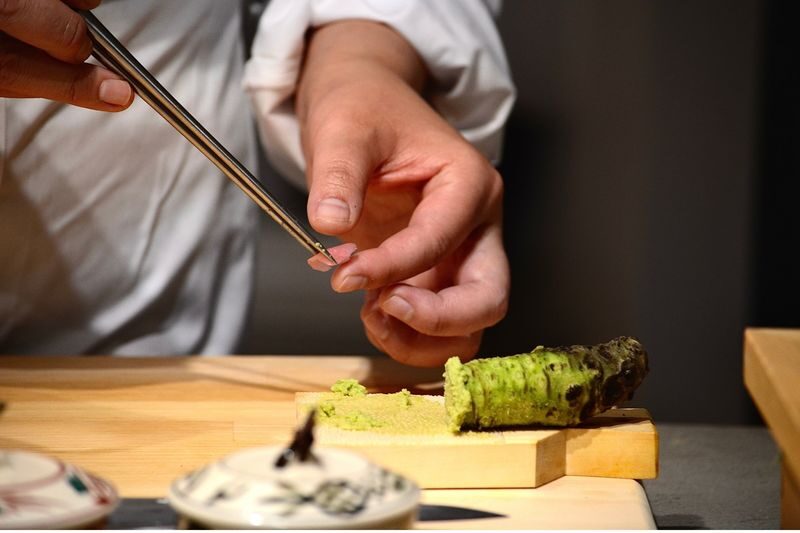
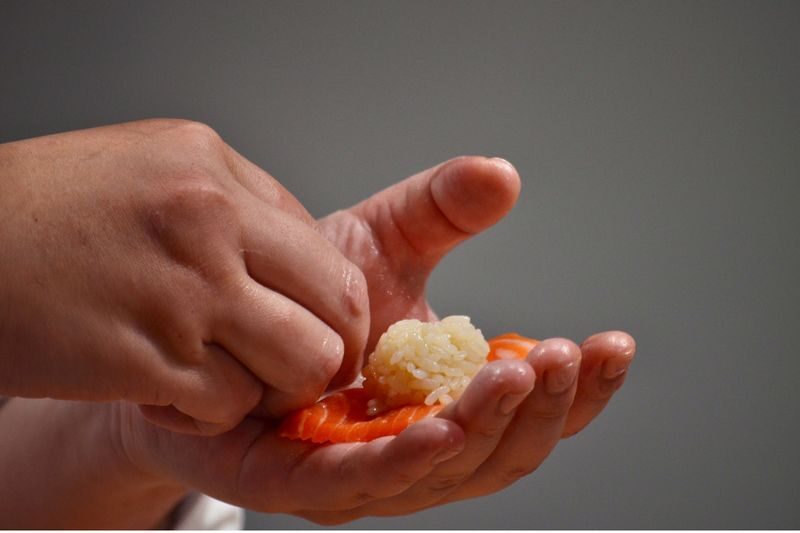
Nigiri looks simple: a small mound of rice topped with fish. But getting the rice into shape without packing it too tightly takes practice. The class focuses on shaping the rice properly and handling the fish, two details that can make homemade sushi feel more confident and less like a lopsided experiment.
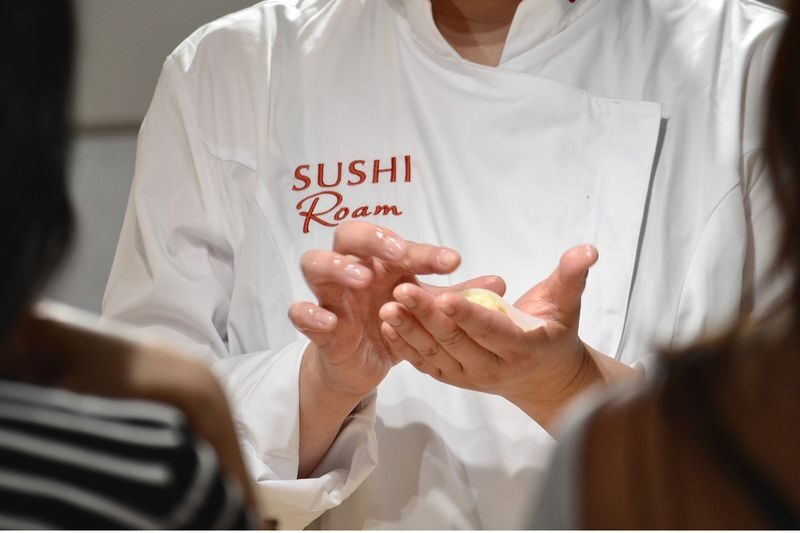
Shiho, the instructor named in a participant’s account, is described as patient and clear in her teaching. She guided the group step by step and made sure beginners felt comfortable. That kind of pacing is especially useful in a private lesson, where you can focus on the technique instead of keeping up with a larger class.
You can also expect small tips and stories along the way. The exact stories are not specified, but those personal details can help connect the hand movements to the food culture behind them. The class is not presented as a formal history lesson, so come for practical instruction and conversation rather than an extensive account of sushi’s past.
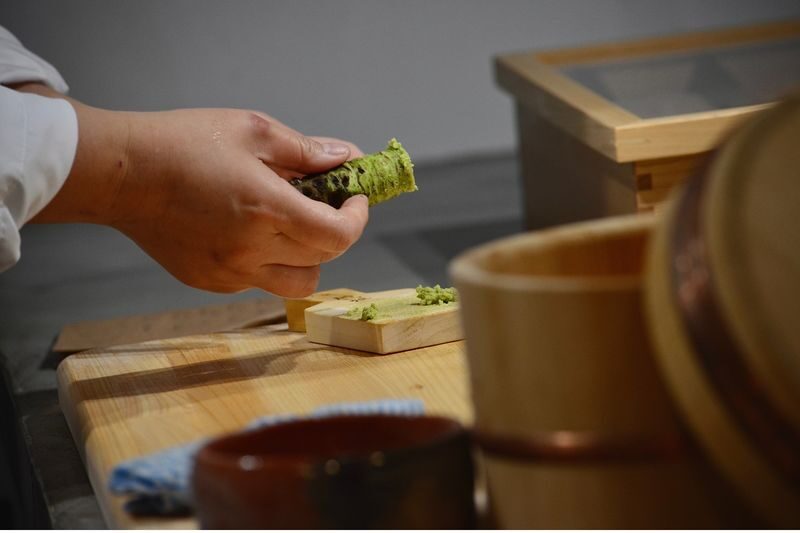
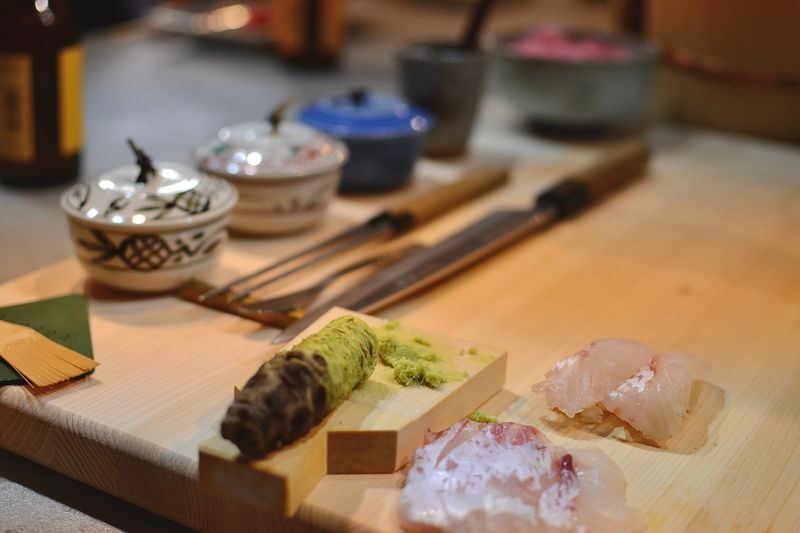
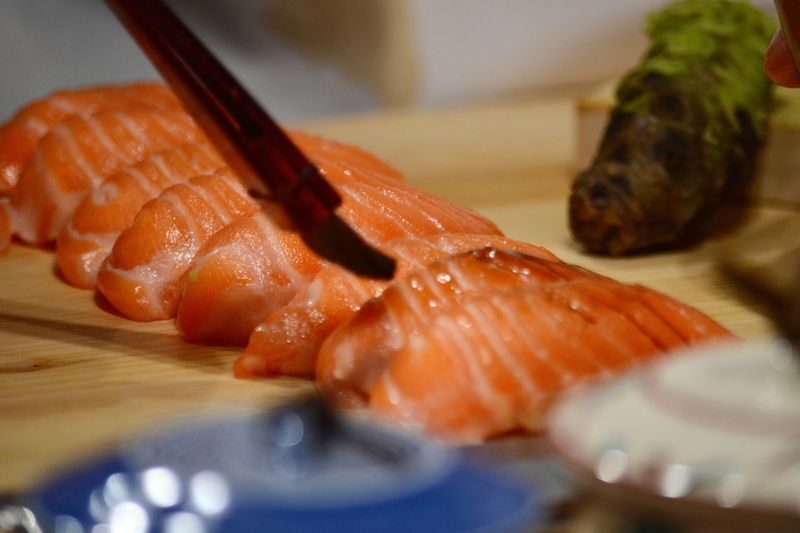
The ingredients are described as fresh and carefully selected. No fish varieties or sourcing details are given, so it is best not to book expecting a particular type of seafood. What you can count on is a chance to learn how to work with the ingredients provided and enjoy the result.
You can also read our reviews of more private tours in Tokyo

Private means your group gets the lesson
The class is advertised as 100 percent private. That means no strangers join your session, a real plus if you are bringing children, have a nervous first-time cook in your group, or simply prefer a quieter activity. The instructor can guide your group through the steps without the social bustle of a shared class.
Private does not necessarily mean a one-to-one lesson. You can book with your own group, but the maximum group size is not provided. If your party is large, confirm the booking details before you go rather than assuming everyone can fit into one session.
The format also suits mixed ages. Children and seniors are explicitly listed as welcome, and the instructions are designed for beginners. Children aged 0 to 5 can join free, while those aged 13 and older are charged the adult rate. The pricing for children aged 6 to 12 is not stated, so check it before booking.
For families, the appeal is straightforward: everyone can take part in making the meal, rather than waiting while one person cooks. Just remember that this is a hands-on food activity. If someone in your group has dietary needs or food allergies, ask the operator about them before booking, since the available details do not specify substitutions or allergy procedures.
A useful early start in central Tokyo
The class can start from 8:00 AM, giving early risers a way to make productive use of the morning. That can be useful if your Tokyo stay is short, or if you would rather fit a class in before other plans. Check the specific time available for your chosen date, since the earliest possible start does not mean every session begins at 8:00.
The meeting point is listed as 第6高輪ビル, at B1F, 2-chome-2-4 Hatchobori, Chuo City, Tokyo 104-0032. The building name may be easier to recognize in Japanese when checking a map. Hatchobori Station, served by the Tokyo Metro Hibiya Line and JR Keiyo Line, is about a three-minute walk via Exit A5.
Takaracho Station is around five minutes away via Exit A2. From Ginza Station, allow about 12 minutes on foot via Exit A13, while Tokyo Station is about a 15-minute walk from the Yaesu Central Exit. The venue is therefore convenient to several parts of central Tokyo, but it is not inside Ginza itself.
Give yourself a little extra time to locate the building and reach the basement meeting area. Arriving late can cost you: participants who are 30 minutes late or more are not eligible for a refund. That is a firm reason to plan your route before class day, especially if you are navigating an unfamiliar station.
Is $105.95 good value?
The starting price is $105.95 for the 1.5-hour private basic experience. That is more than you would spend on a simple sushi meal, but the comparison is not quite fair. You are paying for a private lesson, English-speaking staff, the ingredients, instruction and the meal you make, rather than just a plate of sushi.
The value is strongest if you want a shared activity with your own group and will use the techniques again at home. A private class also helps if you are new to sushi making and want room to ask questions. If your main aim is to eat excellent sushi, a restaurant may be a better use of the money. This experience is about the making as much as the eating.
The price is listed as starting at $105.95, so treat it as a base rate and check the final cost for your date and party. Since the class is private, compare the total cost against your group size before deciding. The available details do not say whether the listed amount applies per person or to the whole group.
What you can take home from the lesson
The most lasting part may be the practical knowledge. Shaping rice and handling fish are skills you can repeat, and the class is designed to give you methods you can use to host a sushi party at home. You will not leave as a sushi chef after 90 minutes, but you should have a better sense of how the process works and what to practise next.
The private setting gives that learning a relaxed frame. You can concentrate on your own hands and ask for guidance without feeling you are holding up a roomful of people. That is particularly helpful for a first cooking class, where the unfamiliar steps can feel awkward at first.
You also get a meal with a story attached: you made the pieces yourself. The 12-piece count makes the class tangible, though the exact balance between nigiri and rolls is not stated. If you have a preferred style or a specific dietary request, ask ahead rather than assuming it will be part of the lesson.
You can also read our reviews of more tours and experiences in Tokyo





Who should book this sushi class?
I would put this class high on the list for first-time sushi makers, families, couples and small groups who want an activity that is both social and useful. The English instruction and private format lower the barrier to joining in, while the short duration makes it easy to fit into a Tokyo schedule.
It is also a good match for anyone who enjoys learning food techniques, not just sampling local dishes. You get a close look at the shaping and handling involved, then eat the results. If you are choosing between this and a market tour, decide what you want most: this class centers on private, hands-on instruction, while the provided details do not include a market visit.
I would look elsewhere if you want a long cooking workshop, a specific seafood menu, or a full tour of sushi history. Those details are not promised here. For a compact, beginner-friendly lesson with a meal at the end, the format makes sense.
Should you book it?
Book if you want a private, practical introduction to sushi making and like the idea of turning a meal into an activity. The best reasons are the small-group privacy, English step-by-step teaching, and techniques you can try again at home. Shiho’s patient approach is a reassuring sign for nervous beginners.
Before paying, check the final price for your group, confirm the session time and ask about any dietary needs. Keep in mind that the venue is in Hatchobori, about a 12-minute walk from Ginza Station, and plan to arrive well before the class begins. If those details fit your day, this is a worthwhile way to learn a little by making lunch yourself.
Private Sushi Making Class near Ginza
“Had an amazing time learning to make nigiri with Shiho as our instructor! She was warm, patient, and clearly passionate about what she does. Shiho…”
FAQ
How long does the sushi class last?
The experience lasts 90 minutes, or 1.5 hours.
Is the class private?
Yes. It is described as a 100 percent private experience for you and your group, with no strangers joining the session.
What will I make?
You will make 12 pieces of sushi, including traditional nigiri and sushi rolls.
Is instruction available in English?
Yes. English-speaking staff guide you through the class step by step.
Where is the meeting point?
The meeting point is 第6高輪ビル, B1F, 2-chome-2-4 Hatchobori, Chuo City, Tokyo 104-0032.
How do I get to the venue by train?
It is about a three-minute walk from Hatchobori Station via Exit A5, five minutes from Takaracho Station via Exit A2, 12 minutes from Ginza Station via Exit A13, or 15 minutes from Tokyo Station’s Yaesu Central Exit.
What is the cancellation policy?
A full refund is available if you cancel at least 24 hours before the activity date, based on local time. Participants who are 30 minutes late or more are not eligible for a refund.