In Asakusa, this one-hour workshop puts a working kitchen knife in your hands, then shows you how to sharpen and finish it under an instructor’s eye. You leave with a blade you helped shape, not just another souvenir destined for a drawer.
I like two things here: the close, patient instruction, which makes the work approachable even if you are clumsy with tools, and the useful take-home knife, with polishing and handle adjustments that give it a personal touch. Instructors named by participants include Satoru, Muto, Omar, and Alberto, though your teacher may differ.
One thing to keep in mind: the session is short, and it appears to focus on sharpening and finishing a knife rather than forging one from raw steel. If you picture a full blacksmithing class, check what the selected package includes before booking. Some handle upgrades or engraving may cost extra.
Key points to know
- A practical souvenir: You leave with a functional kitchen knife you helped finish.
- Beginner-friendly guidance: Instructors supervise each step and explain sharpening clearly.
- A compact class: The workshop lasts about one hour, so it fits neatly into a Tokyo day.
- Central Asakusa meeting point: Find 禅 ZEN Craft Studio on the 10th floor of the Tosei Building.
- Personal touches may cost extra: Engraving and handle upgrades have been available, but confirm current options and prices.
- Plan to arrive on time: More than 15 minutes late may mean rescheduling.

👉 See our pick of the 25 Best Guided Tours In Tokyo
- Key points to know
- A knife-making class with a practical finish
- What happens during the one-hour session
- Patient instruction makes the craft approachable
- Choosing and finishing a knife
- Is .35 a fair price?
- Finding 禅 ZEN Craft Studio in Asakusa
- Who will enjoy this workshop most
- Should you book the Asakusa knife workshop?
- FAQ
- How long does the workshop take?
- Where is the meeting point?
- What is included in the activity?
- Do I need previous knife-making experience?
- Can children take part?
- What payment methods are accepted?
- Can I cancel and receive a refund?
- What happens if I arrive late?
- The Best Of Tokyo!
- More Workshops & Classes in Tokyo
- More Tours in Tokyo
- More Tour Reviews in Tokyo
- Not for you? Here's more nearby things to do in Tokyo we have reviewed
A knife-making class with a practical finish
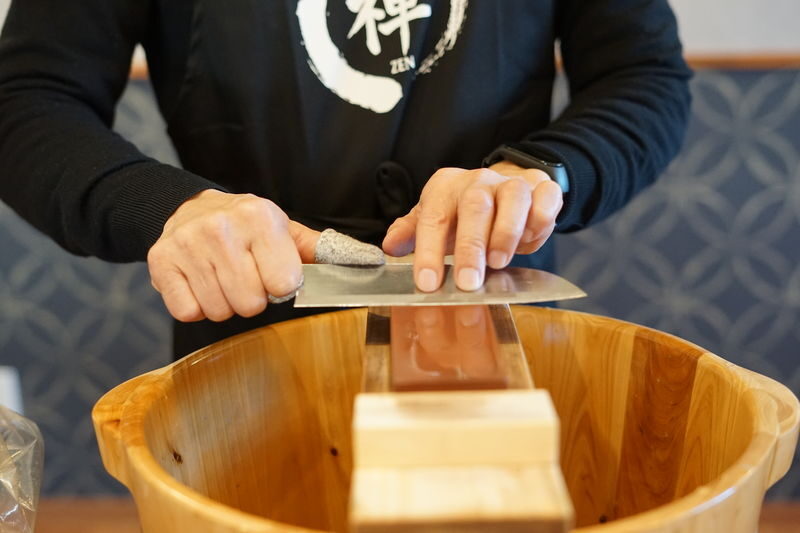
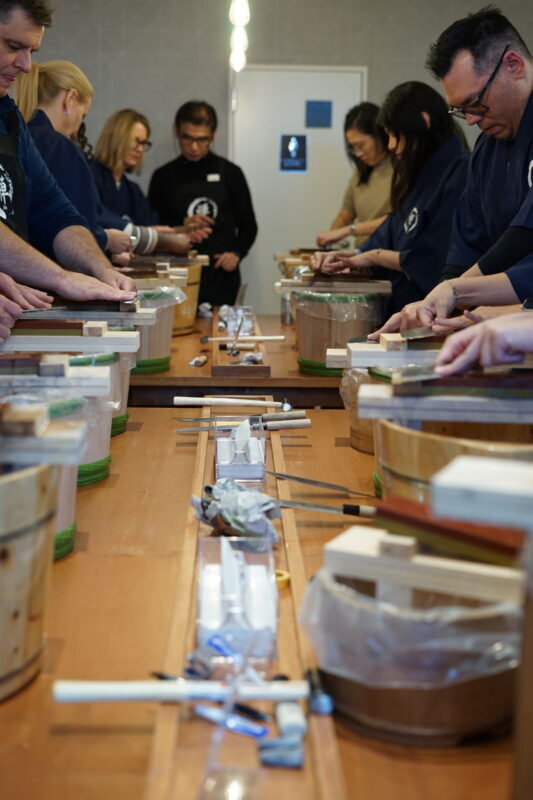
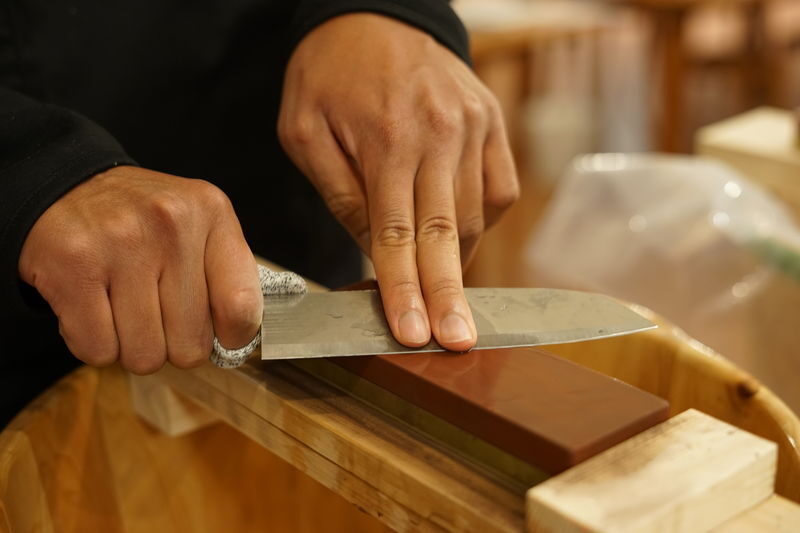
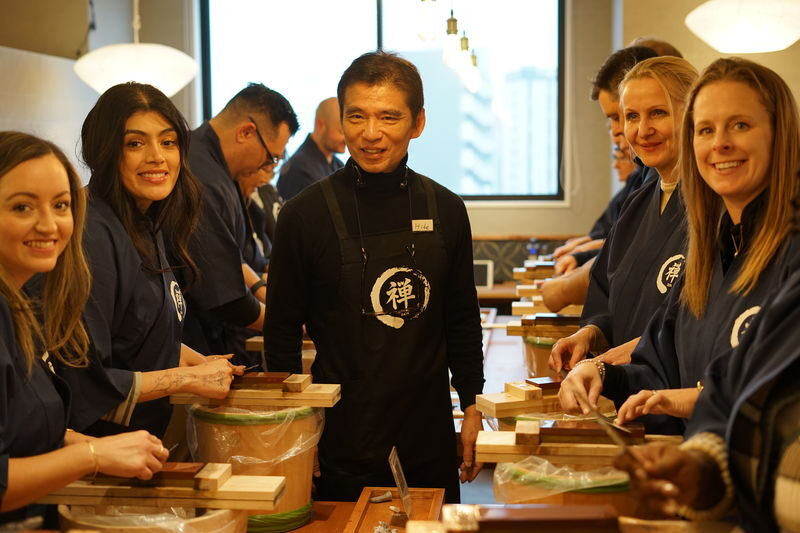
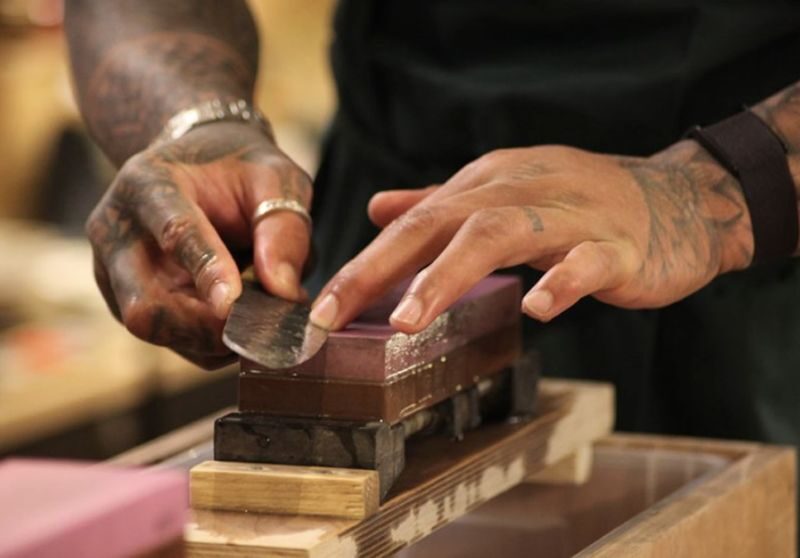
Japanese knives are admired for their sharpness and careful construction. This class gives you a hands-on introduction to that craft, with instruction centered on sharpening and finishing a knife you can use at home. It is a good way to learn something practical while taking part in a small-scale craft activity in Tokyo.
The workshop is described as knife-making, but the details point to a session where you work with a blade and handle, sharpen the edge, and complete final polishing and adjustments. Several participants describe choosing a blade and handle before sharpening. That is still satisfying work, and you gain a better sense of how a knife edge is maintained, but it is not the same as forging steel at a forge.
The distinction matters when you are choosing an activity. If your main goal is to make a useful object and learn basic care, this class looks well suited. If you want to hammer hot metal or follow every stage of traditional blade forging, ask the provider exactly what the class entails before paying.
You can also read our reviews of more tours and experiences in Tokyo


What happens during the one-hour session
The schedule is straightforward: meet at the studio, take part in the guided knife-making and sharpening session, then finish at the same address. There is no transport between stops. The class itself lasts about an hour, making this an easy addition to a day spent around Asakusa.
You’ll work under an instructor’s supervision rather than being left to puzzle out the tools alone. The teaching covers how to sharpen a knife and care for it, with help along the way to keep your technique on track. The instructor may also guide you through final polishing and handle adjustments, which bring the knife closer to a finished, personal piece.
The pace should suit a beginner. Some people come in unsure of how to sharpen a Japanese knife, while others attend with family or children. The class has no stated age limit, and one participant described a 10-year-old being guided through the process. That does not guarantee the same setup for every child, so contact the studio if you have a young participant and want to check the details.
At the end, you take home the knife you worked on. That gives the hour a clear payoff: you leave with both a practical object and a basic understanding of how to keep its edge in shape. A knife is also a souvenir with a job to do, which is a welcome change from another trinket that never leaves a suitcase.
Patient instruction makes the craft approachable
The most consistently praised part of this class is the instruction. Satoru, Muto, Omar, Alberto, Krish, Hana, and other teachers are named by participants, often for being patient, clear, and attentive. Staff speak English and Japanese, and one participant noted that Alberto also spoke Spanish. Instructors vary, so no particular teacher or language beyond English and Japanese is guaranteed.
That patience is useful because sharpening can feel awkward at first. You need to pay attention to the blade and the movement, and a small correction can make the task easier. A teacher who watches closely and explains what to do helps turn the class from a demonstration into a skill you can use again.
Expect a friendly, organized setting rather than a lecture on the history of blades. The value is in doing the work yourself, asking questions, and getting feedback. If you are nervous about handling a sharp tool, the close supervision is a real plus. Still, take instructions seriously and work at the pace the teacher sets.
The class is also a good shared activity for families or couples. You can work on your own knife while comparing choices and results. It gives everyone something to focus on, without requiring prior craft experience or a special interest in cooking.
Choosing and finishing a knife
The most personal part of the process is shaping the finished item to your taste. Participants describe choosing blades and handles, then sharpening and personalizing the knife. The exact selection may depend on the package and what is available on the day, so do not assume you can choose from a particular style or size.
Final polishing and handle adjustments help make the knife feel like your own. Some participants have also had the option to engrave a handle or upgrade it. These extras may involve an additional charge, so ask about the price before deciding. The base price starts at $66.35, and knowing what it includes will help you judge the total cost fairly.
The result is meant to be functional, not just decorative. You’ll want to follow the care advice you receive, especially if this is your first Japanese kitchen knife. Learning how to sharpen and maintain it is part of the value: the class can help you avoid treating a sharp, carefully finished blade like an ordinary souvenir.
Keep in mind that you may need to pack the knife safely for the journey home. The activity information says you take the knife with you, but does not specify packaging or airline rules. If you are flying, check your airline’s rules for packing knives in checked luggage, and ask the studio how the knife is wrapped.
Is $66.35 a fair price?
At a starting price of $66.35, this is not the cheapest hour in Tokyo. But the cost covers more than watching a demonstration. You receive guided, hands-on instruction, time to work on a knife, and a functional piece to take home. If you value practical souvenirs and want to learn basic sharpening, that combination makes the price easier to justify.
The class is also short enough to fit between other plans. You do not need to set aside half a day, and the meeting and return point are the same. That convenience can matter in Tokyo, where a compact activity is often easier to arrange than a long trip across town.
The price is less compelling if you only want a brief explanation of Japanese knives or expect a full forging lesson. The exact included work matters, especially if you are considering a handle upgrade or engraving. Confirm any extra charges before booking, and compare the class with other craft activities if your priority is a longer, more intensive workshop.






Finding 禅 ZEN Craft Studio in Asakusa
The meeting point is 禅 ZEN Craft Studio, on the 10th floor of the Tosei Building, 1 Chome-27-2 Asakusa, Taito City, Tokyo 111-0032. This is a meet-up activity, not a tour with hotel pickup or transportation. Check the map and allow time to find the building and reach the studio floor.
You can select a start time from 9:00 a.m. through 6:00 p.m., with options listed hourly. The matching return times run from 10:15 a.m. through 7:15 p.m., depending on your selected start and the activity schedule. The actual timing can vary, so follow the time confirmed for your booking.
Arrive punctually. The studio may ask anyone more than 15 minutes late to reschedule because late arrivals can affect the next reservation. Payment at the workshop is cashless, with Visa, Mastercard, American Express, JCB, Diners Club, and Discover accepted. Tips and personal expenses are not included.
Who will enjoy this workshop most
I’d choose this class if you like hands-on activities, want to learn a useful skill, or are hunting for a souvenir that will see regular use. It also suits first-timers who want close guidance rather than a lesson that assumes previous sharpening experience. The small time commitment makes it easy to pair with other Asakusa plans.
Families may find it a good shared activity, and the stated age policy has no limit. If you are booking for a child, remember that knife work requires care and supervision; check with the studio about the child’s participation before you go. The activity is also a thoughtful choice for someone who cooks, though a knife may be less meaningful to a person who has no use for kitchen tools.
You might prefer another activity if you want to watch a master smith forge a blade from scratch, or if you need a long class with a detailed technical focus. The information available points to guided sharpening, polishing, and finishing. Set your expectations accordingly, and this can be a satisfying hour.
Should you book the Asakusa knife workshop?
Book it if you want a beginner-friendly craft session with patient instruction and a useful knife to take home. The clearest strengths are the hands-on sharpening, the personal finishing touches, and the chance to learn basic care in a guided setting. It earns its price best when you value the finished knife as much as the hour of instruction.
Before you reserve, confirm what kind of knife work is included and whether you want optional engraving or a handle upgrade. Arrive early, bring a card rather than cash, and plan for a compact class rather than a full forging course. With those expectations, this is a worthwhile Asakusa activity for curious cooks and anyone who prefers souvenirs with a purpose.
Tokyo: Asakusa Japanese Knife Craft & Sharpening Workshop
“Omar was fantastic taking us through the knife making experiance”
FAQ
How long does the workshop take?
The guided knife-making and sharpening session lasts about one hour. The schedule lists a return time around 15 minutes after the selected start time.
Where is the meeting point?
Meet at 禅 ZEN Craft Studio on the 10th floor of the Tosei Building, 1 Chome-27-2 Asakusa, Taito City, Tokyo 111-0032.
What is included in the activity?
The package includes admission to the craft workshop, English-speaking and Japanese-speaking staff, and a knife sharpening experience.
Do I need previous knife-making experience?
No previous experience is stated as a requirement. The workshop is described as suitable for beginners, with step-by-step guidance.
Can children take part?
The activity has no age limit. If you are planning to bring a child, contact the studio to check what participation involves.
What payment methods are accepted?
The workshop is cashless. Accepted cards include Visa, Mastercard, American Express, JCB, Diners Club, and Discover.
Can I cancel and receive a refund?
You can receive a full refund if you cancel at least 24 hours before the activity date, using destination local time.
What happens if I arrive late?
If you arrive more than 15 minutes late, you may be asked to reschedule because late arrivals can affect later reservations.