Sushi Yachiyo has been serving Tokyo for a century, and this 90-minute class gives you a practical way to learn its craft without needing Japanese cooking skills. Restaurant president Kazuki leads the lesson, and you’ll make five types of sushi using two ways of shaping it before sitting down to eat your work.
I like that the class teaches the reasoning behind the shapes, not just the hand motions, and that it takes place in a private room overlooking a small garden. The starting price, US$63.65 per person for groups of five to 13, is also fair for a hands-on class at a historic restaurant.
The main consideration is language: the instructor teaches in Japanese, with written English materials to help you follow along. You can pay more for an English-speaking assistant, but the class is still a better fit if you’re comfortable learning with demonstrations and printed instructions.
- What to know before you book
- Learning sushi in a century-old Tokyo restaurant
- Getting started: ingredients, tools, and demonstrations
- Making five types, then eating the results
- Choosing the right language option
- Is the price good value?
- Who will enjoy this class most?
- Getting there and booking details
- Should you book the Sushi Yachiyo class?
- FAQ
- How long is the sushi-making class?
- Where does the class take place?
- How many types of sushi will I make?
- Is the class taught in English?
- How much does the class cost?
- Can children take part?
- Are ingredients and equipment provided?
- Can the class accommodate dietary requirements?
- How do I get to the restaurant?
- What should I wear, and what should I bring?
- The Best Of Tokyo!
- More Dining Experiences in Tokyo
- More Tours in Tokyo
- More Tour Reviews in Tokyo
- Not for you? Here's more nearby things to do in Tokyo we have reviewed
What to know before you book
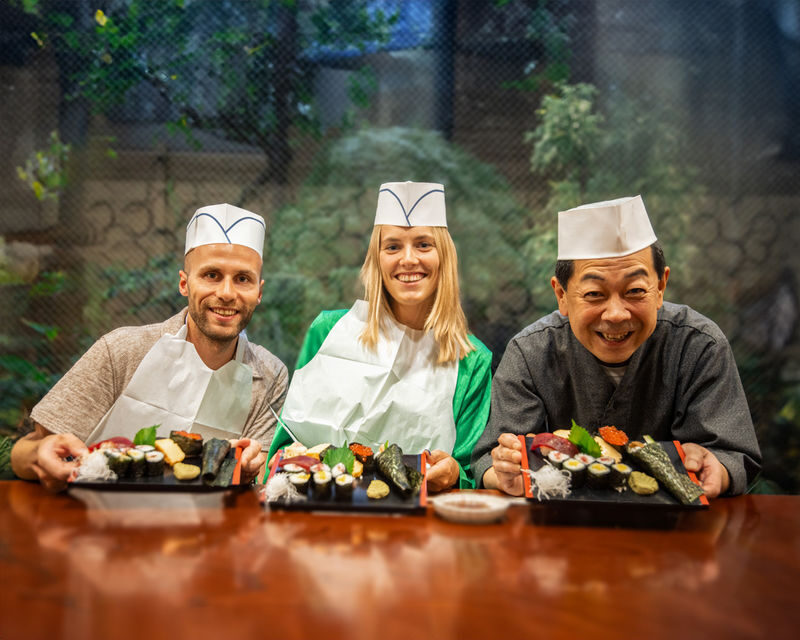
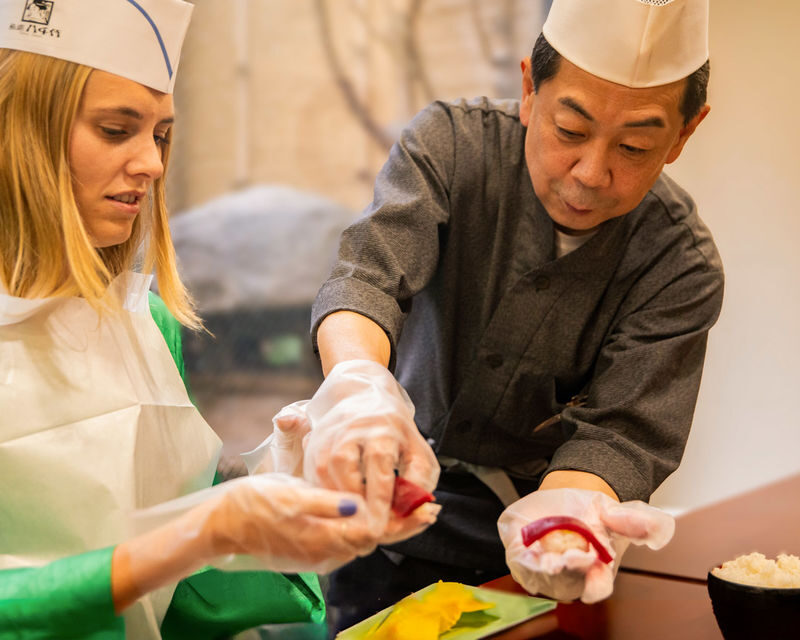
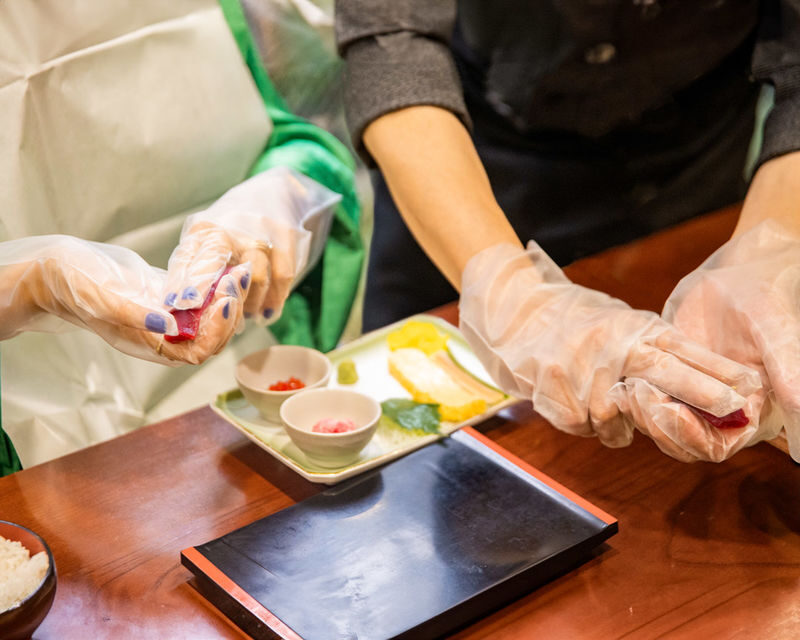
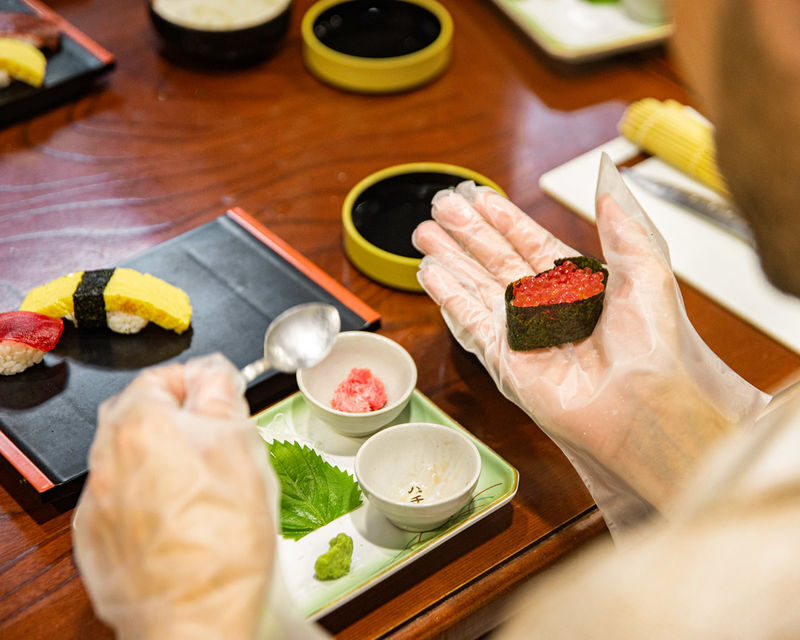
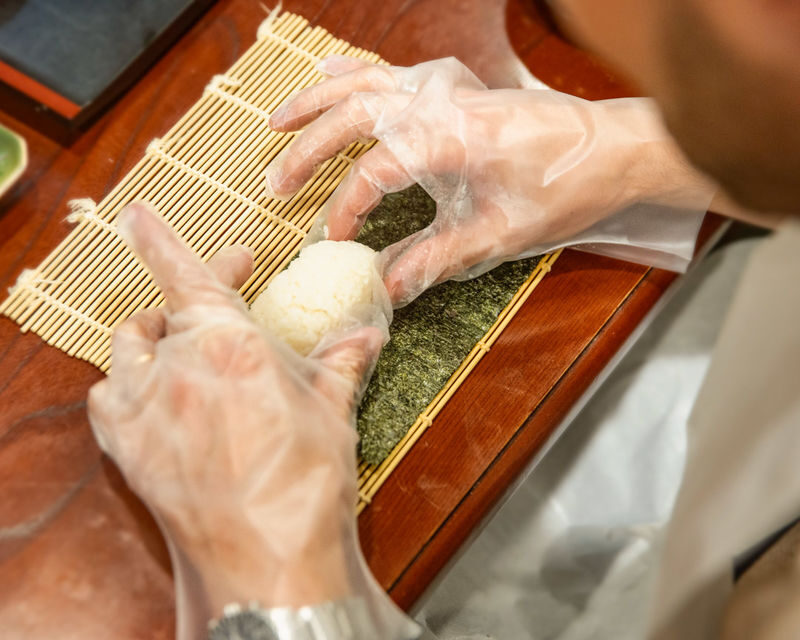
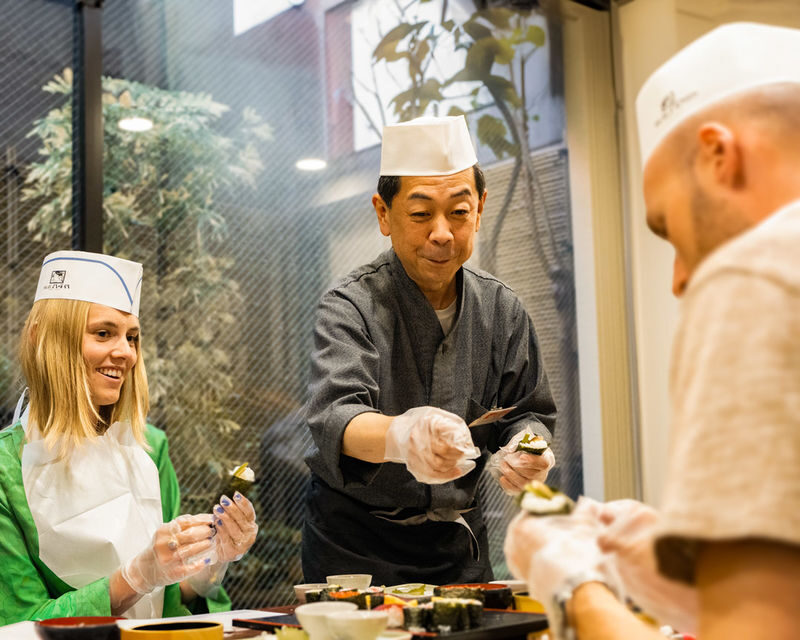
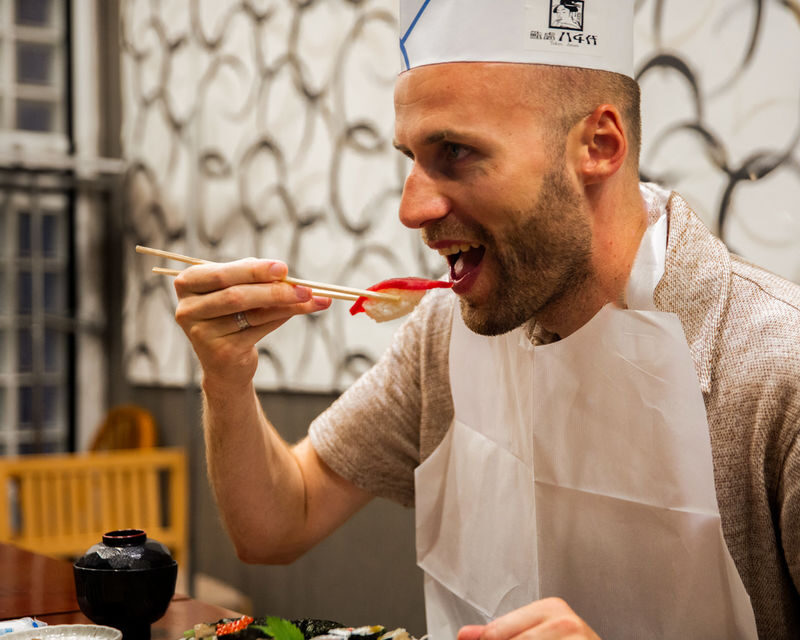
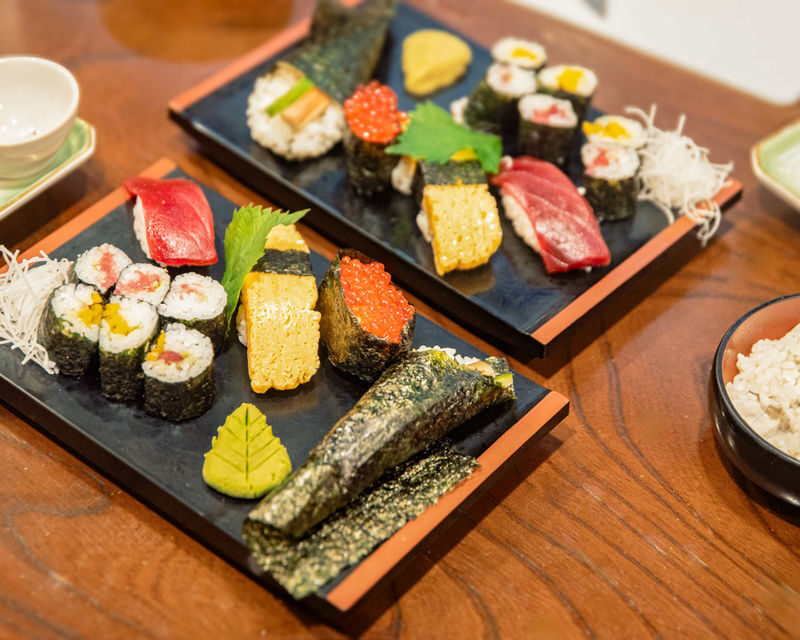
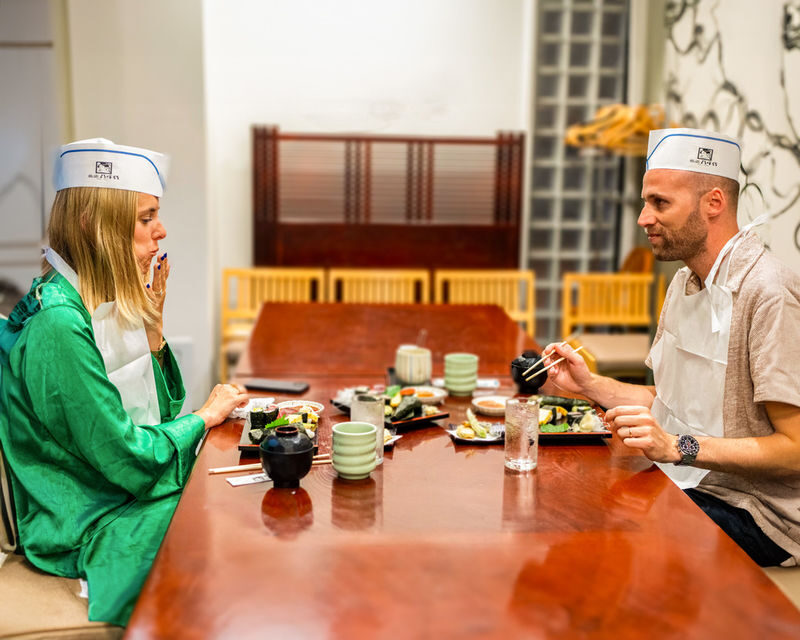
- A century-old restaurant setting: The class meets at Sushi Yachiyo Yotsuya, but the lesson is held in a private garden-view room, not at the sushi bar counter.
- Five sushi styles, two shaping methods: You’ll get hands-on practice with a range of forms, rather than focusing only on one roll.
- A concise 90-minute lesson: The class is short enough to fit into a Tokyo sightseeing day, though you won’t have time for an extended cooking course.
- Japanese instruction, written English support: An English-speaking assistant is an optional package upgrade. Ask for that option if you want spoken translation.
- You eat what you make: The sushi you prepare is part of the experience, turning the lesson into a meal as well as a cooking class.
- Easy to reach by subway: The restaurant is a three-minute walk from Yotsuya-sanchome Station. Transport is not included.

👉 See our pick of the 25 Best Guided Tours In Tokyo
Learning sushi in a century-old Tokyo restaurant
Sushi Yachiyo is a historic restaurant, but the class is designed for participation, not for watching a chef work from a distance. You’ll use the ingredients and tools provided, follow the instructor’s demonstrations, and make several kinds of sushi yourself.
That distinction matters. A meal at a sushi counter can show you the finished craft; this class gives you a chance to try the shaping and see why different forms need different handling. The aim is not to turn you into a sushi chef in 90 minutes. It is to send you away with a better sense of the technique and enough practice to try the basics again at home.
Kazuki, the restaurant president, is identified as the class leader. Chef Ono has also taught sessions and is described as cheerful, patient, and willing to explain methods step by step. Since the instructor may vary, don’t assume you’ll have the same teacher for every date.
The restaurant’s age adds a sense of place, though the setting is not a chance to sit at its sushi counter. The class takes place in a private room overlooking a garden. If you’re hoping to watch a sushi bar in action, this is a different kind of experience. If you’d rather have room to work and ask questions, the separate room makes practical sense.
You can also read our reviews of more tours and experiences in Tokyo

Getting started: ingredients, tools, and demonstrations
The class lasts about an hour and a half. All sushi-making ingredients and tools are supplied, so you don’t need to shop or bring equipment. The instructor demonstrates the work, and you follow along with written English materials if you don’t understand Japanese.
You’ll learn two methods of shaping sushi and make five types. The exact varieties are not specified, so it’s best not to book expecting a particular list of sushi styles. What you can count on is variety: the class is built around more than one shape and more than one finished piece.
A useful part of learning by hand is noticing how technique changes with form. The instructor can show you how to handle each style, then you can try it yourself. One class participant found it especially helpful to hear the reasoning behind each shape, rather than simply copying the motions. That kind of explanation can make the difference between a fun activity and a lesson you’ll remember when you’re back in your own kitchen.
If you choose the standard class, expect the instruction to be in Japanese. English materials are provided, and the instructor has experience teaching international participants. Still, written directions are not the same as live translation. The optional English-speaking assistant is the better choice if you want questions and explanations translated as you go.
Making five types, then eating the results
The hands-on work is the heart of the class. You’ll practice the two shaping methods and use them to make five kinds of sushi. The number gives you a useful range of practice in a short session, while the 90-minute limit keeps the experience from taking over a whole day in Tokyo.
You’ll finish by eating the sushi you’ve made. That simple step gives the class a satisfying end: you can see how your work turned out and enjoy it as part of the experience. Some sessions have also served tempura, miso soup, and green tea. Those extras are not listed as included features, however, so treat them as possible additions rather than something guaranteed with every booking.
The private room’s garden outlook adds a quieter note to the meal. It’s a pleasant contrast to a busy sightseeing schedule, and it means you can focus on the food and the people at your table rather than the activity around a counter.
This is also a social activity. The available group formats are for two to four people or five to 13 people. A smaller group can make it easier to ask questions and get individual attention; a larger group may suit families or friends who want to do the class together. The listing does not promise a private booking for every group, so check the package details if having the room exclusively matters to you.
Choosing the right language option
The standard package uses a Japanese-speaking instructor, with written English instructions. That can work well if you’re comfortable following a demonstration and checking a printed guide as you go. The teacher’s experience with international participants also helps, but it does not replace an English-speaking assistant.
You can select a package with an English assistant at booking. For groups of two to four, that version starts at US$93.60 per person; for groups of five to 13, it starts at US$86.15. If an assistant is unavailable, a partial refund is offered. If spoken explanations are important to you, the added cost may be worthwhile. If you mainly want to try the techniques and can follow written directions, the standard option costs less.
There are four package prices to compare:
- US$63.65 per person: Standard class, group of five to 13
- US$71.15 per person: Standard class, group of two to four
- US$86.15 per person: Class with English assistant, group of five to 13
- US$93.60 per person: Class with English assistant, group of two to four
These are starting prices, so check the price shown for your date and group when booking. The larger-group standard class is the best-value option on paper. The small-group and English-assistant packages cost more, but may be worth it if you value more direct support or want to keep your party small.
Is the price good value?
At the lowest listed price, you get a 90-minute guided lesson, the ingredients and tools, professional instruction, and the sushi you make. That makes the class more than a quick demonstration. You’re paying for time to try the techniques yourself, along with a meal at a long-running Tokyo restaurant.
The higher price for the English-assistant option is a meaningful jump. I’d weigh it against how much you want to ask questions in real time. If you’re a curious cook who wants detailed explanations, spoken translation could make the class more useful. If you’re mainly after a hands-on introduction and can work from written directions, the standard package may be enough.
Transport and personal expenses are not included. The restaurant is a short walk from Yotsuya-sanchome Station, so getting there is straightforward if you’re already using the Tokyo Metro. The class itself is the main spend; you don’t need to budget for ingredients or tools.
You can also read our reviews of more tours and experiences in Tokyo




Who will enjoy this class most?
This is a good fit for anyone who likes learning by doing, especially if sushi is a food you enjoy and you want to understand more than the finished plate. It also works well for couples, friends, and families with older children who can take part in a guided cooking activity.
Children must be at least five years old, and anyone aged five to 17 must be accompanied by a paying adult. Infants and children must be included in the passenger headcount. Keep those rules in mind when selecting your group size and booking.
The class can accommodate pescetarian dietary needs, but you must tell the provider in advance. Other dietary requirements are not confirmed, so contact the provider before booking if you have a restriction beyond pescetarian needs. Wear casual clothing, and don’t count on transport being arranged for you.
If you’re looking for a long, technical course or a meal at the restaurant’s sushi counter, this is not that. It’s a compact introduction in a separate room. Its appeal is the combination of practical instruction, a historic setting, and the chance to eat what you prepare.
Getting there and booking details
The meeting point is Sushi Yachiyo Yotsuya. It is about a three-minute walk from Yotsuya-sanchome Station on the Tokyo Metro. After your booking is confirmed, your voucher provides the detailed location and a Google Maps link. Go directly to the restaurant and present your mobile voucher.
Confirmation is expected within 48 hours. If you don’t receive a confirmation email, contact customer support. The voucher is valid only for the date and time specified, so check those details before you set your day’s plans. You can receive a full refund if you cancel at least 72 hours before the activity, using Tokyo local time.
Should you book the Sushi Yachiyo class?
Book it if you want a short, hands-on sushi lesson in a historic restaurant and you’re happy to learn in a private garden-view room rather than at the sushi counter. The five styles and two shaping methods offer enough variety to make the session feel practical, while the included ingredients and tools keep the experience simple to plan.
Choose the English-assistant package if spoken translation matters to you. Otherwise, the standard class is a reasonable-value introduction, especially for a group of five to 13. I’d pass if you need a detailed course in English, want a specific sushi menu that is not named, or are set on a counter-side experience. For a relaxed Tokyo activity that mixes instruction with a meal, this class makes a solid choice.
Sushi making class at a century-old sushi restaurant in Tokyo
“Superb experience with Chef Ono! We made different styles of sushi and learned the reasoning behind each shape. Chef Ono speaks English and took th…”
FAQ
How long is the sushi-making class?
The class lasts 1.5 hours.
Where does the class take place?
It takes place at Sushi Yachiyo Yotsuya in Tokyo, in a private room overlooking a garden. It is not held at the sushi bar counter.
How many types of sushi will I make?
You will make five types of sushi and learn two methods of shaping it. The specific types are not stated.
Is the class taught in English?
The instructor teaches in Japanese, and written English materials are provided. You can select an optional package with an English-speaking assistant.
How much does the class cost?
Prices start at US$63.65 per person for the standard class in a group of five to 13. Other listed packages start at US$71.15, US$86.15, and US$93.60, depending on group size and whether you choose an English assistant.
Can children take part?
Yes. Participants must be at least five years old. Children aged five to 17 must be accompanied by a paying adult, and infants and children must be included in the passenger headcount.
Are ingredients and equipment provided?
Yes. All ingredients and tools needed to make sushi are included.
Can the class accommodate dietary requirements?
Pescetarian requirements can be accommodated. Inform the provider in advance. Other dietary needs are not specified.
How do I get to the restaurant?
The restaurant is about a three-minute walk from Yotsuya-sanchome Station on the Tokyo Metro. Detailed location information and a Google Maps link are provided on the voucher after booking confirmation.
What should I wear, and what should I bring?
Casual clothing is recommended. Present your mobile voucher at the restaurant.