Mount Fuji sets the scene for a day with three very different acts: animals at Fuji Safari Park, spring-fed ponds at Oshino Hakkai, and flower beds beside Lake Kawaguchi. I like the mix of wildlife and scenery, and the chance to see the mountain from several angles rather than spend the whole day at one viewpoint.
I also like that you explore each stop independently, with transport between them handled for you. The main catch is that safari admission and the Jungle Bus are extra, and traffic or weather can cut into time at the stops.
- Key points before you book
- A day trip with three distinct sides of Mount Fuji
- Fuji Safari Park: plan around the Jungle Bus
- Oshino Hakkai: eight springs and a Fuji view
- Oishi Park: flowers beside Lake Kawaguchi
- What the schedule means in practice
- Transport, guides, and added costs
- Who should book this Fuji day trip?
- FAQ
- Is Fuji Safari Park admission included?
- How long do you get at each stop?
- What time does the tour leave and return?
- What languages are available for the guide?
- Can children join the tour?
- How much luggage can I bring?
- More Safari Adventures in Susono
- More Tours in Susono
- More Tour Reviews in Susono
- Not for you? Here's more nearby things to do in Susono we have reviewed
Key points before you book
 1 / 8
 2 / 8
 3 / 8
 4 / 8
 5 / 8
 6 / 8
 7 / 8
 8 / 8
- Fuji Safari Park is not included in the tour price. Adult admission is ¥3,200, child admission is ¥2,000, and the Jungle Bus costs ¥1,500 per person.
- Reserve the Jungle Bus early. It is the part that allows close-up feeding in the animal zones, and availability can affect how you spend your park visit.
- Oshino Hakkai’s eight springs come from Mount Fuji’s snowmelt. The ponds are a cultural and natural highlight, not just a photo stop.
- Oishi Park pairs flowers with Lake Kawaguchi and Mount Fuji. What blooms depends on the season and that year’s weather.
- The day is long and traffic-sensitive. You leave Tokyo at 8:00 am and are scheduled back around 7:00 pm.
- You need to be punctual. The vehicle may not wait for late arrivals, and missed departures are not refundable.
A day trip with three distinct sides of Mount Fuji
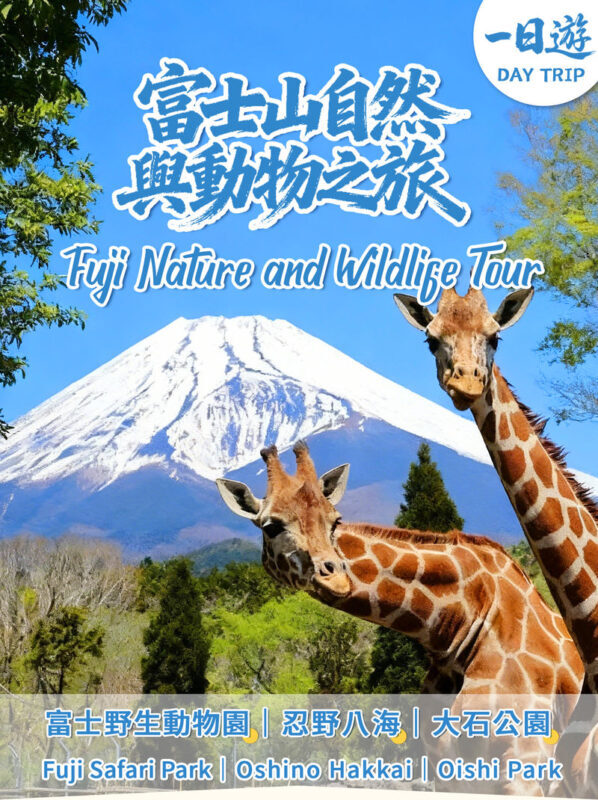
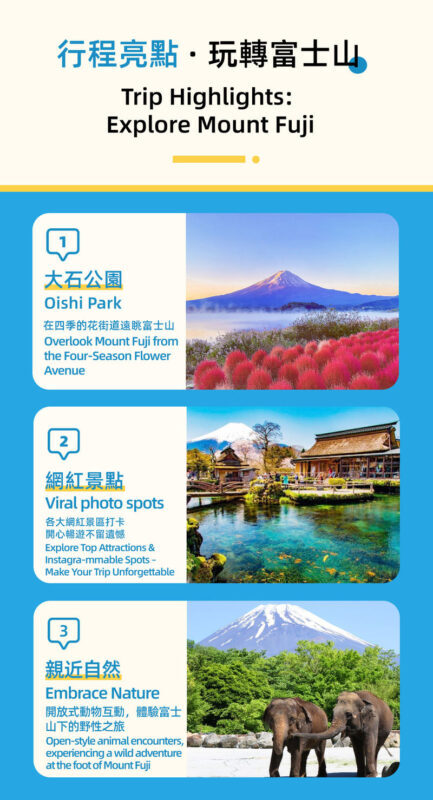
This full-day outing heads from Tokyo to the southern foothills of Mount Fuji, combining a wildlife park, a village of clear springs, and a lakeside flower park. It suits you if you want variety and would rather not arrange several regional transfers yourself.
The appeal is the contrast. At the safari park, the focus is on animals and the practical question of securing a Jungle Bus seat. At Oshino Hakkai, the pace slows around the springs and village setting. Oishi Park then offers a broad, open view across Lake Kawaguchi toward Mount Fuji.
The tour includes round-trip transport, tolls, parking, fuel, and an English- or Chinese-speaking guide. You do not follow the guide through every attraction, though: the stops are self-guided, so you choose how to use the time allotted.
The advertised starting price is not the whole cost. The package described here, departure from the meeting point without tickets, starts at US$70.29, while the experience is also promoted from US$49.20. Prices can differ by option, so check the selected package before booking. Add the park admission and, if available, the Jungle Bus fare to your budget.
You can also read our reviews of more tours and experiences in Susono.

Fuji Safari Park: plan around the Jungle Bus
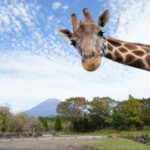
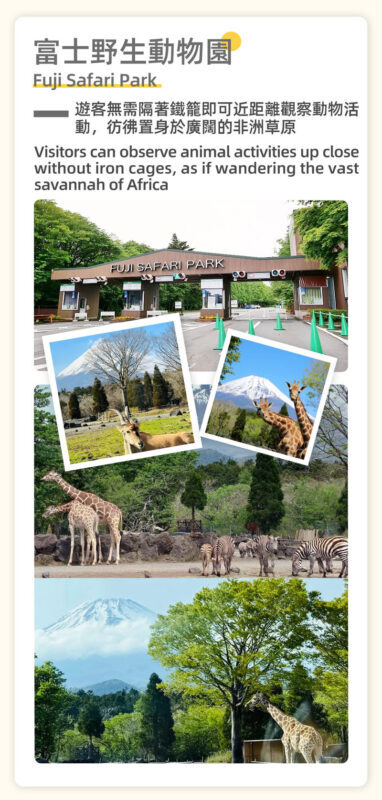
The first major stop is Fuji Safari Park, scheduled for about 10:00 am with two and a half hours to explore. It is one of Japan’s largest wildlife parks, with an open design and separate options for seeing animals from a vehicle or visiting smaller-animal interaction areas.
The Jungle Bus is the key choice. It travels through the wild animal area and allows close-up feeding, making it the more distinctive part of the visit if that is what you came for. The bus fare is ¥1,500 per person, on top of admission. A previous visitor’s practical advice is worth taking seriously: book admission and the safari bus online in advance, and consider the 11:00 am bus so you have time to check in and look around first.
Do not assume the tour fare covers entry. Admission is listed at ¥3,200 for adults and ¥2,000 for children, and those costs can add up for a family. Children aged three and up pay the same tour rate as adults; children aged zero to two can ride free if they do not need their own seat.
If you do not get a Jungle Bus ticket, the park can still be visited on foot, but that changes the experience. One person reported walking about 2.5 kilometres around the zoo after missing out on the safari bus. That may be fine if you are prepared to walk, but it is a poor substitute if close animal encounters were the main reason you booked.
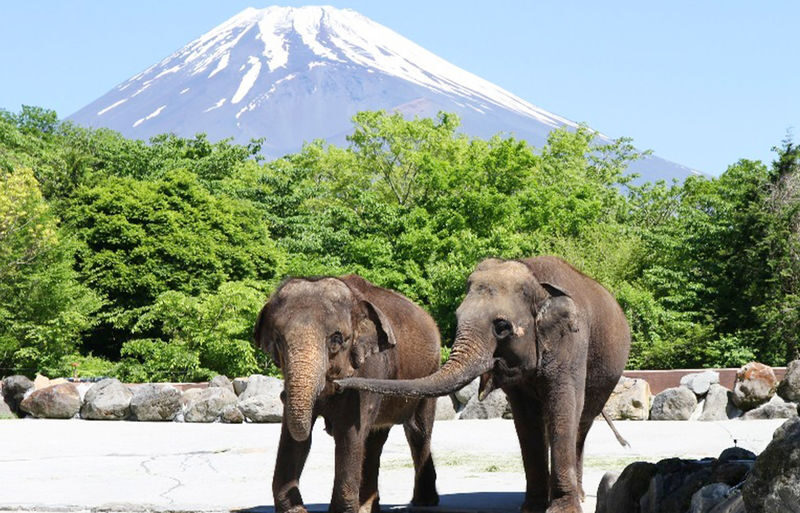
The park’s smaller-animal area offers a different kind of visit, with close contact with capybaras and other small animals. Mount Fuji may be visible behind the park, but it is a bonus, not a promise. Clouds and rain can hide the mountain even when the animals and park remain worth seeing.
Oshino Hakkai: eight springs and a Fuji view
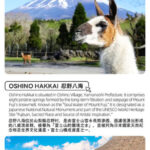
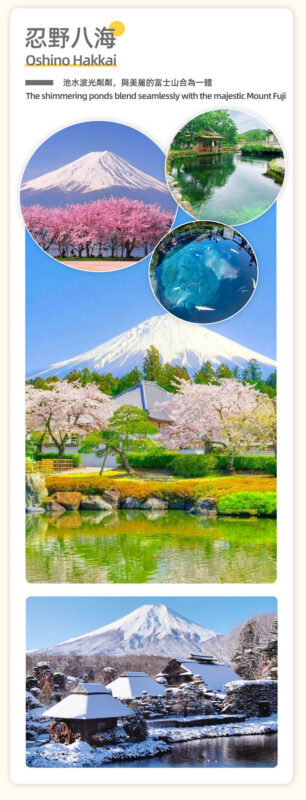
Oshino Hakkai is scheduled for about 1:20 pm, with an hour and a half set aside. The village’s eight clear springs are fed by snowmelt that has filtered through Mount Fuji over a long period. That connection to the mountain gives the ponds more meaning than a quick stop for photographs.
The area is recognized as a national natural monument in Japan and forms part of the Mount Fuji World Cultural Heritage site. You can walk between the springs, take in the village setting, and look for the mountain reflected in the still water. On a clear day, the combination of the pond surface and Fuji’s outline can make for a particularly layered view.
The tour description also calls the spring water Mount Fuji’s soul water and highlights tasting it. Treat that as an opportunity rather than a guarantee of a particular tasting setup. The clear water and its source are the point, even if clouds obscure the mountain.
Oshino Hakkai has relatively flat, open terrain, which makes it an easy place to stroll compared with a steep mountain viewpoint. Still, your time here is not unlimited. One person reported receiving about 50 minutes instead of the scheduled 90 minutes after delays earlier in the day. That is a useful reminder to keep your priorities simple: see the springs, take your photos, and leave time to return to the vehicle.
Oishi Park: flowers beside Lake Kawaguchi
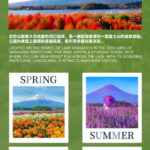
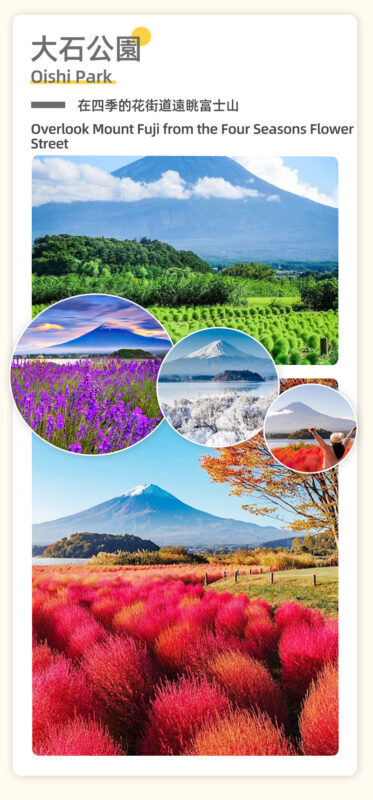
The final sightseeing stop is Oishi Park, scheduled for about 3:20 pm for 40 minutes. It sits on the shore of Lake Kawaguchi, where seasonal flower beds, the lake, and Mount Fuji can share the same view. Tulips and lavender are among the flowers associated with the park, though the display changes with the season and local conditions.
This is the stop for a relaxed look at the scenery rather than a long walk or a detailed visit. Forty minutes is enough for a stroll and photographs if the group keeps to time, but it can feel short if you want to linger. Flowers may bloom earlier or later than expected, and a cloudy afternoon can obscure Fuji. The park is still beside the lake, but the famous mountain-and-flowers composition depends on conditions.
A visit in rain does not have to spoil the day. One couple found that Mount Fuji appeared at Oshino Hakkai despite rain for much of the morning, and they enjoyed their final stop by the lake, where swans were along the shore. That is a good way to think about the weather: Fuji views are a bonus, while the parks and springs remain the core of the outing.
What the schedule means in practice
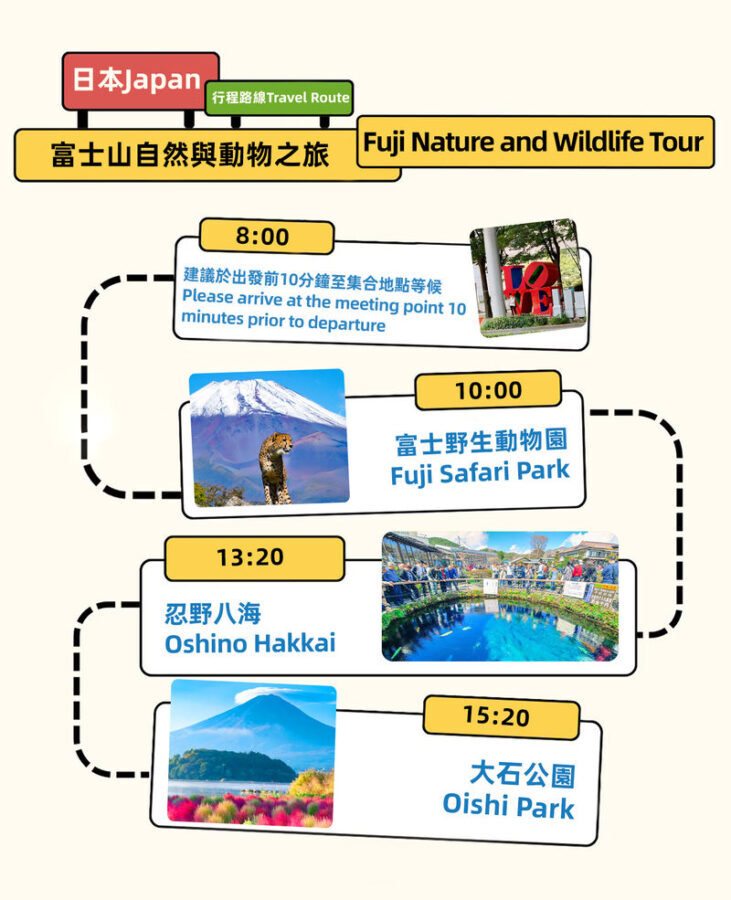
The bus departs Tokyo at 8:00 am, with arrival at Fuji Safari Park planned for around 10:00 am. After the park, the schedule gives you Oshino Hakkai from about 1:20 pm and Oishi Park from about 3:20 pm. The return journey begins at 4:00 pm, with arrival in Tokyo scheduled for around 7:00 pm.
Those times leave little room for a slow start or a late return from any stop. A review of the day described delays caused by late arrivals and reduced time at Oshino Hakkai and Oishi Park. The tour rules say the vehicle will not wait for late participants, but actual timing can still shift with traffic, crowds, weather, or other disruptions.
I would not plan dinner reservations, a show, or another timed activity for the evening. The operator warns that the return time can change, and the drive back alone is scheduled at two and a half hours. Keep your evening flexible.
The exact departure meeting point matters. Tokyo Mode Gakuen is named as the return point, but you should check your tour email for the confirmed place to board. Guide and vehicle details are sent by email before 9:00 pm Japan time the day before departure. Arrive ten minutes early; late arrivals and no-shows cannot receive a refund.
Transport, guides, and added costs
The package includes round-trip transfers from the meeting point, tolls, parking, and fuel. That convenience is valuable on a day that covers several stops around Mount Fuji, especially if you would rather not piece together transport between the safari park, Oshino, and Lake Kawaguchi.
The group arrangement depends on how many people book. For groups of four to 13, the driver may also act as guide, with driving taking priority over explanations. Groups of 14 to 45 have a driver and a separate guide. English- and Chinese-speaking guide service is listed, but the amount of commentary can vary with the setup.
A visitor praised guide Niklaus G. for adjusting the route around rainy weather and making the drive enjoyable; another singled out Kim for being friendly and answering questions. Those details suggest that the guide can shape the feel of the day, especially during the long drives. But treat the transport as the main service and the stops as self-guided, rather than expecting a guided tour inside each attraction.
Meals, drinks, park entry, the Jungle Bus, and personal spending are not included. Bring money for food and any purchases, and check current ticket availability before you set out. Each person may bring one piece of luggage free; additional pieces cost ¥2,000 each and need to be declared when booking. If you have more than one bag, confirm the arrangement in advance.
Who should book this Fuji day trip?
This outing is a good fit if you want to see three different places in one day without arranging the regional transport yourself. Families may appreciate the animal encounters, while photographers have several chances to frame Mount Fuji with water, flowers, or the park’s setting. It also works well for visitors with limited time in Tokyo who want a broad introduction to the mountain’s southern and lakeside surroundings.
It is less suited to you if you want a slow, unhurried visit at every stop. The park’s most distinctive activity costs extra and may sell out, and the two later stops have fairly short scheduled visits. The day also depends on weather for the clearest Fuji views and on traffic for keeping to time.
For the best chance of getting the experience you expect, book the safari bus early, confirm the meeting point, and keep your evening clear. If you are comfortable with a brisk schedule and understand that Mount Fuji may hide behind clouds, the tour offers a practical way to combine wildlife, spring water, and lakeside scenery in one long day.
One-day tour of Fuji Safari Park, Oshino Hakkai, and Oishi Park
“We had a great day visiting Fuji Safari Park, Oshino Hakkai, and Lake Kawaguchi with our guide, Niklaus G. Since we were the only guests, he picked…”
FAQ
Is Fuji Safari Park admission included?
No. Admission is listed at ¥3,200 for adults and ¥2,000 for children. The Jungle Bus is a separate ¥1,500 per person.
How long do you get at each stop?
The planned visits are two hours and 30 minutes at Fuji Safari Park, one hour and 30 minutes at Oshino Hakkai, and 40 minutes at Oishi Park. Traffic, weather, crowds, and delays can change the schedule.
What time does the tour leave and return?
Departure is scheduled for 8:00 am, with return to Tokyo Mode Gakuen around 7:00 pm. The return time may change with traffic or weather.
What languages are available for the guide?
An English- or Chinese-speaking guide is included. In groups of four to 13, the driver may also serve as guide, with driving as the main duty.
Can children join the tour?
Children aged zero to two can ride free if they do not occupy a separate seat. Children aged three and older are charged the same tour rate as adults.
How much luggage can I bring?
One piece of luggage per person is free. Each additional piece costs ¥2,000, and you should note extra luggage when placing your order.