
n
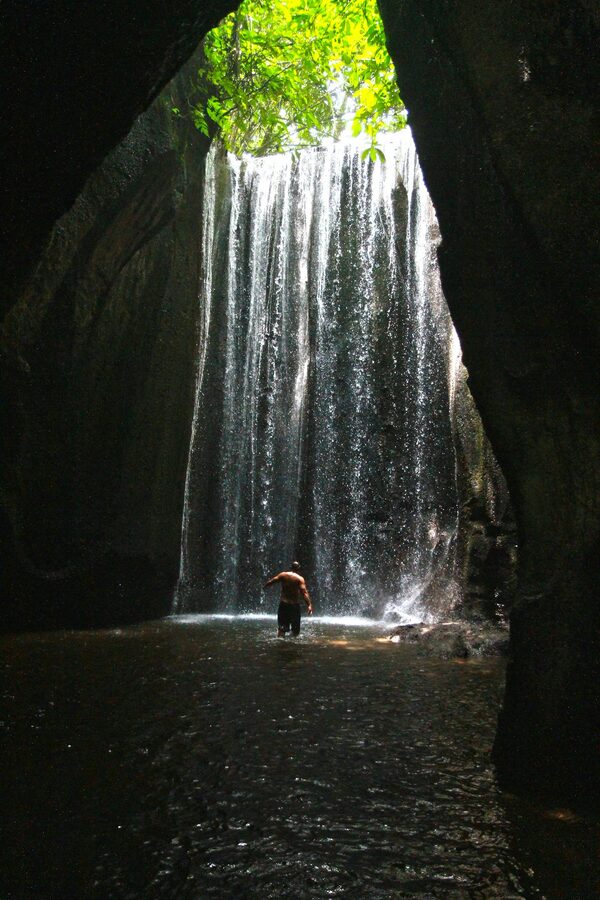
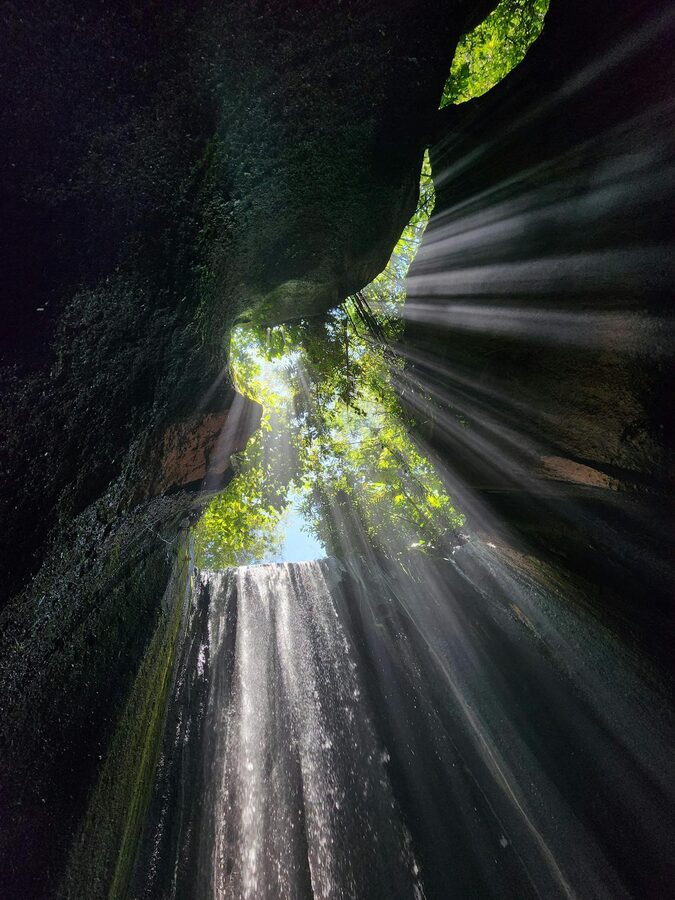
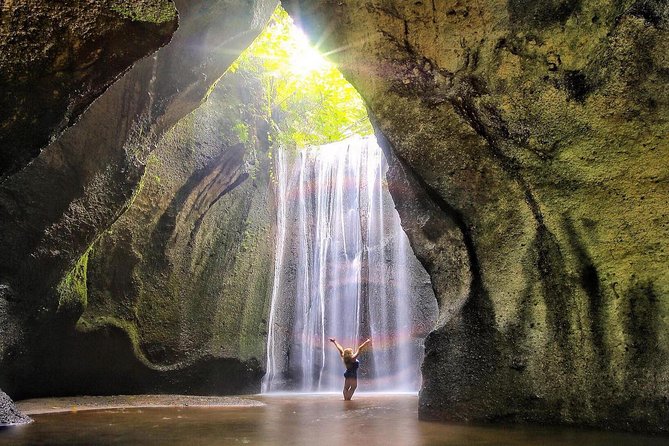
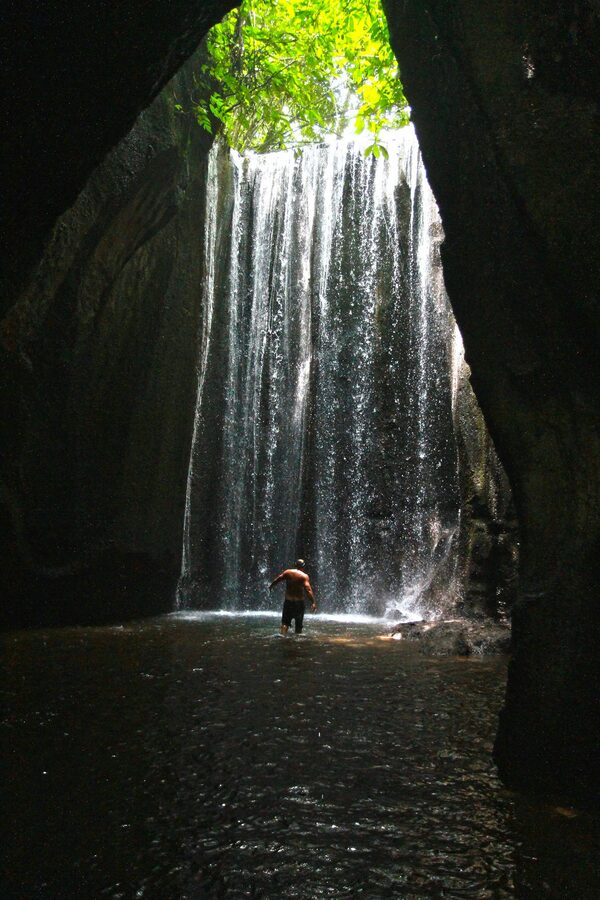
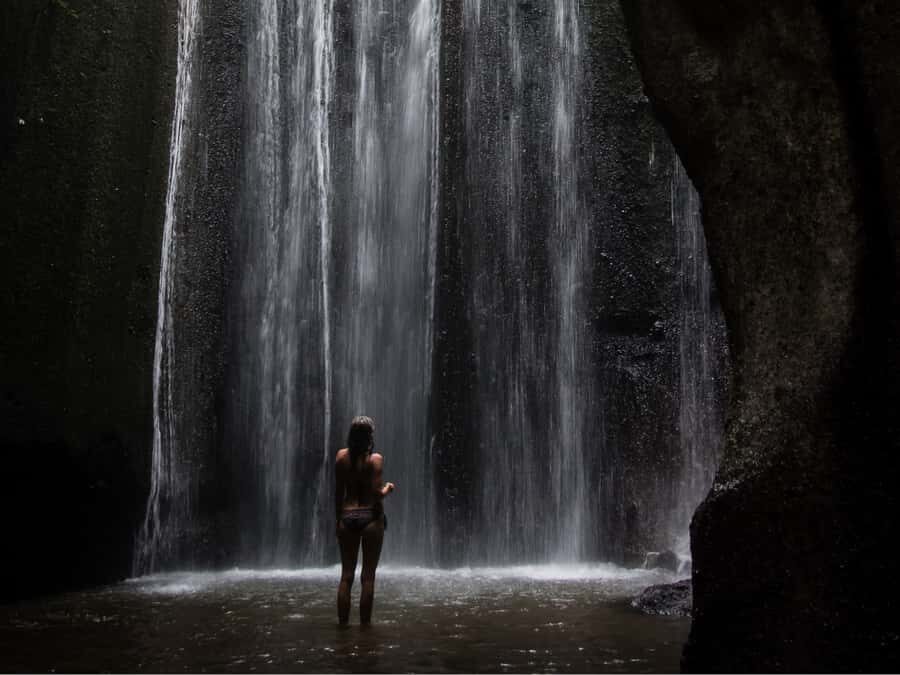
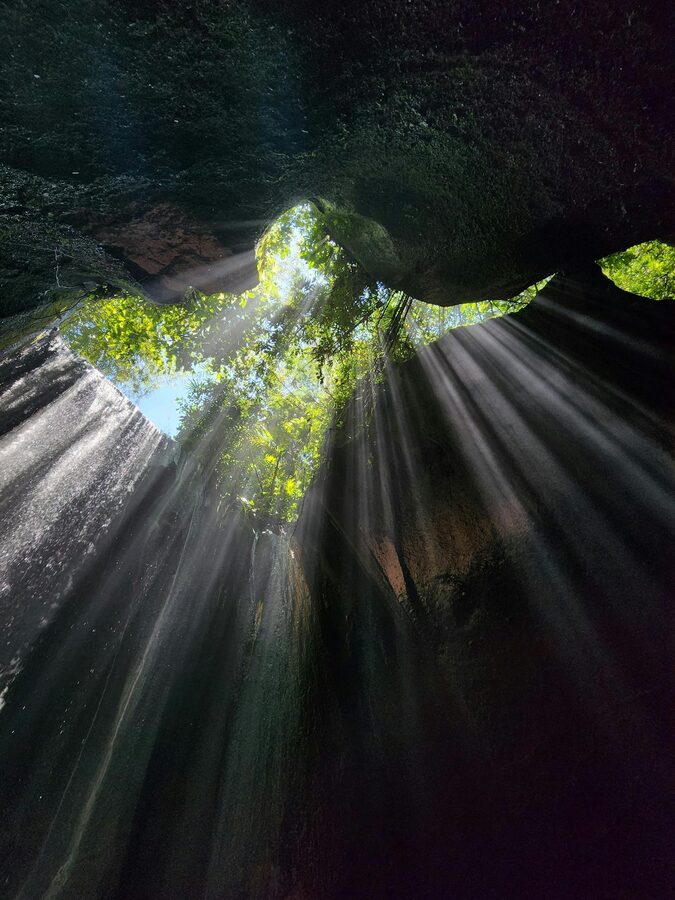
At 8:47 a.m. on a Tuesday in September, a single column of light drops through a slot in the cave roof at Tukad Cepung and lands on the waterfall like a stage light cueing up the lead act. The spray turns into gold dust. The mossy black walls turn into something closer to the inside of a cathedral.
Every person standing in the shin-deep water holds up a phone at the exact same angle because they all came for exactly this — the 20 minutes a day, for about four months of the year, when the sun is high enough to punch through the opening above and low enough to still feel directional. It lasts eight or nine minutes at most.
Then the beam slides off the falls, the water goes back to being water, and the whole room exhales and wades out toward the entrance trail.
That light beam is the single most photographed waterfall moment on the entire island of Bali, and the reason it works is the same reason the three-waterfall tour format exists at all: if you don’t plan your morning around the geometry of sun and cave and crowd, you will miss it entirely and wonder why your friend’s Instagram looks so much better than yours.
We’ve worked through the tour listings, read a few thousand written reviews, and matched them against a couple of dozen traveler emails to pin down which Bali waterfalls tours actually get you the three best falls in the right order, with time at each one, and without overfilling the day.
The three that keep surfacing as the “must do” loop are Tibumana, Tukad Cepung, and Tegenungan — a beginner-friendly jungle grotto, the cave with the light beam, and a huge curtain fall that sits about 30 minutes from central Ubud. There are also tours that fold a fourth waterfall (Kanto Lampo) or rice terraces into the day, and those can be a better pick depending on your travel style.
Below, we walk through the three tours we’d book, what’s actually included, the honest trade-offs, and how to time your booking so the Tukad Cepung light beam actually cooperates.
- Why These Three Waterfalls, and Not the Other Thirty
- How the Three Main Tour Formats Differ
- 1. Best of Bali Waterfalls: Tibumana, Tukad Cepung and Tegenungan
- 2. From Bali: Ubud Day Trip — Waterfall, Rice Terraces & More
- 3. Bali: Lempuyang Quick Access, Waterfall, Water Palace & More
- What to Pack for a Bali Waterfalls Morning
- When to Book and How to Time the Light Beam
- Which Tour Should You Actually Book
- Before You Book: A Quick Checklist
- Final Thoughts on Chasing Waterfalls in Bali
Why These Three Waterfalls, and Not the Other Thirty
Bali has a genuinely absurd number of waterfalls. A quick drive around the Bangli and Gianyar regencies turns up a new sign for a different one every few kilometers, and a committed waterfall chaser could spend a full week on the island and still be adding falls to the list.
So why do Tibumana, Tukad Cepung, and Tegenungan get grouped into the single most-booked tour format on Viator and GetYourGuide? Geography, photographic variety, and effort-to-reward ratio — in that order.
The three sit inside a rough triangle southeast of Ubud, none of them more than 45 minutes from the town, which means a single driver can loop them in half a day without long highway slogs between stops.
n
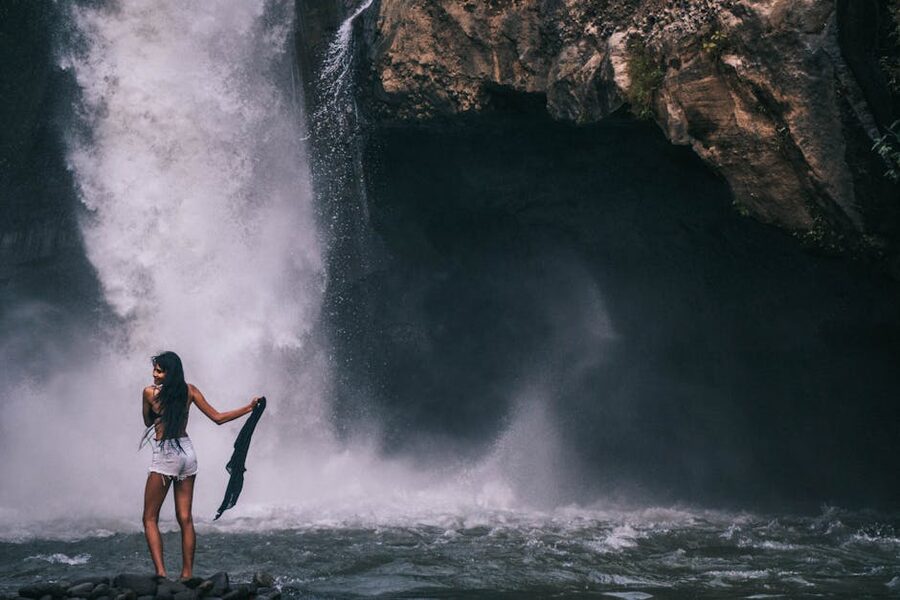
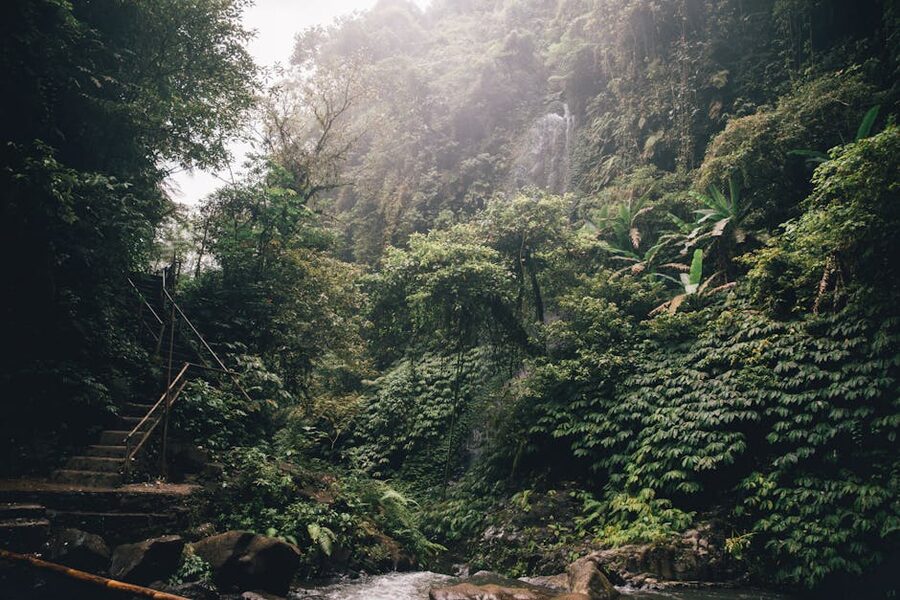
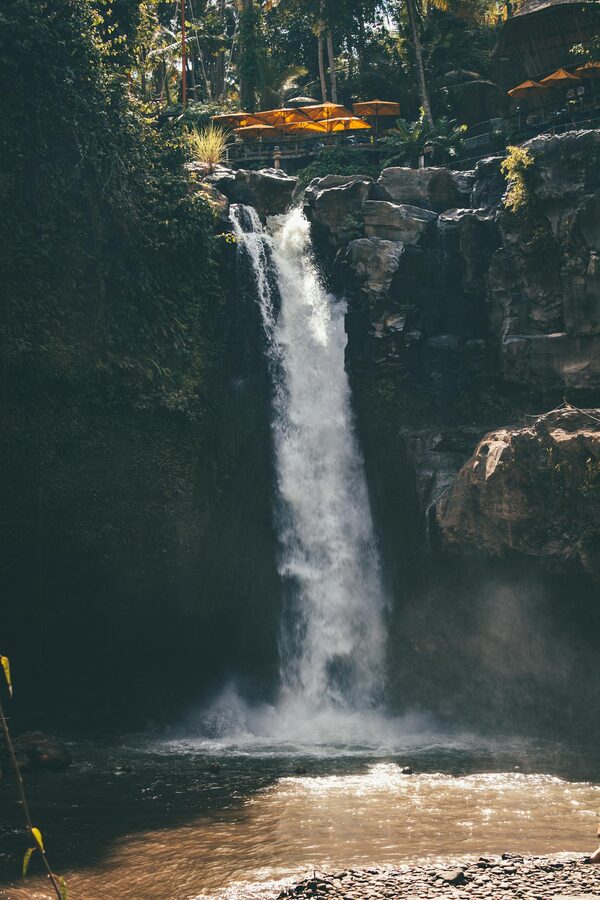
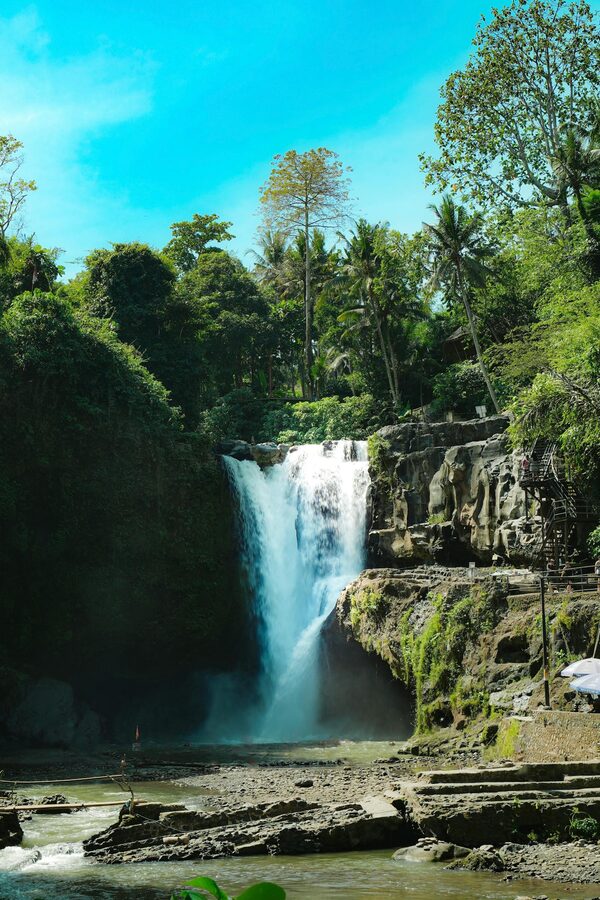
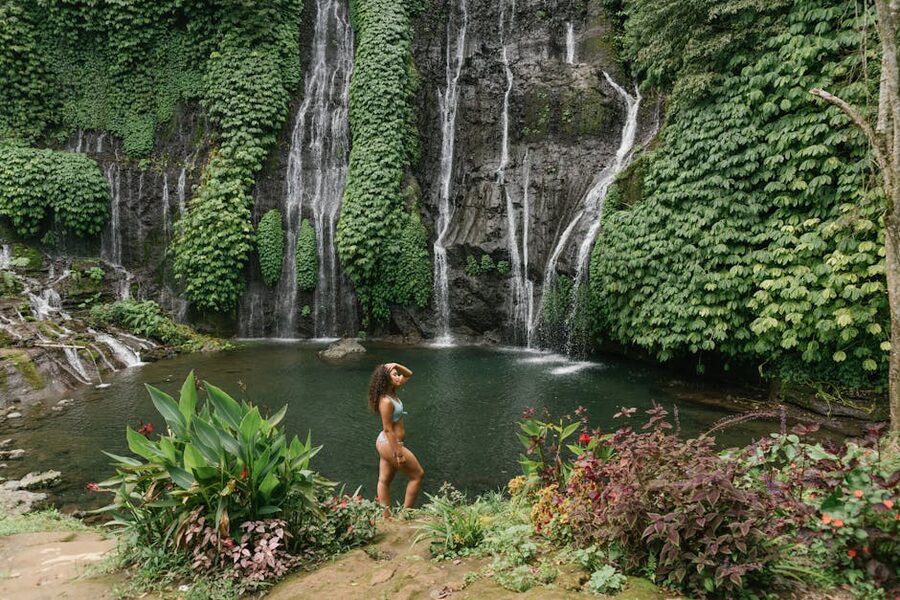
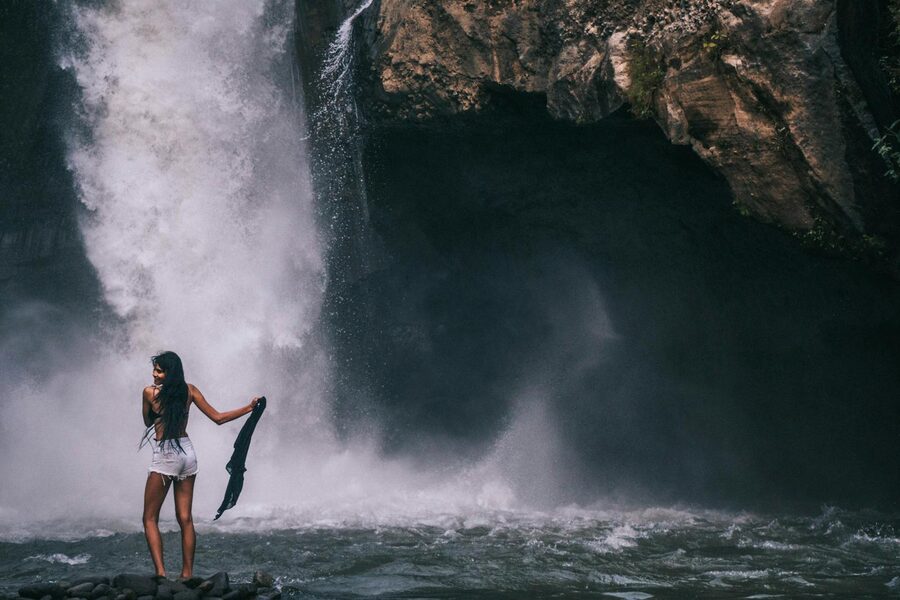
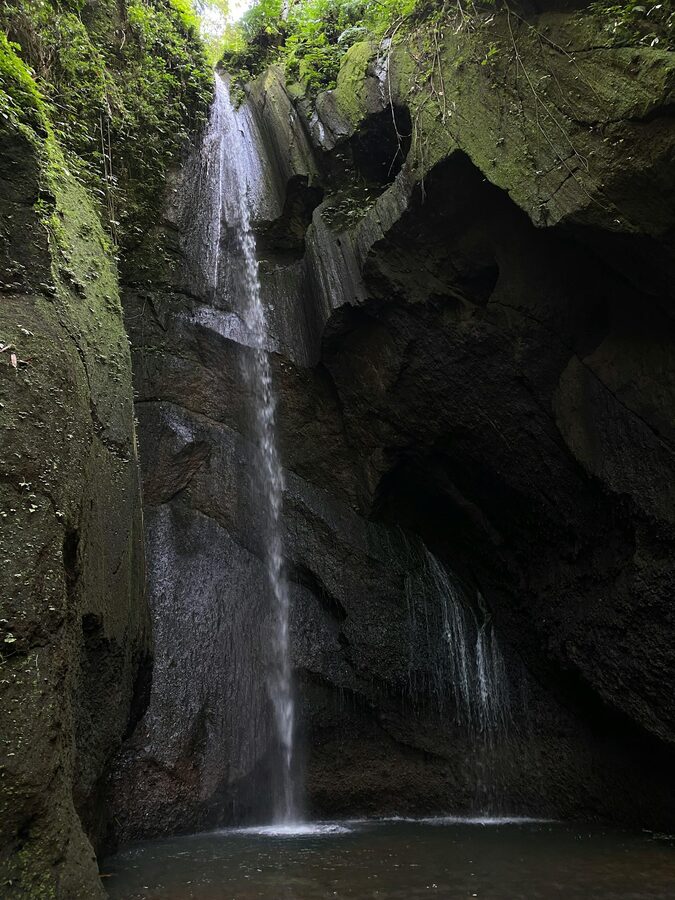
They also happen to be three completely different kinds of waterfall, which is what makes the combination work as a storytelling arc: Tibumana is a slim, graceful veil that drops into a shaded jungle pool and is almost always the quietest of the three; Tukad Cepung is the cave fall, hidden inside a canyon slot and only visible once you wade through a knee-deep stream to reach it; Tegenungan is the wide, thundering curtain, the one you see from 40 meters away and feel in your chest.
A photographer working through the three gets a macro shot, a dramatic light shot, and a wide establishing shot, in one morning, without driving more than 90 minutes total. No other combination of Bali falls gives you that range that fast.
The effort gradient matters too. Tibumana is an easy 10-minute walk down gentle concrete steps to a flat pool area — genuinely accessible for most fitness levels and great for travellers who got the “you’ll have to hike” pitch and weren’t sure they were up for it.
Tukad Cepung involves a steeper stair descent, a short ladder-step bit, and the wade through the stream bed into the cave, which is the part that eliminates strollers and flip-flops. Tegenungan is a staircase of maybe 150 steps down to the viewing platform, more if you want to get into the pool at the base.
None of them is a proper hike, but they’re not identical either, and tours that batch them together do it in a specific order (usually Tibumana first while it’s still quiet, Tukad Cepung second to hit the light beam window, Tegenungan last because it’s closest to the drive back to Ubud or south Bali).
A few things to set expectations on before you commit:
- The Tukad Cepung light beam is seasonal and time-locked. It only punches through when the sun angle is high enough, which in practical terms means roughly April through October, between about 10 a.m. and 11:30 a.m. local time, on a cloudless morning. If you book a tour that schedules Tukad Cepung for 2 p.m., you will see a beautiful cave with a waterfall in it, and no light beam. Tours that know what they’re doing put Tukad Cepung in the 10 to 11:30 slot.
- You will get wet. Tukad Cepung requires a wade, and the spray zone at Tibumana’s base is enthusiastic. Bring a dry bag for your phone, or accept that your shoes and shorts will be damp by noon. A quick-dry outfit beats denim every time.
- Entry fees are usually included, but check. Each waterfall charges a small entrance fee at the gate (roughly 20,000 to 30,000 IDR per person, per fall). The better-run tours bundle these into the booking price so there’s no cash fumbling at the ticket booth. Cheaper operators sometimes strip the fees out to advertise a lower headline price.
- The tour order matters more than the operator. We’ve read reviews where travellers arrived at Tukad Cepung at noon and couldn’t understand why their photos looked flat. It wasn’t the driver’s fault. It was the schedule. Look for tours that explicitly list the waterfalls in the Tibumana to Tukad Cepung to Tegenungan order.
- Crowds build fast after 9 a.m. Tegenungan in particular gets a tour-bus wave around 11, and Tukad Cepung is standing room only by noon during high season. The earlier your pickup, the calmer your morning.
How the Three Main Tour Formats Differ
Before we get to specific tours, it’s worth understanding the three shapes this morning takes on the ground. They are not interchangeable.
n
Pure waterfall tour (3 to 4 falls, half day). This is the tightest format. Hotel pickup around 7 or 7:30 a.m., direct drive to the first waterfall, loop through the three (or four, if Kanto Lampo is added), back to your hotel by early afternoon. Runs about 6 to 8 hours door to door depending on your pickup point.
Price sits in the $35 to $60 per person band for a small-group tour, cheaper if you share a private car with other travellers. This is the purist option — maximum time at each waterfall, no added stops, no rice terrace detour. It’s what we’d book for a photographer.
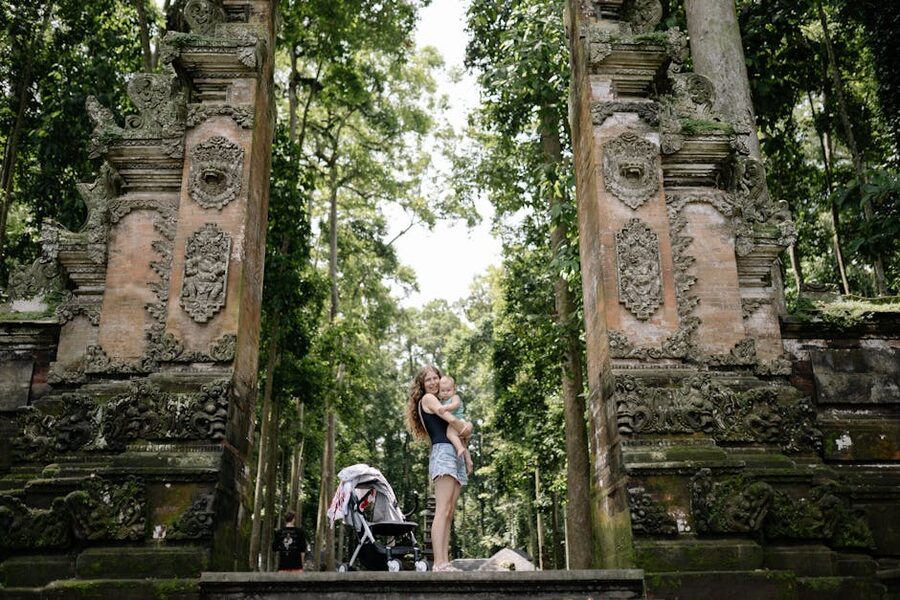
Combo day trip (waterfalls plus rice terraces plus monkey forest). This is the most-booked format on GetYourGuide, because it packs a bigger slice of the Ubud region into a single day.
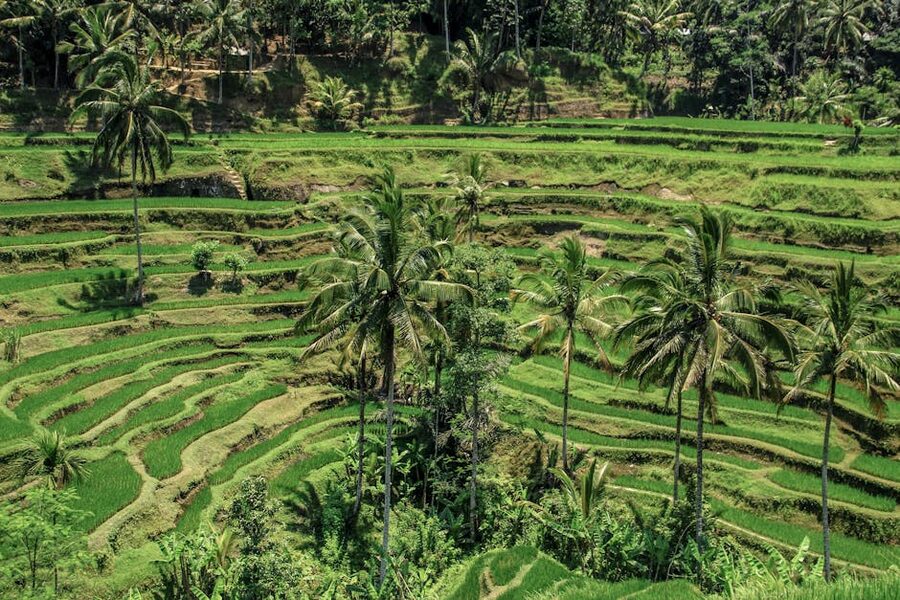
You get Tibumana or Tegenungan (sometimes both, sometimes just one), plus the Tegalalang rice terraces for the iconic photo, plus the Ubud Sacred Monkey Forest, and depending on the operator maybe a swing stop or a coffee plantation. Runs about 8 to 10 hours. Cheaper on a per-hour basis because you’re sharing the driver across more stops, but you get less time at each waterfall.
Great for first-time Bali visitors who want a sampler day. Not ideal for someone whose entire goal is that Tukad Cepung light beam.
East Bali extended combo (Lempuyang plus waterfall plus water palace). This is the “we have one day, show us everything” option.
You start much earlier (typically 1:30 or 2 a.m. pickup), drive to the Lempuyang Temple in east Bali to beat the Instagram queue at the Gates of Heaven, then work your way back west through a waterfall stop and a water palace stop and a viewpoint before returning to the south. It’s a 12- to 14-hour monster of a day, covers a huge amount of ground, and is genuinely exhausting.
It’s not a waterfall tour in the purist sense — the waterfall is one of five stops — but for travellers with only one free day in Bali and a determination to see the headline photos, it works.
With those three shapes in mind, here are the three tours we’d actually book, one per format.
1. Best of Bali Waterfalls: Tibumana, Tukad Cepung and Tegenungan
If you care about the waterfalls themselves more than the add-on stops, this is the tour we’d book without hesitation. A perfect 5.0-star rating across 3,047 written reviews is not a rounding artifact — it is a sustained, near-impossible consistency that tells you the operator has nailed the specific thing travellers turn up for. And the specific thing is the schedule.
The three falls are tackled in the exact order that matches the light: Tibumana first thing in the morning while it’s still quiet and the sun hasn’t pushed into the jungle yet, Tukad Cepung in the sweet spot between 10 and 11:30 for the best chance at the light beam, Tegenungan last because it’s closest to the drive back and the most forgiving of late-morning crowds.
The format is an 8-hour private guided day. Hotel pickup around 7:30 a.m. from Ubud, Seminyak, Kuta, Canggu, Sanur, or Nusa Dua, with the earlier pickups for the southern zones because of the longer drive. You’re assigned a driver-guide who stays with you the entire day — none of the “handoff” nonsense where a different guide meets you at each stop.
At Tibumana, you walk the gentle 10-minute path down to the pool, and the guide hangs back to let you take photos while quietly pointing out which angles actually work. At Tukad Cepung, you change into water shoes (or wade in barefoot — up to you), walk the stair section, drop into the stream, and wade the last 40 meters into the cave for the light beam window.
n
The guide knows exactly when to be standing where to take your photo. At Tegenungan, you descend the staircase to the main viewing platform, and you have the option to go further down to swim at the base if you’ve brought a suit.
What we like:
- The 5.0 rating across 3,000+ reviews is genuinely unusual. We read through the last 80 or so reviews and the consistent note is “driver was incredible, knew exactly when to be at each waterfall, took our photos at the right angles.” That’s the private-tour advantage made real — a shared bus operator simply cannot tune the timing to the light.
- Entry fees are included in the headline price. No cash fumbling at ticket booths, no surprise add-ons. The $53 is what you pay.
- The schedule respects the Tukad Cepung light window. This sounds obvious but most combo tours do not do this. They’ll hit Tegenungan first because it’s closest to the south coast pickups, and by the time you reach Tukad Cepung the sun has moved. This tour is specifically built around the cave fall as the centerpiece.
- It’s a proper private tour. You are not sharing the vehicle with strangers. For couples, friends traveling as a pair, or small families, this means you set the pace and linger where you want.
- Lunch is typically included at a warung with a rice terrace view. It’s not fine dining, but it’s a proper sit-down meal, and it means you don’t have to factor food into your day.
What to be aware of:
- It’s the most expensive of the three tours in this guide. At $53, it’s almost double the headline price of the combo tour below. For travellers on a budget, that difference can matter. What you’re paying for is the private vehicle, the entry fees, the lunch, and the schedule discipline.
- The “light beam” is still weather dependent. Even with the perfect schedule, a cloudy morning in November will kill the effect. The tour runs regardless, and the waterfalls are still gorgeous, but manage expectations if you’re booking in wet season.
- Pickup from the far south adds a long drive. If you’re in Nusa Dua or Jimbaran, your pickup is around 6:30 a.m. and the drive is 90 minutes each way. Ubud-based travellers get the best version of this tour.
Who this is for: photographers who want to maximize the Tukad Cepung light beam, couples who want a relaxed pace without a group, travellers who prioritize waterfalls over rice terraces, and anyone staying in or near Ubud who wants the shortest drive times. If you only book one activity for your Bali waterfalls day, book this one.
2. From Bali: Ubud Day Trip — Waterfall, Rice Terraces & More

This is the value pick, and with nearly 5,000 reviews sitting at a 4.9-star average it’s also the most-proven format of the three. At $23 per person it costs less than half of the dedicated waterfall tour above, and what you give up in pure waterfall time you gain in coverage of the wider Ubud region.
The format is a classic Ubud day trip: one waterfall (usually Tegenungan, sometimes Tibumana depending on operator and season), the Tegalalang rice terraces for the iconic photo moment, the Ubud Sacred Monkey Forest for an hour with the long-tailed macaques, and usually a stop at a traditional coffee plantation or a Luwak coffee tasting on the way back.
Some variants of the tour add a swing stop for the viral rice-terrace photo.
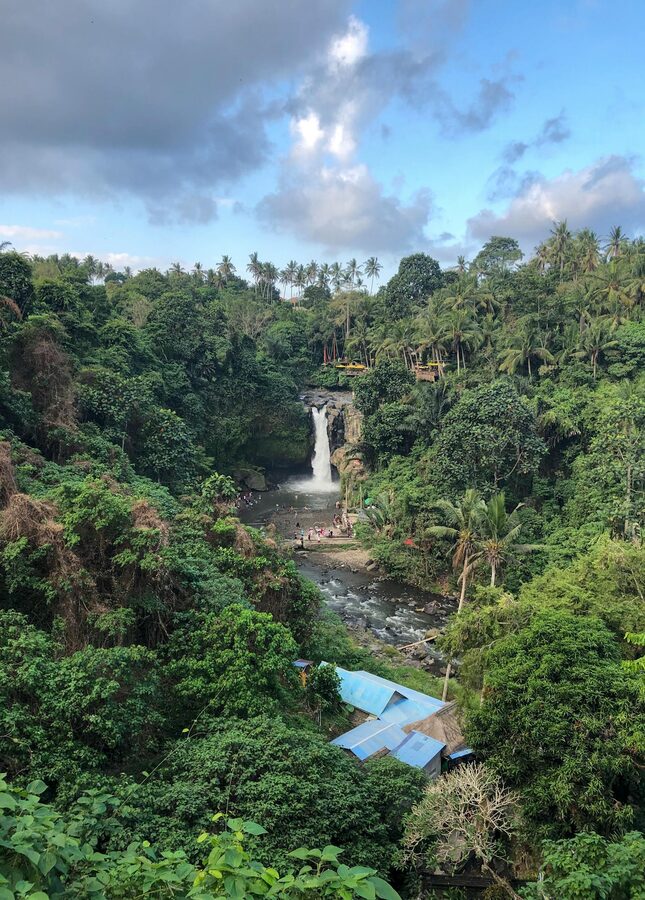
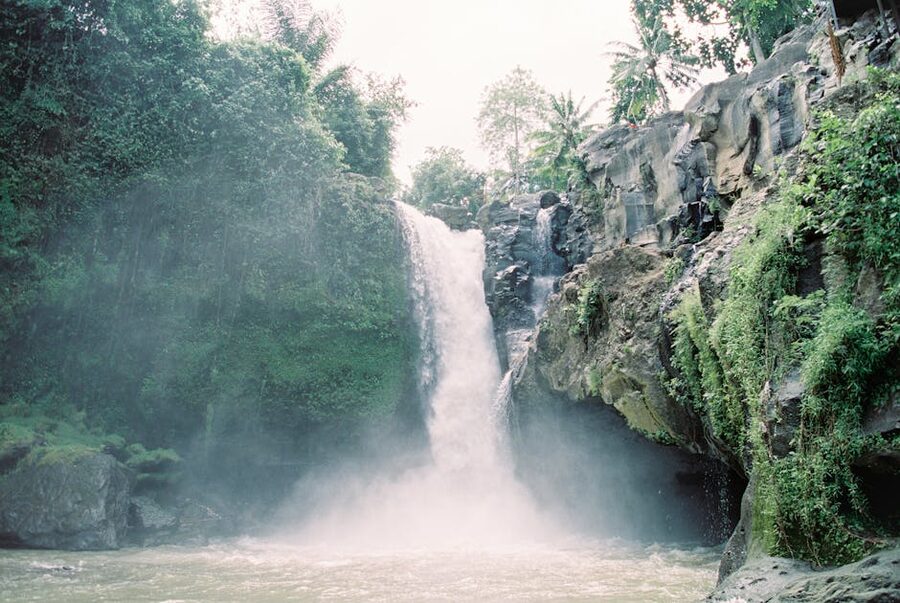
It’s not a dedicated waterfall experience — you’ll only hit one of the three falls, not all three — but for travellers on their first Bali trip who want to sample everything the central part of the island has to offer in one day, this is the format that keeps getting booked for a reason.
The review volume alone is a signal: 4,894 written reviews is an enormous sample, and a 4.9 average across that many bookings tells you the operator ships reliably.
We read through the recent reviews and the common thread is that the driver-guide is willing to adjust the order based on crowd conditions — if Tegenungan is already packed at 9 a.m., they’ll flip to the rice terraces first and come back later.
What we like:
- The price-per-stop math is excellent. Four major stops for $23 per person is genuinely hard to beat on GetYourGuide. For travellers trying to stretch a budget across a two-week Bali trip, this is the day that frees up money for everything else.
- The review count is its own quality signal. 4,894 reviews is a huge sample size. Compare that to cheaper street-touted day trips that have no review trail at all. You’re paying a small premium for a proven operator.
- The rice terraces stop is better than it gets credit for. Tegalalang in the morning light, before the tour-bus crush around 11 a.m., is one of the most photogenic places in central Bali. A tour that puts you there by 9:30 is giving you genuine value.
- It’s a private tour despite the price. You get your own vehicle and driver — you are not sharing a minivan with strangers. That’s unusual at the $23 price point and it’s the reason this tour has the review count it has.
- The pickup zone is wide. Most of south and central Bali is included — Ubud, Seminyak, Kuta, Canggu, Sanur, Nusa Dua, Jimbaran. No pickup surcharges for distance.
What to be aware of:
- You only get one waterfall. This is the big trade-off. If seeing all three of Tibumana, Tukad Cepung, and Tegenungan on the same day is the whole point of your booking, this tour is not the right pick — go for option 1 above.
- The Monkey Forest stop is polarizing. Some travellers love it, others find it stressful (the macaques will genuinely try to take your sunglasses). If you have a fear of monkeys or are traveling with young kids, ask the operator if you can skip that stop for a longer rice terrace session.
- Lunch is not always included. Check the booking page — some variants include a warung lunch, others drop you at a restaurant where you pay for your own food.
- The swing stop is an upsell. If the tour mentions a Bali swing, the actual ride on the swing is usually $25 to $35 extra paid at the gate. The tour includes the stop, not the ride.
Who this is for: first-time Bali travellers who want a sampler day of Ubud’s greatest hits, budget travellers who want a proven private driver at an unbeatable price, anyone who cares equally about rice terraces and waterfalls, and travellers who want a full-day excursion without the 2 a.m. wake-up of the east Bali combo tours.
3. Bali: Lempuyang Quick Access, Waterfall, Water Palace & More
This is the “we only have one day and we want to see everything” option. If your Bali trip is short and you’re trying to cram the entire island’s greatest hits into a single marathon — the Lempuyang Gates of Heaven photo, a proper waterfall stop, the Tirta Gangga water palace, and a few viewpoints — this is the tour that does it.
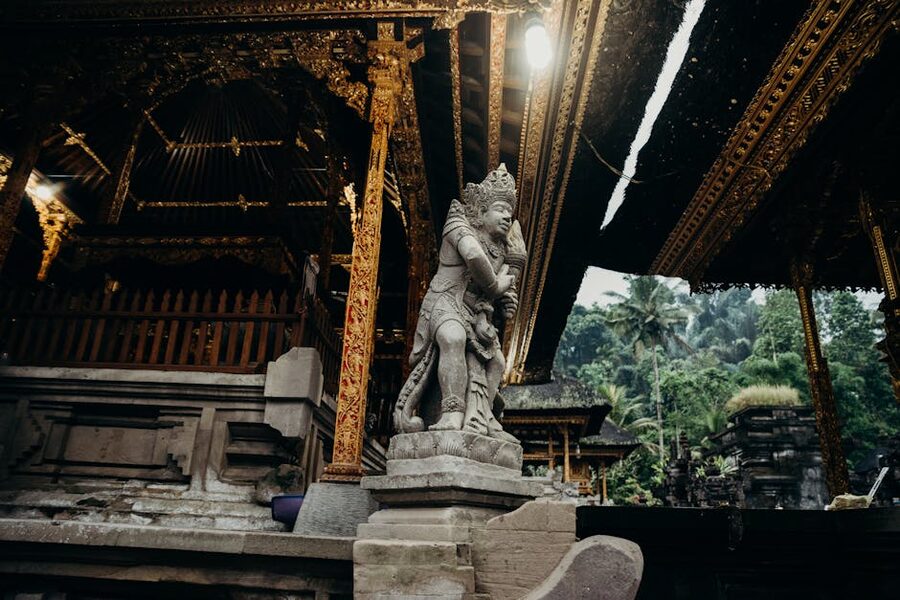
The key selling point buried in the name is “Lempuyang Quick Access,” which matters a lot: the standard Lempuyang experience involves a two-hour wait in a queue of 300 people for the iconic photo in front of the gates. The quick-access variant skips that queue and cuts the wait to around 30 to 45 minutes, which is the difference between a memorable morning and a frustrating one.
The format is a 13.5-hour day that genuinely lives up to that number. Pickup around 2 a.m. from your hotel to make the long drive to east Bali before sunrise, arriving at Lempuyang for the quick-access photo slot around sunrise itself.
Then the loop heads west through a waterfall stop (typically Tibumana or a nearby east-Bali alternative like Tukad Cepung depending on the operator’s routing that day), the Tirta Gangga water palace with its koi ponds and stepping stones, and a viewpoint or two, before the long drive back to your hotel around 3 or 4 p.m.
n
It is a brutal but comprehensive day, and the 4.7 rating across 1,072 reviews tells you the people who sign up for it know what they’re getting and come away satisfied.
What we like:
- The quick-access Lempuyang is a real time saver. We’ve read reviews of the standard queue experience and “three hours of standing in line for a 20-second photo” is a consistent complaint. This variant eliminates that.
- One-day Bali coverage. If your trip is a layover or a three-day visit, this is the tour that lets you tick off five iconic stops in a single day. No other format gets you from Gates of Heaven to a waterfall to a water palace in the same booking.
- It’s a proper private tour. Your own car, your own driver, your own pace. For $30 per person with two travellers, that’s an unusually good price for a 13.5-hour private experience.
- The review distribution is honest. The 4.7 rating is lower than the dedicated waterfall tour, and that’s telling — travellers know this is a long day, and the lower-star reviews are almost all about exhaustion, not about the operator doing anything wrong. The trips run cleanly. The day is just long.
- Water, snacks, and some photo help are included. The driver-guides on this route know the photo spots at Lempuyang and Tirta Gangga cold and will take your pictures without being asked.
What to be aware of:
- It is genuinely exhausting. A 2 a.m. pickup and a 3 p.m. return means you’re effectively losing a full day of rest. If your Bali trip is more than five days long, split these stops across two separate days instead.
- The waterfall stop is a single fall. This is not a waterfalls tour. You’ll see one waterfall, not three. If the falls are your priority, pick option 1 above.
- The drive is long. East Bali from the south is about two hours each way. If you’re prone to motion sickness on winding roads, bring remedies.
- Entry fees may be extra. Check the fine print — the Lempuyang quick-access fee is usually included, but Tirta Gangga and the waterfall gate fees are sometimes paid on the day.
Who this is for: travellers with only one or two days in Bali, photographers chasing the Lempuyang Gates of Heaven shot without the queue, anyone who wants a single-day greatest-hits tour of east Bali, and travellers who’d rather sleep a little less and see a lot more.
What to Pack for a Bali Waterfalls Morning
n
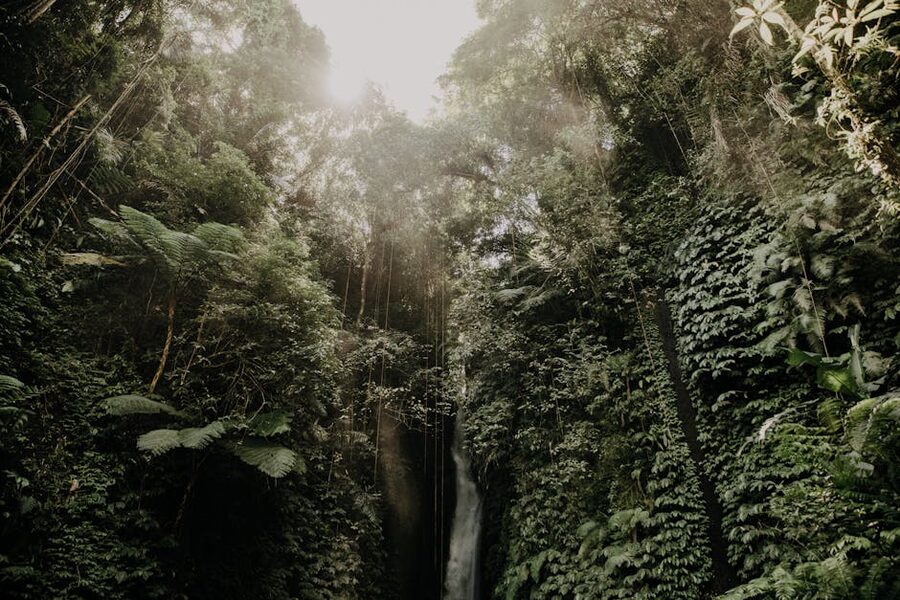
The most common reason travellers have a mediocre time on a waterfalls tour isn’t the waterfalls — it’s being wet in the wrong clothes for eight hours. We’ve seen reviews from people who showed up in jeans and leather sneakers and spent the drive home shivering in damp denim. Don’t be that person. Here’s the packing list we’d actually bring:
- Water shoes or sturdy sandals with a heel strap. Flip-flops will fail in the Tukad Cepung stream wade. A cheap pair of water shoes from a beachfront shop in Kuta costs about $5 and pays for itself in the first 10 minutes.
- A quick-dry outfit. Shorts and a polyester or merino shirt will dry on the drive between waterfalls. Cotton and denim will stay wet all day.
- A swimsuit underneath. Tegenungan has a swimmable pool at the base and you’ll want to be able to get in without a full change.
- A dry bag for your phone. Even a $3 ziplock from a minimart works. The spray zones at Tibumana and Tegenungan will mist a phone in 30 seconds.
- A quick-dry travel towel. Small enough to fit in a day pack, big enough to dry off between stops.
- Sunscreen and a cap. The drive between waterfalls and the rice terrace stops are in direct sun. The falls themselves are shaded.
- Cash for entry fees and small purchases. Around 150,000 to 200,000 IDR per person should cover any fees not included in your tour, plus warung snacks and a tip for your driver. ATMs in Ubud are fine, ATMs at the waterfalls themselves are not a reliable thing.
- A GoPro or waterproof camera. If you have one, bring it. A phone in a dry bag works, but a GoPro at the Tukad Cepung light beam is genuinely the better tool.
- Insect repellent. Tibumana is in jungle and the mosquitoes at 8 a.m. are enthusiastic.
When to Book and How to Time the Light Beam
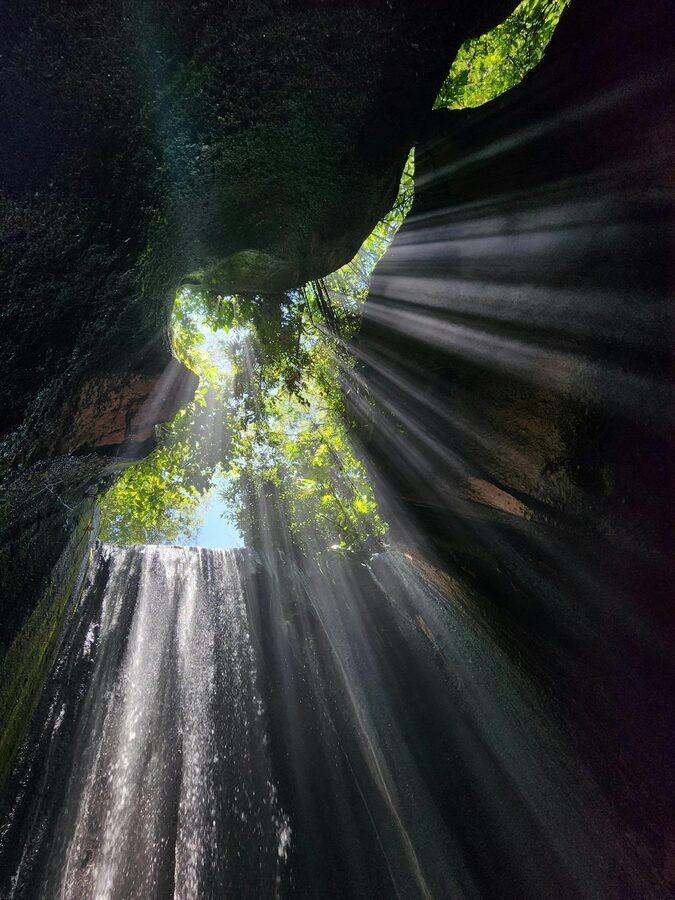
If the Tukad Cepung light beam is the specific thing you came for, the window is narrower than most tours admit. The beam forms when the sun is high enough to punch through the slot in the cave ceiling, which happens consistently between about 10 a.m. and 11:30 a.m. during the dry season (April through October), on a morning without heavy cloud cover.
Wet season trips from November through March will still show you the cave, and the waterfall will still be dramatic, but the beam itself becomes a coin flip.
n
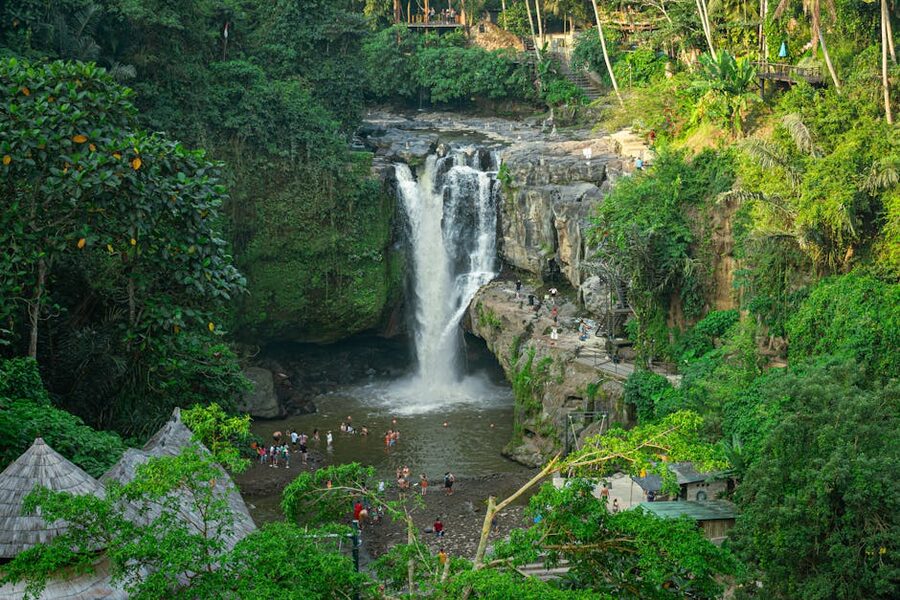
We’d book for any weekday in May, June, July, August, or September. Those months give you the highest probability of a cloudless mid-morning and the most reliable beam. July and August are the busiest, which means the cave will have 40 to 60 people in it during your beam window, and you’ll be waiting your turn for the centerline photo. May, June, and September are the quieter shoulder periods and give you the best combination of dry weather and manageable crowds.
April and October are transitional — dry enough that the beam still forms most mornings, but occasional clouds can kill a random day. If you’re booking in either of those months, build in some flexibility so you can reschedule if the forecast is obviously bad.
November through March is wet season. Tours still run, and the waterfalls are actually at their most dramatic because the flow is higher. Tegenungan in wet season is genuinely thunderous. But the Tukad Cepung beam becomes unreliable. If you’re traveling during these months and the cave fall is a must-have, we’d suggest going with a tour that carries a “bad weather reschedule” clause and being ready to shift the day if the forecast is grim.
Most operators on GetYourGuide and Viator allow free cancellation up to 24 hours before the tour start time, which gives you enough flexibility to check the morning forecast and make a call. If the tour page does not have that cancellation window, we’d book a different one.
Which Tour Should You Actually Book
The honest answer depends on what kind of Bali day you want and how much time you have. Here’s how we’d match traveler types to the three tours:
Book tour 1 (Best of Bali Waterfalls: Tibumana, Tukad Cepung and Tegenungan, $53) if: you care specifically about all three waterfalls, you want to maximize your chance at the Tukad Cepung light beam, you’re staying in or near Ubud, you’re traveling as a couple or small group, you’re willing to pay a premium for a properly scheduled private tour, or photography is a meaningful part of your Bali trip. This is the purist pick and the one we’d book for our own trip.
Book tour 2 (From Bali: Ubud Day Trip — Waterfall, Rice Terraces & More, $23) if: it’s your first time in Bali and you want a sampler day of Ubud highlights, you’re on a budget, you want rice terraces and a waterfall and a monkey forest in the same day, you’re staying in the south (Seminyak, Canggu, Nusa Dua) and don’t want the longer drive of the dedicated waterfall tour, or you’re traveling with someone who doesn’t share your specific waterfall enthusiasm.
Book tour 3 (Bali: Lempuyang Quick Access, Waterfall, Water Palace & More, $30) if: your Bali trip is short (two or three days total), the Lempuyang Gates of Heaven photo is on your bucket list, you want to see east Bali and you won’t get a second chance, you’re okay with a brutal 13.5-hour day, or you’re the kind of traveler who would rather sleep less and see more.
If you still can’t decide — book tour 1. It’s the tour that delivers most consistently on the specific promise of Bali waterfalls (all three of them, in the right order, on the right schedule), and the 5.0 rating across 3,000+ reviews is doing a lot of the risk management for you.
Before You Book: A Quick Checklist
n
Before you hit “reserve” on any of the three tours above, run through this:
- Confirm your pickup location. Most Ubud hotels are included for free. Southern Bali (Nusa Dua, Jimbaran, Uluwatu) sometimes adds a surcharge or earlier pickup.
- Check the cancellation window. 24-hour free cancellation is standard and you want it — it gives you weather flexibility.
- Check which entry fees are included. Tour 1 bundles all three waterfall entry fees. Tours 2 and 3 vary by operator.
- Read the last 20 reviews, not the first 20. The first reviews are often from the launch period. The last 20 tell you how the operator is running the tour this month.
- Note the season. Dry season (April to October) gives you the best shot at the Tukad Cepung light beam. Wet season trips are still fun, but manage expectations.
- Book 48 to 72 hours ahead in peak season. The top-rated tours sell out in July and August. Off-season bookings can be made day-of in many cases.
- Bring cash for tips. 50,000 to 100,000 IDR for a good driver-guide is appreciated and standard practice.
For broader Bali planning, our Ubud tour booking guide covers how Ubud day trips are structured and which operators to trust. If you’re planning a full Bali itinerary, the Mount Batur sunrise hike guide walks through the island’s other must-do pre-dawn experience, and the Nusa Penida day trip guide covers the island-hop many travellers add after a few days in Ubud.
If you want the polar opposite of a waterfalls morning — a dinner-and-fire-dance evening on the south coast — our Uluwatu Kecak fire dance guide covers that evening format in the same detail we’ve used here.
Final Thoughts on Chasing Waterfalls in Bali
n
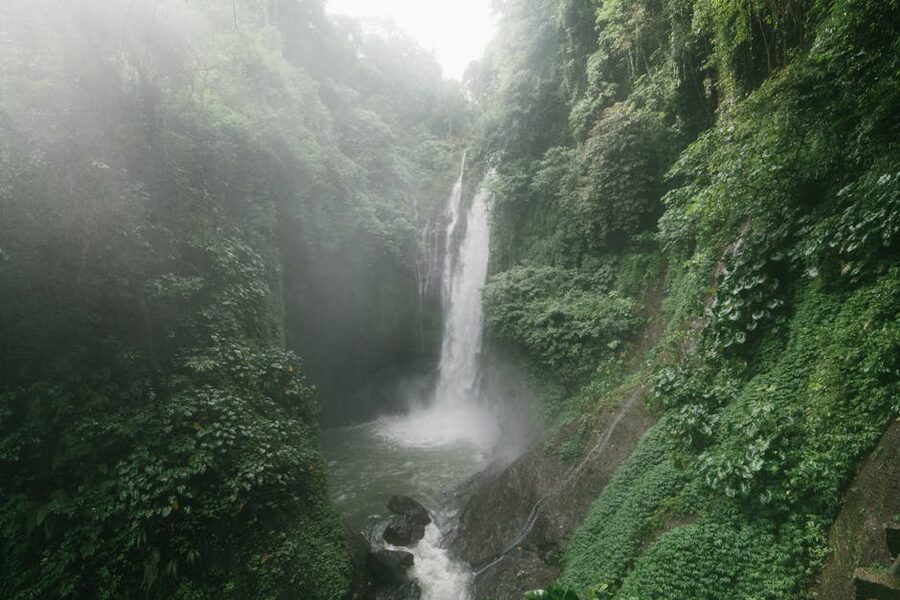
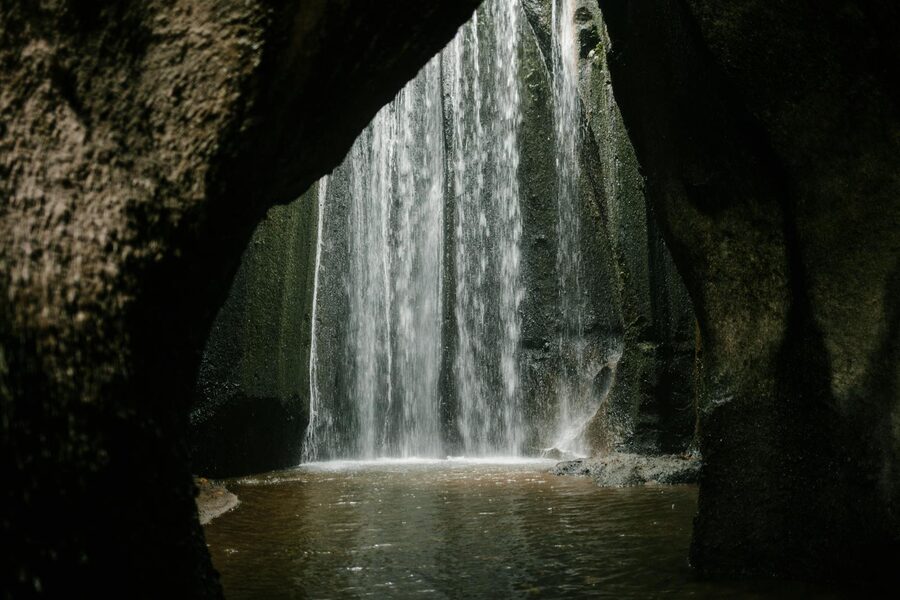
The three waterfalls — Tibumana, Tukad Cepung, Tegenungan — work as a combination because they’re three completely different experiences stacked into a single morning. A quiet jungle veil, a cave with a beam of light, a thundering curtain in the wide open. You’d struggle to find that variety anywhere else in Southeast Asia, let alone inside 90 minutes of a single town.
Tukad Cepung is the star of the show, and the reason tours are worth booking is that a driver who knows the light window can put you in the cave during the eight or nine minutes that matter. Without that knowledge, the same trip is a pleasant waterfall walk that leaves you wondering why the photos don’t match the ones you saw on Instagram.
All three of the tours above get travellers to the falls safely, feed them lunch, handle the entry fees, and return them to their hotels by mid-afternoon. The differences come down to scheduling discipline, how many other stops you want packed into the day, and whether you want one waterfall or three. Pick the one that matches your priorities, book it 48 hours in advance, pack the quick-dry outfit, and get to the pickup point on time. The rest of the day runs itself.