
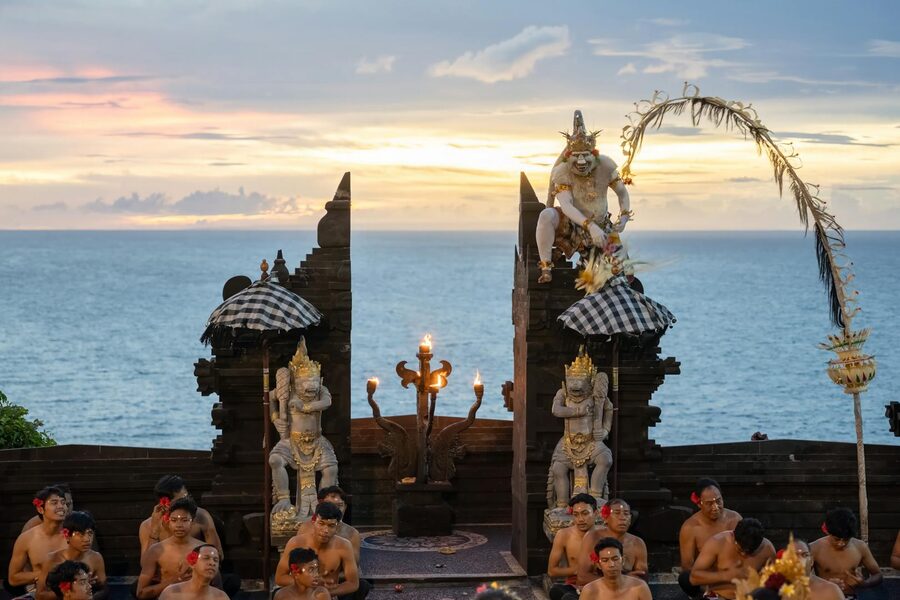
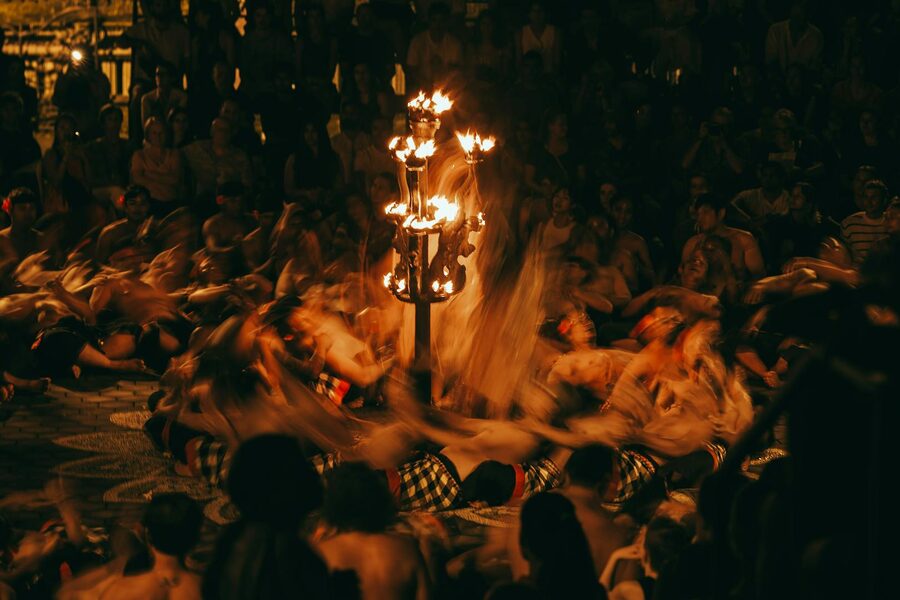
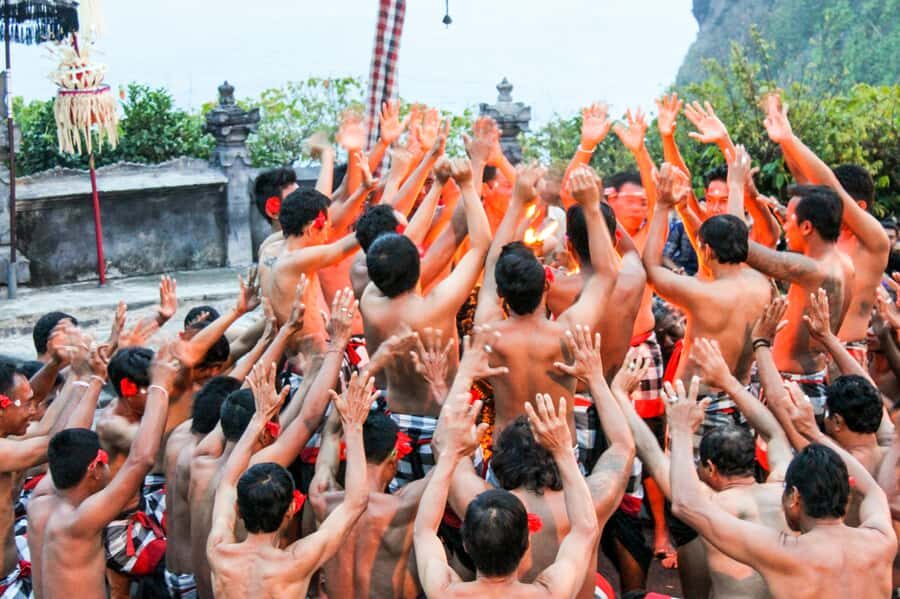
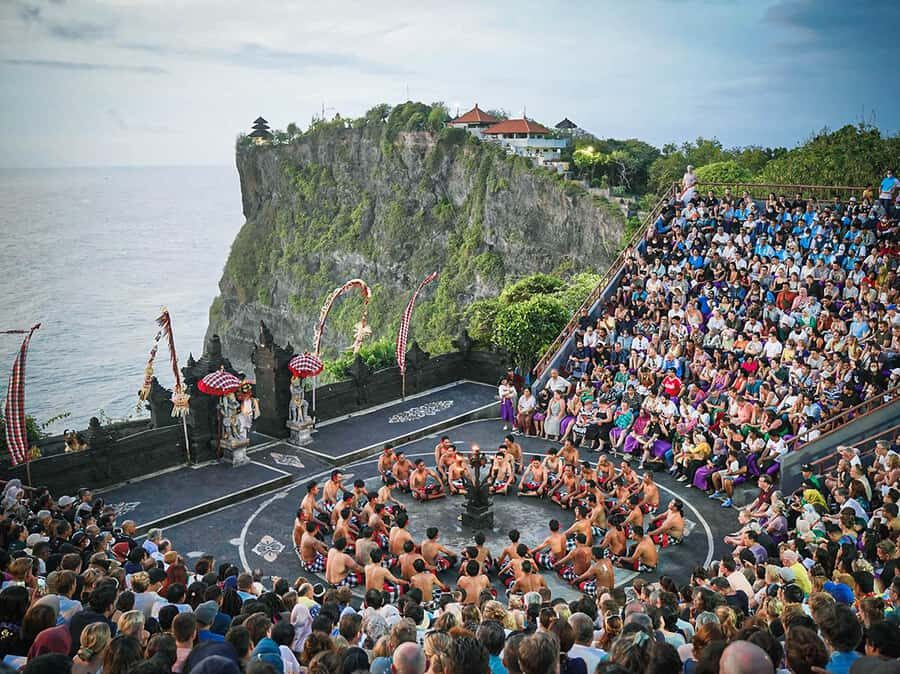
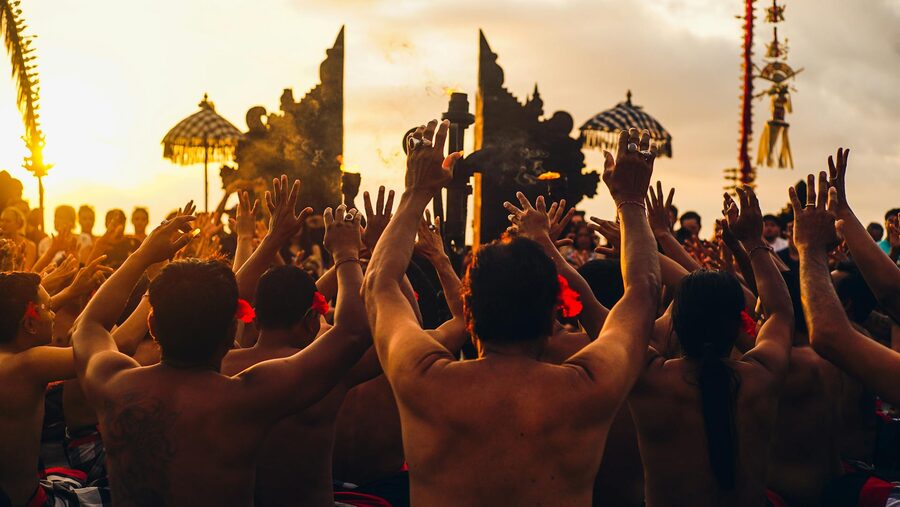
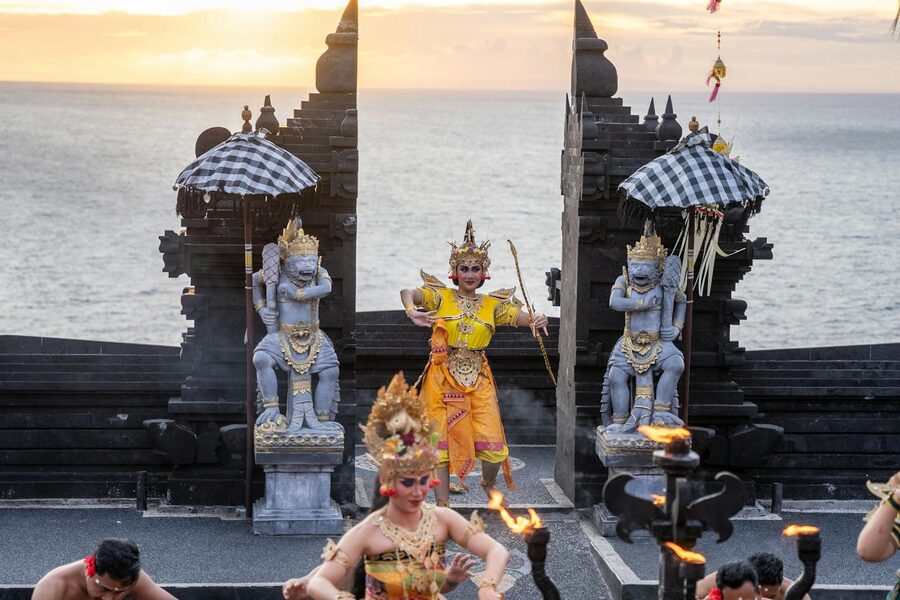
Chak-chak-chak. Seventy men in black-and-white checked sarongs, sitting in a circle three rows deep, start the chant the second the sun touches the water. No instruments. No microphones. Just voices layered into rhythm, a stone amphitheater on the edge of a 70-meter cliff, and the Indian Ocean filling in the background like an enormous moving stage set.
That is the first thirty seconds of the Kecak at Uluwatu Temple. I have seen it three times now and the opening still does something to me.
Here is the thing nobody tells you: Uluwatu is not really about the temple. The temple is small, you cannot enter the inner courtyard unless you are Balinese Hindu, and you will spend about ten minutes looking at it. The real show is the cliff walk before sunset, the fire dance at 6 PM, and a plate of grilled snapper on the sand at Jimbaran afterwards.
Booked as a package, it is one of the best-value evenings on the island. Booked as three separate things, it is a logistical headache.
This guide covers how to book the Uluwatu–Kecak–Jimbaran combo properly, what the ticket options are, why the three most popular tours are priced so differently, and the mistakes that cost most first-timers their seat, their sunglasses, or both.
Short on time? Here are my top 3 picks:
Best overall: Uluwatu Sunset Kecak Dance and Dinner Jimbaran Beach — $35. The full combo with transport, Kecak tickets, and seafood dinner for the price of a middling Bali lunch.
Best premium: Bali Sunset Uluwatu Temple Kecak Dance and Jimbaran Bay — $41. Same itinerary, longer vehicle, more polish — the one to pick if you are coming from Ubud or north Seminyak.
Best budget: Bali Kecak Fire Dance Show and Uluwatu Temple Entry Ticket — $9. Just the Kecak ticket with skip-the-line entry. Perfect if you have your own driver and want to handle Jimbaran yourself.
- How Uluwatu Temple and the Kecak Dance Actually Work
- Ticket types and what you pay
- Tour Package vs DIY: Which Way Should You Book It?
- Honest pros and cons
- The Best Uluwatu Kecak and Jimbaran Tours to Book
- 1. Uluwatu Sunset Kecak Dance and Dinner Jimbaran Beach —
- 2. Bali Sunset Uluwatu Temple Kecak Dance and Jimbaran Bay —
- 3. Bali Kecak Fire Dance Show and Uluwatu Temple Entry Ticket —
- When to Show Up and Why Timing Is Everything
- Best months to go
- How to Actually Get There
- Tips That Will Save Your Night
- What Actually Happens During the Kecak Show
- The Jimbaran Dinner — What to Expect
- The Cliff Walk Before the Show
- While You’re in Bali
How Uluwatu Temple and the Kecak Dance Actually Work
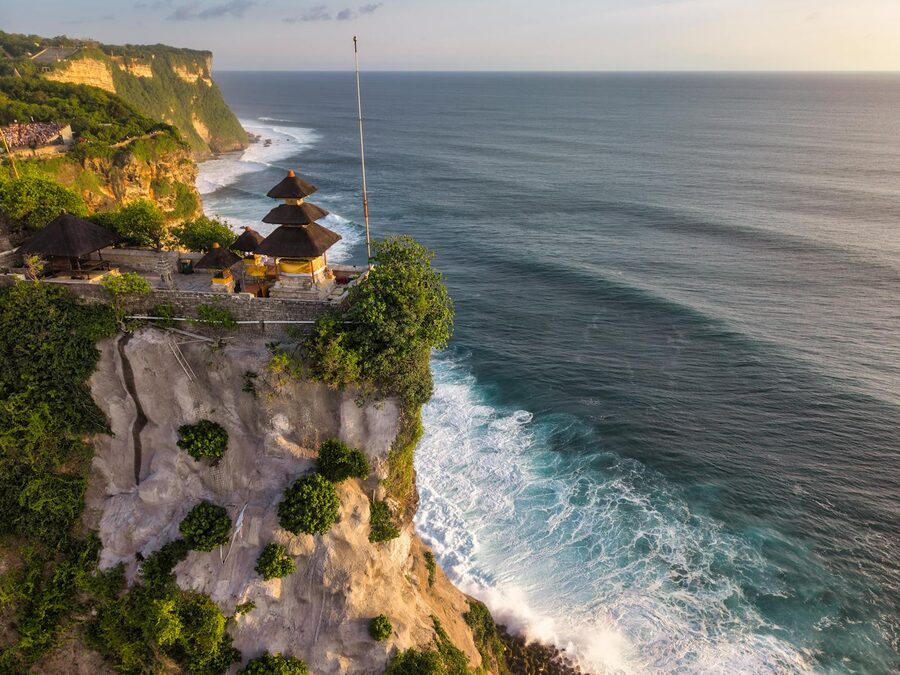
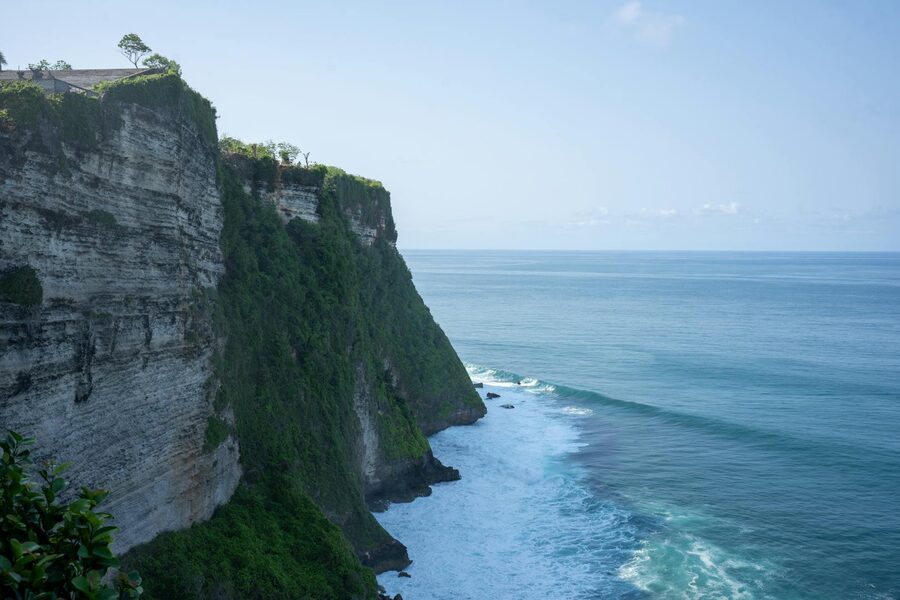
Uluwatu — Pura Luhur Uluwatu, to give it its full name — is one of the six sad kahyangan, the sea temples that protect Bali from bad spirits. It dates from around the 11th century. You cannot enter the inner sanctum unless you are Balinese Hindu in proper dress. That rules out basically everyone reading this. What you can do is walk the clifftop path that wraps around the headland, peek through the stone gateways, and watch the monkeys try to mug the travellers.
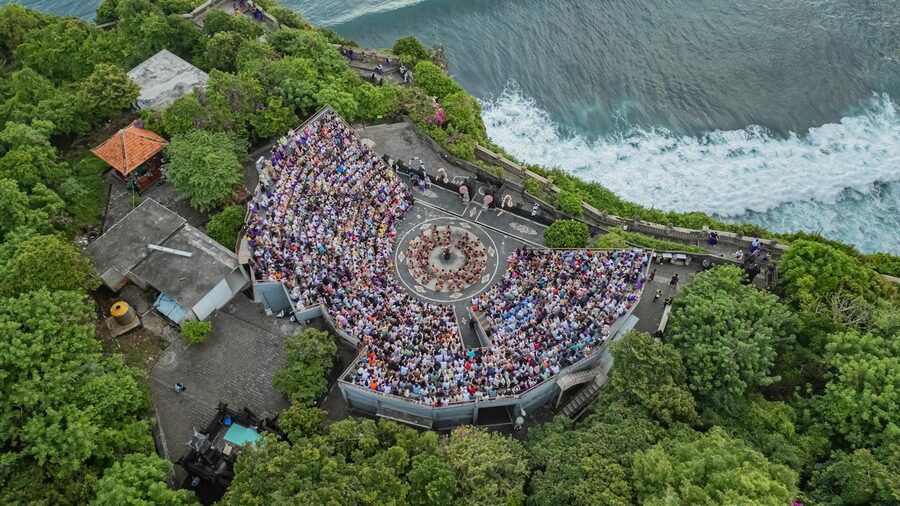
The Kecak dance is a completely separate thing, run by a local village cooperative and performed in an open-air amphitheater built into the south side of the cliff. It runs every single day at 6 PM, rain or shine, year-round. Tickets are 150,000 IDR (around $10) if you buy at the gate, or you can pre-book online with skip-the-line entry for about the same price.
Two things to know before you book.
One. The Kecak you see today was not preserved from ancient ritual. It was choreographed in the 1930s by a German artist named Walter Spies and a Balinese dancer named Wayan Limbak, for travellers, using the vocal patterns from an older trance ceremony called sanghyang.
That does not make it fake — every performer in the circle is a village volunteer, and the whole thing is a functioning cultural institution — but it is useful to know you are watching a 20th-century creation, not an ancient rite.
Two. The performance is an abridged version of the Ramayana, the Hindu epic. If you do not know the story you will enjoy the spectacle fine, but you will miss half the narrative. I will sketch the plot further down so you can follow along.
Ticket types and what you pay
- Temple entry only — 50,000 IDR (~$3.30). Includes the sarong you are required to wear. Temple is open 7 AM to 7 PM.
- Kecak dance ticket — 150,000 IDR (~$10). Covers the 6 PM performance only. Buy this at the entry gate from 4 PM onwards.
- Skip-the-line combo ticket — around $9 on GetYourGuide, often cheaper than buying at the gate because of exchange rates. This is the one I recommend.
- Full tour with transport + dinner — $35 to $45, includes hotel pickup from most of south Bali, Kecak ticket, and a seafood dinner at Jimbaran.
The Kecak ticket is not included in the general temple entry. You pay for both separately if you are doing it independently. One more reason the packaged tours are a better deal than they look on paper.
Tour Package vs DIY: Which Way Should You Book It?
I have done this evening both ways — once with a driver I hired myself, twice on a packaged tour — and the honest answer is the package is better unless you have a very specific reason to go independent.
Here is the math. A Grab or Gojek ride from Seminyak to Uluwatu is around $10 one way, and drivers will not take you back after dark because the distance is too far for a ride-share to be economical. So you hire a private driver for the night: $30 to $45 in the Uluwatu/Jimbaran area. Add Kecak tickets for two people ($20), temple entry ($7), dinner at Jimbaran ($35 to $50 for two), and you are looking at $100 minimum for a couple, probably $120.
A two-person package tour at $35 per person comes out to $70 all in. Same itinerary, no stress about timing, and the driver waits for you through the Kecak without asking for more money. The only time I would book independently is if you are a solo traveler on a tight budget — then the $9 skip-the-line ticket plus a one-way Grab plus a street food dinner near the temple can come to about $25.
Honest pros and cons
Full tour package pros: hotel pickup, no timing stress, Kecak ticket already in your hand so you walk past the queue, dinner reservation is already made, driver handles the Jimbaran logistics (which parking lot, which warung, which beach line).
Full tour package cons: you are on a schedule. You cannot linger on the cliff walk after the show. Group size varies — some operators run 15-seat vans, which is fine, and others pack into 25-seaters, which is less fine. Ask before booking.
DIY pros: you set your own pace. You can skip the packaged dinner and wander into one of the smaller Jimbaran warungs that locals actually eat at. You can stay on the cliff after the Kecak for the post-show photo window.
DIY cons: driver coordination in the dark is harder than it sounds. Jimbaran parking is chaos on weekends. And if you show up late to the amphitheater you may get a standing-room ticket instead of a seat — which after a long day at the beach is genuinely miserable.
The Best Uluwatu Kecak and Jimbaran Tours to Book
I have filtered these down from dozens of listings to the three that I actually recommend. All three have over 3,000 reviews, all three include the Kecak dance, and between them they cover every budget and logistical setup you might have.
1. Uluwatu Sunset Kecak Dance and Dinner Jimbaran Beach — $35
This is the one I would book if you are staying anywhere between Kuta and Nusa Dua. It is the original combo tour, it has the highest review count of any Uluwatu evening tour on the market, and at $35 per person it is the best-value full evening in south Bali right now.
What you get: hotel pickup around 2:30 PM, a stop at one or two clifftop viewpoints on the Bukit Peninsula, the Uluwatu Temple walk with a local guide, reserved Kecak seats, a seafood dinner on Jimbaran Bay with a grill plate (snapper, prawns, squid, corn, rice), and hotel drop-off by around 9:30 PM.
The operator is a Bali-based outfit that has been running the route for years, which shows — they know exactly when to arrive at the amphitheater so you get a mid-tier seat (not the cheap back row, not the front where you get sea spray). At $35 this is a steal. The only reason not to book it is if you are staying far north in Ubud, in which case the next pick is better because of vehicle size.
2. Bali Sunset Uluwatu Temple Kecak Dance and Jimbaran Bay — $41
This is the GetYourGuide version of the same evening, and at $41 it is six dollars more than the Viator option. For that extra money you get a shorter day (six hours, not seven), a better vehicle on average, and — this matters — pickup from Ubud is included. If you are staying north of Seminyak, the Viator package above will charge a supplement or refuse the booking entirely.
Reviews mention two things consistently. First, the guides are good — Agus and Made come up by name in multiple recent reviews, which is usually a sign of a stable staff rather than a rotating freelance crew. Second, the itinerary has some buffer built in, which helps when traffic on the Jimbaran road gets bad (it almost always does on weekends).
Honest warning: the dinner gets mixed reviews. A few recent bookers said the seafood was fine but not memorable, which tracks with most Jimbaran group-tour dinners — the warungs on the beach are set up for volume, not fine dining. If you want a standout meal, pick a different activity. If you want a good evening out with a passable meal and a spectacular setting, this works.
Pick this one if you are staying in Ubud, the north of Seminyak, or if you want the slightly more polished operation. Pick the $35 Viator option above if you are anywhere in south Bali and want to save six bucks.
3. Bali Kecak Fire Dance Show and Uluwatu Temple Entry Ticket — $9
This is the ticket-only option, and at $9 it is cheaper than buying at the gate because of how GetYourGuide handles the exchange rate. You get the Kecak dance ticket with skip-the-line entry, plus Uluwatu Temple entry. No transport, no dinner, no guide. Just the piece of paper that lets you walk past the queue.
Book this if you already have a driver for the day, if you are on a scooter and comfortable riding back to Seminyak after dark (I would not — the traffic is bad and there are no streetlights for long stretches), or if you are a solo traveler watching every dollar.
The 4.2 average rating on this one — slightly lower than the other two — is almost entirely about weather complaints and the Kecak show running late, which happens maybe one night in ten when there is a local ceremony that bumps the start time. The product itself is exactly what it says on the tin. If you want minimum spend and maximum flexibility, this is it.
When to Show Up and Why Timing Is Everything
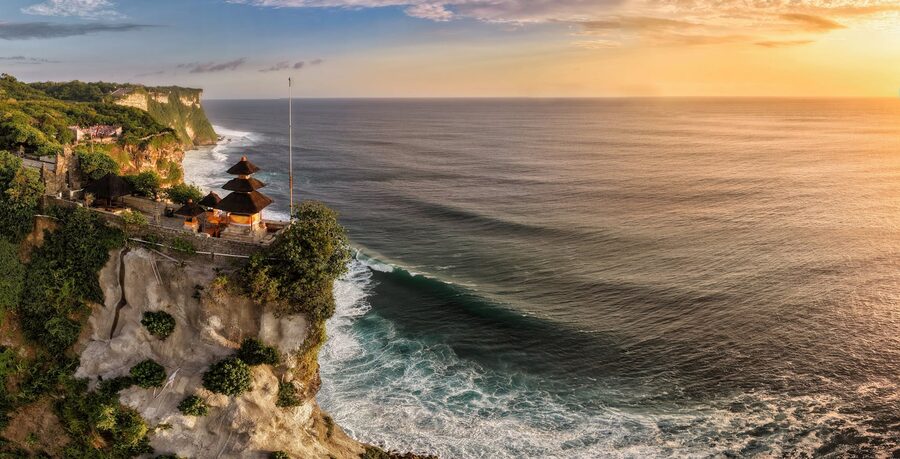
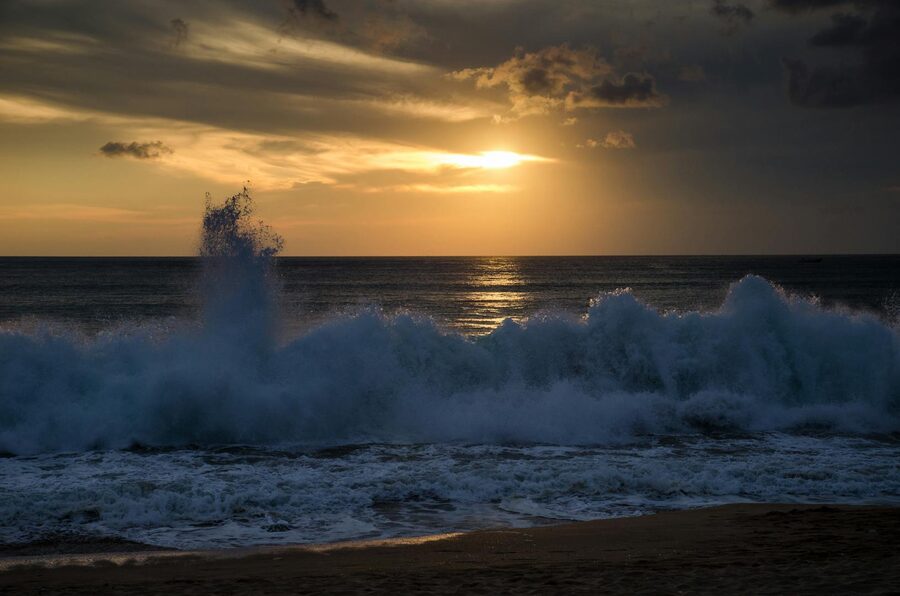
The Kecak starts at 6 PM sharp. Sunset in Bali is usually around 6:10 to 6:25 PM depending on the time of year. You want to be in your seat by 5:30 PM. Here is why.
The amphitheater holds maybe 1,200 people on a full night. Tour operators arrive in waves from 5 PM onwards and seats fill fast. By 5:50 PM the best rows — the middle ones where you see both the dancers and the ocean behind them — are gone. By 6 PM you are in the upper back row or standing. At sunset you want an unblocked view of the horizon, which means middle rows only.
If you are booking a full package tour, the operator handles this. Their van leaves in time for a 5 PM arrival and they hold seats for their groups. If you are going independently, aim for a 4:30 PM arrival at the temple gate, do the cliff walk in the late afternoon light (it is beautiful), and then queue up at the amphitheater by 5:15 PM.
Best months to go
The Kecak runs all year. But the sunset experience depends heavily on the weather, and Bali weather has two seasons.
- May to September (dry season): clear skies, reliable sunsets, biggest crowds. Book at least a week ahead. This is the textbook experience you see in photos.
- October and April (shoulder): my favorite. Still mostly dry, crowds thinner, light often more dramatic because of occasional high cloud. Book 2 to 3 days ahead.
- November to March (wet season): you will gamble with rain. The show runs anyway — they have tarps and the dancers are used to it — but the sunset you came for might not happen. Book the day before so you can cancel if the forecast is bad.
If you are in Bali for a full week, wait for a clear-forecast day and book the night before. If you only have a couple of nights, book the first night so you have a second chance if the weather is bad.
How to Actually Get There
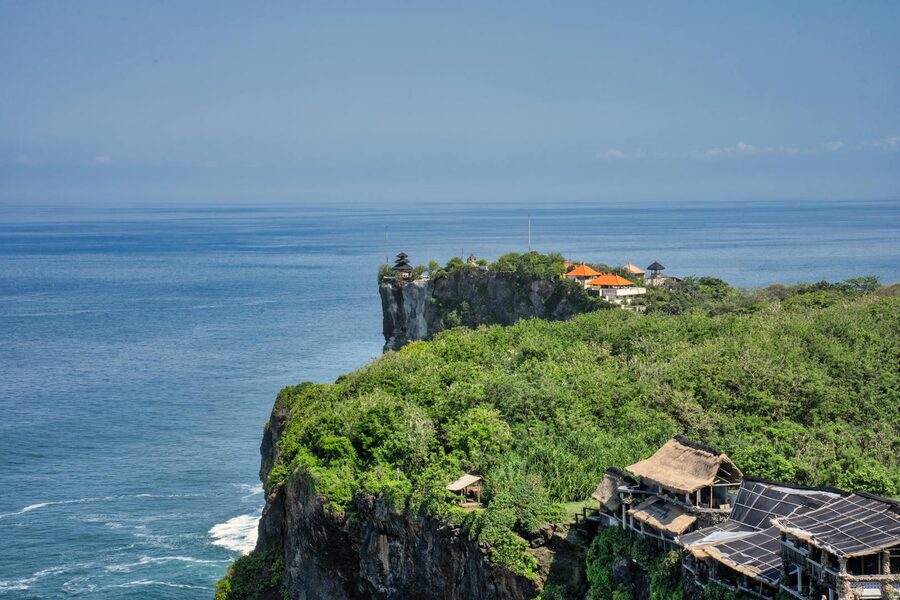
Uluwatu Temple is on the very southern tip of the Bukit Peninsula, about 45 minutes from Kuta in light traffic, an hour from Seminyak, 75 minutes from Canggu, 90 minutes from Ubud, and 25 to 40 minutes from Nusa Dua. Those are light traffic numbers. On a weekend or public holiday, add 30 minutes to each.
Private driver: the standard option. $30 to $45 for a half-day covering the Uluwatu and Jimbaran run. Tell the driver you want 4:30 PM arrival at the temple and they will plan backwards.
Grab / Gojek: fine for getting there, nearly impossible for getting back. After dark the ride-share apps struggle in south Bukit. You will wait 30 minutes for a car and pay a surcharge.
Scooter: possible if you are comfortable with the traffic. The road to Uluwatu from Jimbaran is curvy, narrow, and gets dark early. I would not recommend it unless you are already riding confidently on Bali roads and have done the route in daylight first.
Full packaged tour: hotel pickup included in all three tours I recommended above. This is why the package math works — you are paying for the driver’s time and fuel regardless, might as well let someone else handle it.
Tips That Will Save Your Night
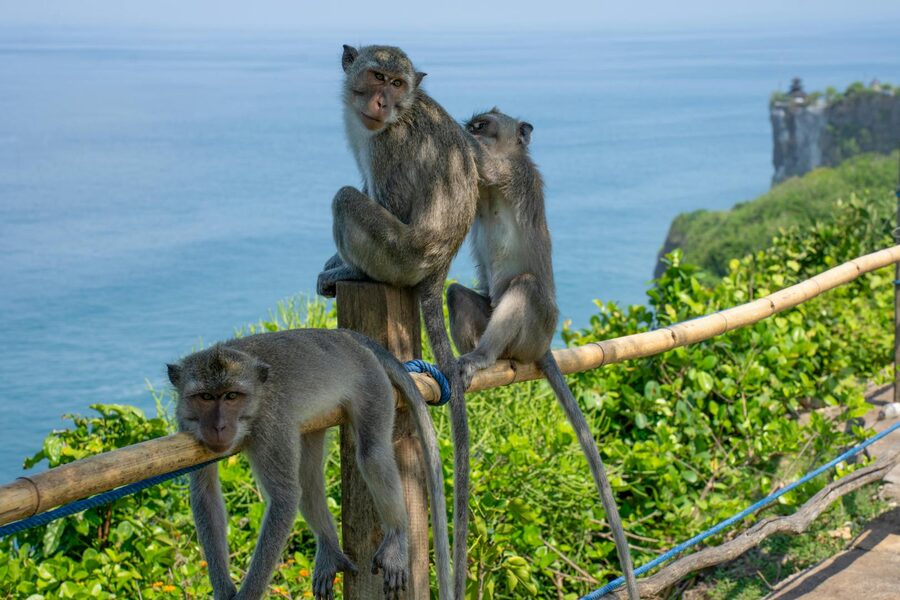
Things I wish someone had told me on the first visit.
- The monkeys steal things. Not cute opportunistic stealing — organized, practiced stealing. They target glasses, phones, hats, water bottles, and earrings. Locals near the entrance will offer to “trade” your stolen item back for a piece of fruit (which you buy from them). Take off your sunglasses and stow them before entering the temple path. I saw a woman lose a pair of prescription Ray-Bans my first time here.
- Sarong is free but you must wear it. Shorts and bare legs are not allowed anywhere near the temple. The sarong is included in the entry fee and they will wrap you in it at the gate. Yes, even if you are wearing long pants, you still get the sash.
- Bring cash. The entry booth accepts cash only. The Kecak ticket booth accepts cash only. The warungs at Jimbaran take cards but the service is faster with cash. Bring 500,000 IDR per person for the evening and you will be covered.
- Do not wear flip-flops. The stone steps to the amphitheater are smooth and can be slippery, especially after sea spray. Sneakers or sandals with grip are fine.
- The amphitheater has no backs on the seats. It is a stone ring. Bring a cushion or ball up a jacket if you have a bad back — it is a 50-minute show and stone does not get softer.
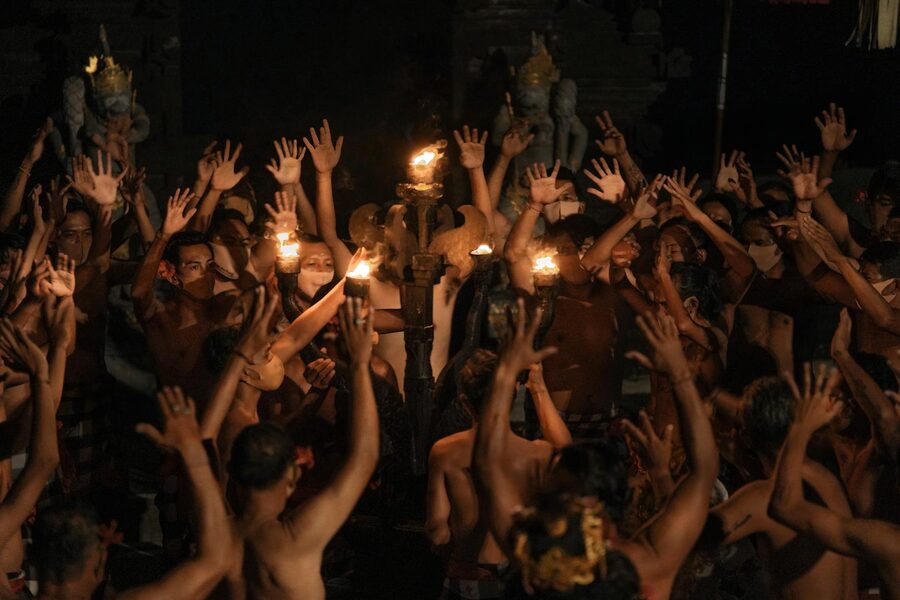
- Phones out only for the fire. The show is more atmospheric if you actually watch it. Save your phone for the fire circle at the end — that is the moment worth filming.
- The post-show exit is a scrum. 1,200 people try to leave the amphitheater at the same time through one narrow staircase. Either stay in your seat for three minutes to let the crowd thin, or get up before the final bow and miss the last 30 seconds.
- Jimbaran dinner is in the dark. The warungs light their tables with small lanterns or candles. It is atmospheric but you cannot really see your food. This is fine. The point is the sound of the ocean and the sand under your table.
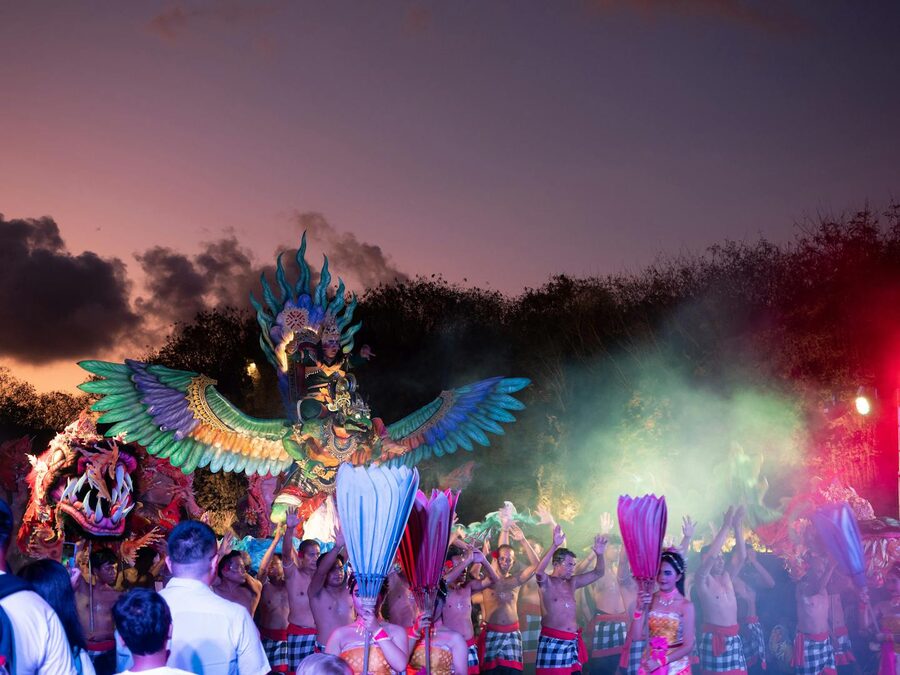
What Actually Happens During the Kecak Show
This is the part nobody explains before you go, and it ruins the experience if you are not ready for it.
The Kecak is a dance-drama version of the Ramayana, one of the two great Hindu epics. The plot, very compressed: Prince Rama is exiled from his kingdom and wanders in the forest with his wife Sita and his brother Lakshmana. The demon king Ravana kidnaps Sita and takes her to his island. Rama and his monkey-god ally Hanuman launch a rescue. There is a battle. Ravana is defeated. Sita is freed. End credits.
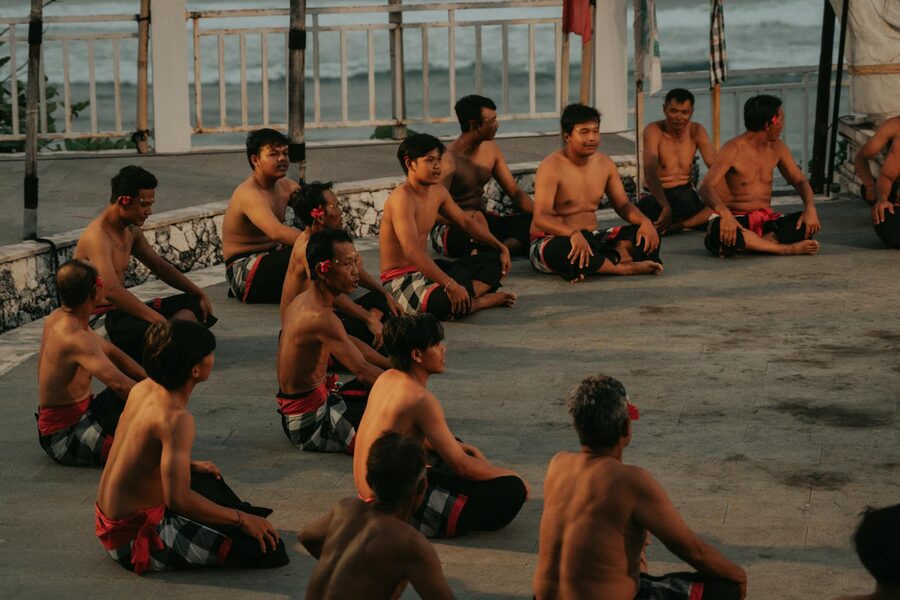
The Uluwatu Kecak performs this in about 50 minutes, in five scenes. The circle of 70 men chanting chak-chak-chak is the chorus — they provide the entire musical soundtrack and represent the monkey army. Costumed dancers come into the middle of the circle to play the main characters: Rama, Sita, Ravana, Hanuman, the golden deer that lures Sita away.
The fire comes in during the final battle, when Hanuman gets captured and sets Ravana’s kingdom on fire with his tail (yes, really).
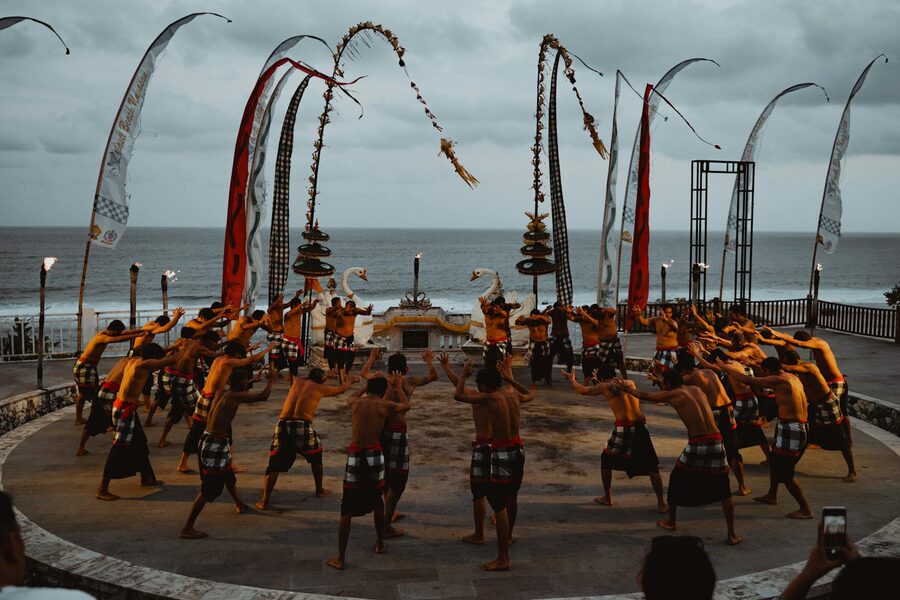
If you do not know the story going in, here is what most first-time viewers think: the chanting is amazing, the costumes are weird, and the fire is the good part. If you know the story, you realize the whole show is a 50-minute oral performance of one of the most important pieces of world literature, performed in a rock amphitheater on a cliff, at sunset, with the only lighting being torches and the last of the daylight. Completely different experience.
Spend two minutes reading the Ramayana Wikipedia page before you go. That is literally all the prep you need and it triples the value of the show.
The Jimbaran Dinner — What to Expect
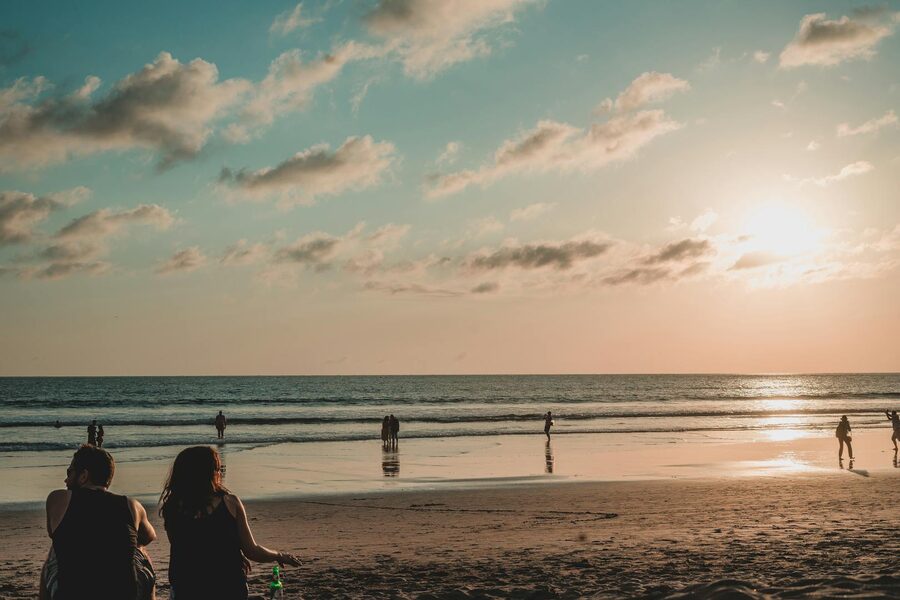
Jimbaran Bay is a fishing village that turned into a seafood-on-the-sand institution. Three main beach sections have grilled seafood warungs lined up in a row: Muaya Beach (the southern section, where most packaged tours go), Kelan Beach (middle, a bit cheaper), and Kedonganan (northern, where the locals actually eat).
The drill is the same at all of them. You arrive, the host seats you at a plastic table with a paper tablecloth set up on the sand, and the sand is often still warm from the day. You order by pointing at fish in the ice cases — snapper, grouper, red snapper, squid, prawns, lobster if you want to splash out. They weigh it, tell you the price, and grill it over coconut husks.
It arrives about 20 minutes later with rice, a plate of water spinach, grilled corn, and a bowl of sambal that will make you cry if you are not paying attention.
On a packaged tour, the menu is usually pre-set: a “BBQ plate” with a fixed selection of one small fish, squid, prawns, rice, and vegetables. This is fine but not the best version. If you want to go off-menu, pay the extra and order the day’s catch by weight — a whole grilled snapper for two costs maybe $20 to $30 and is twice as good as the tourist plate.
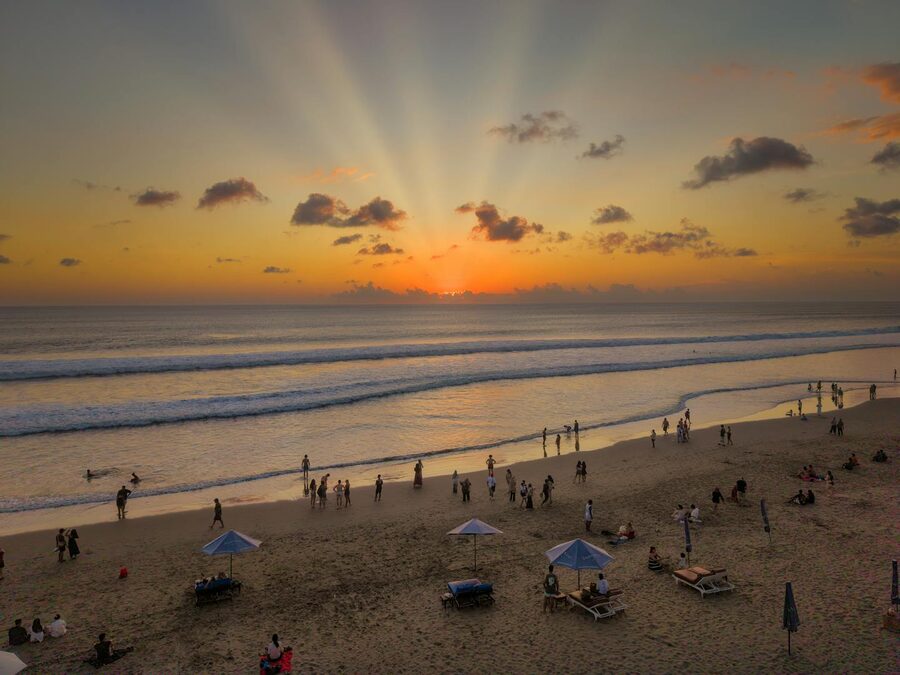
One warning. The Jimbaran warungs have a reputation for gently inflating bills on group tours. Always look at the price per kilo of fish before you commit, and ask for the bill itemized at the end. This is not a scam exactly — it is how the market works — but it helps to know going in.
The Cliff Walk Before the Show
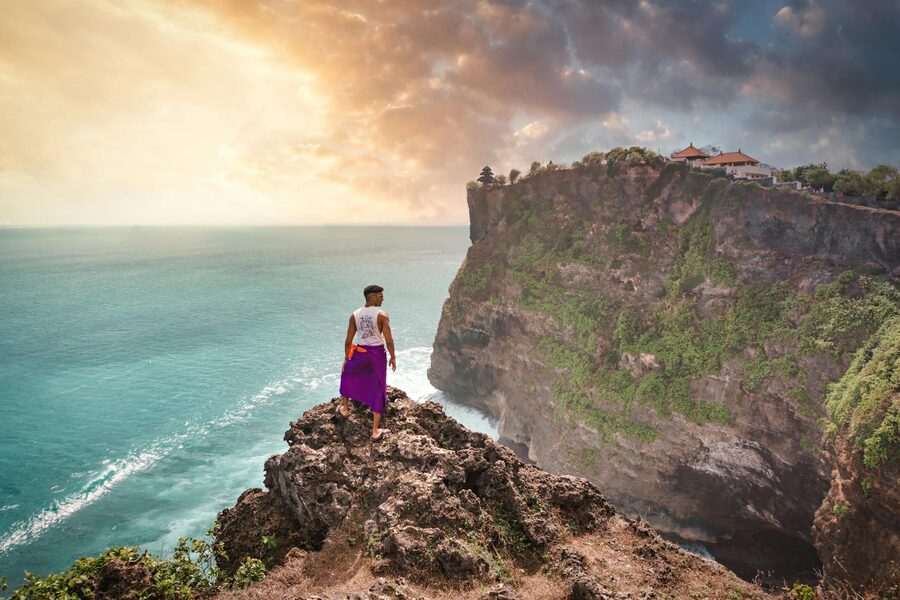
Do not skip this. If you arrive at 4:30 PM as I suggested, you have roughly an hour before you need to be at the amphitheater. Use it.
From the main gate, there are two paths. The northern path goes along the inland side of the headland and gives you views back towards Jimbaran Bay. The southern path is the money shot — it wraps around the cliff and brings you to a railing where you can look back at the temple perched on the rock with the ocean crashing 70 meters below. This is the photograph you came here for. Do it in the last hour of daylight when the light is warm and the temple is still lit naturally.
The walk is about 1.5 kilometers round trip. It is paved, with occasional steps. The only difficulty is the monkeys (see the tips section above) and the sun, which can be brutal on the exposed sections. Bring water.
While You’re in Bali
If you are doing the Uluwatu evening, you are probably planning a few more days on the island.
The two trips that pair best with this one, in my experience, are a dawn hike up Mount Batur for sunrise — which gives you the exact opposite vibe, 2 AM wake-up, volcanic rim, hot springs afterwards — and a full day at Nusa Penida, the island across the strait where Kelingking Beach actually looks like the photos.
If you only have time for one inland day, an Ubud tour covers the rice terraces, Monkey Forest, and a temple or two, and it balances the beach-and-sunset days on the south coast. Put Uluwatu on a night you are already tired — it is the perfect wind-down day.