
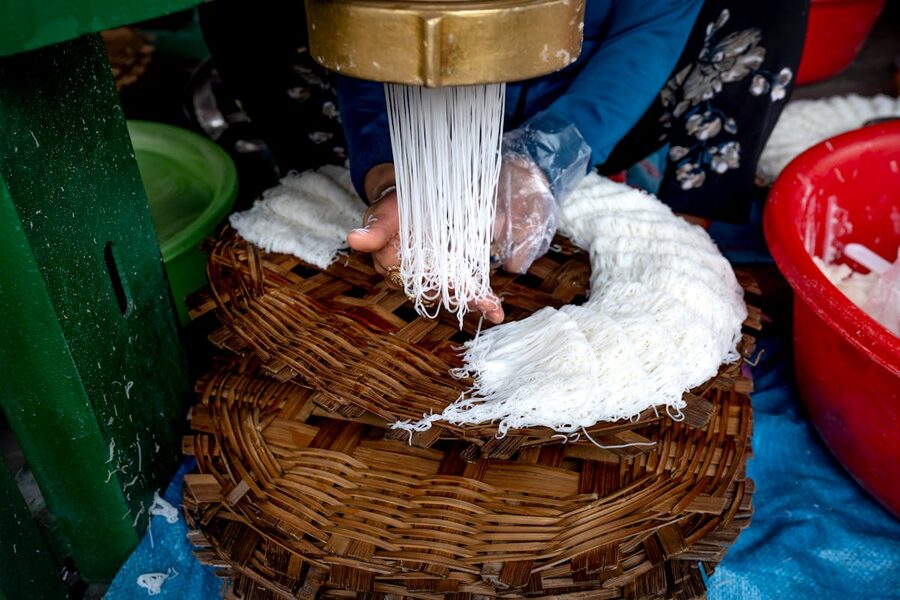
Hoi An is the only place in Vietnam where you can eat cao lau. That is not a marketing claim. The dish requires water from a specific well in the old town, and noodles made anywhere else just do not taste the same. It is one of those rare food facts that sounds made up until you actually try it and realize, yes, this bowl of noodles genuinely cannot be replicated outside a three-block radius.
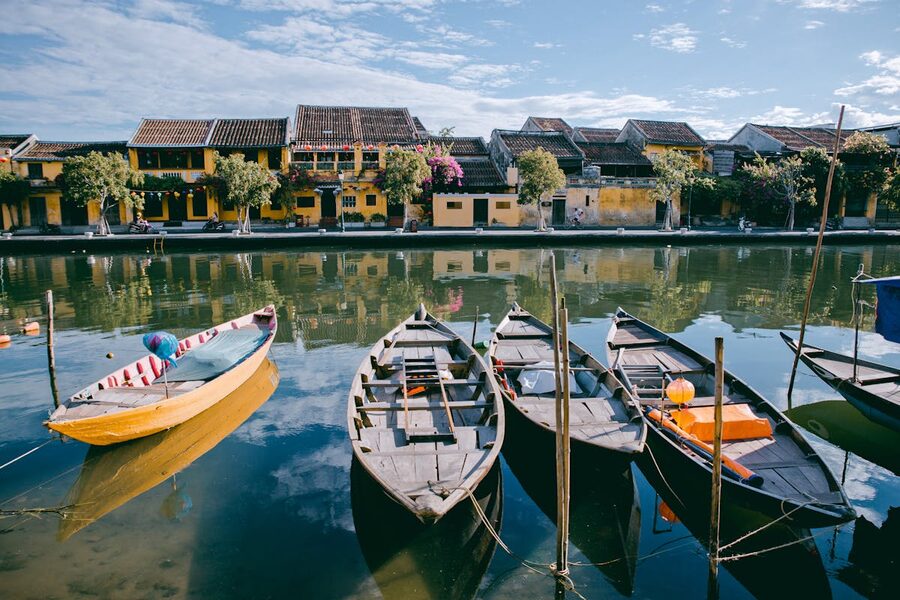
That single detail tells you everything about why Hoi An cooking classes are different from cooking classes anywhere else in Vietnam. This is not a city that borrowed its food culture from Hanoi or Ho Chi Minh City. It developed its own dishes over centuries of Japanese, Chinese, and French trade, and the result is a kitchen that does not exist in any other Vietnamese city.
I signed up for a half-day class expecting to make spring rolls and call it a morning. What I got was a market tour that changed how I buy produce, a lesson in flavor balancing that made my home cooking permanently better, and a plate of banh xeo so crispy I could hear it shatter from across the table.
Short on time? Here are my top 3 picks:
Best overall: Hoi An Eco Cooking Class — $28.81. Full package with market visit, crab fishing, and hands-on cooking. Thousands of five-star reviews for good reason.
Best budget: Hoi An Cooking Class with Market Visit — $4.99. Absurdly cheap for what you get. Includes a basket boat ride and full cooking session.
Best for groups: Local Market, Basket Boat Ride & Cooking Class — $19. Flexible 2-4 hour format, strong on the teaching side, accommodates dietary needs without fuss.
- What Makes a Hoi An Cooking Class Different
- What You Will Actually Learn to Cook
- The Market Visit and Farming Experience
- How to Book and What to Expect
- The Best Hoi An Cooking Classes to Book
- 1. Hoi An Eco Cooking Class (Local Market, Basket Boat, Crab Fishing & Cooking Class) — .81
- 2. Hoi An Local Market, Basket Boat Ride & Cooking Class Tour —
- 3. Hoi An Cooking Class, Market Visit, and Coconut Basket Boat — .99
- When to Book Your Cooking Class
- Tips That Will Save You Time and Money
- How to Get to Hoi An
- What You Will Actually See and Do
- Cooking Class vs. Street Food Tour — Which Should You Do?
- More Vietnam Guides
What Makes a Hoi An Cooking Class Different
Most cooking classes in Southeast Asia teach you generic “local food.” Pad Thai in Bangkok. Nasi goreng in Bali. These are fine, but you could learn them from a YouTube video.
Hoi An cooking classes work differently because the dishes you learn here literally cannot be found anywhere else. Cao lau, white rose dumplings, mi quang noodles — these are Hoi An originals, and the ingredients, techniques, and local knowledge behind them have been passed down through families who have lived in this town for generations.
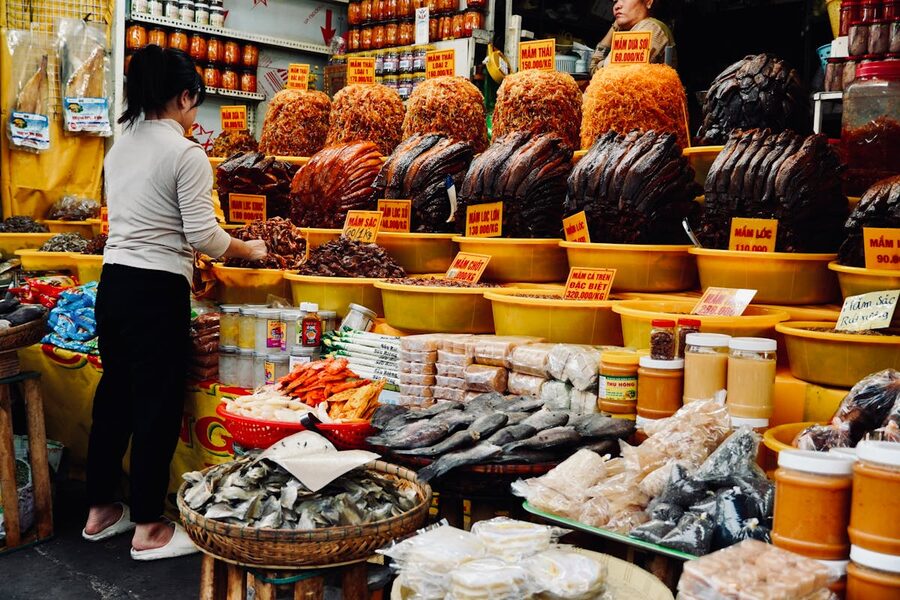
The other thing that sets Hoi An apart is the market-to-table format. Almost every cooking class in the city starts with a guided walk through the central market or a local village market, where your instructor teaches you how to pick the right herbs, which fish looks fresh versus which has been sitting out, and why the same chili can taste completely different depending on when it was picked.
This is not filler. The market visit is the most educational part of the whole experience, and it changed how I shop for food even after coming home.
What You Will Actually Learn to Cook
Every class has a slightly different menu, but the Hoi An cooking class greatest hits typically include three to five of these dishes:
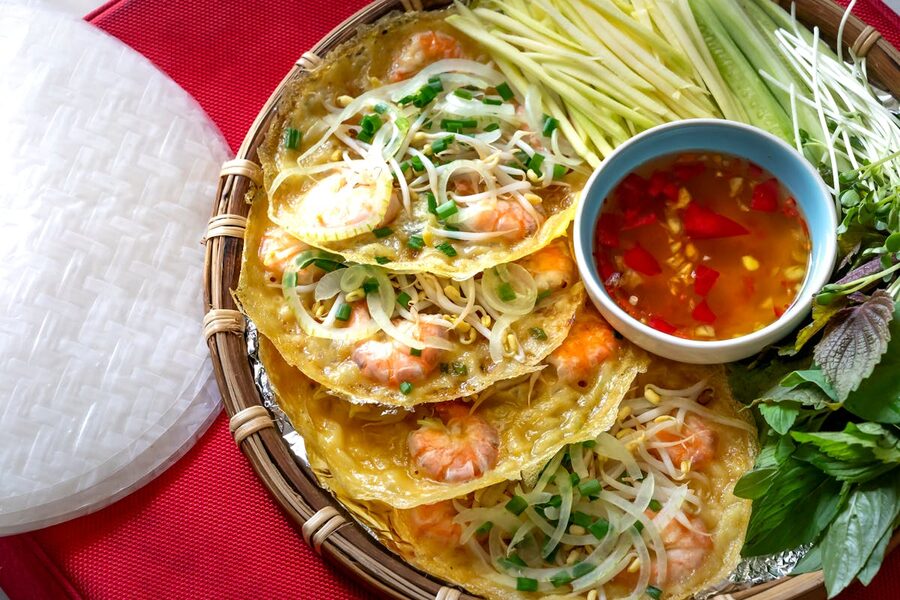
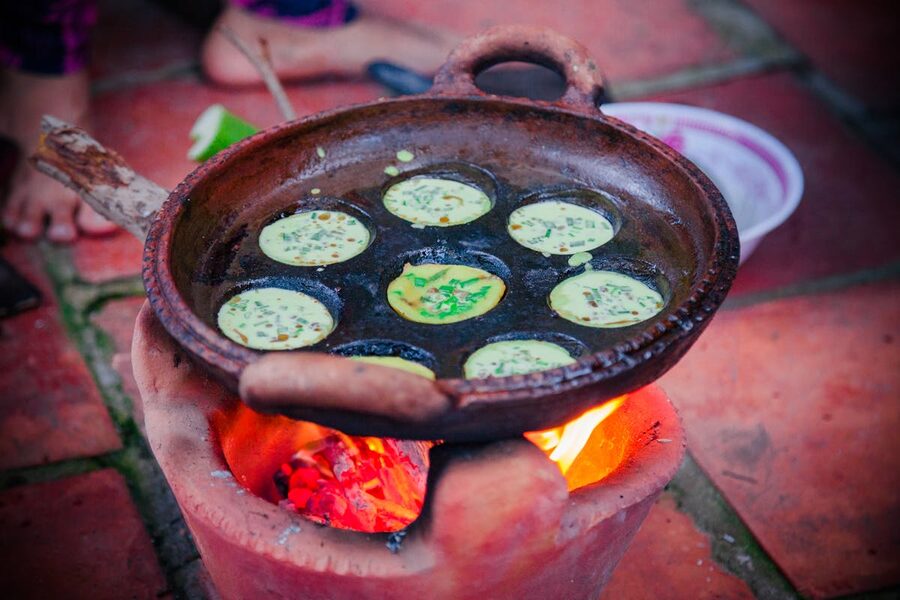
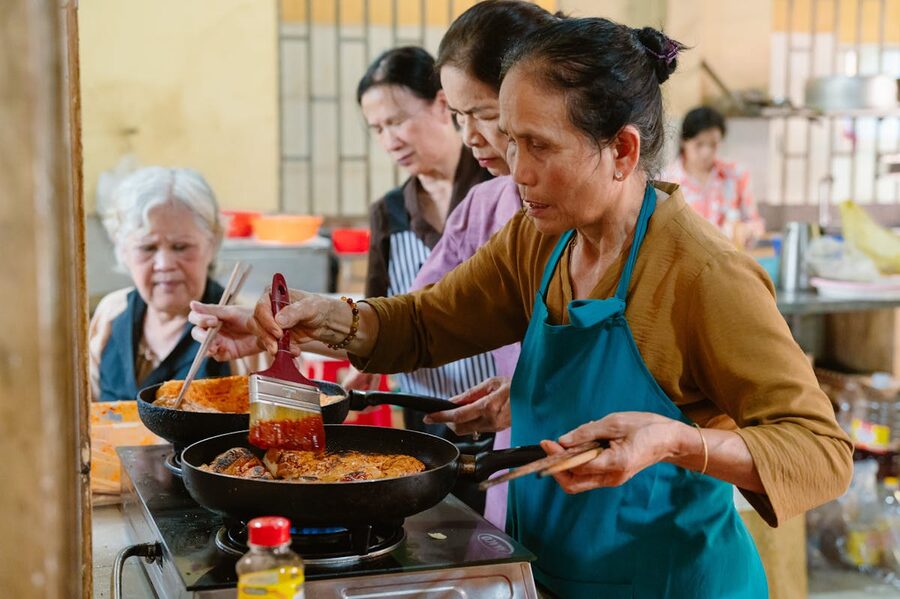
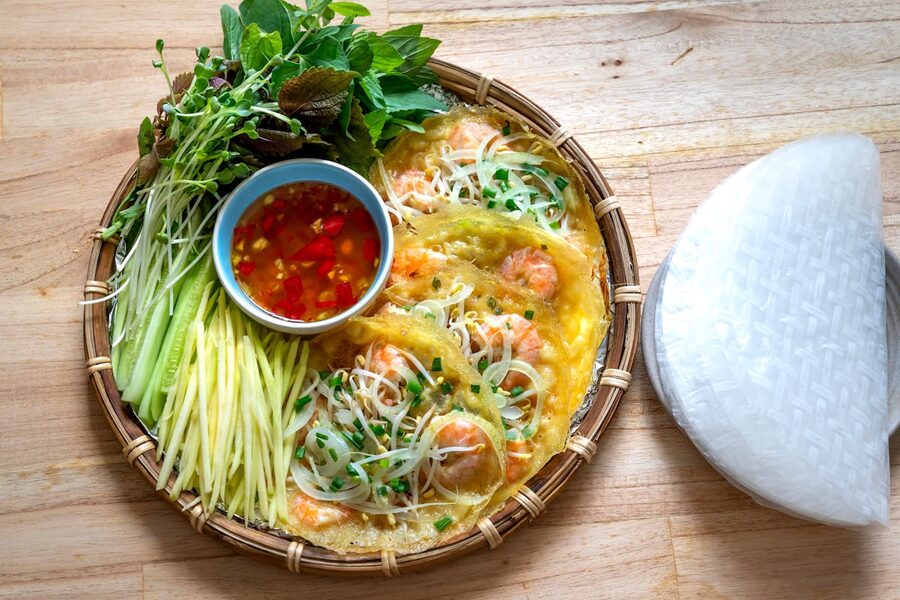
Banh xeo (sizzling pancakes) — These crispy, turmeric-yellow pancakes stuffed with pork, shrimp, and bean sprouts are the dish most people remember best. The trick is getting the pan hot enough that the batter crisps instantly while the filling stays juicy. Your instructor will probably demonstrate once, then let you mess it up yourself. The second attempt is always better.
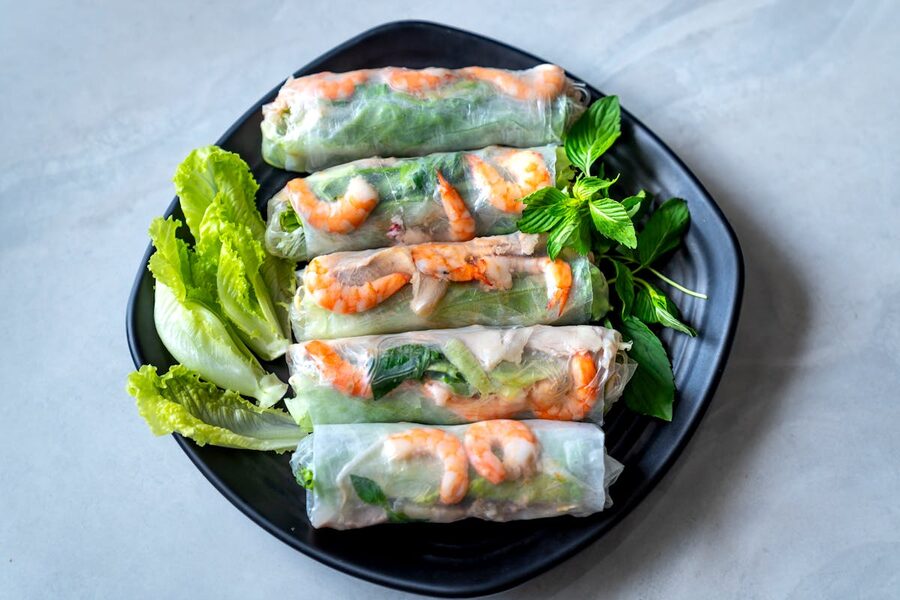
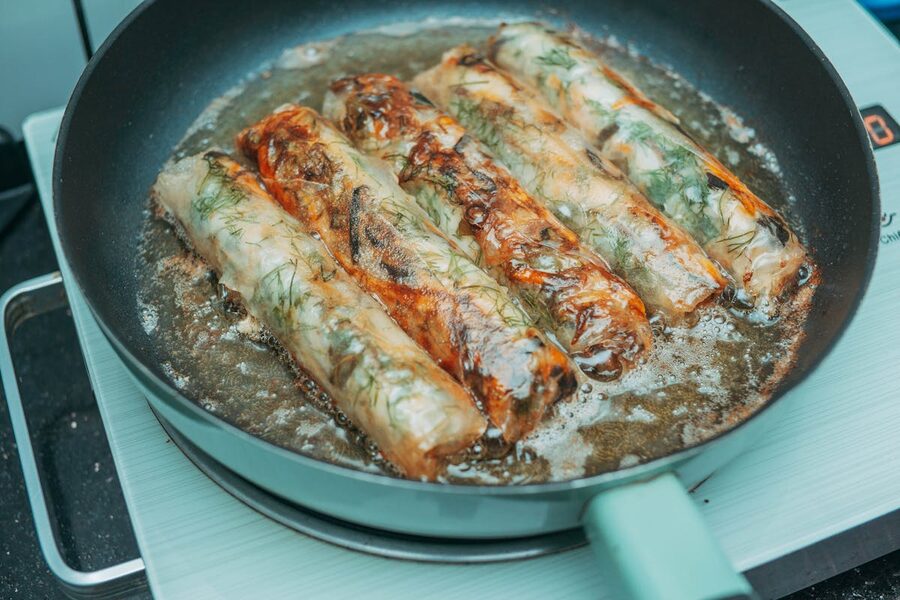
Fresh and fried spring rolls — You will learn both types. Fresh spring rolls are all about wrapping technique — getting the rice paper wet enough to be pliable without it turning into a soggy mess. Fried spring rolls are about the filling ratio and oil temperature. Both are easier than they look, but the fresh rolls are harder than they seem.
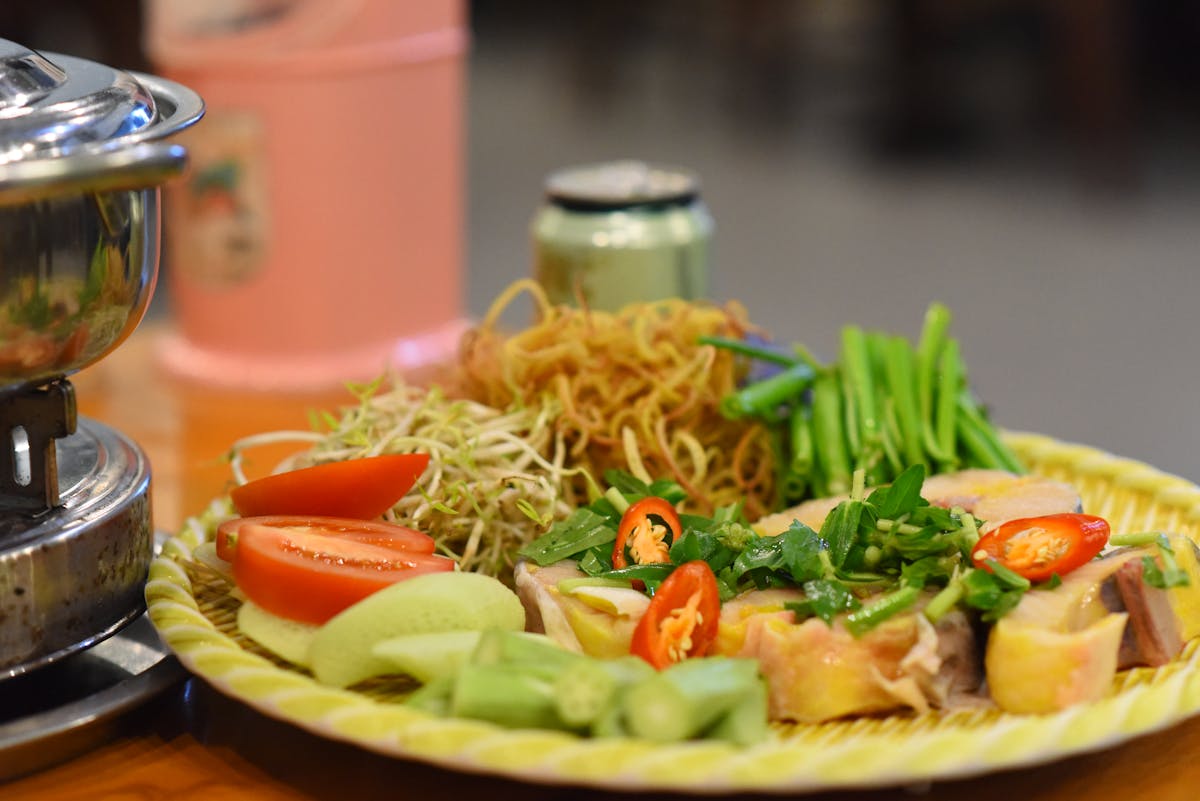
Cao lau — The signature Hoi An noodle dish. Thick, chewy noodles topped with sliced pork, herbs, and crispy croutons, all in a small amount of rich broth. The noodle-making itself takes too long for a class, but you will learn the assembly and the balance of textures that makes cao lau different from any other Vietnamese noodle soup.
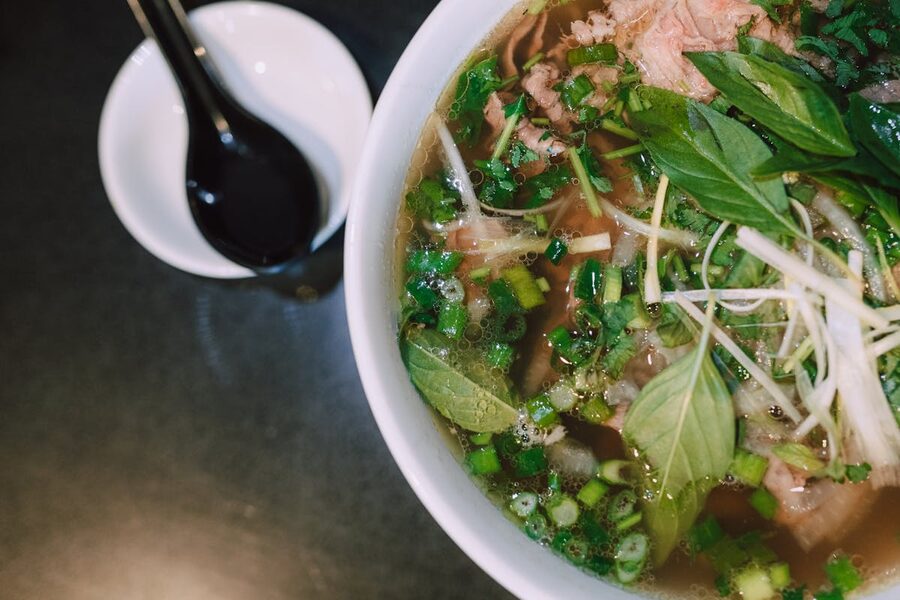
Pho or bun bo — The broth takes hours, so classes typically have it simmering before you arrive. You will learn the spice profile (star anise, cinnamon, cloves), the finishing technique, and why the herb plate on the side matters more than the broth itself.
Green mango salad — Sounds simple, but this dish is a master class in the Vietnamese approach to flavor. Sour, sweet, salty, spicy, and a little bit of funk from the fish sauce. Getting the dressing right is the real skill, and once you nail it, you will put it on everything.
The Market Visit and Farming Experience
I want to spend a minute on the market visit because it surprised me how much I got out of it.
Your instructor walks you through the market at a pace that actually lets you absorb things. They point out herbs that look identical but taste completely different. They show you how to tell if a fish was caught that morning or yesterday. They explain why Vietnamese cooks buy small amounts daily instead of stocking up for the week.
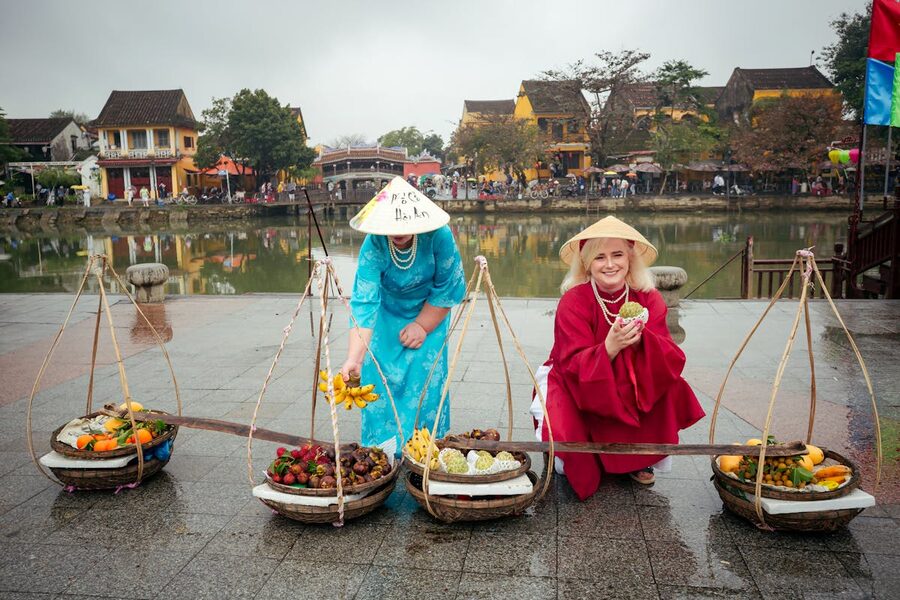
If you pick a class with an eco or farming component, you will also visit a small garden or farm before you cook. This usually means picking herbs directly from the ground, and sometimes catching crabs or small fish from a nearby river. It adds about 30-45 minutes to the experience, but it makes the cooking feel connected to something real rather than just a tourist activity.

Several of the top-rated classes also include a basket boat ride through the coconut forest. This is the round bamboo boat experience in Cam Thanh village. It is a fun addition, but if you are primarily interested in the cooking, make sure the class does not spend two hours on the water and then rush through the actual kitchen time. I have a full guide to the Hoi An basket boat experience separately, so I will focus on the cooking side here.
How to Book and What to Expect
There are two ways to book a cooking class in Hoi An:
Through an online platform (recommended) — Booking through Viator or GetYourGuide gives you free cancellation, price transparency, and real reviews from previous visitors. Most classes include hotel pickup, all ingredients, a recipe booklet to take home, and the meal you cook. This is the easiest way and the one I would recommend for first-timers.
Directly with a cooking school — Hoi An has several well-known cooking schools like Red Bridge, Thuan Tinh Island, and Morning Glory. Booking directly sometimes saves a few dollars, but you lose the cancellation flexibility and review transparency. For a first visit, I would stick with the platforms.
A standard class runs 3-4 hours and follows this rough format:
- Hotel pickup (usually 8-9am for morning classes or 1-2pm for afternoon)
- Market tour (30-45 minutes)
- Travel to the cooking school or farm (15-20 minutes)
- Hands-on cooking of 3-5 dishes (90-120 minutes)
- Sit down and eat everything you made
- Return to hotel
Morning classes are better. The market is fresher, the temperature is more comfortable for cooking over an open flame, and you have the rest of the day free to explore the old town. Afternoon classes work fine, but the heat in Hoi An between April and September makes standing over a stove less pleasant after 2pm.
Prices range from $5 to $30 depending on the platform, the length of the class, and what is included. At the low end you still get a full cooking experience with market visit. At the higher end you get extras like crab fishing, farming, and a basket boat ride.
The Best Hoi An Cooking Classes to Book
I have gone through the top-rated options and picked three that focus on the cooking itself, not just the add-on activities. These are ranked by overall quality and value.
1. Hoi An Eco Cooking Class (Local Market, Basket Boat, Crab Fishing & Cooking Class) — $28.81
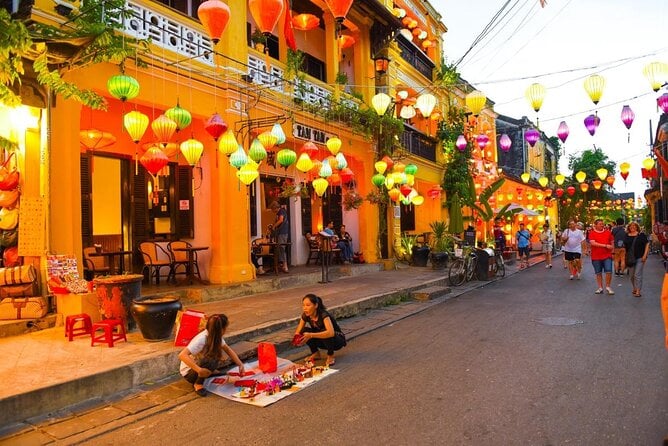
This is the most complete cooking experience you can book in Hoi An. It includes a local market visit, a basket boat ride through the coconut village, crab fishing in the river, and then a full hands-on cooking session where you prepare and eat multiple Vietnamese dishes.
What separates this from cheaper options is the teaching quality. The instructors do not just demonstrate and walk away — they stand with you, adjust your technique, and explain the reasoning behind each step. You learn why the oil needs to be at a specific temperature, not just that it does.
At $28.81 it is more expensive than the budget options, but you are getting a genuinely educational experience, not just an activity to fill a morning. With over 3,300 reviews and a perfect 5.0 rating, this one has earned its reputation.
2. Hoi An Local Market, Basket Boat Ride & Cooking Class Tour — $19

This is the best middle-ground option. You get the market visit, the basket boat, and a solid cooking class, all for $19. The flexible 2-4 hour format means you are not locked into a rigid schedule, and the guides are experienced at working with different group sizes and dietary needs.
One thing I appreciated about this tour is how well they handle food allergies. If you have a nut allergy, shellfish sensitivity, or are vegetarian, they adjust the menu without making it feel like an afterthought. The cooking instruction itself is clear and hands-on — you are actually cooking, not watching someone else cook while you take photos. With nearly 2,750 reviews and a 4.9 rating, this is consistently one of the highest-rated cooking experiences in the city.
3. Hoi An Cooking Class, Market Visit, and Coconut Basket Boat — $4.99
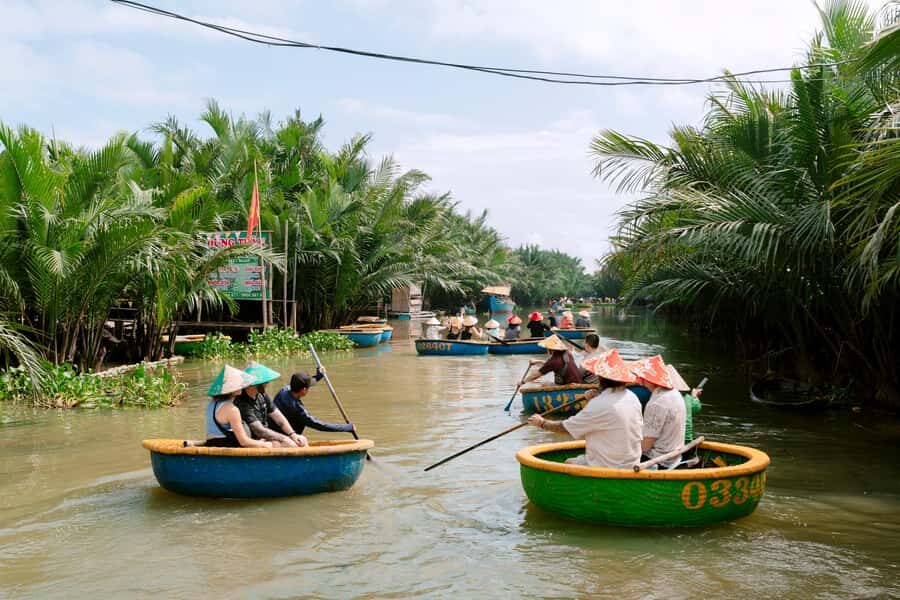
I almost did not believe the price when I first saw it. $4.99 for a cooking class, market visit, and basket boat ride. That is not a typo. Vietnam’s cooking class market is competitive, and this is what happens when quality operators compete on price — the customer wins.
The class is listed at one hour, but that is the cooking portion only. With the market visit and basket boat, expect the full experience to run closer to 2-3 hours. The instruction is good — focused, efficient, and the teachers clearly enjoy what they do. Is it as polished as the $29 option? No. But at this price, it is an absurd amount of value.
If you are on a tight budget or just want to test whether a cooking class is your thing, this is the one to try. Nearly a thousand reviews with a 4.8 rating backs that up.
When to Book Your Cooking Class
Hoi An has two distinct seasons that affect your cooking class experience:
Dry season (February to August) — This is prime cooking class weather. Mornings are warm but not oppressive, the market is at its best, and outdoor cooking schools along the river are comfortable. March to May is ideal — warm without the extreme heat of June-August.
Rainy season (September to January) — Hoi An gets serious rain, especially in October and November. Flooding happens. Cooking classes still run, but outdoor schools may move indoors, the market visit gets wet, and the basket boat addition can be cancelled. If you are visiting during rainy season, book a class with a covered kitchen.
Book at least 2-3 days in advance during peak season (December through March). The most popular classes sell out, especially on days when cruise ship passengers arrive. Off-season, you can often book the day before without issues.
Morning vs. afternoon: I have already said it, but mornings win. The market is freshest, you beat the heat, and you leave your afternoon open for other Hoi An activities. If your hotel is in the old town, most classes pick up between 8 and 9am.
Tips That Will Save You Time and Money
Bring a pen and paper. Most classes give you a recipe card or booklet, but having your own notes about technique, proportions, and the little tips the instructor drops casually is invaluable. I wrote down the fish sauce dressing ratios and I still use them weekly.
Wear clothes you do not mind getting splattered. You will be frying in oil, squeezing limes, and handling turmeric, which stains permanently. Leave the white shirt at the hotel.
Tell them about dietary restrictions upfront. Vietnamese cooking is flexible, and good instructors can swap pork for tofu, remove shellfish, or adjust the heat level. But they need to know before the market visit so they buy the right ingredients.
Do not eat a big breakfast. You will be eating everything you cook, and a typical class produces 3-5 dishes. That is a full meal, and it is a lot of food. A light coffee and maybe a piece of fruit before pickup is enough.
The recipe booklet is your souvenir. Forget the fridge magnets. The recipes and techniques you take home from a Hoi An cooking class are the one souvenir you will actually use. Buy the specific herbs and sauces at the market before you fly out — fish sauce, tamarind paste, and dried chili flakes travel well in checked luggage.
How to Get to Hoi An
Hoi An does not have its own airport. The closest airport is Da Nang International (DAD), about 30 kilometers north.
From Da Nang airport: A Grab car takes 40-50 minutes and costs around $8-12. This is the easiest option. Do not pre-book an expensive hotel transfer — Grab works perfectly and you will pay half the price.
From Hanoi or Ho Chi Minh City: Fly to Da Nang. Flight time is about 1.5 hours from either city, and budget carriers like VietJet and Bamboo Airways often have fares under $30 if you book a few weeks ahead.
From Hue: The drive from Hue to Hoi An takes about 3 hours and passes over the Hai Van Pass, one of the most scenic coastal roads in Southeast Asia. Many travellers hire a driver or take a private car for this stretch — it is worth seeing.

Once you are in Hoi An, everything is walkable or a short bicycle ride away. Most cooking classes include hotel pickup and drop-off, so you do not need to worry about getting to the school yourself.
What You Will Actually See and Do
A Hoi An cooking class is part food lesson, part culture, and part social event. Here is what the experience actually feels like from start to finish.
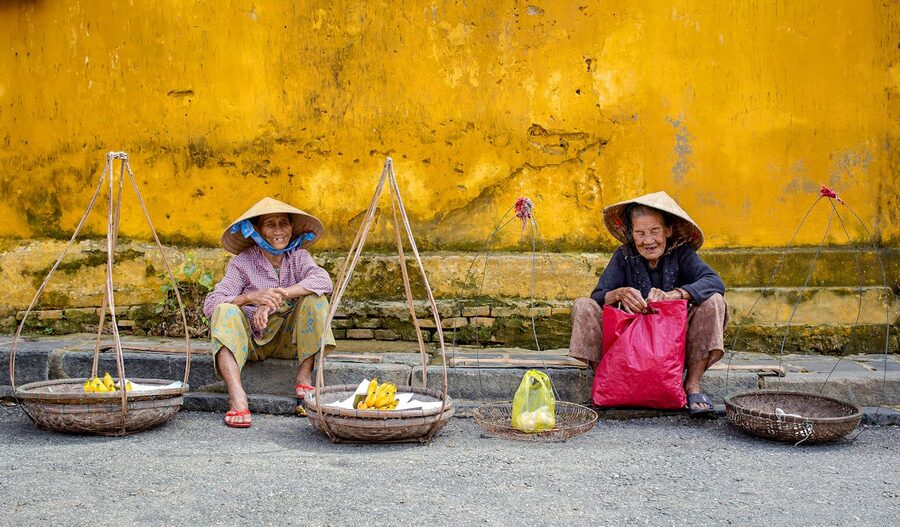
The market visit is sensory overload in the best way. Stacks of fresh herbs, live seafood, whole pigs hanging from hooks, and vendors who have been selling from the same stall for decades. Your guide navigates this chaos with ease, stopping to explain ingredients, letting you smell things, and occasionally buying something unusual for you to try raw.
The cooking itself happens at outdoor stations or covered pavilions, usually with views of the river or rice paddies. Each person gets their own cooking station with a burner, wok, and all the pre-measured ingredients. The instructor demonstrates each dish step by step, then walks around helping as everyone works at their own pace.
The teaching style is encouraging without being patronizing. If your spring rolls fall apart, they laugh with you and show you the trick. If your banh xeo is not crispy enough, they tell you the oil was not hot enough and you try again. You leave feeling like you actually learned something, not like you just followed instructions.
Then you sit down and eat everything. This is the best part. You made all of it, and it tastes better than 90% of the restaurant food you have eaten on the trip. There is cold beer, conversation with the other people in your class (cooking classes attract good company), and that particular satisfaction of eating food you prepared yourself in a country known for its cooking.
Cooking Class vs. Street Food Tour — Which Should You Do?
Both, if you have the time. They serve completely different purposes.
A street food tour (like the ones in Hanoi) shows you where to eat and what to order. A cooking class teaches you how the food is made and why it tastes the way it does. One is about discovery, the other is about understanding.
If you only have time for one and you already enjoy cooking at home, do the cooking class. You will take home skills and recipes you will use for years. If you are more of an eat-than-cook person, do the food tour.
In Hoi An specifically, a cooking class makes more sense than in most cities because the dishes are so unique to this region. You cannot learn to make proper cao lau or Hoi An-style white roses from a food tour — you need to be in a kitchen with someone who knows these recipes.
More Vietnam Guides
If you are spending more than a day in Hoi An, the basket boat ride through the coconut forest is the other must-do activity, and many cooking classes include it. For the rest of your Vietnam trip, the Mekong Delta day trip from Ho Chi Minh City gives you a similar look at Vietnamese food culture from the river, and the Hanoi street food tours are the best way to eat your way through the capital.
History fans should not miss the Cu Chi Tunnels, and the Halong Bay cruises are worth every penny if you can spare two days. For a quieter day trip, Ninh Binh from Hanoi is one of the most underrated experiences in the country.