
The thing about Bangkok street food that nobody tells you is how specific it gets. A vendor doesn’t make “Thai food.” She makes one dish. Maybe two. She has been making that one dish for twenty years, and her cart is on the same corner every night, and the locals who live three blocks away eat there twice a week. That’s the food you want to find. And that’s exactly why food tours in Bangkok exist — because without a guide, you’ll walk right past the best stuff and end up at the place with the English menu and the photos on a laminated board.
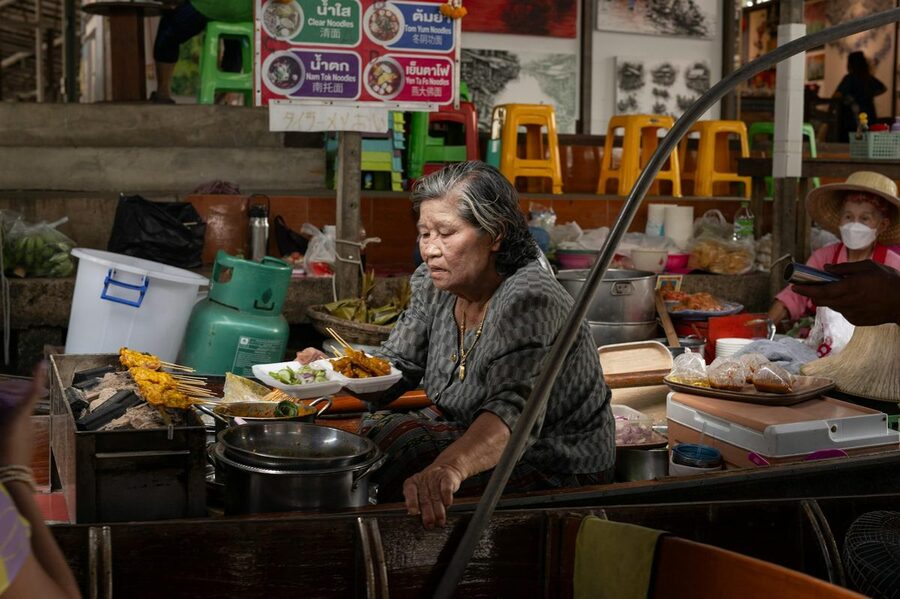
I’ve done food tours in a lot of cities. Bangkok’s are different because the baseline is so high. The street food here isn’t a novelty — it’s genuinely some of the best cooking on earth, and it costs almost nothing. A food tour just removes the guesswork and adds context. Your guide explains what you’re eating, why it tastes like that, and where the ingredients came from.
Here’s how to pick the right Bangkok food tour, what you’ll eat, and which ones are worth booking.
Short on time? Here are my top picks:
Best overall: Bangkok Backstreets Food Tour with 15 Tastings — $62. Small group, chef-designed stops, 15+ tastings over 4 hours. The one to beat.
Best budget: Bangkok Michelin Guide Street Food Tour by Tuk Tuk — $20. Hits Michelin-recommended stalls by tuk-tuk. Absurdly good value.
Best for Chinatown: Bangkok Authentic Tasting Thai-Chinatown Walking Food Tour — $43. Deep explore Yaowarat with 10 tastings on foot.
- Do You Need a Food Tour in Bangkok?
- Walking Tour vs Tuk-Tuk Food Tour
- The Best Bangkok Food Tours to Book
- 1. Bangkok Backstreets Food Tour with 15 Tastings —
- 2. Bangkok Michelin Guide Street Food Tour by Tuk Tuk —
- 3. Old Siam Bangkok Food Tour with 15 Tastings —
- 4. Bangkok Authentic Tasting Thai-Chinatown Walking Food Tour —
- 5. Bangkok Midnight Food Tour by Tuk Tuk —
- When to Go on a Food Tour in Bangkok
- How to Get to the Meeting Point
- What You’ll Eat
- Tips for Your Bangkok Food Tour
- Beyond the Food
Do You Need a Food Tour in Bangkok?
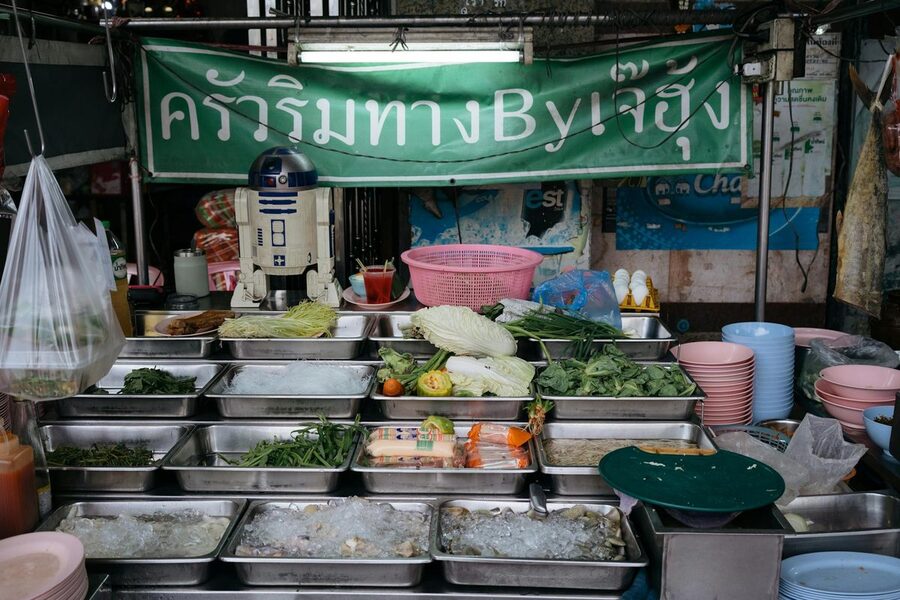
Honestly? You could eat well in Bangkok without a tour. The street food is everywhere, it’s cheap, and you can point at whatever looks good. So why pay $20-$62 for someone to walk you around?
Three reasons.
First, you’ll eat things you’d never order on your own. Boat noodles, khao soi, khanom buang, pla pao — unless you already know Thai food beyond pad thai and green curry, a guide opens up an entirely different menu. I ate kuay jab (rolled rice noodle soup with crispy pork belly and offal) on a tour and it became my favorite Thai dish. I would never have ordered it alone because the stall had no English signage and the contents looked… intimidating.
Second, you go to the right neighborhoods. Most travellers eat on Khao San Road or around Sukhumvit. Those areas are fine but they’re not where Bangkok’s best food lives. The good tours take you to Old Bangkok, Chinatown’s back alleys, and residential neighborhoods where travellers genuinely don’t go.
Third, context matters. Knowing that the som tam vendor has been on the same corner since 1987, or that the boat noodles were originally sold from canals, or that this particular pad thai uses tamarind aged for six months — it changes how the food tastes. Or at least how you remember it.
Walking Tour vs Tuk-Tuk Food Tour
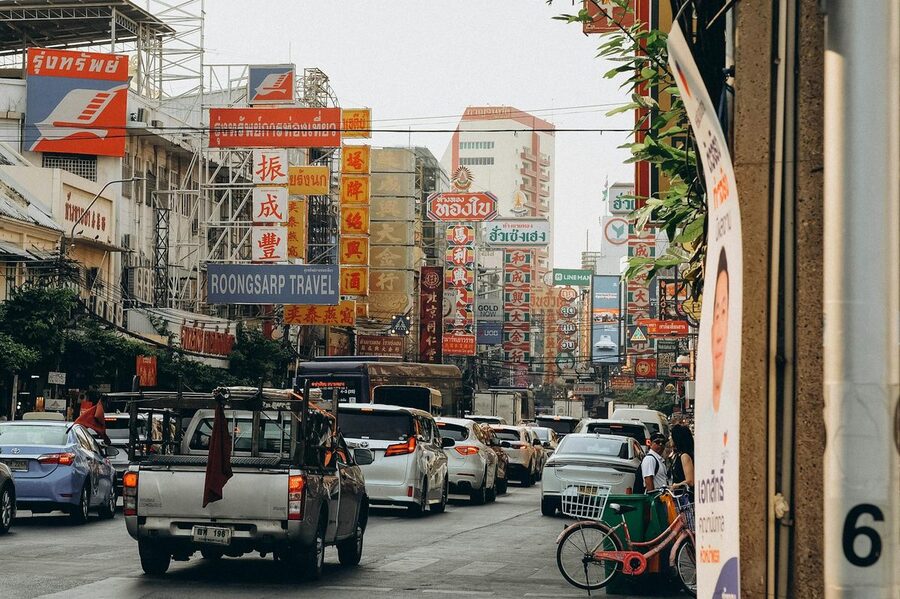
Bangkok food tours come in two main formats, and the difference matters more than you’d think.
Walking tours cover less ground but go deeper. You stay in one neighborhood — usually Chinatown or the Old City — and walk between stalls that are sometimes just 50 meters apart. The pace is slower, you can ask questions at each stop, and you really get to know the area. The trade-off is heat. Walking in Bangkok’s humidity for 3-4 hours is work, even at night.
Tuk-tuk food tours cover more neighborhoods but spend less time at each stop. The ride between food stops is part of the experience — wind in your face, Bangkok at night flying past. If you want the full sensory overload, a tuk-tuk night tour combines food with temples and markets. But you’ll have slightly less time at each food stall.
My recommendation: if this is your first food tour in Bangkok, do a walking tour first. The depth is better and you won’t feel rushed. Save the tuk-tuk version for a second or third visit when you want the atmosphere more than the education. If you prefer two wheels and a breeze, a guided bike tour covers even more ground than a tuk-tuk and lets you stop wherever the smells pull you in.
The Best Bangkok Food Tours to Book
Five tours, ranked by overall quality and value. I’ve filtered these from dozens of options based on guide quality, food variety, and honest review patterns (not just the star rating — I look at what people specifically complain about).
1. Bangkok Backstreets Food Tour with 15 Tastings — $62
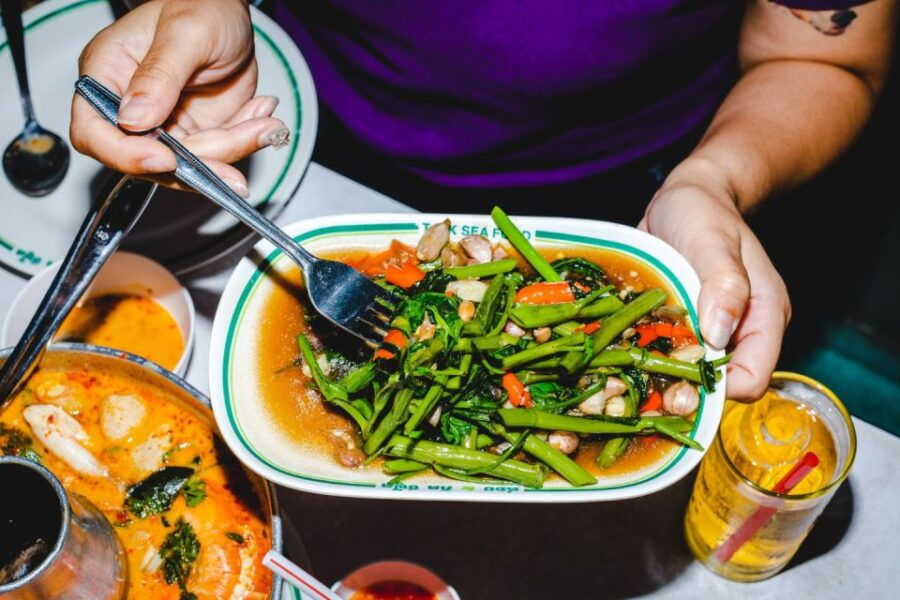
Run by A Chef’s Tour, a company started by actual chefs who got tired of watching travellers eat bad pad thai on tourist streets. The route changes seasonally but always hits the backstreets of Old Bangkok — the kind of alleys where the pavement gives way to concrete and the stalls don’t have signs. Fifteen tastings is a lot. You will be full by tasting number eight and somehow keep going.
With close to 5,000 combined reviews across platforms and a 4.9-5.0 rating, this is the most consistently praised food tour in Bangkok. At $62 it’s mid-range pricing but you’re getting four solid hours, a small group of eight people max, and food that you genuinely cannot find without a local guide. The reviews from our readers confirm what I found — this tour doesn’t cut corners on the food.
2. Bangkok Michelin Guide Street Food Tour by Tuk Tuk — $20
At $20, this is absurdly cheap. You get a tuk-tuk ride between Michelin Bib Gourmand-recognized street food stalls — the ones with the little Michelin sticker on their carts. The food quality is legitimately excellent. The tour runs 1-3 hours depending on the group, and the tuk-tuk transport between stops keeps you cool and adds energy.
The catch? Over 1,200 reviews averaging 4.4 stars — solid but noticeably lower than the other tours on this list. The complaints mostly center on rushed timing and inconsistent guide quality. Some guides are outstanding, others are going through the motions. At this price point, that’s a fair trade-off. Food at Michelin stalls is not included in the tour price — budget an extra 200-400 baht ($6-12) for eating.
3. Old Siam Bangkok Food Tour with 15 Tastings — $59
Also run by A Chef’s Tour, this one covers a different part of Bangkok — the Old City around Rattanakosin and the Chao Phraya riverside. If you’ve already done the Backstreets tour or you’re staying near the Grand Palace area, this one makes more sense geographically. Same format: 15 tastings, small group, 4 hours.
At $59 it’s slightly cheaper than the Backstreets version. Over 800 reviews at a perfect 5.0 average. The food leans more toward traditional Thai-Chinese flavors because of the neighborhood — expect more congee, duck, and dim sum-adjacent bites. The tour also includes a klong (canal) boat ride, which adds a nice break from the walking. If you’re doing two food tours on your trip, pair the Backstreets and Old Siam versions for zero overlap.
4. Bangkok Authentic Tasting Thai-Chinatown Walking Food Tour — $43
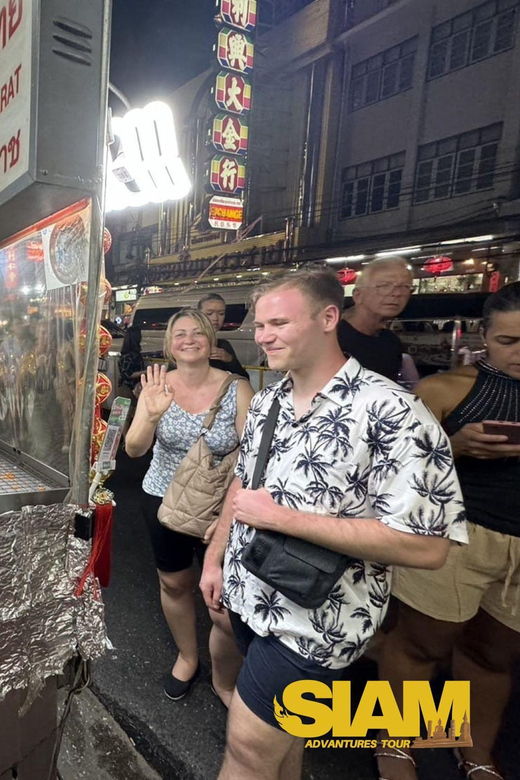
If Chinatown is where you want to eat — and it should be — this tour spends the entire three hours in and around Yaowarat Road. Run by Siam Adventures, it’s a walking-only tour with 10 tastings that focus on the Thai-Chinese fusion food that makes Yaowarat special. Think wonton noodles, grilled seafood, Chinese-style roast meats, and Thai-inflected dim sum.
Over 850 reviews at a 4.9 average. At $43 it’s well-priced for the amount of food you get. The group sizes are a bit bigger than A Chef’s Tour but still manageable. The main weakness is that it only covers Chinatown — you won’t see the Old City or the backstreets neighborhoods. But if Chinatown is what you came for, this goes deeper than any other option.
5. Bangkok Midnight Food Tour by Tuk Tuk — $82
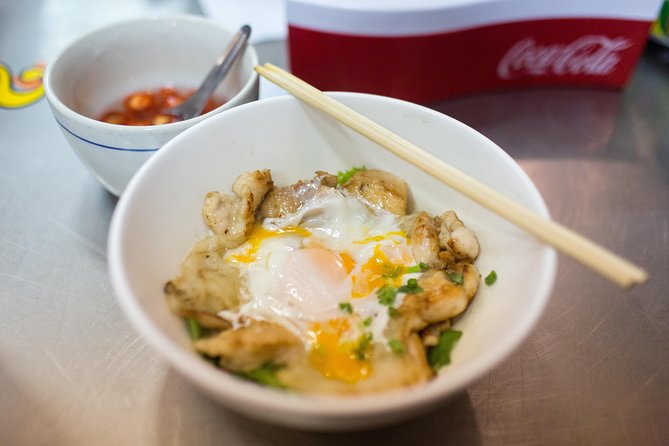
This is the crossover pick — part food tour, part tuk-tuk night tour. Run by Bangkok Food Tours, it starts around 8pm and runs until close to midnight. The tuk-tuk gets you between neighborhoods, and the food stops include late-night markets and street stalls that only open after 10pm. The vibe is completely different from daytime tours.
At $82 it’s the most expensive option on this list, but all food and drinks are included and the quantity is serious. Over 2,500 reviews at a perfect 5.0. The premium price gets you smaller groups, a longer tour window, and access to late-night food spots that the daytime tours can’t reach. If you only have one night in Bangkok and want both the food and the tuk-tuk experience, this one does both.
When to Go on a Food Tour in Bangkok
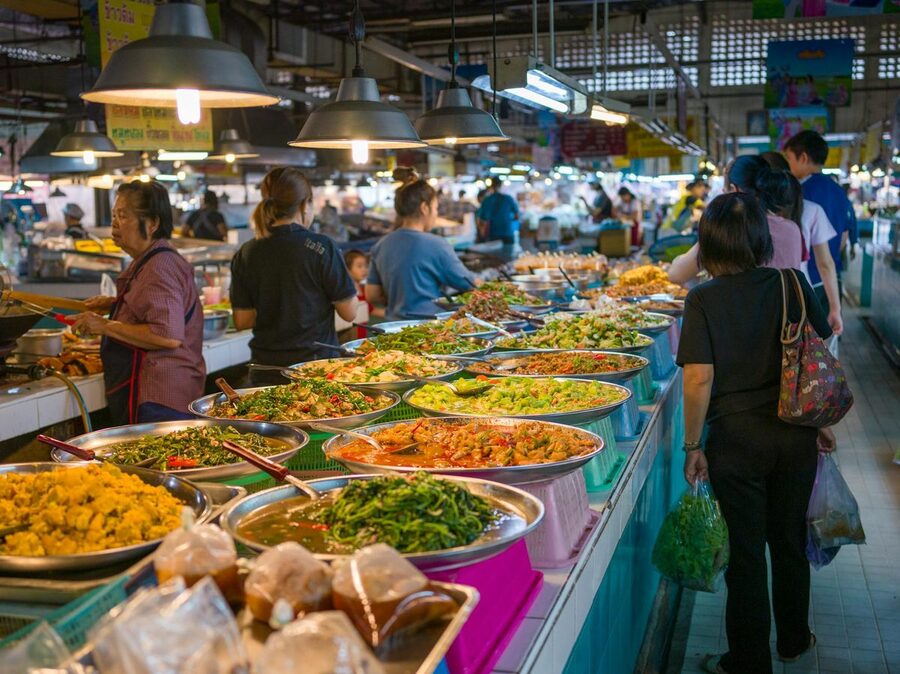
Evening tours are better than morning tours. Thai street food culture peaks after dark. The best stalls set up at 5-6pm and run until midnight or later. Morning tours exist but the selection is limited and the heat is worse.
Best season: November through February. Cooler temperatures (relatively speaking), zero rain, and the markets are at their most active.
Rainy season (June-October): Still works. Street vendors are weather-proof — they cook under tarps and life goes on. But walking tours in a downpour are less fun. Tuk-tuk tours handle rain better.
Weeknight vs weekend: Weeknights are slightly less crowded at the stalls, which means less waiting. But weekends have more variety because some vendors only work Friday through Sunday.
Book at least 2-3 days ahead during high season. A Chef’s Tour runs a max of 8 people per group and sells out regularly.
How to Get to the Meeting Point
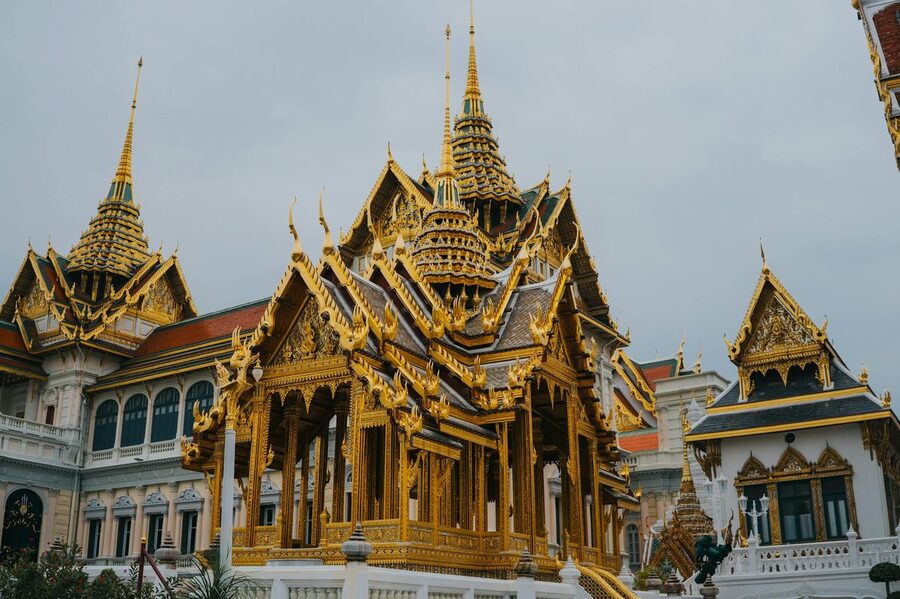
Most food tours meet near Chinatown or the Old City. Here’s how to get there:
MRT to Wat Mangkon station: This is the new Chinatown station and the easiest option. Walk out and you’re on Yaowarat Road within two minutes.
MRT to Hua Lamphong: The old Chinatown-adjacent station. About a 10-minute walk to Yaowarat Road. Most A Chef’s Tour meetups use landmarks near here.
Grab ride: From Sukhumvit or Silom, a Grab to Chinatown costs 80-120 baht ($2-4). If you’re coming from the Silom side, the Mahanakhon SkyWalk is a worthwhile stop on the way — sunset views from the glass floor, then straight to Chinatown for dinner. Don’t take a regular taxi — they’ll refuse to use the meter and quote you triple.
Chao Phraya Express Boat: Take it to Ratchawong Pier, which drops you right at the entrance to Chinatown. A good option if you’re staying near the river or by the Chao Phraya dinner cruise area.
Some tours include hotel pickup. The higher-priced ones (A Chef’s Tour, Bangkok Food Tours) generally do. The budget options ask you to self-transport.
What You’ll Eat
Every tour has its own stops, but here are the dishes that appear on most Bangkok food tours:
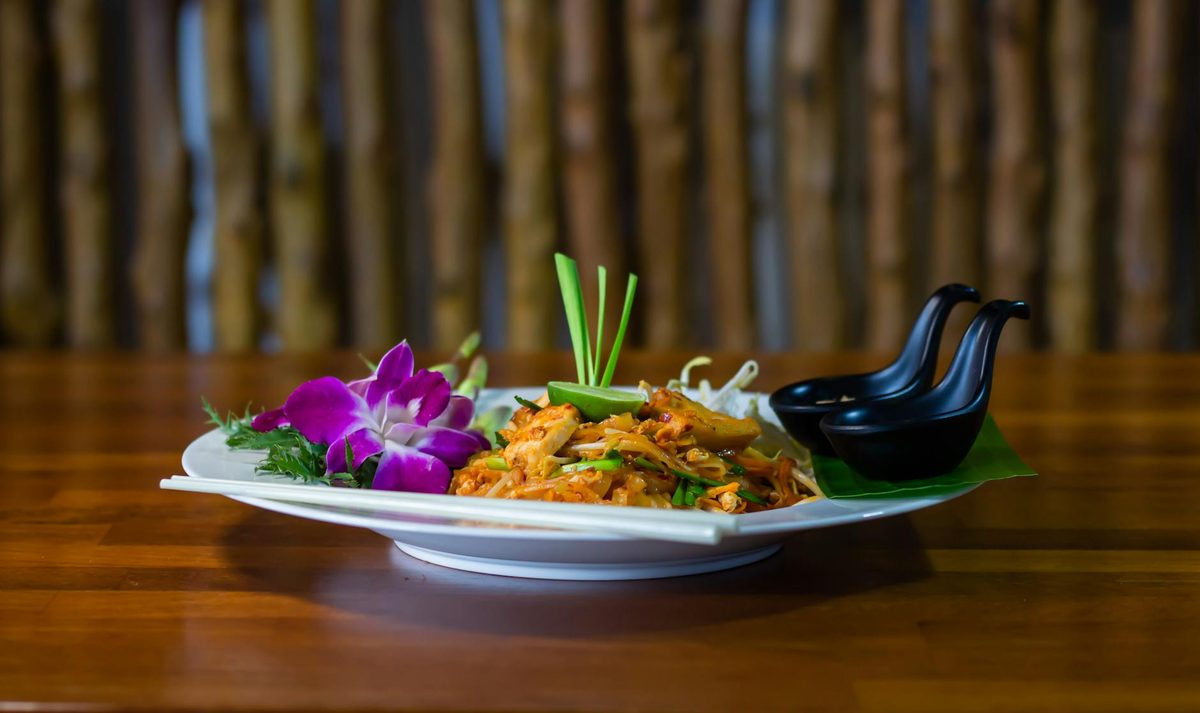
Pad Thai: Not the sad version from the tourist menu. Real pad thai from a cart vendor who makes nothing else. The wok hei (smoky char) is the difference. You’ll taste it immediately.
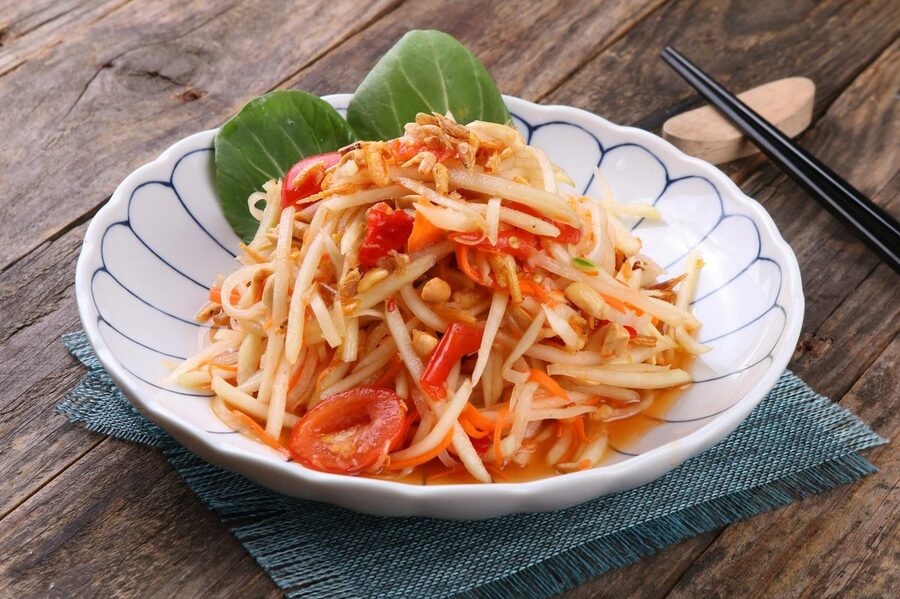
Som tam (green papaya salad): Pounded fresh in a mortar right in front of you. The default spice level at street stalls is genuinely hot. Tell your guide your heat tolerance and they’ll translate.
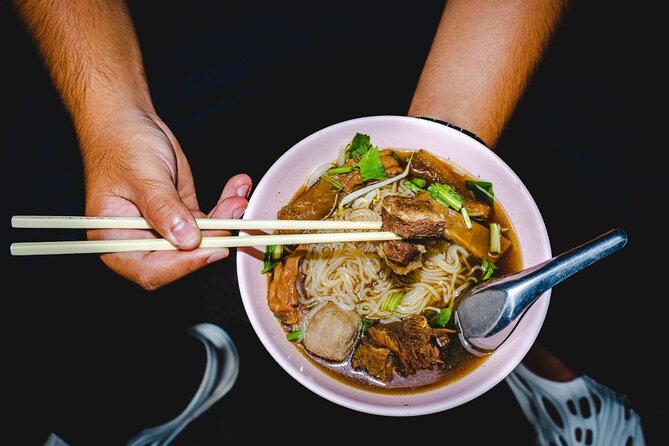
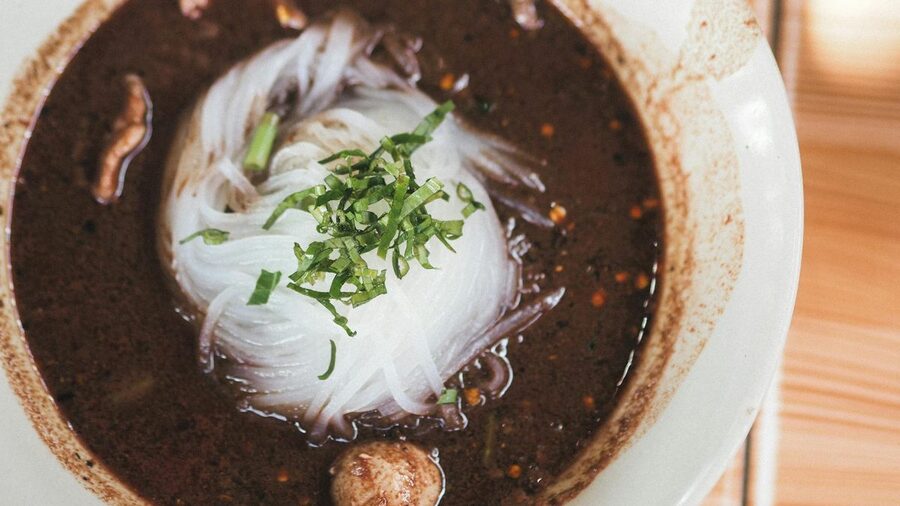
Boat noodles: Served in tiny bowls that seem comically small until you realize the point is to eat a stack of them. The broth is dark, rich, and has an almost meaty depth (some traditional recipes include pig blood, though not all stalls still do this).
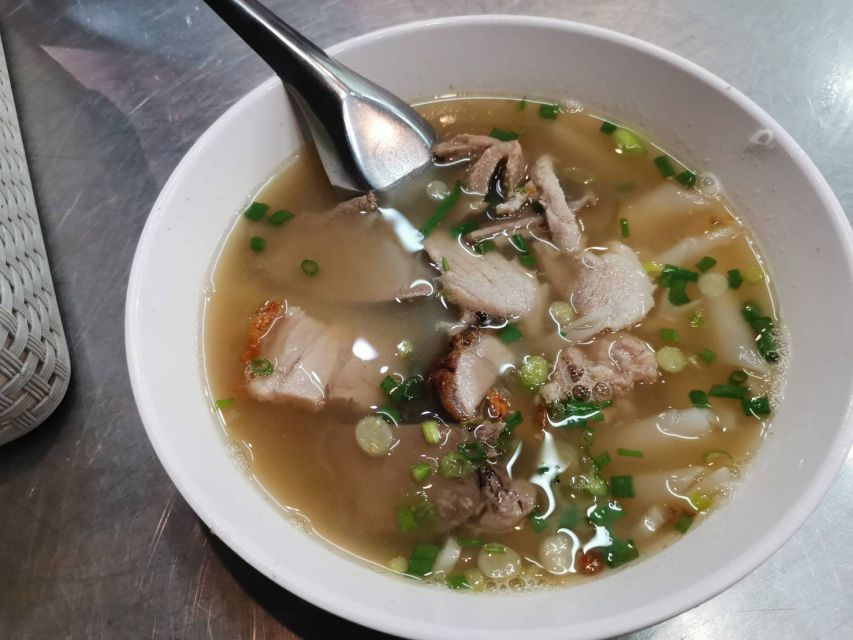
Kuay jab (rolled noodle soup): One of those dishes that looks intimidating but tastes incredible. Rolled rice noodles in a peppery broth with crispy pork belly, tofu, and sometimes offal. If your guide offers this, say yes.
Mango sticky rice: The classic Thai dessert. Fresh mango, sticky rice steamed in coconut milk, with more coconut cream drizzled on top. Simple, perfect, and the street version is better than any restaurant version.
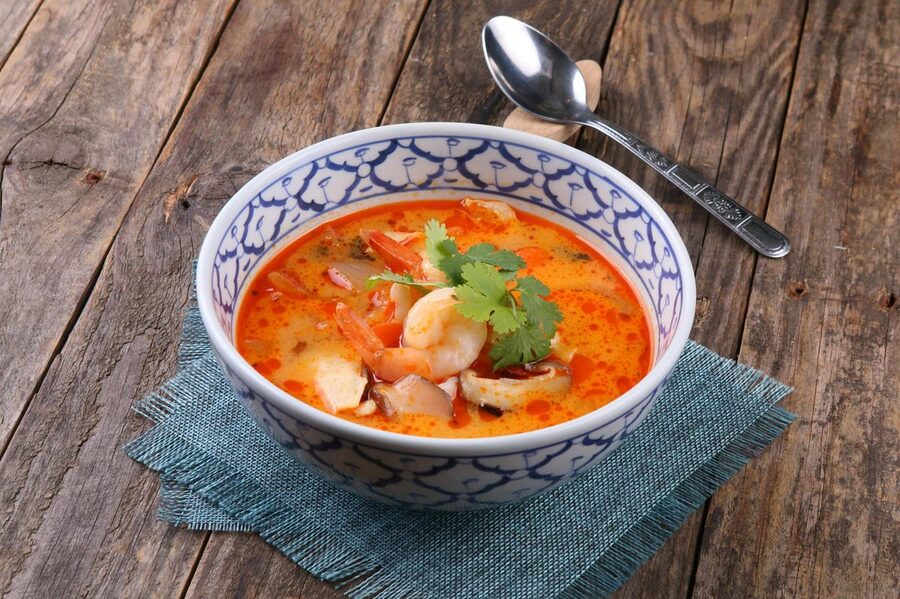
Tom yum goong: Hot and sour shrimp soup that burns and soothes at the same time. The street stall version uses fresh lemongrass, galangal, and kaffir lime leaves — not the paste from a jar.
Khanom buang (Thai crepes): Crispy crepes filled with sweet or savory toppings. The sweet version with coconut cream and shredded egg yolk is addictive. Usually found at night market stalls.
Roti: Thai-style roti from a Muslim vendor. Stretched thin, fried on a griddle, and served with condensed milk and banana. It has nothing to do with Indian roti and everything to do with pure carb joy.
Tips for Your Bangkok Food Tour
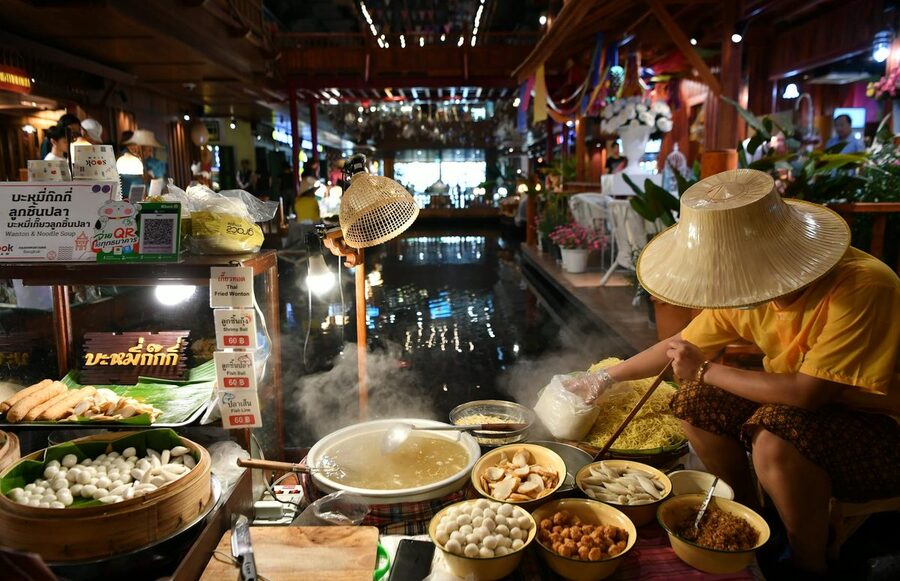
Come hungry. Seriously. The amount of food on a 15-tasting tour is staggering. Skip lunch entirely if your tour starts in the late afternoon. You’ll thank me by tasting number five.
Bring your own water. Most tours provide water, but not always enough. Bangkok’s heat and spicy food combination will have you drinking constantly. A refillable bottle saves you.
Wear dark colors. This sounds like odd advice, but you’re eating street food while standing, and splashes happen. That white linen shirt is a liability.
Cash in small bills. Some tours include all food, others don’t. Either way, you’ll want small bills for tips, drinks, and any extra snacks you spot along the way. ATMs charge 220 baht per withdrawal, so get cash before the tour.
Allergies and dietary needs: Most operators can accommodate vegetarian, halal, and common allergies if you notify them at booking. But Bangkok street food inherently involves fish sauce, shrimp paste, and peanuts — if you have severe allergies, make sure your guide knows before you start.
On nights when you skip the food tour, catching a Muay Thai fight at one of Bangkok’s stadiums is the other quintessential evening activity — the energy is completely different but equally memorable.
Shoes matter more than you’d think. Walking tours cover 2-4 km on uneven pavement, sometimes through market aisles barely wide enough for one person. Wear closed-toe shoes with decent grip. Sandals technically work but one wrong step in a wet market and you’ll regret it.
Beyond the Food
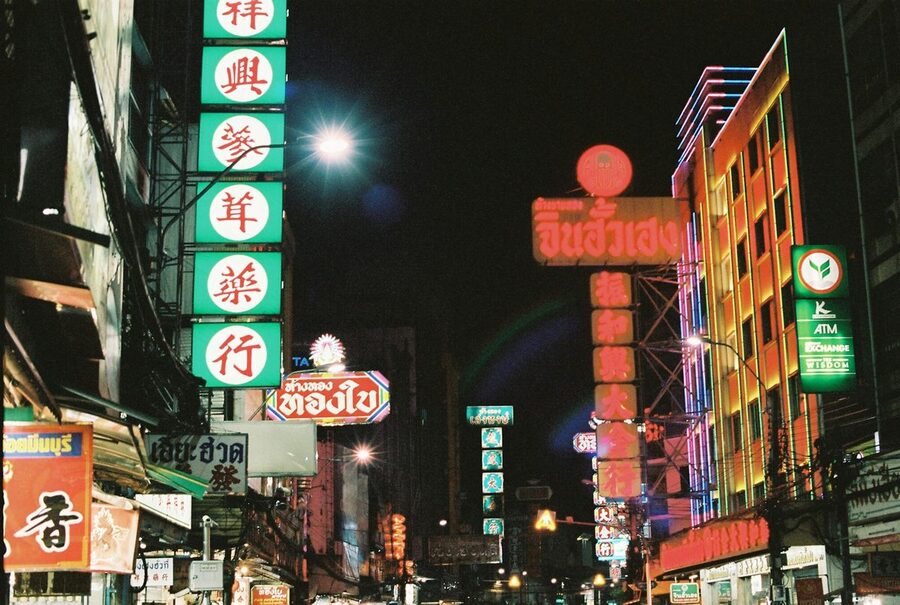
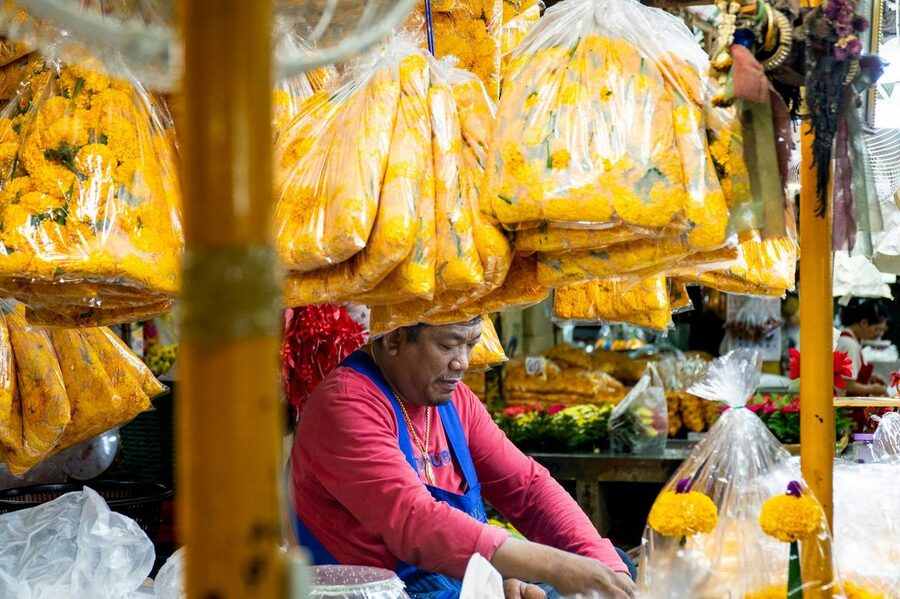
A food tour is one evening. Bangkok has enough going on to fill every other night too. The obvious pairing is a tuk-tuk night tour — temples lit up in gold, market stalls flying past, and yes, more food along the way. For something completely different, spend an evening at a Muay Thai stadium where the crowd noise alone is worth the ticket.
During the day, the Grand Palace and Wat Pho circuit is the cultural anchor most people build their trip around, and from there it’s a short walk to the Chinatown food streets you’ll recognize from your tour. The longtail boat canal tours show you a side of Bangkok that feels nothing like the city above — wooden houses on stilts, orchid farms, and monks collecting alms from the water.
If you want to get out of the center entirely, the floating markets are a half-day trip that puts Thai food culture in a completely different setting.
For anyone heading north after Bangkok, a cooking class in Chiang Mai turns all those flavors you discovered on the food tour into skills you take home. And if the coast is calling, the Krabi and Phi Phi islands are the reset button after Bangkok’s intensity.