
You cannot show up at the Grand Palace in shorts. They will turn you away at the gate, and no amount of polite asking will change that. Covered shoulders, long pants or a skirt past the knee, closed-toe shoes (though some visitors report sandals being fine). This is the single most important thing to know before visiting Bangkok’s most famous landmark, and I’ve watched travellers learn it the hard way more times than I can count.
The Grand Palace, Wat Pho, and Wat Arun sit within a kilometer of each other along the Chao Phraya River, and visiting all three in one morning is completely doable. Most people spread it across a half day, and guided tours handle the logistics and context for about $17-24 depending on the route. But the dress code, the ticket system, and the sequence you visit them in all matter more than you’d think.
Short on time? Here are my top picks:
Best overall: Grand Palace, Wat Pho, and Wat Arun Guided Tour — $24. All three temples, 5 hours, includes ferry crossing. Highest rated option at 4.8 stars.
Best budget: Grand Palace and Wat Phra Kaew Walking Tour — $17. Focused 2.5-hour tour covering just the Grand Palace complex.
Best for depth: Grand Palace Sacred & Local Tour — $18. Includes local neighborhood walks between temples.
- How Tickets and Entry Work
- On Your Own vs. a Guided Tour
- The Best Grand Palace, Wat Pho & Wat Arun Tours
- 1. Grand Palace, Wat Pho, and Wat Arun Guided Tour —
- 2. Temple & Palace Tour — Wat Pho & Grand Palace —
- 3. Grand Palace and Wat Phra Kaew Walking Tour —
- 4. Grand Palace, Wat Pho, Wat Arun Sacred & Local Tour —
- When to Visit
- How to Get There
- Tips That Will Actually Help
- What You’ll Actually See
- What Else to Do While You’re in Bangkok
How Tickets and Entry Work
The three temples each have their own ticketing, and the prices and systems are different.
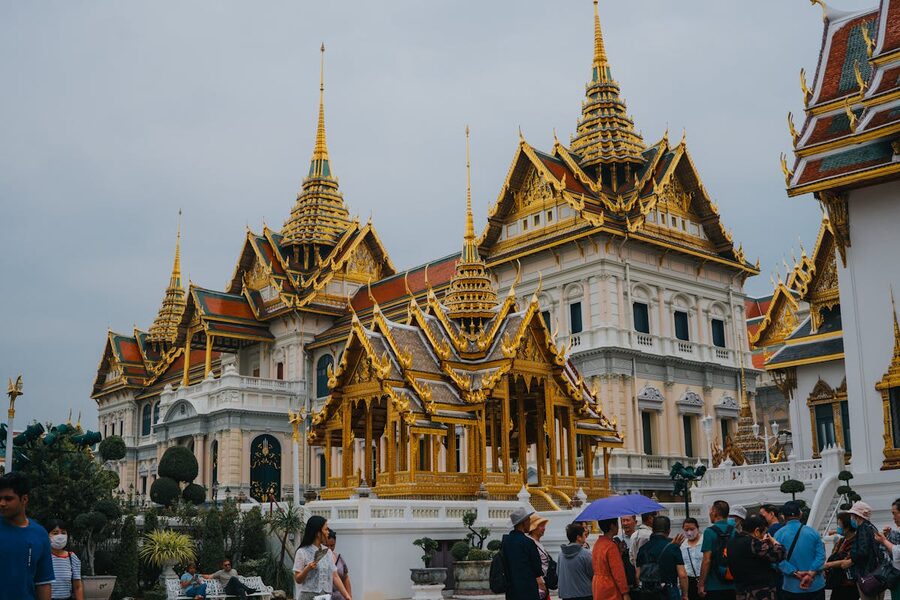
The Grand Palace charges 500 baht (about $14) for foreign visitors. This includes entry to Wat Phra Kaew (Temple of the Emerald Buddha), which sits inside the palace grounds. Thai nationals enter free. The ticket also grants access to the Vimanmek Mansion, though most travellers skip that. Open daily 8:30am to 3:30pm (last entry 3:00pm). The palace closes during royal ceremonies, which are unannounced — check the official website the morning of your visit.
Wat Pho costs 300 baht (about $8.50) for foreigners. This gets you into the Reclining Buddha hall and the full temple compound. A bottle of water is included with your ticket, which sounds minor until you’re sweating through your second shirt at 10am. Open daily 8:00am to 6:30pm. Wat Pho also runs a traditional Thai massage school — a 30-minute massage costs around 260 baht and is an excellent way to recover from the walking.
Wat Arun is the cheapest at 100 baht (about $3). You can explore the temple grounds and climb partway up the central prang (tower) for river views. Open daily 8:00am to 6:00pm. Wat Arun is across the Chao Phraya River from the other two, connected by a short ferry ride (4 baht from the pier near Wat Pho).
Total cost for all three: 900 baht (about $25) in entry fees alone. Guided tours typically range from $17-24 and often include at least two of the three entry fees. Do the math — a guided tour can actually be cheaper than going solo once you factor in tickets plus the ferry.
On Your Own vs. a Guided Tour
Walking between all three temples independently takes about 30-40 minutes total (Grand Palace to Wat Pho is a 5-minute walk; Wat Pho pier to Wat Arun is a 3-minute ferry ride). The logistics are straightforward, and you don’t need a guide to find your way.
But here’s what you miss without one: the Grand Palace complex has over 100 buildings and structures, and without context, you’re just looking at very elaborate gold architecture and thinking “wow, that’s shiny.” A good guide tells you which king built what, why the Emerald Buddha’s outfit changes three times a year, what the murals in the cloister actually depict, and where the real seat of Thai power sits today versus two centuries ago.
A guided tour makes sense if:
- This is your first time in Bangkok
- You want the historical context and stories behind what you’re seeing
- You don’t want to figure out the ferry, the entry fees, or the optimal route
- You want to dodge the worst crowds (guides know the timing tricks)
Go solo if:
- You’ve visited before and want to revisit specific areas
- You’re a photographer who needs to linger at certain spots
- You want to combine these temples with other nearby sites on your own schedule
- You specifically want to do the Wat Pho massage and don’t want to feel rushed
The Best Grand Palace, Wat Pho & Wat Arun Tours
I’ve sorted through the major tour options covering these three temples and picked the four that genuinely deliver different experiences. They’re all walking tours — the temples are too close together to justify bus transport.
1. Grand Palace, Wat Pho, and Wat Arun Guided Tour — $24
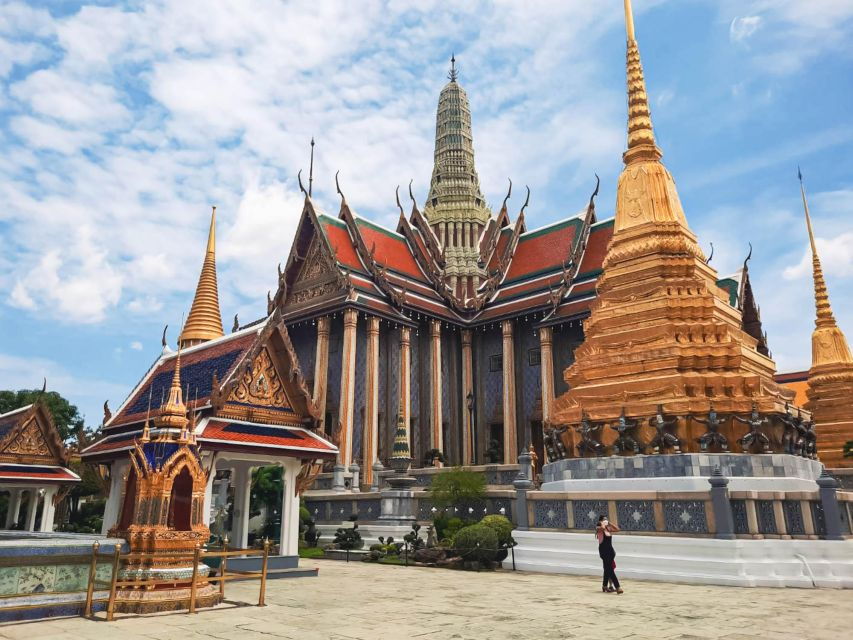
This is the one I’d recommend to anyone visiting for the first time. At $24 for a 5-hour tour covering all three major temples with a local guide, it’s hard to argue with the value — especially since entry fees to the Grand Palace alone cost $14. Over 3,600 people have reviewed this complete temple circuit tour and it sits at 4.8 stars, which is exceptionally high for a group walking tour.
The itinerary starts at the Grand Palace and Wat Phra Kaew, crosses to Wat Arun by ferry, then finishes at Wat Pho. That sequence works well because you hit the Grand Palace before it gets overwhelmingly crowded and end at Wat Pho, where you can optionally stay for a massage after the tour wraps. The guide handles logistics, explains the significance of each site, and knows which corners of the palace most travellers walk right past.
2. Temple & Palace Tour — Wat Pho & Grand Palace — $22
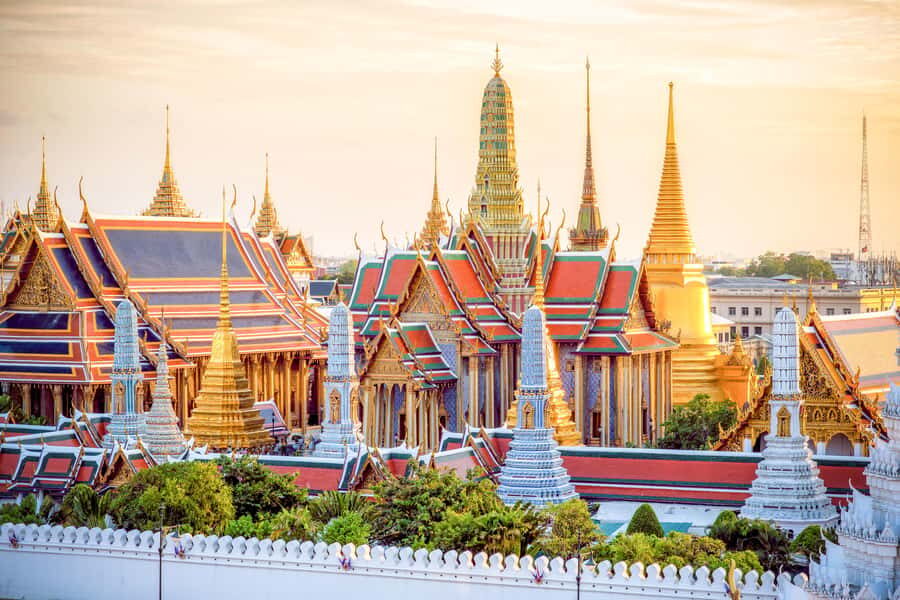
If you’d rather save Wat Arun for a sunset visit on your own (which is a genuinely excellent idea), this 2-4 hour tour covers just the Grand Palace and Wat Pho. At $22 it’s only $2 less than the full three-temple option, so the value proposition is really about getting a more focused experience at the two biggest sites.
With 4,500 reviews at 4.4 stars, it’s well-established. The slightly lower rating compared to the three-temple tour likely reflects that some visitors feel shortchanged by the shorter format. But the flip side is more time at each location and a less packed schedule. If you’re the type who wants to really absorb the Grand Palace murals rather than speed-walk past them, this is the better fit.
3. Grand Palace and Wat Phra Kaew Walking Tour — $17
The most affordable option at $17 for a 2.5-3 hour focused walk through just the Grand Palace and Temple of the Emerald Buddha. At this price, a guide is almost free considering the Grand Palace entry fee is $14 on its own.
Over 2,400 reviews at 4.4 stars. The trade-off is clear: you’re only seeing one complex, and the shorter duration means less time to wander and photograph. But the Grand Palace is enormous, and giving it 2.5 focused hours with a knowledgeable guide is arguably better than splitting your attention across three sites in a rushed half day. You can always walk to Wat Pho afterward on your own — it’s literally across the street.
4. Grand Palace, Wat Pho, Wat Arun Sacred & Local Tour — $18
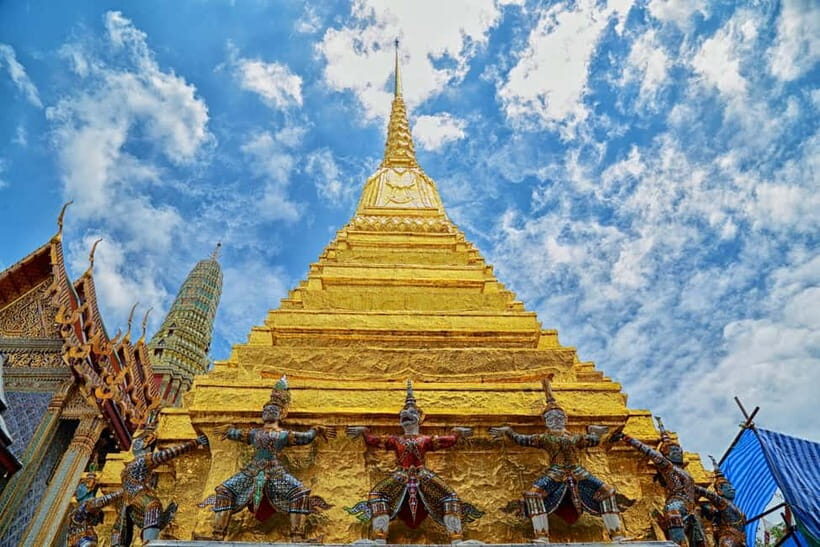
This is the interesting outlier. At $18 for 4-5 hours covering all three temples PLUS local neighborhood walks, it’s the cheapest way to see everything. The “local” angle means the guide takes you through residential streets and market areas between the temples instead of the most direct route. You see a different Bangkok than the temple-to-temple express.
About 2,200 reviews at 4.3 stars. The lower rating compared to the top pick reflects the longer walking distances and the less polished feel of the local segments. But if you’re after authenticity over efficiency, this sacred and local tour gives you something the standard circuits don’t. The price is remarkable — all three temples with a guide for less than the Grand Palace entry fee alone.
When to Visit
The Grand Palace opens at 8:30am and closes at 3:30pm (last entry 3:00pm). These hours are shorter than most people expect. Miss the morning and you’re dealing with the worst crowds between 10am and 1pm, which is when tour buses dump large groups.
Wat Pho has longer hours: 8:00am to 6:30pm. The Reclining Buddha hall is at its emptiest before 9:00am and after 4:00pm. Mid-morning is a zoo.
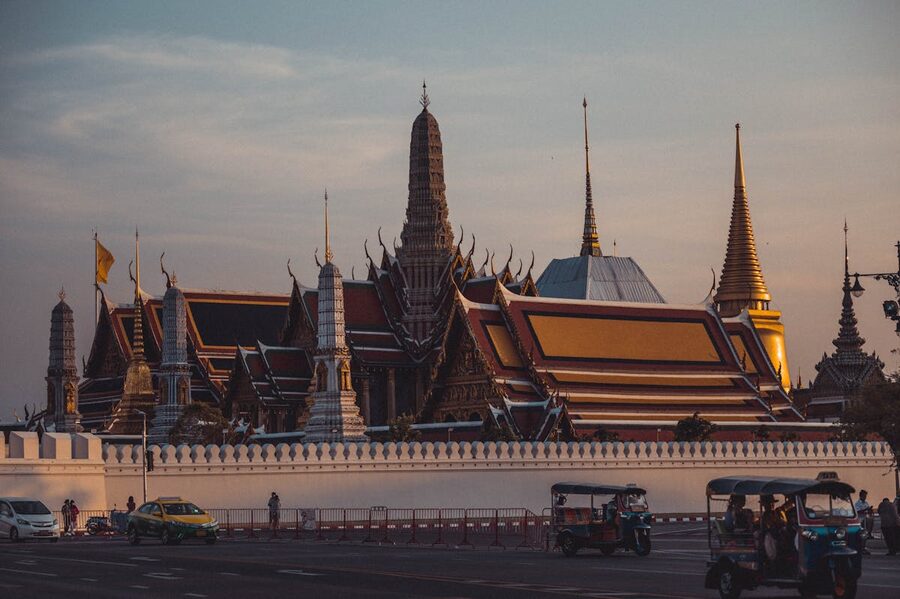
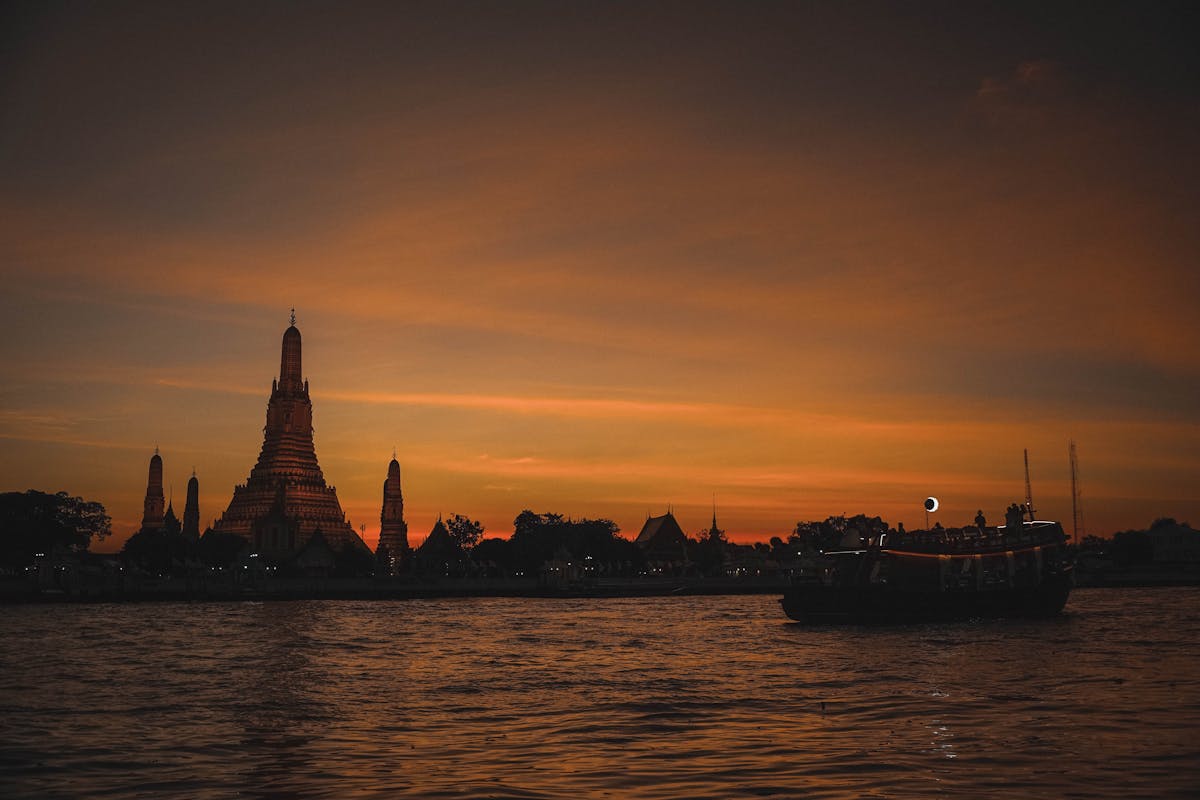
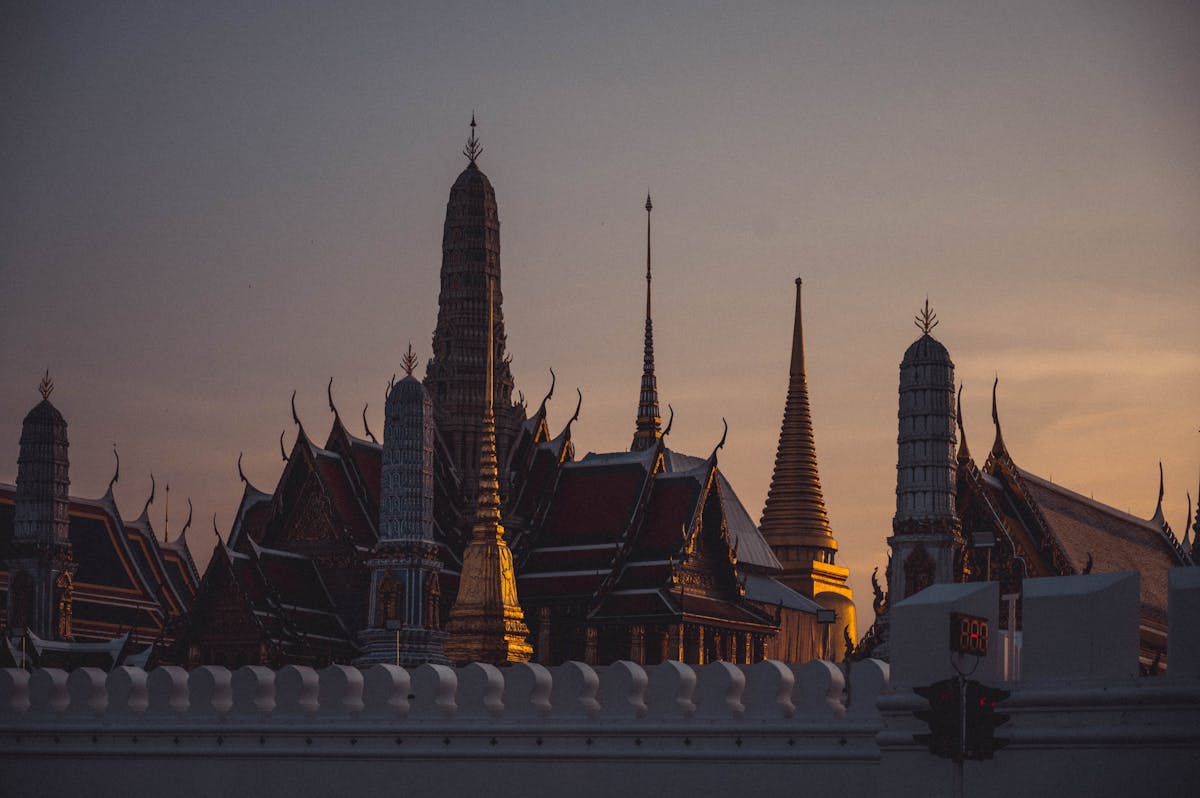
Wat Arun is open 8:00am to 6:00pm. Save this one for late afternoon if your schedule allows. The setting sun lights up the porcelain mosaics and the river views from the top of the prang are at their best in the golden hour. If you time it right, finishing at Wat Arun around sunset and then boarding a Chao Phraya dinner cruise is one of the best one-two punches in Bangkok — you get the temple lit up from the water while eating.
My recommended sequence: Start at the Grand Palace at 8:30am sharp (arrive by 8:15 to queue). Spend 1.5-2 hours there. Walk to Wat Pho by 10:30. Cross to Wat Arun by noon. Or — if you can swing it — do Grand Palace and Wat Pho in the morning, then come back to Wat Arun around 4:30pm for sunset. You’ll need to plan your afternoon around the return trip, but the sunset light is worth it.
Best season: November through February. Cooler temperatures (by Bangkok standards — it’s still 28-32 degrees) and lower humidity. March and April are brutally hot, and you’re walking on stone and concrete with almost no shade.
Rainy season note: June through October brings afternoon rain. Morning visits are usually fine, and the temples are less crowded. Carry a small umbrella and lightweight rain jacket.
How to Get There
If you’re on a guided tour, most include pickup from central Bangkok hotels or start from a designated meeting point near the Grand Palace. Check your booking for specifics.
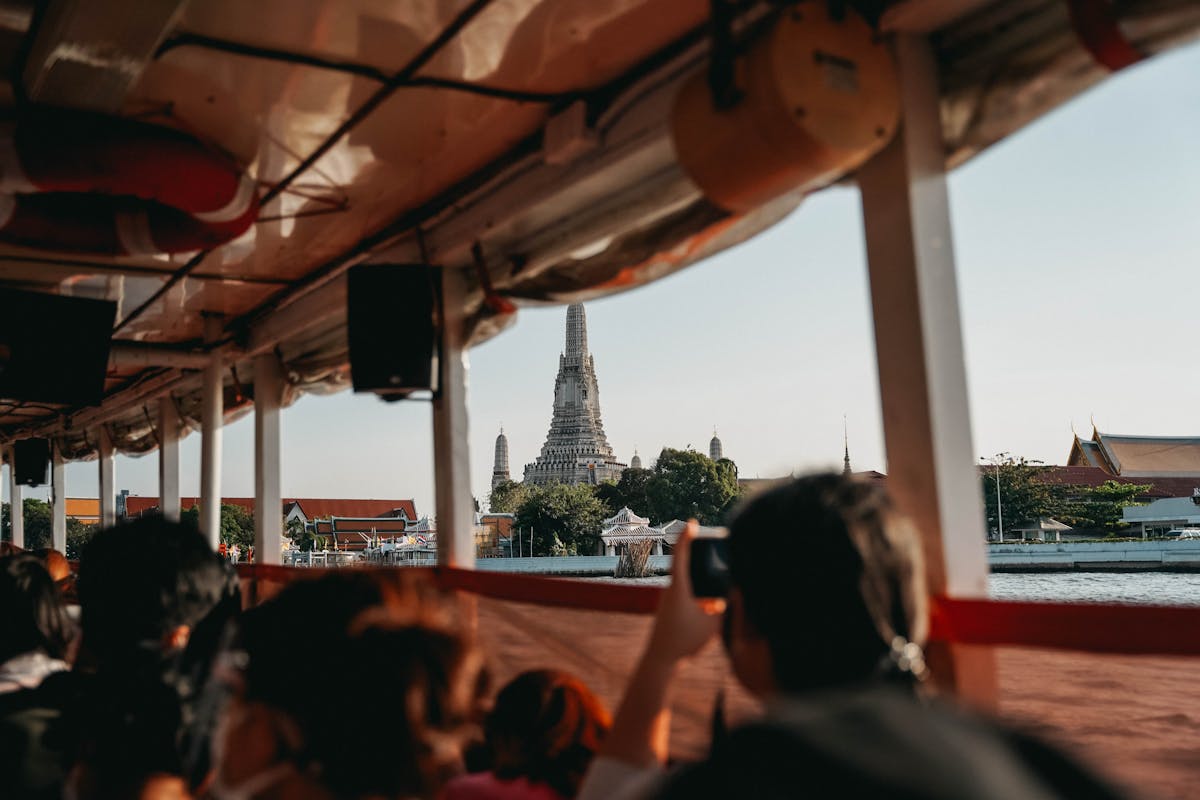
By boat is the most scenic option and often the fastest. Take the Chao Phraya Express Boat to Tha Chang pier (for Grand Palace) or Tha Tien pier (for Wat Pho). From the Sathorn/Taksin BTS station, the boat ride takes about 30 minutes and costs 15-40 baht depending on the boat flag color. If the river approach appeals to you, a longtail canal tour through Bangkok’s quieter waterways makes for a brilliant add-on — several routes pass close to the temple district.
By MRT — take the Blue Line to Sanam Chai station, which drops you a 5-minute walk from Wat Pho. This is the newest and often quickest route if you’re coming from Sukhumvit or Silom.
By taxi or Grab from Sukhumvit or Silom takes 30-60 minutes depending on traffic (Bangkok traffic is consistently terrible, especially during morning rush). Budget 150-300 baht. Ask the driver for the Grand Palace, Na Phra Lan Road entrance.
Between the three temples: Grand Palace to Wat Pho is a 5-minute walk south along Maharaj Road. Wat Pho to Wat Arun requires crossing the river — walk to Tha Tien pier and take the cross-river ferry (4 baht, runs every few minutes).
Tips That Will Actually Help
The dress code is enforced without exceptions at the Grand Palace and with slightly less strictness at Wat Pho and Wat Arun. Long pants or skirts below the knee, covered shoulders, no see-through clothes. There are vendors outside the Grand Palace selling sarongs and cover-ups, but they charge tourist prices. Bring your own or wear appropriate clothes from the start.
Beware the Grand Palace scam. Tuk-tuk drivers near the Grand Palace will tell you it’s “closed today” or “closed for a ceremony” and offer to take you somewhere else — usually a gem shop or tailor where they earn a commission. The palace is rarely closed, and any driver claiming otherwise is running a scam. Walk past them and check the gate yourself.
That said, tuk-tuks aren’t all bad — a guided tuk-tuk night tour with a legitimate operator is actually one of the better ways to see the temples illuminated after dark.
Shoes off, shoes on. You’ll remove your shoes at every temple hall you enter. Wear shoes that slip on and off easily. Sandals work at Wat Pho and Wat Arun; the Grand Palace technically requires closed-toed shoes, but enforcement varies.
Photography rules differ. No photography is allowed inside the Emerald Buddha hall at Wat Phra Kaew. Everywhere else is fair game. At Wat Pho, you can photograph the Reclining Buddha from every angle. At Wat Arun, the views from partway up the prang are the most photogenic.
Water and sunscreen are essential. The Grand Palace complex has very little shade, and you’re walking on stone that reflects heat. Bring at least a liter of water. Wat Pho includes a small bottle with your ticket — a thoughtful touch.
Allow 4-5 hours minimum for all three temples if going independently. The Grand Palace alone needs 1.5-2 hours to see properly. Wat Pho takes 45 minutes to an hour (longer if you get a massage). Wat Arun is 30-45 minutes. Factor in walking time and the ferry crossing.
Get a Wat Pho massage. The traditional Thai massage school at Wat Pho is where Thai massage was first codified and taught. A 30-minute massage runs about 260 baht ($7.50), and it’s surprisingly good. The setting — inside the temple grounds — makes it more memorable than a random spa. Book immediately when you arrive, as there’s often a waitlist by mid-morning.
What You’ll Actually See
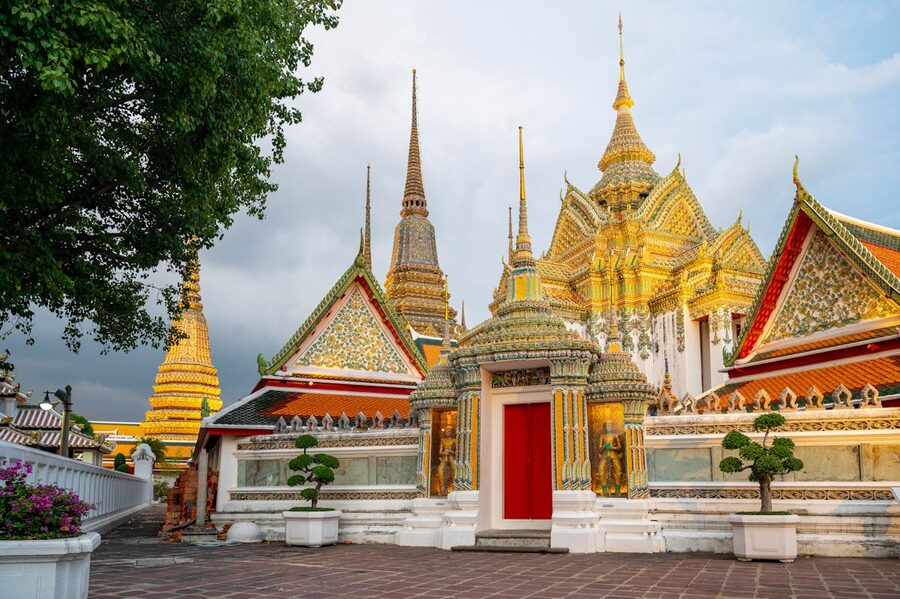
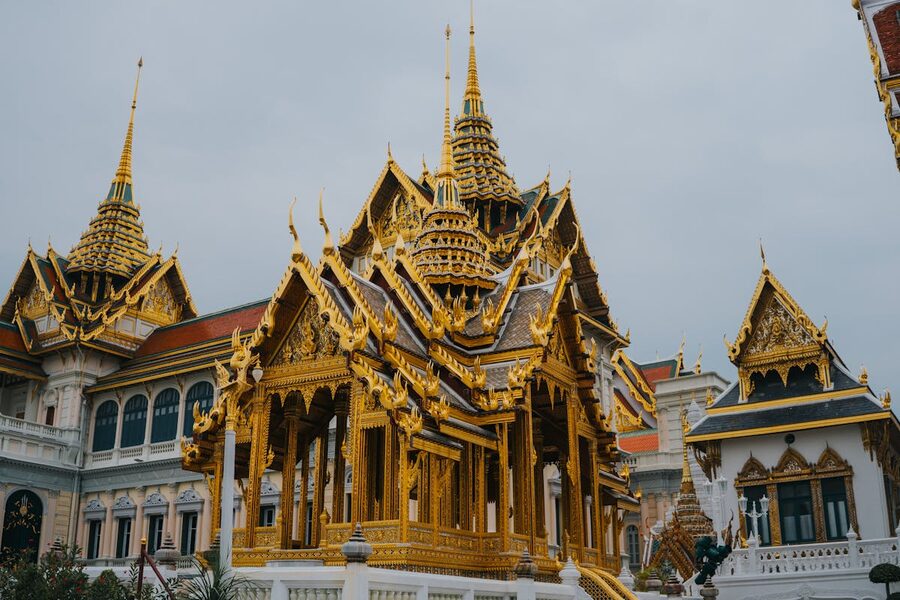
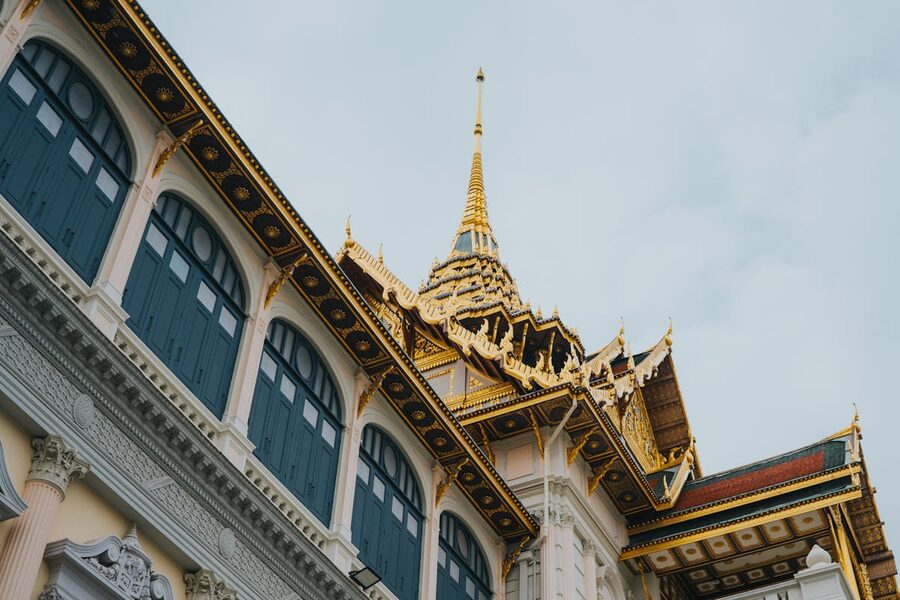
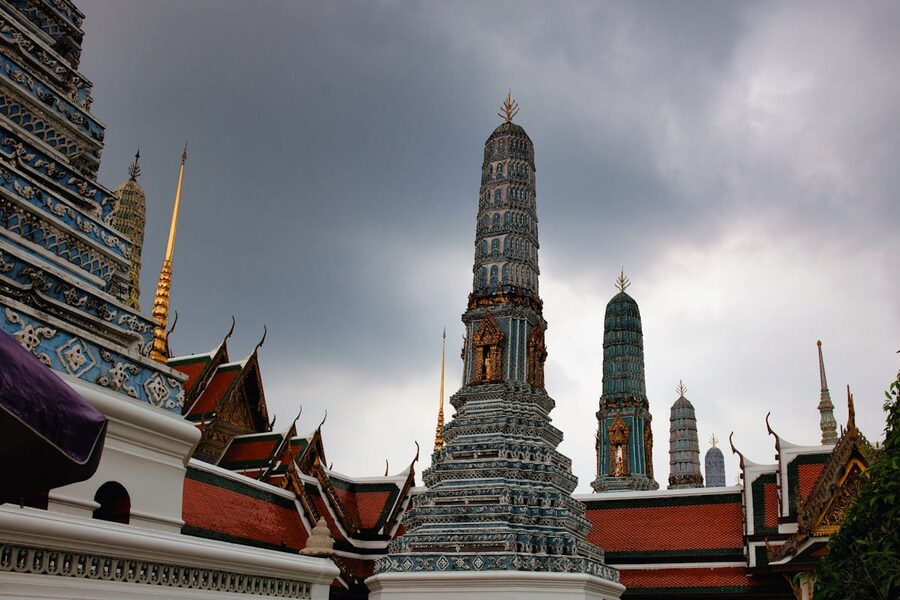
The Grand Palace served as the official residence of the Kings of Siam from 1782 to 1925. It’s a massive 218,000 square meter complex with over 100 buildings representing nearly two centuries of architectural evolution. The Chakri Maha Prasat Throne Hall is the standout — a building that looks like a European palace that someone crowned with a traditional Thai spire.
King Rama V wanted a full European design, but his court convinced him to add the Thai roof. The tension between the two styles is what makes it fascinating.
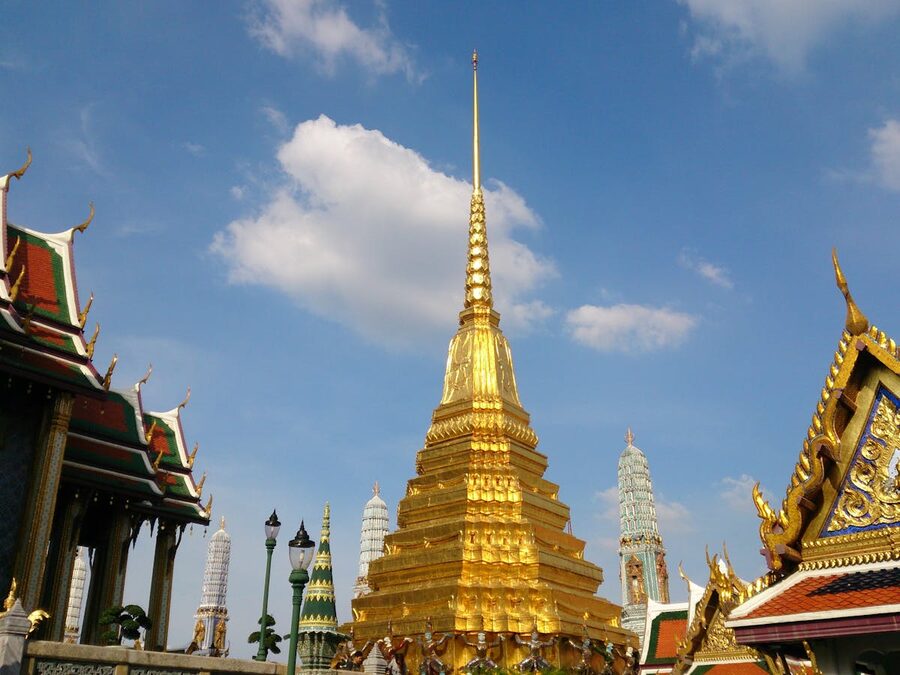
Inside the compound, Wat Phra Kaew houses the Emerald Buddha — Thailand’s most sacred religious artifact. Despite the name, it’s carved from a single block of jade, not emerald. It sits high on a golden throne behind glass, and the King personally changes its golden outfit three times a year to mark the seasons. No one else is allowed to touch it.
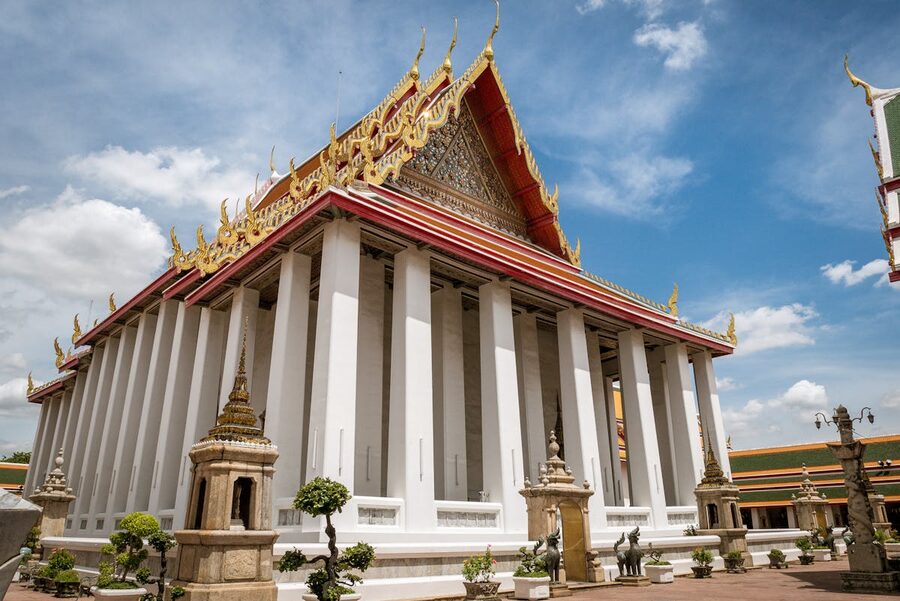
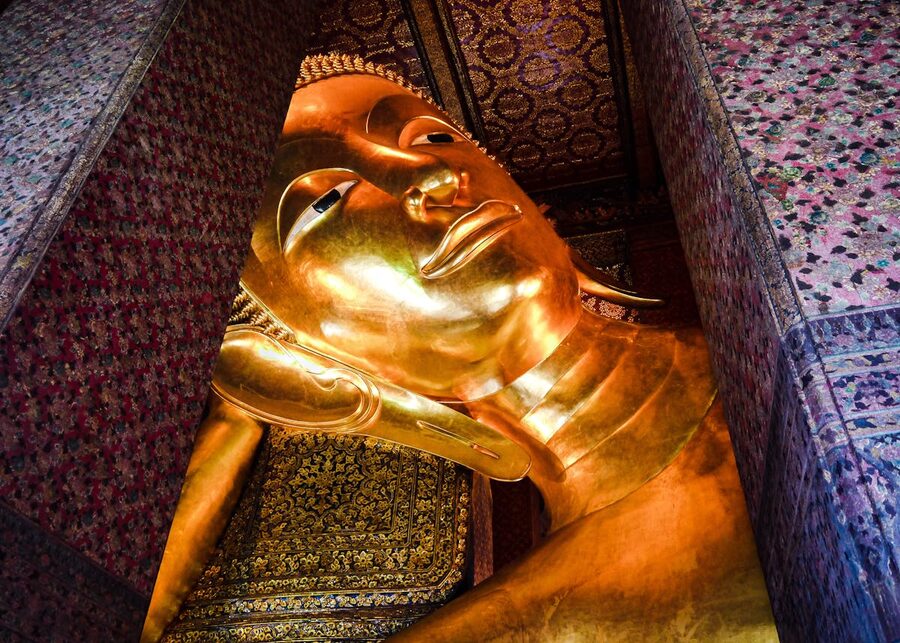
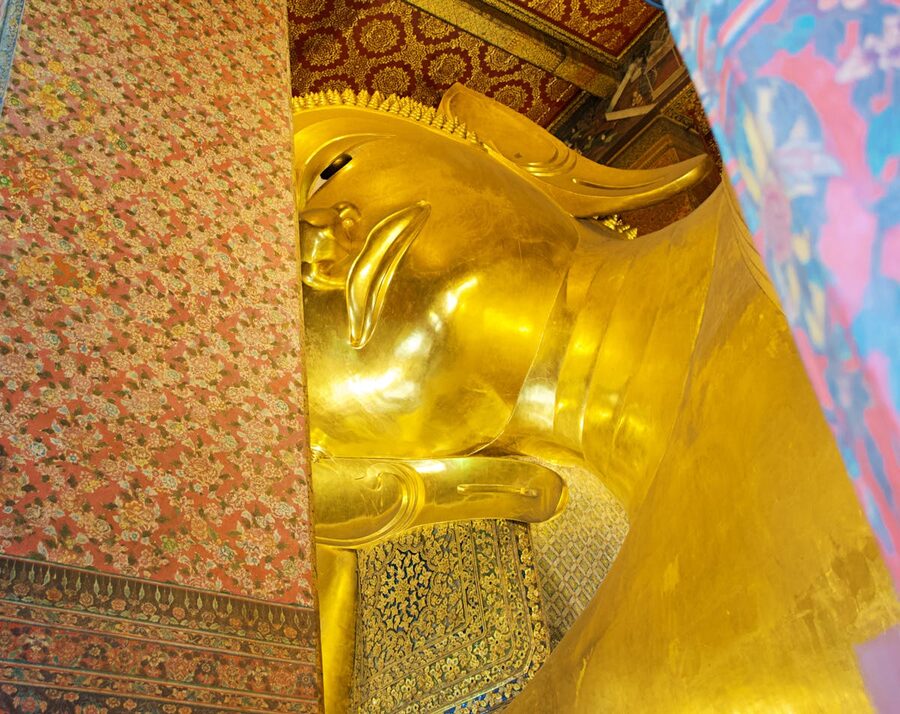
Wat Pho predates Bangkok itself, with origins going back to the 16th century. King Rama III turned it into Thailand’s first public university in the 1830s, and the stone inscriptions throughout the compound represent one of the earliest attempts to make knowledge accessible to ordinary people. But everyone comes for the Reclining Buddha: 46 meters long, 15 meters high, covered in gold leaf.
It depicts the Buddha entering nirvana, and the scale is genuinely awe-inspiring. Walk around to the feet — the mother-of-pearl inlays on the soles depict 108 auspicious symbols from Buddhist cosmology.
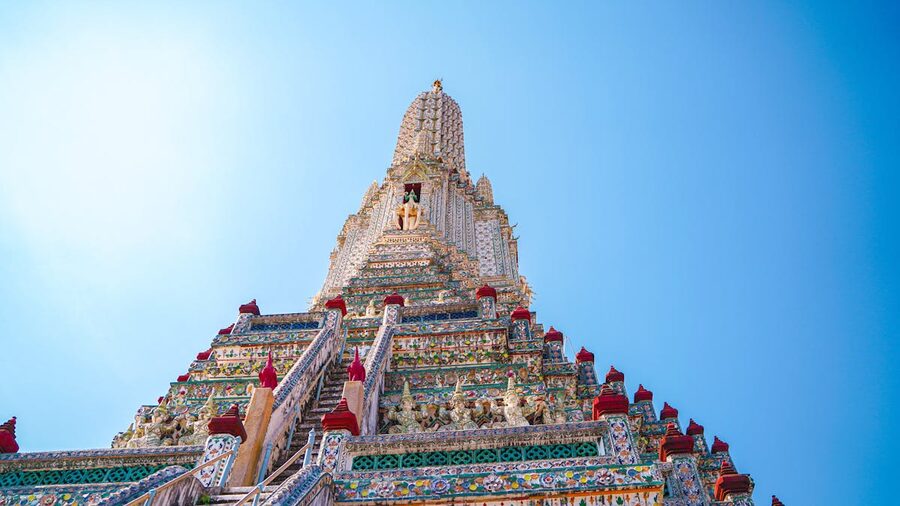
Wat Arun — the Temple of Dawn — is actually more spectacular at sunset than sunrise, despite the name. The central prang stands 82 meters tall and is covered in thousands of tiny porcelain and colored glass pieces that catch the light differently throughout the day. Chinese trading ships used porcelain as ballast, and broken pieces were recycled into these extraordinary mosaics.
You can climb steep stairs partway up the main tower for panoramic views of the river and the Grand Palace on the opposite bank. The stairs are genuinely steep — take your time and hold the railings. For an even higher vantage point over the city, the Mahanakhon Skywalk’s glass floor at 314 meters puts the entire temple district in perspective from above.
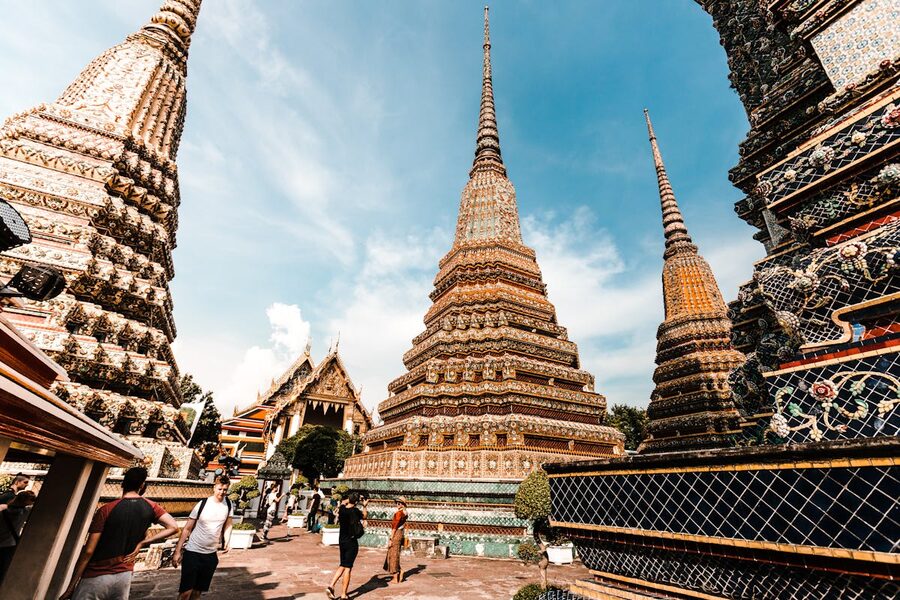
What Else to Do While You’re in Bangkok
The temple circuit usually takes up a morning or a full half-day, which leaves plenty of time for everything else Bangkok does well.
The evening after temples is wide open — a street food tour through the backstreets is the best way to eat your way through neighborhoods you’d never find on your own, and the contrast between the ancient temples and the chaotic food stalls hits differently when you do them the same day.
If you’d rather cover ground on two wheels, a bike tour through the canal-side communities takes you into a version of the city that most visitors never see.
For a day outside the city, Ayutthaya’s ruined temples are 90 minutes north and pair perfectly with the Grand Palace — it’s a before-and-after of Thai royal architecture spanning several centuries. The floating market and train market day trip is the other classic excursion, best saved for a separate morning.
And if the fight sports scene interests you at all, Muay Thai at Rajadamnern Stadium is one of the more intense evenings you can have in any city — the energy in the crowd alone is worth the ticket.
This article contains affiliate links. If you book a tour through one of our links, we earn a small commission at no extra cost to you. This helps us keep writing detailed, independent guides. We only recommend tours we’ve researched thoroughly.