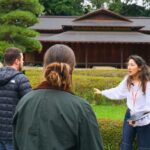
Tsukiji is a place to follow your nose, but the sheer number of stalls can make choosing where to stop a challenge. This two-hour walk pairs a short visit to Tsukiji Hongwan-ji Temple with a longer guided route through the Outer Market, where your guide can explain the food and point you toward stalls worth your time.
I like two things here: the temple visit gives the morning a cultural start, and a local guide can make the market less bewildering by explaining ingredients, traditions, and where to find good-value bites. Guides including Sayaka, Ryo, Tom, and Riki have been praised for their warmth and practical recommendations, though your guide will depend on the date.
One consideration: the advertised price starts at $17.25, but food and drinks are not included. You’ll need extra money if you want to taste your way through the stalls, and bad weather can affect the market experience.
- What makes this Tsukiji walk worthwhile
- Starting at Tsukiji Hongwan-ji
- Finding your way through Tsukiji Outer Market
- What you might taste, and what you pay for
- The pace, crowds, and weather
- Is the .25 starting price good value?
- Booking and meeting-point details
- Should you book this Tsukiji tour?
- FAQ
- How long is the Tsukiji Fish Market tour?
- What food is included in the price?
- What foods might I try?
- Where does the tour meet?
- Is the tour wheelchair-accessible?
- Can I cancel my booking?
- The Best Of Tokyo!
- More Walking Tours in Tokyo
- More Tours in Tokyo
- More Tour Reviews in Tokyo
- Not for you? Here's more nearby things to do in Tokyo we have reviewed
What makes this Tsukiji walk worthwhile
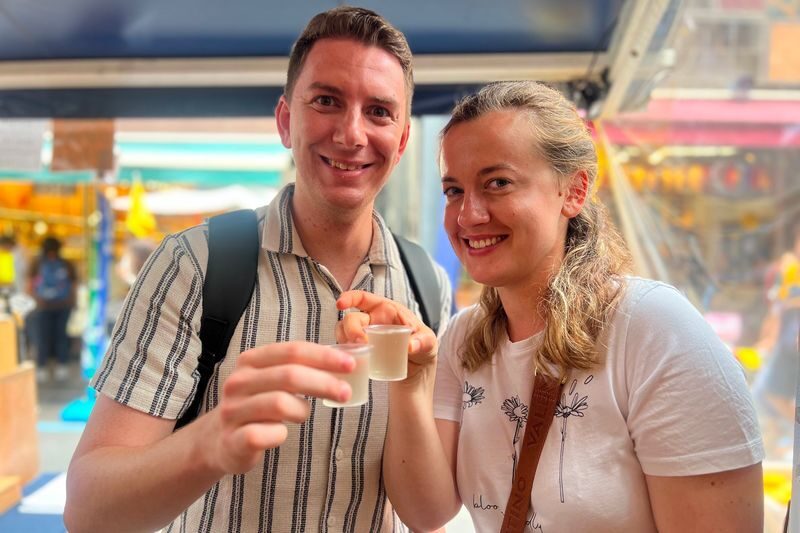
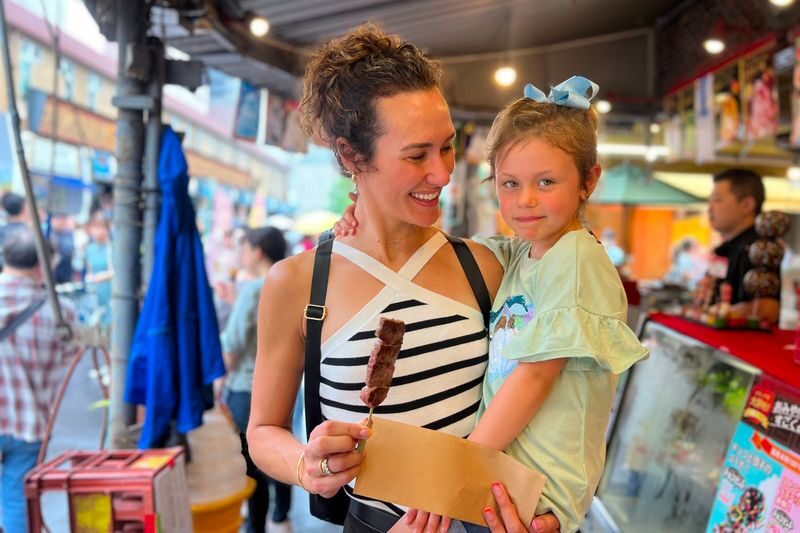
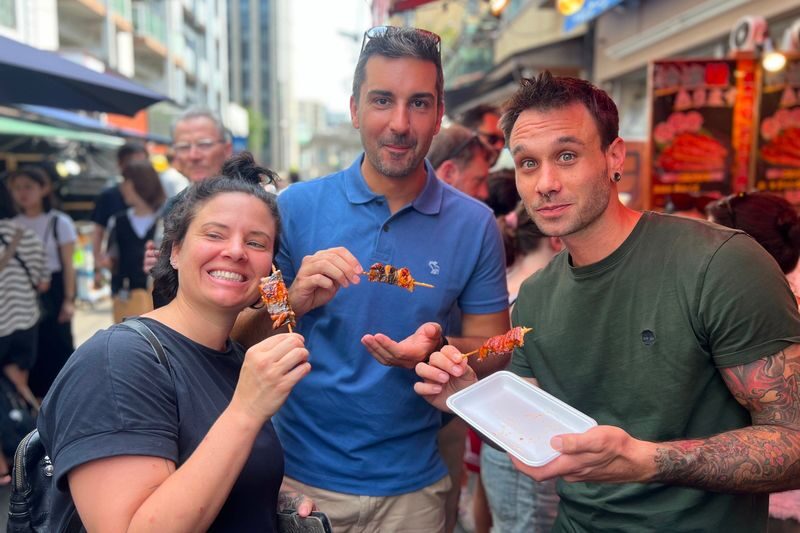
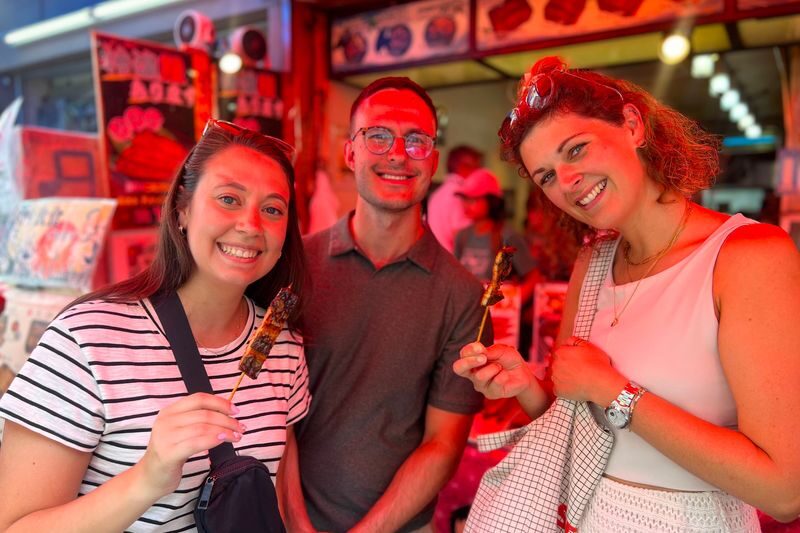
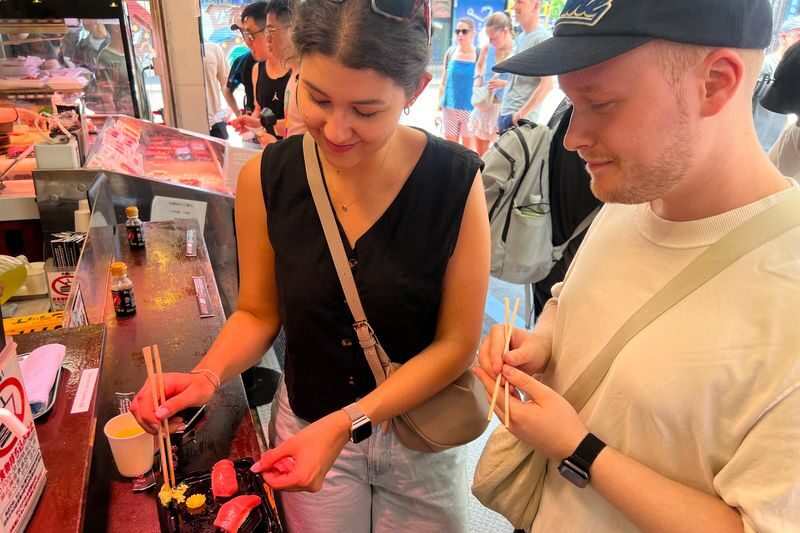
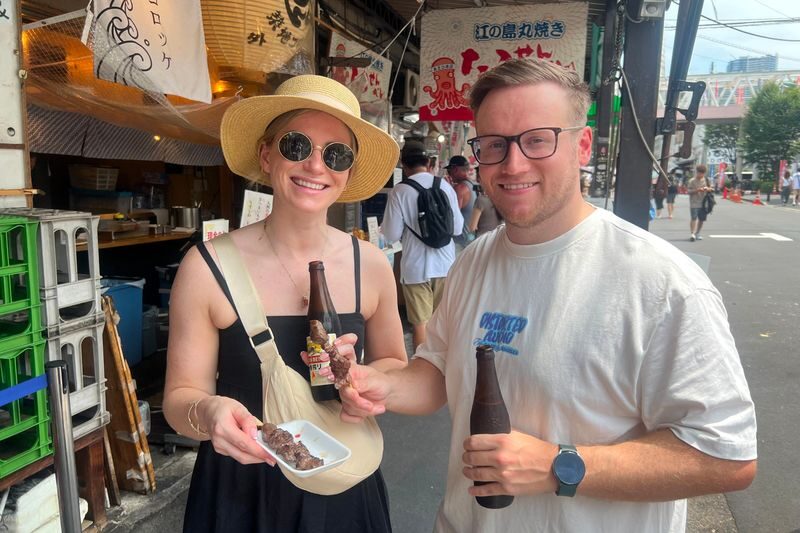
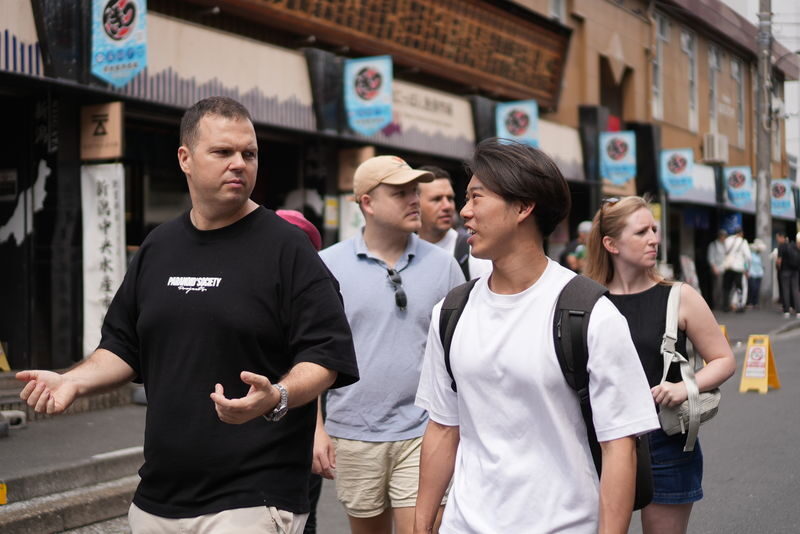
- A temple visit before the food stops: Spend about 15 minutes at Tsukiji Hongwan-ji, with a guide explaining its carvings, interior, and Buddhist context.
- Nearly two hours in Tsukiji Outer Market: The main part of the tour is a guided walk among seafood, produce, traditional ingredients, and food stalls.
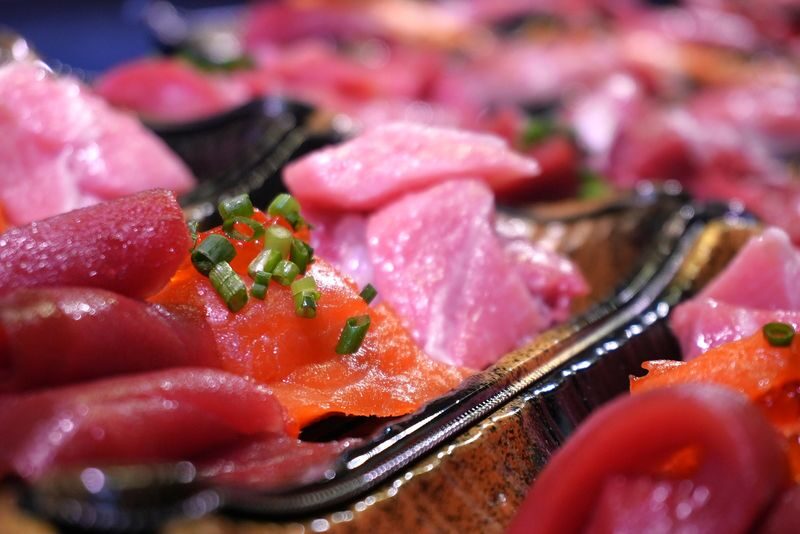
- Help choosing what to try: Guides have led groups to sushi, sashimi, oysters, wagyu, and dried goods, with stops varying by day and group.
- A useful introduction to Japanese food culture: Learn how ingredients fit into Japanese cooking, rather than simply passing a row of counters.
- A low starting price, with tasting costs extra: The guide is included, but meals, drinks, and personal purchases are not.
- A fixed meet-up and a firm start time: Meet near Tsukiji Station at the Starbucks listed for your booking, arriving five minutes early.

👉 See our pick of the 25 Best Guided Tours In Tokyo
Starting at Tsukiji Hongwan-ji
The tour begins near Tsukiji Station, at Starbucks Coffee in the Marumi Building, 1F, at 2-chome-12-8 Tsukiji. You choose a departure time when booking: 08:30, 09:00, 11:00, or 11:30. The available return time depends on your selected start and the day’s schedule.
Arrive five minutes early. This is a meet-up tour, not a hotel pickup, and late arrivals or no-shows are not eligible for a refund. Keep your mobile voucher handy for the meeting point.
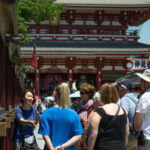
Before entering the market, you visit Tsukiji Hongwan-ji Temple for about 15 minutes. The temple is known for its detailed carvings and calm interior, a striking contrast with the busy food streets nearby. Your guide introduces the site and its religious setting, and some guides explain local customs and rituals along the way.
That brief stop is more than a bonus photo opportunity. It gives the tour a different rhythm and some context before you move into the market. If you come mainly to eat, the temple portion is short; if you like understanding how food and daily life sit within a wider culture, it’s a thoughtful start.
You can also read our reviews of more walking tours in Tokyo


Finding your way through Tsukiji Outer Market
The market portion takes about 1 hour and 45 minutes. That is enough time to visit a selection of stalls and learn what you are looking at, but not enough to examine every shop or sit down for a long meal. Think of it as an introduction with a guide, not an exhaustive tour of everything Tsukiji sells.
Tsukiji can be a lot to take in on your own. Seafood, vegetables, dried goods, and other traditional ingredients compete for attention, while individual stalls may have their own menus and ways of selling. A guide helps you make sense of the choices and can explain how particular foods are used in Japanese cooking.
The best part is the conversation. Guides such as Sayaka, Ryo, Tom, Riki, Shintaro, Rei, and Brendan have been praised for sharing history, answering questions, and giving useful suggestions. You won’t know which guide you’ll have in advance, but the tour’s value depends heavily on that person’s ability to make the market legible and keep the group comfortable.
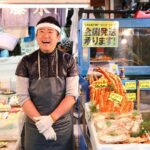
Some guides also know the vendors and can act as a go-between when the group is ordering or sampling. One visitor described being offered samples of dried goods, while others singled out the guide’s help finding good food for a sensible price. These details can turn a walk past stalls into a more personal encounter with the people who sell the food.
What you might taste, and what you pay for
Food is a central draw, but the tour price does not cover meals or drinks. Treat the starting price as the cost of the guided experience, then set aside a separate tasting budget. You can choose what to buy, and some guides have adjusted stops to suit the group’s interests.
Past routes have included sushi, sashimi, oysters, wagyu, and dried goods. That range is part of the fun: Tsukiji is known for seafood, but it isn’t a seafood-only stop. Wagyu skewers, for example, have been a hit with people who came expecting fish. The specific stalls and foods can change, so don’t book expecting a guaranteed tasting menu.
One practical tip is to bring cash. Some market vendors may not accept cards, and having cash makes it easier to buy a snack or small item without slowing down your decision. Since food is extra, you can keep spending modest by choosing a few tastes rather than trying everything that catches your eye.
The guide’s recommendations may also help you avoid paying for a disappointing snack simply because it looks good in a crowded display. But this is still a market, not a formal restaurant meal: you decide what you want, pay the vendor, and should expect to eat at the pace the group allows.
The pace, crowds, and weather
A two-hour tour is a manageable way to see Tsukiji, especially if you’re new to Tokyo or want a first orientation before returning on your own. The market section is the larger share of the outing, but there may be several food stops and time spent looking at products, so don’t expect a leisurely sit-down lunch.
One visitor felt that more time at food stalls and less time around souvenirs would have improved the balance. That’s a useful reminder if eating is your top priority: tell your guide what you most want to try, and be prepared to make quick choices when the group stops. The tour may be able to adapt to preferences, but you should not assume a fully customizable route.
Weather matters. A typhoon has led to the market being closed on some tour dates, and severe weather can prompt the operator to cancel. Even when the tour goes ahead in rain, walking around outdoor stalls is less comfortable. Wear shoes suited to a lot of standing and walking, and check the forecast before you set out.
The activity has no age limit, but it is not wheelchair-accessible. The itinerary may also change because of weather or traffic conditions. These practical limits are worth weighing before booking, particularly if anyone in your party needs step-free access or a sheltered route.
Is the $17.25 starting price good value?
For a guided two-hour walk, the starting price is appealing. You get an English-speaking guide and a structured visit to both the temple and market, which can be useful if you would otherwise spend the morning trying to decide where to go and what to eat. The guide’s local connections and recommendations can add real value, especially for a first visit.
Still, the headline price is not the whole cost. Food, beverages, and personal purchases are extra, and tastings can add up if you stop at several stalls. If you already know Tsukiji well and are happy to wander independently, you may prefer to spend the tour fee on food instead. If you value context and help navigating choices, the guided format makes a stronger case.
The tour is best suited to curious eaters who enjoy trying unfamiliar foods, solo visitors who would welcome a friendly group, and families with older children who can manage a walking route. It can also work for anyone who wants a compact introduction to Tsukiji before exploring more at their own pace.
You can also read our reviews of more food & drink experiences in Tokyo



Booking and meeting-point details
The tour is offered as the Tsukiji Fish Market 2-hour Food Tour. It departs from the Starbucks Coffee near Tsukiji Station at the time selected during booking and returns to Tsukiji Station, near Tsukiji Outer Market. The listed return options are 10:30, 11:00, 13:00, and 13:30, depending on the departure time and schedule.
Booking can be made for the next day, with instant confirmation and a mobile voucher. You can cancel for a full refund up to 24 hours before the activity date, using destination local time. If extreme weather or an unforeseen event leads the operator to cancel, you can reschedule or request a refund. Arriving late or missing the tour means no refund or amendment.
Should you book this Tsukiji tour?
Book it if you want a short, guided introduction to Tsukiji that mixes food with cultural context. The temple visit, explanations of Japanese ingredients, and help choosing stalls make this more than a snack crawl, while the compact schedule fits neatly into a Tokyo morning.
Skip it if you want a long, unhurried meal, need wheelchair access, or would rather browse and choose every stop yourself. And budget beyond the starting price if tasting is the point. For a first visit, though, having someone steer you toward good stalls and explain what’s on offer is a practical way to get more from a market that can otherwise feel like a maze.
Tsukiji Fish Market Food and Walking Tour
“Cool tour with interesting background stories about the temple and the fish market.”
FAQ
How long is the Tsukiji Fish Market tour?
The tour lasts about two hours. It includes around 15 minutes at Tsukiji Hongwan-ji Temple and about 1 hour and 45 minutes in Tsukiji Outer Market.
What food is included in the price?
Meals and beverages are not included. You pay separately for anything you choose to eat or drink at the market.
What foods might I try?
Stops can include foods such as sushi, sashimi, oysters, wagyu, and dried goods. The exact selection can vary.
Where does the tour meet?
The meeting point is Starbucks Coffee in the Marumi Building, 1F, at 2-chome-12-8 Tsukiji, near Tsukiji Station. Arrive five minutes before your booked departure.
Is the tour wheelchair-accessible?
No. The activity is not wheelchair-accessible.
Can I cancel my booking?
You can receive a full refund if you cancel at least 24 hours before the activity date, using destination local time. Late arrivals and no-shows are not eligible for a refund.