Matcha is not one single flavor. This Tokyo class sets several teas side by side, including examples from five Japanese growing areas, so you can compare their aromas and tastes before choosing a favorite and whisking your own bowl. It is a useful way to understand what the word matcha covers, not just how to make a drink.
I like two things about this format: you taste before you choose, and the lesson connects the cup to farming and processing. Chisei, a host named in connection with the class, brings experience from tea farming in Kyoto and agricultural science, including soil science. You also get a bamboo whisk session, matcha latte, and sweets.
One caution: the details describe both eight and ten matcha samples, and give the duration as both one hour and 90 minutes. The tea lineup sounds appealing, but I would confirm the exact tasting count and length before booking.
- What Makes This Matcha Class Worth Considering
- Start With a Side-by-Side Matcha Tasting
- Learn How Farming Shapes the Cup
- Choose a Favorite and Whisk Ousucha
- End With Matcha Latte and Sweets
- Allow for a Session of About an Hour to 90 Minutes
- Find the Class at Henn na Hotel in Asakusa
- Does the .85 Starting Price Make Sense?
- Who Will Get the Most From This Class?
- Should You Book the Matcha Comparison Class?
- FAQ
- How long does the matcha experience last?
- How many types of matcha will I taste?
- Where does the class meet?
- What time can I book?
- What is included in the experience?
- What is the child policy?
- The Best Of Tokyo!
- More Tours in Tokyo
- More Tour Reviews in Tokyo
- Not for you? Here's more nearby things to do in Tokyo we have reviewed
What Makes This Matcha Class Worth Considering
 1 / 6
 2 / 6
 3 / 6
 4 / 6
 5 / 6
 6 / 6
- Compare teas from five production areas: Small tastings help you notice how matcha varies by source rather than treating it as a single uniform drink.
- See what the word matcha means: The lesson covers its definition, cultivation, processing, and history.
- Try more than ceremonial-grade tea: The class description says six samples are ceremonial grade, with two other products sold as matcha despite not being defined as matcha.
- Whisk your own Ousucha: You choose a favorite and use a bamboo whisk, with skills you can use again at home.
- Finish with a latte and sweets: The class adds a more familiar matcha treat after the tasting and whisking.

👉 See our pick of the 25 Best Guided Tours In Tokyo
Start With a Side-by-Side Matcha Tasting
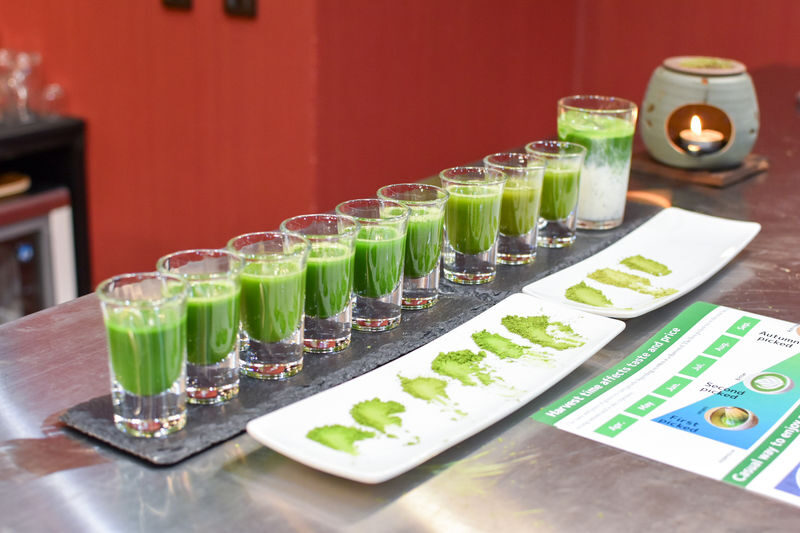
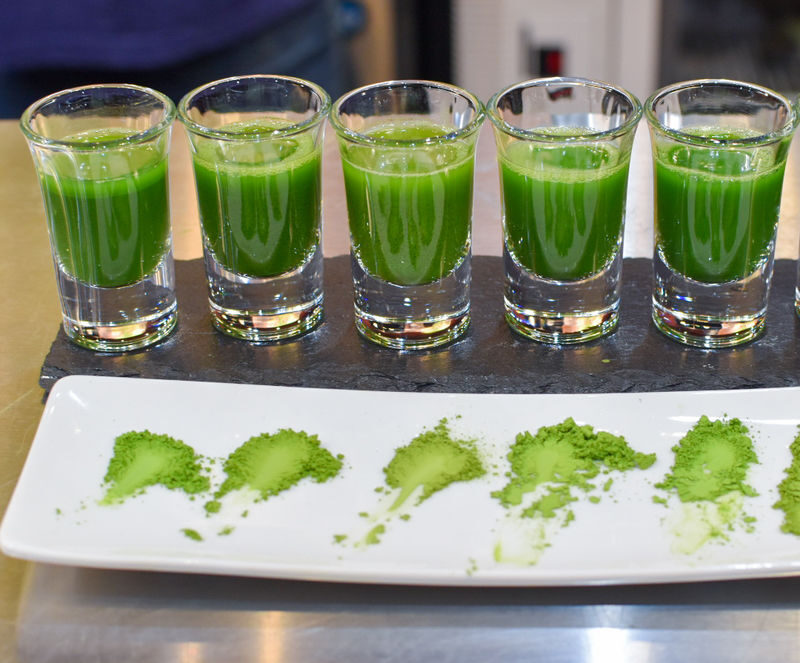
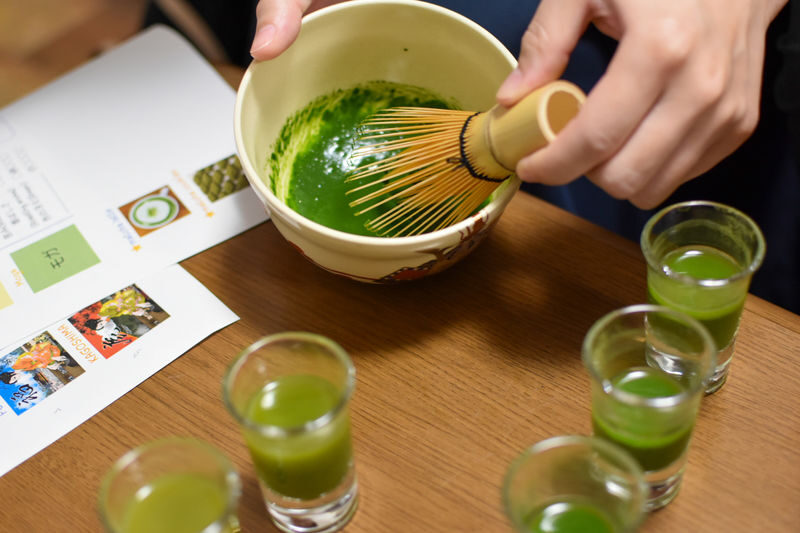
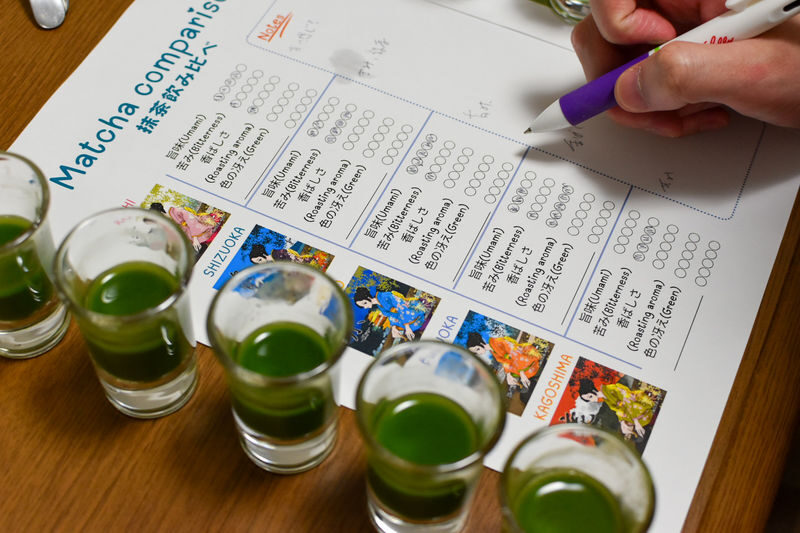
The central idea is simple and smart: taste several teas in small portions, then decide what you like. The class description refers to matcha from five representative Japanese production areas. Comparing them in one sitting can make differences in flavor and aroma easier to notice than sampling one cup on its own.
There is a small counting puzzle in the details. One section says you will compare eight types, with six ceremonial-grade samples and two products that are sold as matcha but are not defined as matcha. Another says you can enjoy ten types from five production areas. Those figures do not quite agree, so ask the operator which lineup applies to your chosen date if the number of samples matters to you.
The distinction between the six ceremonial-grade teas and the other two is more than a technical footnote. It gives the class a chance to explain how products sold under the same familiar label can differ in definition and use. You can make your own judgment by tasting them side by side, rather than relying on packaging or marketing alone.
The samples are served in small portions, which suits a comparison class. You get a range to assess without needing to drink a full bowl of every tea. Pay attention to aroma as well as taste, and note which sample you prefer before moving on. That choice will matter when you make your own Ousucha.
You can also read our reviews of more tours and experiences in Tokyo.



Learn How Farming Shapes the Cup
This is not only a whisking demonstration. You are also introduced to matcha’s definition, cultivation methods, processing, and history. That context helps explain why teas from different production areas may have distinct qualities, and why a label alone does not tell you everything about what is in the cup.
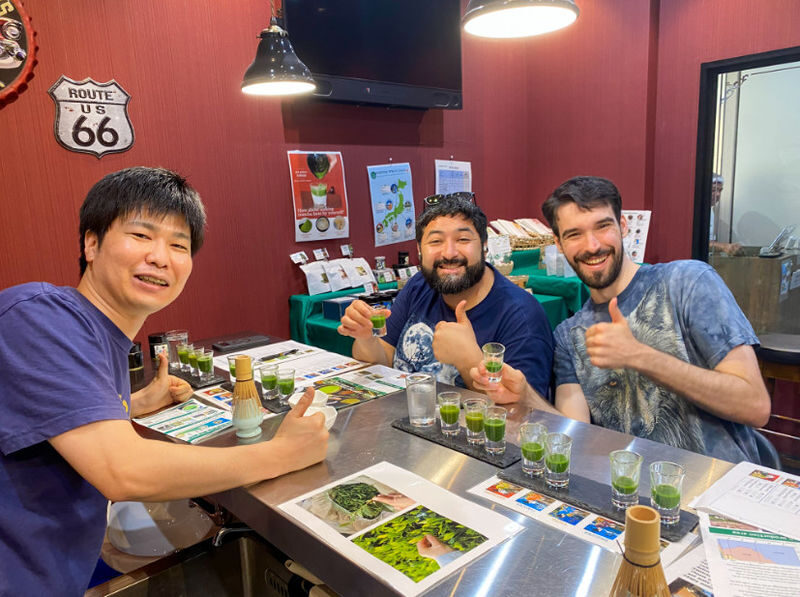
The instructor’s background is a real strength of the format. Chisei is described as having a bachelor’s degree in agricultural science, with particular expertise in soil science, and as a former tea farmer in Kyoto who worked in both cultivation and processing. That combination can make a short lesson more grounded in how tea is grown and made, rather than leaving you with only a recipe.
I would use this part of the class to ask practical questions. How does the growing area affect the tea? What does ceremonial grade indicate? How does cultivation shape aroma or flavor? The description does not promise a specific discussion of every one of these questions, but the instructor’s background makes them natural topics to raise.
For anyone who already drinks matcha, the farming angle may be the most useful part. You can connect what you taste to how the tea is produced. If you are new to matcha, the class gives you a starting framework for understanding what you are buying and drinking.
Choose a Favorite and Whisk Ousucha
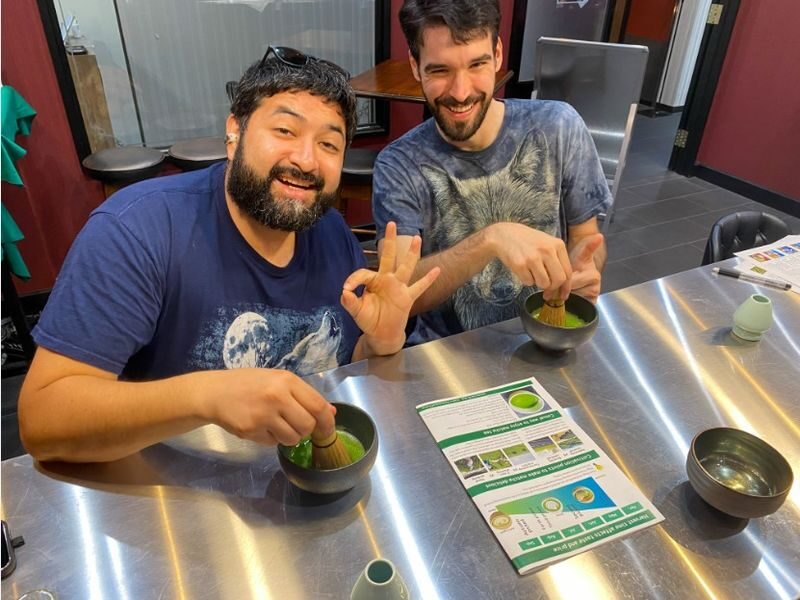
Once you have tasted the samples, you choose the matcha you liked best and prepare Ousucha, a traditional thin-style bowl of matcha. The hands-on step gives the tasting a purpose: you do not just compare teas, you use your preferred one to make a drink yourself.
You will work with a bamboo tea whisk. That matters because whisking is a practical skill you can repeat at home, not a technique that requires special equipment beyond the whisk and matcha. The class says you will be able to make matcha at home after the lesson, though it does not specify whether a whisk or any other tools are included to take away.
If this is your first time making matcha, the class gives you a chance to learn by doing rather than watching from the side. If you already prepare it at home, the tasting may help you reconsider which tea you prefer. Either way, the moment of choosing your own matcha makes the session more personal than a standard demonstration.
End With Matcha Latte and Sweets
Before the lesson ends, you get a matcha latte and matcha sweets. This offers a contrast to the tasting and Ousucha: you can try matcha in a more familiar, approachable form after paying attention to the tea itself.
The latte and sweets are part of the appeal, but the class’s main value is the comparison and instruction. If you are booking mainly for a full meal or a large dessert spread, this is not described as that kind of outing. Think of the treats as a pleasant finish to a focused tea session.
The wider package information also lists snacks and drinks or alcohol at selected bars. That wording is broad, while the class details specifically name a matcha latte and sweets. If you need to know exactly what refreshments are included beyond those items, check with the operator before you go.
Allow for a Session of About an Hour to 90 Minutes
The published timing is inconsistent. The summary calls the activity one hour, while the itinerary gives the guided session as 90 minutes. The departure and return options pair 09:00 with 10:30, and 11:30 with 13:00, which also suggests a 90-minute booking window.
That difference matters if you are arranging another activity, meeting someone, or catching transport afterward. I would leave room for the longer estimate and confirm the expected finish time before making a tight connection. The schedule may also change depending on traffic and weather, though the activity itself takes place at the listed venue.
There are two departure choices: 09:00 or 11:30. You need to attend the time selected when booking, and the meeting instructions ask you to arrive five minutes early. Late arrivals and no-shows are not refundable, so plan to reach the venue with a little breathing room.





Find the Class at Henn na Hotel in Asakusa
The meeting point is matcha trip at Sports Bar Leaf, on the second floor of Henn na Hotel Asakusa Tawaramachi. The address is 3-19-8 Kotobuki, Taito City, Tokyo, postal code 111-0042. The activity returns to the same location.
This is a city venue, not a tea farm visit. The class brings together tea from different Japanese production areas in Tokyo, so you can compare samples without traveling out to the growing regions. That is a practical trade-off: you get a broad tasting and instruction in one place, but not a firsthand look at tea fields or production sites.
The package details list an English-speaking professional driver/guide. Since the activity is described as a one-location class, the role of the driver or guide is not fully clear from the information provided. If you expect transportation to be part of the booking, confirm that point before paying.
Does the $61.85 Starting Price Make Sense?
At a starting price of $61.85, this is more than a quick cup of matcha. You are paying for a guided comparison, background on cultivation and processing, the chance to taste teas from several production areas, a hands-on whisking lesson, and refreshments. If you are curious about what separates one matcha from another, that combination can justify the cost.
The value depends on what you want from the hour or so. If you only want to try a matcha latte, you can find simpler ways to do that in Tokyo. If you want to learn how to compare matcha and make Ousucha yourself, the class offers more lasting value because you leave with a method you can repeat at home.
The unclear sample count and duration deserve attention at this price. Eight or ten kinds is a noticeable difference in a tasting built around comparison, and a 60-minute session is not the same commitment as 90 minutes. Ask for clarification if those details will affect your decision.
Who Will Get the Most From This Class?
I would recommend this to you if you enjoy tea, food, or learning how everyday products are made. It also suits a curious first-time matcha drinker who wants an explanation before buying tea or trying to prepare it at home. The practical whisking lesson makes the class useful beyond the day itself.
It may be less appealing if you want a formal tea ceremony, a visit to a tea-growing region, or a long cultural program. The details describe a tasting and making lesson, not a ceremony or farm tour. The focus is direct: compare, learn, whisk, and have a final treat.
Families can book with children under the stated age rules. Children aged zero to one are free if they do not need a separate seat. Children aged two to five must attend with a paying adult, while children aged six and older pay the adult rate.
Should You Book the Matcha Comparison Class?
Book it if you want to taste matcha with some context, learn from an instructor with tea-farming experience, and leave knowing how to whisk Ousucha. The combination of regional samples and a hands-on lesson gives the class more substance than a simple drink-making stop.
Before you commit, confirm whether your session includes eight or ten samples and whether it runs for an hour or 90 minutes. If those points are settled and you are interested in tea beyond the latte, this is a focused, practical way to spend part of a Tokyo morning.
Matcha Making Experience and Matcha Comparison in Tokyo.
“this was an absolutely educational amd fantastic adventure. Chisei was a great host feom start to finish, telling us of the beauty of matcha! this…”
FAQ
How long does the matcha experience last?
The timing is listed as both one hour and 90 minutes. The itinerary and the departure-to-return options indicate 90 minutes, so confirm the expected length with the operator before booking.
How many types of matcha will I taste?
The details give two counts: eight types in one section and ten types from five production areas in another. Confirm the tasting lineup for your session if the exact number is important to you.
Where does the class meet?
Meet at matcha trip, Sports Bar Leaf on the second floor of Henn na Hotel Asakusa Tawaramachi, 3-19-8 Kotobuki, Taito City, Tokyo. The class returns to the same address.
What time can I book?
The available departure times are 09:00 and 11:30. The return options are 10:30 and 13:00, depending on the departure time and itinerary duration.
What is included in the experience?
The class includes matcha tasting, a bamboo whisk lesson to make Ousucha, a matcha latte, and matcha sweets. The package details also list snacks, drinks or alcohol at selected bars, and an English-speaking professional driver/guide.
What is the child policy?
Children aged zero to one can attend free if they do not occupy a separate seat. Children aged two to five must be accompanied by a paying adult, and children aged six and older pay the adult rate.