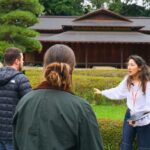
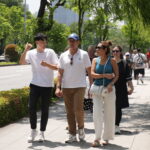
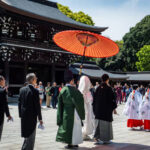
Asakusa’s most meaningful details are easy to miss when you’re following the crowd down Nakamise Street. This four-hour morning walk pairs Tokyo’s famous temple sights with simple lessons in shrine and temple etiquette, then turns into smaller streets where the neighborhood’s older character comes into view.
I like two things in particular: you get a practical introduction to rituals such as using the purification fountain and incense burner, and the walk reaches beyond the main photo stops to places like Tanuki Street and Denboin-dori. Guides named by past participants include Yukari, Mick, Yoshi-san, Nana, and Midori, with repeated praise for clear explanations, a friendly manner, and a pace that leaves room for questions and photos.
The main consideration is that this is a walking tour, not a transport or food package. You’ll meet at 8:00 a.m., walk for about four hours, and pay separately for snacks, drinks, and personal purchases. Even an early start cannot guarantee empty streets, though it does give you a head start on the day’s crowds.
- What to know before you go
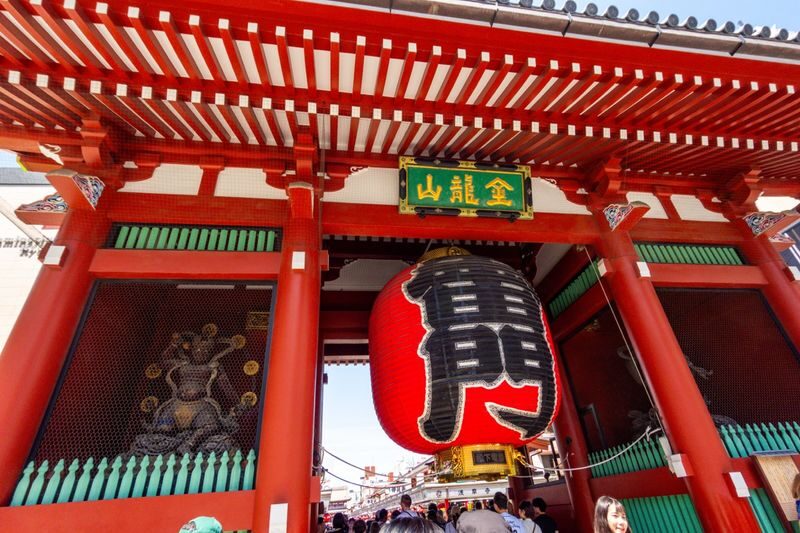
- Begin beneath Kaminarimon’s giant lantern
- Follow Nakamise-dori toward the temple
- Look up at Hozomon Gate and the five-storied pagoda
- Learn the basics at Senso-ji
- Compare temple and shrine customs at Asakusa Shrine
- Take the quieter route through Asakusa’s lanes
- The guide makes the difference
- Is US.55 good value?
- Who should book this Asakusa walk?
- FAQ
- How long is the Asakusa walking tour?
- Where does the tour start?
- Where does the tour end?
- Is an English-speaking guide included?
- Are food and drinks included?
- Does the tour teach temple and shrine etiquette?
- Can children join the tour?
- Can I cancel for a refund?
- The Best Of Tokyo!
- More Walking Tours in Tokyo
- More Tours in Tokyo
- More Tour Reviews in Tokyo
- Not for you? Here's more nearby things to do in Tokyo we have reviewed
What to know before you go
 1 / 10
 2 / 10
 3 / 10
 4 / 10
 5 / 10
 6 / 10
 7 / 10
 8 / 10
 9 / 10
 10 / 10
- Start at Kaminarimon: Meet near the red lantern at Starbucks Coffee, Kaminarimon, 10 minutes before the 8:00 a.m. departure.
- Learn the customs, not just the names: Your guide explains how to approach the incense burner and purification fountain, and how to pray at the temple and shrine.
- See more than the main approach: The route includes Nakamise-dori, Hozomon Gate, Senso-ji, Asakusa Shrine, and backstreets such as Tanuki Street and Denboin-dori.
- Allow four hours: The walk ends at Senso-ji around noon. Transport, meals, drinks, and personal expenses are not included.
- Expect guide-led rather than self-paced sightseeing: Participants especially value the explanations, relaxed pace, help with photos, and local food suggestions.
- The starting price is modest: At US$14.55, the main value is having a guide put the sights and customs into context, not receiving transport or food.

👉 See our pick of the 25 Best Guided Tours In Tokyo
Begin beneath Kaminarimon’s giant lantern
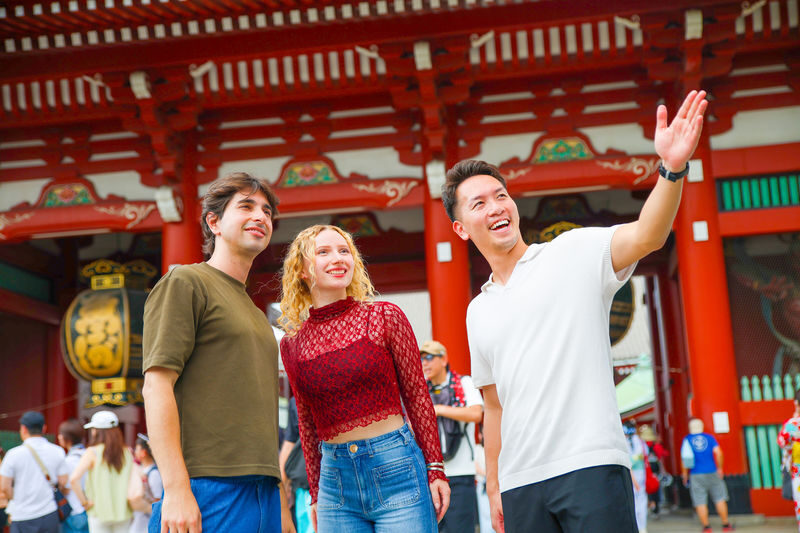
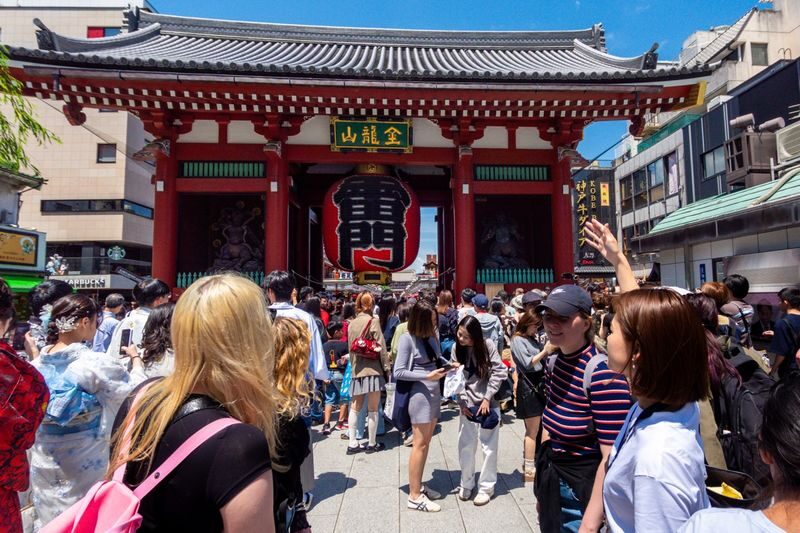
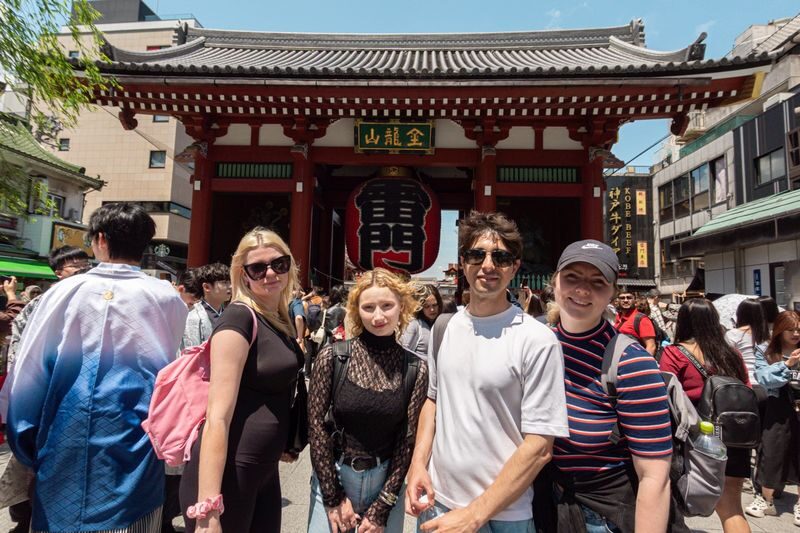
The tour starts at Kaminarimon, the landmark gate with the huge red lantern that serves as Asakusa’s most recognizable meeting point. Its name means Thunder Gate, and figures associated with wind and thunder guard the entrance. It is a striking opening scene, but it is also a useful place to get your bearings before the walk moves into the temple district.
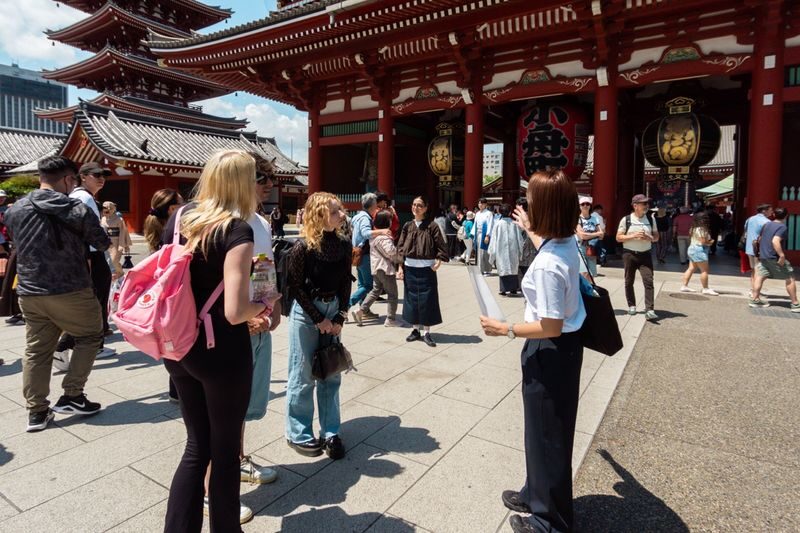
Arriving 10 minutes early matters here. The meeting point is Starbucks Coffee near Kaminarimon, at 1-chome-18-2 Asakusa, and the tour begins at 8:00 a.m. Late arrivals and no-shows are not refundable, so leave a little margin for finding the right side of the street and locating your guide.
This first stop gives your guide a chance to set the scene and point out details that can disappear in a quick photo stop. If you’re new to Tokyo, that orientation is handy: you’ll know what the gate represents and what to look for as you continue toward the temple.
You can also read our reviews of more walking tours in Tokyo


Follow Nakamise-dori toward the temple
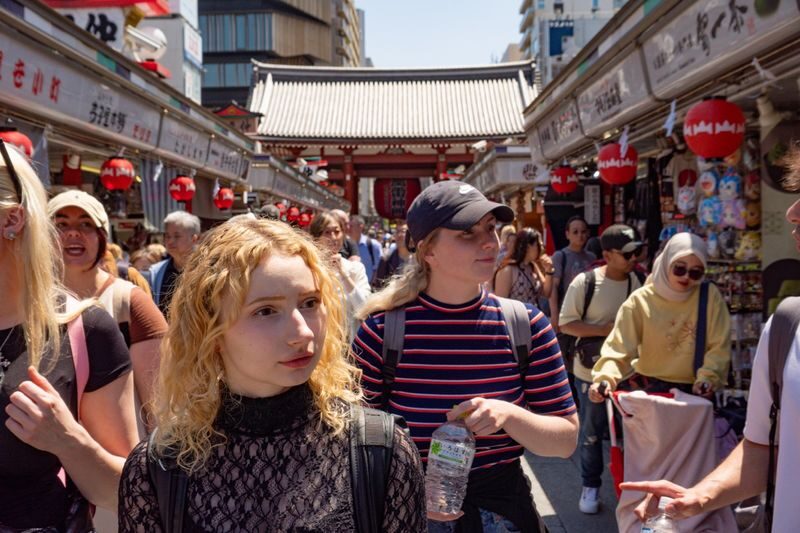
From Kaminarimon, the walk follows Nakamise-dori, one of Japan’s oldest shopping streets, with roots reaching back to the Edo period. The approach is lined with shops selling traditional snacks, sweets, crafts, and souvenirs. It is both a route to the temple and an attraction in its own right.
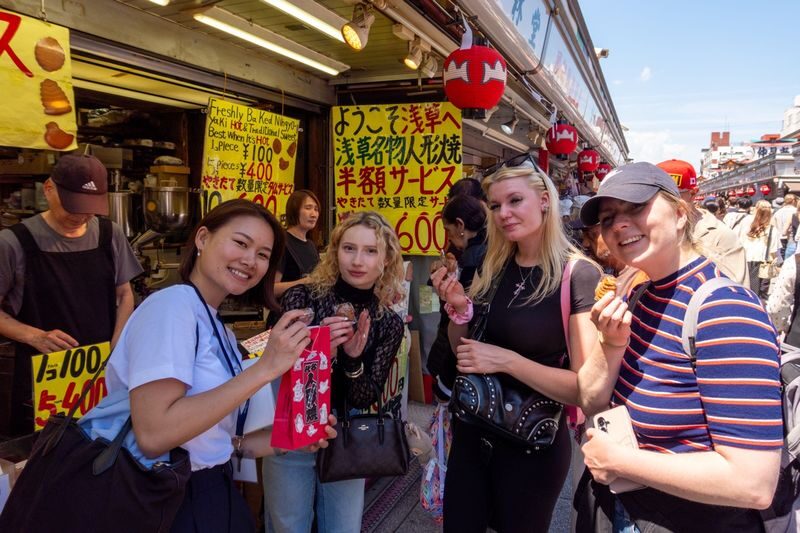
Nakamise can be busy, and the narrow shopping street is not the place to expect a quiet stroll. A guide helps you make sense of the setting while you move with the flow of people, rather than treating every stall as a separate stop. You can also ask about snacks and local specialties, then decide what you’d like to try later.
I’d think of this part as an introduction, not a shopping session. The tour does not include food or drinks, and the schedule continues through several other stops. If a particular sweet catches your eye, ask your guide whether there will be time to return or where else to look nearby.
Look up at Hozomon Gate and the five-storied pagoda
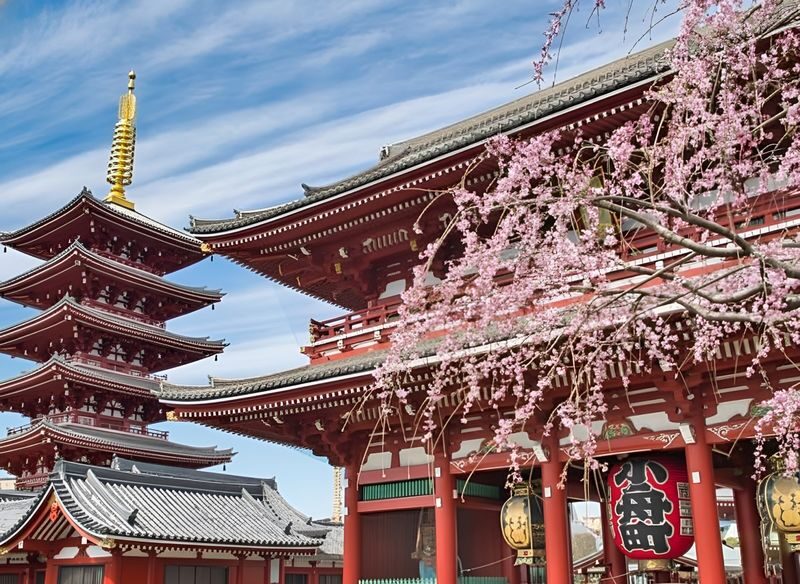
The next major stop is Hozomon, the imposing gate on the temple approach. Here, the scale of the complex becomes clearer. The gate, the five-storied pagoda, and the steady movement of people toward the main hall make this more than a single building to photograph.
A detail to watch for is the pair of enormous straw sandals, or waraji, said to weigh about 500 kilograms. They offer a memorable contrast with the fine architectural work around them. Your guide also introduces the Buddhist meaning associated with the pagoda’s five levels and the five elements.
This is a good place to slow your eyes down. There are large, obvious features to photograph, but there are also details in the gates and structures that can go unnoticed when you’re simply following the crowd. The guide’s explanations help make the architecture legible without requiring you to arrive with a background in Buddhism.
Learn the basics at Senso-ji
Senso-ji is Tokyo’s oldest temple and is dedicated to Kannon, the Goddess of Mercy. It is the central stop of the walk, and its importance is easier to appreciate once you have passed through the gates and learned how the temple fits into Asakusa’s daily life.
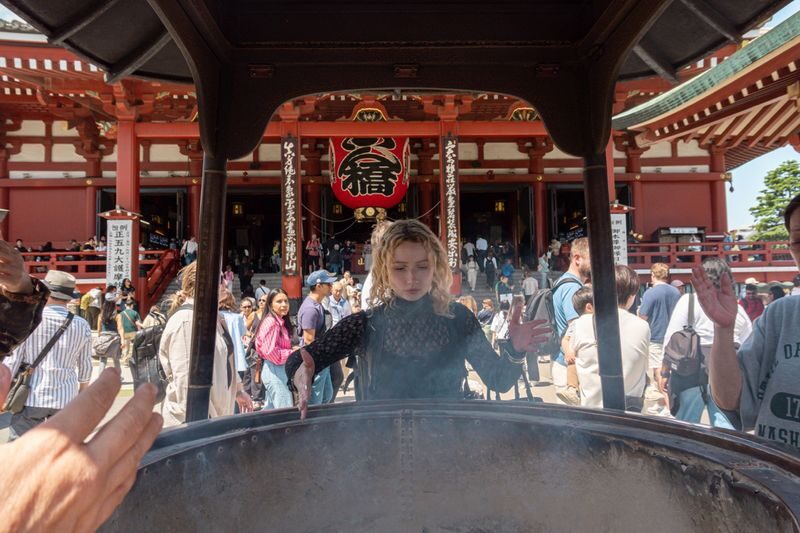
The guide covers practical etiquette at the incense burner and purification fountain. You’ll learn how to approach these practices respectfully and what they mean, rather than having to guess by watching people around you. The tour also introduces the simple act of making a prayer at the temple.
That instruction is especially useful if this is your first visit to a Buddhist temple in Japan. Customs can feel unfamiliar, and it’s easy to worry about doing something incorrectly. A short explanation gives you enough confidence to take part with care, while leaving room to observe if you prefer.
Senso-ji is a popular place, so don’t expect the main temple grounds to feel secluded. The morning departure can help you get ahead of later crowds, but the experience still takes place in a well-known public attraction. Bring patience, and allow your attention to move between the guide’s explanation, the architecture, and the people who have come to pray.
Compare temple and shrine customs at Asakusa Shrine
Beside Senso-ji is Asakusa Shrine, a Shinto shrine honoring the three men associated with the founding of the temple. The close pairing of shrine and temple makes this stop particularly useful: you can see two religious traditions side by side rather than learning about them as abstract ideas.
At the shrine, your guide explains the traditional two bows, two claps, one bow prayer ritual. The contrast with the temple customs gives the lesson a practical shape. You are not just memorizing a rule; you’re seeing how a shrine visit differs from a Buddhist temple visit in the same neighborhood.
This is one of the tour’s strongest features for culture-minded visitors. The walk does not promise an advanced religious history seminar, but it gives you a respectful starting point and the confidence to visit other temples and shrines during your time in Japan.






Take the quieter route through Asakusa’s lanes
After the major temple and shrine sights, the walk turns toward smaller streets, including Tanuki Street and Denboin-dori, and the area around Hoppy Street. The character changes here. Instead of the main approach and its streams of visitors, you’ll see retro Edo-style details, artisan shops, and lucky raccoon dog statues.
This is where the tour earns its value for someone who might otherwise spend the whole visit on Nakamise-dori. The backstreets offer another view of Asakusa, and a guide can point out architectural features and local details that you might pass without noticing. The walk also gives you a chance to ask about souvenir streets and places to eat.
Hoppy Street is associated with local eating and drinking spots, but food and beverages are not included in the tour. Treat the area as a place to note for later, rather than expecting a meal stop. Your guide can offer suggestions, but you’ll cover your own purchases.
The exact sequence can change with weather and other conditions. The published route also returns to Senso-ji at the end, so expect the walk to circle back toward the temple area rather than finish far away from where the main sightseeing began.
The guide makes the difference
The tour’s most consistently praised qualities are the guides’ warmth and the way they explain local history and customs. Names that come up include Yukari, Mick, Yoshi-san, Nana, Midori, Toshy, Moeka, Clarke, and Watanabe-san. Guide assignments can vary, so you should not book expecting a particular person.
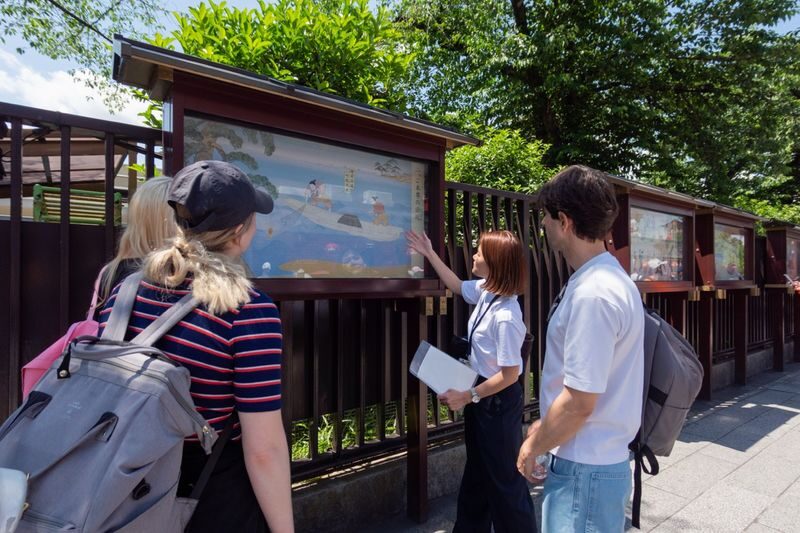
Several participants valued guides who welcomed questions and kept the pace comfortable. Yoshi-san, for example, was singled out for connecting Buddhist ideas with a participant’s knowledge of Hinduism and for offering suggestions for what to see after the walk. Mick and other guides were also praised for friendly explanations and for helping take photos.
That combination matters. A walking tour can easily become a checklist of gates and buildings. A guide who explains the customs, answers questions, and shares useful food tips makes the same route more personal and easier to remember. The reports of smaller groups are encouraging, but group size is not guaranteed, so book for the route and guiding rather than expecting a private tour.
Is US$14.55 good value?
The starting price of US$14.55 is low for a guided four-hour introduction to a major Tokyo neighborhood. You’re paying for an English-speaking guide and a structured route through the district’s key sights and side streets. The price does not include transport, food, beverages, or personal expenses, so budget separately if you want to shop or sample snacks.
The value is strongest if you want context. Senso-ji and Nakamise-dori are straightforward to visit on your own, but the etiquette, shrine and temple comparison, and details in the side streets are easier to appreciate with someone explaining them as you go. If you’re comfortable researching and navigating independently, you may prefer to walk at your own pace and spend longer at individual shops.
At this price, the tour is a practical orientation rather than an all-inclusive outing. Its small-group feel is possible, but not promised. The guide’s explanations and local suggestions are the main reason to book.
Who should book this Asakusa walk?
I’d recommend it to first-time visitors who want to understand what they are seeing at Senso-ji, and to culture lovers who would like a clear introduction to basic temple and shrine etiquette. It also suits anyone who enjoys walking with a local guide and wants a few ideas for snacks, sweets, festivals, and souvenir shopping.
Families can take part because there is no age limit, but infants and children must be included in the passenger headcount. The walk lasts about four hours, so consider whether that length suits the children in your group. Accessibility details are not specified, so check with the operator if you need particular access arrangements.
Skip it if you want a private tour, transport between sights, or a meal included. And if you’re already familiar with Japanese religious customs and prefer to linger at your own pace, a self-guided visit may suit you better.
Book this walk if you want more than a quick temple photo: it offers a useful first look at Asakusa’s rituals, landmarks, and side streets for a modest price. Go early, arrive on time, and keep a little room in your day for a snack or shop that catches your eye.
Tokyo: Asakusa, Senso-ji temple & Shrine Walking Tour
“Watanabe-san was an amazing guide. Highly recommend!”
FAQ
How long is the Asakusa walking tour?
The tour departs at 8:00 a.m. and is scheduled to return around noon, for a total of about four hours.
Where does the tour start?
Meet at Starbucks Coffee near Kaminarimon, at 1-chome-18-2 Asakusa, Tokyo. Arrive 10 minutes before departure.
Where does the tour end?
The scheduled return point is Senso-ji Temple.
Is an English-speaking guide included?
Yes. An English-speaking guide is included.
Are food and drinks included?
No. Meals and beverages are not included, and you will also pay separately for personal expenses.
Does the tour teach temple and shrine etiquette?
Yes. The guide explains how to approach the incense burner and purification fountain at Senso-ji, and how to perform the two bows, two claps, one bow prayer ritual at Asakusa Shrine.
Can children join the tour?
There is no age limit. Infants and children must be included in the passenger headcount.
Can I cancel for a refund?
You can receive a full refund if you cancel at least 24 hours before the activity date, using destination local time.